
Our readers keep the lights on and the weekend projects moving. As an Amazon Associate, I earn from qualifying purchases.
Every fall, the eastern monarch migration faces a crisis: fewer milkweed plants along the flyway. Without the right Asclepias species, egg-laying females find nothing for their caterpillars, and the next generation simply never takes flight. Choosing the wrong seeds or plants isn’t just a gardening mistake—it’s a missed opportunity to sustain a threatened species.
I’m Rikta — the co-founder and writer behind FitlyFast. I’ve spent years analyzing germination rates, seed purity claims, and live plant survival data across dozens of milkweed suppliers to identify which offerings genuinely support monarch reproduction rather than just marketing “butterfly friendly” labels.
This guide cuts through the seed-count hype and live-plant risks to pinpoint the single most reliable asclepias for monarchs based on verified buyer outcomes and species-specific requirements.
How To Choose The Best Asclepias For Monarchs
Not all milkweed is equal in the eyes of a monarch. The species you choose directly affects larval survival rates, bloom timing, and whether the plant naturalizes in your region. Three factors separate an effective host plant from a disappointing garden experiment.
Species Match to Your Region
Asclepias incarnata (swamp milkweed) thrives in moist soil across zones 4-9b, while Asclepias tuberosa (butterfly milkweed) prefers well-drained sandy soil in zones 3-9. Common milkweed (Asclepias syriaca) spreads aggressively in zones 3-11 but provides the highest larval food biomass. Match the species to your USDA zone and soil moisture, or monarchs will ignore it even if it grows.
Seed Viability vs. Seed Count
Many listings advertise 1,000 or 20,000 seeds, but bulk counts often mask low germination rates or filler material like stem debris. Hand-counted reviews frequently reveal 50% fewer viable seeds than advertised. Prioritize suppliers who disclose germination test results and sell seeds from the current or following growing season.
Live Plant vs. Seed Tradeoffs
Seeds require 30-60 days of cold stratification and may take two years to produce blooms. Live plants, especially those in 4-inch pots with established root systems, offer first-season flowering and immediate monarch attraction—but they risk transplant shock and neonicotinoid exposure. Verify “No Neonicotinoids” labels for pollinator-safe establishment.
Quick Comparison
On smaller screens, swipe sideways to see the full table.
| Model | Category | Best For | Key Spec | Amazon |
|---|---|---|---|---|
| Clovers Garden Butterfly Milkweed | Live Plants | Immediate monarch habitat | 2 live plants, 4-8″ tall | Amazon |
| EDUCATIONAL SCIENCE Milkweed Plant | Live Plant | Spring start with flowers | 1 live plant, 250 seeds bonus | Amazon |
| HOME GROWN Premium Mix | Seed Mix | Large meadow coverage | 20,000+ seeds, 14 species | Amazon |
| HOME GROWN Milkweed 5-Variety | Seed Collection | Diverse species garden | 500+ seeds, 5 Asclepias types | Amazon |
| CZ Grain Monarch Garden Kit | Seed Mix | Family project, 10 sq ft | 28 species, 10 sq ft coverage | Amazon |
| MySeeds.Co Swamp Milkweed | Single Species Seeds | Wet soil, zones 4-9b | 1,000 seeds, Asclepias incarnata | Amazon |
| MySeeds.Co Butterfly Milkweed | Single Species Seeds | Dry sandy soil, zones 3-9 | 1,000 seeds, Asclepias tuberosa | Amazon |
In‑Depth Reviews
1. Clovers Garden Asclepias Tuberosa Butterfly Milkweed

This is the closest thing to a guarantee for first-year monarch hosting. Clovers Garden ships two established Asclepias tuberosa plants in 4-inch pots, each standing 4 to 8 inches tall with a root system they call “10x Root Development” — and multiple buyer photos confirm the roots fill the pot. The plants are grown in the Midwest with a “No Neonicotinoids” pledge, meaning no residual systemic pesticides that could kill caterpillars feeding on the leaves.
Butterfly milkweed produces tangerine-orange umbels that bloom nearly all summer, and because it is a true perennial in zones 3-9, these plants return larger each spring. The careful packaging (eco-friendly, recyclable box with a Quick Start guide) explains why shipping survival rates run high: only two of dozens of verified buyers reported transplant loss, and those were attributed to ground conditions rather than plant health.
The key tradeoff is cost per plant versus seed volume, and the fact that Asclepias tuberosa has less milky sap than common milkweed—meaning slightly lower leaf biomass for caterpillars. However, for anyone wanting monarch activity in the same season they plant, this is the most reliable option on the list.
Why it’s great
- Established root system ensures first-year blooms
- No Neonicotinoids verified by multiple buyers
- Long summer bloom window
- Survives transplant well when planted promptly
Good to know
- Less leaf biomass than common milkweed
- Requires full sun and sandy, well-drained soil
2. EDUCATIONAL SCIENCE Milkweed Plant BF100A

This product bridges the gap between impatient gardeners and seed-starters: you receive a live Asclepias plant (species varies but tagged as “Asclepias SSP.”) plus approximately 250 bonus seeds. The live plant arrives in spring-ready condition—multiple reviewers noted “multiple shoots” and “beautiful flowers” within weeks of potting up. One buyer discovered a monarch caterpillar already feeding on arrival, confirming the plant’s host value.
The organic material claim on the listing adds a layer of reassurance for those avoiding chemical residues, though no third-party certification is referenced in the specs. The recommended sandy soil and full sun placement is standard for Asclepias, and the plant recovers quickly from shipping stress when repotted promptly—reviewers consistently mention perking up within days.
The main limitation is the lack of species specificity: you may receive any Asclepias variant, and the 250 seeds are unlabeled. If you want a guaranteed known species for your zone, this feels less precise. But for a combined “instant plant plus future seeds” approach, it delivers consistent results.
Why it’s great
- Live plant arrives with established foliage
- Includes seeds for future expansion
- Multiple reports of visible monarch activity
Good to know
- Species is not specified exactly
- Seeds are unlabeled and may vary
3. HOME GROWN Premium Monarch Butterfly Wildflower Seeds Mix

When your goal is to cover ground—literally—this 2-ounce mix of over 20,000 seeds is the most cost-efficient way to establish a monarch meadow. The blend includes Butterfly Milkweed (Asclepias tuberosa) and Common Milkweed (Asclepias syriaca) as core host species, plus 12 nectar-rich companion flowers like Purple Coneflower, Cosmos, and Zinnia that sustain adult monarchs through the breeding season.
Germination occurs in 7-14 days according to the included grow guide, and buyers in zones 3-9 report successful stands after simply broadcasting, raking, and watering. The extended bloom period from spring through fall ensures nectar availability across multiple monarch generations. The “Made in USA” and Non-GMO labels match the brand’s HOME GROWN line consistency.
One significant detail: the mix contains both annuals and perennials, so first-year flowers are heavy on annual cosmos and marigolds while perennials establish root systems. If you want an instant pure milkweed patch, this blend dilutes the host plant concentration. For a full pollinator habitat, however, this variety actually supports the complete monarch lifecycle more effectively than monoculture planting.
Why it’s great
- Massive seed count for large areas
- Includes nectar plants for adult monarchs
- Fast germination in 1-2 weeks
Good to know
- Annuals dominate first year
- Not a pure milkweed mix
4. HOME GROWN Milkweed Flower Seeds 5-Variety
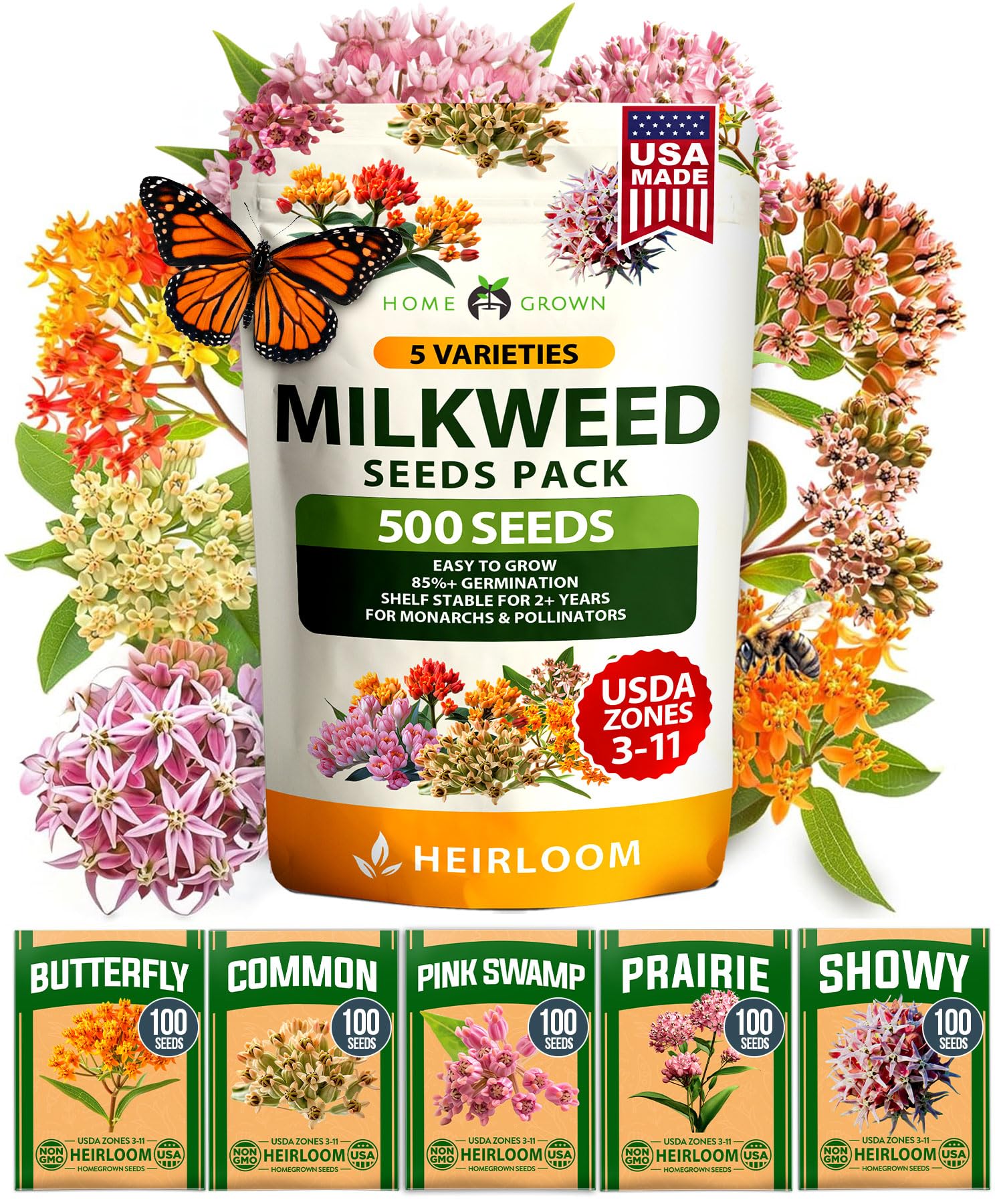
This collection is designed for gardeners who want biodiversity within the Asclepias genus itself. Five separate packets contain Butterfly Milkweed, Common Milkweed, Swamp Milkweed, Showy Milkweed, and Pink/Prairie varieties—each suited to different soil conditions and bloom periods. The 500+ total seed count is modest compared to bulk packs, but the species range allows you to experiment with what naturalizes best in your specific yard.
The heirloom, Non-GMO designation and the inclusion of a comprehensive online grow guide reflect thoughtful preparation. Common Milkweed provides the highest leaf biomass for caterpillars, while Butterfly Milkweed offers drought tolerance and Showy Milkweed thrives in both arid and moist soils. By planting all five, you create a staggered bloom that supplies nectar from early summer through fall across zones 3-11.
The germination complaints are real—one buyer reported only 1 sprout from 4 plantings, which may stem from seed storage conditions during transit. Counterbalancing that, the majority of reviews describe good germination and vigorous seedlings. The five-packet format also means isolation failure in one species doesn’t torpedo the entire project.
Why it’s great
- Five different milkweed species in one purchase
- Covers multiple soil and sun conditions
- Includes detailed grow guide
Good to know
- Smaller total seed count than bulk packs
- Inconsistent germination reported by some buyers
5. CZ Grain Monarch Butterfly Garden Kit

Positioned as an entry-level project for kids and families, this kit packs 28 species of perennial wildflower seeds—including milkweed varieties—into a single packet designed to cover 10 square feet. The “Extended Bloom Time” special feature and the promise of seeing monarchs in the first year make this a low-stakes starting point for beginners unsure about commitment.
The seed mix includes red, blue, purple, green, orange, and pink flowering species, creating a visually engaging space that appeals to children and attracts a broad range of pollinators beyond just monarchs. The included instructions use a QR code linking to video guidance, which helps first-time sowers avoid common mistakes like planting too deep or overwatering.
Size complaints are valid—the packet is physically small, and some experienced gardeners felt misled by the volume. Additionally, several reviewers noted that annuals dominate the first year while perennials establish. For a pure monarch host plant, this kit is too diffuse; the milkweed component is minor relative to the total seed content. But as an introductory “gateway” pollinator kit, it works.
Why it’s great
- Great for families and children
- Video instructions included
- Attracts diverse pollinators
Good to know
- Small packet size surprises some buyers
- Milkweed is a minority of the seed mix
6. Big Pack Pink Swamp Milkweed Seeds
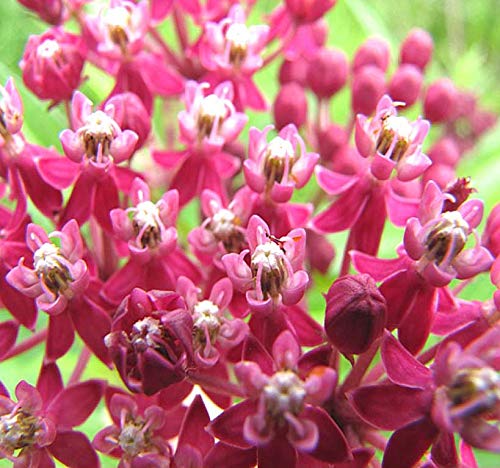
MySeeds.Co’s swamp milkweed seeds target a specific ecological niche: consistently moist soil where Asclepias incarnata thrives. This species produces clusters of pink, red, and white flowers on plants reaching 4-5 feet, with a strong vanilla-like scent that attracts honeybees as well as monarchs. The 1,000-seed count is theoretically sufficient for a large rain garden or pond margin planting.
The Non-GMO, open-pollinated claim is standard, and the temperature-controlled storage facility suggests careful handling. Cold stratification for 3.5 weeks is explicitly recommended, and multiple successful planters confirm good results when following those instructions. The species is perennial across zones 4-9b, returning reliably from deep root systems.
The persistent complaint about short-counting seeds — multiple hand-counts found only ~500 seeds instead of 1,000 — undermines trust. Combined with the stem debris mixed in, the effective viable seed count is lower than advertised. This doesn’t mean the seeds that do germinate are poor quality (they produce true swamp milkweed), but the value proposition is weaker than the packaging suggests.
Why it’s great
- Strong performer in wet soil conditions
- Fragrant flowers attract diverse pollinators
- Non-GMO, open-pollinated genetics
Good to know
- Seed count frequently falls short of 1,000
- Contains stem debris and filler
7. Big Pack Butterflyweed Milkweed Seeds
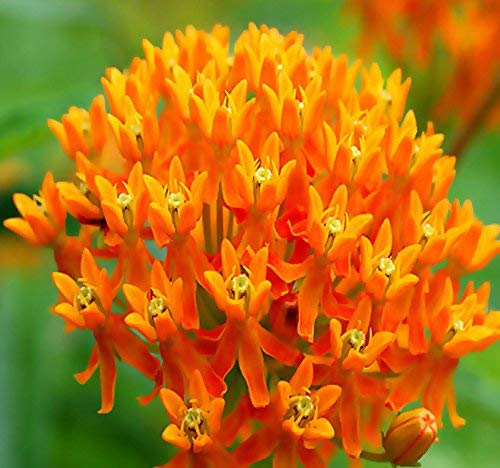
For gardeners with sandy, well-drained soil who want the classic orange butterfly milkweed (Asclepias tuberosa), this is the largest bulk packet available. The species is legendary for drought tolerance once established and provides a crucial nectar source from early summer through fall. The deep taproot also makes it one of the most resilient milkweed species in hot, dry climates.
The seller’s reputation among returning customers is strong—repeat buyers specifically note they trust MySeeds.Co after receiving “genuine seeds” from previous orders, distinguishing them from sellers offering mislabeled or dead seed stock. The stratification instructions are clear and the packaging includes guidance on fall versus spring planting.
Same issues as the swamp milkweed sibling: seed count discrepancies and debris content. Hand-counts by skeptical buyers consistently report ~500 seeds rather than the advertised 1,000. The cold stratification duration of 3.5 weeks is non-negotiable for this species; buyers who skipped it or shortened it reported zero germination. If you accept the effective count and follow protocol, the seeds perform well. If precise count matters to you, consider a smaller pack from a different supplier.
Why it’s great
- Extremely drought-tolerant once established
- Bright orange flowers are highly attractive to monarchs
- Proven seller reputation among returning buyers
Good to know
- Actual seed count often half the advertised amount
- Requires strict cold stratification for germination
FAQ
What is the difference between butterfly milkweed and common milkweed for monarchs?
How long does it take milkweed seeds to bloom from seed?
Can I skip cold stratification if I buy live milkweed plants?
Final Thoughts: The Verdict
For most users, the asclepias for monarchs winner is the Clovers Garden Butterfly Milkweed because it delivers established, No-Neonicotinoid plants that host caterpillars in the same season—no stratification delay, no germination gamble. If you want a massive seed blend for full meadow coverage, grab the HOME GROWN Premium Mix. And for targeted species diversity across different soil types, nothing beats the HOME GROWN 5-Variety collection.