
Our readers keep the lights on and the weekend projects moving. As an Amazon Associate, I earn from qualifying purchases.
Few things sabotage a scouting season faster than heading out to a remote site only to find your camera shut off prematurely because the internal cells sagged under the cold. Standard alkaline chemistries lose voltage rapidly below freezing, and many lithium-iron disulfide designs spike early unless the load matches their sweet spot. The right AA chemistry and capacity tier for a trail cam is not a generic buy — it demands cold-tolerance specs, steady 1.5V output under high-drain trigger pulls, and shelf stability measured in years, not months.
I’m Rikta — the co-founder and writer behind FitlyFast. Over several years of market analysis in consumable power categories, I’ve tracked which battery chemistries actually reduce the number of treks into the woods for swap-outs during prime movement windows.
After comparing capacity ratings, cycle life claims, temperature tolerance ranges, and real-user longevity reports across multiple lithium and Ni-MH options, this guide pinpoints the best aa batteries for trail cameras based on factors that genuinely keep your camera clicking through a full season of temperature swings and motion-activated bursts.
How To Choose The Best AA Batteries For Trail Cameras
Trail cameras are demanding devices — they sit idle for weeks, then fire a high-current IR flash burst in freezing temperatures. The wrong cell chemistry causes rapid voltage drop, fake low-battery warnings, or early shutdown exactly when you need captures. Focus on four key specs to avoid swapping cells mid-season.
Chemistry: Lithium vs. Ni-MH vs. Alkaline
Standard alkaline cells are the cheapest per pack but die fastest below 32°F and leak corrosive fluid over time. Ni-MH rechargeables (1.2V nominal) work well in mild climates but often trigger false low-battery alerts in cameras calibrated for 1.5V. Lithium primary or rechargeable lithium-ion cells maintain a steady 1.5V output down to -40°F, making them the only reliable choice for year-round outdoor deployment.
Capacity Rating: mWh vs. mAh
Most trail cam batteries list capacity in mWh (milliwatt-hours) rather than mAh because the voltage is steady at 1.5V. A 3000mWh cell delivers roughly 2000mAh at 1.5V — enough for several hundred flash triggers. Look for at least 3000mWh for primary cells or 3400mWh for rechargeable packs if your camera captures video clips.
Temperature Tolerance Range
Field conditions vary from deep freeze to blistering summer. Lithium cells rated to -40°F ensure the IR emitter powers fully even during January morning triggers. If the spec sheet stops at 32°F, the camera will likely miss captures on cold nights.
Cycle Life for Rechargeable Options
If you plan to recharge, look for at least 1600 cycles before capacity drops to 80%. Rechargeable lithium (1.5V) sets cost more upfront but eliminate the churn of buying disposable 12-packs every season. For cameras on remote properties with limited access, high-cycle rechargeables reduce both waste and trips.
Quick Comparison
On smaller screens, swipe sideways to see the full table.
| Model | Category | Best For | Key Spec | Amazon |
|---|---|---|---|---|
| RayHom 12-Pack Rechargeable | Lithium Rechargeable | High-capacity rechargeable kit | 3700mWh / 1.5V constant | Amazon |
| Hixon Rechargeable 8AA+Charger | Lithium Rechargeable | Long-lasting per charge | 3500mWh / 3A max current | Amazon |
| EBL Lithium 12 Pack Non-Rechargeable | Lithium Primary | Max shelf life (25 years) | 3700mAh / -68°F rated | Amazon |
| EBL Rechargeable 8AA with Charger | Lithium Rechargeable | Budget rechargeable starter set | 3000mWh / 1600 cycles | Amazon |
| RayHom 12-Pack + Charger | Lithium Rechargeable | Complete 12-bay system | 3400mWh / USB-C charging | Amazon |
| Energizer Ultimate Lithium 24-Pack | Lithium Primary | Extreme cold reliability | 1.5V / -40°F to 140°F | Amazon |
| Energizer MAX Alkaline 48-Pack | Alkaline | Budget-friendly household backup | 1.5V / 12-year shelf life | Amazon |
In‑Depth Reviews
1. RayHom Rechargeable Lithium AA 12-Pack with Charger
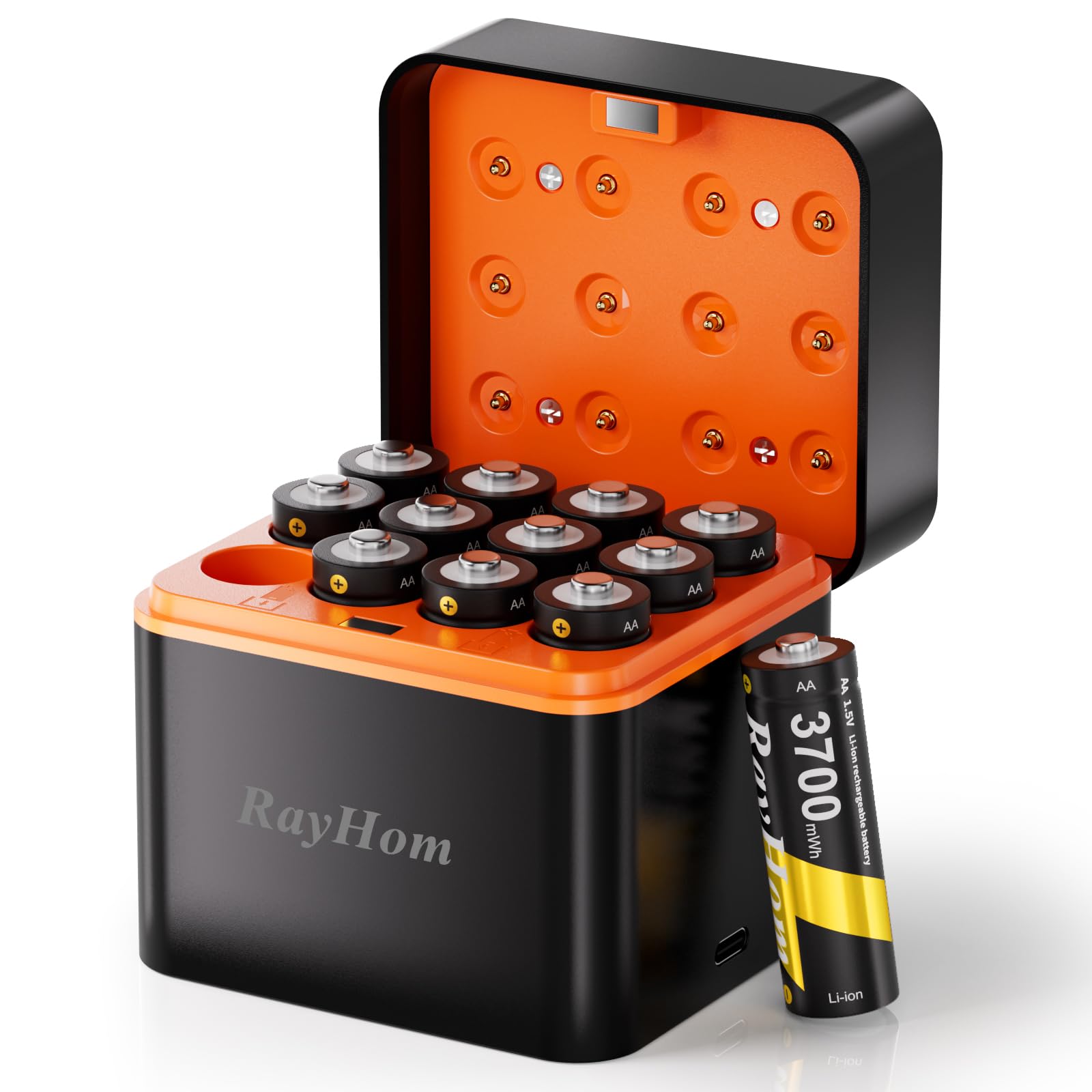
This kit delivers 3700mWh per cell with a true 1.5V constant output, which is the exact voltage trail camera microcontrollers expect for accurate battery reporting. Users report zero low-battery warnings during weeks of daily motion triggers, a common pain point with Ni-MH cells that sag to 1.2V under load. The 12-slot independent charger handles mixed charging of 1 to 12 batteries simultaneously, with a 2-hour full charge via USB-C input.
The lithium cells handle extreme cold down to -20°F, meaning January setup at sunrise won’t result in a dead camera by dusk. Each cell is rated for up to 1600 recharge cycles before hitting 80% capacity — enough for several years of field deployment if you cycle two sets. The smart LED indicator flashes red for damaged or incompatible cells and green for overheating, reducing the risk of charging a faulty cell overnight in a cabin.
Reviewers note the charger’s compact design fits well in a gear bag, and the independent slots mean you can charge a single battery without needing a full set. One user reported a single defective cell but received a replacement 4-pack within a week — indicating responsive support for what is otherwise a highly reliable system for camera deployments.
Why it’s great
- True 1.5V constant eliminates false low-battery warnings on trail cameras
- Full set recharges in approximately 2 hours via USB-C
- 1600-cycle lifespan dramatically reduces long-term battery waste
Good to know
- One cell may arrive dead — test all 12 upon receipt
- Charger slot count is 12, not portable for single-cell field swaps
2. Hixon Rechargeable Lithium AA 3500mWh 8AA+Charger

The Hixon cells output a constant 1.5V at up to 3A continuous discharge, which is critical for trail cameras that fire high-current IR LED arrays alongside the image sensor. Several reviewers confirm these batteries outlasted EBL lithium cells in side-by-side Blink camera tests, with no low-battery warnings even after months of deployment. The 3500mWh capacity provides a solid runtime for cameras capturing both stills and short video clips.
The charger finishes a full set of 8 in roughly 2 hours via USB input, and the bundle includes two battery cases for organized storage at the field base. One user noted nearly 1.5x the runtime of eneloop Ni-MH cells in a robotic platform due to the steady voltage curve — a trait that translates directly to trail cameras where voltage sag can trigger premature shutdown at 1.1V.
A minor limitation is the charger size only accommodates 4 batteries at a time (the set includes 8, so you will run two cycles). Additionally, one reviewer reported incompatibility with solar-recharged outdoor lights, but for direct trail camera use, the reliability is strong. The cells also feature CE, RoHS, and PSE certification for international travel.
Why it’s great
- 3A max discharge current powers high-drain IR flash arrays without voltage drop
- Holds steady voltage until nearly depleted, avoiding false shutdown
- Rapid 2-hour charge cycle keeps gear ready for field swaps
Good to know
- Charger only holds 4 cells, requiring 2 cycles to charge all 8
- Voltage regulator can interfere with AM radios — not an issue for cameras
3. EBL Lithium AA 12 Pack Non-Rechargeable

For deployments in extremely remote areas where recharging is impossible, these primary lithium cells offer a 25-year shelf life. The 3700mAh capacity delivers up to 7x the runtime of alkaline cells, and the leak-proof construction guarantees zero corrosive leakage even if a camera fails and cells remain installed for months. The SUPER III technology extends usage time specifically for high-drain devices like trail cameras and video doorbells.
The temperature range is extraordinary — -68°F to 140°F — which covers every conceivable outdoor environment from Alaskan winter to Arizona summer. The cells weigh 35% less than alkaline equivalents, which helps when packing a dozen cells into a backpack for a long hike to a remote camera site. Multiple user reviews confirm they last as long as name-brand lithium options in Blink camera systems at a more accessible price per pack.
The included hard plastic case is rugged enough for reuse as storage for your field kit, protecting cells from moisture and impact during transport. The trade-off is that these are single-use cells, so annual replacement costs are higher than rechargeable solutions over multiple seasons. For one-and-done setups where access is limited to once per year, the 25-year shelf stability removes the guesswork of cell freshness.
Why it’s great
- 25-year shelf life — ideal for emergency backup or annual deployment
- Rated down to -68°F, ensuring full power in extreme cold
- 100% leak-proof guarantee protects expensive camera internals
Good to know
- Not rechargeable — must be replaced after depletion
- Extreme cold shortens effective runtime despite wide spec range
4. EBL Rechargeable AA Lithium 8 Pack with Charger

This EBL kit offers the lowest entry point for a complete rechargeable lithium system with charger. The 3000mWh cells output a steady 1.5V constant voltage, preventing the false low-battery alerts that plague trail cameras using 1.2V Ni-MH cells. Users report the 8-pack is sufficient for most mid-size cameras that take 4 to 8 cells, and the included charger handles 1–8 AA or AAA cells of both lithium and Ni-MH chemistry.
The 1.5V constant output is specifically beneficial for smart home cameras, but trail camera users note these cells last about 4x longer than alkaline and hold charge well during cold snaps down to -40°F. The charger features smart chip protection against overcharging, overheating, and short circuits, which is important for unsupervised charging between field trips. One reviewer reported 3 defective cells out of the 8-pack — suggesting batch variation — though most users rate the longevity positively.
The charger uses micro-USB (not USB-C) which feels slightly dated, but the 3-in-1 compatibility with lithium and Ni-MH cells makes it useful for household battery management beyond just trail cameras. At 1600 cycles per cell, the long-run cost per trigger is extremely low compared to primary disposables, making this a strong pick for budget-conscious hunters with accessible camera sites.
Why it’s great
- Complete rechargeable system at a budget-friendly entry point
- Constant 1.5V output prevents false low-battery camera shutdowns
- Works down to -40°F for winter scouting sessions
Good to know
- Charger uses micro-USB rather than modern USB-C
- Some units may have defective cells — test all upon arrival
5. RayHom 12-Pack Rechargeable AA with Charger (3400mWh)
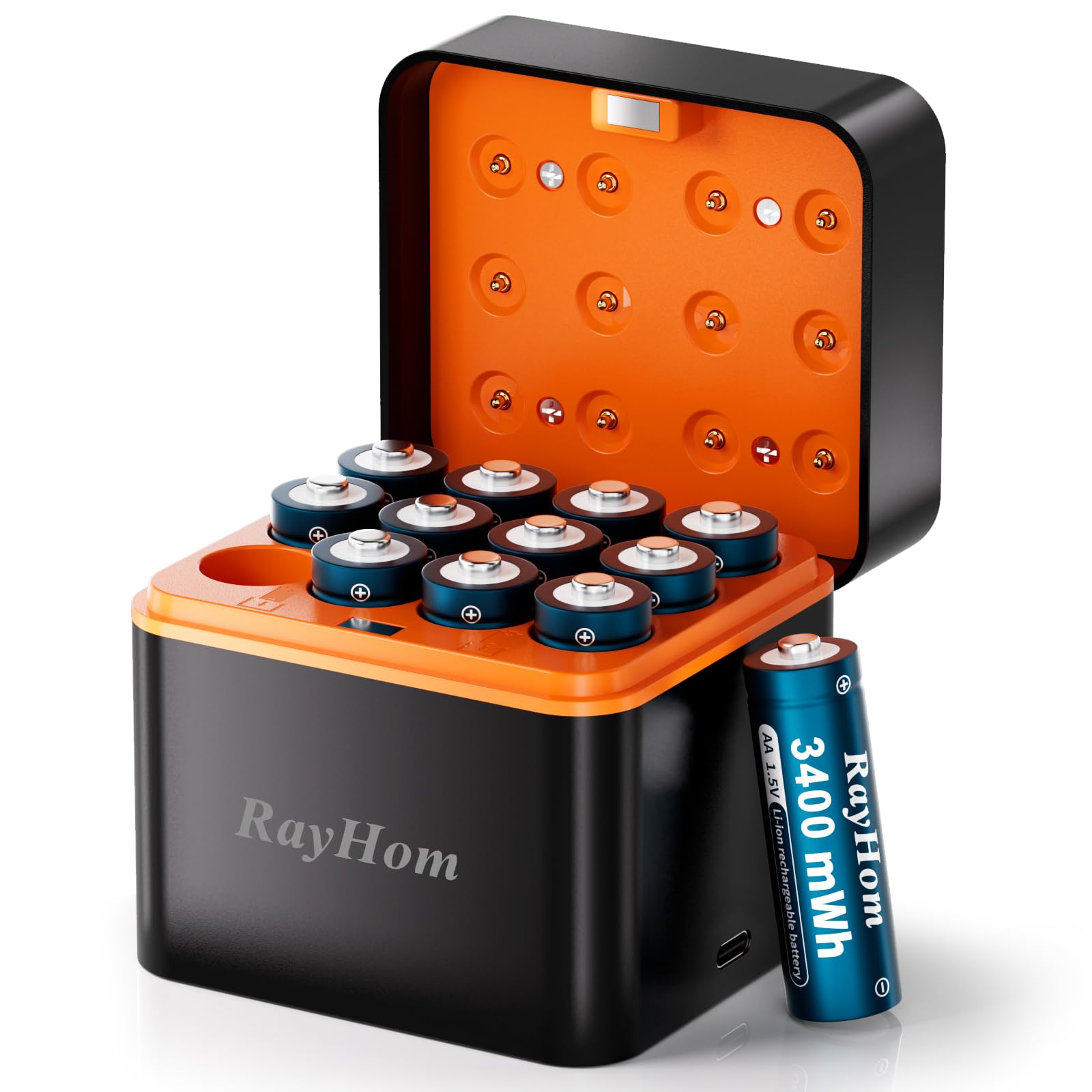
The 12-slot charger in this RayHom kit is a standout for someone managing multiple camera deployments — every slot operates independently so you can charge 1, 6, or all 12 cells without needing a full tray. The cells offer 3400mWh capacity with smart △V cutoff technology that prevents overcharging, and the charger features a magnetic-sealed storage lid that protects cells from dust and moisture when not in the field.
USB-C input on the charger is a modern convenience that lets you power it from a portable battery bank, car adapter, or wall block — a huge advantage when charging in a truck cab between camera runs. The LED indicators show red for charging and green for full, making it easy to check at a glance which cells are ready for deployment.
Some users noted a shorter-than-expected charge retention of about 2–3 weeks before a noticeable drop in capacity, which means frequent rotation between sets is advisable. However, the convenience of a 12-bay charger with USB-C and magnetic storage makes it one of the most complete kits for serious trail camera enthusiasts who need to cycle multiple sets per weekend.
Why it’s great
- 12 independent charging slots handle mixed cell counts efficiently
- Magnetic storage lid keeps cells dust-free between deployments
- USB-C input for versatile charging from any power source
Good to know
- Charge retention drops after 2–3 weeks of idle storage
- Capacity (3400mWh) is slightly lower than the 3700mWh RayHom variant
6. Energizer Ultimate Lithium AA 24 Pack

Energizer Ultimate Lithium holds the reputation as the world’s longest-lasting AA battery, and for trail camera users, the chemistry delivers exactly what matters: reliable 1.5V output down to -40°F and a 25-year shelf life. The 24-pack provides enough cells for 3 to 6 camera deployments (depending on cell count per camera) with zero concern about leakage damaging expensive camera boards over a full season.
Users report that these batteries last several months in Blink outdoor cameras with daily motion triggers, outlasting alkaline by a wide margin in freezing conditions. The leak-proof construction is backed by Energizer’s engineering, which is critical for cameras left unattended for weeks — a leaked alkaline cell can destroy the battery contacts and ruin the camera’s electronics.
The premium price per pack is the main barrier — these are significantly more expensive than rechargeable lithium per cycle. But for a single-season deployment where you cannot return to swap cells, the reliability and longevity justify the upfront cost. The lightweight cell construction also reduces shipping weight if you’re ordering for a remote outpost delivery.
Why it’s great
- Industry-leading 25-year shelf life for worry-free storage
- Leak-proof construction protects camera contacts from corrosive damage
- Reliable performance at -40°F for deep-winter trail use
Good to know
- High per-pack cost compared to rechargeable lithium alternatives
- Single-use — no option to recharge, must replace entire set
7. Energizer MAX Alkaline AA 48 Pack
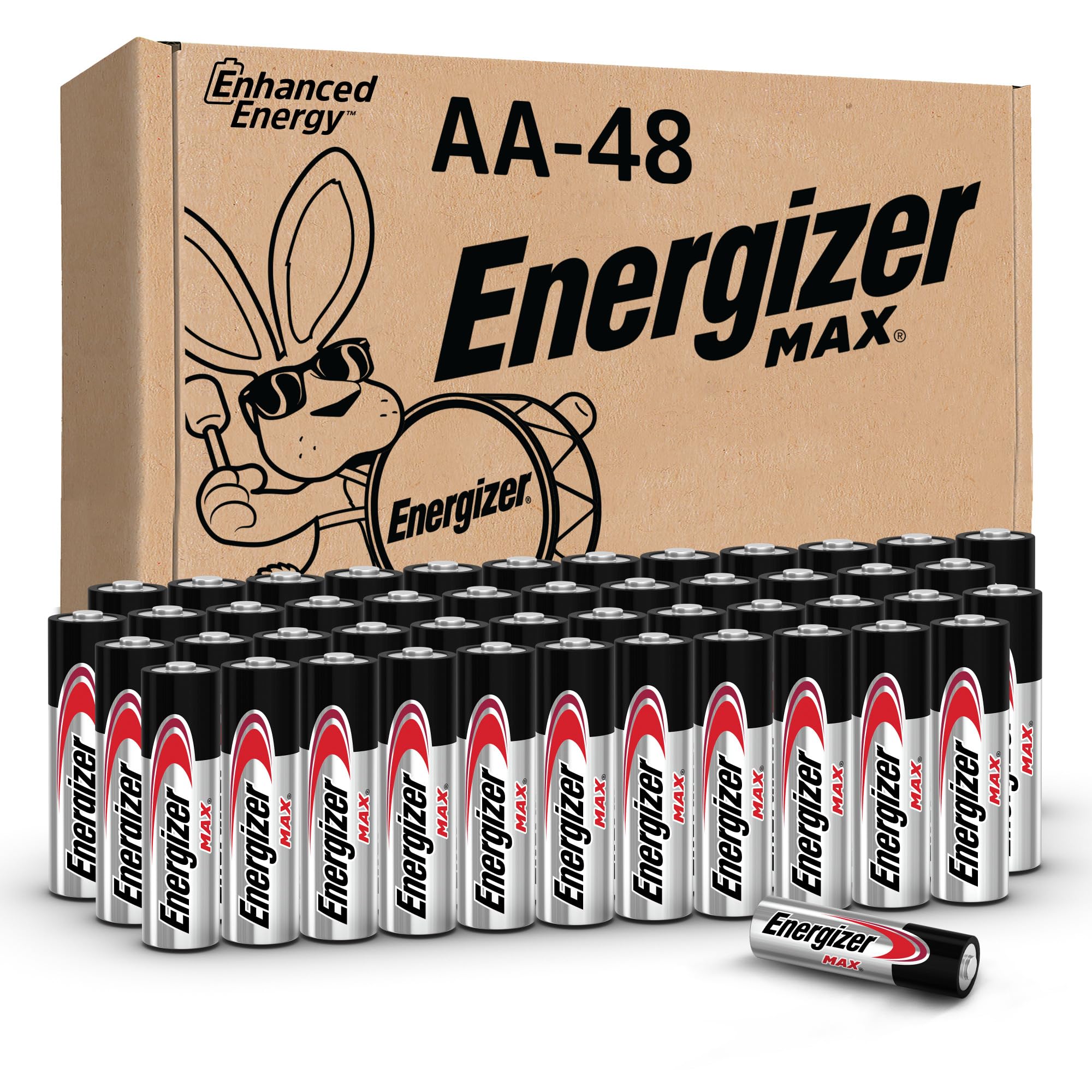
The Energizer MAX alkaline 48-pack is the most affordable per-cell option, but it is generally not recommended as a primary battery for trail cameras deployed outdoors year-round. Alkaline cells lose voltage rapidly below freezing, and many trail camera users report shutdowns after just a few cold nights. However, for indoor test runs, summer-only camera setups, or as backup cells for non-critical devices, this pack delivers reliable 1.5V output with a 12-year shelf life for storage.
The leak-resistant design protects devices for up to two years after full use, which reduces the risk of damage if a cell is left in a device and forgotten. The 48-count provides a massive inventory for household use across remotes, clocks, and toys, making it a practical bulk buy for general battery needs even if it is not the top choice for trail cameras.
User reviews confirm this is a trusted household brand with consistent performance across low-drain devices. For trail camera specific use, it is best reserved as a summer-only or backup option when you know temperatures will stay above freezing. For serious hunters relying on winter scouting data, this pack is better used for flashlights and GPS units in camp rather than the cameras themselves.
Why it’s great
- Lowest per-cell cost for high-volume household backup
- 12-year shelf life allows long-term storage without degradation
- Reliable leak resistance protects device contacts for 2 years after use
Good to know
- Performs poorly below 32°F — not suitable for winter trail cameras
- Alkaline chemistry causes false low-battery warnings in high-drain cameras
FAQ
Can I use Ni-MH rechargeable batteries in my trail camera?
Do lithium AA batteries last longer in cold weather than alkaline?
Final Thoughts: The Verdict
For most users, the aa batteries for trail cameras winner is the RayHom Rechargeable Lithium 12-Pack with Charger because it offers the highest capacity (3700mWh) in a true 1.5V constant rechargeable format with a fast USB-C charger and 1600-cycle lifespan — drastically reducing per-trigger cost over time. If you want maximum shelf stability for remote one-season deployments where recharging is impossible, grab the EBL Lithium 12 Pack Non-Rechargeable with its 25-year shelf life and extreme cold rating. And for the best bang-per-buck rechargeable system that still handles winter conditions, nothing beats the EBL Rechargeable 8-Pack with Charger.