
Our readers keep the lights on and the weekend projects moving. As an Amazon Associate, I earn from qualifying purchases.
Standing in the garden center staring at pallets of bagged soil is the moment most raised bed plans stall. The wrong mix leaves you with compacted clay that suffocates roots or a fluffy blend that dries out before lunch. The right bag of soil delivers loose, nutrient-rich structure that lets vegetables and flowers thrive through an entire season with minimal amendments.
I’m Rikta — the co-founder and writer behind FitlyFast. I’ve spent years analyzing soil composition reports, customer feedback on nutrient longevity, and the real-world drainage behavior of commercial bagged mixes so you don’t have to gamble on a bad batch.
This guide breaks down the top performers by ingredient quality, organic certification, and structural consistency to help you find the absolute best bagged soil for raised garden beds for your specific growing conditions.
How To Choose The Best Bagged Soil For Raised Garden Beds
Raised beds demand a soil that balances moisture retention with fast drainage, holds nutrients without compacting, and supports root systems vertically. Generic topsoil or cheap potting mix will settle within weeks, creating a dense layer that chokes roots. Understanding the four critical factors below helps you avoid that failure.
Organic Matter & Compost Content
The backbone of any good raised bed mix is high-quality compost or worm castings. Rich, decomposed organic matter feeds beneficial microbes and provides slow-release nutrients. Look for blends that list compost, peat moss, or coconut coir as the primary ingredient rather than fillers like sand or processed bark.
Aeration & Drainage Structure
Raised beds drain faster than in-ground gardens, so the soil needs perlite, pumice, or coarse sand to maintain air pockets. Without adequate aeration, roots suffocate and water pools at the bottom. A mix with visible perlite chunks and a light, crumbly texture indicates good structural integrity.
Nutrient Profile & Microbial Additives
Initial NPK numbers matter less than the presence of mycorrhizae, beneficial bacteria, and slow-release organic fertilizers (alfalfa meal, kelp meal, feather meal). These components sustain plant growth for weeks without synthetic inputs. Blends with worm castings or lobster/crab shell meal provide both nutrients and natural pest deterrence.
Organic Certification & Ingredient Transparency
OMRI listing ensures no synthetic chemicals or GMO materials. For edible gardens, certification matters because bagged soil sits directly against roots that absorb whatever is in the mix. Brands that disclose their full ingredient list rather than vague terms like “natural compost” are more trustworthy.
Quick Comparison
On smaller screens, swipe sideways to see the full table.
| Model | Category | Best For | Key Spec | Amazon |
|---|---|---|---|---|
| Espoma Organic Raised Bed Mix | Raised Bed Mix | Direct fill for new raised beds | 1.5 cu ft, Myco-Tone mycorrhizae | Amazon |
| Coast of Maine Bar Harbor Blend | Potting Soil | Container & raised bed vegetables | 16 qt, lobster & kelp meal | Amazon |
| Espoma Veg & Flower Garden Soil | In-Ground Mix | Amending native soil in raised beds | 1 cu ft, earthworm castings | Amazon |
| Coast of Maine Tomato & Veg Soil | Planting Soil | Heirloom tomatoes & moisture-sensitive crops | 20 qt, composted manure | Amazon |
| Michigan Peat All Purpose Potting Soil | Potting Soil | Large raised beds needing high volume | 50 lb, perlite & slow-release fertilizer | Amazon |
| Black Kow Composted Cow Manure | Soil Amendment | Improving poor native soil or sandy beds | 8 qt, beneficial bacteria | Amazon |
| Back to the Roots Worm Castings | Fertilizer | Top-dressing & seed-starting boost | 5 lb, odorless vermicompost | Amazon |
In‑Depth Reviews
1. Espoma Organic Raised Bed Mix

Espoma’s Raised Bed Mix is formulated specifically for the unique drainage and root environment of elevated gardens. The blend uses earthworm castings, alfalfa meal, kelp meal, and feather meal as organic nutrient sources, and the proprietary Myco-Tone mycorrhizae helps roots absorb water and minerals more efficiently. Customers consistently report that seedlings sprout faster and transplants establish without shock compared to general-purpose potting soils.
The texture is light and crumbly straight out of the bag, with no manure odor — a major plus for urban gardeners working close to living spaces. In subtropical climates, reviewers noted the mix retains moisture without becoming soggy, even during rainy stretches. The 1.5 cubic foot bag volume covers roughly two standard 4×4 raised bed fills when mixed with existing soil, making it a practical volume for serious gardeners.
Some users mention the cost per bag is higher than bulk alternatives, but the nutrient density reduces the need for additional fertilizers through the first 6-8 weeks. The mix arrived well-sealed with no mold or dry pockets, and the compost was evenly blended throughout.
Why it’s great
- Formulated specifically for raised beds with optimized drainage
- Myco-Tone mycorrhizae boosts root nutrient uptake
- No manure odor and clean, uniform texture
Good to know
- Higher price per bag than generic potting mixes
- Bag volume may require multiple units for large beds
2. Coast of Maine Bar Harbor Blend Potting Soil
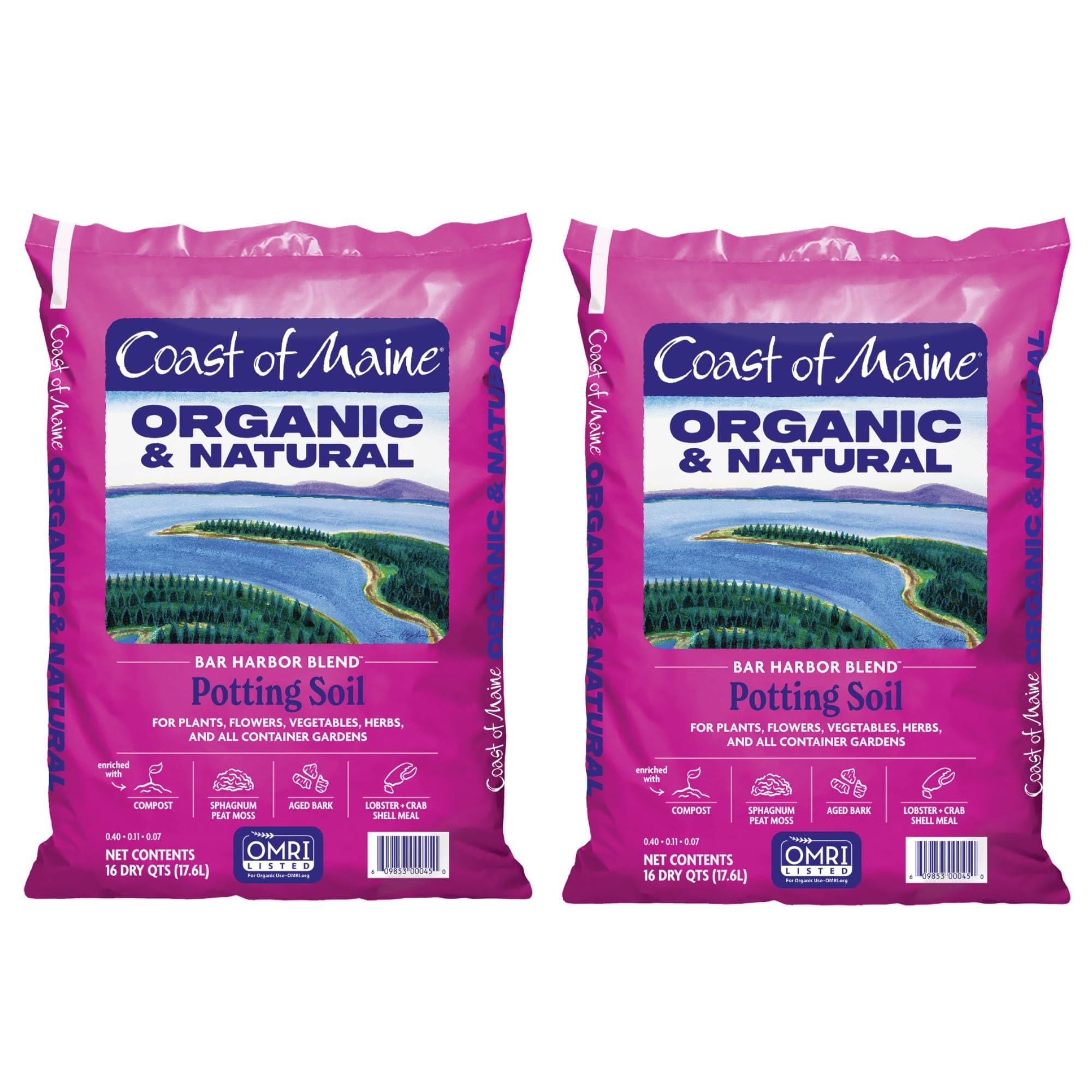
Coast of Maine’s Bar Harbor Blend stands out for its unique marine-based ingredient profile — lobster and crab shell meal provide natural chitin that deters soil-borne pests while delivering slow-release nitrogen and calcium. The mix combines sphagnum peat moss, compost, perlite, and kelp meal to create a dark, nutrient-dense base that encourages aggressive root development.
Users switching from national brands report their tomatoes and peppers show visibly darker leaves and stronger stems within two weeks. The soil has a noticeably darker color compared to peat-heavy mixes, indicating a higher compost-to-peat ratio that holds moisture longer. In container and raised bed tests, the blend maintained consistent hydration without needing daily watering, even during 85-degree stretches.
A few reviewers noted the need to add extra perlite for plants that demand extremely sharp drainage, like succulents or lavender. The 16-quart bag size is practical for topping off existing beds or filling medium containers, but larger raised beds will need multiple bags. The organic certification and complete ingredient transparency make it a trusted choice for edible gardens.
Why it’s great
- Lobster and crab shell meal provide natural pest deterrence
- High compost-to-peat ratio improves moisture retention
- Dark, rich texture with no weed seeds or funky smell
Good to know
- May need additional perlite for very sensitive root systems
- Smaller bag size requires multiple units for large raised beds
3. Espoma Organic Vegetable & Flower Garden Soil

Espoma’s Vegetable & Flower Garden Soil is designed as an in-ground amendment but performs exceptionally well in raised beds when mixed 1:1 with existing soil or a lighter base. The formula includes earthworm castings for microbial activity and Myco-Tone mycorrhizae for root colonization. Customers report that plants grown in this mix outperform those in leading organic competitors, with denser foliage and earlier flowering.
The texture is richer and heavier than pure raised bed mixes, which makes it ideal for raised beds that sit on clay or compacted native soil — it helps break up the dense layer underneath while providing nutrients above. Multiple reviewers noted the bags arrived bug-free and properly sealed, with no signs of fungal growth or excessive dryness. The 1 cubic foot volume is manageable for small beds or targeted amendment applications.
A small number of indoor gardeners experienced fungus gnats, though these cases likely originated from the surrounding environment rather than the soil itself. For outdoor raised beds in full sun, the risk is negligible. The organic certification and absence of synthetic chemicals make this a safe choice for edible crops.
Why it’s great
- Rich in worm castings and mycorrhizae for strong root growth
- Effective at breaking up heavy clay beneath raised beds
- Trusted organic ingredients with no synthetic additives
Good to know
- Heavier texture works best when mixed with a lighter base
- Indoor use may require monitoring for gnats
4. Coast of Maine Tomato & Vegetable Planting Soil

Specifically crafted for tomatoes and vegetables, this Coast of Maine blend uses composted manure, sphagnum peat moss, and perlite to create a soil that holds moisture without waterlogging — a critical balance for heirloom tomatoes prone to root rot. The lightweight, fluffy texture makes it easy to work into raised beds or containers, and customers report excellent results with tomato seedlings that transition smoothly indoors to outdoors.
The mix contains aromatic wood material that naturally deters some insects, adding a layer of pest management without chemicals. Reviewers growing tomatoes, peppers, and cucumbers noted the soil supported vigorous growth through the entire season with only occasional side-dressing. The OMRI organic listing ensures the composted manure is fully aged and will not burn tender roots.
Some users experienced an initial gnat emergence when using the soil indoors for seed starting, which was controlled with neem oil treatment. The price per bag runs higher than generic vegetable soils, so large-scale growers may find it cost-prohibitive for filling entire beds — it is best used as a top layer or for high-value crops.
Why it’s great
- Balanced moisture retention and drainage for tomatoes
- Aromatic wood materials help deter insects naturally
- OMRI certified with fully aged composted manure
Good to know
- Can trigger gnats if used indoors for seed starting
- Premium pricing makes it less ideal for bulk bed fills
5. Michigan Peat General All Purpose Potting Soil

Michigan Peat’s 50-pound bag delivers the volume needed for large raised bed installations at a cost-efficient per-pound ratio. The blend combines dark reed sedge peat, perlite, and sand with starter and slow-release fertilizers to give plants an immediate nutrient boost and sustained feeding for several weeks. It arrives pre-mixed and ready to use, eliminating the time spent blending separate components.
Customers praise the consistency for container gardening and raised beds, noting that the soil holds its structure well without settling into a dense cake after watering. The perlite content is visible throughout the mix, providing adequate aeration for most vegetables and flowers. The 50-pound weight is manageable for a single trip from the car to the garden.
Multiple reviewers mentioned fungus gnats emerging from the bag after opening, which is common with peat-based mixes stored in moist environments. Letting the soil dry out slightly before planting or treating with beneficial nematodes can mitigate this. This is a solid mid-range option for gardeners prioritizing bulk coverage over premium organic ingredients.
Why it’s great
- High volume 50-pound bag covers large raised beds economically
- Includes both starter and slow-release fertilizers
- Consistent texture with visible perlite for aeration
Good to know
- Peat-based mix can harbor fungus gnats in moist storage
- Not OMRI certified; contains synthetic starter fertilizer
6. Black Kow Composted Cow Manure

Black Kow is not a standalone raised bed soil — it is a concentrated organic manure amendment designed to improve soil structure and microbial life. When mixed 1:1 with native soil or a base potting mix, it dramatically increases moisture-holding capacity in sandy beds and breaks up heavy clay by adding organic matter that promotes aggregation. The beneficial bacteria in Black Kow convert nitrogen into plant-available forms slowly, preventing root burn.
Gardeners using it on roses, lawn bare spots, and vegetable beds report visibly greener foliage and stronger stem growth within two weeks. The granules are dry enough to mix evenly without clumping, and the composted process eliminates the strong ammonia odor associated with fresh manure. The 8-quart bag is compact, making it easy to store and apply as needed.
This product is best used as a supplement rather than a primary bed filler. For a 4×8 raised bed, you would need 6-8 bags to achieve the recommended 1:1 ratio, which can add up in cost. The lack of perlite or aeration components means you must pair it with a base that already provides drainage.
Why it’s great
- Concentrated organic manure boosts microbial activity fast
- Aids water retention in sandy soil and aeration in clay
- Composted to eliminate odor and prevent root burn
Good to know
- Designed as an amendment, not a standalone raised bed filler
- Requires multiple bags for significant bed coverage
7. Back to the Roots Organic Worm Castings

Back to the Roots Worm Castings is a pure vermicompost concentrate that works as a top-dressing or soil amendment rather than a bulk fill. The 5-pound bag packs the nutrient density of several bags of generic compost, delivering beneficial microbes that protect seedlings from pathogens while providing slow-release nitrogen. Customers consistently describe the texture as rich and clean, with no odor or burning risk.
Home gardeners mixing it into chunky soil blends (coco chips, perlite, charcoal) report healthier leaves and stronger root systems on vegetables, milkweed, and houseplants. The resealable bag keeps the castings fresh between applications, and the USA-sourced vermicompost eliminates concerns about imported soil quality. Several reviewers noted the castings hold significant moisture, which is a benefit when mixed into sandy or fast-draining raised bed soil.
This product is best used as a nutrient booster rather than a primary bed filler. A single 5-pound bag covers roughly 10-15 square feet when applied as a 1/2-inch top-dressing. For filling an entire raised bed from scratch, you would need multiple bags and a separate base mix. The high concentration means a little goes a long way.
Why it’s great
- Pure USA vermicompost with no fillers or odors
- Beneficial microbes protect seedlings and enhance soil biology
- Slow-release nutrients reduce the need for synthetic fertilizers
Good to know
- Concentrated formula is not meant as a standalone raised bed fill
- Holds significant moisture — monitor watering in dense mixes
FAQ
Can I use regular potting mix in a raised garden bed?
How often should I replace bagged soil in a raised bed?
Do I need to add fertilizer to bagged raised bed soil?
Final Thoughts: The Verdict
For most users, the best bagged soil for raised garden beds winner is the Espoma Organic Raised Bed Mix because it is purpose-formulated for elevated beds with mycorrhizae and organic nutrients that support a full season of growth. If you want marine-based ingredients that deter pests while feeding the soil, grab the Coast of Maine Bar Harbor Blend. And for budget-conscious gardeners filling large beds, the Espoma Vegetable & Flower Garden Soil mixed with a lighter base delivers excellent results without breaking your budget.