
Our readers keep the lights on and the weekend projects moving. As an Amazon Associate, I earn from qualifying purchases.
Wildfire season or a nearby structure fire turns your indoor air into a health hazard. The microscopic particles in smoke—PM2.5 and smaller—bypass your nose’s defenses and lodge deep in your lungs, triggering asthma, coughing, and long-term respiratory strain. A standard dust-catching fan won’t cut it. You need a machine built for the specific chemistry and particulate load of fire smoke.
I’m Rikta — the co-founder and writer behind FitlyFast. I’ve spent hundreds of hours dissecting CADR specs, carbon bed depth, and HEPA micron ratings to find which machines actually strip smoke from a room rather than just recirculating the smell.
This guide filters out the hype to deliver a clear, spec-driven comparison of the market’s most capable machines. You’re about to read the definitive resource for the best air purifier for fire smoke, ranked by real-world smoke CADR and validated by verified buyer experiences.
How To Choose The Best Air Purifier For Fire Smoke
Smoke from fires is not like household dust. The particles are smaller, the odor compounds are tenacious, and the volume of particulate matter can spike hundreds of times above healthy levels in hours. Choosing the wrong machine means breathing toxic air while the fan spins uselessly. Focus on these specific criteria.
Smoke CADR: The Number That Tells the Truth
Clean Air Delivery Rate for smoke is the only measurement that simulates real wildfire conditions. An AHAM-Verifide smoke CADR of 200 or higher means the unit can clear a 300-square-foot room of smoke particles roughly five times per hour. Ignore the “covers up to 1,000 sq ft” marketing—that’s on the lowest fan setting with zero smoke load. Double-check the fine-print room size where the CADR was tested.
Carbon Filter Mass, Not Just Presence
Smoke odor comes from volatile organic compounds (VOCs) and aldehydes that a HEPA filter cannot touch. A thin sheet of activated carbon glued to a mesh does nothing for wildfire smell. Look for a separate, thick carbon bed or a pelletized carbon filter weighing at least a pound. The heavier the carbon, the longer it adsorbs smoke gases before saturating.
Sealed Filtration and Gasket Integrity
Cheap purifiers let unfiltered air slip around the HEPA through gaps in the frame. For smoke, where every micron matters, a unit with a gasket-sealed filter housing prevents bypass. Premium brands use foam or rubber gaskets that press the filter tight against the chassis—ask the manufacturer or check teardown videos before buying.
Quick Comparison
On smaller screens, swipe sideways to see the full table.
| Model | Category | Best For | Key Spec | Amazon |
|---|---|---|---|---|
| Levoit Core 300-P | Mid-Range | Bedroom smoke & allergens | 143 CFM Smoke CADR | Amazon |
| Clorox Turbo | Mid-Range | Quick odor & smoke removal | 360° 3-stage filtration | Amazon |
| Winix 5520 | Mid-Range | Large room auto-purification | AHAM Verifide 392 sq ft | Amazon |
| PuroAir 240 | Mid-Range | Allergy & smoke 24/7 use | 1,000 sq ft coverage | Amazon |
| Generic H13 HEPA | Mid-Range | Extra-large room smoke | 235 CFM CADR | Amazon |
| Coway Airmega AP-1512HH | Premium | Wildfire response & sensor speed | 233 CFM Smoke CADR | Amazon |
| Blueair Signature SP3i | Premium | Smart medium-room smoke control | 7-stage HEPASilent filtration | Amazon |
| Nuwave OxyPure | Premium | Large open-concept smoke zones | 5-layer + washable filters | Amazon |
| AirDoctor AD3500 | Premium | Hospital-grade smoke recovery | UltraHEPA 0.003 microns | Amazon |
In‑Depth Reviews
1. Coway Airmega AP-1512HH
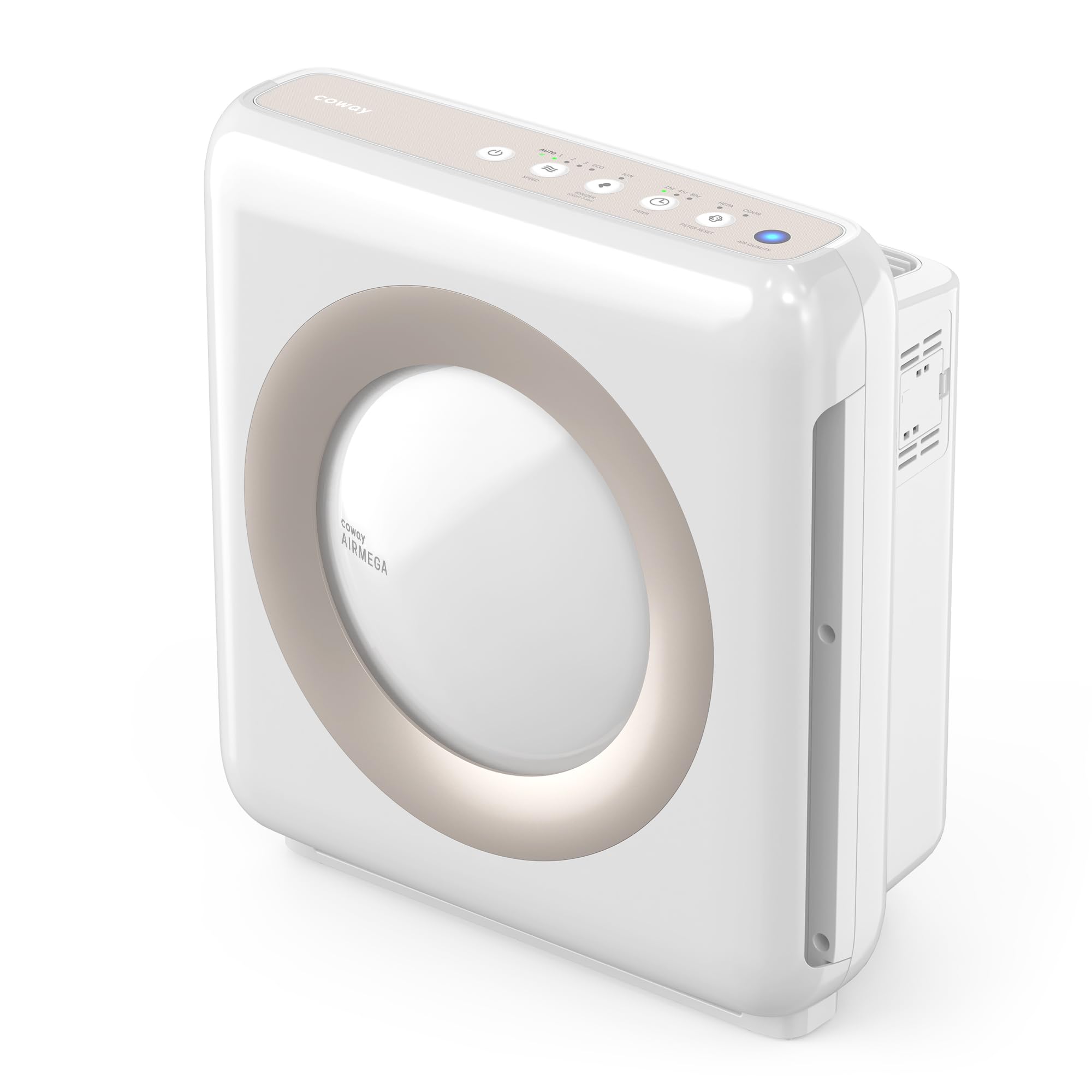
The Coway Airmega AP-1512HH earned its Wirecutter “Best Air Purifier” badge for good reason: its smoke CADR of 233 cubic feet per minute is among the highest in its size class. In verified user tests, this unit dropped heavy wildfire smoke readings from red to blue in minutes, with the pollution sensor catching even the faintest cooking fumes. The 4-stage filtration system—pre-filter, deodorization carbon, True HEPA, and Vital Ion—handles both the particulate and the odor fraction of smoke better than most units at twice the footprint.
Noise levels span a reasonable 24.4 dB on low to 53.8 dB on high, with owners noting the high setting is loud but genuinely effective for rapid smoke clearing. The auto mode intelligently ramps speed based on real-time air quality without requiring a phone app. Eco mode shuts the fan off after 30 minutes of clean air, saving energy during long stretches between smoke events—a smart feature for wildfire season when you need the unit running 24/7.
The Achilles’ heel is the auto mode’s sensitivity to humidity: several owners report the sensor falsely triggers high speed after a hot shower, running loudly for an hour. There is no dedicated sleep mode to lock the fan speed. However, the timer (1/4/8 hours) and separate filter replacement indicators for both the pre-filter and HEPA mitigate the headache of maintenance tracking. For a 361 sq ft room, this is the benchmark smoke fighter.
Why it’s great
- Proven 233 CFM smoke CADR with AHAM Verifide certification
- Real-time air quality display with color-coded feedback
- Washable pre-filter and year-long HEPA life reduce recurring costs
Good to know
- Auto mode can spike due to bathroom humidity, not just smoke
- No app-based remote control or scheduling
2. Blueair Signature SP3i
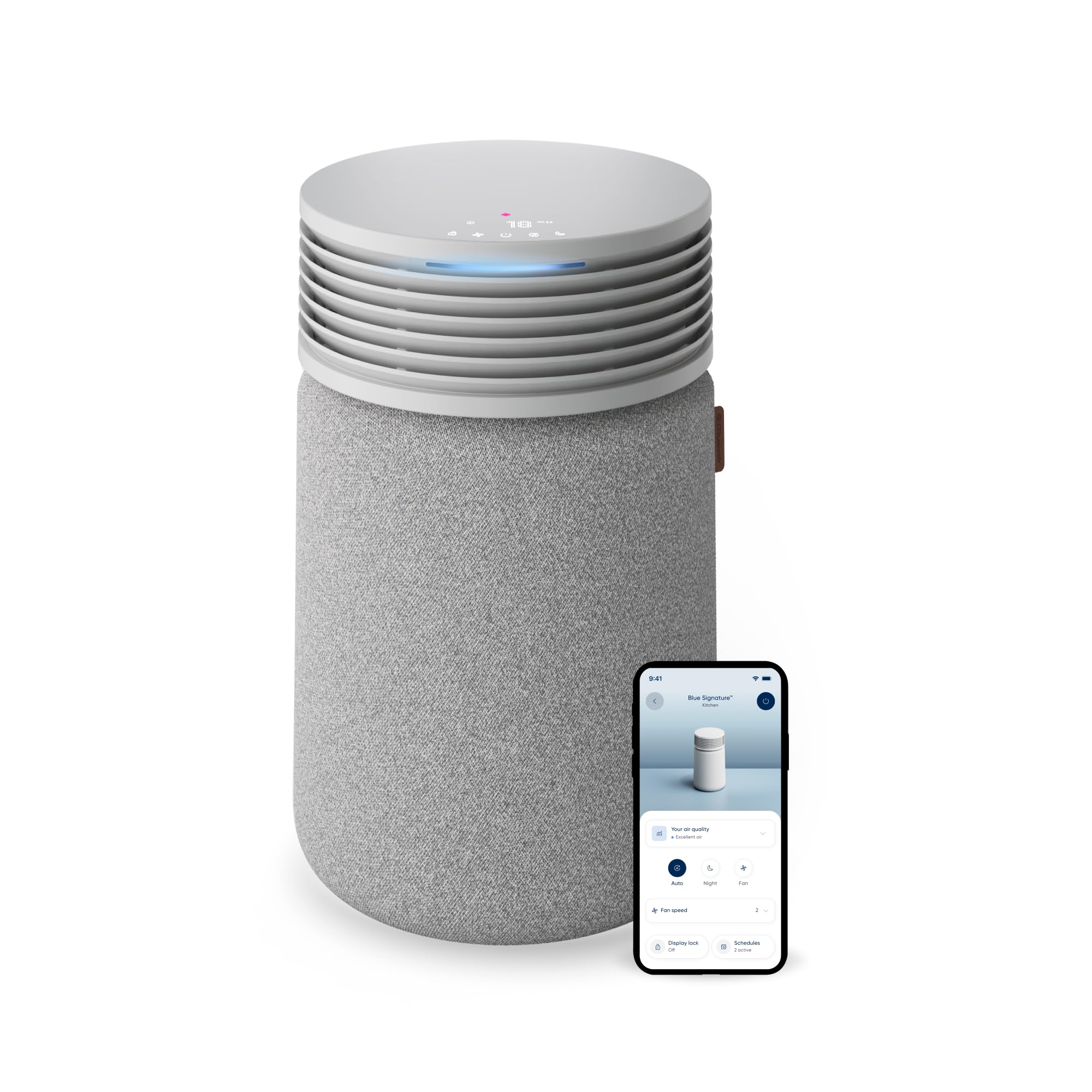
The Blueair Signature SP3i solves the noise-versus-power dilemma that plagues many smoke purifiers. Its HEPASilent technology—a hybrid of electrostatic and mechanical filtration—delivers 99.97% capture of 0.1-micron particles while operating as low as 19 dB, which is barely audible in a quiet bedroom. For smoke scenarios, the OdorFence Technology uses an activated carbon layer to break down the VOCs that cause the characteristic burnt smell, not just mask them.
WiFi and app control allow you to monitor real-time air quality and adjust settings remotely—useful when you arrive home to a smoke-filled house and want the unit running before you walk in. The auto mode uses a built-in particle sensor to adjust fan speeds based on changing conditions, and the 5-color air quality indicator (blue to red) sits right in the air outlet for instant feedback. Owners consistently mention noticeably fresher air during cooking events and reduced dust accumulation on surfaces.
The unit covers rooms up to 498 sq ft in 12.5 minutes, making it a solid choice for medium-sized living rooms or master bedrooms. The trade-off is filter cost: replacement packs are premium-priced, and the app can occasionally lag during status updates. The interchangeable pre-filter fabric panels come in various colors, letting you match decor, but they add no functional smoke-benefit—treat them as aesthetic bonuses rather than performance features.
Why it’s great
- Near-silent 19 dB operation on low, perfect for bedrooms during fire season
- OdorFence carbon layer specifically targets smoke VOCs
- WiFi scheduling lets you pre-clear rooms before arriving home
Good to know
- Replacement filter packs cost a premium compared to mid-range rivals
- App responsiveness can be inconsistent across firmware versions
3. Nuwave OxyPure

The Nuwave OxyPure is built for the worst-case smoke scenario: an open-concept home, a high-ceilinged living area, or a multi-room floor plan where smoke spreads freely. Its 5-layer filtration system starts with a stainless-steel pre-filter that captures large ash and soot particles before they clog the finer media. The dedicated ozone emission removal filter is a rarity—it strips out the ozone that some ionizer-based purifiers inadvertently produce, which is especially important when running the unit continuously during a multi-day smoke event.
What makes the OxyPure stand out for long-term smoke management is the washable and reusable filter design. The stainless-steel pre-filter and Bio-Guard filter never need replacement; you rinse them under water. The package includes 4 extra HEPA/carbon combo filters, effectively eliminating filter replacement costs for the first 5 years. For homes in high-fire-risk zones where the purifier runs for weeks at a stretch, this dramatically lowers the total cost of ownership.
The unit covers up to 2,934 sq ft in one hour, with a CADR of 664.6 m³/h. The auto mode uses both particle and odor sensors to adjust fan speed, and owners report the machine detecting cooking smoke from 10 feet away and ramping up automatically. On turbo mode, it is loud—think window AC on high—but the rapid smoke clearance justifies the noise for short bursts. Night mode drops to 31.4 dB, quiet enough for sleep. The unit is heavy at 26 pounds, so plan for a permanent floor placement.
Why it’s great
- 5-year zero-filter-replacement cost with included bonus filters
- Stainless steel pre-filter captures large ash without clogging
- Covers nearly 3,000 sq ft, enough for open-concept homes
Good to know
- Turbo mode is very loud; best used for rapid cleaning bursts
- Large footprint and weight require dedicated floor space
4. AirDoctor AD3500
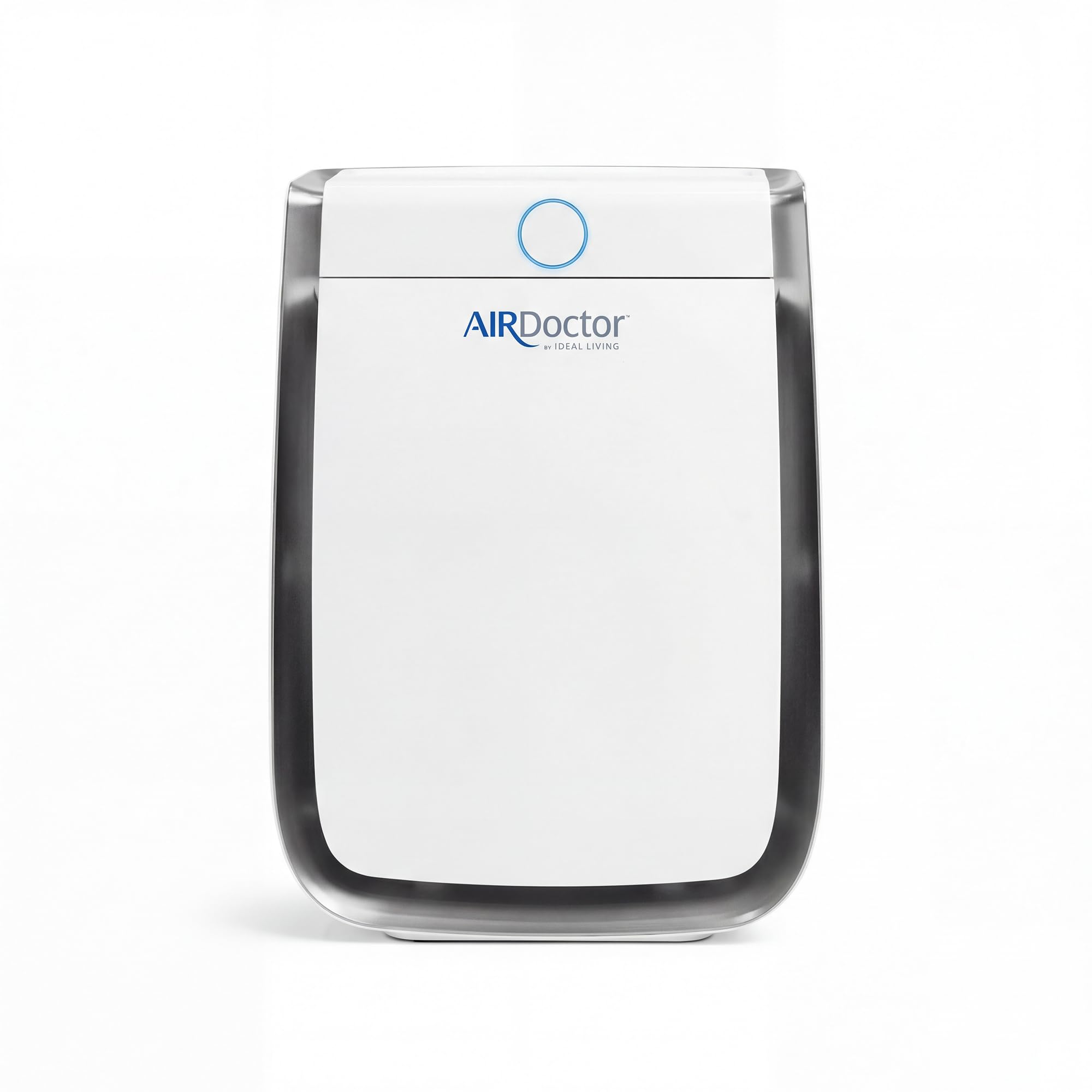
The AirDoctor AD3500 takes the smoke-filtration conversation to a different level. Its UltraHEPA media captures 99.99% of airborne particles at 0.003 microns—100 times smaller than the standard HEPA threshold. In smoke terms, this matters because wildfire smoke carries ultra-fine nanoparticles that penetrate standard HEPA filters. The premium activated carbon filter, infused with potassium permanganate, chemically breaks down the aldehydes and VOCs that give smoke its acrid profile rather than just adsorbing them temporarily.
For rooms up to 630 sq ft, the AD3500 delivers a full air change every 15 minutes, and it scales to 2,520 sq ft in one hour for lighter smoke loads. The Auto Mode with the Halo display gives real-time PM2.5 readings and color-coded air quality feedback, adjusting fan speed automatically. Owners in Southern California wildfire zones report waking up without the typical stuffy nose and dry throat that dominated their mornings before using this unit. The low-speed operation is genuinely quiet—comparable to a desktop fan on its lowest setting.
The downsides are the upfront investment and the ongoing filter costs. The carbon filter needs replacement every 6 months, and the UltraHEPA every 12 months. Genuine AirDoctor filters are not cheap, though they are FSA and HSA eligible. Some owners note that the unit’s high setting creates noticeable airflow noise, though it is not jarring. For anyone with asthma, COPD, or a medical condition aggravated by smoke, the AD3500 is the closest thing to a clinical-grade air scrubber available for home use.
Why it’s great
- UltraHEPA captures nanoparticles down to 0.003 microns, far exceeding HEPA standard
- Potassium permanganate carbon filter chemically neutralizes smoke odors
- FSA/HSA eligible for pre-tax purchase
Good to know
- Premium purchase price and recurring filter costs add up over time
- Carbon filter requires replacement every 6 months under heavy smoke use
5. Winix 5520
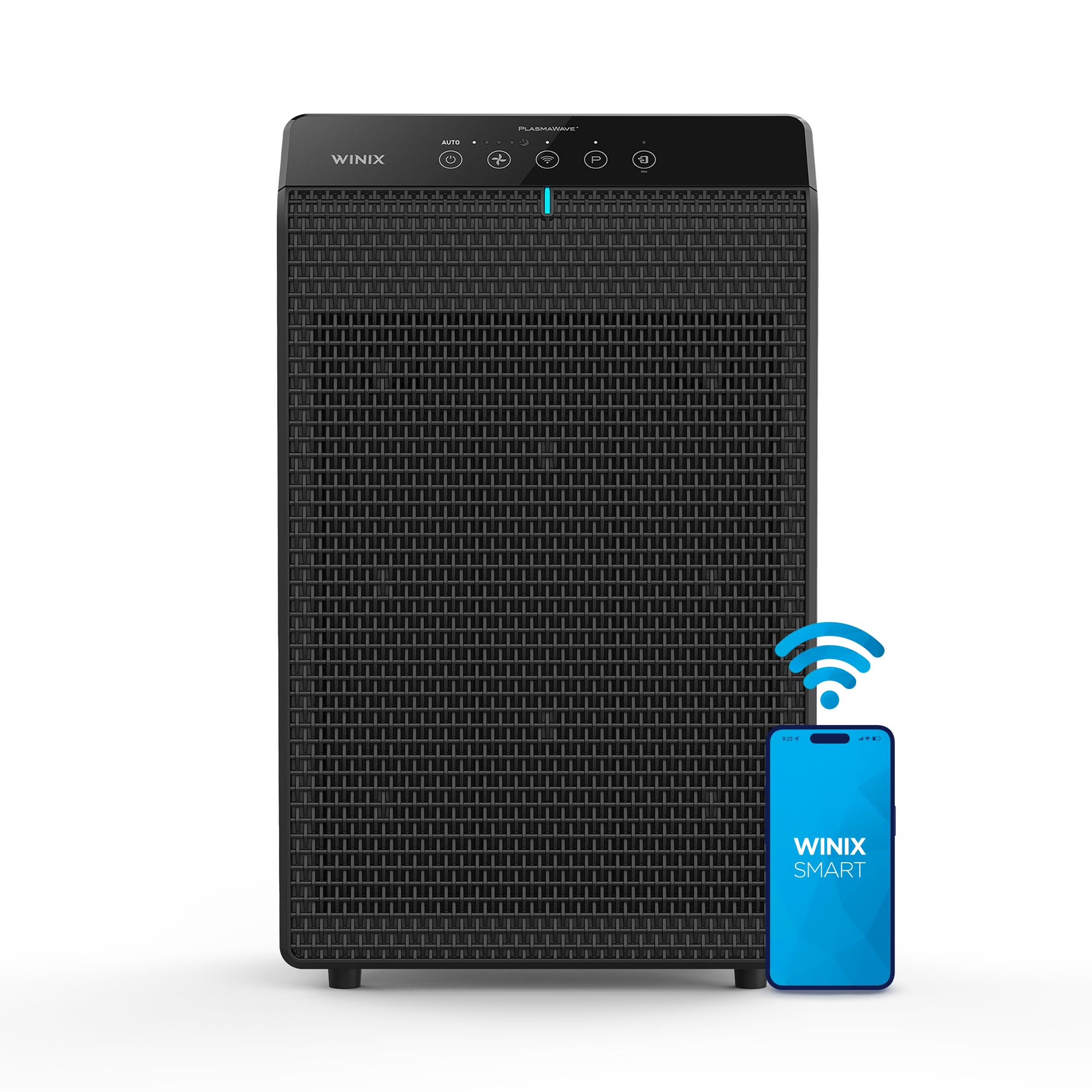
The Winix 5520 brings the brand’s proven 3-stage filtration system—washable fine mesh pre-filter, AOC carbon filter, and True HEPA—into a package certified for a 392 sq ft room. Its smoke CADR is competitive for the mid-range tier, and the auto mode uses a real-time air quality sensor to adjust fan speed without user intervention. The addition of Winix Smart App compatibility gives you remote control and monitoring, a feature usually reserved for pricier units.
The washable pre-filter captures large smoke-borne particles before they reach the HEPA, extending the life of the more expensive carbon and HEPA elements. The separate AOC carbon filter handles VOCs from smoke, cooking, and pets independently from the HEPA—meaning you can replace the carbon more frequently if you’re dealing with heavy smoke without tossing a pricey combo filter. The sleep mode automatically activates when the room darkens and returns to auto mode when lights come on, which is seamless for overnight use during fire season.
Noise levels register as low as 23.5 dB on the slowest speed, though owners report modes 2 through 4 produce noticeable fan noise. The unit does not remember the ionizer-off setting after a power loss, which can be annoying if you prefer to run the unit without PlasmaWave. The 1,882 sq ft one-hour coverage claim applies to a single air change per hour; for smoke, you want at least 4 air changes per hour, so realistically this unit fits a 450-500 sq ft space for heavy smoke duty.
Why it’s great
- Separate AOC carbon and HEPA filters allow independent replacement cycles
- Washable pre-filter cuts consumable costs during heavy smoke periods
- Smart app control for remote monitoring and scheduling
Good to know
- Does not retain PlasmaWave off setting after power interruption
- Fan noise on higher speeds is more noticeable than premium-tier rivals
6. Generic H13 True HEPA (SIESEAN AP-400)
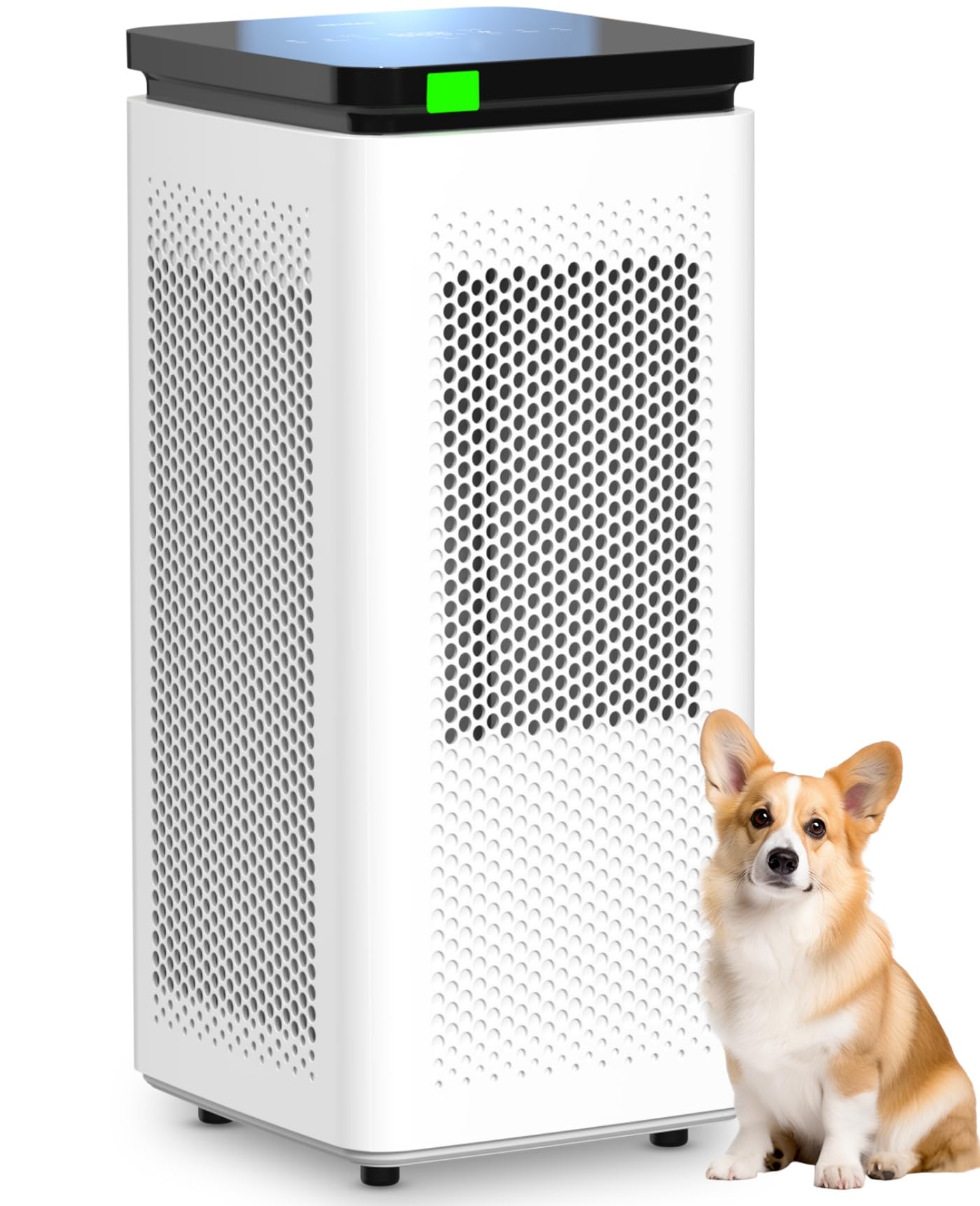
This unit punches above its price bracket with a 235 CFM CADR and dual-inlet airflow that pulls smoke from two sides simultaneously, effectively doubling the air turnover rate compared to single-inlet designs. The H13 True HEPA filter captures 99.97% of particles down to 0.1 microns—adequate for the bulk of wildfire smoke particles. The built-in PM2.5 digital display gives real-time feedback on particulate levels, and owners report the numbers drop visibly within minutes of turning the unit on in a smoky kitchen.
The sleep mode drops noise to 30 dB, and the dimmer function lets you turn off all panel lights for an uninterrupted night’s sleep—a small detail that matters when the unit runs 24/7 during fire events. The activated carbon filter handles VOCs and odors, though the carbon layer is thinner than dedicated odor-control machines. For a room up to 500 sq ft, this unit delivers four air changes per hour, which is the recommended minimum for smoke-heavy scenarios.
The filter replacement interval is 3–4 months under heavy use, which is shorter than premium units. Replacement filters are proprietary to SIESEAN (search B0FVFQQXDR), so you are locked into their supply chain. The child lock and timer functions are nice safety touches for homes with kids. Overall, this is a high-value option for a guest room or home office where you need serious smoke CADR without the premium price tag.
Why it’s great
- 235 CFM CADR with dual-inlet airflow for rapid smoke clearance
- Real-time PM2.5 display gives actionable air quality feedback
- 30 dB sleep mode with full light dimming for undisturbed rest
Good to know
- Carbon filter is thinner than dedicated odor-removal units
- Proprietary replacement filters required every 3-4 months
7. Levoit Core 300-P

The Levoit Core 300-P is the most compact unit on this list that still carries AHAM Verifide smoke CADR ratings. With a smoke CADR of 143 CFM, it is best suited for smaller bedrooms or home offices up to 222 sq ft where it can deliver 4.8 air changes per hour. The 56W high-torque motor pushes air through a 3-in-1 filter that combines a pre-filter, HEPA-grade media, and activated carbon. For wildfire smoke events in a single room, this unit is a space-efficient solution that does not dominate your floor space.
The QuietKEAP Technology drops noise to 24 dB in Sleep Mode—virtually silent for a light sleeper. Owners consistently praise the unit for its whisper-quiet operation and the ability to turn off all display lights for pitch-black bedrooms. The timer options (2/4/6/8 hours) let you run the unit through the night without wasting energy on empty rooms. The Core 300-P is also CARB compliant for California, meaning it meets strict ozone emission standards.
The biggest downside is filter cost relative to the unit price; genuine Levoit replacement filters are expensive for the size, and the carbon layer in the standard filter is thin. Levoit offers specialized options like the Smoke Remover filter and Toxin Absorber filter, which use denser carbon for odor control. At 7.9 pounds, the unit is easy to move between rooms, making it a flexible secondary unit for targeted smoke management.
Why it’s great
- AHAM Verifide smoke CADR in a compact, portable 7.9-pound chassis
- 24 dB Sleep Mode with full light shutoff for noise-sensitive sleepers
- Compatible with specialized Smoke Remover and Toxin Absorber filters
Good to know
- Replacement filter costs are high relative to the unit price
- Best suited for rooms under 222 sq ft for effective smoke cycling
8. Clorox Turbo
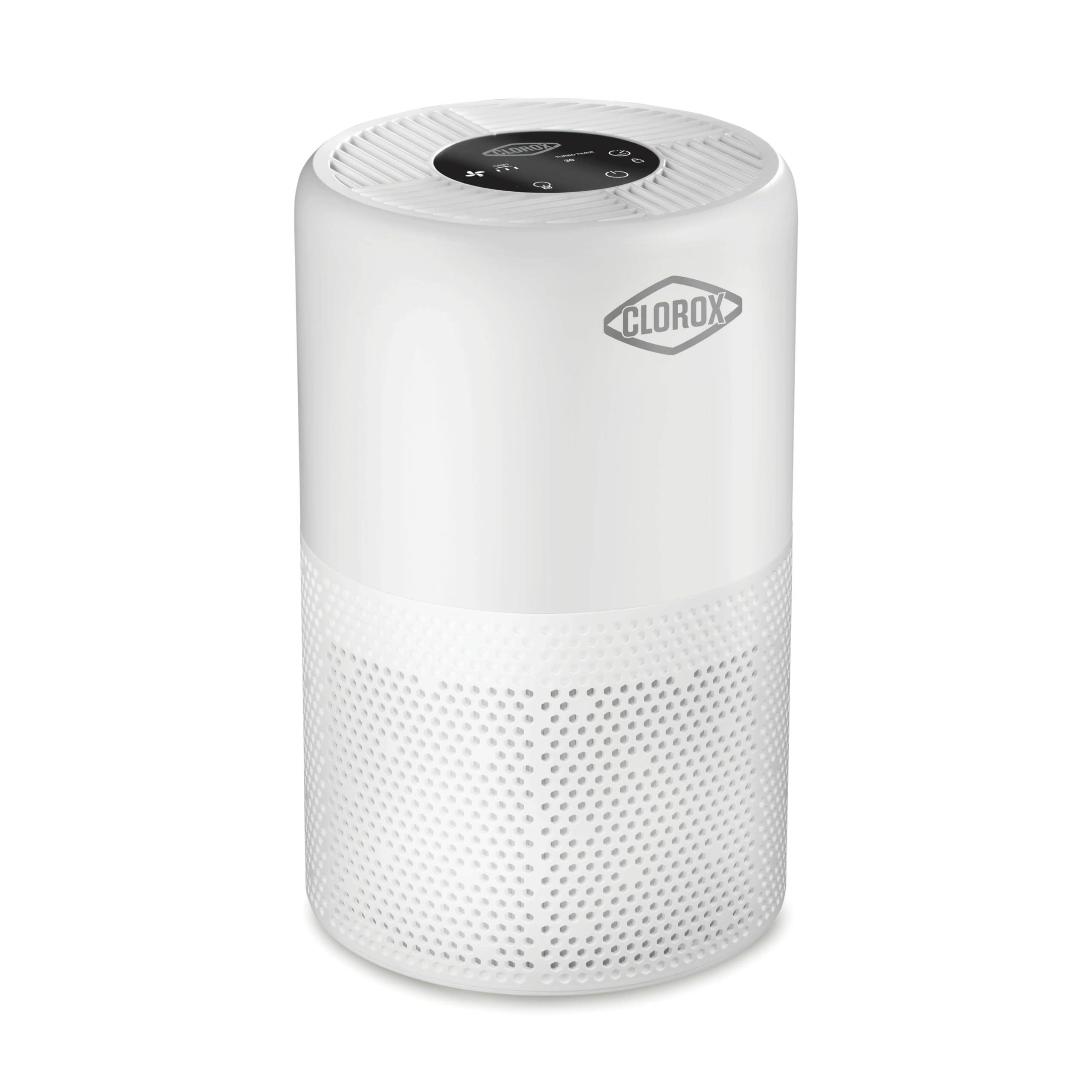
The Clorox Turbo uses a 360° air intake that pulls smoke particles from all directions, a design that helps the unit feel faster in practice than its medium-room footprint suggests. With 3-stage filtration—pre-filter, True HEPA, and activated carbon—it captures 99.97% of particles while the carbon layer reduces VOCs and odors. The Turbo Timer is the standout feature for smoke events: you can set a 10, 20, or 30-minute burst of maximum airflow to clear a room quickly after cooking or when smoke drifts in from outside.
Owners specifically mention this unit removing burnt food smells and cigarette smoke effectively, with noticeable improvements in allergy symptoms within days. The 4-speed fan (low to turbo) gives granular control, and the display brightness has three settings (on, dim, off) so the unit can sit in a bedroom without light pollution. The 5.2-pound weight makes it easy to relocate from kitchen to bedroom as smoke conditions shift.
The unit is designed for medium rooms up to 215 sq ft to achieve 5 air changes per hour. The 1,000 sq ft coverage figure assumes a single air change per hour, which is insufficient for heavy smoke loads. The carbon filter is integrated into the 3-stage cartridge rather than being replaceable separately, so you replace the whole assembly when the carbon saturates. For the price, it is a solid secondary unit for a kitchen or office where smoke events are intermittent rather than chronic.
Why it’s great
- 360° intake and Turbo Timer provide rapid burst smoke clearance
- Lightweight 5.2-pound design for easy room-to-room relocation
- Three-level display brightness control for low-light environments
Good to know
- 1,000 sq ft coverage valid only for a single air change per hour
- Integrated filter cartridge means replacing carbon and HEPA together
9. PuroAir 240
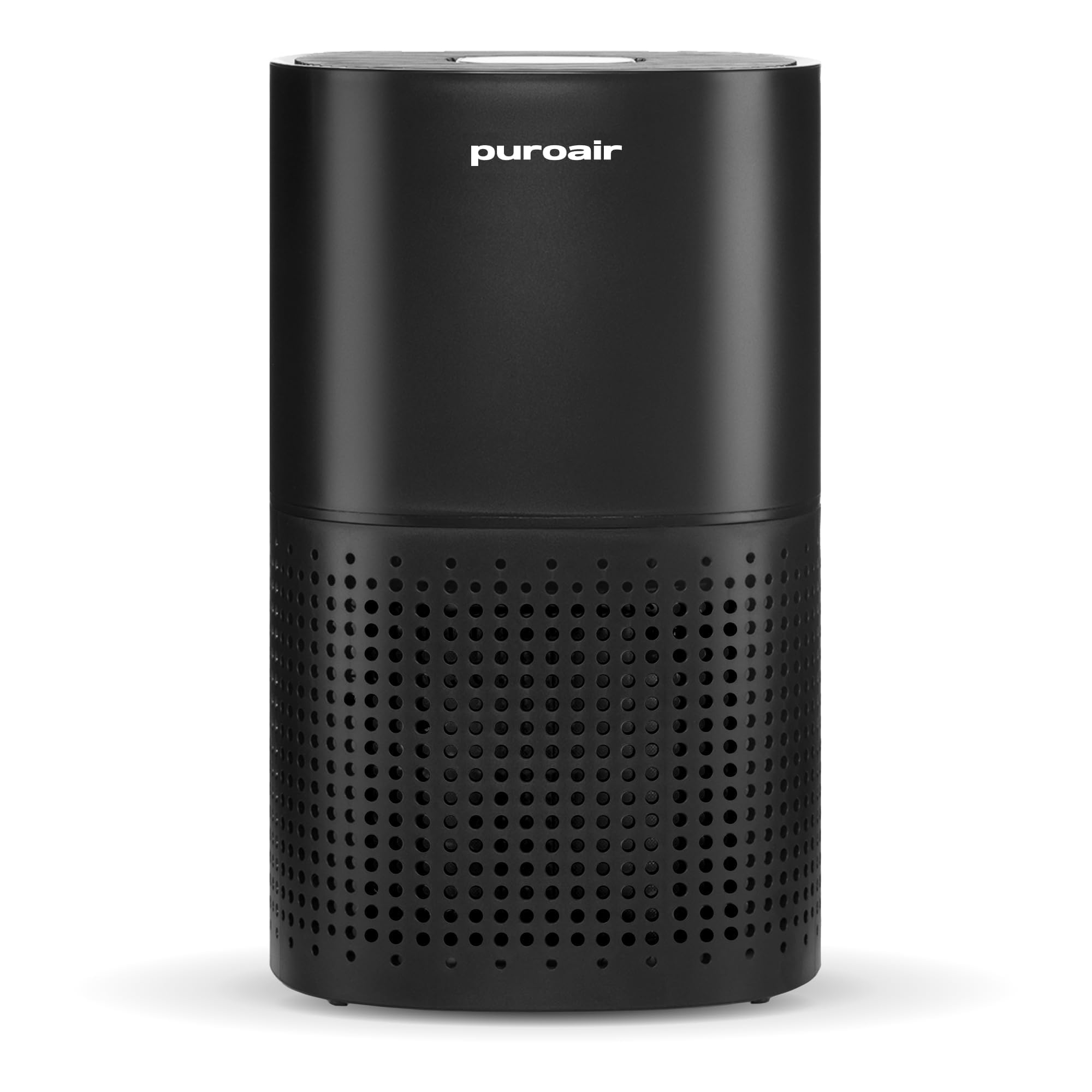
The PuroAir 240 brings a 3-layer filtration system (pre-filter, HEPA, activated carbon) with a smart particle sensor and auto mode to a price point that makes it accessible for multi-unit setups. Its CarbonTech layer is marketed as 500X stronger than standard carbon, which translates to better VOC adsorption per gram—important for smoke odor. The unit covers up to 1,000 sq ft at a single air change per hour, but for effective smoke clearance, you will want to use it in rooms of about 250 sq ft where it can cycle air 4 times per hour.
The auto mode uses the built-in particle sensor to monitor air quality and adjust fan speed. Owners report the sensor detecting dust from remodeling and smoke from cooking, switching the fan to high automatically and then dropping back to low once the air clears. The sleep mode is genuinely quiet, making it suitable for a bedroom. The 2-year risk-free warranty adds peace of mind for a budget-friendly investment.
The 7.3-pound unit has a tall, slim profile (28 inches) that fits in corners without taking up much floor space. Filter replacement costs are a common complaint; some owners report aftermarket filters degrading performance within 3 months. Stick with genuine PuroAir filters for the full lifespan. For households needing multiple units to cover different rooms during fire season, the PuroAir 240 offers a reasonable balance of entry-level price and smoke-capable performance.
Why it’s great
- Smart particle sensor with auto mode adjusts speed in real time
- Tall slim profile fits into corners without dominating room space
- 2-year risk-free warranty supports long-term ownership confidence
Good to know
- CarbonTech layer saturates faster under heavy, continuous smoke load
- Aftermarket replacement filters may degrade performance quickly
FAQ
Can a standard HEPA purifier handle wildfire smoke or do I need a special filter?
How many air changes per hour do I need for a room with heavy fire smoke?
Does a higher price always mean better smoke removal?
Should I run my air purifier 24/7 during fire season?
Can I use an air purifier to remove smoke smell after a fire has been extinguished?
Final Thoughts: The Verdict
For most users, the best air purifier for fire smoke winner is the Coway Airmega AP-1512HH because it delivers a proven 233 CFM smoke CADR, real-time air quality feedback, and a washable pre-filter at a price that outperforms units costing hundreds more. If you need whisper-quiet operation for a bedroom during fire season, grab the Blueair Signature SP3i with its 19 dB floor and OdorFence carbon layer. And for Nuwave OxyPure open-concept homes or heavy wildfire zones, the Nuwave OxyPure’s 5-year zero-filter-cost design and massive 2,934 sq ft coverage make it the ultimate long-term investment.