
Our readers keep the lights on and the weekend projects moving. As an Amazon Associate, I earn from qualifying purchases.
When the grid goes down, the silence in your kitchen isn’t peaceful—it’s the sound of a freezer full of food warming up and a house without heat or cooling. A backup generator for your house is the difference between waiting out a storm in comfort and scrambling for hotel rooms or extension cords. The right unit takes the panic out of power loss.
I’m Rikta — the co-founder and writer behind FitlyFast. I spend my days analyzing home backup power hardware, comparing inverter vs. conventional alternator designs, and mapping fuel consumption patterns across the 1,100 to 22,000-watt range so you don’t have to guess which generator gets through a multi-day outage without a costly mistake.
Whether you need to keep a well pump running or your entire 3,000-square-foot home lit and cooled, this guide breaks down the best backup generator for house use, covering dual-fuel flexibility, tri-fuel whole-house monsters, and clean-sine inverter tech that won’t fry your electronics.
How To Choose The Best Backup Generator For House
A home backup generator is a multi-year durable good—buying wrong means living with undersized power or expensive fuel switching mistakes during the next outage. Focus on three pillars: wattage math, fuel logistics, and power quality.
Calculate Your Starting vs. Running Wattage
A fridge might run at 700 watts but needs 2,000 watts to kick the compressor on. An AC unit with a hard-start kit still demands a surge that doubles its running draw. Add your largest motor starts together—that number is your surge target. Running wattage covers everything already on, so overshoot surge by 20% to avoid nuisance overload trips.
Fuel Type Determines Your Outage Endurance
Gasoline is widely available but degrades in storage and requires restocking during storms. Propane stores indefinitely in tanks but delivers roughly 10% fewer watts per hour. Natural gas offers unlimited runtime if the gas lines stay pressurized, but the unit is homebound—you can’t loan it to a neighbor. Tri-fuel units give you all three, but premium models like the Generac Guardian are natural gas/LP only and require professional installation with a permanent transfer switch.
Inverter vs. Conventional Alternator
Conventional generators produce power with harmonic distortion often exceeding 6% THD, which can damage variable-speed appliances and modern electronics. Inverter generators convert raw AC to DC then back to clean AC, keeping THD under 3%. If you plan to run a computer, mini-split, or smart home hub during an outage, an inverter unit is non-negotiable.
Quick Comparison
On smaller screens, swipe sideways to see the full table.
| Model | Category | Best For | Key Spec | Amazon |
|---|---|---|---|---|
| Westinghouse 11000W Dual Fuel Inverter | Inverter | Clean power for whole-home backup | 9000W running / 11,000W surge | Amazon |
| Champion 15kW Tri Fuel | Tri Fuel | Heavy-duty whole-house on NG | 12,000W running on gasoline | Amazon |
| Generac Guardian 22kW | Standby | Automatic whole-house protection | 22,000W with 200A transfer switch | Amazon |
| Champion 11000W Inverter | Inverter | Quiet remote-start backup | 11,000W surge / 9,000W running | Amazon |
| AIVOLT 11250W Dual Fuel | Inverter | Ultra-quiet 50A RV-ready backup | 11,250W surge / 9,000W running | Amazon |
| Westinghouse 18kW Tri Fuel | Tri Fuel | Large home with multiple AC zones | 18,000W surge / 14,500W running | Amazon |
| DuroMax XP13000HXT Tri Fuel | Tri Fuel | Value-oriented whole-home NG backup | 13,000W surge / 10,500W running | Amazon |
| WEN 6800W Dual Fuel Inverter | Inverter | Compact EV charging + RV backup | 6800W surge / 5100W running | Amazon |
| EcoFlow DELTA Pro 3600Wh | Power Station | Silent indoor/outdoor portable power | 3600W AC output, 3600Wh LFP | Amazon |
| EcoFlow DELTA Pro 3 + Dual Fuel | Hybrid | Extended silent backup with auto-charge | 4096Wh + 3200W dual fuel generator | Amazon |
| PowerSmart 7000W Inverter | Inverter | Entry-level clean power for essentials | 7000W surge / 6000W running | Amazon |
In‑Depth Reviews
1. Westinghouse 11000W Dual Fuel Inverter Generator

The Westinghouse 11000W hits the sweet spot for most homeowners: enough surge (11,000 peak / 9,000 running on gasoline) to cover a 3-ton AC with a soft start, a well pump, and a refrigerator simultaneously, all while staying under 3% THD so your TV and router don’t get fried. The 457cc cast-iron sleeve engine with remote start key fob lets you fire it up from the back porch without stepping into the rain.
On propane, you get 10,000 peak and 8,100 running watts, and the 9.8-gallon tank stretches to 17 hours at light loads when using the ECO mode. The digital display shows fuel level, power output, and remaining run time—a critical feature during a multi-day outage when fuel planning gets tricky. At 64 dBA from 23 feet, it’s quiet enough for suburban neighborhoods where loud generators cause friction with neighbors.
Assembly is minimal: install the wheel kit, add oil, connect the battery tender. The 50A outlet is transfer-switch-ready, and the CO sensor auto-shuts the unit if exhaust accumulates in a garage or enclosed porch. A few users noted the included oil is too thick for sub-freezing starts, so swap to 5W-30 synthetic if you live in a cold climate.
Why it’s great
- Remote start works reliably at 50 feet
- Inverter output <3% THD protects sensitive electronics
- Dual fuel gives you propane storage stability without sacrificing gasoline wattage
Good to know
- Recommended oil unsuitable below 23°F—plan a cold-weather oil change
- At 187 pounds with wheels, still requires some effort to maneuver on soft ground
2. Champion 15,000W Tri Fuel Home Backup Generator

The Champion 15,000-watt tri-fuel generator is built for homeowners who want a permanent natural gas backup solution without the cost of a fully installed standby unit. The 717cc Milwaukee Series V-Twin engine delivers 12,000 running watts on gasoline and enough torque to start a 3.5-ton AC compressor when paired with a soft-start kit. Both natural gas and propane hoses are included in the box—you just supply the fuel line or tank.
Users who ran this unit during Hurricane Beryl reported powering their entire house, including central AC, for over 90 hours on natural gas without a single hiccup. The Intelligauge tracks voltage, hertz, and runtime hours, which simplifies maintenance intervals. The electric start uses a toggle switch rather than a key fob, which some prefer for reliability but is less convenient than a remote. At 78 dBA, it’s loud—comparable to a gas lawn mower—so position it as far from bedrooms as the extension cord allows.
The CO Shield auto-shutdown system is sensitive. Several buyers experienced shutdowns after 1.5 to 2 hours even in outdoor operation, which can be frustrating if you’re running critical medical equipment. Champion’s 3-year warranty and lifetime technical support are responsive, but the sensitivity of the CO sensor is a common complaint worth noting before purchase.
Why it’s great
- Tri-fuel ready out of the box with no additional hose purchases needed
- V-Twin engine provides smooth power delivery and handles sustained heavy loads
- Costs a fraction of a dedicated standby unit with comparable wattage
Good to know
- CO sensor may trip prematurely in windy conditions
- Requires a 5-hour break-in with an oil change before full-load use
3. Generac Guardian 22kW Home Standby Generator
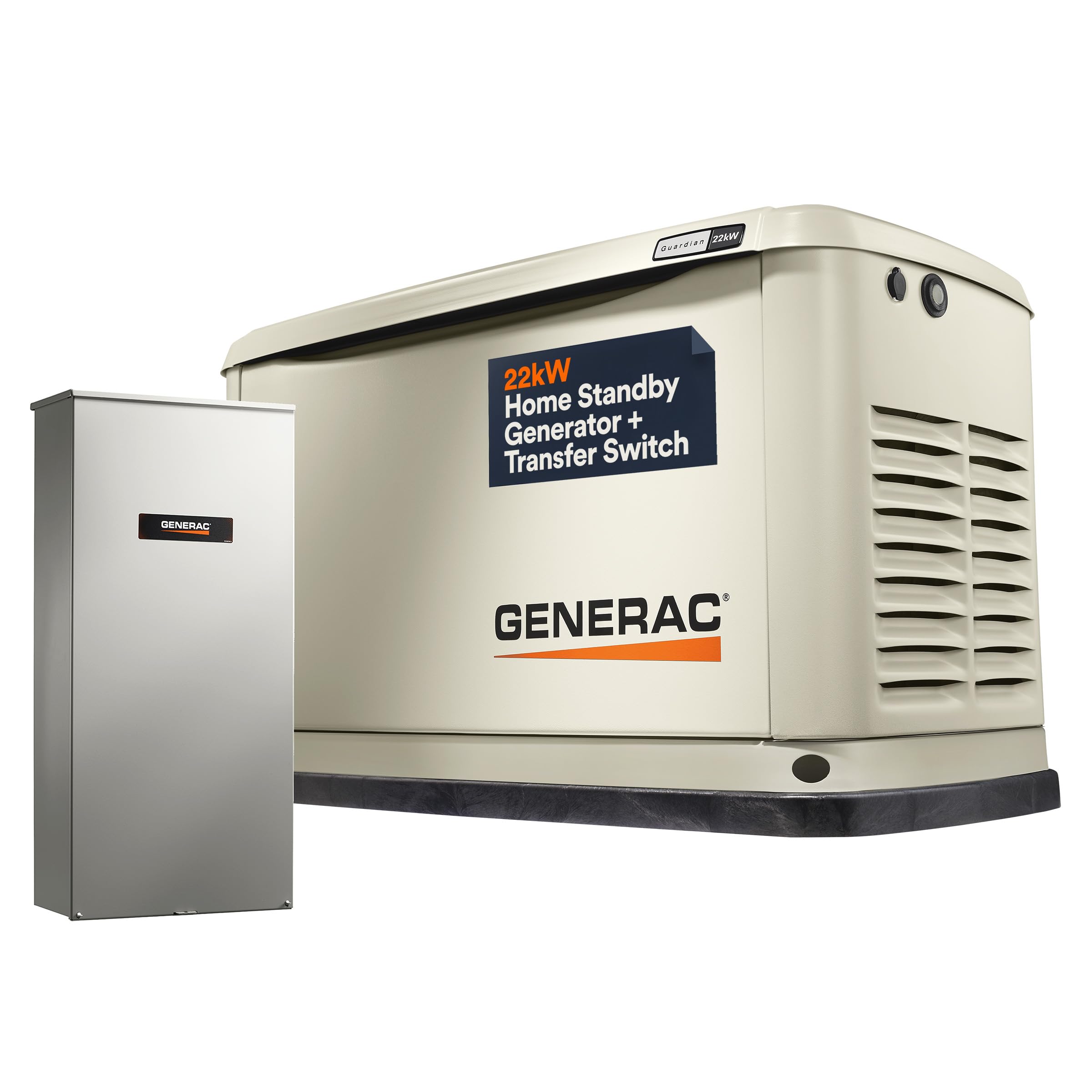
The Generac Guardian 22kW is the ultimate permanent solution for homeowners who refuse to think about generators during a storm. It sits outside on a concrete pad, wired directly into your home’s electrical panel through the included 200-amp automatic transfer switch, and powers on within seconds of a grid failure—no extension cords, no fuel mixing, no manual starting. The G-Force 999cc engine runs on natural gas or LP and produces 22,000 watts with less than 5% THD, safe for sensitive electronics.
Mobile Link Wi-Fi connectivity sends status updates and maintenance alerts to your phone, so you know the battery is charged and the unit ran its weekly self-test before the hurricane arrives. The aluminum NEMA 3R enclosure withstands rain, snow, and direct sun without rusting. This is the unit to spec if you have medical equipment, a home office, or just a low tolerance for power-related disruption. Installation by a licensed electrician is mandatory and typically costs between and , depending on your panel and gas line configuration.
While the retail price is high, buyers consistently report that purchasing through Amazon saves significant money compared to dealer quotes—in some cases over . The 5-year limited warranty adds long-term peace of mind. It is worth noting that the onboard computer requires a stable connection to exercise properly, and one user reported the control panel malfunctioning after a lightning surge, so adding a whole-home surge protector is a smart investment.
Why it’s great
- Automatic 10-second startup with no user intervention needed
- 200A transfer switch included, supporting whole-home coverage
- Wi-Fi monitoring lets you check status remotely during travel
Good to know
- Professional installation adds significant upfront cost
- Computer-controlled system may not suit remote off-grid needs
4. Champion Power Equipment 11,000W Inverter Generator

Champion’s 11,000-watt inverter generator combines the quiet variable-speed operation of an inverter with a wireless remote start that works up to 80 feet away. The 459cc engine with Cold Start Technology fires reliably in freezing weather, and the 200-pound unit rolls on a wheel kit that assembles in minutes. The 64 dBA noise rating means it won’t dominate your backyard during an evening outage.
Real-world tests show it handling a 3-ton AC compressor with a soft-start kit, a well pump, and standard lighting/refrigeration loads at just 45% capacity, leaving headroom for occasional high-draw appliances. The fuel gauge is notoriously hard to read in low light, and the CO sensor is very sensitive—some users disabled it by moving the generator farther from the house. Still, the THD below 3% makes it safe for mini-splits, computers, and smart home hubs.
The 3-year warranty with lifetime technical support is industry-leading for this price tier. A few units arrived with cosmetic damage from shipping, but Champion’s parts replacement process was praised by affected buyers. The absence of a 50A outlet means you’ll need an adapter for a full-house transfer switch, but the 30A locking outlet handles most critical loads.
Why it’s great
- Remote key fob start from 80 feet away
- Cold Start Technology eliminates carburetor frustration in winter
- Inverter design keeps THD under 3% for sensitive electronics
Good to know
- Fuel gauge hard to read without direct sunlight
- No 50A outlet; requires adapter for full-house panel connection
5. AIVOLT 11250W Dual Fuel Inverter Generator
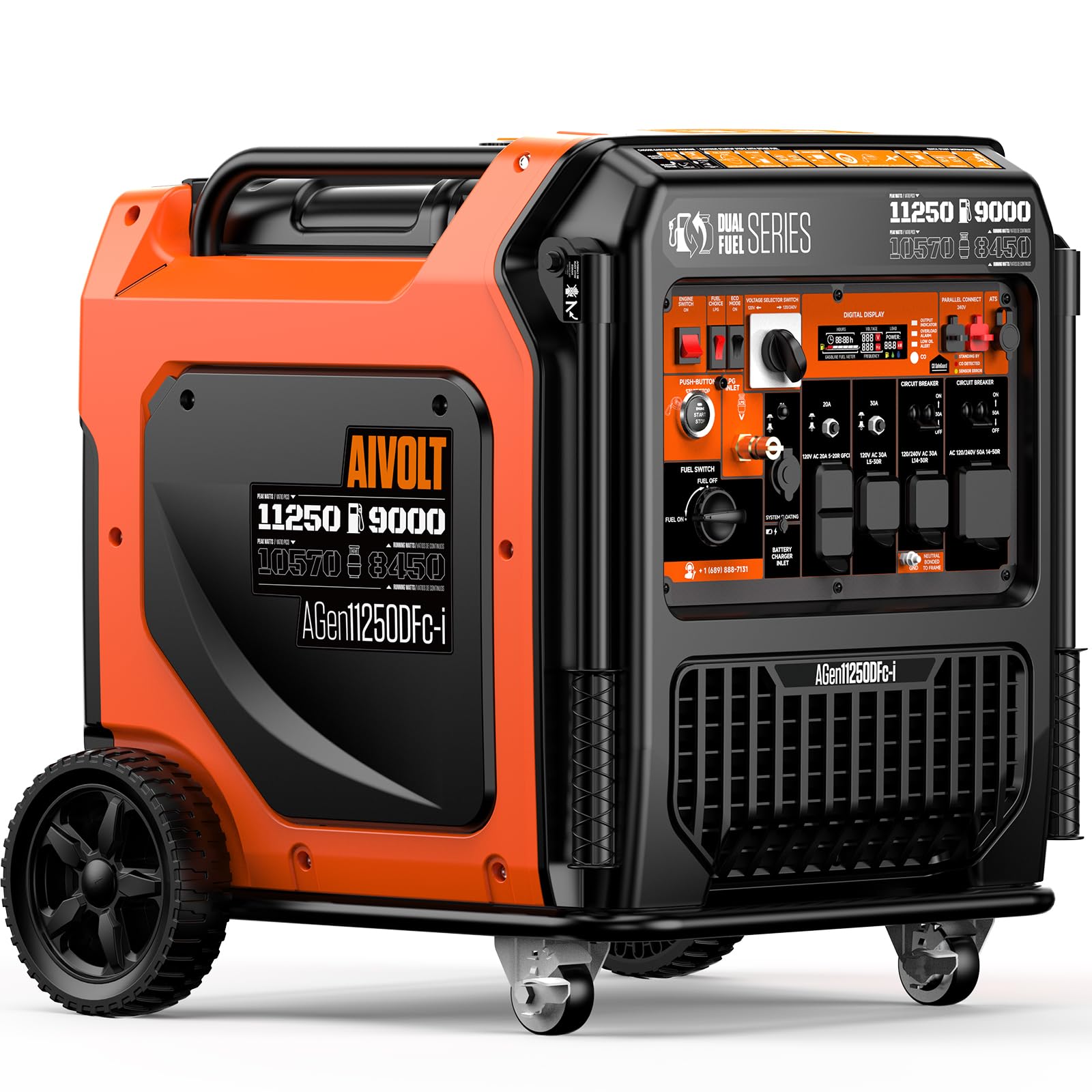
The AIVOLT 11250W is a dark-horse contender in the premium inverter category, packing 11,250 peak watts on gasoline and 10,570 on propane with a CARB-compliant engine that ships to all 50 states. It operates at conversation-level noise—advertised at 57 dBA from 23 feet, though independent measurements put it closer to 72 dBA at 5 feet, still quieter than most open-frame competitors. The remote start, electric push-button, and recoil backup give you three ways to fire it up.
The 50A outlet is RV-ready and transfer-switch-compatible, and the ECO mode stretches runtime past 19 hours at light loads. Owners praise the premium build feel and responsive customer support, though a few units exhibited a heat-soak restart issue—if you shut it down hot, you may need to wait up to an hour before it restarts. This is a characteristic of some inverter designs and not necessarily a defect, but it’s worth planning for if you need to switch fuel types mid-outage.
Parallel capability lets you gang two units for double the output, though the kit is sold separately. The digital display shows fuel level, voltage, and runtime hours. One buyer reported a complete failure after one hour with no voltage output, but the replacement process was handled through Amazon. The AIVOLT is a strong mid-premium option if you prioritize quiet operation and CARB legality over brand recognition.
Why it’s great
- CARB compliant for California and other strict-emission states
- Extremely quiet operation at idle in ECO mode
- 50A outlet included for direct RV or transfer switch hookup
Good to know
- May require cool-down period before restart when hot
- Customer support is international; response times vary
6. Westinghouse 18,000W Tri Fuel Generator
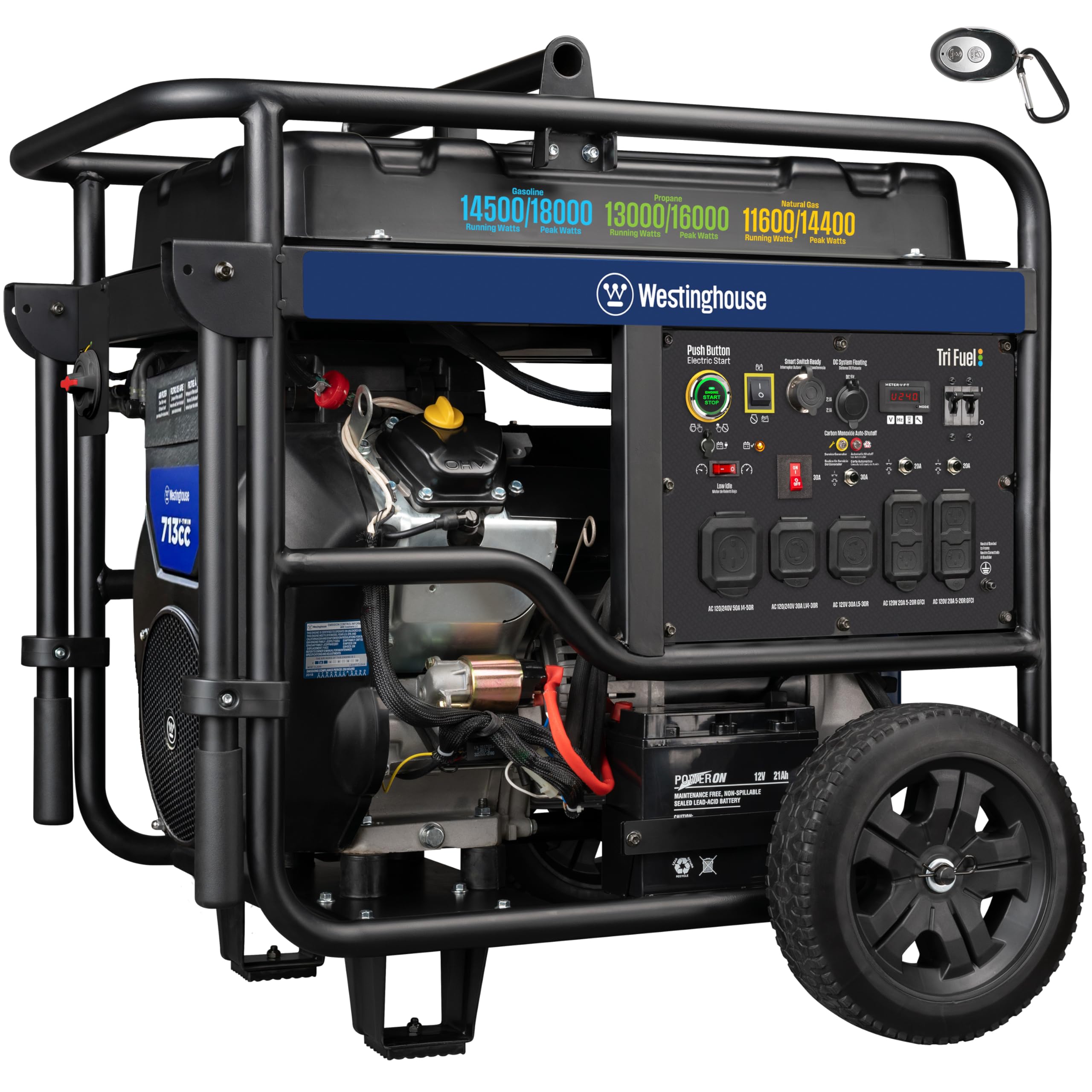
The Westinghouse WGen14500TFc is for homes where a 22kW standby generator is overkill but a 12kW portable isn’t enough. The 713cc V-Twin engine produces 18,000 peak watts on gasoline, 16,000 on propane, and 14,400 on natural gas, with a 50A outlet and a 30A outlet both transfer-switch-ready. The VFT data center shows voltage, frequency, and lifetime hours so you can track maintenance without guessing.
Natural gas users report stable 11kW continuous output at 60 Hz with THD around 5.5-5.8%, which is safe for most household electronics though not as clean as an inverter unit. The remote start and push-button ignition make cold mornings easier, and the 10.5-gallon tank delivers up to 16 hours at 25% load. The unit is loud (74 dBA), and the reinforced steel handles don’t fully compensate for the 348-pound weight—plan for a dedicated dolly or a permanent placement on a generator pad.
Some units shipped with a stuck fuel shutoff solenoid on the carburetor bowl, preventing gasoline operation out of the box. The fix is simple—free the plunger manually—but it’s an extra troubleshooting step during an already stressful setup. Natural gas hose is not included, so factor that into your installation cost.
Why it’s great
- Tri-fuel gives you unlimited natural gas runtime during grid outages
- V-Twin engine delivers smooth power for large motor loads
- VFT display makes load management and maintenance simple
Good to know
- Natural gas hose not included—requires separate purchase
- 348 pounds requires permanent placement or heavy-duty dolly
7. DuroMax XP13000HXT Tri Fuel Generator
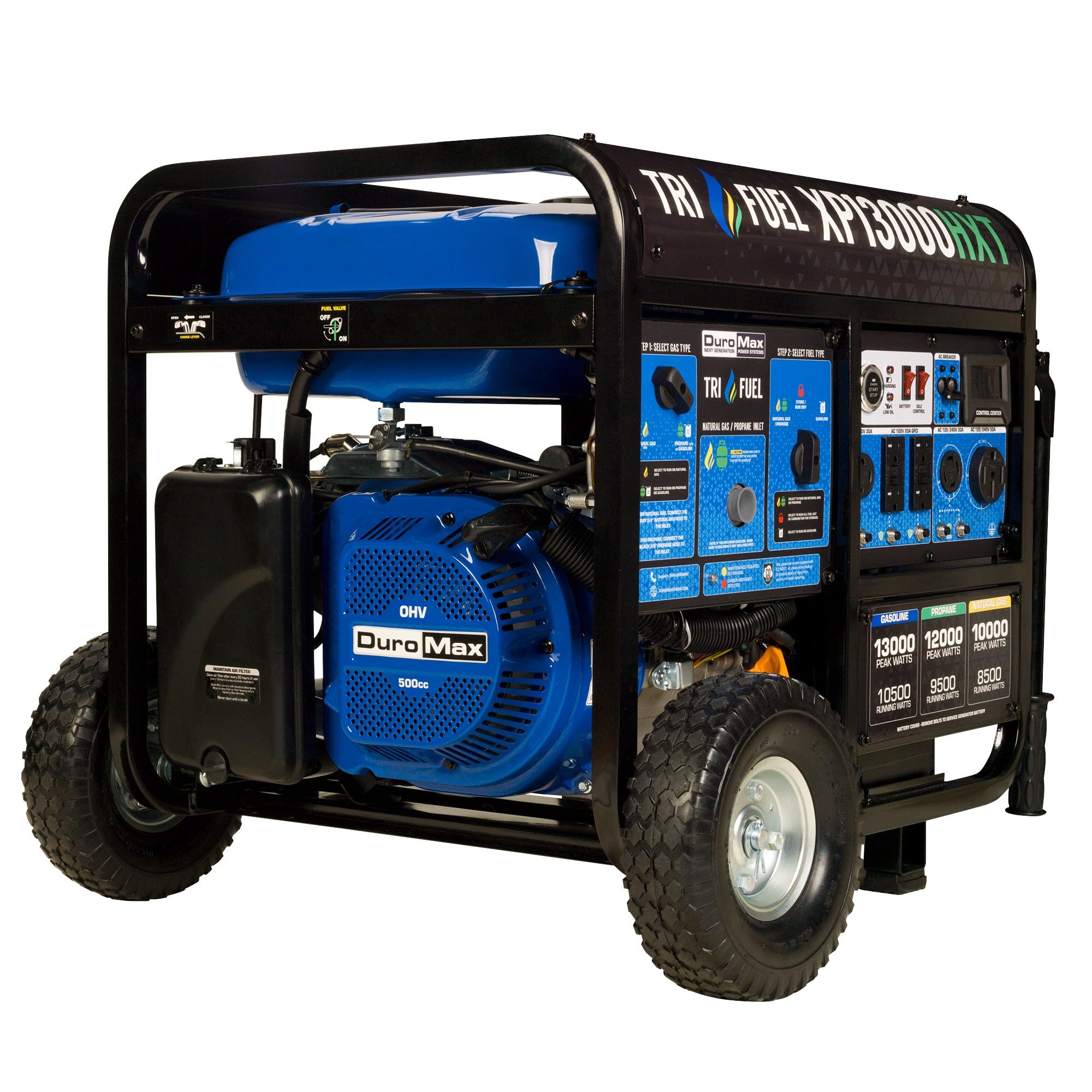
The DuroMax XP13000HXT is the value king of the tri-fuel category, delivering 13,000 surge watts from a 500cc OHV engine at a price that undercuts most inverter generators half its size. The push-button start and included remote fob let you fire it up from indoors, and the CO Alert auto-shutdown adds essential safety. The fuel selector knob lets you switch between gasoline, propane, and natural gas in seconds.
Whole-home users report running a 3.5-ton AC, two refrigerators, a furnace, and security cameras at just 25-30% load on natural gas, with 6 hours of runtime on 2.2 gallons of gasoline under mixed loads. The unit weighs 240 pounds and rolls on a wheel kit, though the included hardware is basic—upgrade the wheels if you plan to move it across grass. The DuroMax 5-year warranty is one of the best in this price range.
Assembly requires attaching wheels and handle, filling oil, and connecting the battery. The fuel selector knob is stiff from the factory, and the natural gas hose included is a 15-foot 3/4-inch line—make sure your gas meter can supply the 225,000 BTUs/hr this unit demands at full load. Some units arrived with cosmetic damage from shipping, but DuroMax’s US-based support team resolved issues quickly.
Why it’s great
- Tri-fuel capability at a budget-friendly price point
- Remote start provides convenient indoor firing
- 500cc engine offers ample power for most whole-home loads
Good to know
- Fuel selector knob is very stiff initially
- Requires high-BTU gas line—check your meter capacity before installing
8. WEN 6800W Dual Fuel Inverter Generator

The WEN DF680iX fills a unique niche: a bonded-neutral 240V inverter generator that can provide low-power Level 2 charging for battery and hybrid electric vehicles. The 224cc dual-fuel engine produces 6,800 surge watts (5,100 running) on gasoline and 6,000 surge (4,500 running) on propane, with a weight of just 99 pounds that makes it genuinely portable. The CO Watchdog sensor and fuel shutoff maximize longevity by draining the carburetor before shutdown.
Owners report excellent fuel efficiency on propane—a 40-pound tank lasts multiple weekends at moderate loads—and the ECO mode keeps things quiet enough for campground use. The electric start worked flawlessly in reviews, though some users wish a battery trickle-charge connector were included. The telescoping pull handle and onboard wheels are functional on pavement but struggle on loose gravel. At 99 pounds, you can lift it into a truck bed without a ramp.
The control panel includes a 30A twist-lock, two 120V GFCI outlets, a TT-30R RV outlet, a 12V DC outlet, and two USB ports. The voltage selector switch lets you toggle between 120V-only and 120/240V output. One buyer reported a faulty fuel solenoid that prevented gasoline operation after three hours, but WEN’s warranty support was responsive. This is an excellent unit if you need to charge an EV during an outage or want a lightweight RV companion that also backs up home circuits.
Why it’s great
- Lightweight at 99 pounds with telescoping handle
- Bonded-neutral 240V output enables EV Level 2 charging
- Fuel shutoff extends carburetor life by preventing gumming
Good to know
- Not powerful enough for whole-house backup—plan for essential circuits only
- No battery trickle-charge connector included for long-term storage
9. EcoFlow DELTA Pro 3600Wh Power Station
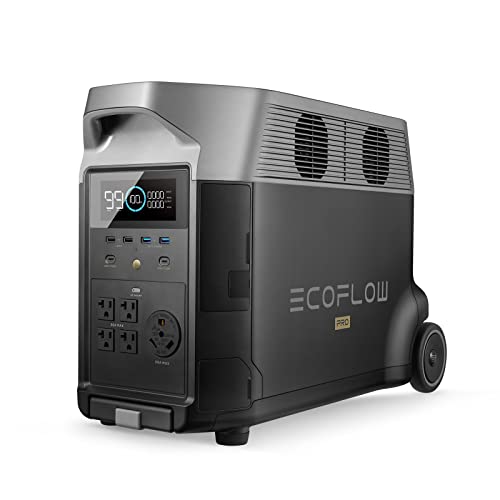
The EcoFlow DELTA Pro 3600Wh is the choice for homeowners who want zero noise, zero fumes, and instantaneous power transfer—no extension cords, no warm-up, no fuel smell. The LiFePO4 battery delivers 3,600W continuous AC output (surge to 7,200W with two units paralleled) and can be recharged from a wall outlet in 2.7 hours via X-Stream fast charging. The pass-through mode acts as a UPS, automatically switching to battery power when the grid fails with no noticeable delay.
Five 120V AC outlets, two USB-C (100W each), and a 12V car port mean you can run a fridge, freezer, coffee maker, and multiple devices simultaneously. The 99-pound unit is heavy for a power station but still portable with the built-in handles. The EcoFlow app gives you remote monitoring of charge level, temperature, and discharge rates, plus customizable settings for input/output priorities. Solar recharge at up to 23% efficiency makes this a long-term option for off-grid use.
Real-world performance shows the unit powering an oxygen machine for about 7 hours before needing a recharge. It is not designed for whole-house loads—you won’t run a central AC or well pump—but it handles essential circuits silently. The initial charge is slow (around 7 hours from empty), and some users found the fan noise noticeable during high-demand charging. If your goal is to keep medical devices, internet, and refrigeration running through a 6-hour outage with zero hassle, this is your unit.
Why it’s great
- Completely silent operation—no noise complaints from neighbors
- No fuel costs or storage concerns; recharges from solar, wall, or car
- Pass-through UPS mode provides seamless grid-to-battery transition
Good to know
- 3600Wh capacity limits runtime for large appliances
- 90-pound weight still requires effort to move, despite handles
10. EcoFlow DELTA Pro 3 + Dual Fuel Generator
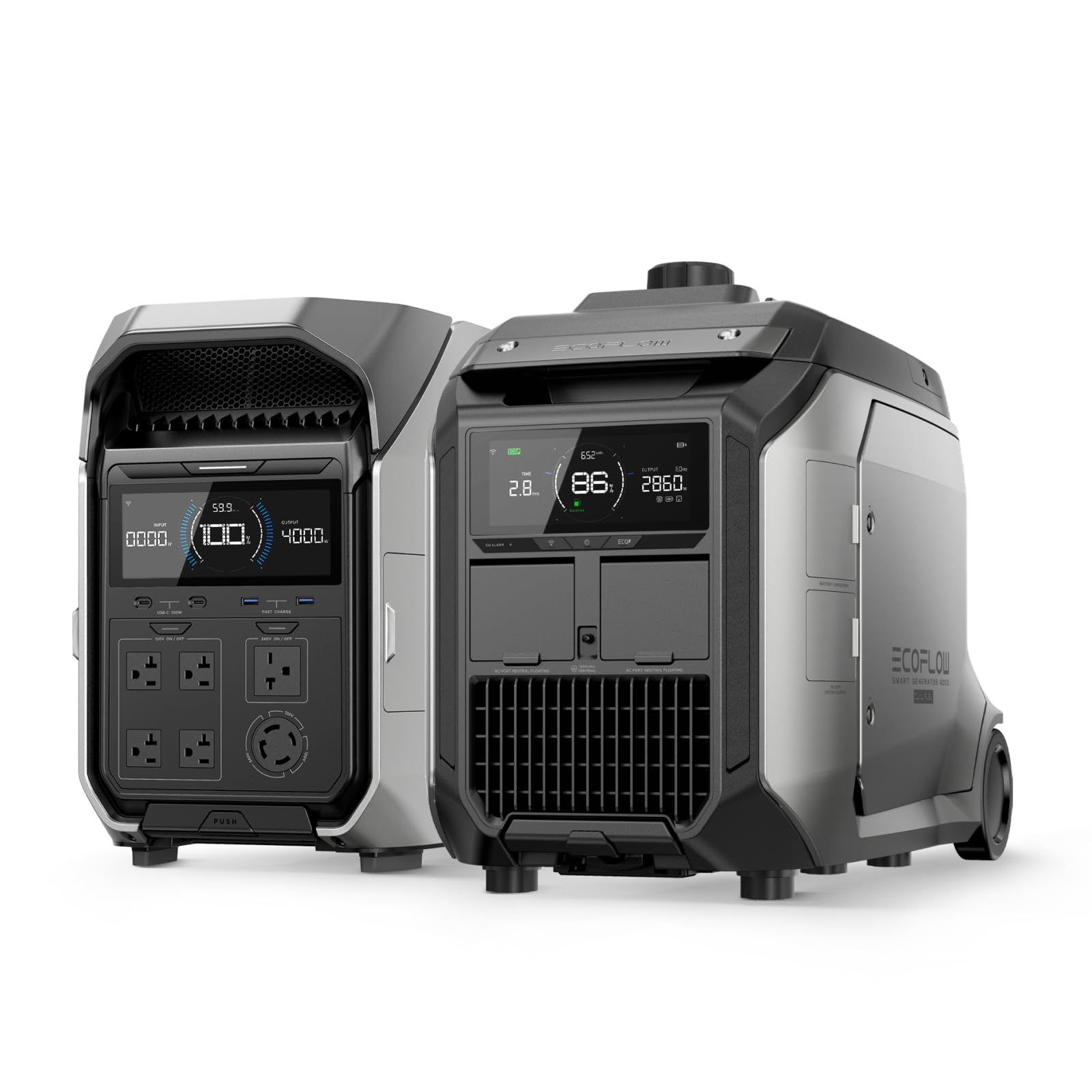
The EcoFlow DELTA Pro 3 bundle with the GE305 Dual Fuel Generator is the closest thing to a silent standby setup that doesn’t require a concrete pad. The 4096Wh LFP power station provides the primary silent power, and the 3200W dual-fuel generator acts as a smart charger that fires up automatically when the battery dips below a set threshold—then shuts off when the battery is full. You get the silence of battery power with the unlimited runtime of gasoline or LPG.
On propane, the generator charges the DELTA Pro 3 for up to 24 kWh from a single 20-pound tank, effectively extending your backup to multiple days without refueling. The app lets you monitor battery state, set charge schedules, and receive alerts for CO concentration, high temperature, and overload. The system also supports solar input, EV charging piles, and the EcoFlow Smart Home Panel 2 for whole-home integration. The 3-year warranty and automatic operation make this the most hands-off portable power solution available.
The biggest drawback is the price tag, which approaches the cost of a professionally installed standby generator. Additionally, the system is not CARB-approved and cannot ship to California. Some early units experienced FedEx shipping delays, and a few buyers reported generator failures after 5 hours on propane (EcoFlow replaced them under warranty). If you value zero-maintenance battery operation with generator backup only when needed, this system delivers unmatched convenience.
Why it’s great
- Smart auto start/stop eliminates manual generator management
- Silent battery power covers overnight hours without disturbing sleep
- Expandable to 48 kWh with extra batteries for multi-day coverage
Good to know
- Not CARB approved—cannot ship to California addresses
- Price approaches permanent standby installation cost
11. PowerSmart 7000W Open Frame Inverter Generator
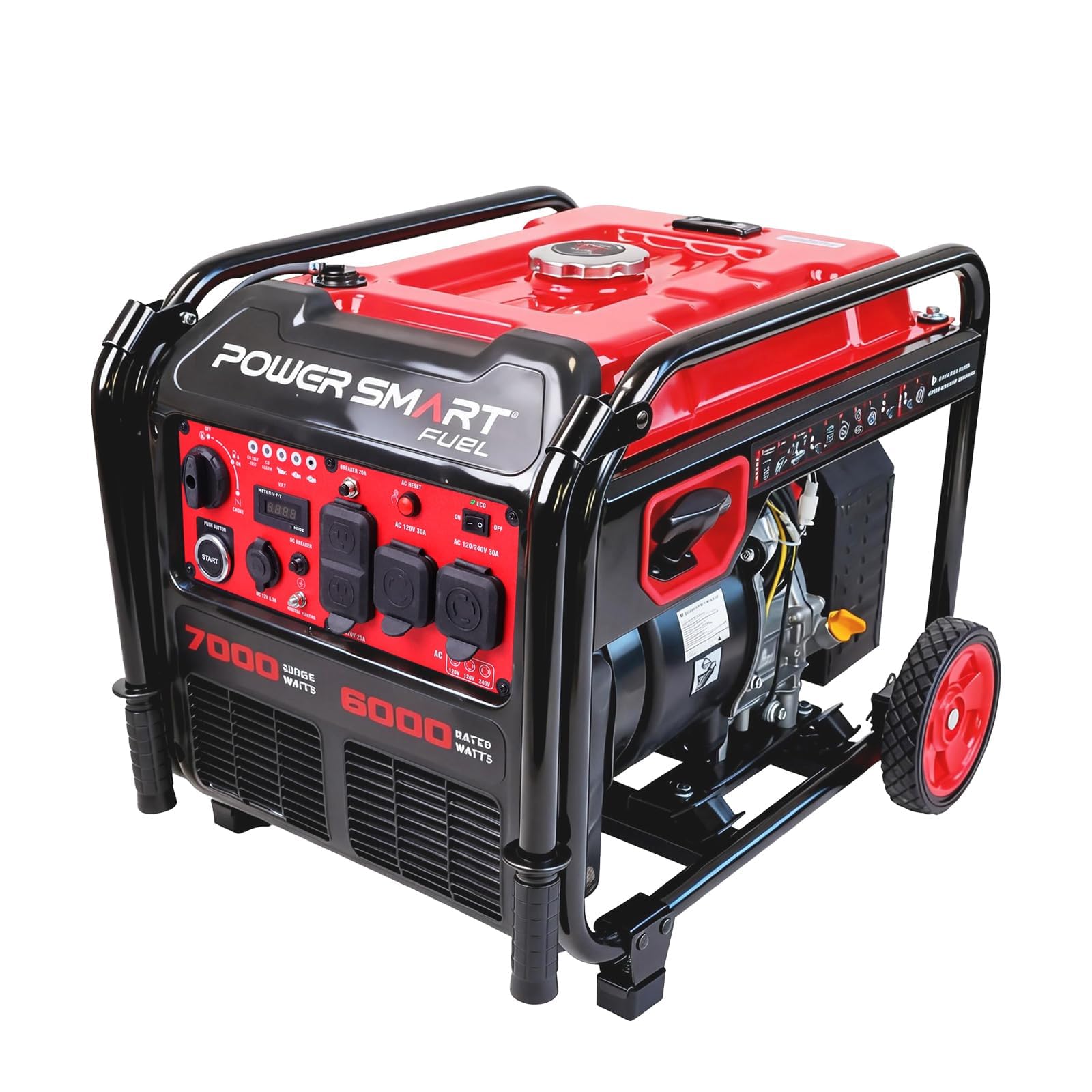
The PowerSmart 7000W Open Frame Inverter is the entry-level sweet spot for homeowners who need clean power for essentials—fridge, lights, furnace fan, and a few electronics—without spending premium-tier money. The 322cc engine produces 7,000 surge watts and 6,000 running with less than 3% THD, making it safe for sensitive electronics. The electric push-button start with recoil backup reduces the frustration of rope-pulling during a storm.
At 113.5 pounds, it’s the lightest unit in this lineup that still offers 240V dual voltage for transfer switch connection. The 3.2-gallon tank provides a 6-hour runtime at 50% load, enough to get through overnight outages without refueling. The open-frame design improves airflow and cooling compared to enclosed inverters, but it also means higher noise at 70 dBA—acceptable for outdoor use but not for close-quarters camping. The CO sensor and low-oil shutdown add safety redundancy.
Owners praised its ability to run a planer on a job site and keep two refrigerators plus a freezer running during an outage. The included wheels and handle are basic—you may want to upgrade them if you move the unit frequently. A small number of units arrived with minor oil leakage from the air filter, and the instructions recommend a 10-minute warm-up before connecting high-wattage loads to stabilize the inverter. For the price, this is the most reliable entry point into inverter backup power.
Why it’s great
- Under 3% THD inverter power at a budget-friendly price
- Lightest 240V inverter at 113.5 pounds for easy transport
- Electric start with battery included reduces setup time
Good to know
- Only 6-hour runtime at 50% load requires evening refueling
- Basic wheel kit struggles on uneven surfaces
FAQ
Can I plug a backup generator directly into a wall outlet?
How do I calculate the right generator size for my house?
Is natural gas better than propane or gasoline for a backup generator?
Why does my generator’s CO sensor keep shutting it down outdoors?
Final Thoughts: The Verdict
For most users, the best backup generator for house is the Westinghouse 11000W Dual Fuel Inverter Generator because it combines inverter-clean power with dual fuel flexibility, remote start convenience, and enough surge capacity for a typical 2,000-square-foot home. If you want a permanent automatic solution with professional installation, the Generac Guardian 22kW provides whole-house coverage with Wi-Fi monitoring and zero manual effort. And for noise-sensitive situations where you need silent battery power with generator backup only when necessary, the EcoFlow DELTA Pro 3 bundle delivers an unmatched hands-off experience.