
Our readers keep the lights on and the weekend projects moving. As an Amazon Associate, I earn from qualifying purchases.
Most music lovers accept a compromise the second they go wireless: thin sound, compressed dynamics, and that flat digital glare that turns a favorite track into background noise. A dedicated Bluetooth DAC solves this by offloading decoding from your phone and injecting a dedicated DAC chip and amp stage into the chain, restoring texture, headroom, and a proper soundstage whether you are wired or streaming over LDAC.
I’m Rikta — the co-founder and writer behind FitlyFast. I spend my days parsing THD+N figures, SINAD sweeps, and Bluetooth codec tables so you do not have to guess which portable DAC actually delivers measurable transparency versus just marketing hype.
Whether you are upgrading an old stereo receiver, feeding high-impedance headphones from a dongle, or breaking free from your phone’s noisy internal audio, the best bluetooth dac is the single piece of gear that brings recorded sound back to life without anchoring you to a desk.
How To Choose The Best Bluetooth DAC
A Bluetooth DAC is not a one-size-fits-all purchase. The right choice depends on whether you need a pocket dongle for IEMs, a receiver to modernize an old amp, or a wearable Bluetooth amp with balanced output. Prioritize the DAC chip and codec support first — these determine the ceiling of what you will hear.
Codec Support: LDAC vs. aptX HD vs. AAC
LDAC at 990 kbps is the highest-bandwidth Bluetooth codec available, making it the choice for Android users who want near-lossless wireless streaming. aptX HD offers 24-bit/48 kHz resolution with solid stability. AAC is the default for iPhone users and performs well with Apple hardware. Every other codec (SBC, standard aptX) is a fallback that introduces audible compression on revealing gear.
Output Stage: Balanced vs. Single-Ended
A 4.4mm balanced output doubles the voltage swing and cuts crosstalk by canceling ground-loop noise. If you own headphones over 50 ohms (Sennheiser HD 6XX, Beyerdynamic DT 770 Pro 80 ohm) or plan to use planars, a balanced-capable DAC like the FiiO BTR7 or iFi Go Blu unlocks the true power reserve. Single-ended 3.5mm is fine for sensitive IEMs but leaves headroom on the table for full-size cans.
DAC Chip and Measured Performance
The Cirrus Logic CS43131 and ESS ES9219C are the two dominant DAC chips in this class. Look for a SINAD above 110 dB and a noise floor below 2 µV — these numbers translate to a dead-black background and zero audible hiss. The ES9018K2M in the 1Mii B06HD+ is an older but still capable flagship chip tuned for line-level output rather than direct headphone drive.
Form Factor and Power Source
Dongle-style DACs (Fosi Audio DS2, Moondrop Dawn Pro 2) draw power from your phone, which can drain 16% or more of your battery per two-hour session. Wearable Bluetooth DACs with an internal battery (FiiO BTR13, BTR7, Khadas Tea, iFi Go Blu) preserve your phone’s charge and let you walk freely. Desktop-styled receivers like the 1Mii B06HD+ stay plugged in and serve a whole stereo system.
Quick Comparison
On smaller screens, swipe sideways to see the full table.
| Model | Category | Best For | Key Spec | Amazon |
|---|---|---|---|---|
| ifi GO blu | Portable BT Amp | Hi-res wireless with analog controls | Qualcomm 5100, LDAC, 4.4mm balanced | Amazon |
| FiiO BTR7 | Portable BT DAC/Amp | MQA rendering & high-impedance cans | Dual ES9219C, XMOS XUF208, DSD256 | Amazon |
| Khadas Tea | MagSafe BT DAC | iPhone users with MagSafe | ESS ES9281AC Pro, 1160mAh battery | Amazon |
| FiiO BTR13 | Entry-Level BT Amp | First-time buyers on a budget | Dual CS43131, 220mW balanced, 28.6g | Amazon |
| 1Mii B06HD+ | Home Stereo Receiver | Adding BT to an old receiver | ES9018K2M, LDAC, OLED display | Amazon |
| Fosi Audio DS2 | USB-C Dongle DAC | Wired hi-res from phone or laptop | Dual CS43131, 170mW balanced, DSD256 | Amazon |
| Moondrop Dawn Pro 2 | USB-C Dongle DAC | App-based PEQ tuning | Dual CS43198, 4Vrms, 100-level volume | Amazon |
In‑Depth Reviews
1. iFi GO blu

The iFi GO blu uses the Qualcomm 5100 series chipset for Bluetooth 5.1 with support for LDAC, aptX HD, and AAC, but it distinguishes itself with a warm, analog-leaning voicing that many competing DACs lack. The inclusion of XBass and XSpace analog processing lets you add low-end weight and soundstage width without digital artifacts, and the physical volume knob provides precise level control that on-screen sliders cannot match.
On the balanced 4.4mm output, the GO blu drives the Sennheiser HD 660S with authoritative sub-bass and a dead-black background, and the single-ended 3.5mm uses iFi’s S-Balanced circuitry to cut harmonic distortion by half when using standard cables. The built-in microphone handles hands-free calls cleanly, and the small 27-gram chassis is pocket-sized, though the included belt clip is too short for secure attachment on thicker straps.
Battery life sits around 8–9 hours of continuous LDAC streaming, and the unit charges via USB-C. There is no companion app for EQ, and the lack of a display means codec info and battery level are communicated via LED color, which some users find ambiguous. For anyone wanting a truly portable BT DAC with balanced drive and analog tuning options, this is the benchmark.
Why it’s great
- Warm, organic sound with analog XBass/XSpace processing
- 4.4mm balanced output with S-Balanced single-ended mode
- Physical volume knob with precise tactile feedback
Good to know
- No companion app or parametric EQ
- Belt clip is short and lacks grip on thicker materials
- LDAC limited to 24/96 via Bluetooth (no USB LDAC)
2. FiiO BTR7

The FiiO BTR7 packs dual ESS ES9219C DAC chips feeding a 4.4mm balanced output that delivers enough current to drive 300-ohm headphones without breaking a sweat. It supports LDAC, aptX Adaptive, and aptX HD via Bluetooth 5.1, and when connected via USB it handles PCM up to 384 kHz and native DSD256, plus MQA 8x rendering for Tidal subscribers.
The build uses an aluminum alloy frame with high-strength glass panels, and the color display shows codec, sample rate, battery, and volume in a clean layout. The independent amplifier stage is dead silent — reviewers consistently note the black background and absence of hiss even with sensitive multi-BA IEMs. The FiiO Control app provides a 10-band parametric EQ that stores presets directly on the device.
The menu system is dense and the volume wheel is easy to bump in a pocket, which can cause sudden level changes. Battery life is about 7–8 hours with the display on; the screen is the main power draw. The BTR7 is heavier and larger than the BTR13 but justifies the footprint with substantially more power and MQA support, making it a top-tier wearable DAC for critical listening.
Why it’s great
- True high-impedance drive: powers 300-ohm cans with authority
- Comprehensive codec support including MQA full decoder
- 10-band PEQ with onboard storage
Good to know
- Menu navigation is slow and non-intuitive
- Battery life shorter than competitors due to color display
- Occasional Bluetooth drop when paired to multiple sources
3. Khadas Tea

The Khadas Tea is the thinnest Bluetooth DAC in this roundup at under 8 mm, and it uses MagSafe magnets to attach directly to the back of an iPhone for a clean, cable-free setup. Inside is the ESS ES9281AC Pro DAC chip, which handles PCM, DSD, and MQA, and the BT side uses the Qualcomm QCC5125 for LDAC up to 24-bit/96 kHz.
Sound quality is surprisingly organic for such a slim device — the ES9281AC Pro delivers clean instrument separation, intimate vocals, and tight bass that leans toward the neutral-warm side. The 1160 mAh internal battery provides around 8 hours of continuous playback and keeps the phone battery untouched. Bluetooth microphone support allows hands-free calls directly through the unit.
The biggest drawbacks are the lack of a companion app for EQ and the fragility of the included USB-C cables, which users report failing quickly. The glass back panel is also vulnerable — one reviewer cracked theirs sitting on the device. There is no balanced output, only a single-ended 3.5 mm jack. For iPhone users who prioritize a seamless, ultra-portable BT DAC with no cable clutter, the Tea is a unique and compelling option.
Why it’s great
- Ultra-thin design with strong MagSafe integration
- ESS ES9281AC Pro DAC delivers organic, detailed sound
- Internal battery prevents phone battery drain
Good to know
- No balanced output (3.5mm single-ended only)
- Glass back cracks easily under pressure
- No parametric EQ or companion app
4. FiiO BTR13

The FiiO BTR13 uses dual Cirrus Logic CS43131 DAC chips, one per channel, to eliminate crosstalk and deliver a balanced output of 220 mW into 32 ohms — a 282% increase over the older BTR3K. It weighs just 28.6 grams and includes a three-position switch (PC/BT/Phone) that lets the same unit serve as a USB sound card, wireless receiver, or smartphone companion without re-pairing.
Sound quality is clean and transparent, with a dead-silent background that reviewers describe as hiss-free even on sensitive IEMs. The 4.4mm balanced output drives the Beyerdynamic DT 770 Pro (80 ohm) with headroom to spare on high gain. The FiiO Control app offers a 10-band PEQ with online preset sharing, which is uncommon at this price tier.
The user interface is slow and the menu system requires some patience during initial setup. The belt clip broke off in one reviewer’s report after a desk drop, and the 80% charge-limit feature is buried deep in the app. For the price, the BTR13 offers a feature set — dual DAC, balanced output, PEQ, internal battery — that undercuts most competitors while delivering near-transparent sound.
Why it’s great
- Exceptional 220mW balanced output for the size and price
- 10-band PEQ with online community presets
- Lightweight (28.6g) with versatile mode switch
Good to know
- Menu navigation is slow and non-intuitive
- Apple iOS lacks audio management compatibility
- Belt clip feels fragile
5. 1Mii B06HD+
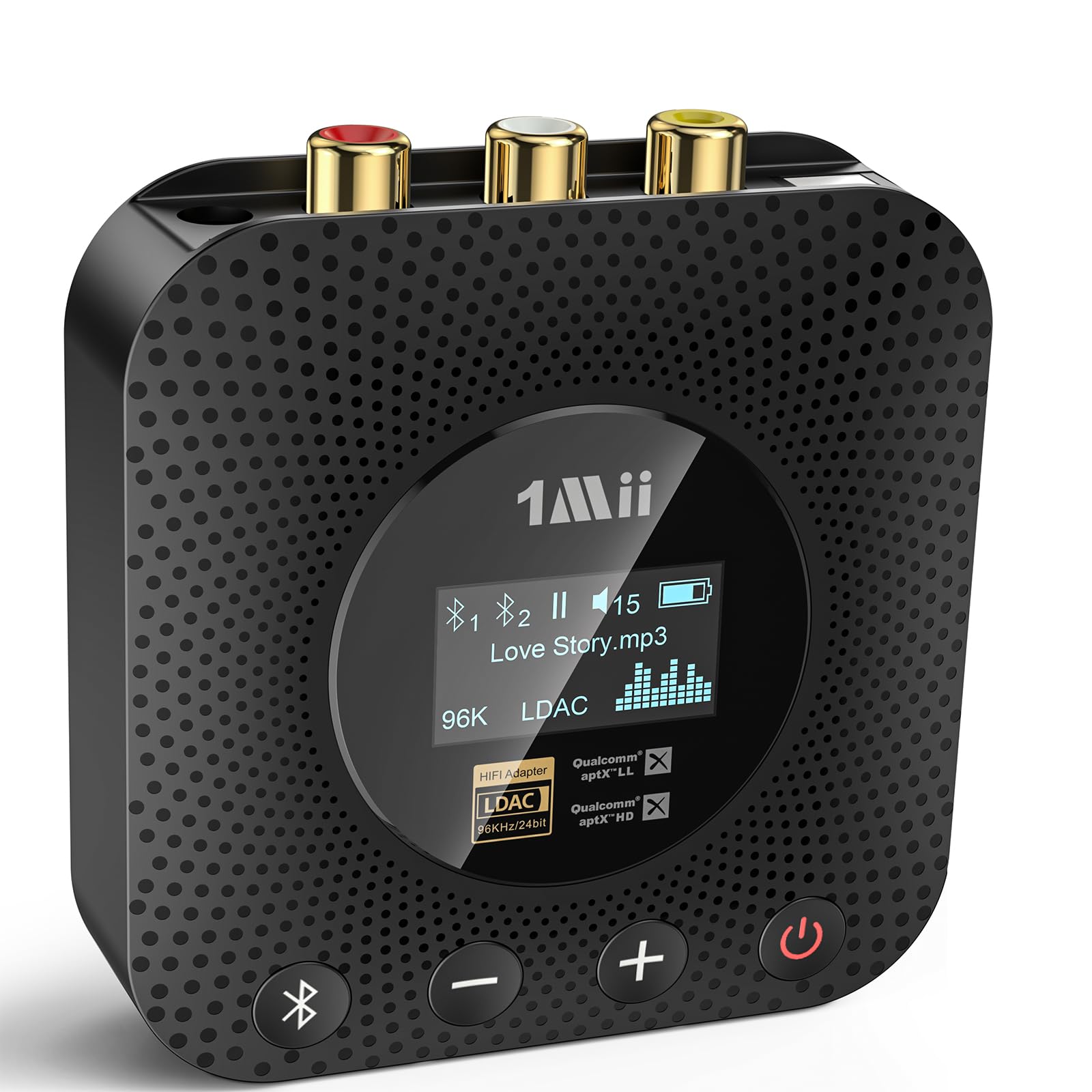
The 1Mii B06HD+ is not a dongle or a wearable — it is a dedicated Bluetooth receiver designed to bring LDAC and aptX HD streaming to legacy stereo systems. It uses the ES9018K2M DAC chip from ESS, the same flagship part found in many mid-range desktop DACs, paired with the Qualcomm Bluetooth 5.3 chipset for stable wireless reception up to 80 feet indoors.
Output options include analog RCA, optical TOSLINK, and coaxial SPDIF, so it can interface with any amplifier or powered speaker. The OLED display shows song name, sample rate, codec in use, and battery level. Sound quality through the digital outputs is notably cleaner than the analog path, and reviewers report dynamic range that rivals vinyl playback when paired with a good amp.
The unit has an auto power-off after 10 minutes of idle signal, which can be annoying during pause-heavy listening sessions. The default LDAC codec caused a “no signal” issue on one reviewer’s older receiver, requiring a manual switch to aptX HD. The B06HD+ is an ideal solution for anyone who wants to preserve a vintage receiver while adding Bluetooth without sacrificing audio quality.
Why it’s great
- Flagship ES9018K2M DAC with LDAC and aptX HD
- Optical, coaxial, and RCA output options
- OLED display shows real-time codec and sample rate
Good to know
- Auto power-off can interrupt longer listening sessions
- LDAC may require codec switching on older receivers
- No USB input for direct wired connection
6. Fosi Audio DS2

The Fosi Audio DS2 is a wired USB-C dongle DAC that uses two Cirrus Logic CS43131 chips (one per channel) with a 4.4mm balanced output rated at 170 mW per channel into 32 ohms. It supports PCM up to 32-bit/384 kHz and native DSD256. The 60-step independent volume buttons provide fine level control that bypasses the coarse iOS volume rocker.
Sound is described as analytical and detailed rather than warm — the CS43131 DACs produce a clean, neutral presentation with a 1 µV noise floor and 130 dB SNR. Reviewers using the balanced output with the Sennheiser HD 660S (300 ohm) report massive improvements in bass depth and detail retrieval. The all-metal CNC-machined body feels premium in hand and resists pocket scratches.
The main downside is power draw: the DS2 drains about 16% of an iPhone’s battery per two-hour listening session, which is typical for USB-powered dongles. The included USB-C cable is cheap and users recommend replacing it. The DS2 lacks Bluetooth entirely — it is strictly a wired dongle — but for anyone who wants the cleanest possible wired path from their phone to their headphones, this is a top contender.
Why it’s great
- Ultra-low noise floor (1 µV) with high SINAD
- 60-step independent volume control for precise level matching
- Solid CNC-machined aluminum build
Good to know
- Significant battery drain on phones (approx. 8% per hour)
- Included USB-C cable is low quality
- No Bluetooth or internal battery
7. Moondrop Dawn Pro 2
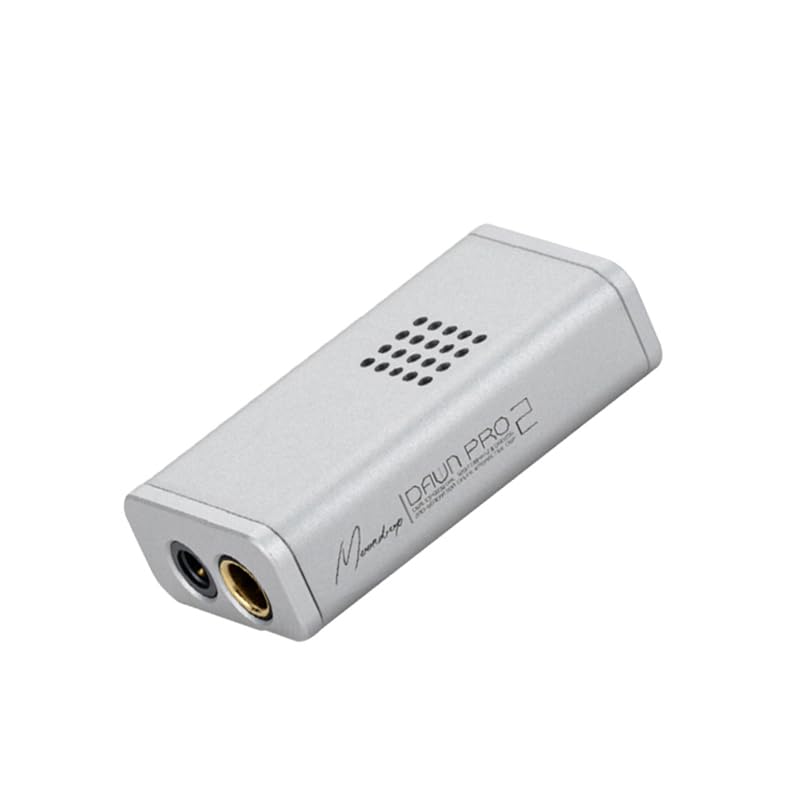
The Moondrop Dawn Pro 2 is a wired USB-C dongle that features dual flagship CS43198 DAC chips with three independent LDO regulators for clean power separation. It outputs 4 Vrms from the balanced 4.4mm jack (124 mW into 32 ohms) and offers a 100-level lossless volume control that bypasses the phone’s digital volume attenuation.
The standout feature is the MOONDROP App integration, which provides an interactive parametric EQ interface where you can adjust filter type, frequency, gain, and Q value. A built-in headphone frequency response database helps you tune your IEMs to a target curve. The aluminum alloy housing uses ventilation slots above the DAC chips to dissipate heat, keeping performance stable during long sessions.
Sound is clean with a flat frequency response and a slight bass shelf that adds warmth without bloat. Reviewers praise the clarity but note that the treble can sound etched or digital on some recordings. Quality control is a concern — one reviewer reported that the 4.4mm jack required careful seating of the plug to get full output. The Dawn Pro 2 is ideal for buyers who want deep EQ control and don’t mind a wired-only dongle.
Why it’s great
- Deep parametric EQ with headphone database via Moondrop App
- 4 Vrms output with near-lossless 100-level volume control
- Aluminum housing with dedicated heat dissipation vents
Good to know
- 4.4mm jack may require careful plug seating
- Treble can sound etched on certain IEMs
- No Bluetooth or wireless functionality
FAQ
Will a Bluetooth DAC work with my iPhone?
Can I use a Bluetooth DAC with wired headphones?
What is the difference between a USB dongle DAC and a Bluetooth DAC?
Do I need a balanced cable for a 4.4mm output?
Final Thoughts: The Verdict
For most users, the best bluetooth dac winner is the iFi GO blu because it combines LDAC wireless, a true 4.4mm balanced output, and analog tuning options in a pocketable form that delivers warm, natural sound without requiring a smartphone app. If you want MQA support and the raw power to drive 300-ohm headphones, grab the FiiO BTR7 with its dual ES9219C chipset and XMOS processing. And for breathing LDAC life into a vintage stereo receiver, nothing beats the 1Mii B06HD+ with its ES9018K2M DAC and full optical/coaxial output suite.