
Our readers keep the lights on and the weekend projects moving. As an Amazon Associate, I earn from qualifying purchases.
Shin splints turn every run, every shift on your feet, and every walk across the parking lot into a grinding, aching reminder that something is wrong. The root cause is almost never your shinbone itself — it is your arch collapsing under load, forcing your tibialis anterior to overwork and your posterior chain to compensate in ways that inflame the connective tissue along your shin. Fix the arch, and you starve the shin splints at their source.
I’m Rikta — the co-founder and writer behind FitlyFast. I have spent years analyzing foot biomechanics research and stress-testing insoles across heavy-duty work, high-impact athletics, and daily standing use to separate the arch supports that actually offload the shin from those that just add cushion under the heel.
After comparing seven products on arch rigidity, heel cup depth, shock-absorbing core materials, and real-world shin splint recovery reports, here is my analysis of the best arch support for shin splints money can buy right now.
How To Choose The Best Arch Support For Shin Splints
Shin splints are a repetitive-stress injury driven by poor foot mechanics — specifically by overpronation that yanks the arch flat and forces the tibialis anterior to overload. A good insole counters that by providing a rigid enough arch cradle to hold the navicular bone up during stance phase. Cushion is secondary; structural stability is primary.
Arch Rigidity vs. Arch Height
Height alone is meaningless if the arch collapses under your body weight. Look for insoles with a TPU or carbon-fiber medial post that resists compression when you load the foot. Flexible foam arches feel nice at the store but will flatten after two miles and hand the shock right back to your shins.
Heel Cup Depth and Heel Strike Control
A deep U-shaped or cupped heel holds the calcaneus in neutral alignment, preventing the heel from rolling inward (overpronating) at ground contact. A shallow heel cup lets the heel slide, which transfers rotational stress up the kinetic chain into the shin. Look for a heel cup that wraps at least 12-15 mm up the sides of the heel.
Shock-Absorbing Core Material
The interface between your foot and the ground is where high-frequency vibration enters the tibia. Dual-density EVA midlayers, PORON microcellular urethane, and silicone gel pads each attenuate impact differently. PORON and gel excel at absorbing sharp heel-strike shock; dense EVA handles prolonged standing better. Avoid single-density foam insoles — they bottom out quickly.
Fit and Footwear Compatibility
Most orthotic-quality insoles add 3-5 mm of thickness at the heel. This means your laces may need to be loosened a full notch, and low-cut shoes like Vans or dress flats often become unwearable. Measure the removable depth of your shoe’s factory insole before committing to a thick orthotic model. Trim-to-fit styles offer flexibility but weak scissors will leave rough edges that cause blisters.
Quick Comparison
On smaller screens, swipe sideways to see the full table.
| Model | Category | Best For | Key Spec | Amazon |
|---|---|---|---|---|
| PowerStep Pinnacle | Premium Orthotic | Podiatrist-grade support & all-day wear | Semi-rigid arch; dual-layer EVA | Amazon |
| Move Game Day | Athletic Performance | High-impact sports & basketball | Composite heel; reactive arch plate | Amazon |
| QBK Memory Foam | Shin-Specific Orthotic | Shin splint correction & overpronation | Medial wedge; TPU arch + massage ball | Amazon |
| CRUVHEAL Sport | Athletic Shock Absorption | Running & high-cushion sports | Gel heel pads; deep heel cup | Amazon |
| BestHalo Heavy Duty | Heavy-Duty Support | 220+ lbs & high arches | Biomechanical EVA + gel cushioning | Amazon |
| Professional Heavy Duty | Value Orthotic | Budget-friendly plantar fasciitis relief | PORON cushioning; Golden Triangle support | Amazon |
| Neo G NeoThotics ¾ | Silicone Shock Absorber | Heel & lower-leg impact reduction | Premium silicone; ¾-length design | Amazon |
In‑Depth Reviews
1. PowerStep Pinnacle Insoles

The PowerStep Pinnacle is the #1 podiatrist-recommended orthotic for good reason — it uses a semi-rigid arch shell that does not collapse under load, maintaining its navicular cradle through the entire stance phase. The dual-layer EVA cushioning sits on top of that shell, so you get structural control without feeling like you are standing on a concrete slab. Multiple customers with chronic shin splints reported that the Pinnacle eliminated lower back and nerve pain within days, and runners noted that the moderate pronation control kept their tibia aligned mile after mile.
Unlike trim-to-fit models, PowerStep orders by shoe size and arrives ready to drop in. No trimming means no guessing where the arch should land. The heel cup is moderately deep — it stabilizes without restricting natural heel movement. The polyester top cover breathes well enough for 12-hour wear in work boots or hiking shoes. The arch feels firm against a neutral or slightly flat foot, and some users with very low arches needed a short break-in period.
At the premium end of the market, this insole balances everyday comfort with genuine postural correction. The key spec that earns its top spot is the semi-rigid construction backed by decades of clinical use — it is the most predictable fix for shin splints caused by overpronation that you can buy without a prescription.
Why it’s great
- Podiatrist-recommended semi-rigid arch does not collapse
- No trimming required — drop-in fit right out of the box
- Dual-layer cushioning absorbs heel strike without losing stability
Good to know
- Firm arch may feel aggressive for very flat feet initially
- Requires a shoe with a removable factory insole to accommodate the thickness
2. Move Game Day Performance Insoles

Co-founded by Damian Lillard, the Move Game Day insole uses a composite heel structure and a reactive arch plate designed to return energy on toe-off while keeping the foot aligned under high-velocity directional changes. Multiple customers with five-plus years of shin splint pain reported running a mile pain-free for the first time after switching to Game Day. The arch support is noticeably stiffer than most athletic insoles, which is exactly what you need when shin splints are triggered by overpronation during jumping or sprinting.
The insole works best in basketball shoes, running trainers, and high-top athletic footwear. The heel cup is deep and wraps around the calcaneus securely, preventing the heel slide that loads the posterior tibial tendon. The molded forefoot design conforms to the metatarsal heads without bunching. Because the Game Day is built for active sports, its thickness adds noticeable volume — users had to size up half a shoe in some cases, and the insoles add a few ounces of weight to each shoe.
For athletes who refuse to choose between shin splint management and on-court performance, this is the strongest option tested. The composite heel and reactive arch deliver the shock attenuation and pronation control that active shin splint sufferers need without deadening the feel of the court or trail.
Why it’s great
- Reactive arch plate returns energy during toe-off
- Deep heel cup stabilizes calcaneus in high-impact landings
- Multiple verified shin splint recoveries reported by runners and hoopers
Good to know
- Adds noticeable volume and weight to shoes
- Some users needed to size up half a shoe size for proper fit
3. QBK Memory Foam Orthotic Insoles

The QBK insole is one of the few over-the-counter orthotics that explicitly mentions shin splints in its engineering brief — and it delivers. The medial wedge design runs along the inner edge of the insole, tilting the foot outward to correct overpronation at the source. A rigid TPU arch shell sits beneath a top layer of memory foam, so you get the immediate comfort of a soft bed without sacrificing the structural control that keeps the tibialis anterior from overloading. One user reported that after wearing these for just a few hours daily, they completed a three-mile walk pain-free for the first time in months.
The built-in massage ball at the metatarsal area and heel adds a sensory-distraction element that some users found genuinely therapeutic for arch fatigue, though others found the bump noticeable during the first few wears. The breathable velvet top cloth resists odor well, and the 300+ pound weight rating means the TPU arch does not buckle under heavier loads. The insole is trim-to-fit, which gives you flexibility but requires careful cutting along the printed lines.
At a mid-range price, the QBK delivers the most shin-specific engineering in this test. The combination of a medial wedge, TPU arch cradle, and layered foam stack makes it the strongest choice for anyone whose shin splints are clearly linked to overpronation during walking or standing.
Why it’s great
- Medial wedge directly corrects overpronation at the arch
- TPU shell supports over 300 pounds without flattening
- Shin splint relief reported within days of short-duration wear
Good to know
- Massage ball may feel unusual under the metatarsal area initially
- Trim-to-fit requires precision cutting for best results
4. CRUVHEAL Sport Shock Absorbing Insoles

The CRUVHEAL Sport insole targets the impact side of the shin splint equation with strategically placed gel pads at the heel and forefoot that absorb high-frequency shock before it resonates up the tibia. The deep U-shaped heel cup locks the calcaneus in place, preventing the rotational instability that often aggravates shin splints during lateral movement. Users who stand on concrete for 14-hour shifts reported complete elimination of foot and ankle pain, and a soccer referee noted improved acceleration without shin discomfort after 5 kilometers of running.
The construction uses a dense EVA base frame with gel inserts embedded at strike zones, giving the insole a springy but controlled feel. It is slightly heavier than standard athletic insoles because of the gel mass, and the bouncy character may feel unfamiliar to runners used to mushy cushioned soles. The trim-to-fit sizing works for sizes through men’s 13, but the insole runs true to length and does not require the aggressive trimming that some budget competitors demand. CRUVHEAL backs it with a year of protection even after trimming.
If your shin splints flare primarily during running or court sports rather than daily walking, the CRUVHEAL’s gel-based shock attenuation gives it an edge over insoles that focus on passive arch support alone.
Why it’s great
- Gel pads absorb heel-strike shock before it reaches the shin
- Deep heel cup prevents overpronation during lateral movement
- Year-long warranty even after custom trimming
Good to know
- Heavier than standard athletic insoles due to gel content
- Bouncy feel may not suit runners who prefer a firm platform
5. BestHalo Heavy Duty Plantar Fasciitis Insoles
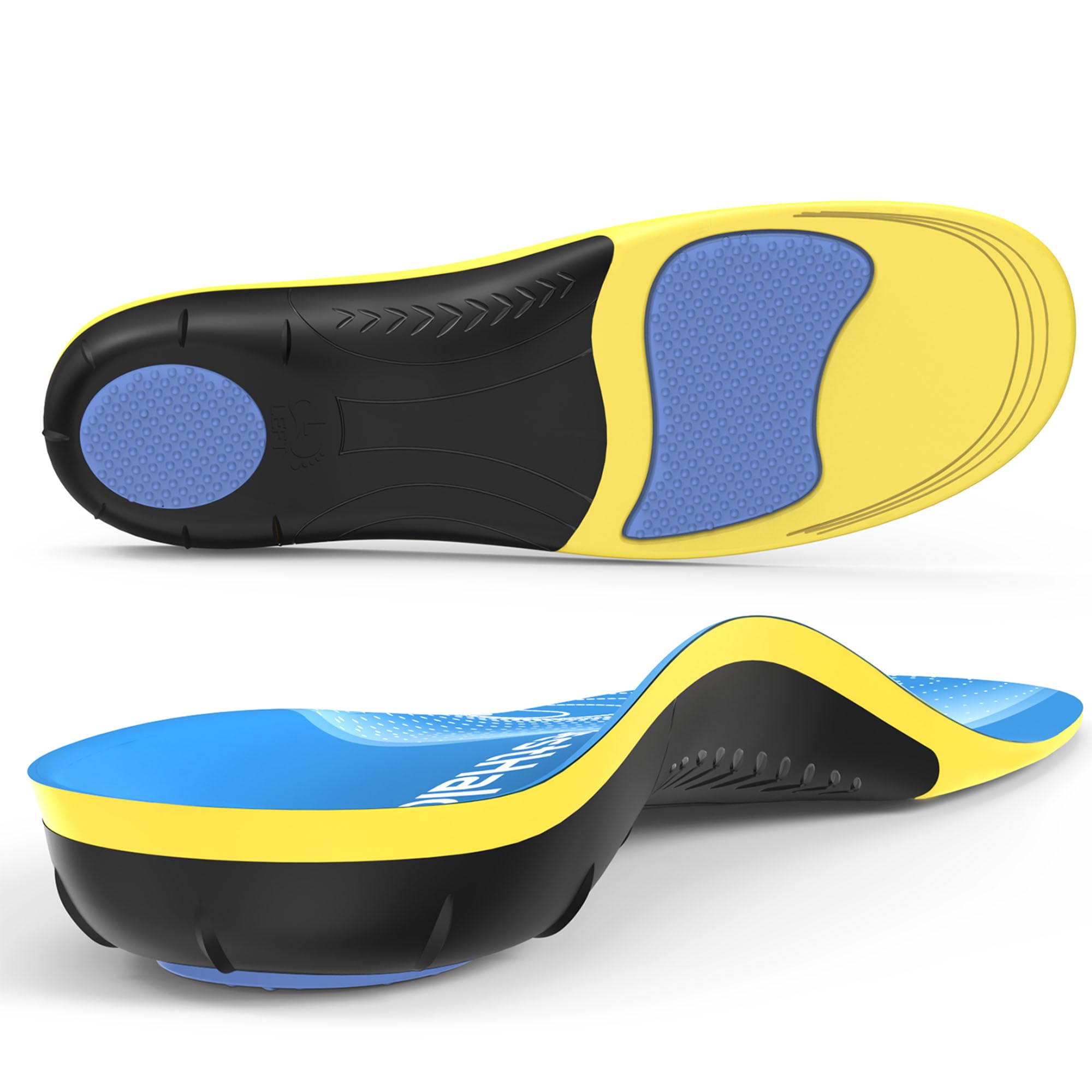
The BestHalo insole is engineered for high arches and heavier body weights — it uses a pronounced arch contour combined with a gel layer at the heel and forefoot to distribute pressure evenly. Multiple users who suffer from post-surgery nerve pain and radiating hip issues found that the high arch cradle eliminated pain that had been traveling up the posterior chain. The biomechanical design promotes natural heel-to-toe gait, which directly reduces the overloading of the tibialis anterior that drives shin splints.
The EVA and gel sandwich provides excellent durability under 220-plus pound loads without bottoming out. The deep heel cup holds the calcaneus firmly, which some users with sensitive heels found too rigid during the three-to-seven-day adaptation period. BestHalo recommends starting with two to three hours of wear and gradually increasing, which is standard for high-arch orthotics. The trim-to-fit pattern covers men’s sizes 9 through 10.5 and fits comfortably in work boots, tennis shoes, and casual sneakers.
For users with higher-than-average arches who have found that medium-arch inserts push the foot into further pronation, the BestHalo provides the aggressive lift needed to normalize the foot position and quiet the shin splint mechanism.
Why it’s great
- Pronounced high arch lifts the navicular in high-arched feet
- Gel layer attenuates shock without sacrificing durability
- Effective for posterior chain pain radiating from the foot
Good to know
- Requires a gradual break-in period of 3-7 days
- Heel cup may feel too firm for users with sensitive calcaneal fat pads
6. Professional Heavy Duty Support Pain Relief Orthotics
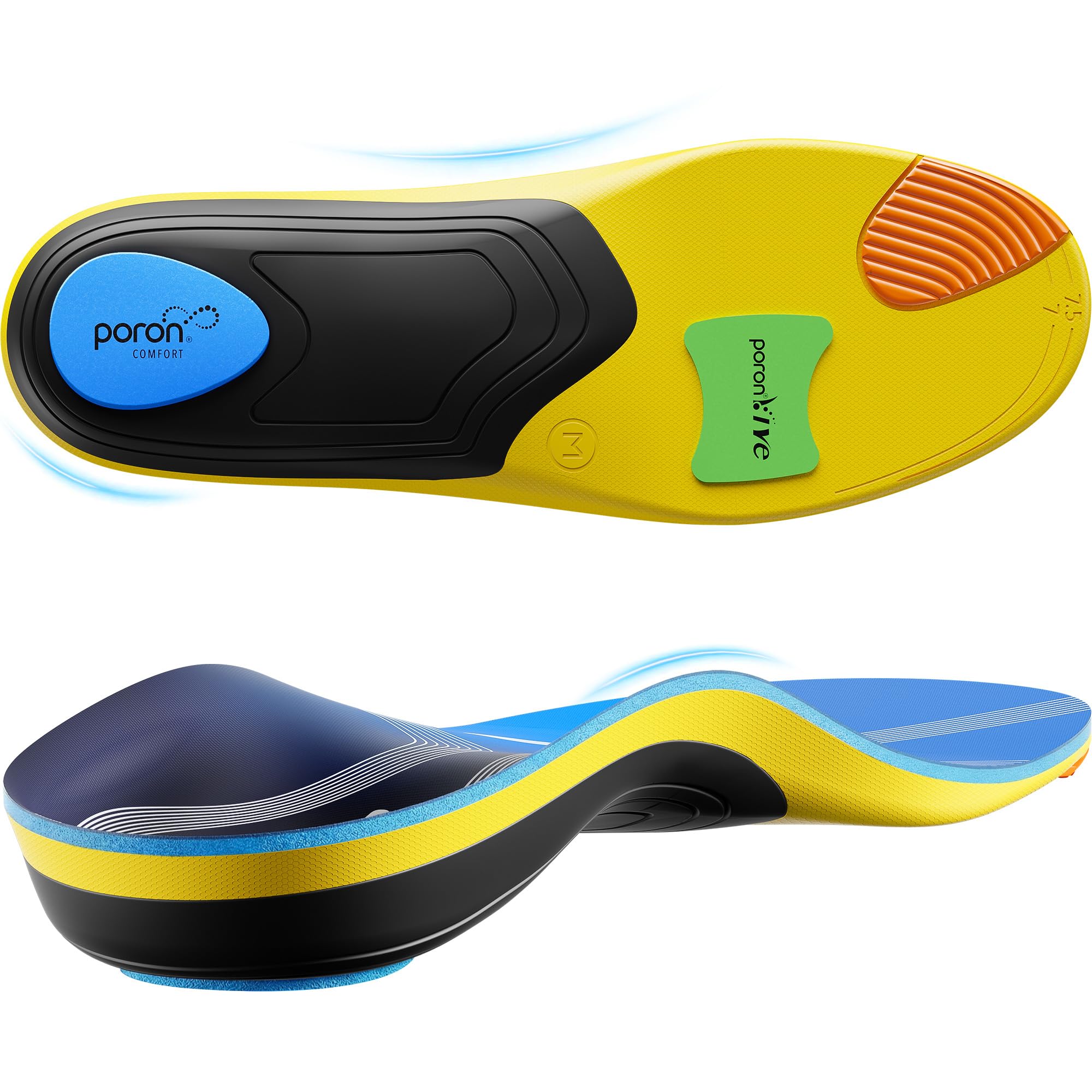
This budget-friendly orthotic packs a surprising amount of technology for its price point. The dual PORON (microcellular urethane) layer provides advanced shock absorption that rivals insoles twice the cost, and the Golden Triangle three-point support system locks the forefoot, arch, and heel into a stable tripod. Users who work nine-to-ten-hour shifts on hard flooring reported that the support did not flatten or produce odor after three weeks of daily use, and the medium arch height worked well for both normal and mildly flat arches.
The deep U-shaped heel cup prevents side slippage during walking and running, which reduces the torsional stress that often transfers into shin splint pain. The full PU bottom layer adds durability, though the insole is noticeably thick — users with low-volume shoes or tight laces found it necessary to loosen their footwear significantly. The trim-to-fit process is straightforward, and the size chart covers women’s sizes through men’s 13. Some reviewers noted that the insole took up enough volume that shoes felt cramped until the foam compressed slightly.
For anyone looking for genuine shin splint support on a tight budget, this is the strongest entry-level contender. The PORON core delivers the impact attenuation that budget insoles typically skip, and the three-point cradle provides enough pronation control to reduce tibial load during long shifts or daily walks.
Why it’s great
- PORON cushioning rivals premium insoles for shock absorption
- Three-point contact cradle stabilizes the foot during stance
- No odor or flattening after weeks of heavy daily use
Good to know
- Thick build reduces interior shoe volume noticeably
- May require lace loosening in low-cut or narrow footwear
7. Neo G NeoThotics ¾ Length Insoles

The Neo G NeoThotics stands apart from every other insole on this list with its ¾-length design — it runs from the heel to just behind the metatarsal heads, leaving the toes free. This makes it the only option that fits into shoes where a full-length insole would crowd the toe box, such as dress shoes, boots with toe caps, or cycling shoes. The premium-grade silicone construction absorbs shock and vibration effectively, and the heel cup provides good support for plantar fasciitis and Achilles issues that often accompany shin splints.
Because the silicone is self-adhesive and sits under the factory insole (or directly on the shoe bed), it does not slide around during movement. However, the sticky nature of the silicone can make it challenging to get the foot into the shoe without the insole shifting — once seated, it stays put. The lack of a forefoot arch element means that users whose shin splints stem from forefoot-driven overpronation may not get enough correction. The ¾-length also provides less overall structural control than a full-length rigid orthotic.
If your shin splints are primarily aggravated by heel-strike impact and you need a solution that fits footwear where full-length insoles cannot go, the Neo G NeoThotics works as a targeted shock absorber. It is not a full biomechanical correction tool, but for its niche, it is the only serious candidate.
Why it’s great
- ¾-length fits shoes that cannot accommodate a full-length insole
- Silicone construction absorbs vibration better than EVA alone
- Self-adhesive backing prevents slippage under the foot
Good to know
- Sticky silicone can shift during initial foot insertion
- Less overall arch control than a full-length rigid orthotic
FAQ
Can arch supports cure shin splints completely?
Should I choose a full-length or ¾-length insole for shin splints?
How tight should the arch support feel when I first wear it?
Final Thoughts: The Verdict
For most users, the best arch support for shin splints is the PowerStep Pinnacle because it offers a podiatrist-tested semi-rigid arch that stops overpronation without the bulk of a custom orthotic. If you are an athlete whose shin splints flare during high-impact sports, grab the Move Game Day for its reactive arch plate and deep heel cup. And for targeted overpronation correction at a mid-range price, nothing beats the QBK Memory Foam Insole with its medial wedge and TPU arch shell — these three cover every shin splint scenario most people will face.