
Our readers keep the lights on and the weekend projects moving. As an Amazon Associate, I earn from qualifying purchases.
The search for the perfect pair of open-back headphones is a journey into sound itself. You’re not looking for bass boosts or noise cancellation; you’re looking for transparency, imaging, and the ability to hear the space between the instruments as clearly as you hear the instruments themselves. This guide cuts through the marketing to focus on the only thing that matters: the performance of the driver and the accuracy of the tuning.
I’m Rikta — the co-founder and writer behind FitlyFast. I spend my time analyzing the frequency response graphs, comparing driver technology (dynamic vs. planar magnetic), and evaluating build ergonomics across hundreds of models to find the sets that justify their price with measurable performance gains.
Whether you are building your first critical listening rig or searching for your endgame setup, this deep-dive will help you identify the pair that matches your personal taste. After hours of research and cross-referencing technical specs with real-world user experience, this guide to the best audiophile headphones breaks down which models deliver the finest balance of detail, soundstage, and long-term comfort.
How To Choose The Best Audiophile Headphones
The right choice depends entirely on your sonic priorities and your existing gear. Do you value pinpoint imaging for critical mixing, or a wide, holographic soundstage for immersive listening? Are you prepared to invest in a dedicated amplifier, or do you need an efficient set that works with a simple dongle? Let’s break down the core differentiators.
Driver Technology: Dynamic vs. Planar Magnetic
The driver is the heart of the headphone. Dynamic drivers (found in most traditional headphones like the Sennheiser HD 490 PRO) use a voice coil and magnet to move a diaphragm. They excel at delivering punchy, impactful bass and a natural timbre, especially at their price point. Planar magnetic drivers (like those in the HIFIMAN Ananda Nano and Audeze LCD-X) use a thin, conductive diaphragm suspended between two magnetic arrays. This design offers exceptionally low distortion, lightning-fast transient response, and incredible detail retrieval, but often requires more power to drive properly. The choice here defines your headphone’s fundamental character.
Impedance, Sensitivity, and Amplification
Impedance (measured in ohms) and sensitivity (measured in dB/mW) tell you how much power a headphone needs to reach a given volume. Low-impedance, high-sensitivity models like the Sony MDR-MV1 (24 ohms) are easy to drive from a laptop or phone. High-impedance models like the Sennheiser HD 660S2 (300 ohms) and many planar magnetics demand a dedicated headphone amplifier to deliver their full dynamic range and bass control. Skipping the amp on a power-hungry headphone will result in a thin, lifeless sound.
Soundstage vs. Imaging: What’s the Difference?
Soundstage refers to the perceived “space” or “size” of the audio environment — does it feel like the music is happening inside your head, or in a concert hall? The Sennheiser HD 800 S is legendary for its massive, expansive soundstage. Imaging is the ability to pinpoint the exact location of an instrument or sound cue within that space. The Audio-Technica ATH-R70XA and ATH-AD900X are known for their precise, three-dimensional imaging, making them excellent for competitive gaming and complex orchestral mixes. A headphone can have a large soundstage but poor imaging, so clarity in this distinction is crucial.
Quick Comparison
On smaller screens, swipe sideways to see the full table.
| Model | Category | Best For | Key Spec | Amazon |
|---|---|---|---|---|
| HIFIMAN Ananda Nano | Planar Magnetic | Natural timbre & detail | 5Hz–55kHz Frequency Response | Amazon |
| HIFIMAN Arya Stealth | Planar Magnetic | Expansive soundstage | Stealth Magnet Design | Amazon |
| Sennheiser HD 800 S | Dynamic Driver | Reference-class imaging | 56mm Ring Radiator Driver | Amazon |
| Audeze LCD-X | Planar Magnetic | Studio mixing & bass slam | 106mm Planar Diaphragm | Amazon |
| Sennheiser HD 660S2 | Dynamic Driver | Intimate vocal presentation | 300 Ohm Impedance | Amazon |
| Sennheiser HD 490 PRO | Dynamic Driver | Entry-level critical listening | Low-Frequency Cylinder System | Amazon |
| Audio-Technica ATH-R70XA | Dynamic Driver | Featherweight long sessions | 199g Total Weight | Amazon |
| Sony MDR-MV1 | Dynamic Driver | Fatigue-free studio monitoring | 24 Ohm Low Impedance | Amazon |
| Audio-Technica ATH-AD900X | Dynamic Driver | Budget open-back entry point | 53mm Large-Aperture Driver | Amazon |
In‑Depth Reviews
1. HIFIMAN Ananda Nano

The HIFIMAN Ananda Nano represents a rare convergence of flagship technology at a mid-range price. Borrowing the nanometer-thickness diaphragm design from the legendary SUSVARA, this planar magnetic headphone delivers a level of transient speed and micro-detail that typically requires a much larger investment. The “Stealth Magnet” design reduces wave diffraction turbulence, resulting in a remarkably pure and uncolored sound.
Tonally, the Ananda Nano leans toward a neutral-bright signature. The bass is tight, controlled, and extends deeply without any bloat, offering a more natural presentation compared to the boomy, punchy bass of its sibling, the Edition XS. The midrange is forward and clear, bringing vocals and leading edges of instruments to the forefront. The treble is exceptionally detailed, though it has peaks around 8kHz and 10kHz that some listeners may find a touch bright on poorly mastered tracks; a gentle EQ adjustment tames this effortlessly.
Comfort is a mixed bag. The hybrid headband and large ear cups are well-padded, but the clamp force is significant, leading to some pressure after an hour for certain head shapes. The build uses a mix of metal and high-grade plastic that feels adequate, not luxurious. However, for its sonic performance—often compared favorably to the HE1000v4—the Ananda Nano is an outstanding value that challenges headphones costing twice as much.
Why it’s great
- Exceptional detail retrieval and transient speed.
- Natural, controlled bass with deep extension.
- Clear, forward midrange for vocal presence.
Good to know
- Bright treble may require EQ for sensitive listeners.
- Clamp force can cause discomfort after extended wear.
- Build quality is good but not luxurious.
2. HIFIMAN Arya Stealth Magnet Version

The HIFIMAN Arya Stealth is the headphone that defines the term “holographic soundstage.” It creates an expansive, three-dimensional audio canvas that extends well beyond the ears. Instruments float in a vast, well-defined space with precise positioning, making it an absolute joy for classical, jazz, and live recordings. It is a clear step up in refinement and detail retrieval from the Ananda Nano.
Its sound signature is balanced and musical. The bass is impactful and well-defined, though not as aggressive as some dynamic driver competitors. The midrange is smooth and liquid, while the treble is extended and airy without being harsh. The headphones reveal the quality of your source material ruthlessly; a poorly mastered track will sound flat, while a high-resolution recording will reveal every nuance. They pair beautifully with hybrid Class A tube amplifiers, which add a touch of warmth and magic to the presentation.
Build quality is a topic of mixed feedback. The headband is lightweight and comfortable for many, but the all-black aesthetic uses a high-grade plastic that does not feel as premium as its price suggests. The ear cups are large and can cause some jaw pressure for certain users. The 3.5mm user-replaceable connectors are a welcome touch for durability. For its sheer ability to transport you into the recording venue, the Arya Stealth is a benchmark performer.
Why it’s great
- Stunningly wide and precise holographic soundstage.
- Excellent detail retrieval and musicality.
- Responds beautifully to quality tube amplification.
Good to know
- Build uses plastic parts that feel less premium.
- Large earpads can cause jaw pressure for some.
- Requires clean, powerful amplification to shine.
3. Sennheiser HD 800 S

The Sennheiser HD 800 S is an icon in the audiophile world, celebrated for its extraordinary soundstage and surgical precision. Its unique 56mm ring radiator driver, the largest ever used in a dynamic headphone, creates an incredibly spacious and airy presentation. The proprietary absorber technology smoothes out treble peaks, resulting in a more refined listening experience than the original HD 800.
Tonally, the HD 800 S is bright and analytical. The bass is present but lean, lacking the weight and slam of planar magnetic competitors. The midrange is detailed but can sound slightly thin for some, particularly those used to the warmer Sennheiser HD 600 series. Its superpower is resolution: it unearths micro-details, reverb trails, and subtle spatial cues that lesser headphones gloss over. This makes it an unparalleled tool for critical listening, mixing, and mastering, but it can be unforgiving of poor recordings.
Comfort is excellent for extended sessions, thanks to its lightweight magnesium construction and micro-fiber ear pads. The Japanese-made build quality is superb, with a distinct, industrial aesthetic. While it requires a high-quality DAC and amplifier to perform optimally, the HD 800 S remains the standard by which all other headphones are measured for soundstage width and technical ability. It is the ultimate tool for those who prioritize absolute clarity and precision.
Why it’s great
- Unmatched soundstage width and spatial precision.
- Exceptional detail retrieval and micro-dynamic resolution.
- Lightweight and very comfortable for long listening.
Good to know
- Bass is lean and may sound thin to some listeners.
- High-impedance requires a powerful, pristine amplifier.
- Can be analytical and unforgiving of poor recordings.
4. Audeze LCD-X

The Audeze LCD-X is the headphone of choice for professional recording engineers, and for good reason. Its massive 106mm planar magnetic drivers deliver distortion-free, incredibly detailed sound with authority and slam that few can match. The 2021 revision improved comfort with a new ear pad design, and the all-metal, leather-accented build feels like it was machined from a solid block—which it practically is.
Out of the box, the LCD-X has a slightly dark tonal balance, with a rolled-off upper treble. This is a deliberate design choice for fatigue-free mixing, but most users will want to apply the Oratory 1990 or Reveal+ EQ preset to unlock its full potential. When properly equalized, it offers a breathtakingly flat, neutral response with thunderous, distortion-free sub-bass, crystal clear mids, and exceptional dynamics. The soundstage is more intimate than the HD 800 S or Arya, but the imaging and instrument separation are top-tier.
The primary trade-off is weight. At around 600g, the LCD-X is a heavy headphone. While the thick leather headband and plush pads distribute the weight well, it can cause neck fatigue during very long sessions. The 20-ohm impedance and high sensitivity make it surprisingly easy to drive for a planar magnetic, working well with a variety of amplifiers. For its unparalleled bass authority, raw detail, and tank-like build, the LCD-X is a professional audio powerhouse.
Why it’s great
- Incredible, distortion-free bass authority and slam.
- Exceptional detail and dynamics when EQ’d properly.
- Tank-like all-metal build quality, made in the USA.
Good to know
- Heavy design can cause neck fatigue over time.
- Out-of-box tuning is dark and benefits greatly from EQ.
- Requires a quality amplifier for optimal performance.
5. Sennheiser HD 660S2
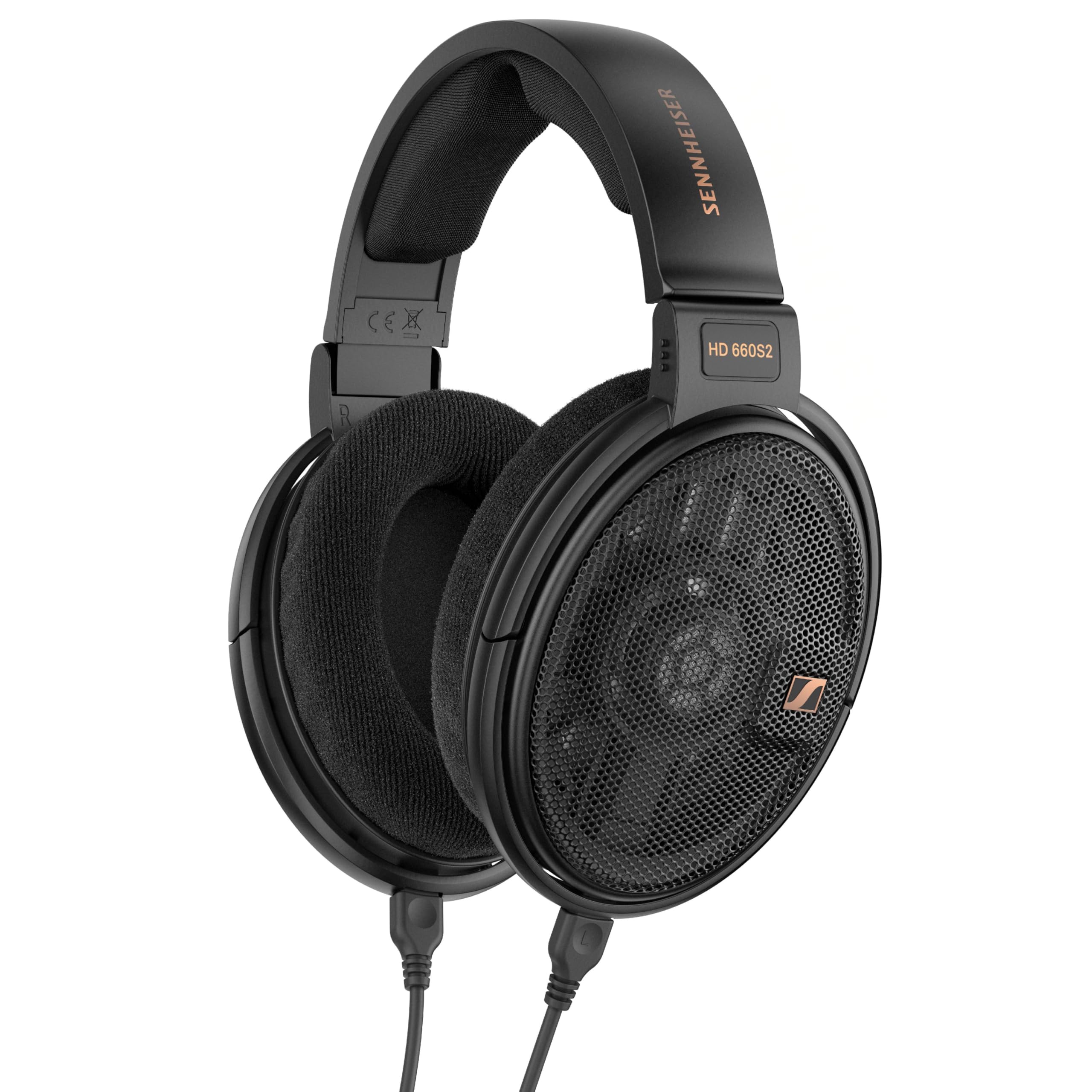
The Sennheiser HD 660S2 is a refined evolution of the legendary HD 600 series, designed to address the primary criticism of its predecessors: a lack of bass extension. By redesigning the voice coil and driver, Sennheiser has delivered an open-back headphone that retains the natural, intimate midrange and smooth treble the line is famous for, while adding a welcome warmth and depth to the low-end.
The HD 660S2 offers a “you are there” intimacy rather than the “they are here” spaciousness of the HD 800 S. The soundstage is relatively narrow and focused, but the imaging is pinpoint accurate. This makes it fantastic for critical vocal tracking and mixing, as well as for listeners who want a rich, engaging, and non-fatiguing experience. It excels at acoustic music, vocals, and jazz, presenting them with a lifelike timbre that is difficult to fault.
Build quality is excellent, with a classic understated aesthetic. At 300 ohms, it requires a dedicated amplifier to sound its best; a standard motherboard output will leave it sounding thin and lifeless. The cables are a common point of criticism for being microphonic and stiff, but the balanced 4.4mm cable included in the box is a real value-add. For the listener seeking a direct, emotional connection to the music without harshness, the HD 660S2 is a masterclass in natural sound.
Why it’s great
- Natural, lifelike timbre with rich, intimate vocals.
- Warm and extended bass compared to the HD 660S.
- Class-leading comfort for long listening sessions.
Good to know
- Soundstage is narrow and intimate.
- High-impedance demands a capable headphone amp.
- Stock cables are prone to microphonics.
6. Sennheiser HD 490 PRO

The Sennheiser HD 490 PRO is a purpose-built tool for mixing, mastering, and gaming that punches well above its weight. Its open-back architecture and patented low-frequency cylinder system deliver a remarkably clear, tight, and punchy bass that is among the best in the dynamic driver world at this price. The frequency response is flat and uncolored, providing an honest representation of your audio.
Its standout feature is the dual ear pad system. The “mixing” pads provide a more analytical sound with a sharper transient response, while the “producing” pads offer a slightly warmer, more relaxed tuning for longer sessions. This flexibility makes it incredibly versatile. The imaging is crystal clear and precise, making it a beast for competitive gaming where positional audio is critical. The soundstage is more intimate than the HD 800 S but wider than the HD 660S2.
Comfort is top-tier due to its low weight (about 260g) and flexible, twistable ear cups. The fiberglass-reinforced polymer build is durable and professional. With an impedance of 130 ohms and high sensitivity, it is easy to drive from a good audio interface or laptop, though it still benefits from a dedicated amp. The HD 490 PRO is a fantastic starting point for anyone entering the world of professional audio.
Why it’s great
- Excellent bass control and punch for open-backs.
- Versatile dual ear pads for mixing and producing.
- Superb comfort and easy to drive.
Good to know
- Proprietary pads with limited aftermarket options.
- Build uses polymer, not all-metal.
- Soundstage is not as wide as some competitors.
7. Audio-Technica ATH-R70XA
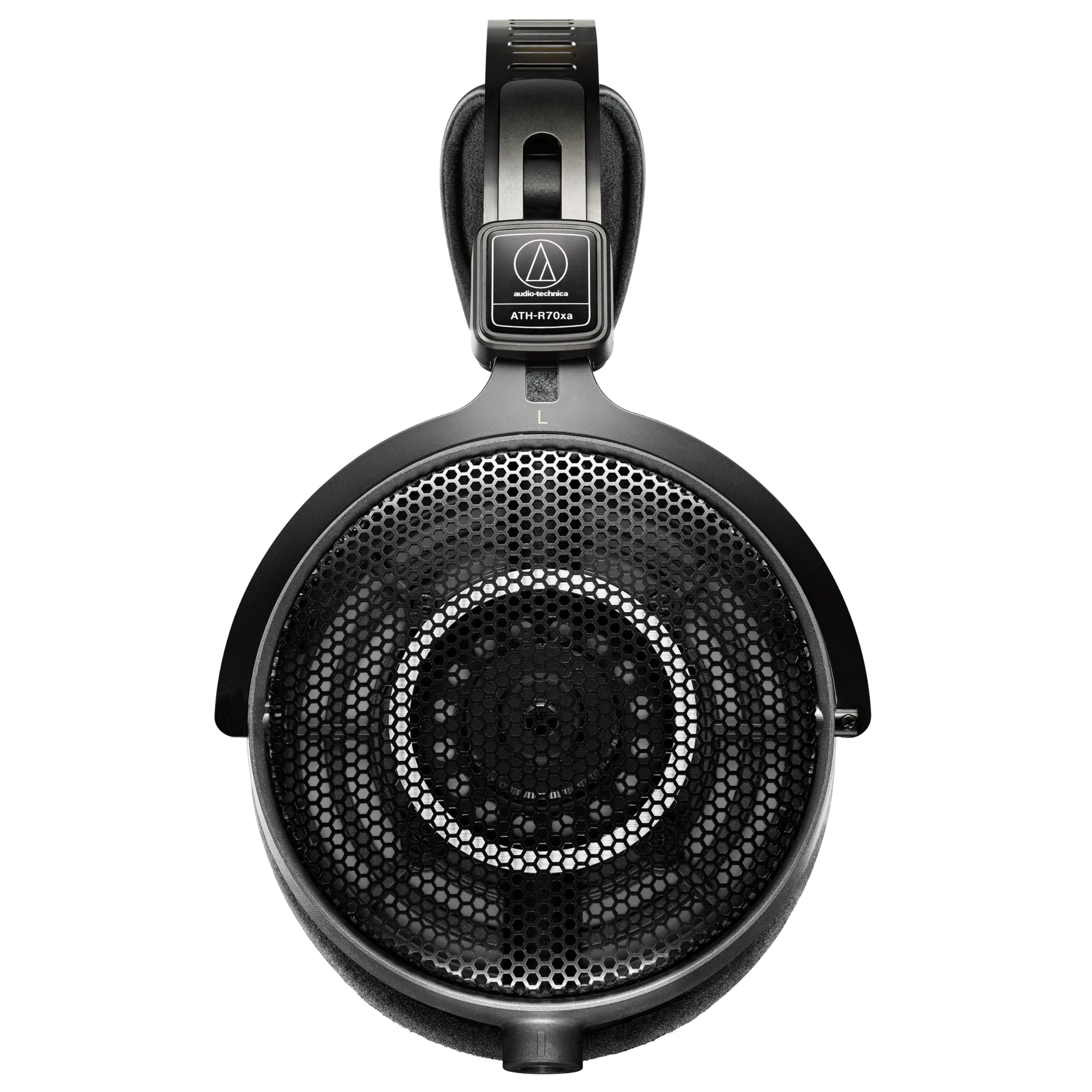
The Audio-Technica ATH-R70XA is a marvel of ergonomic design. At just 199 grams, it is one of the lightest, most comfortable open-back headphones on the market. The featherweight build and gentle clamp force make it easy to wear for entire workdays without fatigue. The dual-sided, L/R independent locking cable is a thoughtful touch that ensures proper stereo orientation.
Sonically, the R70XA offers a neutral, transparent, and highly detailed presentation. The bass is clean and well-extended, the mids are open and revealing, and the treble is smooth without being dull. It excels at imaging and spatial cues, making it a favorite for both critical listening and gaming. Its resolution is impressive for its class, pulling out micro-details in recordings that other headphones in its range miss. It scales well with better gear, responding to a quality DAC and amp with improved clarity and bass extension.
Its Japanese craftsmanship is apparent, but the build uses a carbon composite resin that, while lightweight, does not feel as premium as some metal competitors. The 470-ohm impedance means it absolutely needs a dedicated amplifier to perform; a phone or motherboard output will not do it justice. For the listener who prioritizes comfort above all else without sacrificing high-fidelity sound, the R70XA is an elegant solution.
Why it’s great
- Incredibly lightweight and comfortable for all-day wear.
- Neutral, transparent sound with excellent detail.
- Precise imaging and spatial positioning.
Good to know
- High impedance requires a powerful amp.
- Build uses lightweight resin, not all-metal.
- Stock cable is not balanced and looks utilitarian.
8. Sony MDR-MV1

The Sony MDR-MV1 is a hidden gem designed for spatial audio mixing but perfect for the discerning listener. Its low impedance (24 ohms) and high sensitivity (100 dB/mW) make it one of the easiest to drive headphones in its class, working beautifully directly from an audio interface, laptop, or even a dongle DAC. This is a major advantage for users who do not want to invest in a separate high-power amplifier.
Sonically, it offers a “gentle V-shape” tuning with a warm lower midrange, punchy and well-extended bass, and a smooth, non-fatiguing treble. The soundstage is impressively wide and airy, with excellent depth. The imaging is sharp, making it easy to pinpoint instruments in a complex mix. It is a very musical, engaging listen that still retains a professional, neutral enough character for monitoring work. It provides a more forgiving and fun experience than the ruthlessly analytical HD 800 S.
Comfort is a standout feature. At 223 grams with soft suede ear pads and a gentle clamp, it is easy to forget you are wearing them. The all-aluminum build feels premium and lightweight. The main drawbacks are the stock cable, which is long, tangles easily, and has a bulky 1/4-inch termination, and the proprietary pads which have limited aftermarket replacements. For a plug-and-play high-fidelity experience, the MDR-MV1 is superb.
Why it’s great
- Exceptionally easy to drive from any source.
- Warm, musical, and non-fatiguing sound signature.
- Superb comfort and lightweight design.
Good to know
- Stock cable is long, tangly, and microphonic.
- Proprietary ear pads limit customization.
- Not the most neutral option for critical mixing.
9. Audio-Technica ATH-AD900X
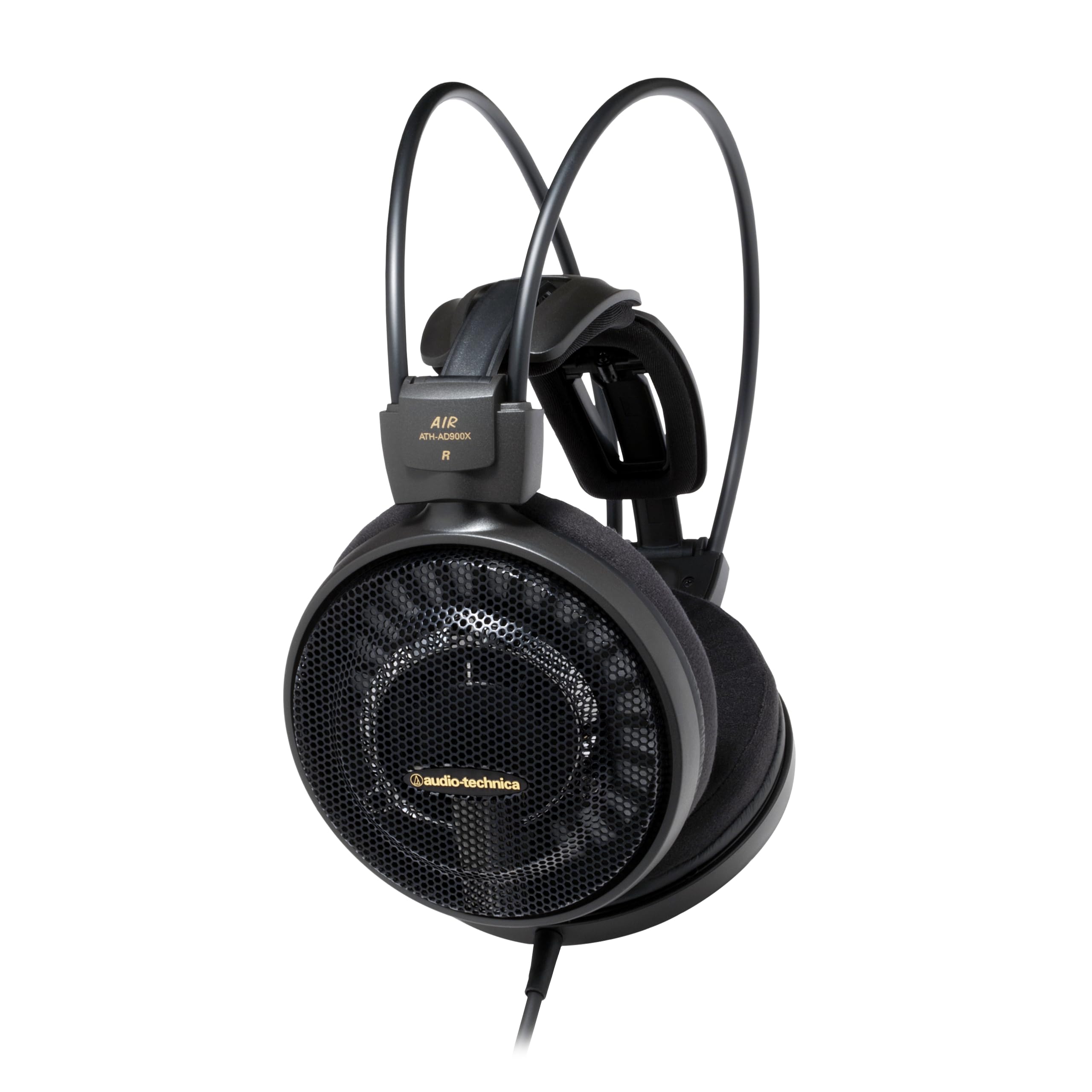
The Audio-Technica ATH-AD900X is the definitive entry point into the world of high-fidelity open-back sound. Its large 53mm drivers deliver a clear, neutral, and spacious sound signature with a strong emphasis on vocals and acoustic instruments. The mids and highs are crisp and detailed, offering a level of clarity that is surprising at this price point, making it excellent for gaming and acoustic music.
The headphone’s soundstage is wide and airy, providing a great sense of space. The “3D Wing Support” headband is a unique design that offers a very light and airy fit, but it relies on gravity and can feel loose or slip with sudden head movements. The ear cups are massive and generously padded with velour, which is comfortable for long sessions, though the shallow depth can cause ears to graze the driver housing.
The bass is the primary trade-off. It is tight and present but lacks the weight and sub-bass extension of more expensive models or closed-back alternatives. This is a bright headphone that emphasizes clarity over impact, so it is not suited for bass-heavy genres. It also leaks significant sound and requires an amplifier to reach its full potential. For an affordable, open, and articulate listening experience, the ATH-AD900X is a fantastic starting point.
Why it’s great
- Clear, detailed mids and highs for vocals and acoustics.
- Wide soundstage and good imaging for gaming.
- Unique, lightweight wing support system.
Good to know
- Bass is light and lacking in sub-bass impact.
- Wing support can be loose and unreliable.
- Non-replaceable cable is a durability concern.
FAQ
What amplifier do I need for a 300-ohm headphone like the HD 660S2?
Is a planar magnetic headphone always better than a dynamic driver?
Why do some open-back headphones need burn-in time?
Final Thoughts: The Verdict
For most users, the best audiophile headphones winner is the HIFIMAN Ananda Nano because it delivers a near-flagship level of detail and refinement at a price that offers incredible value. If you want a massive, holographic soundstage, grab the HIFIMAN Arya Stealth. And for the ultimate in precision mixing and soundstage width, nothing beats the Sennheiser HD 800 S.