
Our readers keep the lights on and the weekend projects moving. As an Amazon Associate, I earn from qualifying purchases.
Lectures move fast, and even the sharpest note-taker misses critical details when a professor shifts topics or a guest speaker drops a key stat mid-sentence. A dedicated audio recorder for lectures solves that by capturing every syllable with clarity, freeing you to listen actively instead of scribbling furiously.
I’m Rikta — the co-founder and writer behind FitlyFast. I’ve spent hundreds of hours analyzing recording hardware, comparing microphone sensitivity specs, noise-reduction algorithms, and battery endurance data to separate genuinely useful devices from the ones that just look good on paper.
After combing through dozens of models and thousands of verified buyer experiences, I’ve pulled together the seven best options available now for finding the right audio recorder for lectures that matches how you actually study or work.
How To Choose The Best Audio Recorder For Lectures
Selecting the right recording device for academic settings goes beyond just picking the cheapest option. You need to weigh storage capacity, battery life, microphone quality, and file management features to ensure you never lose a critical lecture.
Storage Capacity and Expandability
A typical lecture runs 60 to 90 minutes. If you record five lectures per week, you’ll fill a 4GB recorder in under a month at high-quality settings. Look for models with at least 8GB of internal storage or a microSD slot so you can swap cards between semesters without deleting old files.
Battery Life and Charging Convenience
Nothing derails a recording session faster than a dead battery. Devices powered by standard AAA alkaline cells let you swap batteries in seconds, while built-in rechargeable batteries need advance planning. Aim for recorders that offer at least 20 hours of continuous operation to cover a full week of lectures on a single charge or set of batteries.
Microphone Quality and Noise Reduction
Large lecture halls create echo, and side conversations add unwanted noise. A recorder equipped with a stereo microphone and a digital signal processing (DSP) chip can isolate the speaker’s voice and filter out ambient rumble. Voice-activated recording (VOR) is also useful because it pauses during pauses, saving storage and reducing playback scrubbing.
File Transfer and Connectivity
After the lecture, you need to move the audio file to your laptop or phone for note-taking. Built-in USB connectors (either USB-A or USB-C) simplify transfers without hunting for a cable. Some newer models even offer AI-powered transcription, which converts speech directly to text and saves hours of manual work.
Quick Comparison
On smaller screens, swipe sideways to see the full table.
| Model | Category | Best For | Key Spec | Amazon |
|---|---|---|---|---|
| Plaud NotePin S | AI Wearable | AI transcription & summaries | 64GB + GPT-based transcribe | Amazon |
| Olympus WS-883 | Traditional | Reliable everyday use | 8GB + 32GB expandable | Amazon |
| AFFETUNI Magnetic | AI Enhanced | Long-term continuous recording | 128GB + 35‑day battery | Amazon |
| Sony ICD-PX440 | Starter | Simple plug-and-play | 4GB + microSD expansion | Amazon |
| OM SYSTEM WS-882 | Traditional | Stereo interviews | 4GB + 32GB microSD | Amazon |
| Olympus WS-700M | Budget Friendly | Entry-level lectures | 4GB internal + microSD | Amazon |
| Yegolito 128GB | Value | Mass storage on a budget | 128GB + 35‑hour battery | Amazon |
In‑Depth Reviews
1. Plaud NotePin S
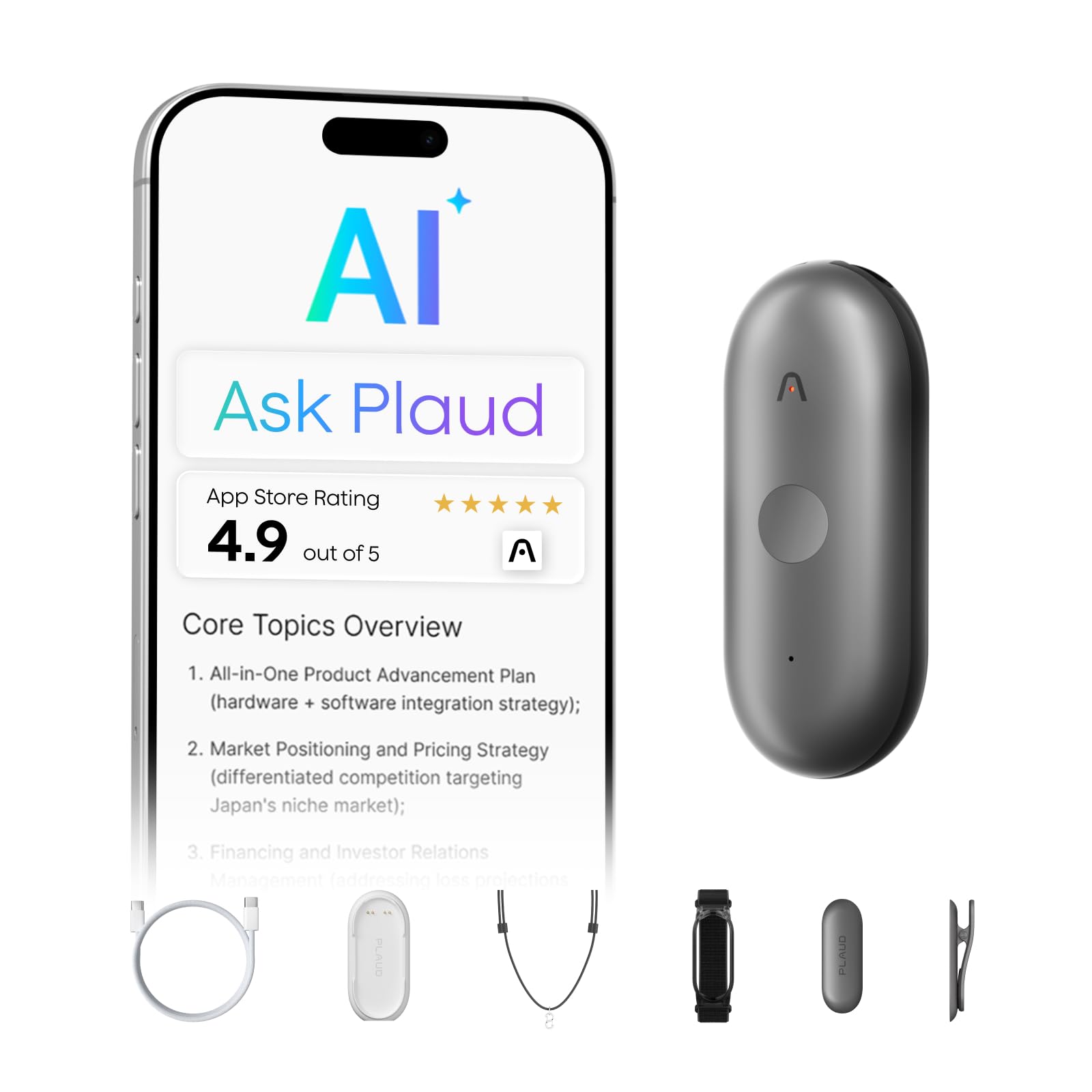
The Plaud NotePin S is a wearable AI recorder that captures, transcribes, and summarizes conversations across more than 100 languages. Instead of storing raw audio files that you must replay and type up, it uses GPT‑5.5, Claude Sonnet, and Gemini models to convert speech into structured notes, mind maps, and to‑do lists. Four included accessories — clip, lanyard, wristband, and magnetic pin — let you wear it discreetly on a lapel or bag strap, keeping the 0.61‑ounce device within easy reach during long lectures.
The single physical record button provides tactile control so you never accidentally stop a recording mid‑lecture. Battery life reaches 20 continuous hours, and standby stretches to 40 days, more than enough for a full week of classes between charges. The device stores up to 64GB of audio locally, and the free Starter Plan delivers 300 transcription minutes per month — sufficient for most students — while Pro and Unlimited plans scale up for heavy users.
Enterprise‑grade privacy certifications (ISO 27001, SOC 2, HIPAA, GDPR) mean sensitive lecture content stays secure. Cross‑device syncing via desktop, web, and mobile apps makes it easy to review transcripts on any screen. Whether you need instant summaries for study guides or verbatim transcripts for research, this recorder transforms how you process lecture material.
Why it’s great
- AI transcription saves hours of manual note-taking
- Wearable design with four mounting options for hands‑free capture
- Strong privacy compliance for sensitive academic content
Good to know
- Advanced transcript features require monthly subscription beyond free tier
- No headphone jack for live monitoring
2. Olympus WS-883 Digital Voice Recorder

The Olympus WS-883 builds on a legendary reliability reputation that court reporters have trusted for decades. It ships with 8GB of internal memory, double the base storage of its predecessor, and includes a microSD slot that expands capacity up to 32GB. True stereo microphones capture the full spatial sound of a lecture hall, and the built‑in low‑cut filter reduces air‑conditioning hum and projector fan noise that often muddy classroom recordings.
Battery life reaches 68 hours on two AAA alkaline cells, easily covering a full academic week without a swap. The USB‑A connector slides directly out of the chassis for immediate file transfer without hunting for cables — a huge convenience when you need to offload recordings between back‑to‑back classes. Linear PCM and MP3 recording formats let you choose between archival‑quality WAV files (ideal for language study) or space‑saving MP3s for everyday note review.
Users report that the WS‑883 pairs well with external microphones for even better pickup in large halls or when the speaker walks away from the podium. The one‑handed slide switch and two‑button control layout is intuitive enough for anyone to operate without reading a manual, yet the device offers advanced features like index marking and adjustable playback speed for serious note‑takers.
Why it’s great
- True stereo microphones with low‑cut filter for clear lecture audio
- Retractable USB‑A for instant drag‑and‑drop file transfer
- 68‑hour battery life from standard AAA batteries
Good to know
- Onboard rechargeable battery is a NiMh pack, not replaceable in the field
- Auto power‑off timer cannot be disabled, may interrupt very long recordings
3. AFFETUNI 128GB Magnetic Voice Recorder
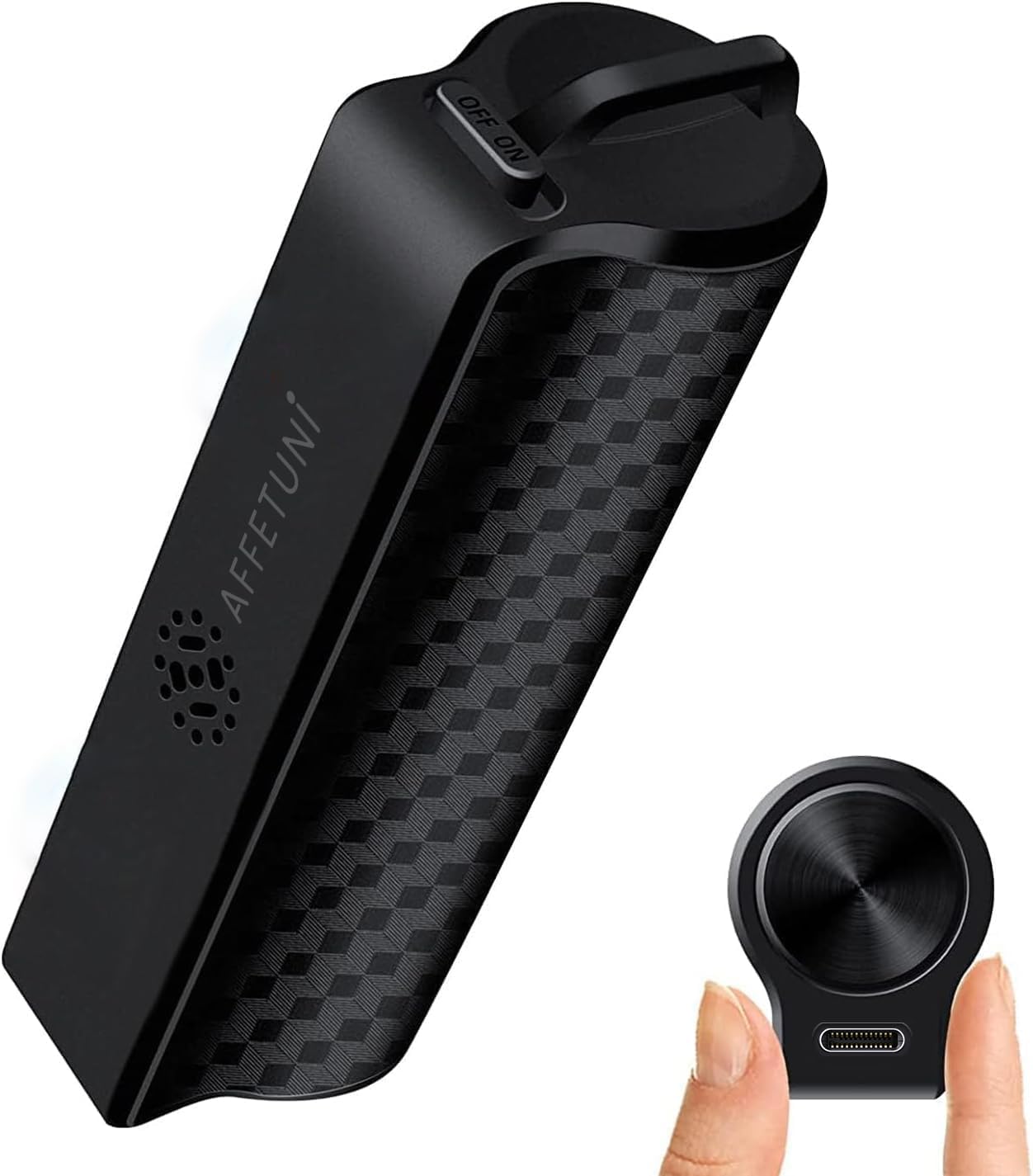
The AFFETUNI Magnetic Voice Recorder stands out for its extraordinary battery endurance: up to 35 days of continuous recording on a single charge. That makes it a no‑thought solution for semester‑long projects where you need to record every lecture without worrying about battery depletion. The 128GB internal storage holds over 600 hours of high‑quality WAV audio, eliminating the need for memory cards or file management until after the course ends.
AI‑powered triple‑layer noise reduction intelligently filters out background chatter, HVAC rumble, and paper shuffling, leaving the professor’s voice crisp even in crowded halls. The built‑in magnet lets you attach the recorder to any metal surface — a seat frame, podium leg, or whiteboard rail — for stable placement without a clip or stand. Voice‑activated recording (VOR) automatically pauses during silent moments, saving both battery and storage while simplifying playback by removing long pauses.
File transfer happens over USB‑C, which is becoming the universal standard for laptops and tablets. The compact 2.9‑inch body weighs only 65 grams, making it easy to drop into a pencil case or slide into a notebook pocket. Reviewers consistently note that the recorder picks up clear audio from across a room, and the one‑slider start mechanism is reliable for quick activation as the professor begins speaking.
Why it’s great
- 35‑day continuous recording needs almost no charging during a semester
- 128GB storage holds hundreds of lectures without card swaps
- Strong magnet for versatile hands‑free mounting
Good to know
- No dedicated iOS/Android app for direct phone connection
- Some users report initial connection issues with iPhones
4. Sony ICD-PX440 Stereo IC Digital Voice Recorder
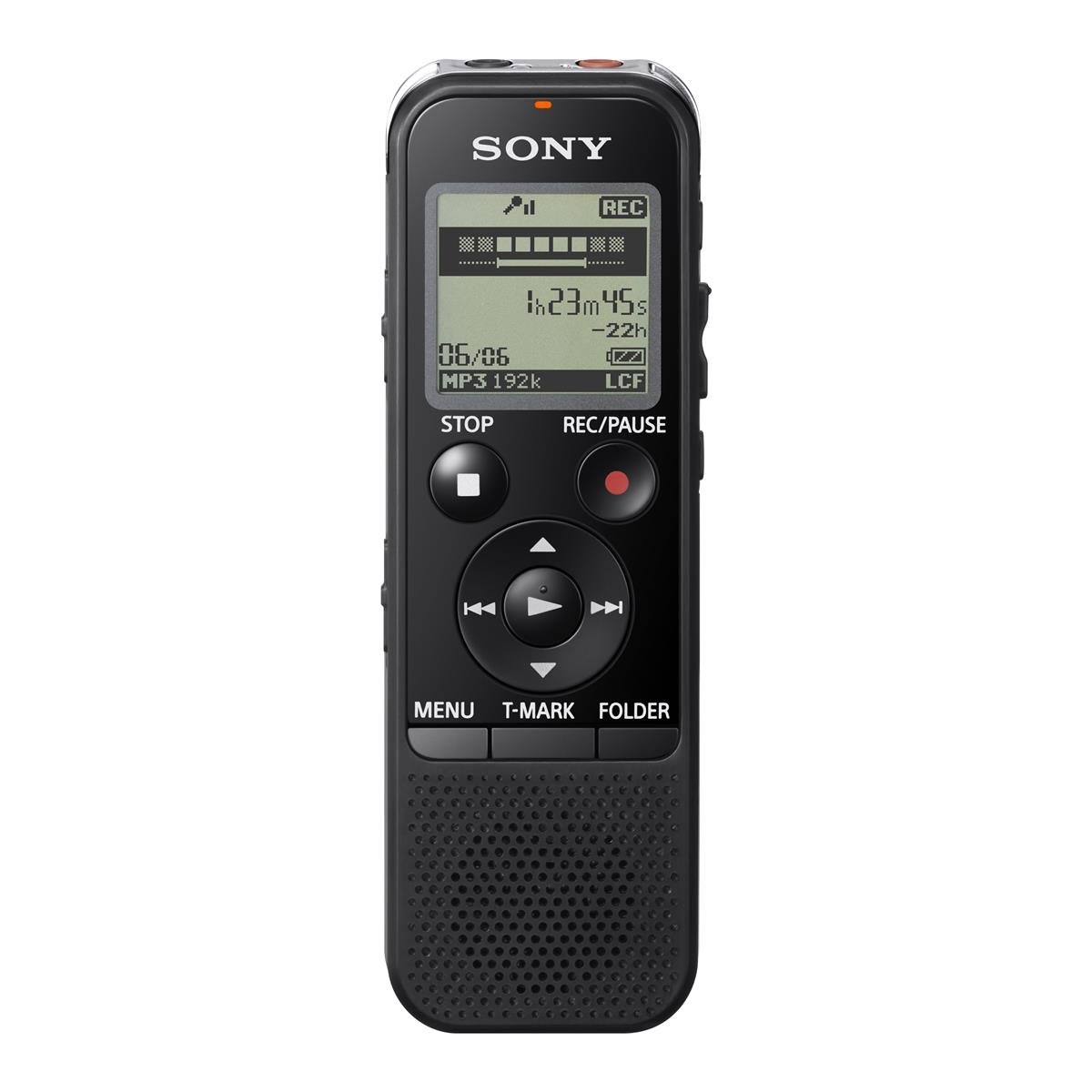
The Sony ICD-PX440 is a straightforward digital recorder that prioritizes ease of use above all else. Scene Select modes — including a dedicated lecture preset — automatically adjust microphone sensitivity and noise filtering for common recording environments, so you never need to tweak gain levels manually. The stereo microphone delivers clear pickup for a medium‑sized classroom, and intelligent noise cut reduces the ambient drone of projector fans and central HVAC systems.
Built‑in 4GB flash memory stores up to 1,073 hours at the lowest MP3 bitrate, and a microSD/memory stick slot offers expansion up to 32GB for longer recordings. The slide‑out USB connector plugs directly into a computer for instant drag‑and‑drop file transfer without a cable. Two AAA alkaline batteries deliver approximately 65 hours of operation, which translates to weeks of class use before replacement.
Users frequently pair this model with an external lapel microphone like the Sony ECM‑CS3 to improve pickup when the professor moves away from the podium. The menu system is intentionally simple — no steep learning curve. A small criticism is the lack of a backlit screen, which can make navigation tricky in dim lecture halls. Still, for students seeking a no‑frills workhorse that just works, the ICD‑PX440 remains a top contender.
Why it’s great
- Scene Select presets optimize settings for lectures instantly
- Slide‑out USB provides cable‑free computer connection
- 65‑hour battery life on cheap, replaceable AAA batteries
Good to know
- Screen lacks backlight, difficult to read in low light
- No headphone jack for live monitoring during recording
5. OM SYSTEM Olympus WS-882 Digital Voice Recorder

The OM SYSTEM WS‑882 carries forward the Olympus heritage of reliable voice recording with a focus on audio fidelity. It records in both Linear PCM and MP3 formats, giving you the option to capture lossless WAV files for transcription work or compressed MP3s for everyday review. The internal 4GB memory holds up to 1,040 hours of audio, and a microSD slot expands capacity further — though users note the boot time increases significantly with larger cards.
Battery life is excellent at 68 hours on two AAA cells, ensuring the recorder survives a full semester without frequent battery changes. The USB‑A direct connector simplifies file transfer to any laptop without extra cables. Reviewers praise the WS‑882 for stereo recording quality when used with an external microphone, making it a solid choice for podcasting or capturing Q&A sessions with multiple speakers.
The interface feels dated compared to modern touch screen devices, but the physical buttons offer reliable, tactile control that never fails during a recording. The power‑off switch doubles as a hold feature, preventing accidental recordings from filling storage. If you need a traditional recorder with expandable storage and professional‑grade audio capture for lecture use, this model delivers dependable performance.
Why it’s great
- Linear PCM recording for high‑fidelity audio archives
- 68‑hour battery life on common AAA batteries
- Expandable storage via microSD for long lecture series
Good to know
- Large SD cards cause slow boot times (20 seconds with 32GB card)
- Not chargeable via USB — uses standard batteries only
6. Olympus WS-700M Digital Voice Recorder

The Olympus WS‑700M is an entry‑level recorder that still holds up well for light lecture use. It packs 4GB of internal memory and a microSD card slot for expansion, offering enough capacity for a semester of standard MP3 recordings. Voice activation (VCVA) automatically pauses the recorder during quiet moments, preserving battery and storage while making playback more efficient by skipping long pauses.
The built‑in USB connector swings out for direct computer connection, a feature many budget recorders omit. Scene Select presets adjust settings for lectures, meetings, or dictation, and the large backlit LCD screen remains readable even in dim auditoriums. Battery life is rated at over 1,000 hours of recording at the lowest quality, but practical use at standard MP3 quality still delivers multiple weeks of class coverage on a single set of rechargeable AAA batteries.
Users note that the built‑in microphone is adequate for quiet rooms but benefits from an external mic in larger spaces. The WS‑700M records in MP3, WMA, and PCM formats, giving you flexibility to choose file size over fidelity. For students on a limited budget who need a reliable recorder for straightforward lecture capture, this is a proven option with a strong track record of durability.
Why it’s great
- Voice activation saves battery and storage during silent periods
- Backlit LCD screen is easy to read in dark lecture halls
- Multiple recording formats (MP3, WMA, PCM) for flexibility
Good to know
- Mono microphone limits spatial sound capture compared to stereo models
- Lower internal storage requires more frequent file transfers
7. Yegolito 128GB Voice Recorder
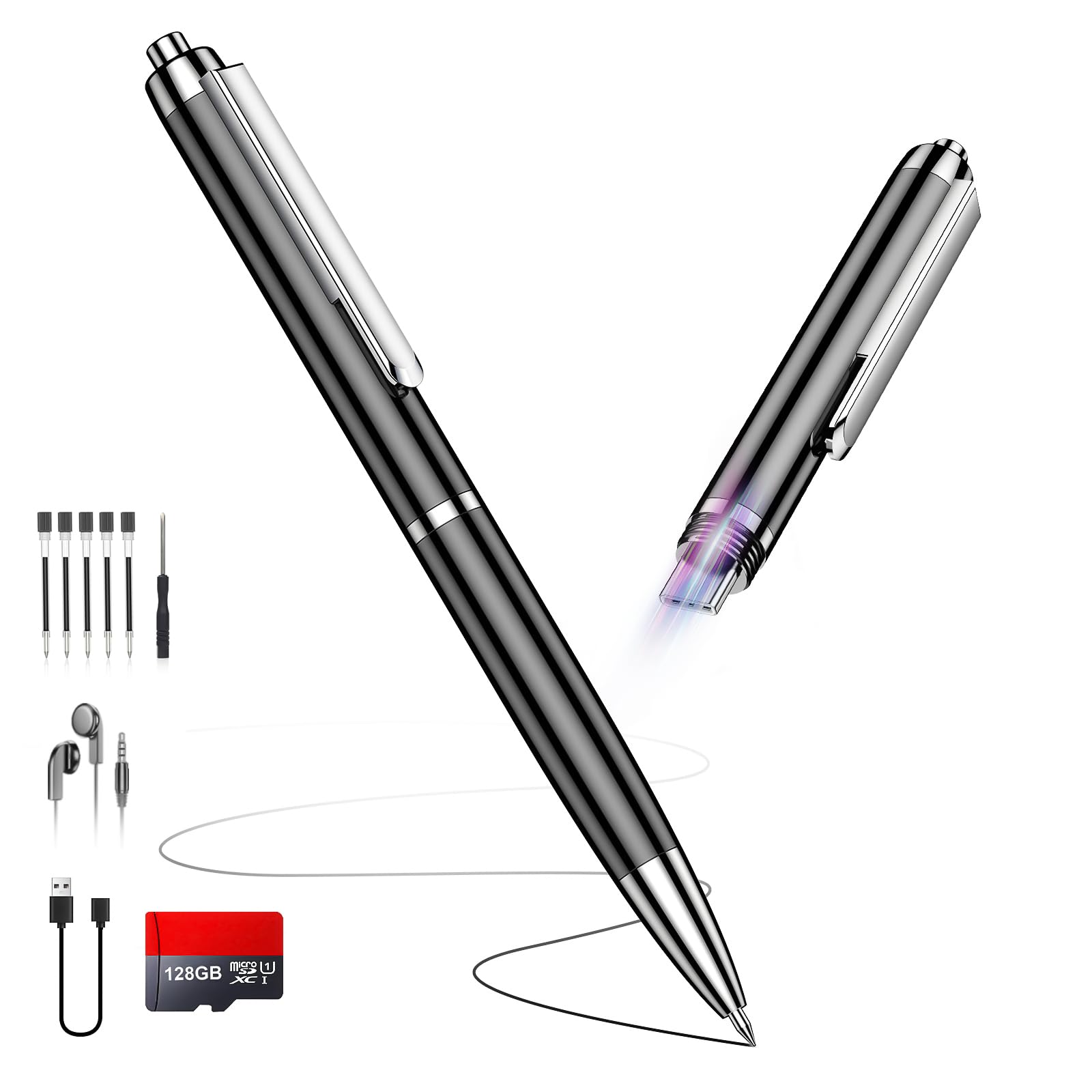
The Yegolito 128GB Voice Recorder delivers massive built‑in storage at a budget‑friendly price. Unlike many value options that cap out at 4GB or 8GB, this recorder offers a full 128GB of onboard memory, storing over 9,800 hours of audio. That’s enough capacity to save recordings from every lecture of a multi‑year degree program without ever deleting a file. The rechargeable battery provides 35 hours of continuous recording, covering an entire week of classes on a single charge.
A 360‑degree omnidirectional microphone picks up sound from all directions, ensuring you catch the professor’s voice even when they turn toward the whiteboard. The DSP noise reduction chip intelligently filters ambient room noise, leaving clean audio for later review. A unique ballpoint‑pen button mechanism activates recording with one press and saves the file when pressed again — literally as simple as clicking a pen. Voice‑operated recording (VOR) skips silent gaps, and the unit can split long recordings into user‑defined segments with timestamped filenames.
The built‑in USB‑C port allows direct connection to modern laptops and Android phones for file transfer without a dedicated cable, and the recorder doubles as a portable USB drive or MP3 player. Included accessories — a USB‑C to USB‑A cable, 3.5mm headphones, and replacement pen refills — add unexpected value. While the audio quality won’t match studio‑grade recorders, the sheer storage capacity and ease of use make it an exceptional choice for students on a tight budget.
Why it’s great
- 128GB internal storage holds years of lectures without file management
- USB‑C port for direct connection to modern devices and charging
- One‑press ballpoint mechanism for effortless recording start
Good to know
- Audio quality is serviceable, not professional‑grade
- Small buttons and interface require a short adjustment period
FAQ
How much storage do I need for a semester of lectures?
Can I use an external microphone with these recorders?
What does DSP noise reduction actually do for lecture recordings?
Should I choose a recorder with replaceable batteries or a built‑in rechargeable battery?
Final Thoughts: The Verdict
For most users, the best audio recorder for lectures winner is the Plaud NotePin S because it eliminates the manual labor of note‑taking by providing AI‑powered transcription and summaries directly from the lecture hall. If you want uncompromised audio fidelity with true stereo microphones and a slide‑out USB connector, grab the Olympus WS-883. And for the longest battery endurance and massive storage on a budget, nothing beats the AFFETUNI 128GB Magnetic Recorder.