
Our readers keep the lights on and the weekend projects moving. As an Amazon Associate, I earn from qualifying purchases.
Introducing solids to a four-month-old is a milestone that mixes excitement with anxiety. The right first cereal should be iron-fortified, single-grain, and mixable to a thin, spoonable consistency that a baby still learning to swallow can handle without gagging. A wrong choice—loaded with added sugars or a gritty texture—can turn mealtime into a battle.
I’m Rikta — the co-founder and writer behind FitlyFast. I’ve spent years researching infant nutrition guidelines and analyzing the ingredient lists, fortification levels, and organic certifications that separate safe, effective first foods from marketing fluff.
After cross-referencing pediatric feeding recommendations with real parent feedback, I’ve narrowed the field to the top contenders for baby cereal for 4 month old starters that prioritize iron content, digestibility, and clean labeling without overcomplicating the transition.
How To Choose The Best Baby Cereal For 4 Month Old
A baby’s first solid food sets the stage for a lifetime of eating habits. For a four-month-old, the cereal must be easy to swallow, gentle on the gut, and packed with the nutrients breast milk or formula alone can’t provide at this stage. The wrong pick can lead to digestive upset or refusal.
Iron Fortification is Non-Negotiable
By the time a baby hits four months, the iron stores they were born with begin to deplete. A quality infant cereal should provide at least 60% of the Daily Value of iron per serving to support brain development and red blood cell production. Skip any box that doesn’t clearly state the iron percentage.
Single-Grain Simplicity for a First Food
Pediatricians overwhelmingly recommend starting with a single-grain cereal—usually rice or oatmeal—because it’s the least likely to trigger an allergic reaction. A single ingredient on the label also makes it easier to pinpoint potential sensitivities. Multi-grain blends belong in stage 2, not at the starting line.
Quick Comparison
On smaller screens, swipe sideways to see the full table.
| Model | Category | Best For | Key Spec | Amazon |
|---|---|---|---|---|
| Earth’s Best Organic Multi-Grain Cereal | Premium | Iron-fortified organic whole grains | 12 boxes, 8 oz each | Amazon |
| Gerber Baby Cereal Rice 1st Foods | Mid-Range | Budget-friendly rice cereal bulk | 5 boxes, 8 oz each | Amazon |
| Cerebelly Organic Baby Food Variety Pack | Premium | Brain-development nutrients pouch | 8 pouches, 4 oz each | Amazon |
| Gerber Stage 2 Fruit Cereal Tubs | Premium | Convenient on-the-go variety tubs | 32 tubs, 4 oz each | Amazon |
| Amara Organic Oats & Berries | Mid-Range | Third-party tested heavy metals | 10 pouches, 3.5 oz each | Amazon |
| Beech-Nut Veggie Purees Variety Pack | Mid-Range | Veggie-first stage 1 purees | 18 pouches, 3.5 oz each | Amazon |
| Peter Rabbit Organics Sweet Potato Corn Apple | Mid-Range | Simple ingredient pouch for older 4 mo | 10 pouches, 4.4 oz each | Amazon |
In‑Depth Reviews
1. Earth’s Best Organic Multi-Grain Baby Cereal (12 Pack)
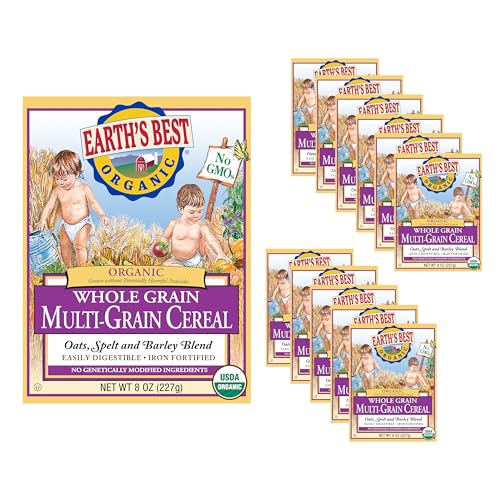
This 12-box bulk set from Earth’s Best is the gold standard for parents who want organic whole grains with serious iron fortification at a per-unit cost that beats the grocery store. The blend of organic oat, spelt, and barley flours offers a gentle introduction to texture without overwhelming a four-month-old’s palate. Parents report that it mixes to a reliably smooth consistency with breast milk or formula, and babies—even triplets in one verified review—digest it without issue.
The manufacturer recommends this cereal for the four-to-six-month window, exactly matching the transition to solids. Each eight-ounce box provides a solid two-week supply for a baby eating one small serving per day, making the twelve-pack a three-to-six-month stash that parents of multiples especially appreciate. The iron content provides 60% of the daily value per serving, meeting the key nutritional requirement at this stage.
One subtle advantage over single-grain rice cereals is the mild flavor variety: oats and barley read as slightly sweeter on a baby’s tongue, which may ease the switch from milk-based nutrition. A small number of users noted that the multi-grain texture demands thorough mixing to avoid clumps, but that’s true of any dry cereal. For the organic certification, bulk value, and clean nutrition, this is the one to beat.
Why it’s great
- Certified organic whole grains with no artificial additives
- Fortified with iron to support brain development at 60% DV
- Excellent bulk value that lasts months for a single baby
Good to know
- Multi-grain blend is better suited after confirming no single-grain sensitivity
- Requires thorough whisking to prevent clumps
2. Gerber Baby Cereal Rice 1st Foods (5x8oz)
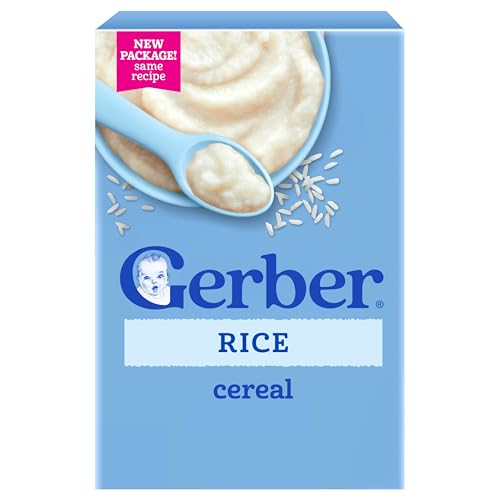
Gerber’s classic 1st Foods rice cereal is the baseline standard that generations of American parents have reached for when starting solids. The five-box pack delivers forty ounces total, which is enough to thicken bottles for reflux management or serve as a breakfast staple for several months. The ingredient list is tight—just rice flour plus vitamins and minerals—with only five pronounceable components total.
Multiple verified reviews specifically mention using this cereal under pediatrician guidance to thicken milk for babies with reflux, and the parents of one preemie reported that switching from oatmeal to rice eliminated colic symptoms. The Non-GMO label and SNAP eligibility add practical value for families on a budget. Mixing is straightforward: stir into breast milk or formula until the desired thin-liquid-to-thick-paste consistency appears.
One trade-off is that rice cereal has faced scrutiny over arsenic levels compared to oats, though Gerber’s sourcing meets FDA guidelines. The texture is also noticeably finer than oatmeal-based cereals, which some babies accept more readily. If you want a proven, low-cost starting point that doctors have recommended for decades, this is it.
Why it’s great
- Only five ingredients with no added sugars
- Pediatrician-recommended for reflux bottle thickening
- SNAP/EBT eligible in qualifying states
Good to know
- Rice cereal may contain trace arsenic per FDA testing standards
- Comes in pouches instead of boxes, requires transfer to airtight container
3. Cerebelly Organic Baby Food Variety Pack (8 Pack)
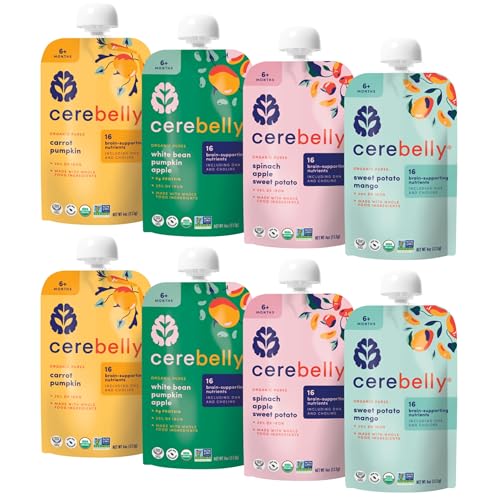
The variety pack includes veggie-and-fruit blends like pumpkin, mango, and apple, all organic and tested by a third party for heavy metals and toxins. For parents who want more than just calories in the first solid food, this is the smart pick.
The pouches are shelf-stable, require no refrigeration until opened, and feature BPA-free packaging. Parents in the reviews specifically call out the Clean Label Purity Award and the regular batch testing that goes beyond FDA minimums. At four months, you’d start by squeezing a small amount onto a spoon, but the 4-ounce size also works well as baby grows into stage 2 self-feeding. One reviewer noted that their baby with multiple allergies tolerated these without issues.
The main drawback is the price per pouch compared to a dry cereal box. This is not a budget bulk option—it’s a premium product for families who prioritize purity and traceability over volume. The flavors trend vegetal rather than sweet, which some babies need time to warm up to. For parents losing sleep over heavy metal exposure, this is the gold standard of reassurance.
Why it’s great
- 16 brain-supporting nutrients per pouch
- Third-party tested for heavy metals and toxins
- Clean Label Purity Award with full transparency on batch testing
Good to know
- Higher price per serving compared to dry cereal options
- Some babies need repeated exposure to accept the vegetal flavors
4. Gerber Stage 2 Fruit Cereal Tubs (32 Pack)
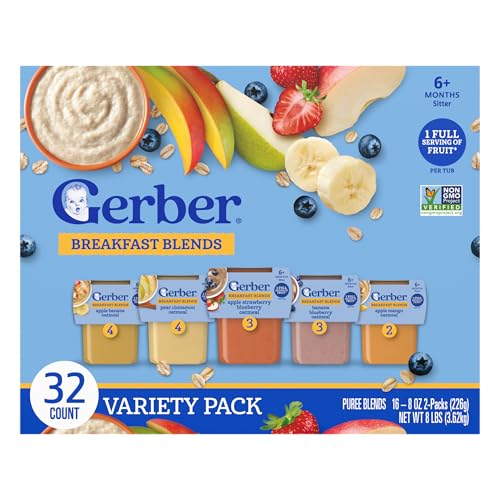
Gerber’s Stage 2 fruit-and-cereal tubs offer the ultimate grab-and-go convenience for parents who don’t want to mix powder from a box. Each 4-ounce tub combines a fruit puree with a whole-grain cereal base—options include apple banana oatmeal and pear cinnamon oatmeal—and delivers 60% of the daily value for iron plus 45% for vitamin C. This is marketed for babies six months and older, but many parents start offering it at the tail end of month four once a baby shows readiness for slightly thicker textures.
The 32-count variety pack covers five different flavor combos, which helps prevent the palate fatigue that can set in with single-flavor purees. Multiple verified reviews mention that babies “devour” these and that the sealed tubs travel well in diaper bags without leaking. The iron content is specifically called out to support brain development and learning ability, matching the nutritional goals of this stage.
The biggest caveat is the sugar content: while Gerber adds no sweeteners, the fruit puree itself naturally contains sugar, making this a different nutritional profile than a plain dry cereal. It’s also a Stage 2 product, so some four-month-olds may not be ready for the thicker consistency. But for busy parents who need a no-prep breakfast solution, this is hard to beat.
Why it’s great
- Zero prep required—just twist and serve
- Five flavor varieties in one bulk pack to prevent boredom
- Provides 60% DV iron alongside fruit nutrition
Good to know
- Marked for Stage 2 (6+ months), may be too thick for early 4-month-olds
- Natural fruit sugars present, higher sugar than plain cereal mixed at home
5. Amara Organic Oats & Berries (10 Pouches)
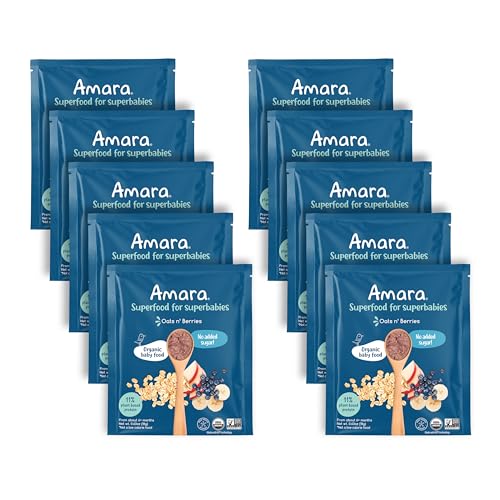
Amara’s Oats & Berries pouch uses a patented technology that avoids the repeated high-heat processing typical of jarred baby foods. The result is a fresh-tasting cereal mix that you reconstitute with breast milk, formula, or water directly in the pouch, giving you full control over the thickness. The ingredient list is brutally short: organic oats, apple, banana, and blueberries—nothing else. No added sugars, no fillers.
A standout detail from customer reviews is that Amara tests for heavy metals through a third party, a meaningful reassurance for parents concerned about the topic that dominated baby food headlines. The texture starts fine and becomes smooth with mixing, which makes it suitable for a four-month-old adjusting to spoon feeding. Parents of allergy-prone babies specifically note it as safe for dairy, wheat, and egg intolerances.
The downside is the price relative to a box of dry cereal: ten pouches go quickly if used as a daily breakfast, and some reviewers mention finding cheaper alternatives without sacrificing quality. The rehydration process also takes a few minutes of stirring, so it’s not as instant as a pre-mixed tub. For parents who want the freshest possible texture and heavy-metal transparency, Amara delivers.
Why it’s great
- Third-party tested for heavy metals with full results available
- Fresh-food texture from non-thermal processing technology
- Customizable thickness—mix with breastmilk, formula, or water
Good to know
- Higher cost per serving compared to traditional dry cereal boxes
- Requires active stirring and waiting to hydrate properly
6. Beech-Nut Veggie Purees Variety Pack (18 Pack)

Beech-Nut’s variety pack leans into the vegetable-first philosophy, offering three blends—Squash, Peas & Pears; Zucchini, Spinach & Banana; and Pumpkin, Zucchini & Apple—each designed to introduce savory flavors before sweet ones. Each 3.5-ounce pouch contains a full serving of fruits or vegetables with no artificial preservatives, colors, or flavors. This is a smart option for parents who want to establish veggie acceptance early in the feeding journey.
The texture is smooth enough for a four-month-old just starting out, though the purees are thicker than a thin cereal mixture. Some parents choose to thin these with a splash of formula before spoon-feeding. The packaging is BPA-free, and the non-GMO, dairy-free, and gluten-free certifications cover the most common allergen concerns. Verified reviews highlight the convenience of the 18-count variety for daycare bags and diaper bag rotation.
The limitation here is that this is a puree, not a cereal, so it doesn’t provide the iron fortification that a dry infant cereal offers. You’d want to pair this with an iron-fortified cereal serving to meet your four-month-old’s nutritional needs. The price per pouch is competitive with other organic puree brands, and the veggie-forward flavor profile is a genuine differentiator for parents trying to avoid the “fruit junkie” trap later on.
Why it’s great
- Veggie-first blends to build early acceptance of savory flavors
- Non-GMO, dairy-free, gluten-free, and nut-free across all varieties
- No artificial preservatives, colors, or added sweeteners
Good to know
- Not iron-fortified, so must be paired with a cereal for complete nutrition
- Some pouches may be thicker than a 4-month-old’s preferred consistency
7. Peter Rabbit Organics Apple Sweet Potato Corn (10 Pack)
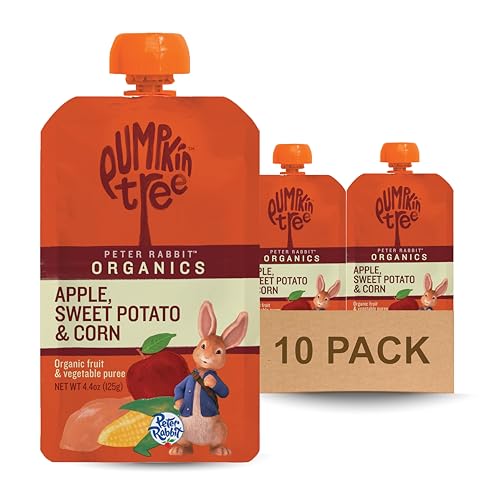
Peter Rabbit Organics offers one of the simplest ingredient lists on the shelf: organic sweet potato, corn, and apple—that’s it. The 4.4-ounce pouches are larger than the standard 3.5-ounce serving, which makes them a solid bridge between the tiny first tastes and a full meal. This is a stage 1 puree recommended from six months, but many parents at four months use it as a thin puree after mixing with a little breast milk.
The sweet potato base provides natural beta-carotene and fiber, while the apple adds a gentle sweetness that babies tend to accept on the first try. Parents in the reviews mention that the pouches are convenient for travel and that the flavor combination is one of the few their toddlers will reliably finish. The larger portion size also means less packaging waste per feeding compared to smaller pouches.
The notable drawback is that this is a puree, not a cereal, so it does not provide the iron fortification critical at this age—it needs to be used as a complement to an iron-rich cereal. The price per pouch is on par with other organic brands, and the manufacturer’s recommendation starts at six months, so consulting your pediatrician about introducing it earlier is wise. For parents who want a simple, organic, vegetable-forward puree in a larger format, this is a reliable choice.
Why it’s great
- Only three organic ingredients: sweet potato, corn, apple
- Larger 4.4 oz pouches reduce packaging waste per feeding
- No preservatives, additives, or added sugars
Good to know
- Not iron-fortified, requires pairing with an iron-rich cereal
- Manufacturer recommends for 6 months+; check with your pediatrician for 4-month use
FAQ
Can I mix baby cereal with formula or breast milk instead of water?
How do I know if my 4-month-old is ready for cereal?
Should I start with rice cereal or oatmeal?
Final Thoughts: The Verdict
For most parents starting solids, the baby cereal for 4 month old winner is the Earth’s Best Organic Multi-Grain Cereal because it combines certified organic whole grains, robust iron fortification, and bulk value that stretches through the first several months of feeding. If you want an ultra-simple, pediatrician-benchmarked starter to manage reflux or tight budgets, grab the Gerber 1st Foods Rice Cereal. And for parents who prioritize heavy-metal testing above all else, nothing beats the Amara Organic Oats & Berries for purity and fresh-food texture.