
Our readers keep the lights on and the weekend projects moving. As an Amazon Associate, I earn from qualifying purchases.
Overpronation isn’t just about flat feet — it’s a chain reaction that starts with a collapsing arch, rolls the ankle inward, and torques the knees, hips, and lower back with every step. The wrong insole lets that chain continue; the right one locks your foot into neutral alignment and stops the cascade before it starts.
I’m Rikta — the co-founder and writer behind FitlyFast. I’ve spent years analyzing torsional rigidity, arch profile gradients, and heel-cup depth data across hundreds of orthotic insoles to separate what actually controls pronation from what just feels squishy for a week.
Below, I break down the seven insoles that genuinely resist medial column collapse without sacrificing stride comfort — this is the definitive guide to arch support for pronation.
How To Choose The Best Arch Support For Pronation
Not all arch supports are built to fight pronation. Many insoles claim “support” but use soft foam that compresses under load, letting the foot roll inward exactly as before. You need a structure that resists that movement — and that comes down to three specific, measurable features.
Shell Rigidity and Medial Posting
The shell — the plastic base under the arch — is the mechanical stop that prevents the foot from collapsing. A flexible shell bends with your foot, which feels comfortable but does nothing for pronation. A rigid or semi-rigid shell, often reinforced with a medial post (a built-up wedge on the inner side), physically blocks the ankle from rotating inward. Look for insoles that specify a “stabilizing shell” or “pronation control frame” rather than just cushioned arch bumps.
Heel-Cup Depth and Heel Strike Alignment
Pronation control starts at the heel. A shallow heel cup allows the calcaneus to tilt inward during stance, initiating the collapse chain. A deep heel cup (typically 12–18 mm at the rear wall) cradles the heel bone, locking it in a neutral position. This prevents the talus bone from shifting and stops the entire foot from rolling. Measure heel-cup depth by looking for terms like “deep decoupled heel cup” or “sculpted rearfoot cradle.”
Arch Profile Matching
“Medium arch” on one insole is “high arch” on another. For pronation, you need a profile that fills your specific arch void without over-correcting — too low, and the arch still collapses; too high, and you get midfoot pain or stress fractures. The best brands offer multiple arch heights (low, medium, high) within the same model, allowing you to match your foot’s exact shape rather than guessing with one-size-all arches.
Quick Comparison
On smaller screens, swipe sideways to see the full table.
| Model | Category | Best For | Key Spec | Amazon |
|---|---|---|---|---|
| Protalus T-100 Elite | Premium | Whole-body alignment & overpronation | Patented alignment system + deep heel cup | Amazon |
| PowerStep Pinnacle Hiker | Premium | Hiking & trail pronation control | Semi-rigid shell + maximum cushion layer | Amazon |
| CURREX SupportSTP Medium | Premium | Customizable dynamic arch support | 3 profile options + deep decoupled heel cup | Amazon |
| Superfeet Green (All-Purpose High Arch) | Mid-Range | High arch stability & active lifestyles | Closed-cell foam + sculpted heel cradle | Amazon |
| Superfeet Run Cushion Medium Arch | Mid-Range | Running with medium pronation | Adaptive arch + energy-return foam | Amazon |
| Vionic Relief 3QTRW | Value | Everyday correction in tight shoes | 3/4 length no-cut orthotic insert | Amazon |
| PowerStep Archmolds Heat Moldable | Mid-Range | Custom heat-molded fit for low arches | Heat-moldable EVA + firm medial post | Amazon |
In‑Depth Reviews
1. Protalus T-100 Elite Premium Insoles
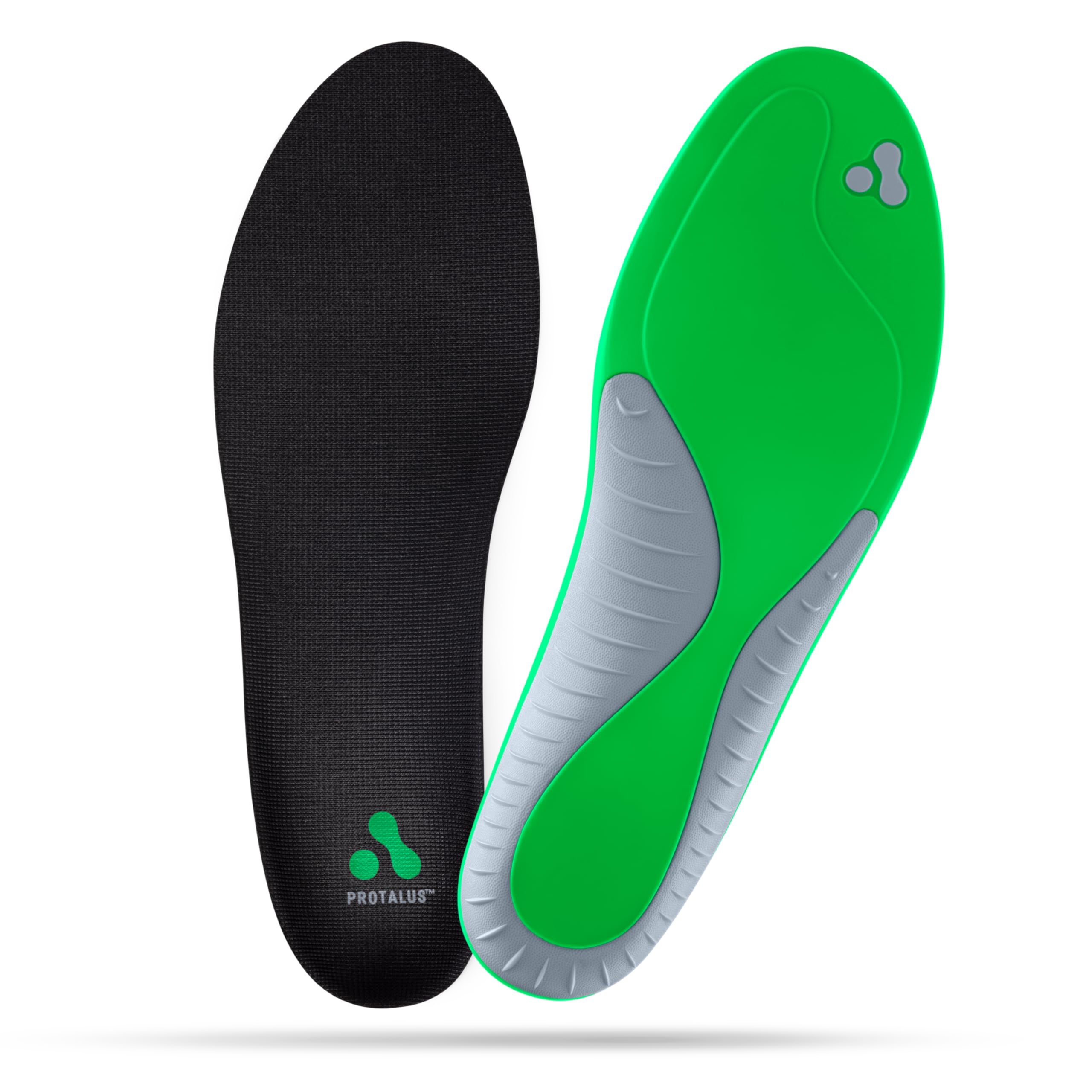
The Protalus T-100 Elite uses a patented alignment guide that doesn’t just prop up the arch — it gently steers the entire foot into a neutral position. The deep heel cup stabilizes the calcaneus against inward rotation, and the responsive cushioning layer absorbs impact at heel strike, reducing the torque that drives overpronation.
Users report immediate relief from plantar fasciitis pain and arthritic ankle strain, with many buying multiple pairs to keep one in every shoe. The universal adaptive design works for flat feet, high arches, and everything between, though the rigid shell may feel firm during the first week of wear.
For anyone who stands 10+ hours daily or deals with chain-reaction pain traveling up through the knees and lower back, this insole delivers the most complete pronation control on this list without compromising all-day comfort.
Why it’s great
- Patented alignment tech mechanically blocks pronation
- Deep, stabilizing heel cup locks the rearfoot
- Works across arch types without needing multiple profiles
Good to know
- Shell can produce audible squeaking on smooth floors
- May feel overly rigid for runners used to flexible insoles
2. PowerStep Pinnacle Hiker Orthotic Insoles

Built specifically for hiking boots, the Pinnacle Hiker combines a semi-rigid polypropylene shell with a dual-layer foam cushion. The shell provides the torsional rigidity needed to resist medial collapse on uneven terrain, while the top layer cushions underfoot without allowing the arch to flatten under load.
Verified buyers report hiking 16 miles with zero foot pain after replacing thin stock insoles, and multiple users with flat feet call this the best insole they’ve used for reducing leg fatigue on technical trails. The insert is thicker than standard insoles, so it works best in boots with ample volume.
For hikers who overpronate and want an insole that holds up mile after mile without compressing into a pancake, the Pinnacle Hiker delivers the most trail-specific pronation control available.
Why it’s great
- Semi-rigid shell prevents collapse on uneven ground
- Dual-layer cushion absorbs trail impact without losing structure
- Podiatrist-recommended for plantar fasciitis on trails
Good to know
- Thick build may compress toes in snug-fitting boots
- Does not mold to individual foot shape over time
3. CURREX SupportSTP Medium Arch Insole

CURREX offers three distinct arch profiles — low, medium, and high — each with a different shape, arch height, and flex pattern. This allows you to match the insole’s support curve precisely to your foot’s natural contour, which is critical because the wrong arch height either leaves the arch unsupported or jams into the midfoot.
The deep decoupled heel cup wraps and locks the heel in place, preventing the rearfoot tilt that triggers overpronation. Air vent technology in the foam layer keeps feet dry during long runs or shifts. Runners fitted at specialty shops consistently report that the SupportSTP corrects foot position and stabilizes stride immediately.
For athletes and daily wearers who need a truly customized arch match rather than a one-size-medial-post approach, the CURREX system is the most adaptable pronation-control insole on the market.
Why it’s great
- Three arch profiles allow precise pronation correction
- Deep decoupled heel cup locks heel against inward tilt
- Moisture-wicking mesh keeps feet dry during activity
Good to know
- Thin heel cushion may feel minimal for some runners
- Requires correct profile selection for effective control
4. Superfeet All-Purpose Support High Arch (Green)
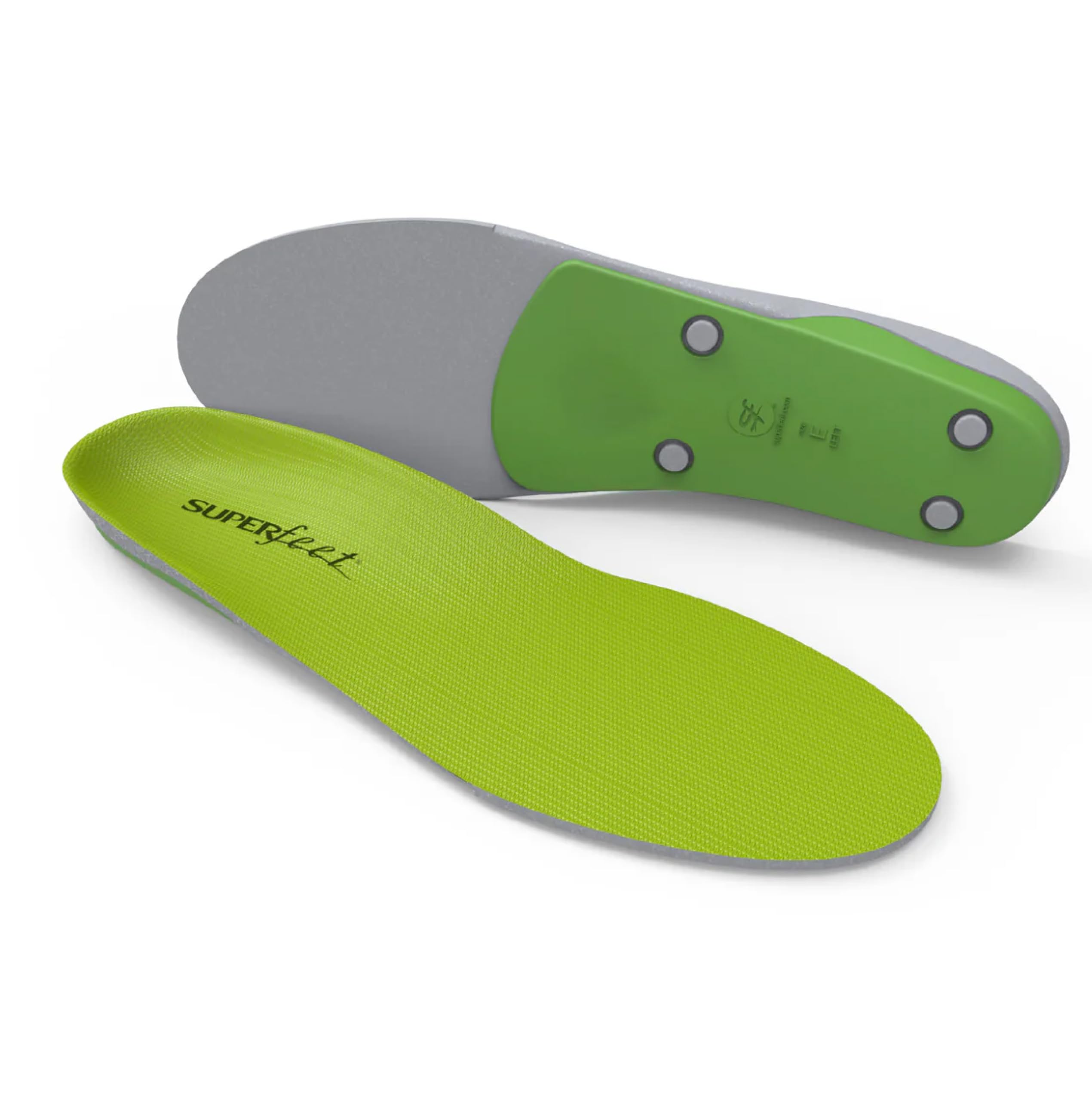
The Superfeet Green is a 15-year icon in the orthotic world, redesigned under the “All-Purpose Support High Arch” name. The closed-cell foam doesn’t pack out over time, and the plastic stabilizer cap under the heel provides a rigid platform that prevents the calcaneus from shifting medially.
Users with flat feet and low arches report that the high arch profile effectively fills the void, and the deep sculpted heel cradle maximizes natural shock absorption. The insole requires a gradual break-in period — the firm support can feel intense initially — but after adaptation, it delivers consistent pronation control for heavy daily use in work boots, trail shoes, and casual sneakers.
For people with genuinely high arches who also overpronate (a less common but real combination), this insole provides the most targeted correction without over-cushioning the arch.
Why it’s great
- Dense foam maintains structure for months
- Sculpted heel cradle stabilizes rearfoot effectively
- Proven track record across 15+ years of user data
Good to know
- Firm feel; requires gradual break-in period
- High arch profile may not suit medium or low arch feet
5. Superfeet Run Cushion Medium Arch Insoles

Designed specifically for runners with medium arches, the Run Cushion uses a flexible orthotic support that flexes with the foot during heel-to-toe turnover while maintaining enough structure to resist overpronation. The foam blends cushioning with rebound to maximize energy transfer, helping runners maintain form without feeling like they’re fighting the insole.
The impact-dispersing layer reduces vibration at heel strike, which directly addresses the repetitive stress that leads to plantar fasciitis and shin splints in overpronators. Multiple users report that these insoles eliminate morning heel pain and allow them to return to activities like softball, climbing, and hiking pain-free.
For runners who need pronation control but refuse to sacrifice ground feel and responsiveness, the Run Cushion hits the balance better than the firmer Superfeet Green or the rigid Protalus T-100.
Why it’s great
- Adaptive arch flexes naturally during running gait
- Energy-return foam maintains responsiveness
- Reduces heel-strike vibration that triggers PF and shin splints
Good to know
- Not suitable for severe overpronation needing rigid posting
- Medium arch only; low or high arches need different model
6. PowerStep Archmolds Heat Moldable Insoles
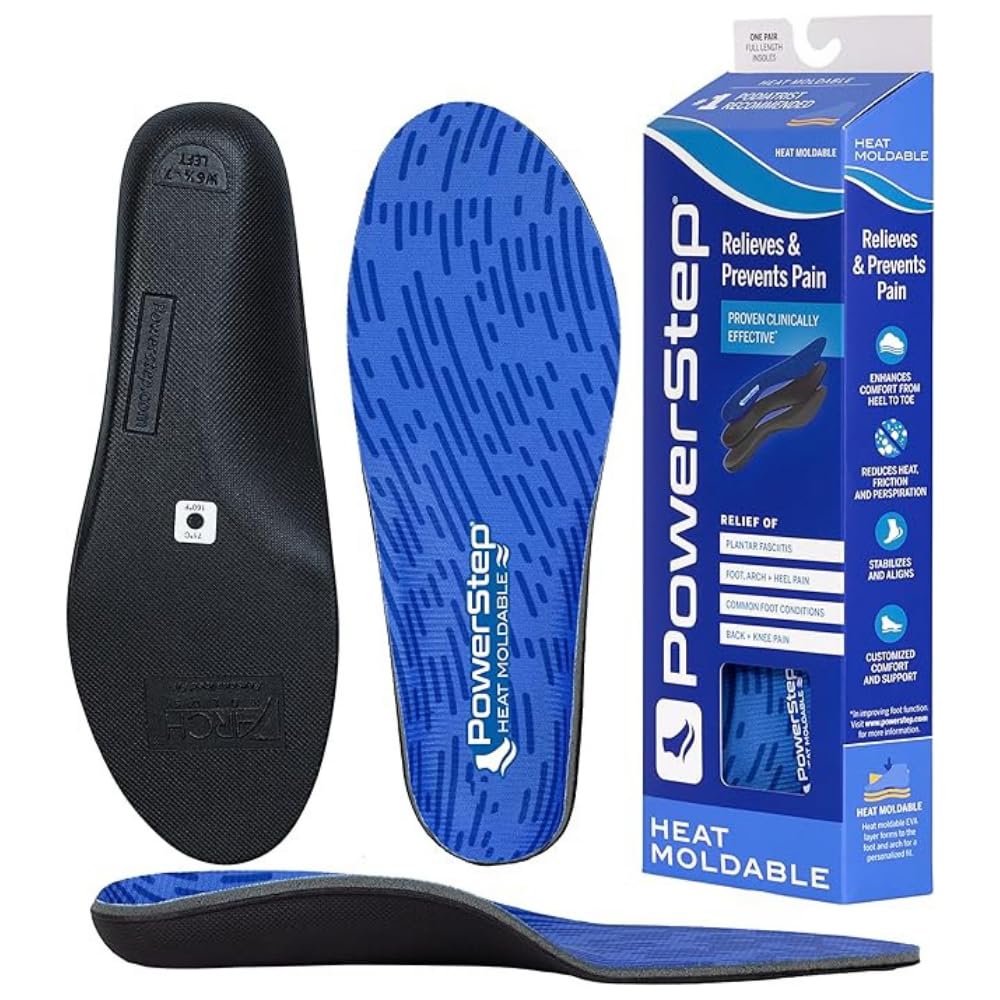
The Archmolds take a different approach to pronation control: you heat the insole in the oven, then step into it to mold the arch and heel cup to your exact foot contour. This creates a custom fit that a standard trim-to-size insole cannot replicate, perfect for people whose left and right arches differ in height.
The firm EVA foam provides a stable medial post that mechanically blocks inward roll, and users who overpronate report that the molded fit stabilizes their feet in any shoe type. However, some users with severely fallen arches found the arch height too low to correct their pronation, and the support can degrade after several months of heavy use.
For budget-conscious buyers who want a semi-custom fit without visiting a podiatrist, the Archmolds offer the best compromise between personalized molding and pronation control.
Why it’s great
- Heat molding creates a custom arch contour
- Firm medial post effectively blocks inward rotation
- Affordable entry into personalized orthotic territory
Good to know
- Arch height may be too low for severe overpronation
- Support can degrade and require replacement after months
7. Vionic Relief 3QTRW
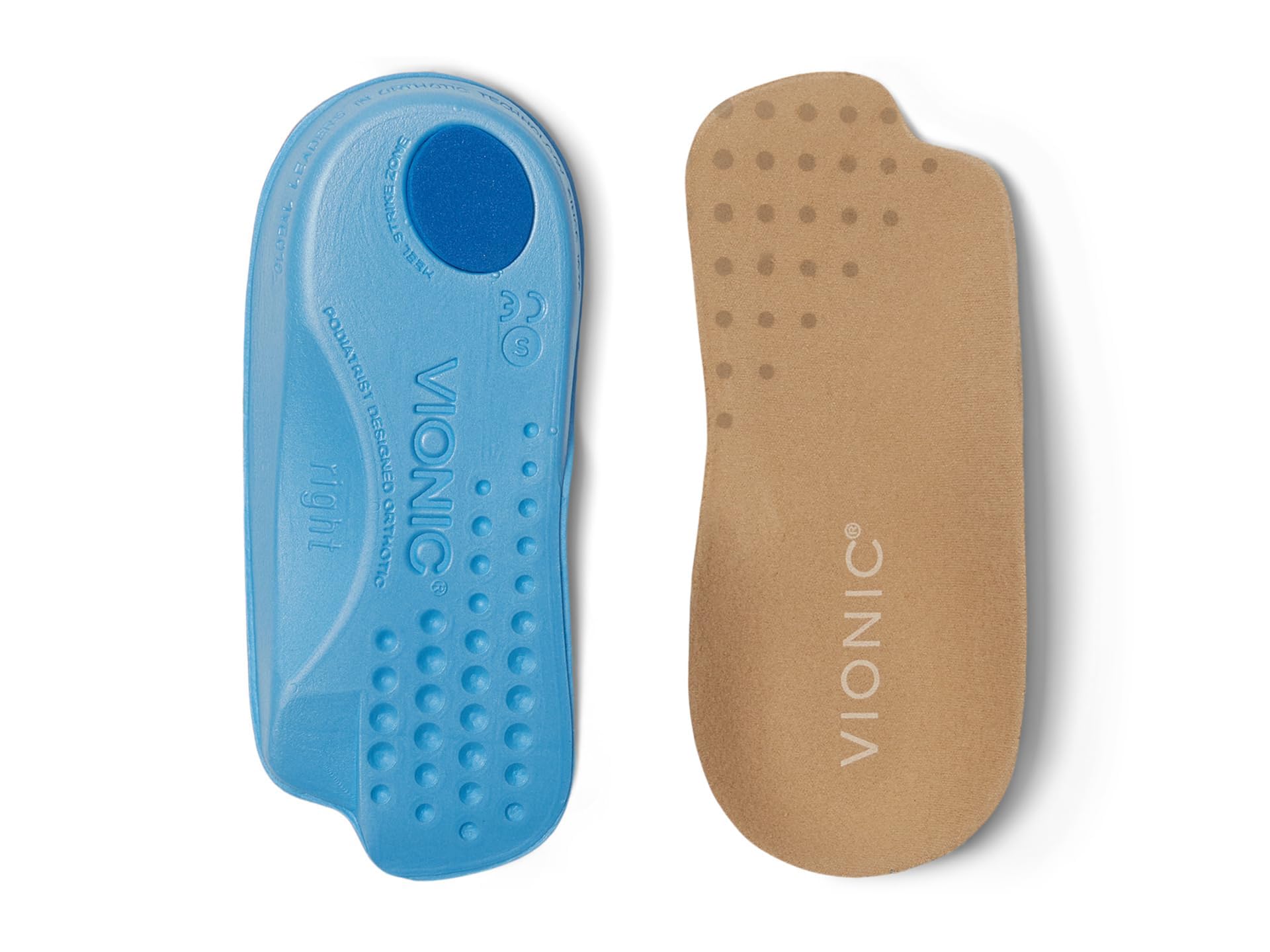
The Vionic Relief 3QTRW is a 3/4-length orthotic insert that skips the toe area, making it ideal for shoes where a full-length insole would compress toes or crowd the toebox. Vionic’s proprietary orthotic arch support is built into a firm shell that controls overpronation without needing to remove the shoe’s existing insole.
Long-time users report that these inserts are more comfortable than expensive custom orthotics, correcting congenital flat feet and reducing pain in jazz shoes, loafers, pumps, and boots. The 3/4 design means no cutting is required, but it also means there’s no forefoot cushion — users with metatarsalgia may need additional padding.
For people who need reliable pronation correction in shoes where a full-length insole won’t fit — dress shoes, narrow boots, ballet flats — the Vionic Relief is the best compact solution.
Why it’s great
- 3/4 length fits tight shoes without toebox compression
- Firm orthotic shell corrects pronation effectively
- No cutting required for most shoe sizes
Good to know
- Discontinued model; seek rebranded version
- No forefoot padding; not ideal for metatarsal pain
FAQ
Can an insole fix overpronation or only reduce the symptoms?
Should I get low, medium, or high arch support for overpronation?
How long does a pronation-control insole last before needing replacement?
Will a pronation insole make my shoes feel too tight?
Final Thoughts: The Verdict
For most users, the arch support for pronation winner is the Protalus T-100 Elite because its patented alignment system and deep heel cup deliver the most comprehensive mechanical block against pronation without sacrificing all-day wearability. If you hike technical trails and need a rugged, thick-shelled insole, grab the PowerStep Pinnacle Hiker. And for runners who want adaptive arch support that flexes naturally with the gait cycle, nothing beats the Superfeet Run Cushion.