
Our readers keep the lights on and the weekend projects moving. As an Amazon Associate, I earn from qualifying purchases.
Blood sugar monitoring is moving from finger sticks to your wrist, and the newest generation of health wearables aims to deliver continuous glucose insights without the pain. These watches combine optical sensors, companion algorithms, and in some cases inflatable cuffs to track not just glucose but your entire metabolic picture.
I’m Rikta — the co-founder and writer behind FitlyFast. I’ve spent years analyzing wearable health hardware, cross-referencing sensor accuracy claims with real user feedback and regulatory filings to separate science from marketing hype in this specific niche.
Whether you’re managing prediabetes, optimizing athletic performance, or simply want a fuller daily health snapshot, finding the best blood sugar monitor watch means balancing sensor technology, battery life, and companion app depth against your specific lifestyle needs.
How To Choose The Best Blood Sugar Monitor Watch
Not all health watches claiming blood sugar tracking are created equal. The market is split between optical PPG devices that estimate glucose indirectly and watches that pair with dedicated continuous glucose monitors (CGMs) for true interstitial readings. Understanding this distinction is the first step to a purchase you won’t regret.
Sensor Architecture — CGM Bridge vs. Optical Estimation
True continuous glucose monitors use a tiny sensor inserted under the skin, transmitting data to a receiver or watch display. Most blood sugar monitor watches in the consumer category use optical sensors (photoplethysmography) to estimate blood sugar based on light absorption changes under the skin — these are convenient but not medical-grade. If you require lab-accurate data for insulin dosing, look for a watch that explicitly supports CGM data relay from systems like Dexcom or Abbott Libre.
FDA Clearance and Medical Certification
For peace of mind, especially if you’re using the device to inform health decisions alongside a physician, seek models with FDA 510(k) clearance, CE Medical, or CFDA certification. These regulatory markers indicate that the manufacturer submitted clinical data demonstrating acceptable accuracy for the claimed metrics. Without certification, treat the watch’s glucose-related data as a general wellness trend rather than a diagnostic tool.
Companion App Ecosystem and Data Sharing
The hardware is only half the equation. A useful blood sugar monitor watch must pair with an intuitive app that logs trends, generates easy-to-read reports, and — critically — supports remote data sharing with family members or healthcare providers. Features like timed blood pressure monitoring reminders and automatic data upload add real clinical value, especially for those managing chronic conditions or caring for elderly relatives.
Quick Comparison
On smaller screens, swipe sideways to see the full table.
| Model | Category | Best For | Key Spec | Amazon |
|---|---|---|---|---|
| BP Doctor Smart Watch | Inflatable Cuff | Integrated BP monitoring | Air pump oscillometric cuff | Amazon |
| Samsung Galaxy Watch 7 | Premium Smartwatch | Ecosystem & body energy scoring | Galaxy AI Energy Score | Amazon |
| FITVII GT5 PRO MAX | All-Day Health | Multi-parameter wellness monitoring | 1.97″ AMOLED, 7-day battery | Amazon |
| Garmin Vivoactive 5 | Fitness GPS | Long battery & structured workouts | 11-day smartwatch mode | Amazon |
| Nymvik BPW1 | FDA Cleared | Medical-adjacent BP measurements | FDA 510(k) clearance | Amazon |
| EarlySincere Smart Watch | Value Wearable | Large display & budget entry | 2.06″ AMOLED, 340mAh | Amazon |
| Garmin Fenix 8 | Rugged Flagship | Extreme endurance & dive-rated | 16-day battery, 40m dive | Amazon |
In‑Depth Reviews
1. BP Doctor Smart Watch
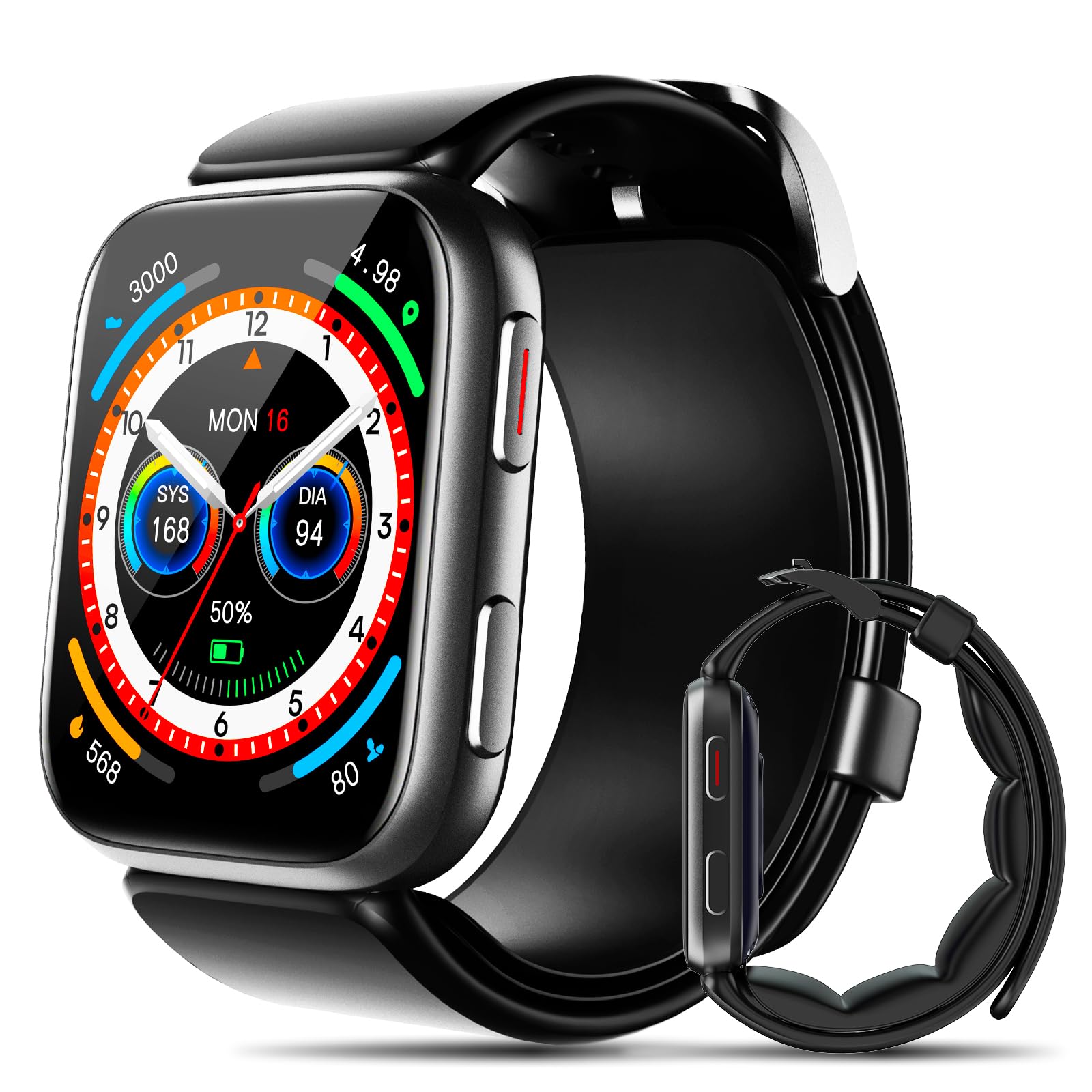
The BP Doctor stands apart by using a genuine inflatable air cuff embedded in the strap, operating on the same oscillometric principle as a clinical arm cuff. This design directly addresses the biggest criticism of optical-only watches — it physically takes a blood pressure measurement rather than estimating it from pulse wave analysis. The integrated high-precision PPG sensor works alongside the cuff to refine readings, and the companion app supports remote family data sharing so loved ones can monitor trends.
With 50-plus sports modes, automatic sleep stage analysis from 18:00 to 12:00, and a 1.95-inch full-touch color screen, the package feels complete for daily health tracking. The 7-day typical battery life with a 1-hour recharge cycle means you can wear it continuously without stressing about power. Its 0.37 amp-hour lithium polymer cell provides enough overhead for overnight SpO2 and heart rate logging without interruption.
Some users note the wrist-based readings can differ from an arm cuff if the band is not positioned snugly. The companion app also defaults to metric units, which may frustrate users accustomed to mmHg — check your app region settings before purchase. Despite these quirks, for someone who wants a mechanical BP measurement alongside activity and sleep data, this is the most category-relevant option available at its tier.
Why it’s great
- Inflatable air cuff provides oscillometric BP readings, not just optical estimates
- Remote family data sharing with alerts for abnormal heart rate or BP
- 1-hour charging supports continuous 7-day wear without gaps
Good to know
- BP accuracy depends heavily on proper cuff placement and strap tightness
- App is locked to metric units, which may not convert to mmHg for all regions
- No on-board GPS for standalone distance tracking during outdoor runs
2. Samsung Galaxy Watch 7 40mm

Samsung’s Galaxy Watch 7 takes a software-first approach to health monitoring. The Galaxy AI engine generates a daily Energy Score based on your previous day’s activity, heart rate variability, sleep quality, and consistency — a composite metric that helps you decide whether to push hard or recover. The improved heart rate tracking algorithm filters out motion artifacts from running or weightlifting to provide cleaner readings, while sleep tracking now detects signs of moderate to severe sleep apnea.
Physically, it is built around a 40mm case with a 300 milliamp-hour lithium-ion battery that delivers roughly 30 hours on a charge — about 2 days with light use. The 1.05-inch AMOLED display is sharp and vibrant, and the TPU band is comfortable for all-day wear. LTE cellular capability means you can leave your phone behind during runs and still stream music or take calls. Its compatibility with the wider Wear OS ecosystem also opens the door to third-party glucose tracking apps.
Battery life remains the most frequent trade-off against Garmin competitors; heavy users with always-on display enabled will need to charge daily. The lock screen re-lock behavior during contactless payments can also be annoying mid-transaction. For anyone deep in the Samsung ecosystem who values AI-driven readiness insights and sleep apnea screening alongside general health tracking, this is the most polished experience available.
Why it’s great
- Galaxy AI provides personalized Energy Score and motion-filtered heart rate tracking
- Sleep apnea detection (FDA-authorized) is a standout feature for at-risk users
- LTE option allows phone-free streaming and calling during workouts
Good to know
- Battery life averages 30 hours — daily charging is typical with always-on screen
- Requires a Samsung phone for full feature access; limited on non-Samsung Androids
- No dedicated inflatable cuff for standalone BP or glucose measurement
3. FITVII GT5 PRO MAX Smart Watch
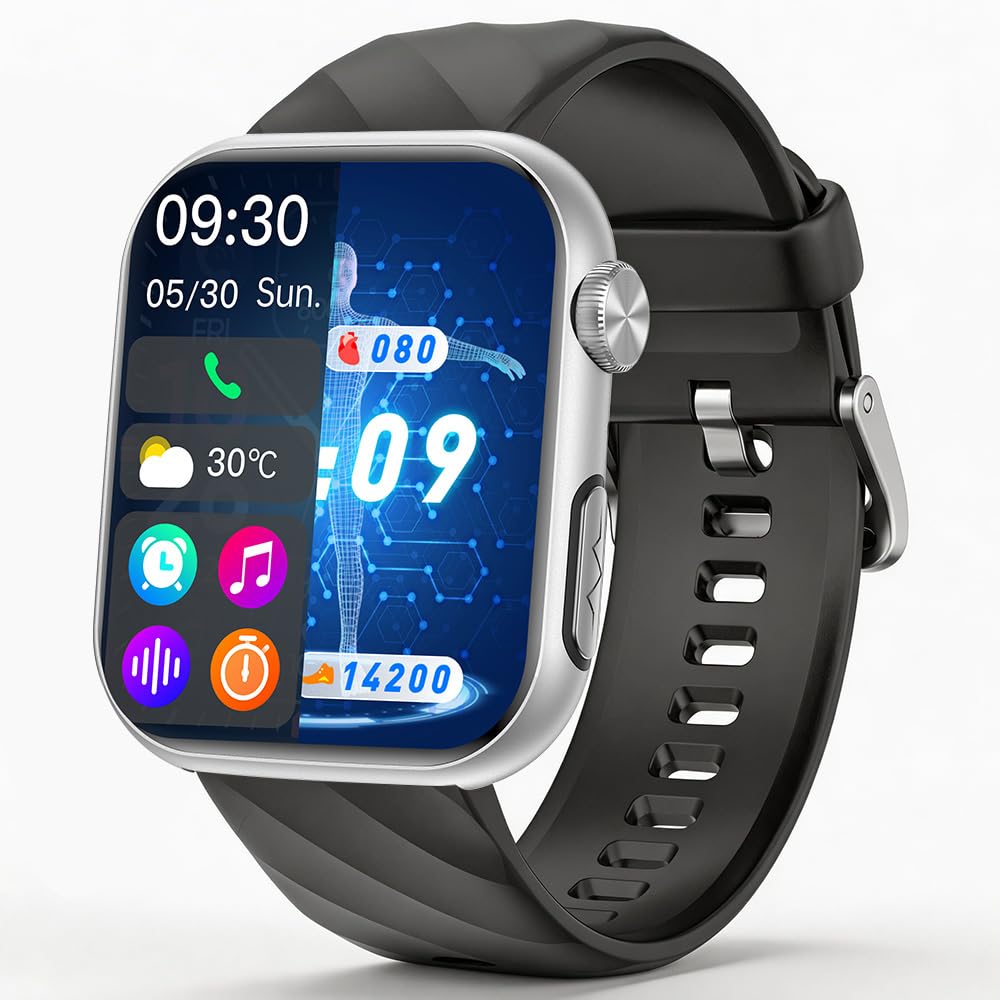
The FITVII GT5 PRO MAX covers the full spectrum of blood pressure, heart rate, SpO2, body temperature, and stress tracking in one slim 53-gram package. Its 1.97-inch AMOLED display delivers crisp visuals for message previews and activity readouts, and the IP67 rating handles rain and sweat without issue. The 325 milliamp-hour battery comfortably lasts 7 days under normal use, charging in roughly 2 hours.
Where this watch really shines is its breadth of practical tools: it supports Bluetooth 5.3 calling with a built-in speaker and mic, includes menstrual cycle tracking, sedentary reminders, and a shake-to-photo shutter. The companion app logs MET (Metabolic Equivalent) values during 100-plus sports modes, giving a more useful calorie burn estimate than simple step counts. For those who want one device to handle both health vitals and daily smartwatch chores, this is a compelling all-rounder.
Like most optical-device wearables, its blood pressure readings are reference-level, not clinical-grade. The instruction manual explicitly states the watch is for general wellness use only and is not a medical device. Users needing FDA-certified precision should pair this with a dedicated arm cuff for spot checks. For everyday trend monitoring with the convenience of a responsive AMOLED touchscreen, it delivers excellent value.
Why it’s great
- Comprehensive 24/7 tracking: BP, HR, SpO2, stress, and body temperature
- 1.97-inch AMOLED screen with 100-plus watch faces for customization
- 7-day real-world battery life with IP67 water resistance
Good to know
- Optical sensor readings are wellness guidance, not medical diagnostics
- No internal GPS — relies on phone connection for location tracking
- Band width and clasp design may not suit very small or very large wrists equally
4. Garmin Vivoactive 5

The Vivoactive 5 is Garmin’s sweet spot — it combines the brand’s best-in-class fitness ecosystem with an always-readable AMOLED display and a battery that genuinely lasts up to 11 days in smartwatch mode. For anyone managing weight and activity levels alongside blood sugar concerns, the integration of Body Battery energy monitoring, HRV status, and sleep score provides context that raw glucose numbers alone cannot. The morning report summarizes overnight recovery, stress, and readiness into one actionable snapshot.
Beyond health metrics, this watch excels as a workout companion with 30-plus built-in GPS and indoor sports apps, wheelchair mode that tracks pushes instead of steps, and preloaded workouts for strength, HIIT, yoga, and Pilates. Garmin Coach adaptive training plans make it easy to work toward a running goal without overtraining. Music storage from Spotify, Amazon Music, or Deezer enables phone-free listening through Bluetooth earphones.
Its sleep tracking is among the most accurate consumer wearables tested, and automatic nap detection adds logged rest periods to your daily recovery data automatically. The main trade-off is the absence of an integrated cuff or optical blood pressure sensor — this watch focuses on metabolic readiness rather than direct glucose or BP measurement. If your priority is sustained battery life, structured training guidance, and holistic biometric insight, the Vivoactive 5 is the strongest mid-range choice.
Why it’s great
- 11-day battery in smartwatch mode eliminates daily charging anxiety
- Body Battery and HRV status provide context for energy and recovery levels
- Wheelchair mode and Garmin Coach adaptive plans are uniquely inclusive
Good to know
- No direct blood pressure or glucose optical sensor built into the watch
- Nap detection can be buggy if you sleep outside typical overnight hours
- Notifications are Bluetooth-only — no Wi-Fi or LTE for standalone messaging
5. Nymvik BPW1 Blood Pressure Monitor Watch
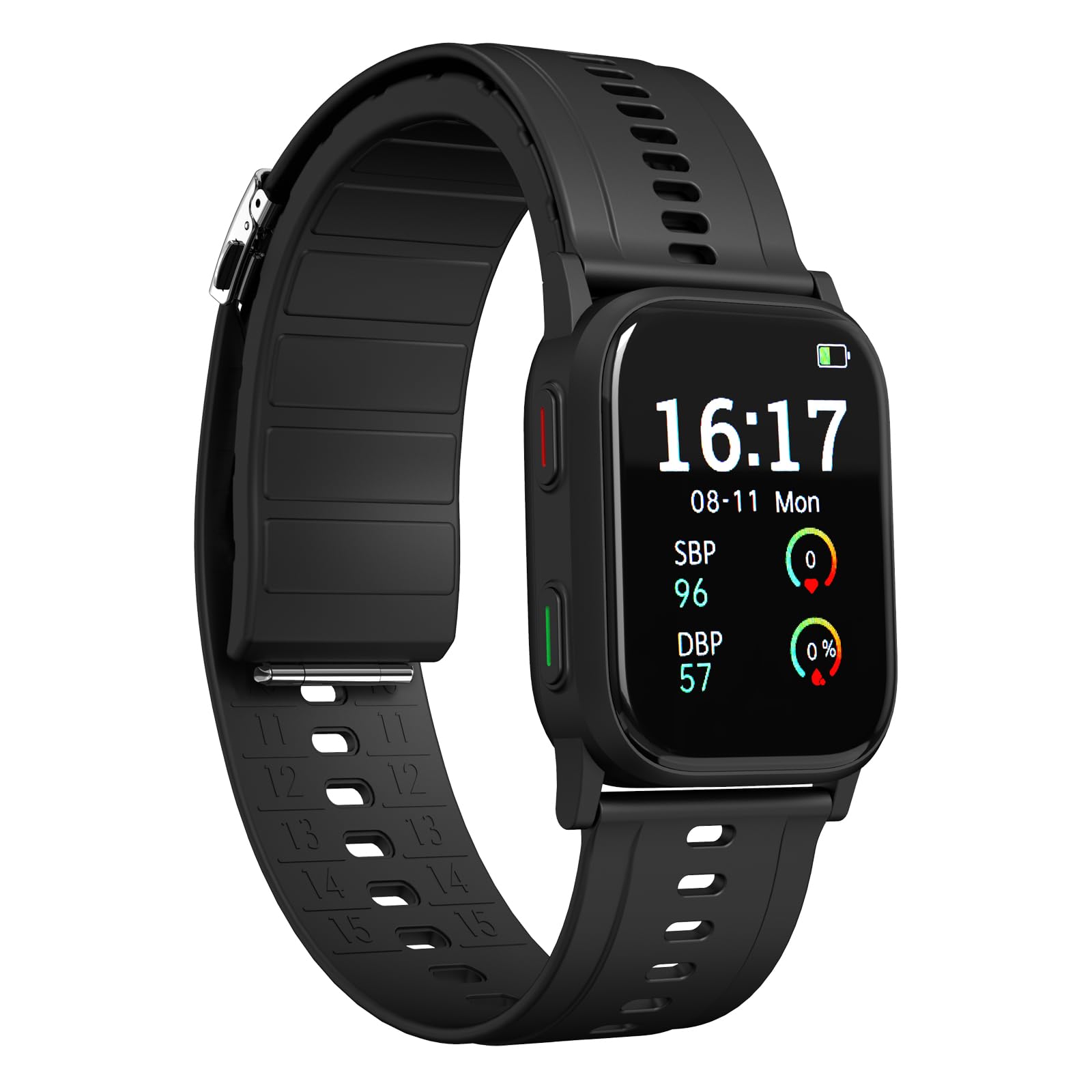
The Nymvik BPW1 carries FDA 510(k) clearance, CE Medical, and CFDA certification — a rare regulatory trifecta in the wrist-worn blood pressure category. This means the manufacturer submitted clinical data verifying its oscillometric algorithm produces readings comparable to traditional arm cuffs. The watch uses a micro air pump and inflatable airbag hidden within the silicone strap, activating on demand to take a measurement. It can schedule up to 48 readings per day automatically, capturing systolic and diastolic trends without manual interaction.
The 1.83-inch full-touch color display is bright enough to read in direct sunlight, and Bluetooth 5.3 ensures fast, stable syncing with the companion app. Data sharing extends beyond family to include integration with hospital and clinic systems — a real advantage for users whose physicians want longitudinal BP records. The watch itself is ultra-lightweight at 2.29 ounces, making it comfortable for overnight wear and sleep tracking.
Critical feedback highlights inconsistency: while many users report readings within 2-3 points of their doctor’s equipment, others saw discrepancies of 20-plus points. SpO2 readings have also been flagged for falsely reporting normal saturation when actual levels were clinically low — a serious concern if you depend on SpO2 data for medical decisions. The warranty also specifies a 3-year device lifespan, which is relatively short for a premium-priced wearable. Use this watch strictly for BP trend monitoring in consulation with your physician, not as a standalone diagnostic tool.
Why it’s great
- FDA 510(k), CE Medical, and CFDA certification provides regulatory confidence
- Up to 48 automatic scheduled measurements per day for trend analysis
- Data sharing integrates with hospital systems and family caregivers
Good to know
- BP accuracy varies between individuals — some users report significant deviation
- SpO2 readings may show false normal values, creating a false sense of safety
- Bluetooth speaker for calls is weak and unclear for phone conversation
6. EarlySincere Smart Watch for Men

The EarlySincere watch makes an immediate impression with its 2.06-inch AMOLED display — one of the largest screens in this roundup. The 410×502 resolution panel remains clear in bright sunlight, and the zinc alloy case with a stainless steel magnetic band gives it a genuinely premium look. It supports Bluetooth calling with an AI voice assistant, notification alerts from WhatsApp and Instagram, and a digital crown for menu navigation.
Health tracking covers heart rate, SpO2, sleep stages, and stress with 24/7 logging. The DaFit companion app provides detailed reports and supports 10 custom menu themes plus 100-plus watch faces. Battery life lands at 5-7 days of normal use with stand-by extending to 30 days, powered by a 340 milliamp-hour cell that fast-charges in about 2 hours. The IP68 rating means it survives rain, sweat, and handwashing with no issues.
The watch does not include an inflatable cuff or dedicated blood pressure sensor — its optical heart rate sensor drives all cardiovascular metrics. Users seeking direct glucose or BP measurement will need to pair it with a separate device. The magnetic metal band, while stylish, may not fit very small wrists securely; the 22mm width is best suited for medium to large wrists. For someone prioritizing display size, everyday notifications, and a dressy look, it is tough to beat at this price.
Why it’s great
- Massive 2.06-inch AMOLED screen is the largest and brightest in this class
- Milanese-style magnetic metal band offers tool-free adjustment and a premium feel
- IP68 rating exceeds typical IP67 — survives immersion and heavy rain
Good to know
- No inflatable cuff or optical BP sensor — relies entirely on optical PPG for heart metrics
- Magnetic band may slip or detach during vigorous exercise or sports
- Display can occasionally reset to default watch face without warning
7. Garmin Fenix 8 – 47 mm AMOLED Sapphire

The Fenix 8 is Garmin’s flagship multisport tool, built for serious athletes and adventurers who need absolute durability and performance tracking depth. The 47mm AMOLED sapphire lens sits in a titanium bezel that weighs just 80 grams, while the dive-rated 40-meter water resistance enables scuba and apnea activity tracking — a feature no other watch in this list offers. Battery life is staggering: up to 16 days in smartwatch mode and 47 hours with continuous GPS.
Health monitoring includes wrist-based heart rate, Pulse Ox, advanced sleep tracking with HRV status, and the Training Readiness score that considers sleep quality, recovery, and training load. The built-in LED flashlight is genuinely useful for after-dark navigation, and multi-band GPS with SatIQ technology locks position quickly even in dense urban canyons or tree cover. The ECG app can record heart rhythm and check for signs of atrial fibrillation in supported regions.
No direct blood pressure or continuous glucose sensor is built into the watch — health tracking focuses on cardiovascular and metabolic readiness rather than specific glucose levels. The primary complaint from users with non-standard sleep schedules is that sleep tracking and Body Battery calculations suffer when rest occurs outside the watch’s expected sleep window. At the top of the price spectrum, buyers are investing in expedition-grade hardware and ecosystem depth, not medical diagnostics. For multi-day backcountry trips where you cannot recharge, nothing else compares.
Why it’s great
- 16-day smartwatch battery and 47-hour GPS endurance redefine field autonomy
- 40-meter dive rating with scuba and apnea tracking, plus leakproof metal buttons
- Multi-band GPS with SatIQ provides best-in-class positioning accuracy
Good to know
- Premium price positions it far outside the budget-conscious buyer’s range
- Sleep tracking relies on rigid scheduling — fails to log split or daytime sleep
- No dedicated blood pressure or glucose sensor; metrics focus on training readiness
FAQ
Can a blood sugar monitor watch replace a standard finger-stick glucometer?
How does an inflatable cuff watch differ from a regular optical health watch?
What does FDA 510(k) clearance actually mean for a health watch?
Final Thoughts: The Verdict
For most users, the best blood sugar monitor watch winner is the BP Doctor Smart Watch because its inflatable cuff architecture bridges the gap between convenience and oscillometric accuracy, while supporting remote family data sharing. If you want a premium wellness dashboard with AI-driven Energy Scores and sleep apnea detection, grab the Samsung Galaxy Watch 7. And for multi-day expeditions where battery endurance and rugged navigation are non-negotiable, nothing beats the Garmin Fenix 8.