
Our readers keep the lights on and the weekend projects moving. As an Amazon Associate, I earn from qualifying purchases.
Sorting through the baby cereal aisle feels like a minefield — every pouch claims to be “organic,” but recent reports on heavy metals in infant rice and oat cereals have left even the most diligent parents second-guessing their choices. You need a first solid food that delivers iron, rinses clean on third-party testing, and actually tastes good enough for a picky eater to finish the bowl.
I’m Rikta — the co-founder and writer behind FitlyFast. I spent weeks cross-referencing ingredient decks, parsing USDA organic certs, and mapping customer feedback on texture and digestibility to separate the truly clean oat blends from the ones riding on marketing labels.
Whether you are transitioning a four-month-old to solids or stocking the diaper bag for a road trip, this guide breaks down the safest, most nutritious, and best-tasting boxes of organic baby oatmeal that actually earn their place in your pantry.
How To Choose The Best Organic Baby Oatmeal
Every box of baby oatmeal looks the same on the shelf until you flip it over and read the fine print. The differences that matter — iron content per serving, grain particle size, third-party metal testing, and the absence of added sweeteners — determine whether your baby gets a developmentally appropriate meal or a bowl of empty carbs. Here is what to check before you add to cart.
Iron Fortification vs. Natural Iron
Infants between six and twelve months need roughly 11 mg of iron per day, and breast milk alone cannot cover that gap. The best organic baby oatmeals add iron (usually ferric orthophosphate or ferrous fumarate) to reach 45–100% of the daily value per serving. Skip any brand that relies only on the trace iron naturally present in oats — it is not enough to prevent anemia during the critical brain-development window.
Third-Party Testing for Heavy Metals and Glyphosate
Consumer Reports and Clean Label Project have repeatedly flagged conventional oat cereals for arsenic, lead, cadmium, and glyphosate residues. Brands that voluntarily publish results from NSF, USDA, or independent labs give you real proof their supply chain avoids contaminated fields. If a product page does not mention heavy metal testing anywhere, assume the manufacturer has not invested in the protocol.
Grain Particle Size and Texture Progression
Stage 1 babies (around four to six months) need oatmeal ground into a fine, almost flour-like powder so it mixes smoothly with breast milk or formula. Stage 2 and toddler cereals can include slightly flaked or rolled oats that require more chewing. Picking the wrong grind can cause gagging or refusal. Always match the product’s labeled stage to your baby’s oral-motor readiness.
Quick Comparison
On smaller screens, swipe sideways to see the full table.
| Model | Category | Best For | Key Spec | Amazon |
|---|---|---|---|---|
| Earth’s Best Organic Whole Grain Multi-Grain | Multi-Grain Cereal | Iron-fortified base for Stage 1 | 45% DV iron per serving | Amazon |
| Gerber Organic Grain and Grow Toddler Oatmeal Banana | Toddler Cereal | Banana flavor + iron for toddlers | Finely blended oat-banana flakes | Amazon |
| Amara Organic Oats & Berries | Freeze-Dried Pouch | Travel-ready, mix-to-texture pouch | Third-party tested for heavy metals | Amazon |
| Gerber Organic Banana Blueberry Blackberry Oatmeal Pouch | Stage 2 Pouch | Convenient on-the-go puree | 18 mg DHA + 25% DV potassium | Amazon |
| Terrasoul Superfoods Organic Rolled Oats | Bulk Rolled Oats | DIY baby oatmeal for older infants | Batch-tested gluten-free under 10 ppm | Amazon |
| Nature’s Path Organic Original Instant Oatmeal | Instant Packet | Quick toddler breakfast or snack | 50g whole grains per packet | Amazon |
| Bob’s Red Mill Organic Gluten Free Oatmeal Cup | Single-Serve Cup | GF + flax/chia for older kids | Certified gluten-free, no added sugars | Amazon |
In‑Depth Reviews
1. Earth’s Best Organic Whole Grain Multi-Grain Cereal
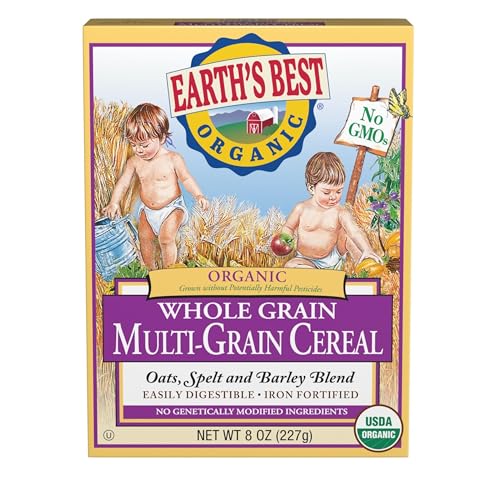
Earth’s Best delivers a finely milled, multi-grain cereal that hits 45% of the daily value for iron per serving — exactly the dosage pediatricians recommend for exclusively breastfed babies entering the solid-food phase. The blend of organic oat, spelt, and barley flour provides a more diverse amino acid profile than single-grain options without overwhelming a sensitive digestive system.
Parents report that the cereal mixes into a silky consistency with breast milk or formula, and the subtle nutty taste scores high marks even with fussy eaters. The cardboard-box packaging is no-frills, but the six-pack bulk format keeps per-serving cost notably low compared to single-box premiums at the grocery store.
Customer feedback consistently highlights that triplets and twins digest this blend without gas or constipation, a common pain point with barley-heavy cereals. If you want one versatile box that transitions from Stage 1 thin porridge to thicker toddler mash, this is the safest bet on the list.
Why it’s great
- High iron fortification (45% DV) supports infant brain development
- Organic spelt, barley, and oat flours add fiber diversity
- Bulk six-pack stretches the budget without sacrificing quality
Good to know
- Boxes lack resealable bags — transfer to an airtight container
- Multi-grain may cause sensitivity in babies with gluten intolerance
2. Gerber Organic Grain and Grow Toddler Oatmeal Banana Cereal
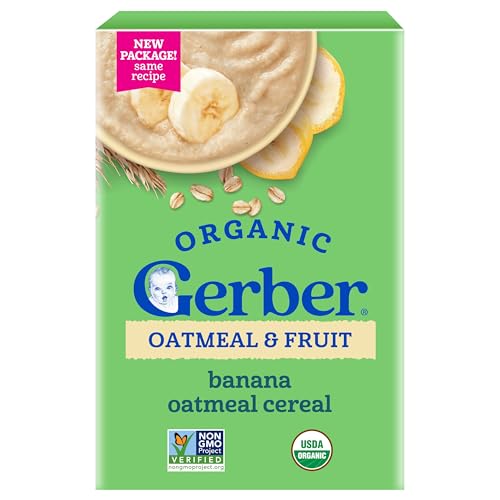
Gerber’s Grain and Grow line targets the toddler stage specifically: the oat-banana flakes are ground fine enough to dissolve quickly but retain enough structure to encourage chewing practice. Each serving carries iron and zinc to support continued growth after the first birthday, and the organic certification covers the banana puree that gives this cereal its naturally sweet profile.
Parents note the aroma is noticeably pleasant compared to plain oat cereals, making morning prep easier when your toddler is already cranky. The five-box pack (each 8 oz) is convenient for daycare drop-offs or grandparents’ houses, though some long-time buyers miss the old plastic-container format that kept cereal fresher longer.
One reviewer specifically called out that this oatmeal tested clean for heavy metals, a deciding factor for families who previously relied on rice cereal until the arsenic warnings came out. For a ready-made toddler breakfast that requires zero doctoring with fruit puree, this hits the mark.
Why it’s great
- Banana flavor eliminates need for added sweeteners
- Fine flake texture suits transitioning toddlers
- Iron and zinc fortification for continued development
Good to know
- Box packaging is less airtight than the older container design
- Banana taste may not appeal to babies who prefer plain oats
3. Amara Organic Baby Food Oats and Berries
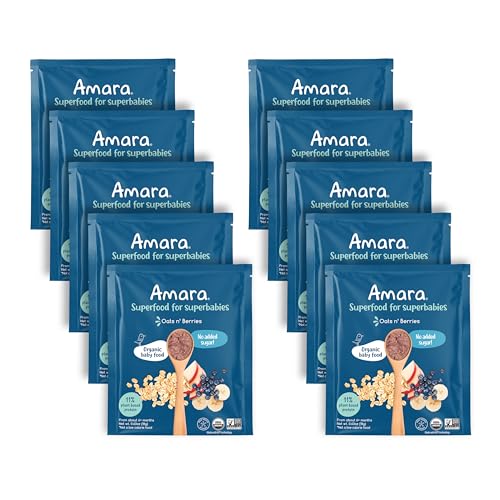
Amara uses a proprietary freeze-dry process that avoids the repeated high-heat treatment typical of shelf-stable pouches, which means the oat and berry cells retain more of their original nutrient density. The ingredient deck is surgically simple — organic oats, apple, banana, blueberries — and the brand voluntarily publishes third-party heavy metal test results, a differentiator that matters after the Clean Label Project disclosures.
You mix the powder directly in the pouch with breast milk, formula, or water, adjusting the liquid volume to control texture from thin puree to thicker mash. Traveling parents rave about keeping a few pouches in the diaper bag for instant breakfast at hotels or relatives’ homes, needing only a splash of warm water and a quick shake.
A few reviewers note the price per pouch runs higher than traditional jarred options, but they accept the premium because the ingredient purity and convenience justify it. For parents who prioritize tangible proof of purity over bulk value, Amara is the gold standard in the pouch category.
Why it’s great
- Third-party tested for heavy metals with published results
- Customizable texture — mix to your baby’s stage
- No added sugars, preservatives, or high-heat processing
Good to know
- Higher per-pouch cost than conventional baby cereal
- Requires water or milk for preparation — not ready-to-eat
4. Gerber Organic Banana Blueberry Blackberry Oatmeal Pouch
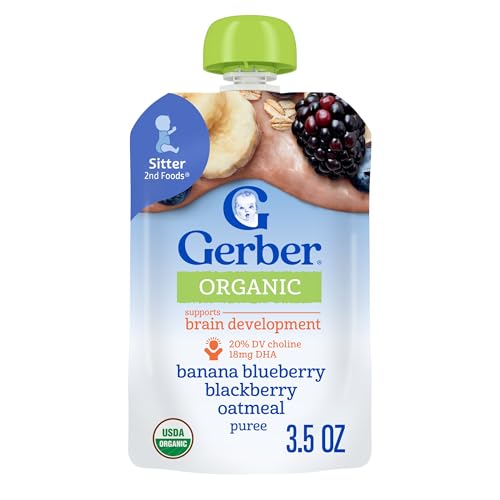
Gerber’s WonderFoods line blends oatmeal with a berry trio and adds 18 mg of DHA (algae-derived omega-3) plus choline to support brain and eye development during the first year. Each 3.5-ounce pouch delivers 25% of the daily value of potassium, making it more nutrient-dense than fruit-only pouches that lack iron or protein.
The texture is a smooth Stage 2 puree — thick enough to stay on the spoon but thin enough to swallow without chewing — and the oatmeal base provides satiety that plain fruit pouches cannot match. Multiple reviews from grandparents and parents confirm that this specific flavor is the only pouch their picky baby will finish.
The pack of 12 is cost-efficient per pouch compared to single-serve alternatives, and the resealable cap lets you split a pouch across two meals without mess. If you need a quick, spoon-free meal for the car or a distracted baby, this is the top performer among ready-to-eat options.
Why it’s great
- Contains 18 mg DHA and choline for brain development
- Smooth puree works for babies new to Stage 2 textures
- No added sweeteners or artificial colors/flavors
Good to know
- Not suitable for Stage 1 babies under six months
- Berries may cause staining on light-colored bibs and clothes
5. Terrasoul Superfoods Organic Rolled Oats

Terrasoul’s rolled oats are batch-tested for gluten at under 10 ppm and certified glyphosate-free by third-party labs, making them a solid foundation for parents who want to grind their own baby oatmeal at home. The 5-pound bag splits into two resealable pouches, and the oats carry a fresh, nutty aroma that standard supermarket oats lack.
Because these are old-fashioned rolled oats rather than pre-ground flour, you will need a blender or food mill to reduce them to a baby-safe powder before cooking. Older infants (nine months+) can handle the intact flake texture when prepared as a soft porridge, and the fiber content is significantly higher than most commercial baby cereals.
Customer loyalty runs deep — one reviewer has purchased this product 32 times. The trade-off is convenience: you trade instant preparation for total control over ingredient sourcing and cost per pound. For families already making homemade purees, this bulk oat bag is the logical next step.
Why it’s great
- Third-party verified glyphosate-free and gluten-free
- Bulk 5-lb format costs less per serving than baby-specific cereal
- Fresh, nutty aroma and clean flavor without bitterness
Good to know
- Must be ground or cooked longer for younger infants
- No added iron — pair with iron-rich foods for balanced nutrition
6. Nature’s Path Organic Original Instant Oatmeal
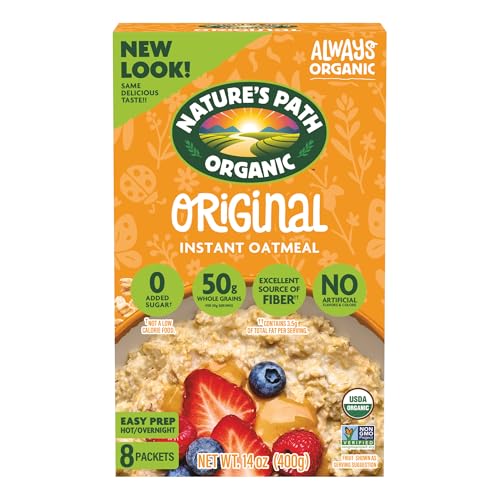
Nature’s Path instant oatmeal contains exactly one ingredient — whole grain organic oats — with no added sugars, salt, or preservatives. Each packet delivers 50 grams of whole grains and 4 grams of fiber, which makes it a suitable breakfast for toddlers who have graduated from baby cereal but still need a clean, low-sodium option.
Preparation is straightforward: empty a packet into a bowl, pour boiling water, stir, and wait five minutes. The texture is slightly thicker than baby cereal but soft enough for little mouths, and the neutral flavor allows you to fold in fruit puree, nut butter, or yogurt without clashing.
Some reviewers note that the instant flakes produce a softer final texture compared to stovetop oats, but for speed and ingredient transparency, this is the strongest packet option available. The six-box bundle (84 ounces total) supplies nearly three months of weekday breakfasts for a toddler.
Why it’s great
- Single-ingredient organic oats — zero additives
- Low sodium and no added sugar
- Bulk six-pack provides long-term pantry stock
Good to know
- Instant texture may become gummy if over-stirred
- Not fortified with iron — needs pairing with iron sources
7. Bob’s Red Mill Organic Gluten Free Oatmeal Cup

Bob’s Red Mill combines certified gluten-free organic rolled oats with flaxseed and chia seeds for a fiber and omega-3 boost that standard baby cereals rarely offer. Each cup contains over 40 grams of whole grains and a short ingredient list — organic oats, flax, chia, sea salt — with zero added sugars or preservatives.
The cup format is ideal for older toddlers and young children who can handle the slightly chewy texture of rolled oats; simply add hot water, stir, wait one minute, and eat directly from the container. Parents who travel frequently appreciate that the cup eliminates the need for a separate bowl and spoon for solid meals.
A few customers mention the salt content (60 mg per cup) is higher than plain oats, but it remains well within pediatric guidelines for children over one year. For a grab-and-go breakfast that packs extra omega-3s without artificial fortification, this is the most thoughtful single-serve option available.
Why it’s great
- Certified gluten-free with added flax and chia seeds
- Single-serve cup requires no bowl or measuring
- No added sugars, artificial flavors, or preservatives
Good to know
- Contains 60 mg sodium per cup
- Cup size is small — may need two for older children
FAQ
Can I use organic baby oatmeal past the printed best-by date?
How do I know when my baby is ready for multi-grain oatmeal instead of single-grain?
Should I be concerned about arsenic in organic baby oatmeal?
Final Thoughts: The Verdict
For most users, the organic baby oatmeal winner is the Earth’s Best Organic Whole Grain Multi-Grain Cereal because it delivers 45% DV of iron per serving, uses a clean organic blend of oat, spelt, and barley, and comes in a budget-friendly bulk six-pack that works from Stage 1 through toddlerhood. If you want a metal-tested, freeze-dried pouch that mixes to any texture on the go, grab the Amara Organic Oats and Berries. And for a zero-prep, single-serve breakfast packed with flax and chia for omega-3s, nothing beats the Bob’s Red Mill Organic Gluten Free Oatmeal Cup.