
Our readers keep the lights on and the weekend projects moving. As an Amazon Associate, I earn from qualifying purchases.
Yard work is a full-body battle against mud, morning dew, wet grass, and hidden roots. Wearing the wrong boot means you spend the afternoon squishing through puddles, fighting for traction on a slope, or nursing blisters after an hour of raking. A dedicated yard work boot needs to seal out moisture, grip loose soil, and survive the abuse of shoveling, leaf blowing, and hauling debris without leaving your feet aching by sunset.
I’m Rikta — the co-founder and writer behind FitlyFast. I’ve spent years analyzing consumer feedback, material specs, and real‑world performance data across dozens of outdoor work boot models to separate marketing claims from actual durability and comfort.
The deciding factor in any pair is how the boot balances waterproof protection, slip resistance, and all‑day wearability for the specific chores you do. This guide cuts through the noise to help you find the absolute best yard work boots for your property, budget, and body.
How To Choose The Best Yard Work Boots
The best boot for your property depends on climate, terrain, and the specific mix of your weekly chores. A one‑boot approach almost never works for year‑round outdoor work, so evaluate these factors before you buy.
Upper Material: Rubber Neoprene vs Full‑Grain Leather
Rubber neoprene boots (like the Trudave and Muck styles) offer seamless waterproofing up the calf and flex easily for squatting and kneeling. They are ideal for muddy spring cleanups and wet grass mowing. Leather boots (like the Wolverine and Timberland PRO options) breathe better in dry heat but require periodic waterproofing treatment and have a shorter shaft that stops below the ankle, leaving you vulnerable to dew‑soaked cuffs.
Outsole Traction for Yard Specifics
Yard work demands a deep self‑cleaning tread that won’t pack with mud between lugs. Look for chevron or multi‑directional lugs spaced widely enough to shed soil. Boots with shallow or tightly packed treads lose grip on wet slopes and turn raking into a slipping hazard. The Carhartt and Trudave options grip loose soil well, while the Wolverine’s full‑rubber lug outsole holds on packed dirt and gravel equally effectively.
Insulation vs Breathability Balance
In colder months, 5–6 mm neoprene with fleece lining keeps your feet warm during still yard tasks like trimming or raking. But the same boot will cook your feet in July weed‑eating sessions. If you do yard work year‑round in moderate climates, prioritize a boot with minimal insulation and wear thick wool socks in winter. The Trudave draws the best balance between warmth and ventilation for active movement.
Quick Comparison
On smaller screens, swipe sideways to see the full table.
| Model | Category | Best For | Key Spec | Amazon |
|---|---|---|---|---|
| Trudave Rubber Boots | Mid‑Range | Active all‑season yard work | 6mm neoprene + steel shank | Amazon |
| Wolverine Carlsbad Waterproof 6″ | Premium | Dry, hot‑weather mowing & blowing | Full‑grain leather upper | Amazon |
| Carhartt Rugged Flex WP Steel Toe | Mid‑Range | Heavy lifting & construction yard tasks | Steel toe + flex welt | Amazon |
| Timberland PRO Pit Boss Steel Toe | Premium | Long days on concrete or packed earth | Goodyear welt + EVA footbed | Amazon |
| MUCK Men’s Chore Met Guard | Premium | Wet, freezing mud & snow chores | CR‑flex met guard + steel toe | Amazon |
| Men’s Rubber Muck Boots (Insulated) | Budget‑Friendly | Light yard duty & quick errands in rain | Insulated neoprene upper | Amazon |
| Hunthor Steel Toe Rubber Boots | Mid‑Range | Wet, cold seafood‑style conditions | Steel toe + puncture‑proof shank | Amazon |
In‑Depth Reviews
1. Trudave Rubber Boots for Men & Women with Steel Shank
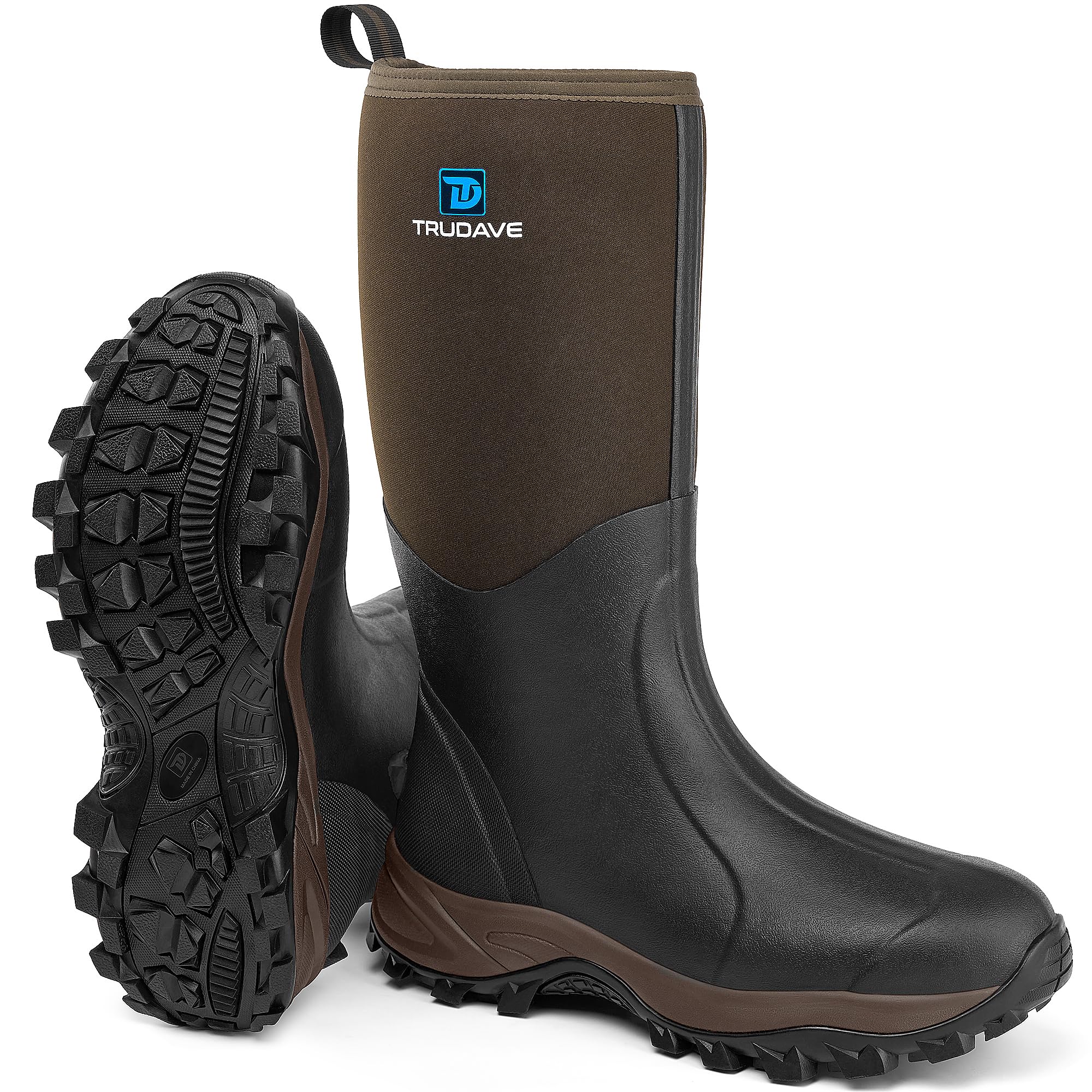
The Trudave boot strikes the hardest‑to‑find balance in the yard boot category: it delivers 6mm neoprene warmth and waterproofing while staying light enough for active year‑round use. The steel shank provides underfoot rigidity for shoveling and walking on uneven terrain without adding the heavy bulk you feel in most rubber work boots. Customers consistently report zero foot sweat and dry feet after hours of spring mud work and summer grass cutting.
Real‑world testing shows this boot excels in deep snow and wet muck when paired with thick wool socks — reviewers note it stays warm at sub‑freezing temperatures but avoids overheating in 50‑degree rain. The tread pattern resists packing with animal waste and loose soil, maintaining grip through a full weekend of property maintenance. Fitting is accurate for most foot shapes, though some users find the top edge slightly tight if worn folded at full height.
Considering the six‑month track record of watertight seams and minimal wear, the Trudave outperforms many rubber boots at double the price point. It is the smartest all‑around choice for anyone who does mixed seasonal yard work without wanting to swap boots between spring mud and fall leaves.
Why it’s great
- Lightweight 6mm neoprene breathes better than thicker rubber competitors
- Steel shank provides solid underfoot support for shoveling and standing
- Tread pattern sheds mud effectively and resists slipping on wet grass
Good to know
- Insulation is moderate — needs wool socks for truly cold winter days
- Top edge can cause mild chafing when worn fully unfolded for extended periods
2. Wolverine Men’s Carlsbad Waterproof 6″ Work Boot

The Wolverine Carlsbad is a leather work boot that breathes properly in summer heat, making it a standout for dry‑climate yard work. Its full‑grain leather upper resists punctures from thorns and wire while the moisture‑wicking mesh lining pulls sweat away during hot mowing sessions. At roughly 3 pounds per boot, it feels noticeably lighter than steel‑toe rubber boots and allows natural ankle flexion for stooping and crouching.
Customers who wear these 10–14 hour days confirm the EVA midsole and footbed reduce impact on concrete driveways and packed soil. The rubber lug outsole grips well on loose gravel and damp grass without the deep cleaning issues of some self‑cleaning treads. A short break‑in period — roughly one full work day — means you do not spend a week limping before the boot becomes comfortable.
This boot is not waterproof beyond the ankle collar, so it is unsuitable for standing in puddles or walking through wet grass higher than the shaft. But for dry debris blowing, weed eating, and summer property maintenance, the Carlsbad delivers breathability and stability that rubber boots cannot match.
Why it’s great
- Full‑grain leather breathes well in heat and resists punctures from brush
- EVA midsole absorbs impact on hard surfaces like driveways and patios
- Short break‑in period — comfortable by the second day of wear
Good to know
- Shaft only reaches 6 inches — not suitable for wet grass or deep puddles
- Not steel toe; side suede tongue can wear faster than the rest of the boot
3. Carhartt Men’s Rugged FF6213-M Flex WP 6″ Steel Toe Work Boot
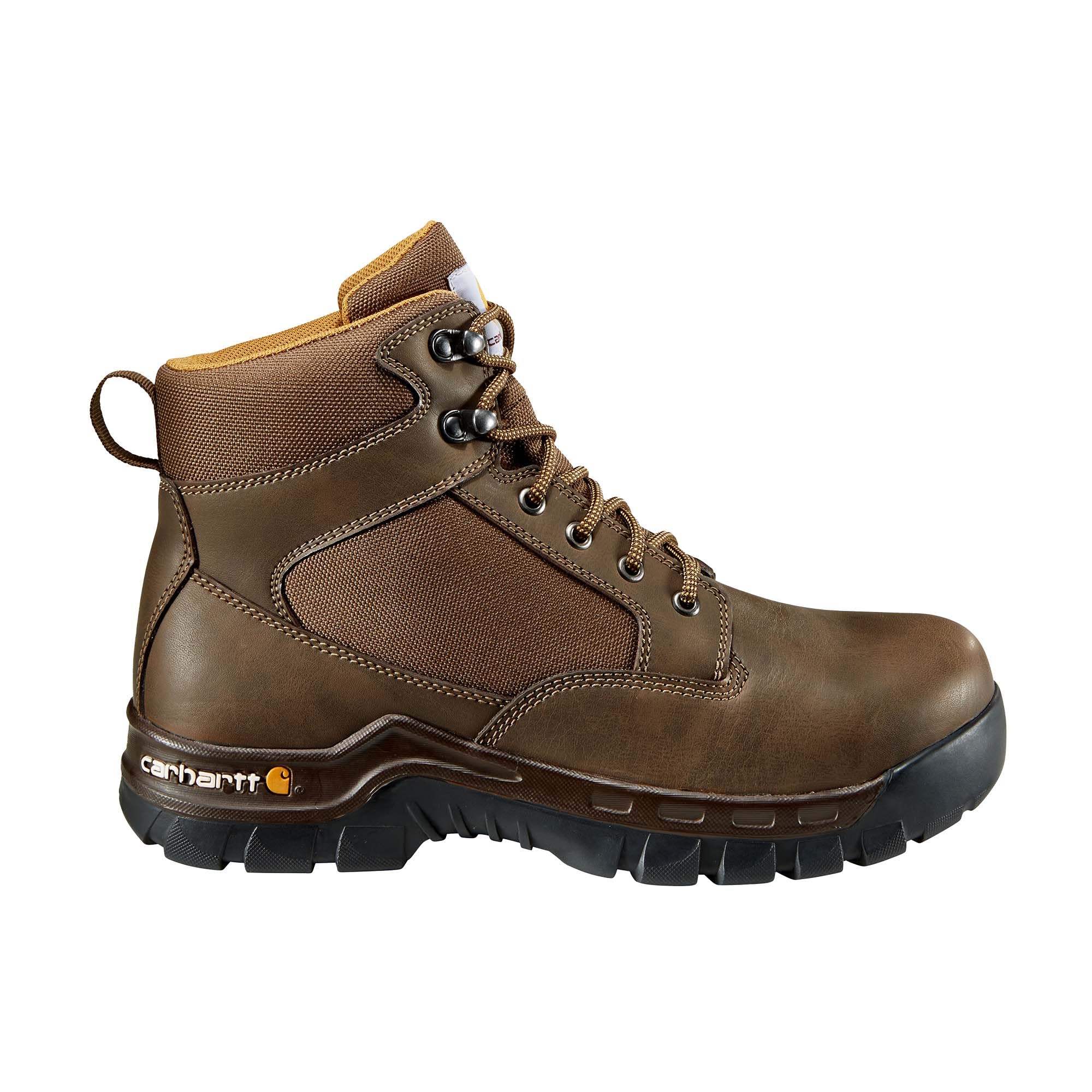
The Carhartt Rugged Flex boot brings dual‑purpose protection to yard work — the steel toe handles heavy lifting, wheelbarrow loads, and dropped tools while the flex welt allows natural foot movement on uneven lawn grades. At 4.5 pounds per boot, it sits heavier than leather options but lighter than most all‑rubber wellies. Ankle support ranks 10/10 in customer feedback, crucial when navigating root‑filled or sloped terrain with a loaded wheelbarrow.
The waterproof membrane holds up during light rain and morning dew, though the boot’s 6‑inch height leaves the upper sock vulnerable to deeper slogs. Customers with diabetes and foot sensitivity report this is the only boot they can wear for 12‑hour shifts on concrete without pain — a testament to the interior cushioning and wide toe box design. The slip‑resistant tread performs well on wet concrete and loose gravel, though it packs slightly in sticky clay mud.
One durability complaint exists — a single reviewer experienced sole separation after 60 days. Given the overwhelming majority of customers logging a year or more of hard daily wear, this appears to be a batch issue. For property work that involves carrying lumber, moving heavy pots, or operating a tiller, the Carhartt steel toe is the protective anchor your feet need.
Why it’s great
- Steel toe protects against dropped tools and heavy landscaping equipment
- Outstanding ankle support rated 10/10 for sloped and uneven yard terrain
- Wide toe box accommodates foot swelling during long work days
Good to know
- 6‑inch shaft limits protection in standing water or tall wet grass
- A small number of units have shown premature sole separation
4. Timberland PRO Men’s Pit Boss 6 Inch Steel Safety Toe Industrial Work Boot

The Timberland PRO Pit Boss is constructed with a Goodyear welt that allows resoling, making it a long‑term investment for frequent yard workers who wear through soles in a single season. The steel toe provides ANSI‑rated impact protection, while the rubber lug outsole delivers reliable grip on dry and damp surfaces. The boot runs slightly wide — customers with narrow feet should size down half a step for a secure heel lock.
This boot is not factory waterproof, but the sturdy leather upper responds well to mink oil treatment, creating a weather‑resistant barrier that handles morning dew and light rain. The EVA footbed offers solid shock absorption for standing on concrete walkways and driveways, though it lacks the honeycomb insole found in other Timberland PRO models. The heavier build (due to the Goodyear welt) provides a planted feel when operating a push mower or hauling branches.
For property owners who want a serviceable boot that can be rebuilt rather than replaced, the Pit Boss delivers classic good looks and repairable construction. Just plan to apply a waterproofing wax before the first use and the boot will handle most dry‑weather yard tasks admirably.
Why it’s great
- Goodyear welt allows resoling — extends boot life beyond one season
- Steel toe meets ANSI safety standards for debris protection
- Roomy toe box accommodates thicker socks for cooler mornings
Good to know
- Not waterproof out of the box — requires mink oil treatment for moisture protection
- Heavier build due to Goodyear welt; less ideal for quick lawn chores
5. MUCK Men’s Chore Met Guard Work Boots

The Muck Chore Met Guard is built for the wettest, coldest yard work you can imagine — standing in snowmelt, walking through icy puddles, and shoveling mud in midwinter. The one‑piece rubber upper and neoprene lining seal water completely while the steel toe and met guard protect the top of your foot against shovel blades and dropped fence posts. The rubber outsole uses deep, widely spaced lugs that shed mud and grip on slick surfaces far better than any leather‑sole competitor.
Customers who have owned previous Muck boots report the steel toe stays comfortable without digging into the toes, and the roomy fit allows layering thick socks for sub‑freezing temperatures. The met guard sits over the laces and provides unyielding protection during repetitive bending movements like loading firewood or digging. At roughly 4.5 pounds per boot, it feels substantial but not clunky, and the neoprene top flexes well for kneeling and squatting.
Two isolated quality reports mention sole separation within days of purchase — a sharp contrast to the years of service most users enjoy. Given the premium price, if you face deep water or heavy snow weekly, the Muck Chore Met Guard is the definitive wet‑weather solution. For dry or moderate climates, a lighter boot may better serve your needs.
Why it’s great
- One‑piece rubber upper provides 100% waterproofing up the calf
- Met guard protects the top of the foot from shovel blade impacts
- Deep rubber lugs grip slick mud and ice better than any leather boot
Good to know
- Heavier and warmer than necessary for dry summer yard work
- Sporadic quality issues — some users report early sole separation
6. Men’s Waterproof Rubber Muck Boots – Insulated Mid-Calf Rain & Mud Boots
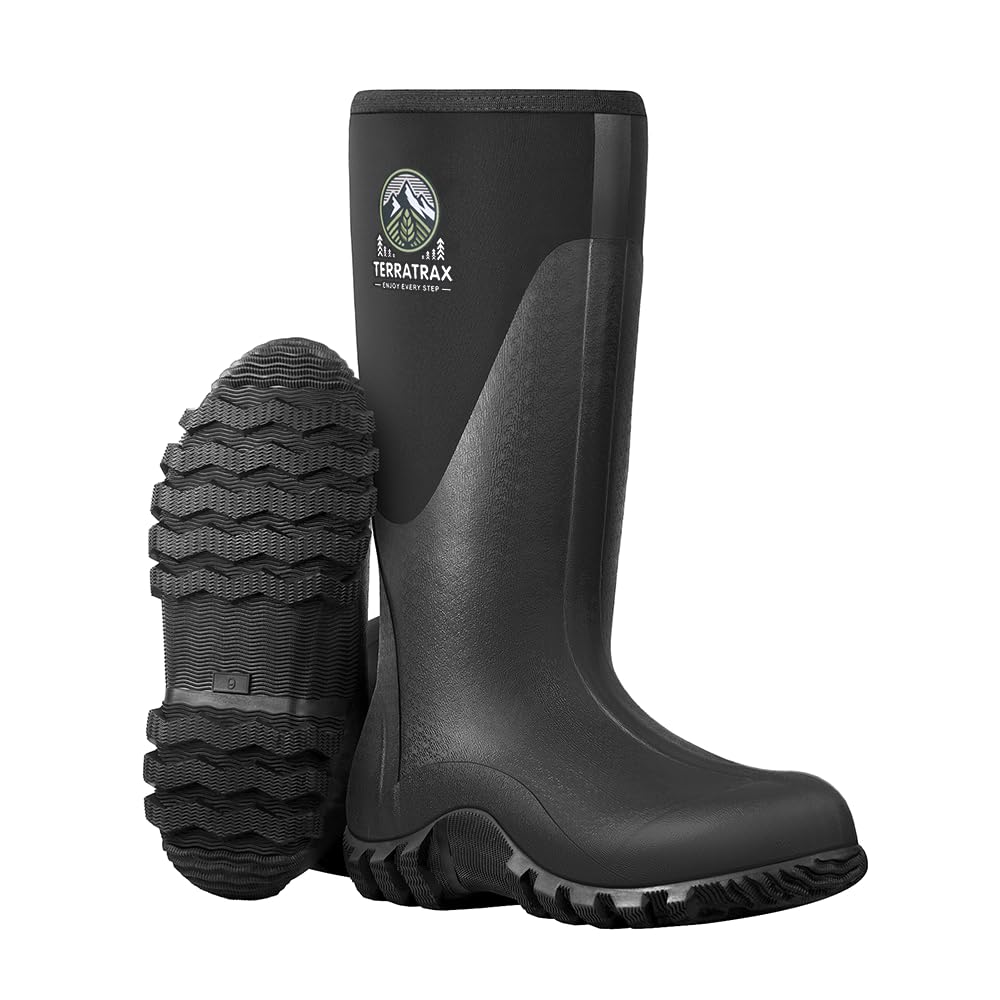
This entry‑level rubber boot delivers the core waterproofing and slip resistance needed for light yard tasks at a fraction of the price of premium models. The neoprene upper extends to mid‑calf and seals against dew, puddles, and light rain while the anti‑slip outsole holds well on wet grass and muddy paths. The boot is notably lightweight, making it easy to kick on and off for quick trips to the compost pile or garden hose.
Customer feedback is overwhelmingly positive for value — buyers describe accurate sizing, extra toe room, and comfort straight out of the box. The insulation is present but moderate; a reviewer noted the boot runs cooler than expected, which actually benefits active summer yard work but fails to keep feet warm during prolonged winter inactivity. The traction pattern works well on standard yard surfaces but lacks the aggressive self‑cleaning design needed for deep mud.
For homeowners who only need a boot for occasional wet‑weather chores like watering plants or bagging wet leaves, this model is a smart budget choice. Heavy‑duty users who spend hours in standing water or snow should invest in the Trudave or Muck instead.
Why it’s great
- Lightweight and easy to pull on for quick yard trips
- True‑to‑size fit with extra toe room for natural foot spread
- Good traction on wet grass and muddy paths for the price
Good to know
- Moderate insulation — not warm enough for inactive periods in freezing weather
- Less durable outsole than premium models; best suited for light‑duty use
7. Hunthor Rubber Work Boots, Puncture-Proof with Steel Toe & Shank
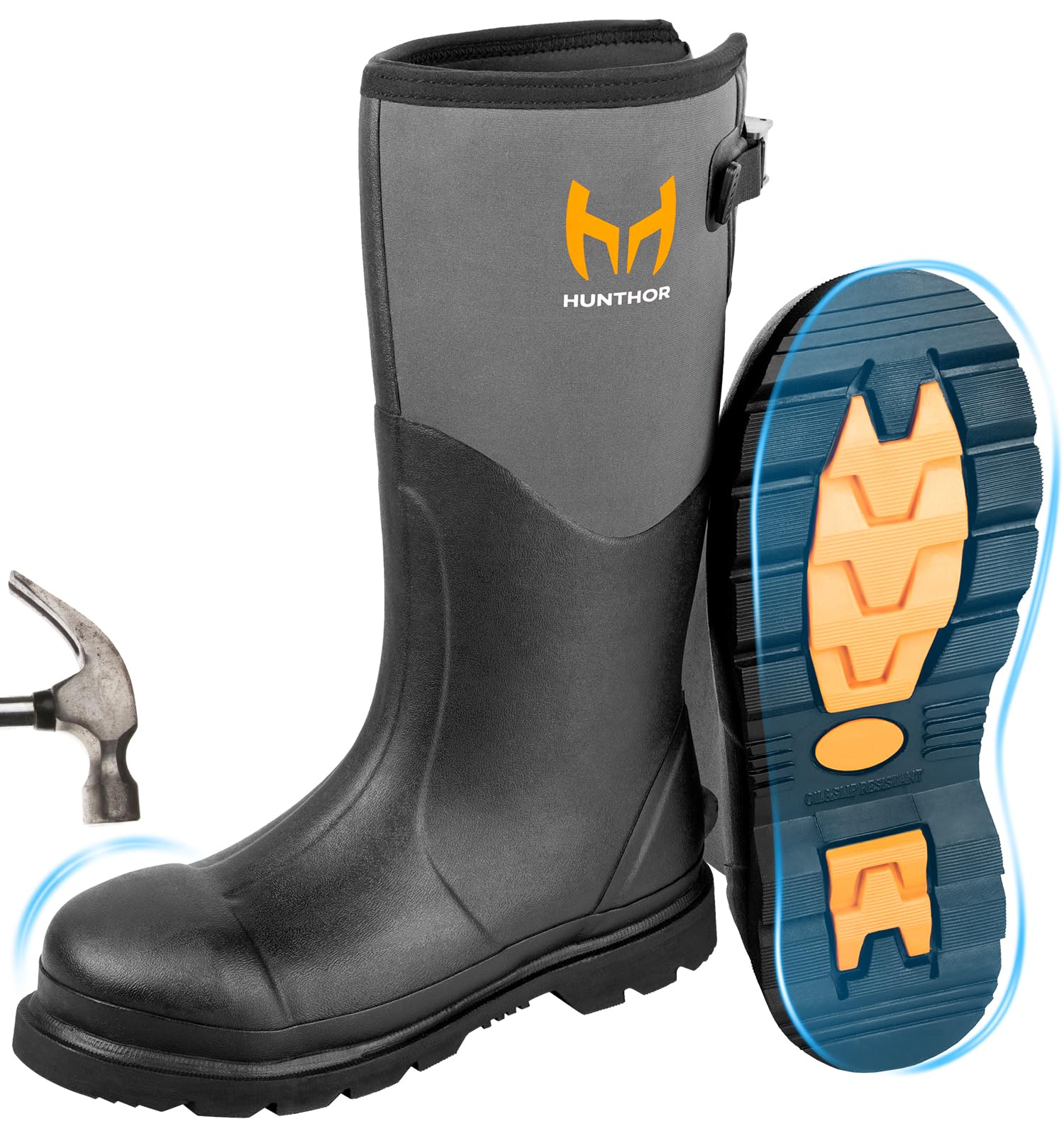
The Hunthor boot brings full steel‑toe safety and a puncture‑proof shank to wet yard conditions, making it a solid middle‑tier option for those who need toe protection in a waterproof package. The 6mm neoprene liner and thick rubber outsole seal against standing water while the steel shank provides underfoot rigidity for navigating rocky garden beds or debris‑strewn work sites. Customers who work in seafood packing and heavy wet construction praise its durability at nearly half the price of equivalent Red Wing boots.
Real‑world users report staying dry through 12‑hour days in several inches of water, with the extra‑thick sole preventing cold transfer from the ground. The boot runs slightly narrow in the calf — reviewers with thicker legs found the fit restrictive. A small cosmetic issue — some units arrive with discoloration on the back of the boot due to glue residue — but this does not impact performance or longevity. The raised steel toe and aggressive outsole deliver reliable traction on wet concrete, mud, and gravel.
If you need steel‑toe protection for property work involving heavy materials, machinery, or livestock, the Hunthor delivers excellent value. For lighter yard tasks without impact hazards, the Trudave or budget rubber boot offer better breathability at a lower weight.
Why it’s great
- Steel toe and puncture‑proof shank provide serious debris and impact protection
- 100% waterproof up to the calf — tested in standing water for full shifts
- Extra‑thick rubber sole insulates against cold ground and resists cracking
Good to know
- Calf opening is narrower than average — may not fit those with thicker legs
- Heavier than non‑steel rubber boots; some cosmetic glue residue on early units
FAQ
Can I wear rubber neoprene boots all year in moderate climates?
Do steel toe yard work boots hurt for walking on lawn?
How long should a pair of yard work boots last before needing replacement?
Final Thoughts: The Verdict
For most users, the best yard work boots winner is the Trudave Rubber Boot because it combines lightweight 6mm neoprene with a steel shank for all‑season support without overheating or losing waterproof protection. If you want breathable leather that performs best in dry heat, grab the Wolverine Carlsbad. And for standing in deep mud, snow, or icy puddles, nothing beats the MUCK Chore Met Guard for total wet‑weather protection.