
Our readers keep the lights on and the weekend projects moving. As an Amazon Associate, I earn from qualifying purchases.
An indoor bike trainer turns your outdoor rig into a year-round training tool, but the wrong choice can leave you with a noisy, unstable, or uninspiring experience. The gap between a frustrating session and a focused workout comes down to one decision: resistance type and connectivity that match how you actually train.
I’m Rikta — the co-founder and writer behind FitlyFast. I’ve analyzed dozens of trainer specifications, from fluid damping curves to electromagnetic resistance accuracy, to separate the smart-buy signals from the marketing noise.
Whether you ride for fitness, recovery, or structured power-based training, this breakdown of the best bike trainer options will help you match your riding style to the right indoor partner.
How To Choose The Best Bike Trainer
Picking the right trainer starts with understanding your training environment and your tolerance for setup time. A fluid trainer delivers near-silent progressive resistance that mimics real road climbs, while a magnetic unit offers simple, adjustable tension at a lower entry point. Smart trainers with electromagnetic or direct-drive designs give you app-controlled resistance changes and power measurement, but they cost significantly more. The key is matching the resistance type and connectivity to your riding goals — not just your budget.
Resistance Type: Fluid, Magnetic, or Electromagnetic
Fluid trainers use a sealed impeller spinning in silicone oil to create resistance that increases naturally as you pedal harder, producing a smooth road-like feel. Magnetic trainers use a flywheel with adjustable magnets that step through fixed resistance levels, which can feel less natural and create more noise at higher settings. Electromagnetic resistance, found in smart trainers, allows the trainer or an app to change resistance dynamically, enabling structured interval workouts and automatic hill simulations. For realistic feel, fluid wins; for app-controlled precision, electromagnetic is the standard.
Smart Connectivity: App Control and Data Tracking
A smart trainer with dual ANT+ FE-C and Bluetooth can pair directly with apps like Zwift, Rouvy, and TrainerRoad. This allows the app to increase resistance during climbs and decrease it on descents, and it records power, speed, and cadence data without extra sensors. Wheel-on smart trainers (like the Saris M2) offer an affordable entry to app training, but power accuracy typically sits around ±5%. Direct-drive smart trainers (like the Wahoo KICKR CORE and Garmin Tacx Neo 2T) remove the tire contact variable for higher accuracy, quieter operation, and no tire wear. If you plan to use structured training apps, choose a trainer with built-in connectivity rather than relying on add-on sensors.
Stability and Noise: Real-World Comfort
A trainer that wobbles under high power or echoes through the house will kill your motivation fast. Look for wide M-shaped or reinforced steel frames with non-slip feet and front wheel risers for stability during out-of-saddle efforts. Noise is determined by the resistance unit and the tire — fluid and electromagnetic units are quieter than magnetic fans, and a slick trainer tire cuts roar significantly compared to a knobby mountain bike tire. For apartment use or early morning sessions, prioritize a fluid or direct-drive unit and plan to use a dedicated slick tire. Weight capacity matters too: if you are over 250 pounds, check the frame’s stated limit to avoid flexing or damage.
Quick Comparison
On smaller screens, swipe sideways to see the full table.
| Model | Category | Best For | Key Spec | Amazon |
|---|---|---|---|---|
| Garmin Tacx Neo 2T | Direct Drive Smart | Serious power-based training | 32 neodymium magnets, 2200W max | Amazon |
| Wahoo KICKR CORE 2 | Direct Drive Smart | App-integrated training | Integrated WiFi, 20 speed settings | Amazon |
| Saris M2 Smart | Wheel-On Smart | Zwift without breaking the bank | Electromagnetic, ±5% accuracy | Amazon |
| Alpcour Fluid Trainer | Fluid Wheel-On | Quiet home workouts | Stainless steel frame, 300 lb capacity | Amazon |
| Saris Fluid2 | Fluid Wheel-On | Road-like feel on a budget | Precision balanced flywheel | Amazon |
| Elite Qubo Power Fluid | Fluid Wheel-On | Compact storage and quiet operation | Elastogel reduces tire wear 20% | Amazon |
| Topeakmart Magnetic | Magnetic Wheel-On | Entry-level indoor riding | Folds to 21.5x7x17.3 inches | Amazon |
In‑Depth Reviews
1. Garmin Tacx Neo 2T Smart Trainer

The Garmin Tacx Neo 2T uses 32 neodymium magnets to deliver electromagnetic resistance that reaches up to 2200 watts, making it the most powerful and quietest option in this lineup. The direct-drive design removes the rear tire entirely, eliminating tire wear, noise from rubber contact, and the need for calibration against tire pressure. The virtual flywheel simulates the inertia of riding outdoors, and the platform can reproduce road surface textures like cobblestones for immersive app training through Zwift or Tacx Premium. Setup requires mounting a cassette on the freehub and matching chainline, but once configured, the unit folds for storage with a weight of 47.4 pounds.
Real-world feedback highlights the near-silent operation and instant connectivity via ANT+ and Bluetooth, with users reporting no disturbance to others in the same room. The tactile sensations — vibration during virtual cobblestone sections — add a layer of realism that fluid trainers cannot replicate. Garmin includes a one-month Tacx Premium software subscription and front wheel support. The training platform handles high-power sprints without any lateral flex, and the built-in power meter reads accurately without requiring an external sensor.
The trade-off is the price point, which lands in the premium tier, and the learning curve for cassette spacer placement during setup. Some users noted a slight noise if the cassette spacer configuration was incorrect, but this resolved after adjustment. The Neo 2T also requires a dedicated power source and is heavier than wheel-on trainers, making it less travel-friendly. For riders who train year-round with structured power zones and want the most realistic indoor experience, this is the benchmark.
Why it’s great
- Whisper-quiet 32-magnet electromagnetic resistance
- Dynamic road surface simulation for immersive training
- Top-tier 2200W max power with built-in power meter
Good to know
- Premium price point suits dedicated cyclists
- Setup requires cassette spacer adjustment
- Heavy 47.4 lb unit, not portable
2. Wahoo Fitness KICKR CORE 2 ZWIFT COG and Click
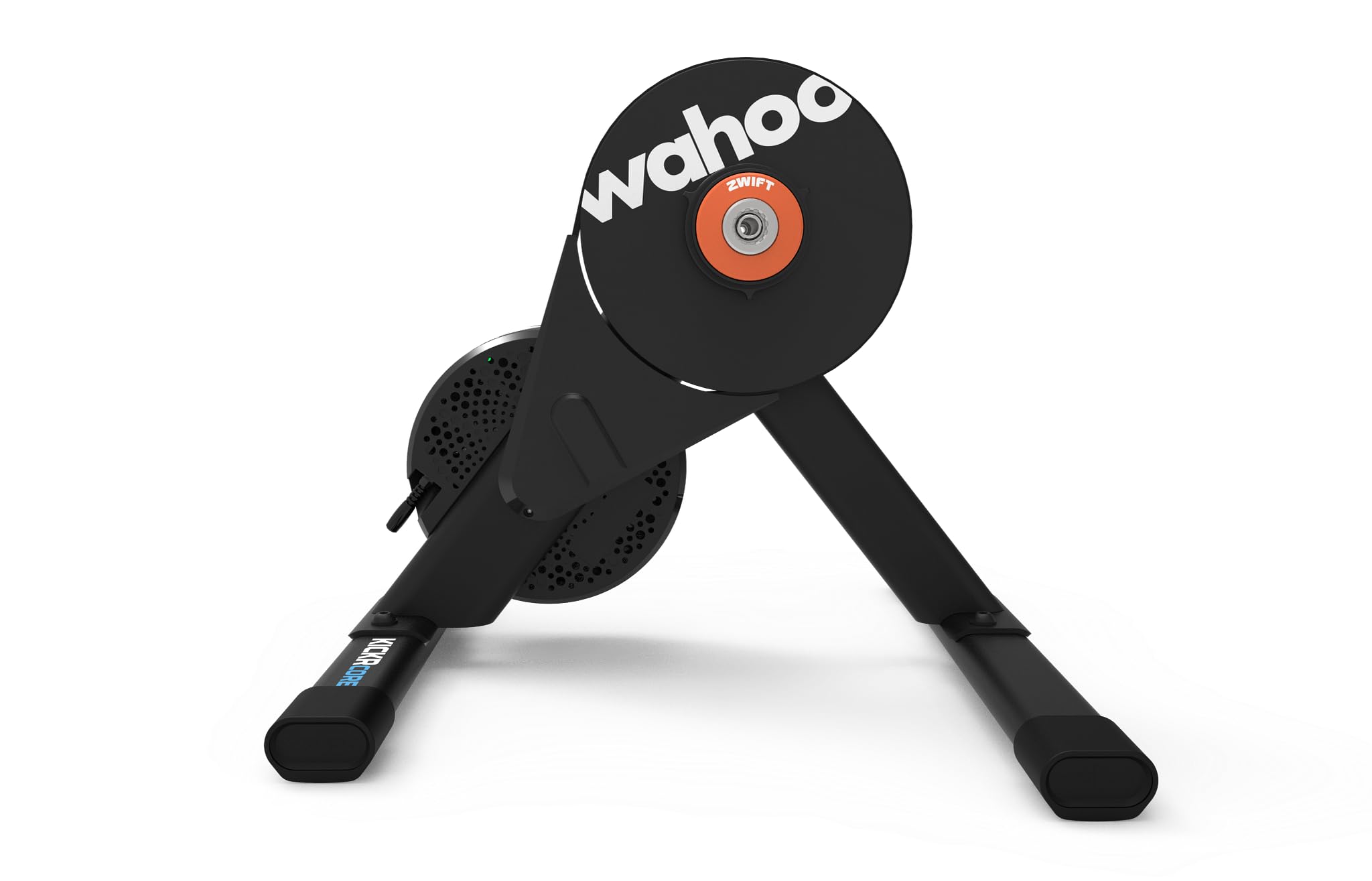
The Wahoo KICKR CORE 2 builds on the proven direct-drive platform with integrated WiFi for faster app pairing and automatic firmware updates. The package includes the Zwift Cog and Click virtual shifting system, which eliminates the need for a rear derailleur or cassette — you shift gears through the Click controller while riding. The alloy steel frame supports up to 200 pounds of rider+bike weight and folds for compact storage. With 20 electromagnetic resistance settings, the trainer simulates grades up to 16% and can handle sprint efforts smoothly without the tire contact variables of a wheel-on unit.
Users consistently praise the simple setup and stable ride feel, noting that the trainer pairs instantly with both Zwift and Rouvy. The integrated WiFi streamlines the connection process, avoiding Bluetooth dropouts common in other smart trainers. The virtual shifting with the Zwift Click is a standout feature for riders who want app-controlled gear changes without adjusting a derailleur. Feedback from long Zwift sessions highlights the quiet operation — one user reported their spouse could not hear the trainer — and the sturdy base does not wobble during out-of-saddle efforts.
The main criticism targets the Zwift Click itself, which some users found unreliable for shifting even after configuration, leading them to recommend using a standard cassette instead. The KICKR CORE 2 does not include a Zwift subscription, which adds to the ongoing cost. A minor vibration noise is present at certain cadences, though not loud. For riders who want the convenience of direct-drive accuracy with fast app integration and are comfortable with the ongoing app subscription, this is a strong mid- to premium-choice.
Why it’s great
- Integrated WiFi for fast, stable app pairing
- Zwift Cog and Click enables virtual shifting without a cassette
- Very quiet and stable for high-intensity sessions
Good to know
- Zwift Click shifting can be unreliable for some users
- Requires ongoing Zwift subscription for full smart features
- Minor vibration noise at certain cadences
3. Saris M2 Smart Indoor Electromagnetic Resistance Bike Trainer

The Saris M2 brings electromagnetic resistance and dual ANT+ FE-C and Bluetooth connectivity into a wheel-on design, offering app-controlled training without the cost of a direct-drive system. The steel frame handles up to 300 pounds, and the magnetic resistance unit delivers a maximum simulated power of 1500W at 20 mph with ±5% accuracy. The included steel quick-release skewer fits most road and mountain bike frames, and the trainer folds for storage. Saris includes a one-month Rouvy subscription to help new users experience virtual training.
User reviews consistently describe the M2 as a solid budget-friendly smart trainer that works well with Zwift and Rouvy after a simple calibration via the Saris app. The assembly is straightforward, though the instructions can be unclear — experienced users recommend applying WD40 to the slider for smoother adjustment and avoiding over-tightening the yellow tension knob until it clicks. The trainer produces about 70 decibels of noise, which falls in a moderate range, and riders report no slippage even during 700W sprint efforts when tire pressure is set around 115 psi.
Not all experiences are positive: one user reported a dangerous flexing event that ejected them at high speed, damaging their frame and electronics. The included quick-release skewer is not compatible with thru-axle frames, so an adapter is required separately. For cyclists transitioning from a basic fluid trainer to app-connected workouts without paying for direct-drive, the M2 offers a clear value path. Just follow the calibration steps carefully and use a dedicated trainer tire for optimal noise and grip.
Why it’s great
- Electromagnetic resistance with dual ANT+/Bluetooth connectivity
- Zwift and Rouvy compatible for structured training
- Folds for compact storage
Good to know
- Reports of dangerous flexing under high power
- Thru-axle adapter required for non-QR frames
- Moderate noise level around 70 dB
4. Alpcour Fluid Bike Trainer Stand

The Alpcour Fluid Trainer uses a sealed fluid impeller to create progressive resistance that ramps up naturally with pedal speed, closely simulating the feel of climbing a real road. The stainless steel frame supports up to 300 pounds and includes a front wheel riser block and non-slip rubber pads to prevent rocking during high-output efforts. The dual-lock system — a tension knob and lock ring — secures the bike firmly to the roller. The unit folds and packs into the included storage bag, making it portable for travel or tucking away when not in use.
Users praise the sturdy construction and quick assembly, describing it as a single-bolt setup that takes a couple of minutes. The noise level registers around 70 dB at max pedaling, comparable to TV audio, which works for home use but may still be noticeable in apartments. The fluid resistance is smooth but has a notable threshold: some riders report that generating more than 160 watts requires sustained high cadences, and dropping back down mid-sprint can feel difficult because the fluid takes 10-15 seconds to return to baseline. For casual fitness and general conditioning, this is a strong fluid option.
The main durability concern is the front tire block, which some users report breaking, though the trainer remains functional. A missing bolt has been reported in some shipments, and customer service response times are slow — expect to wait over two weeks for a replacement. The resistance level may not satisfy competitive cyclists needing high sustained loads for interval training. For riders who want a near-silent fluid trainer for everyday fitness rides and value portability, the Alpcour is a compelling mid-range choice.
Why it’s great
- Fluid resistance provides smooth, progressive road-like feel
- Sturdy stainless steel frame supports up to 300 lb
- Includes foldable design with storage bag for portability
Good to know
- Resistance threshold may feel low for strong cyclists
- Front wheel block can break under heavy use
- Slow customer service for missing parts
5. Saris Fluid2 Indoor Bike Trainer
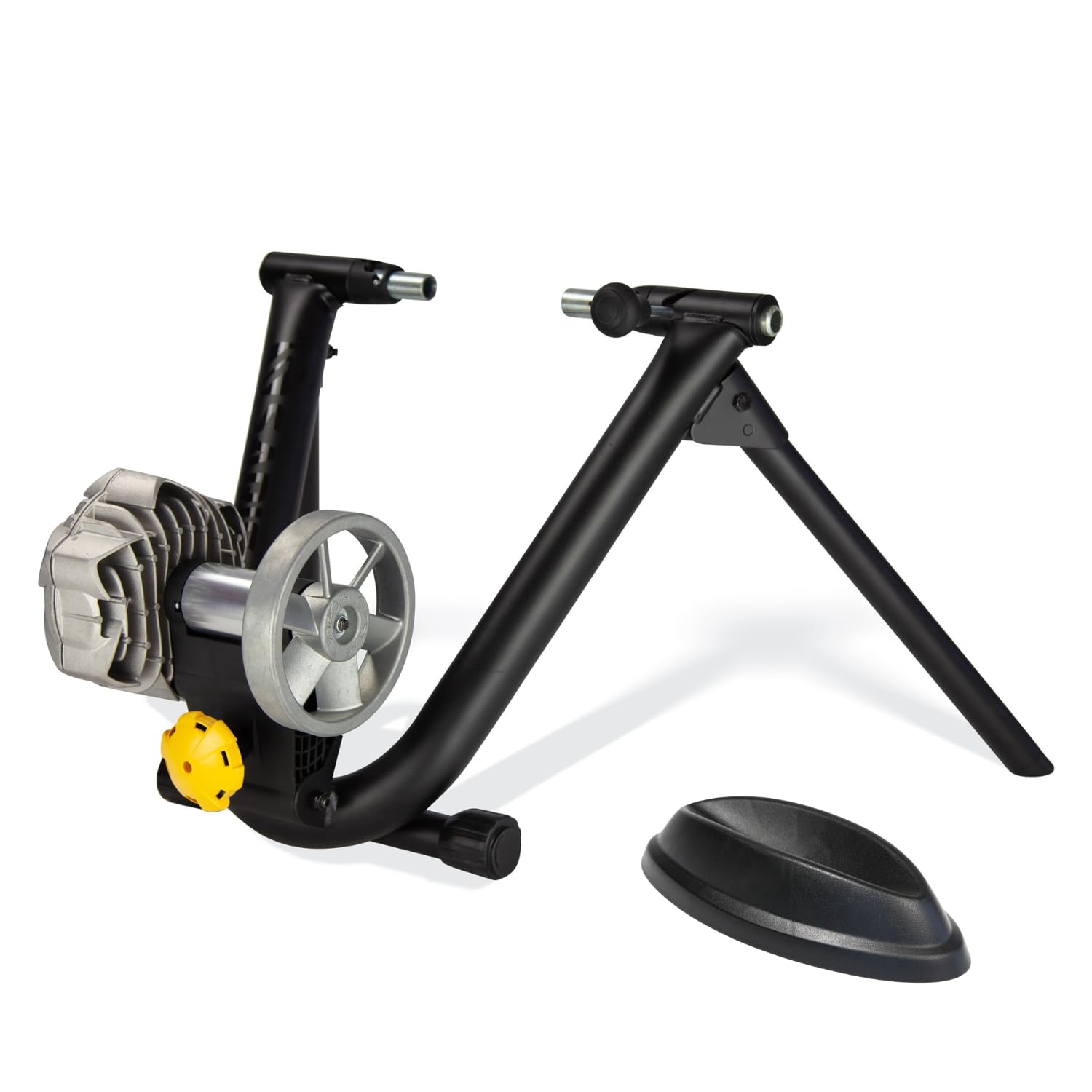
The Saris Fluid2 delivers precision fluid resistance through a large balanced flywheel that increases drag as you push harder, creating a natural road feel without fixed resistance steps. The aluminum frame folds for compact storage, and the wheel-on design is compatible with road, mountain, and hybrid bikes using the included quick-release skewer. The trainer can connect to virtual apps like Zwift and Rouvy when paired with an external speed or cadence sensor, though it is not a smart trainer out of the box. The noise rating of 69 decibels keeps sessions comfortable for home use, especially with a dedicated slick tire.
User feedback highlights the sturdy build and stable ride even during out-of-saddle efforts, with many riders noting it feels solid and reliable. The quiet operation is a recurring theme — several users reported that the Fluid2 is noticeably quieter than magnetic units they had used previously. Assembly is straightforward, though the instructions can be unclear; the beveled end of a tube must slide in first, and the orientation of the fan and power unit matters. Watching a setup video on YouTube is the recommended approach.
Quality control concerns appear in a small number of reviews. One user received two damaged units with machining errors, missing parts, and rust on bolts that required tools to assemble. The leg folding mechanism is not designed for daily use, so storing the trainer assembled is better than breaking it down after every session. A trainer tire is highly recommended because standard tires produce significant noise. For riders seeking a smooth, quiet fluid trainer that can eventually pair with training apps via add-on sensors, the Fluid2 delivers consistent fluid feel at a reasonable entry point.
Why it’s great
- Smooth, progressive fluid resistance with no fixed steps
- Quiet operation at 69 dB with a slick tire
- Foldable aluminum frame is easy to store
Good to know
- App connectivity requires separate speed/cadence sensor
- Quality control can be inconsistent
- Legs not designed for daily folding
6. Elite Qubo Power Fluid Trainer

The Elite Qubo Power Fluid Trainer uses an immersed flywheel fluid resistance system that delivers quiet, progressive load without fan noise or magnetic stepping. The standout feature is the Elastogel roller, which Elite claims reduces operating noise by 50% and tire wear by 20%, making it one of the quietest wheel-on fluid trainers in this tier. The frame uses reinforced 50 mm carbon steel tubes with a Fast Fixing lock system for quick bike attachment and a wide contact base for stability. The trainer folds flat for storage and can be converted into a non-interactive smart trainer using the optional Misuro B+ adapter for app-based data tracking.
Users consistently describe the Qubo as very quiet with no vibration feedback, making it suitable for shared living spaces. The progressive resistance feels natural and ramps up smoothly with cadence. The compact folded size is a major plus for riders with limited storage space. The unit works well with hybrid, road, and mountain bikes, and one review noted it runs great even with a recumbent trike using 20-inch wheels, which highlights the roller’s compatibility with smaller diameters.
The main reliability concern involves the feet: multiple users reported the unit arriving with broken or separated feet, though they were reattachable and the trainer remained stable after repair. One critical report described the rear wheel unlocking from the roller after 10 minutes of use, causing a crash and injury — this suggests the clamping mechanism may need careful tightening before every session. The resistance may feel insufficient for very strong cyclists pushing high sustained power. For entry-level and intermediate riders who want a compact, quiet fluid trainer that stores easily and reduces tire wear, the Qubo is a thoughtful choice.
Why it’s great
- Elastogel roller reduces noise and tire wear significantly
- Compact folded size for easy storage
- Progressive fluid resistance feels natural and smooth
Good to know
- Feet can arrive broken in some units
- Clamping mechanism needs careful tightening to avoid wheel release
- Not suitable for very high-power training sessions
7. Topeakmart Magnetic Bike Trainer Stand

The Topeakmart Magnetic Trainer is a no-frills entry-level wheel-on trainer that uses a single-setting magnetic resistance unit and a powder-coated high-carbon steel frame with an M-shaped design for basic stability. It supports bikes with 26-28 inch and 700C wheels and includes a quick-release skewer and front wheel support block. The unit folds down to 21.5 x 7 x 17.3 inches for storage, and the four adjustable non-slip feet caps can be rotated to level the trainer on uneven floors. The load capacity is a practical 264.6 pounds, and the alloy steel roller uses a rust-resistant coating.
Users confirm the trainer is easy to assemble and stable enough for casual indoor riding, with several reviews noting it works well for winter maintenance workouts and basic cardio. The magnetic resistance is functional but not quiet — multiple reviews describe noise levels as high, especially with knobby hybrid tires. Switching to a slick trainer tire reduces the noise significantly, bringing it to a manageable level. The lack of progressive resistance means you only get one fixed resistance level, with gear changes on the bike providing the only way to adjust effort.
The trainer works best for beginners or riders who want a simple indoor setup without app integration or variable resistance. The single magnetic setting limits its use for structured training, and the noise with anything other than a slick tire will be disruptive in shared spaces. Thru-axle adapters are not included, so bikes with thru-axle dropouts require separate adapters. For a budget-conscious buyer who wants to spin indoors occasionally without spending on a fluid or smart unit, the Topeakmart covers the basics but lacks the refinement of the higher-tier options.
Why it’s great
- Very affordable entry point for indoor riding
- Foldable design with adjustable leveling feet
- Sturdy M-shaped frame holds up to 264.6 lb
Good to know
- Single magnetic resistance is noisy and lacks progression
- Thru-axle adapters not included
- Slick tire required for acceptable noise levels
FAQ
Do I need a trainer tire for a wheel-on fluid trainer?
Can I use a mountain bike with a 29-inch wheel on a standard trainer?
How do I calibrate a smart trainer like the Saris M2?
What is the difference between progressive and step resistance on a trainer?
Will a direct-drive trainer fit my bike without modifications?
How much noise should I expect from a direct-drive smart trainer?
Final Thoughts: The Verdict
For most riders seeking the best balance of realistic feel, quiet operation, and training app compatibility, the Wahoo KICKR CORE 2 wins because its direct-drive design with integrated WiFi and virtual shifting delivers a premium ride experience without the top-tier price. If you want the absolute quietest and most powerful direct-drive option with road surface simulation, the Garmin Tacx Neo 2T is the benchmark for serious cyclists. For riders who prefer a smooth fluid feel and quick storage without app complexity, the Saris Fluid2 delivers consistent road-like resistance at a mid-range entry point. Your choice should match your training style: app-based intervals demand a smart trainer, while casual fitness rides thrive with fluid.