
Our readers keep the lights on and the weekend projects moving. As an Amazon Associate, I earn from qualifying purchases.
A sewing machine that stalls on a single layer of denim or jams on folded cotton is not an all-purpose machine—it is a frustration waiting to happen. The difference between a machine that collects dust and one you actually use comes down to three things: piercing power through thick seams, smooth fabric feeding at slow speeds, and a bobbin system that does not tangle. The market is flooded with machines that look feature-rich on paper but fail when you need them most.
I’m Rikta — the co-founder and writer behind FitlyFast. I spend my time analyzing hardware specifications and real user feedback for home sewing gear, from the frame construction to the feed dog design that determines whether a machine handles jeans hems or silk hems equally well.
After hours of combing through technical specs and user reports across nine models ranging from entry-level mechanicals to near-industrial workhorses, I’ve isolated the machines that actually deliver on their promise. This guide will help you find the best all-purpose sewing machine for your specific projects, whether you need a lightweight beginner model or a heavy-duty tank for thick fabrics.
How To Choose The Best All-Purpose Sewing Machine
An all-purpose machine must handle daily mending, garment construction, quilting, and occasional heavy fabrics without complaint. Beginners often focus on stitch count, but experienced sewists know that frame build, motor type, and feeding mechanism determine whether a machine is a keeper or a headache. Here are the three specifications that separate quality from disappointment.
Frame Construction and Motor Power
A metal internal frame provides stability and reduces vibration at higher speeds, which directly translates to stitch consistency on thick seams. Plastic frames can flex under pressure, causing skipped stitches on denim or multiple layers. Motor power is measured not by advertised speed (stitches per minute) but by torque—the ability to maintain needle penetration through heavy material without slowing down. A high-torque servo motor, as seen in the FEIYUE FYe350, delivers better slow-speed control and energy efficiency than traditional induction motors.
Bobbin System and Fabric Feeding
The two main bobbin types are drop-in (top-loading) and front-loading. Drop-in bobbins are universally easier to monitor and replace mid-project, making them ideal for beginners. Front-loading vertical oscillating hooks, like the one on the Janome 2212, are often praised for tighter stitch formation and less frequent jamming but require more skill to thread. The feed dog system—rows of metal teeth that move fabric—should be strong enough to grip multiple layers evenly. A 7-piece feed dog, such as the one in the Janome JW8100, provides superior control on slippery or thick materials.
Stitch Versatility vs. Usability
Stitch libraries of 37, 100, or even 200 stitches sound impressive, but the useful range for an all-purpose machine is far smaller. Key utility stitches include straight, zigzag, blind hem, buttonhole, and a stretch stitch. Decorative stitches are fun but should not drive the purchase. The one-step automatic buttonhole function is a must-have for garment making—avoid four-step buttonhole systems if you plan to sew shirts or dresses regularly. Weight and portability matter too: a machine over 13 pounds becomes inconvenient to store or move, but lighter machines often sacrifice frame rigidity.
Quick Comparison
On smaller screens, swipe sideways to see the full table.
| Model | Category | Best For | Key Spec | Amazon |
|---|---|---|---|---|
| Brother CP100X | Computerized | Versatile quilting & garment sewing | 100 built-in stitches / metal frame | Amazon |
| Janome JW8100 | Computerized | Quilters needing extra workspace | 100 stitches / 7-piece feed dog | Amazon |
| SINGER Heavy Duty 6800C | Computerized | High-speed deco stitching | 586 stitch applications / LCD | Amazon |
| PooLin EOC02 | Computerized | Budget-friendly large stitch library | 200 built-in stitches / LCD | Amazon |
| Juki TL-2010Q | Mechanical | Pro-level quilting & straight stitch | Industrial-grade / 39 lb frame | Amazon |
| SINGER Heavy Duty 4423 | Mechanical | Denim & heavy-duty daily sewing | 1,100 stitches/min / metal frame | Amazon |
| Janome 2212 | Mechanical | Beginner simplicity & durability | Front-loading bobbin / 12 stitches | Amazon |
| Brother XM3700 | Mechanical | Lightweight starter for home use | 37 built-in stitches / drop-in bobbin | Amazon |
| FEIYUE FYe350 | Mechanical | Entry-level heavy fabric handling | Servo motor / 23 stitches | Amazon |
In‑Depth Reviews
1. Brother CP100X Computerized Sewing and Quilting Machine

The Brother CP100X strikes an ideal balance between stitch versatility and build quality. Its durable metal frame keeps the machine steady when sewing through thick denim or multiple quilt layers, a feature often missing in lightweight computerized models. The 100 built-in stitches include eight one-step auto-size buttonholes, plus utility, decorative, and heirloom patterns that genuinely expand your project range without overwhelming the interface.
The inclusion of a wide extension table, hard protective case, and ten presser feet—including a walking foot and quilting foot—makes this package ready for quilting out of the box. The fixed needle bar ensures consistent stitching and even lines, a notable advantage over machines with a vibrating needle mechanism. Users report that it handles denim, cotton, and webbing without tension issues, although the automatic needle threader can feel bulky and the bobbin winding may require manual thread guidance to avoid uneven spools.
A standout feature for sewers with mobility limitations: the speed control slider allows operation without the foot pedal, enabling hands-free stitch start and stop. This machine is quiet, smooth, and light enough (10.5 pounds) to move between rooms, yet the hard case adds bulk for storage. It is a true mid-range workhorse that grows with your skills.
Why it’s great
- Solid metal frame provides stability on thick seams
- Includes 10 sewing feet and hard case
- Speed slider bypasses foot pedal for accessible sewing
Good to know
- Needle threader is bulky and takes practice to master
- Bobbin winding can be uneven without manual guidance
2. Janome JW8100 Fully-Featured Computerized Sewing Machine

The Janome JW8100 is engineered for sewists who want a smooth, computerized experience without sacrificing durability. Its 7-piece feed dog system is one of the best in its class, moving fabric evenly and preventing shifting or puckering on cotton, knits, and layered quilting materials. The 100 stitches and seven one-step buttonholes offer genuine creative flexibility for garment and home decor projects.
What sets this model apart is the included accessory bundle: an extra-wide extension table, hard cover, even feed foot, and quarter-inch foot for precise quilt piecing. The metal construction feels substantial yet the machine weighs only 12 pounds, making it lighter than many all-metal counterparts. Users consistently praise its quiet operation, responsive speed control, and ability to sew through multiple layers of denim or fleece without straining. The jam-proof drop-in bobbin and automatic threader save significant setup time.
The needle up/down control and start/stop button give you fine command over your stitching. A common minor complaint is that the LED light could be brighter for detailed work. The machine uses standard class 15 bobbins, a welcome detail that makes replacements easy and cheap. For quilting and garment work, this machine delivers reliable, even stitches that build confidence.
Why it’s great
- 7-piece feed dog system prevents fabric shifting
- Includes extension table, hard cover, and walking foot
- Quiet, smooth operation with responsive speed control
Good to know
- Light could be brighter for detailed stitch work
- Needle does not raise very high for very thick items
3. SINGER Heavy Duty 6800C Computerized Sewing Machine

The SINGER Heavy Duty 6800C is the most feature-dense machine in its price tier, offering 586 stitch applications that include basic, stretch, decorative stitches, and two built-in lettering fonts for personalizing projects. The intuitive LCD screen displays stitch images and even recommends which presser foot to use, a feature that helps beginners avoid mistakes. It includes nine one-step buttonhole styles, giving you professional consistency on garment closures.
The motor is 60% stronger than standard SINGER motors, delivering up to 1,100 stitches per minute through thick fabrics like denim, canvas, and leather. The full metal frame keeps vibration low at high speeds. An impressive accessory package comes in the box: 10 presser feet (including a walking foot and cording foot), four clear bobbins, and a soft cover. The built-in needle threader, top drop-in bobbin, and automatic thread cutter make workflow smooth and efficient.
Users who upgraded from basic mechanical machines report that the 6800C feels faster and more precise, though some note that the included needles broke quickly and that the machine should be tested on thick fabrics before reliance. The FREE Creativate app provides direct access to the manual, tutorials, and troubleshooting guides—a valuable resource for new users. For sewists who want maximum stitch variety without moving to an industrial machine, this is a compelling choice.
Why it’s great
- Massive stitch library with built-in lettering fonts
- LCD screen shows foot recommendations
- 60% stronger motor for heavy fabric piercing
Good to know
- Included needles may need immediate replacement
- Long-term durability still being established
4. PooLin EOC02 Computerized Sewing Machine
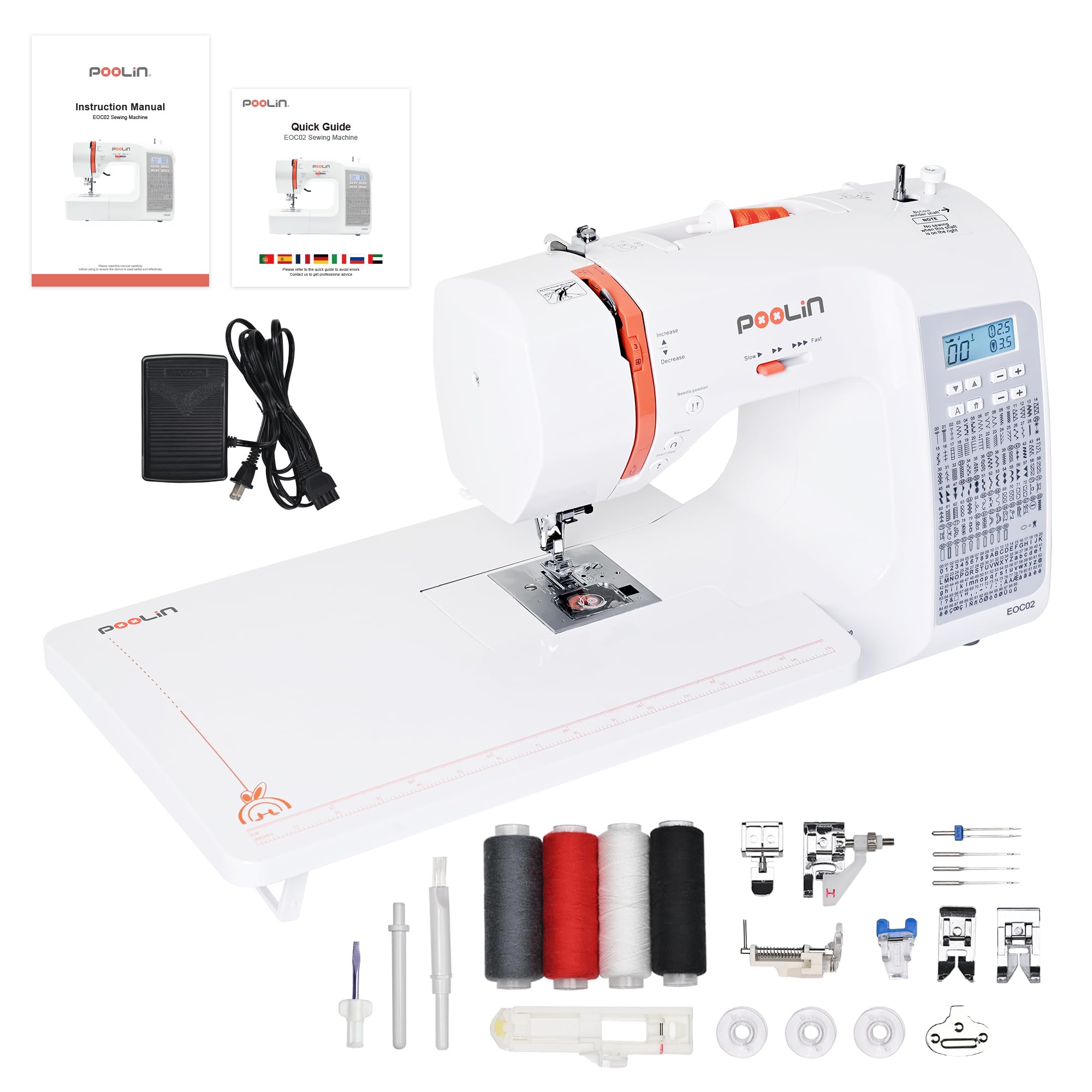
The PooLin EOC02 packs an enormous 200-stitch library—including utility, decorative, and alphanumeric patterns—into a machine priced well below comparable computerized models. The large LCD screen displays stitch selection clearly, and the intuitive controls allow easy speed and pattern adjustments. Seven presser feet are included, covering basic straight stitching through to advanced applications, though a walking foot is notably absent for quilting projects.
The automatic needle threader and start/stop button free you from constant foot pedal use. The extra-wide table provides generous workspace for quilts and bulky materials. Users who switched from Singer and Bernina machines praise the consistent stitches, quiet operation, and lack of vibration even at higher speeds. The machine handled multiple layers of vinyl, batting, and lining well, and the pre-set tension settings eliminated guesswork for most fabric types.
Some users reported minor issues with 100% cotton thread, finding that poly-cotton blends ran more smoothly—likely a needle selection issue rather than a machine flaw. The included instruction book is unusually complete, and the customer support team provides step-by-step guidance for assembly and threading. For budget-conscious sewists who want a large stitch library and computerized features, this machine offers exceptional value.
Why it’s great
- 200 built-in stitches at a very accessible price point
- Quiet, smooth operation with no vibration
- Extra-wide table and detailed instruction book
Good to know
- No walking foot included for quilting
- Cotton thread may need specific needle selection
5. Juki TL-2010Q High Speed Sewing & Quilting Machine

The Juki TL-2010Q is not for everyone. It is a dedicated high-speed straight stitch machine—no zigzag, no decorative stitches, no buttonholes—designed for quilters and garment makers who want industrial-grade precision and speed. The full metal frame weighs 39 pounds, providing a rock-solid platform that barely vibrates even at maximum speed. This machine is a workhorse for long-arm quilting and high-volume garment production.
The large workspace and extended arm offer ample room for bulky quilts. The thread cutter is excellent, saving time on every seam. Users report that it handles denim, minky, and slippery fabrics without difficulty, and the strong suction feet prevent the machine from walking at high speeds. The daily oiling requirement is a trade-off for the smooth, steady operation—owners who skip this step risk premature wear. Changing feet requires a screwdriver rather than a snap-on system, which slows down multi-foot projects.
Setup and threading have a learning curve; the automatic threader and bobbin winding can be finicky. But once dialed in, the stitch quality is superior to any home machine in this list. The Juki warranty covers electronics for two years and the head unit for five years, underscoring its build quality. If your sewing revolves around straight seams and you need speed with consistency, this is the only machine that will satisfy you.
Why it’s great
- Industrial-grade straight stitch precision
- Rock-solid frame eliminates vibration
- Excellent thread cutter and large workspace
Good to know
- No zigzag or decorative stitches
- Requires daily oiling and screw-on foot change
6. SINGER Heavy Duty 4423 High Speed Sewing Machine
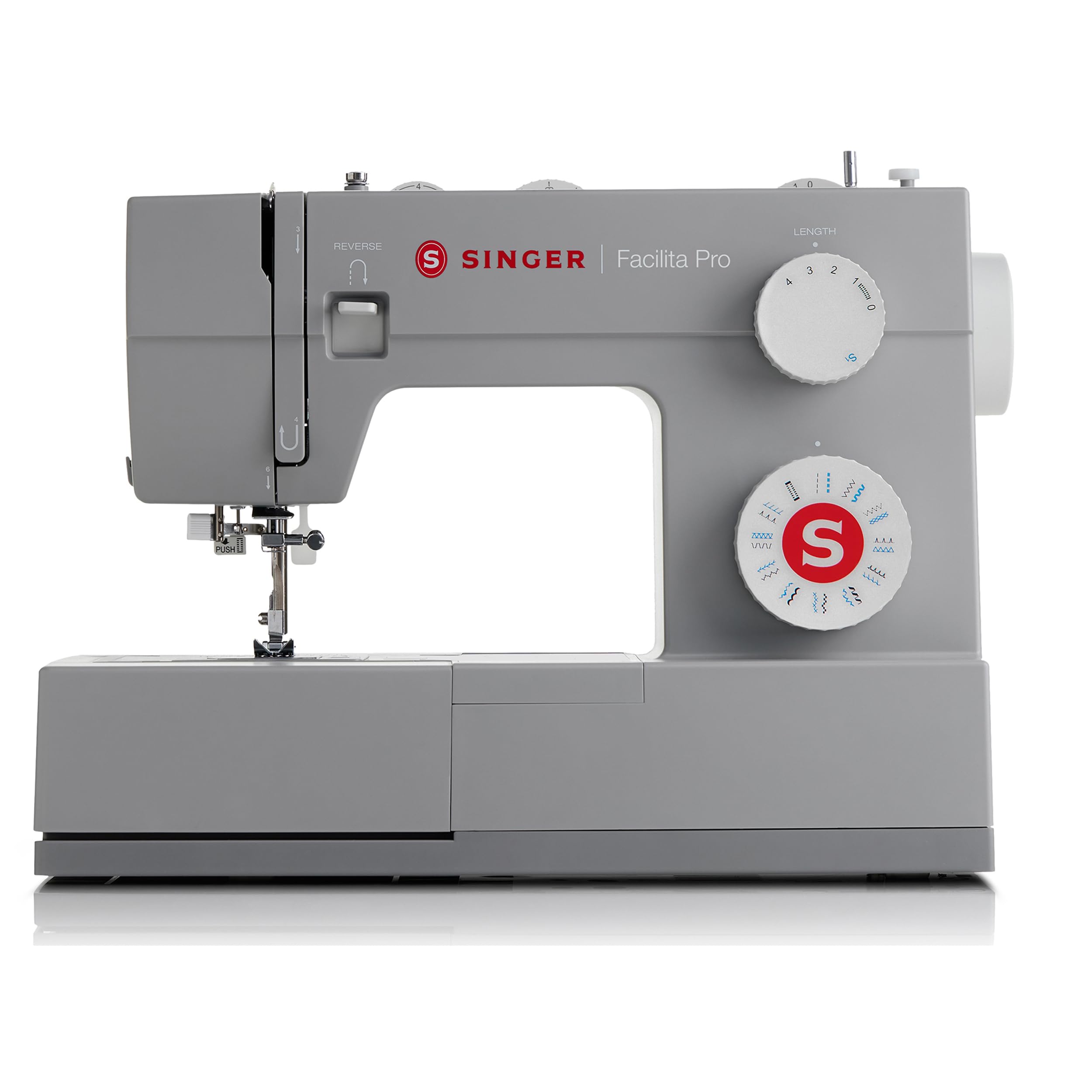
The SINGER Heavy Duty 4423 is a true cult classic in the sewing world. It delivers 1,100 stitches per minute powered by a motor that is 60% stronger than standard SINGER motors, yet it remains affordable enough for serious hobbyists. The heavy-duty metal internal frame and stainless steel bedplate provide longevity and stability for repetitive heavy fabric sewing—jeans hems, canvas bags, leather patches—without the machine moving or shaking.
The 23 built-in stitches generate 97 stitch applications, covering straight, zigzag, blind hem, and decorative options. The one-step buttonhole is easy to use for consistent results. The automatic needle threader works well once you follow the printed threading path. An included accessory set with all-purpose foot, zipper foot, buttonhole foot, and soft dust cover gives you a solid start. Users report reliable performance even after years of heavy use, with only the presser foot needing occasional replacement.
The machine accepts only class 15 plastic bobbins, and using the wrong type can cause issues. The foot pedal is sensitive and requires practice to control the high speed, though the LED light is bright enough for precise work. Some users mention that the manual lacks detail, but the machine is straightforward enough that YouTube tutorials fill the gap. For a no-frills, high-speed workhorse, the 4423 cannot be beat.
Why it’s great
- Fast 1,100 stitches/min on thick materials
- Heavy-duty metal frame for long-term stability
- Includes dust cover and multiple presser feet
Good to know
- Only works with class 15 plastic bobbins
- Sensitive foot pedal takes practice to control
7. Janome 2212 Front-Loading Sewing Machine

The Janome 2212 is a mechanical sewing machine that trades bells and whistles for bulletproof reliability. With only 12 built-in stitches and a four-step buttonhole, it lacks the decorative options of computerized models, but every stitch it produces is consistent and well-formed. The front-loading vertical oscillating hook bobbin system is favored by purists for its tight stitch formation and low jam rates, though it requires more manual skill to thread than a drop-in system.
The metal internal parts and sturdy construction give the 2212 a weight of 14.85 pounds, which keeps it planted during sewing. The free arm and drop feed mechanism allow you to sew cuffs and sleeves easily, and the extra-high presser foot lift accommodates thick layers. Users report sewing through four layers of fleece and multiple folds of denim without adjustment issues. The stitch length and width dials are intuitive, and tension rarely needs manual tweaking.
This machine has a cult following among quilters who prefer mechanical machines for free-motion quilting, as they are less prone to electronic issues than computerized models. The reverse switch must be held, which takes some getting used to, and the foot pedal cord could be longer for comfortable operation. For sewists who value simplicity, durability, and the ability to repair their own machine, the Janome 2212 is a smart investment that will last for years.
Why it’s great
- Simple mechanical operation with fewer electronic failure points
- Sturdy metal frame for stable sewing on thick layers
- Extra-high presser foot lift accommodates bulky materials
Good to know
- Only 12 stitches and four-step buttonhole
- Front-loading bobbin requires more skill to thread
- Reverse stitch requires holding the lever
8. Brother XM3700 Sewing Machine

The Brother XM3700 is the easiest machine on this list to set up and start using immediately. Its 37 built-in stitches include all the utility essentials plus decorative options, and the one-step auto-size buttonhole simplifies garment making. The jam-resistant drop-in top bobbin and automatic needle threader reduce frustration for beginners. The machine is lightweight at 12.5 pounds, easy to lift with one hand and store when not in use.
The free arm design makes sewing cuffs, sleeves, and baby clothes straightforward. Five included presser feet—zigzag, zipper, blind stitch, buttonhole, and button sewing—cover the most common applications. The threading path is marked with arrows directly on the machine, and Brother provides free technical support via online chat or phone for the machine’s lifetime. Users consistently praise the smooth stitch quality on fabrics ranging from heavy felt to delicate silk.
The automatic needle threader is tricky to master but works well once you understand its action. Some users note that the reverse stitch location takes adjustment after using other brands. For absolute beginners who want a machine that works out of the box and offers room to grow without overwhelming complexity, the XM3700 is the best entry point into the Brother ecosystem.
Why it’s great
- Very easy to thread with marked path and drop-in bobbin
- Lightweight and portable for easy storage
- Lifetime technical support from Brother
Good to know
- Auto needle threader can be tricky to master
- Reverse stitch location differs from other brands
9. FEIYUE FYe350 Sewing Machine
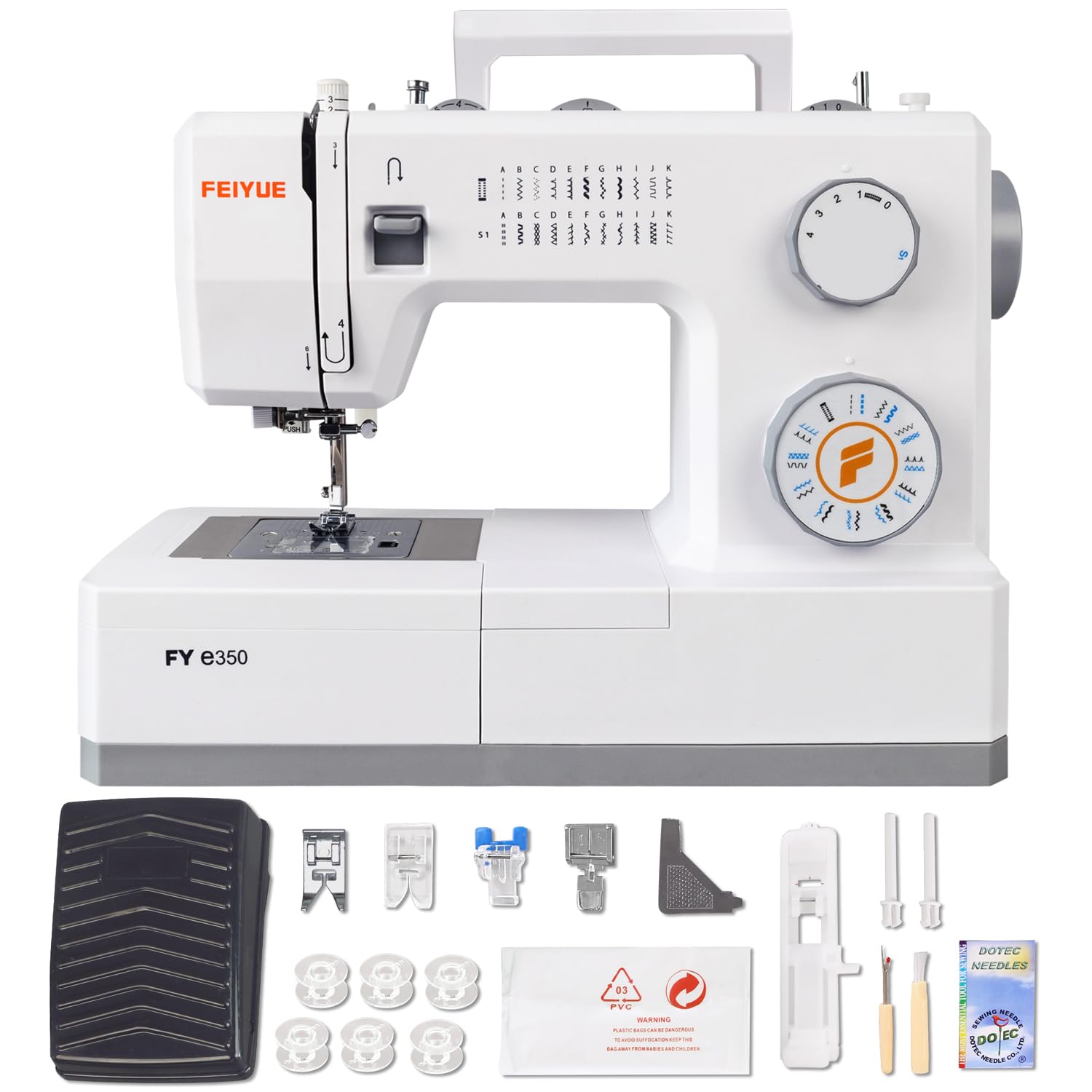
The FEIYUE FYe350 stands out in the entry-level segment because of its energy-saving servo motor—typically found in more expensive machines—which improves efficiency by 10% and saves up to 35% more power than traditional induction motors. The high-torque design delivers smooth ultra-low-speed control, making it easier to sew tricky curves and corners on denim or canvas without the machine jerking. The metal frame supports heavy-duty use, and users report sewing through two layers of 2–4 oz leather with ease.
Thread jam protection is a practical safety feature: if a jam occurs, the machine stops automatically and a blinking light alerts you, protecting the motor from damage. The 23 built-in stitches cover basic seams, decorative patterns, and stretch stitches. The automatic needle threader saves significant time, though like many machines in this class, it can be finicky. A complete starter kit with six bobbins, three needles, five presser feet, and a foot pedal means you can sew immediately without extra purchases.
Build quality concerns appear in some user reports: feed dog breakage, needle position issues, and presser foot stiffness have been mentioned. The machine is quieter than many comparably priced models, and speed control is praised. The foot pedal requires a harder initial press to start, which takes adjustment. For sewists on a tight budget who need servo motor control and leather capability, the FYe350 delivers genuine value if you are willing to accept some quality variance.
Why it’s great
- Servo motor provides smooth slow-speed control and energy savings
- Thread jam protection with auto-stop and blinking alert
- Can handle two layers of 2–4 oz leather effectively
Good to know
- Some units reported feed dog and presser foot issues
- Foot pedal requires specific starting pressure
FAQ
Do I need a computerized or mechanical machine for all-purpose sewing?
What weight of fabric can an all-purpose sewing machine handle?
Why does my thread keep breaking or jamming?
Final Thoughts: The Verdict
For most users, the best all-purpose sewing machine winner is the Brother CP100X because it combines a metal frame, 100 versatile stitches, a wide extension table, hard case, and accessible features like the speed slider all at a very accessible price point. If you need a dedicated heavy-duty machine for denim and canvas daily, grab the SINGER Heavy Duty 4423. And for the quilter who wants smooth fabric feeding and professional stitch quality without moving to an industrial machine, nothing beats the Janome JW8100.