
Our readers keep the lights on and the weekend projects moving. As an Amazon Associate, I earn from qualifying purchases.
Black algae are the most stubborn and resilient invaders a pool owner can face. Unlike green algae that bloom and fade quickly, black algae dig deep roots into plaster, concrete, and gunite surfaces, forming a protective outer layer that shrugs off standard chlorine treatments and weak algaecides. Eliminating them demands a specialized chemical approach, aggressive brushing, and a product formulated to penetrate that tough outer shell.
I’m Rikta — the co-founder and writer behind FitlyFast. For the last decade I’ve analyzed hundreds of pool chemical formulations, cross-referenced lab data with verified customer field reports, and evaluated copper-based versus polymer-based algaecides for their real-world efficacy against black spot algae.
This guide breaks down the seven most effective options on the market, comparing their active ingredients, application methods, and specific strengths so you can choose the right algaecide for black algae and finally clear that stubborn pool surface for good.
How To Choose The Best Algaecide For Black Algae
Black algae (often called blue-green or black spot algae) form a thick, waxy outer layer that shields them from standard pool sanitizers. Choosing the wrong algaecide means wasting money while the spots continue spreading across your plaster or concrete surfaces. You need a product that combines a penetrating active ingredient with a delivery system that sticks to vertical walls long enough to break through the cell wall.
Active Ingredient: Copper vs. Polymer vs. Quaternary Ammonium
Copper sulfate pentahydrate (11-18% concentration) is the most proven active against black algae because copper ions disrupt the photosynthesis process and interfere with the algae’s cell membrane permeability. Products like In The Swim Black Algaecide rely on this compound. Polymer-based algaecides using polyquat 60 are gentler on pool equipment and safer for swimmers, but they work more slowly against a heavy black algae infestation and are better suited for prevention once the copper treatment has done its job. Quaternary ammonium compounds (quats) can be effective but often foam up and degrade quickly in sunlight.
Formulation: Sticking Power and Coating Ability
For black algae to be killed, the algaecide must coat the pool wall long enough to penetrate the waxy layer. Look for products that explicitly mention a wall-coating surfactant or a “cling” technology. Copper algaecides with triethanolamine prevent copper from precipitating out of solution, meaning the active ingredient stays available longer. If a product pours like water and has no thickening agent, it will run off the black spot before it can act.
Application Protocol: Brushing, Shocking, and Dose Timing
Even the strongest algaecide cannot work if you skip the brushing step. Black algae must be physically scraped open to expose the inner cell to the chemical. A stainless steel or nylon wire brush is essential — a standard pool brush will not break the outer layer. After brushing, super chlorinate the water to 10-15 ppm, then apply your algaecide. Repeat the brush-and-dose cycle every 5-7 days until the spots turn white or gray and flake off.
Quick Comparison
On smaller screens, swipe sideways to see the full table.
| Model | Category | Best For | Key Spec | Amazon |
|---|---|---|---|---|
| In The Swim Black Algaecide | Copper-Based | Direct black algae eradication | 11.8% copper sulfate pentahydrate | Amazon |
| BioGuard Pool Complete Weekly | Enzyme + Clarifier | Preventing black algae via phosphate removal | Phosphate remover + clarifier blend | Amazon |
| HTH Algae Guard Ultra | Polymer Blend | Long-term prevention after treatment | 3-month protection per dose | Amazon |
| AquaDoc Algae Smash Polyquat 60 | Polyquat 60 | Non-staining weekly maintenance | Polyquat 60 formulation | Amazon |
| GLB Strike Out Algaecide | Quaternary Ammonium | Immediate swim approval after dose | 32 oz concentrate, immediate swim | Amazon |
| Rx Clear 7% Copper Algaecide | Copper-Based | General algae control with copper wall coating | 7% copper with triethanolamine stabilizer | Amazon |
| Eeziblue Monthly Algae Treatment | Zinc-Copper Mineral | Reducing chlorine demand and routine prevention | Zn-Cu synergy, 24-hour clarity | Amazon |
In‑Depth Reviews
1. In The Swim Black Algaecide

This is the only product in this lineup that is formulated specifically for black algae, not just as a general algaecide that includes black algae on the label. The difference is crucial: In The Swim uses 11.8% copper sulfate pentahydrate, a concentration proven to break through the waxy cell wall of black spot algae. Multiple verified reports confirm that spots turned white and flaked off after combining this product with a wire brush and super chlorination.
The liquid formulation pours easily, but it is not overly thick — you should apply it directly to the affected areas or dilute per the instructions and distribute around the perimeter. Users with 20k–40k gallon pools report that a single quart lasts through an initial treatment cycle and several follow-up spot treatments. The copper ions remain active in the water longer than polymer-based options, giving you a wider window to brush and re-dose.
A few customers noted slower results on very mature black algae patches, which is expected — the outer shell on a 3-year-old colony takes multiple brush-and-dose sessions. Also note that this product has shipping restrictions to certain states including DC, ID, MT, and others due to copper content regulations. If you are in one of those areas, you will need an alternative.
Why it’s great
- 11.8% copper sulfate pentahydrate specifically for black spot algae
- Multiple reviewers confirm it kills black algae after brushing and shocking
- Can be used as both treatment and maintenance dose
Good to know
- Shipping restricted to several states due to copper regulations
- Mature black algae may require 2–3 treatment cycles
- Not compatible with soft-sided or vinyl pools with metal sensitivity
2. HTH Algae Guard Ultra
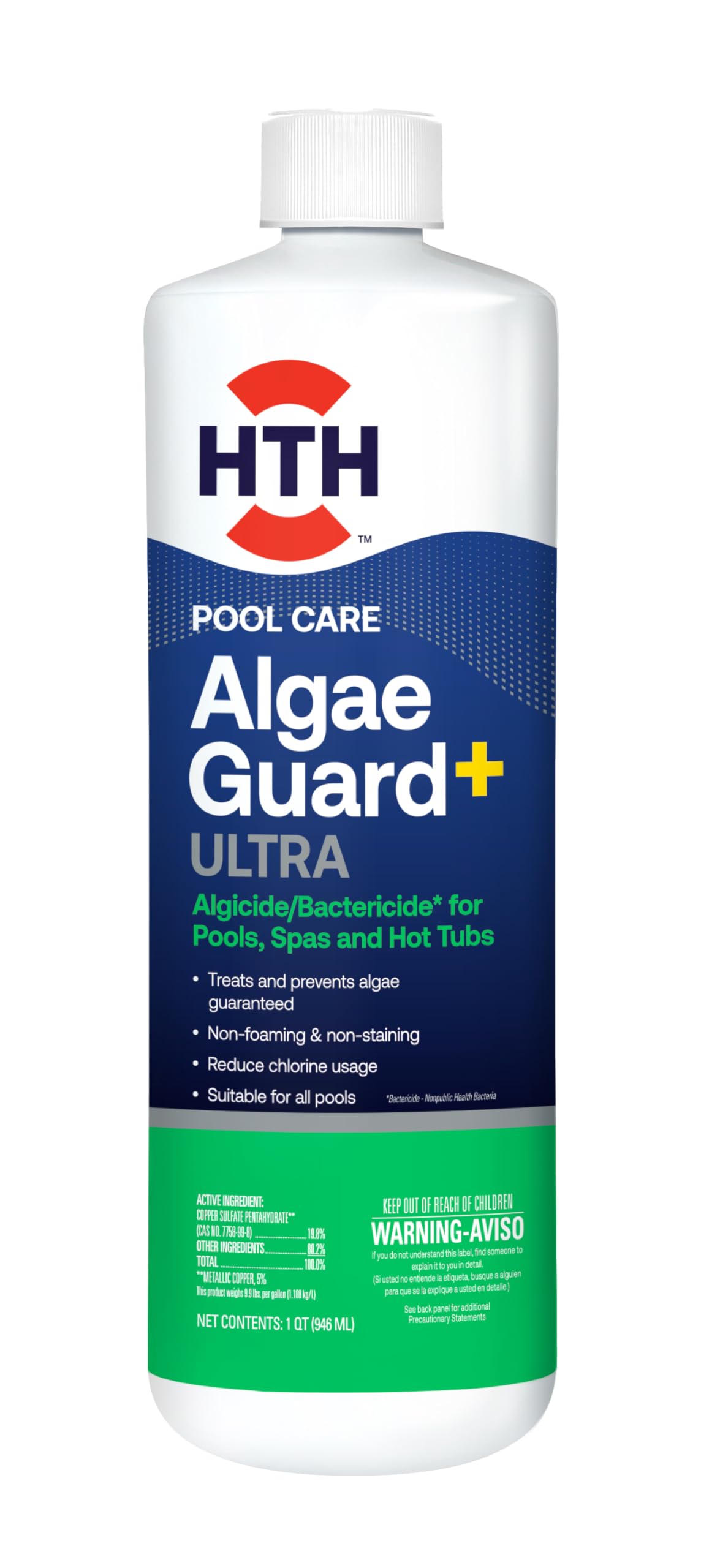
HTH markets this as their strongest algae control, claiming it prevents regrowth of green, black, and mustard algae for up to three months per dose. The formula is non-foaming and safe for vinyl-lined and saltwater pools, which removes the risk of staining that some copper-based treatments carry. Real-world feedback matches the claims: one reviewer noted that a single application cleared algae after a previous bottle had failed due to freezing, and the algae never returned.
The non-staining nature is a significant advantage for plaster and fiberglass pool surfaces where copper can leave blue-green marks. HTH achieves this by using a polymer-based active that binds to the algae cell rather than relying on metal ions. Users report visible results within 48 hours, and the water clarity improves noticeably as the dead algae particles get captured by the filter.
The trade-off is that this product works well as a powerful preventive but may not penetrate deeply established black algae colonies on the first application. Several users who had been fighting black spots for weeks reported needing to combine it with a copper algaecide or a stronger shock treatment before HTH could finish the job. If your black algae is confined to early-stage spots, this is an excellent one-step solution.
Why it’s great
- Non-staining and non-foaming, safe for all pool surfaces
- One dose provides up to 3 months of protection
- Effective on green and mustard algae as well
Good to know
- May require a copper pre-treatment for heavy black algae
- Some users report slower action compared to copper options
- Larger pools may need multiple bottles for a full dose
3. AquaDoc Algae Smash Polyquat 60
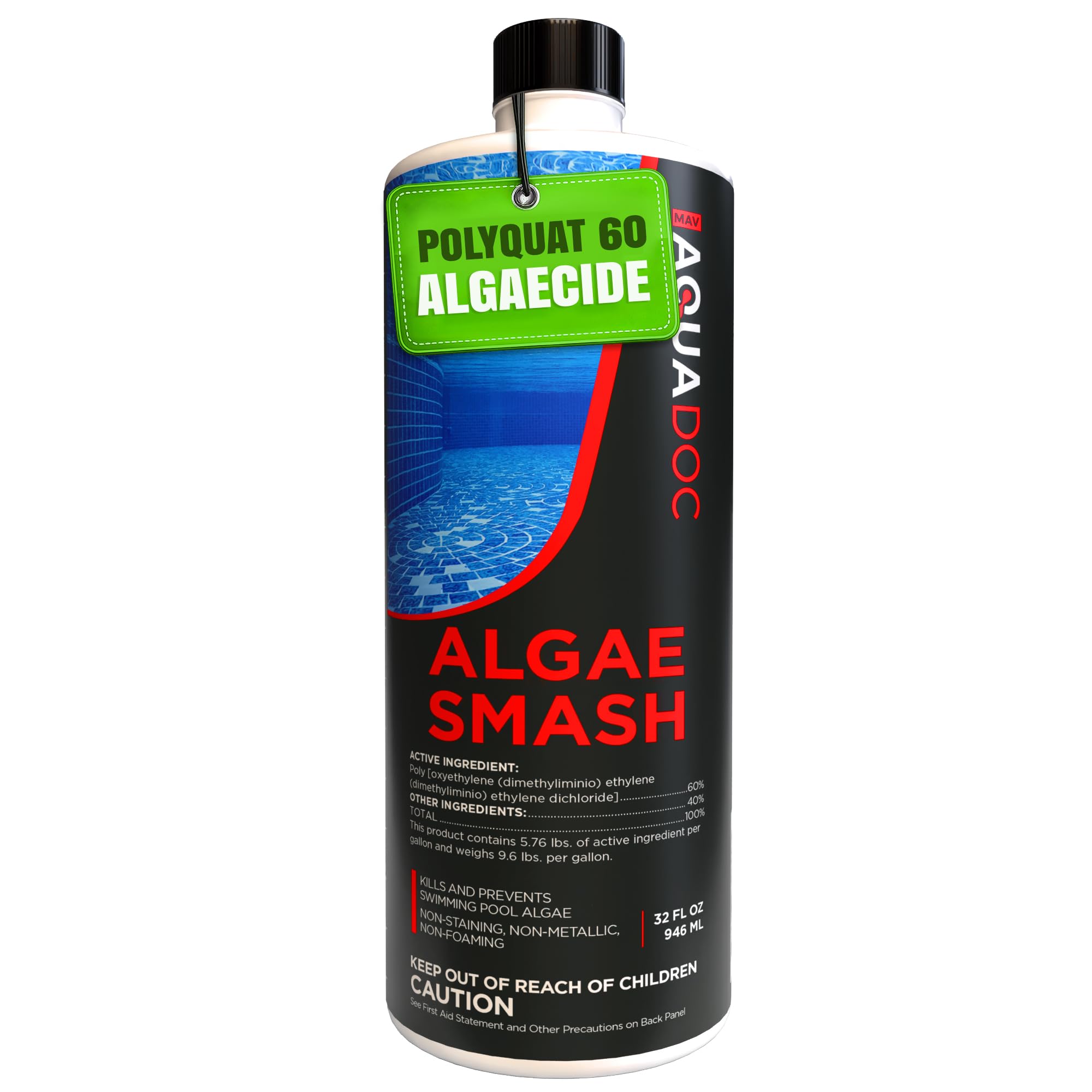
AquaDoc Algae Smash offers a non-metallic, non-staining route to black algae control using polyquat 60, a polymer-based algaecide that clumps algae cells and allows the filter to remove them. For pool owners concerned about copper staining on light-colored plaster or fiberglass, this is a safer daily driver. It is also compatible with saltwater systems and does not interfere with chlorine or bromine sanitizers.
The formula performs best as a preventive maintenance algaecide once the black algae bloom has been broken by brushing and a copper shock treatment. Users report that 4 oz per 10,000 gallons per week keeps water clear and prevents new black spots from forming. The non-foaming design means your filter and skimmer operate normally without air bubbles or surface scum.
A few experienced pool owners note that polyquat 60 degrades quickly in high-chlorine environments — above 5 ppm free chlorine can break down the polymer before it has time to work. The manual recommends adding this product after super chlorination has dropped to normal levels. It is also slower than copper algaecides against established black algae, so pair it with mechanical brushing for the first 2–3 weeks.
Why it’s great
- Non-staining, non-metallic, safe for all pool surfaces
- Made in the USA with consistent quality
- Works as a reliable weekly preventive for black algae
Good to know
- Slower acting than copper algaecides for active blooms
- Degrades quickly in high chlorine — dose after shock levels drop
- Not permitted for shipping to California
4. BioGuard Pool Complete Weekly
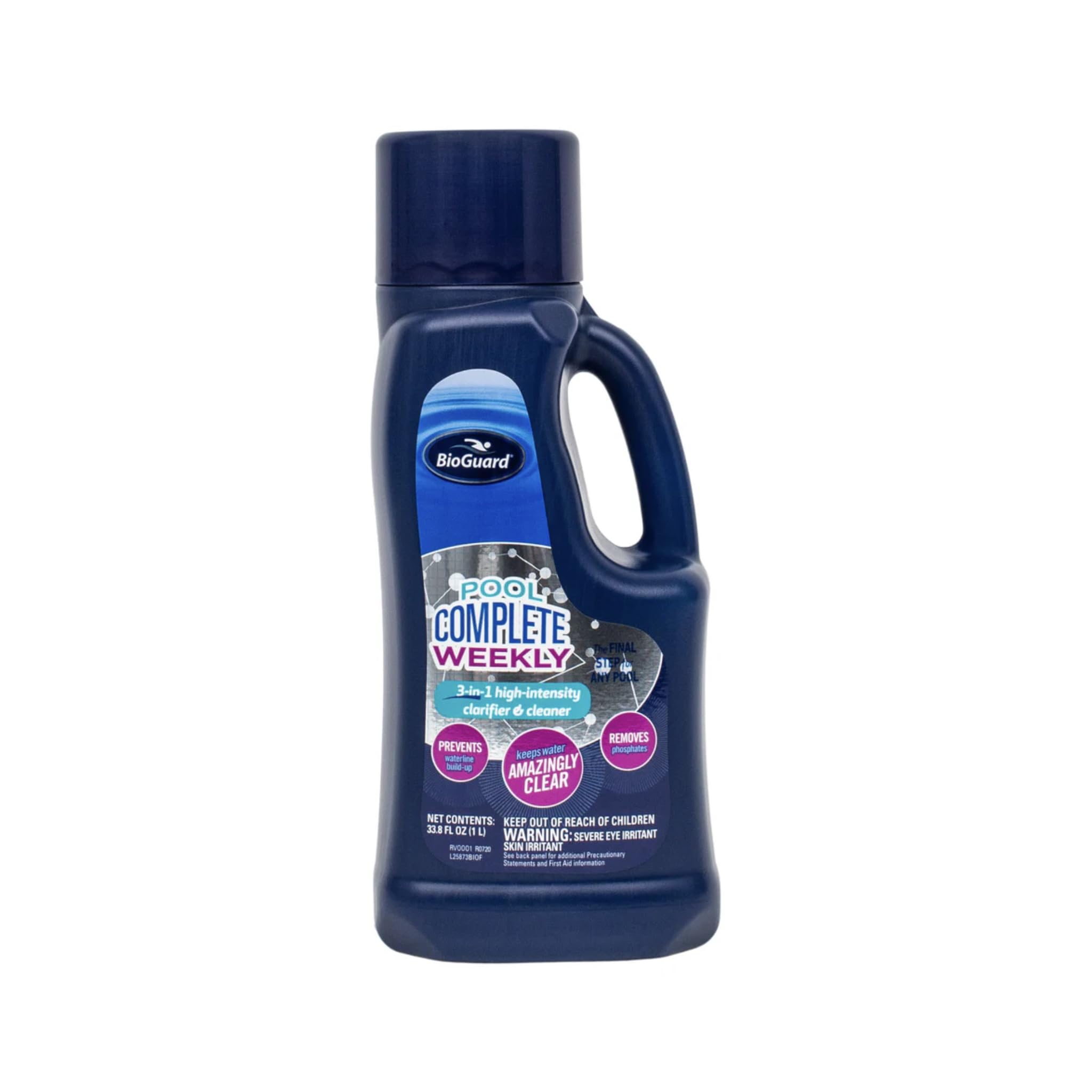
BioGuard Pool Complete Weekly is not a direct black algaecide — it is a 3-in-1 formula that removes phosphates, clarifies water, and uses enzymes to prevent algae growth. However, for pool owners who already have black algae under control and want to stop it from returning, this product removes the phosphate food source that feeds the algae. When phosphates are high (above 500 ppb), even the best algaecide struggles because the algae simply regrows from any surviving spores.
One verified customer report shows that this product reduced phosphate levels from over 3,000 ppb to zero in a single weekly dose. The water clarity improves because the clarifier binds fine particles that escape the filter. It is specifically designed for weekly use — just one capful per week per the instructions — making it a low-effort addition to your maintenance routine.
This is not the right product if you are currently dealing with an active black algae outbreak. It does not contain copper, polyquat, or any direct algaecidal compound. Its role is purely preventive. Use it after a copper-based algaecide has killed the existing black spots, then switch to BioGuard weekly to deny algae the nutrients it needs to return.
Why it’s great
- Removes phosphates, starving black algae of nutrients
- Improves water clarity significantly with weekly use
- Easy one-capful dose per week
Good to know
- Does not kill existing black algae — it prevents regrowth
- Requires consistent weekly application for results
- Slightly higher cost per ounce compared to basic algaecides
5. GLB Strike Out Algaecide

GLB Strike Out is a quaternary ammonium (quat) algaecide that allows swimming immediately after application — no waiting period — which is rare among black algae treatments. The product should be diluted with at least nine parts water before application and sprinkled around the edge of the pool. One verified user with a 32k gallon pool reported that it cleared green algae in 24 hours and uses 0.5–1 oz weekly for maintenance, noting that it also removes algae growing on walls and steps.
The quat formulation is effective against a broad spectrum of algae, including black algae, but it has two common drawbacks: it can foam if over-dosed, especially in saltwater pools, and it degrades under direct sunlight. To minimize foaming, follow the dilution instructions precisely and apply during late afternoon or dusk. The product works with chlorine, bromine, and ozone sanitizers, making it flexible for different pool systems.
Black algae specifically may require a higher initial dose than the label suggests for general algae. One reviewer noted that it eliminated black algae after their pool store’s recommended treatments failed. For severe black spot infestations, consider using this product after a copper-based initial treatment to catch any remaining spores without the staining risk.
Why it’s great
- Swim immediately after application — no wait time
- Broad spectrum effective against green, mustard, and black algae
- Compatible with chlorine, bromine, and ozone sanitizers
Good to know
- Can foam if over-dosed or used in saltwater pools
- Sunlight degrades effectiveness — apply at dusk
- Higher cost per ounce compared to copper options
6. Rx Clear 7% Copper Algaecide
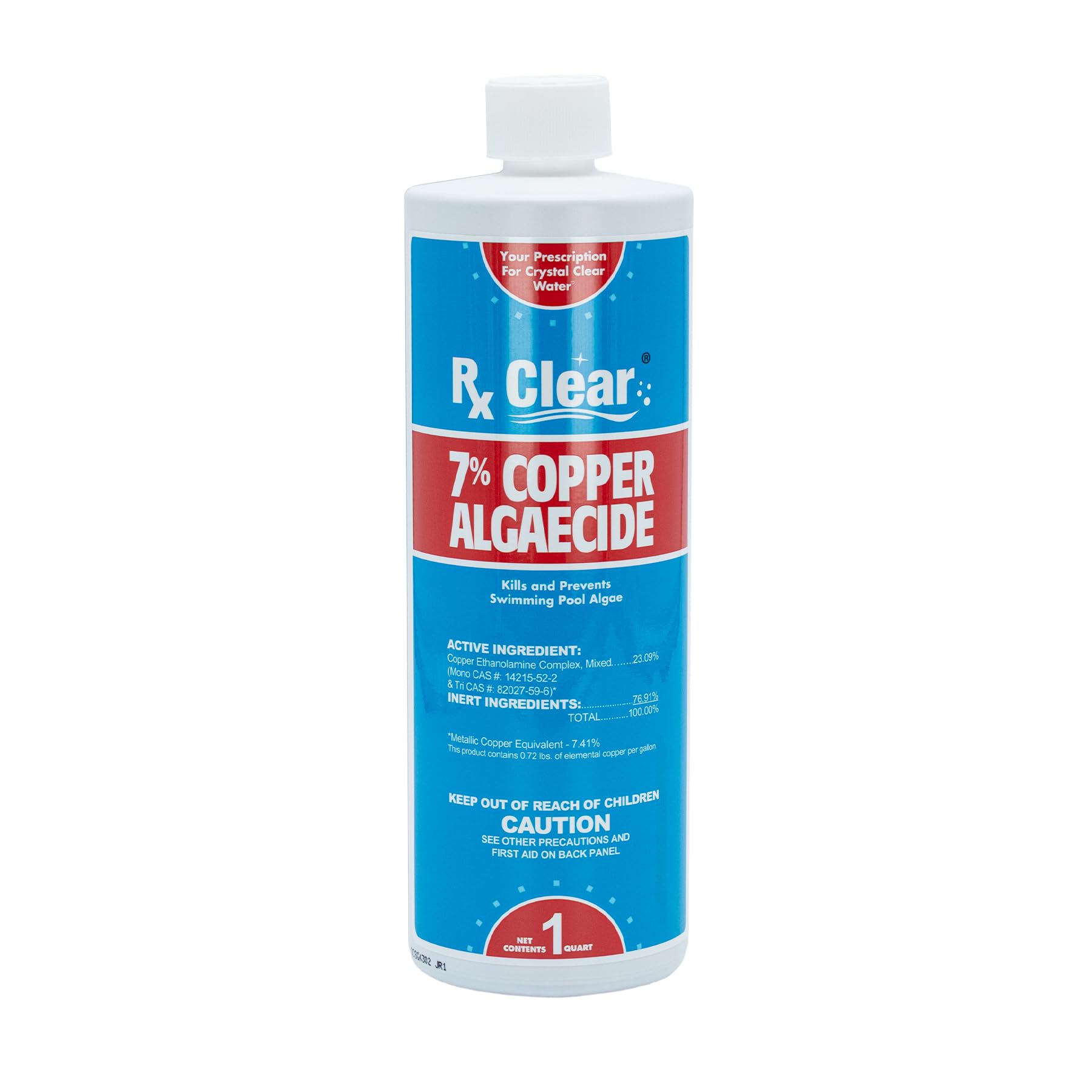
Rx Clear 7% Copper Algaecide distinguishes itself with a coating action: it contains triethanolamine to prevent copper precipitation, meaning the copper ions stay dissolved and active longer. The label specifically calls out black algae, mustard algae, and several types of string algae (Chara, Spirogyra, Cladophora). It requires a biweekly dose of 4 oz per 10,000 gallons, which is manageable for most pool owners.
The wall-coating surfactant helps the algaecide cling to vertical surfaces where black algae typically takes hold. This is a crucial feature — many algaecides pour directly to the bottom drain and never make contact with the black spots on the walls. Rx Clear addresses this with a surfactant that splits open algae cells and holds the copper against the cell wall. Multiple users report positive results on green algae and satisfactory performance on black spots when combined with vigorous brushing.
At 7% copper concentration, this is a mid-strength copper algaecide. It is not as concentrated as the In The Swim product (11.8%), which means you may need a slightly higher volume for heavy black algae infestations. The trade-off is that the lower copper content reduces staining risk on light-colored pool finishes. It is safe to swim immediately after dosing, which adds convenience.
Why it’s great
- Wall-coating surfactant holds copper against black algae spots
- Triethanolamine prevents copper precipitation
- Biweekly dosing schedule is easy to maintain
Good to know
- 7% copper is less concentrated than some competitors
- Heavy black algae may require multiple applications
- Some users report slow results on established black spots
7. Eeziblue Monthly Algae Treatment
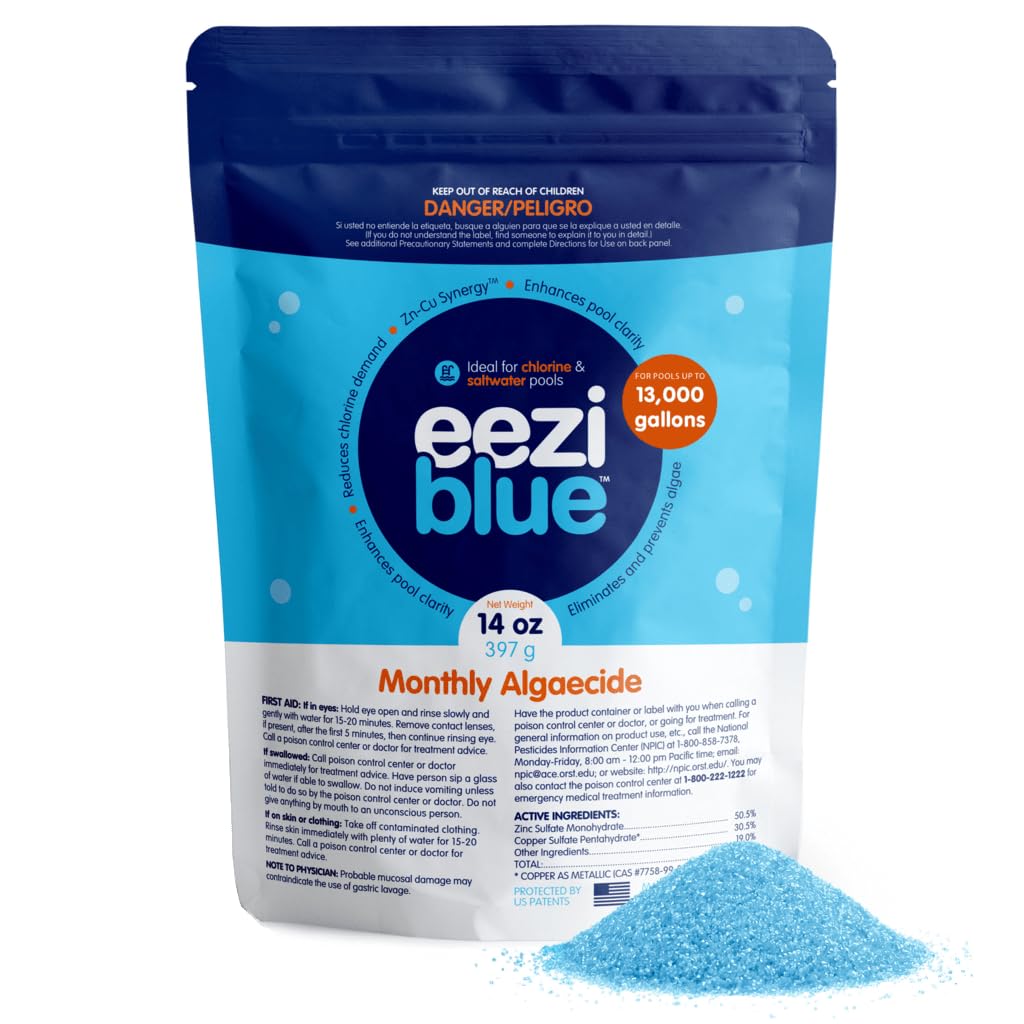
Eeziblue uses a patented zinc-copper mineral synergy that simultaneously acts as an algaecide, bactericide, and phosphate remover. The powder formulation is pre-measured for monthly use in above-ground and inground pools, and the company claims it can reduce chlorine demand by up to 75%. One verified customer with a 52×24-inch above-ground pool reported that it eliminated algae after other products had failed.
The zinc component is unusual — most copper algaecides use copper alone. Zinc adds a bacteriostatic effect that helps prevent the bacteria that feed on dead algae and cause water cloudiness. Users note that the water stays clear all summer with minimal clarifier use. The powder dissolves easily when dropped directly into the skimmer, making application simpler than measuring liquid doses.
For black algae specifically, this product works best as a monthly preventive rather than a shock treatment for an established outbreak. The copper content is lower than dedicated black algae algaecides, and the powder format does not have the wall-coating properties of liquid copper formulations. One reviewer called it “junk” and said it did nothing to clear their algae, though the seller offered a full refund. Use this for ongoing prevention after the black spots have been eliminated by a stronger treatment.
Why it’s great
- Zinc-copper blend reduces chlorine demand significantly
- Pre-measured monthly dose is very convenient
- Acts as algaecide, bactericide, and phosphate remover in one
Good to know
- Not effective as a standalone treatment for active black algae
- Mixed reviews — some users saw no improvement
- Powder format may not coat walls as well as liquid options
FAQ
Can I use a general algaecide instead of a black algae specific product?
Do I need to brush before applying algaecide for black algae?
How long does it take for black algae algaecide to work?
Will black algae algaecide stain my pool surface?
Can I swim after applying black algae algaecide?
Final Thoughts: The Verdict
For most users, the best algaecide for black algae winner is the In The Swim Black Algaecide because its 11.8% copper sulfate pentahydrate formulation directly targets the waxy cell wall of black spot algae and delivers proven results when combined with brushing. If you want a non-staining prevention option that works on all pool surfaces, grab the AquaDoc Algae Smash Polyquat 60. And for ongoing phosphate control that starves black algae of its food source, nothing beats the BioGuard Pool Complete Weekly.