
Our readers keep the lights on and the weekend projects moving. As an Amazon Associate, I earn from qualifying purchases.
A single blue jay can strip a mature blueberry bush in under ten minutes. The wrong netting just as easily tangles a songbird, rots in the first frost, or snaps under a heavy summer storm. The difference between a net that protects your harvest and one that becomes its own problem comes down to mesh size, material density, and UV tolerance — specs that most product descriptions blur. This guide walks through each critical spec so you can choose netting that stays taut, sheds weather, and keeps your fruit, vegetables, and poultry safe season after season.
I’m Rikta — the co-founder and writer behind FitlyFast. I’ve analyzed dozens of bird netting SKUs across multiple seasons, comparing weave density, material composition, and real-world user performance to separate sturdy designs from disposable mesh.
You are reading the definitive fit test for the best bird netting, built from thousands of verified buyer experiences and side-by-side spec comparisons across seven market-leading options.
How To Choose The Best Bird Netting
Buying bird netting seems simple until you unroll a cheap polyethylene sheet that snags on every branch and disintegrates after one winter. The real decision points are the weave structure, the material’s resistance to UV degradation, the hole size you actually need, and whether the netting weight is enough to stay put without tearing your plant supports. Below are the three specifications that matter most for a net that keeps working year after year.
Mesh Size: The Balance Between Exclusion & Pollination
At 3/4-inch openings, sparrows and finches squeeze through easily. At 1/2-inch, most songbirds are blocked, but bees can still reach blossoms — this is the sweet spot for fruit trees and berry bushes. Dropping to a 0.04-inch ultra-fine mesh excludes even leafhoppers and cabbage moths, but it also stops pollinators, meaning you must lift the netting during flowering periods. Choose based on your primary threat: large birds call for 5/8-inch or 1/2-inch, while a full insect barrier demands the fine mesh.
Material Strength & UV Resistance
Nylon monofilament netting (like the GWHOLE product) is tear-resistant and holds up in wind, but it can fray after two or three seasons of direct sun. High-density polyethylene (HDPE), used in the Vocray net, resists UV better and handles temperature swings from below freezing to intense summer heat. Stabilised polyethylene (PE), found in the RIFNY ultra-fine net, is the lightest option — adequate for raised beds but vulnerable to squirrel gnawing. For permanent or semi-permanent installations, choose HDPE or thick nylon; for seasonal row covers, lighter PE works.
Weight Per Square Yard & Anti‑Tangle Construction
A net weighing 0.6 oz/yd² or less (like traditional deer netting) will flutter in the first breeze, snag on twigs, and tangle itself into a mess during installation. The better garden nets weigh around 0.9 oz/yd² (25 g/m²), giving them enough heft to stay draped without extra anchoring. A heavier weave also resists tearing when you stretch it tight over a frame. Look for netting that unrolls without balling up — reviews consistently call out “tangles easily” as the top frustration with cheap mesh.
Quick Comparison
On smaller screens, swipe sideways to see the full table.
| Model | Category | Best For | Key Spec | Amazon |
|---|---|---|---|---|
| Vocray 15×15 Ft | Heavy‑Duty HDPE | Multi‑season orchards | 1/2‑in mesh, 0.9 oz/yd², load >100 lbs | Amazon |
| RIFNY 13×40 Ft | HDPE Mid‑Range | Winter‑hardy coverage | 5/8‑in mesh, 0.65 oz/yd², –58°F to 212°F range | Amazon |
| ATICCA 7.5×100 Ft | Nylon Roll | Large vegetable gardens | 1/2‑in mesh, includes 10 stakes | Amazon |
| GonLei 10×50 Ft | Ultra‑Fine PE | Insect‑proof row covers | 0.04‑in mesh (60 per inch), nylon | Amazon |
| GWHOLE 33×13 Ft | Nylon Monofilament | Vertical fences & bird block | 1‑in square mesh, UV‑treated nylon | Amazon |
| RIFNY Ultra‑Fine 10×33 Ft | Stabilised PE | Raised beds & fine insect barrier | 0.04‑in oblong mesh, 2‑pack | Amazon |
| GonLei 4‑Pack Bags | Nylon Drawstring Bags | Single‑bush blueberry protection | Ultra‑dense mesh, drawstring closure | Amazon |
In‑Depth Reviews
1. Vocray 15×15 Ft Bird Netting

This is the netting that customers buy again after discovering that cheaper mesh tears in one season. The Vocray net is woven from HDPE at 0.9 oz/yd² — roughly three times the density of standard deer netting — and users report it holds up in desert sun, high winds, and even against eagles and hawks trying to access chicken runs. The 1/2-inch mesh is small enough to block hummingbirds but large enough to let bees through, making it a true dual-purpose net for fruit trees and poultry enclosures.
Installation is straightforward: drape over plants or a frame, then weigh down the edges with stones or stakes. Several reviewers mention unrolling it without tangling, and the load capacity exceeding 100 pounds means you can stretch it tight across a large bed without worrying about snaps. The black color also fades into the garden background well.
One caution: the stated 15×15-foot size refers to the net when evenly stretched in both directions. If you pull lengthwise too hard, the diamond-shaped mesh distorts and reduces width, so allow some slack. The material is resistant to extreme cold and heat, but storing it folded during winter will prolong its life.
Why it’s great
- Triple the weight of cheap netting — resists tearing and tangling
- 1/2‑inch mesh blocks small birds without trapping them
- Survived brutal desert exposure in reviews with no UV wear
Good to know
- Must avoid over‑stretching one direction or mesh distorts
- Not suitable as an insect barrier (mesh is too large for pests)
2. RIFNY 13×40 Ft Bird Netting
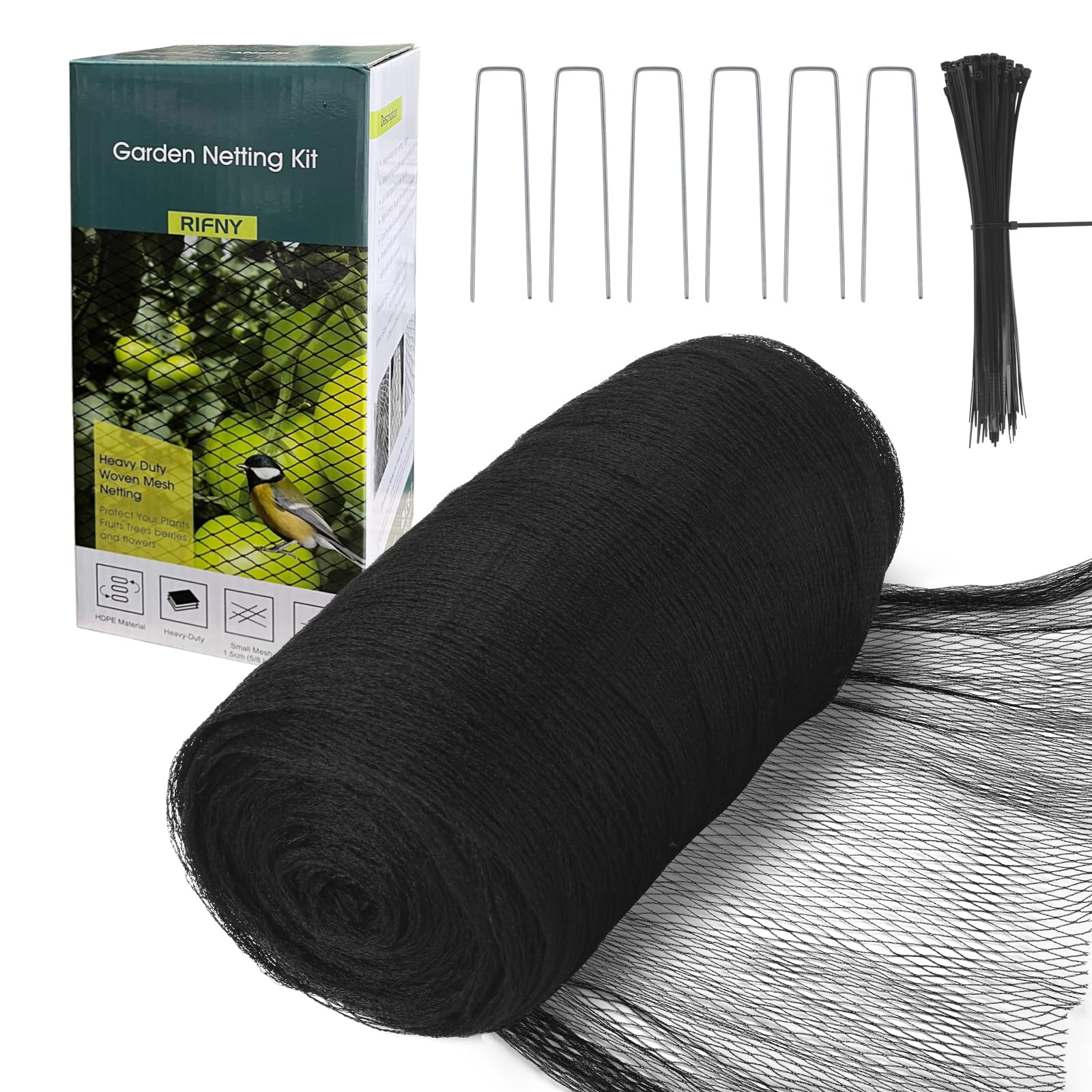
The RIFNY 13×40-foot net uses 5/8-inch mesh openings, which are slightly larger than the Vocray’s 1/2-inch but still effective against most songbirds and squirrels. The real differentiator is its material: high-density polypropylene (HDPE-like) that remains flexible across a huge temperature range — from -58°F to 212°F. Reviewers in cold climates note that this net doesn’t become brittle or crack in winter, and the 0.65 oz/yd² weight is enough to drape without floating but light enough to avoid breaking tree branches.
Buyers praise the net’s anti-tangle construction, calling it far easier to unroll than plastic netting from hardware stores. The included landscape staples and twist ties are basic but sufficient for securing edges. Many users repurpose it as a barrier for raised beds, grape arbors, and even as a toddler-proof fence around delicate plants.
A small but important detail: the mesh size lets bees pass freely, so you won’t need to lift it during the pollination window. However, the same opening that welcomes bees also admits smaller insects, so this is a bird-first solution, not an all-pest barrier. The material feels lightweight but has held up over multiple seasons according to repeat purchasers.
Why it’s great
- Exceptional temperature tolerance — stays flexible in deep winter
- Anti‑tangle weave makes unrolling frustration‑free
- Light enough for fruit tree branches but strong against birds
Good to know
- 5/8‑inch mesh may let very small finches through
- Landscape staples may not penetrate hard or rocky soil
3. ATICCA 7.5×100 Ft Heavy Duty Netting
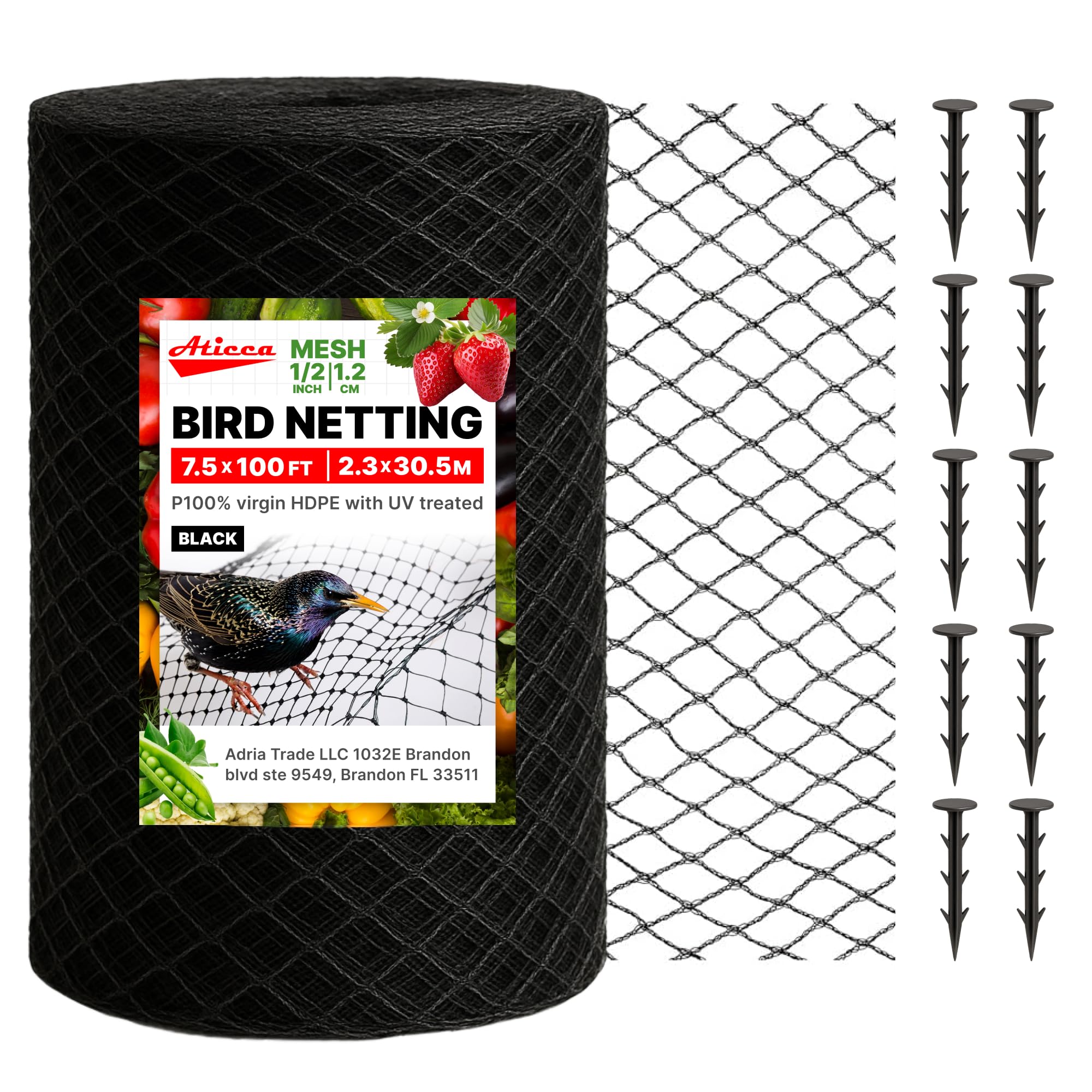
When you need to cover a long garden row or multiple fruit trees, the ATICCA roll gives you 750 square feet of coverage with a 1/2-inch nylon mesh. The package includes 10 durable plastic stakes, which simplifies installation compared to buying anchors separately. The nylon material is UV-resistant and designed to survive multiple growing seasons; one reviewer reported using it for three years on pole beans and winter squash with the netting actually supporting the heavy fruit.
Customer feedback highlights the balance between strength and ease of use. The net goes up in minutes over a simple frame, but buyers warn that it has a tendency to snag on rough edges and will tangle if you rush the unrolling process. Carefully laying it out flat before draping avoids the most common frustration. The black color blends well against soil and foliage.
The 7.5-foot width is narrow enough to handle alone but wide enough for most raised beds and small orchards. The stakes are effective in soft to moderately compact ground, though users with hard clay soil may need to switch to metal staples. Overall, this is a solid mid-range option for gardeners covering long, narrow areas.
Why it’s great
- Massive 100‑ft length covers large gardens in one roll
- Includes 10 plastic stakes for quick ground anchoring
- UV‑resistant nylon held up for multiple seasons in reviews
Good to know
- Can tangle if unrolled too quickly
- Stakes may not hold in very loose or sandy soil
4. GonLei 10×50 Ft Ultra‑Fine Netting

If insects are your primary adversary — cabbage moths, carrot flies, leafhoppers — this ultra-fine nylon netting blocks them all with 60 mesh strands per inch, creating an effective physical barrier that still passes air, water, and 70%+ of sunlight. The 10×50-foot roll provides ample coverage for raised bed rows, and the white tone keeps temperatures from building up inside the cover. One reviewer explicitly credited this net with saving their entire tomato crop from squirrels.
However, the fine mesh comes with two trade-offs. First, the material is thinner than standard bird netting, and some customers report tearing when snagged on sharp stakes or old wood. Second, the 0.04-inch openings block bees along with pests, which means you must manually pollinate or lift the net during flowering. Most users apply it after fruit sets, then remove it when blossoms appear the following season.
Installation is easy: drape over hoops or a frame and secure the edges with soil or clips. The net is lightweight enough that heavy wind can lift it, so thorough anchoring is advised. For gardeners who want to combine bird and insect protection in one material, this is the best choice — with the bee-access caveat.
Why it’s great
- 60‑mesh nylon blocks insects that larger nets miss entirely
- Large 10×50‑ft size covers entire raised‑bed layouts
- Allows light and rain through while protecting from pests
Good to know
- Fine mesh also blocks bees — must lift during pollination
- Thinner material can tear on sharp edges if not handled carefully
5. GWHOLE 33×13 Ft Nylon Netting

Built from white nylon monofilament, the GWHOLE netting is nearly invisible from a distance — a major aesthetic advantage for gardeners who dislike the look of black mesh draped over their plants. The 1-inch square mesh is large enough to let bees and most beneficial insects through easily, and the transparent weave makes it easy to inspect fruit without lifting the cover. Customers use it on balconies, guinea pig cages, and as a cat deterrent, which shows the material’s versatility.
The net has good tear resistance, stretching under weight without snapping. However, because the openings are a full inch, this netting will not stop small birds like finches or sparrows. It is best suited for keeping larger birds (jays, crows, pigeons) and mammals away from fruit trees, berry bushes, and poultry runs. The white color reflects sunlight, which helps keep plants slightly cooler.
A few buyers note that after two or three years of direct sun exposure, the nylon can become brittle and crack. Storing the net indoors during winter extends its life significantly. The 33×13-foot size is generous for vertical fences or wrapping individual trees, and it cuts easily with scissors without unraveling.
Why it’s great
- Nearly invisible white mesh keeps garden looking uncluttered
- 1‑inch openings allow full bee and pollinator access
- Resists stretching and tearing under moderate weight
Good to know
- 1‑inch mesh does not block small songbirds or finches
- Nylon becomes brittle after a few seasons in full UV exposure
6. RIFNY Ultra‑Fine 10×33 Ft (2‑Pack)

This package provides two 10×33-foot rolls of stabilised PE netting with an oblong 0.04-inch mesh — the same ultra-fine density as the GonLei but in a different material. The oblong hole shape improves airflow and rain penetration compared to square-mesh fines, and the white color keeps temperatures moderate. Reviewers love the sheer size for covering multiple raised beds at once, and the netting goes up quickly when draped over a PVC hoop frame.
Because PE is lighter than nylon, this netting is more prone to tearing if squirrels or large birds land on it repeatedly. Several customers mention squirrels ripping holes in the material, so it’s best used as a seasonal barrier for tender seedlings rather than a permanent predator-proof enclosure. The netting also blocks bees, so pollination requires manual intervention or periodic lifting.
Each roll is folded in the package — not rolled — which can create creases that take time to settle out. The 10-foot width is generous, but you may need multiple layers to exclude very determined chipmunks. For the price, you get immense coverage, making this a great budget option for protecting spring vegetables from insects and light bird pressure.
Why it’s great
- Two large rolls offer outstanding coverage for the money
- Oblong mesh improves airflow and water penetration
- White color reflects heat, reducing plant stress under covers
Good to know
- PE material is vulnerable to squirrel claw damage
- Fine mesh blocks pollinators — net must be lifted during flowering
7. GonLei 4‑Pack Drawstring Netting Bags
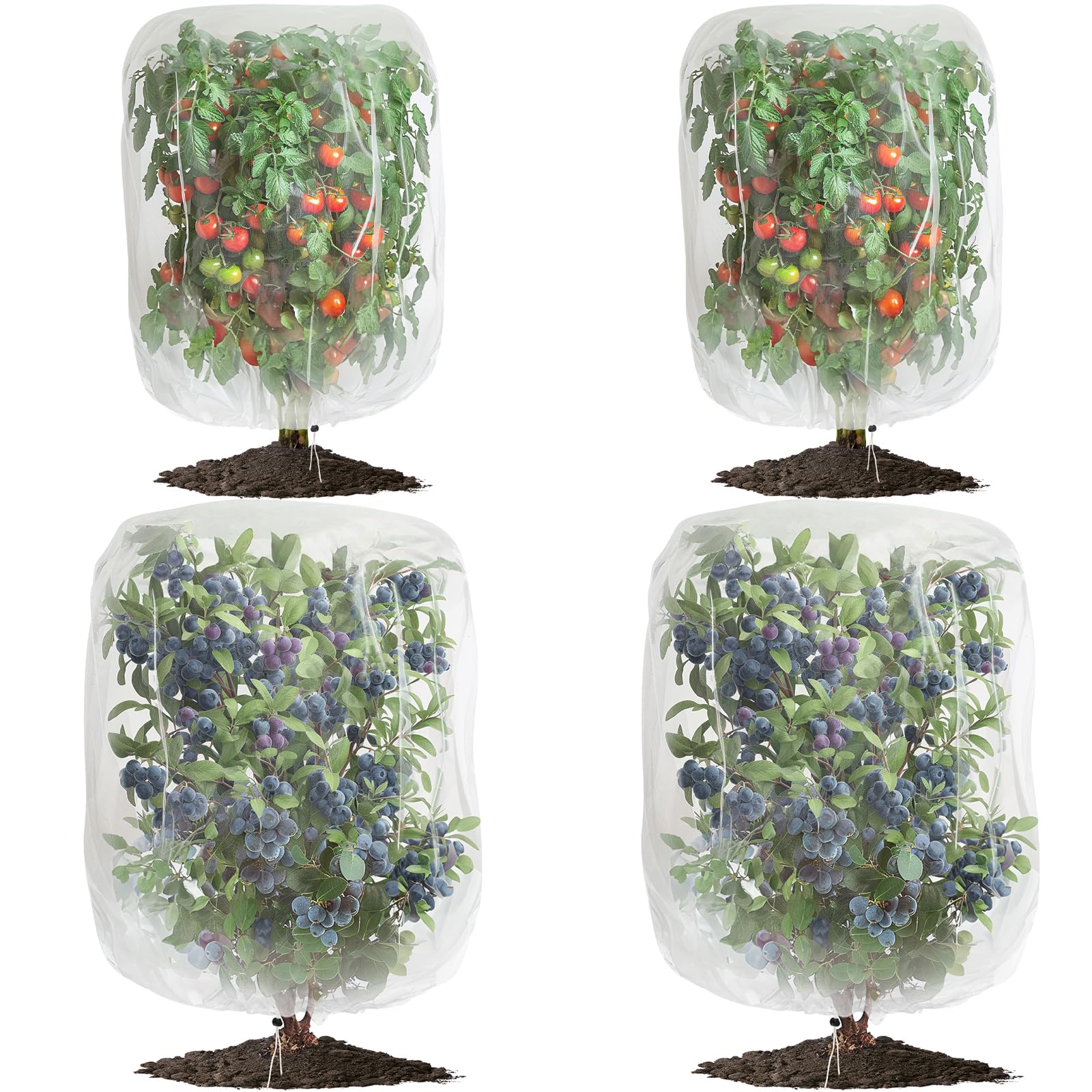
This set cuts the installation time to zero: you simply pull the drawstring closed around a blueberry bush, tomato cage, or young fruit tree. The kit includes two 2.6×3.3-foot bags and two 3.3×4.9-foot bags, accommodating both small and large plants. The ultra-dense nylon mesh blocks birds and insects, and the drawstring design cinches tightly around the trunk or stake, preventing animals from entering through the bottom. One reviewer used these bags successfully on blackberry plants, cutting small access slits for harvesting.
The major drawback is that the drawstring cord is thin synthetic material that can fray after a season. Several buyers recommend replacing it with thicker ribbon or using zip ties for a stronger closure. Without reinforcement, wind can loosen the bag or a persistent squirrel can work its way inside. The white mesh is translucent and does not trap heat.
These bags are ideal for gardeners with a small number of valuable plants — blueberry bushes, dwarf fig trees, or individual tomato specimens — rather than for covering entire beds. They allow you to target protection exactly where it’s needed without draping netting over a wide area. For targeted single-plant defense, this is the most convenient option on the list.
Why it’s great
- Drawstring design installs in seconds with no tools required
- Two sizes fit both small plants and larger bushes
- Ultra‑dense nylon mesh blocks insects as well as birds
Good to know
- Original drawstring cord is thin and may fray — replace with ribbon
- Not suitable for large‑scale row or orchard coverage
FAQ
Can I leave bird netting on fruit trees year‑round?
What mesh size keeps squirrels out but lets bees through?
How do I stop bird netting from tangling during installation?
Will ultra‑fine netting block pollinators and stop my plants from fruiting?
Final Thoughts: The Verdict
For most users, the best bird netting winner is the Vocray 15×15 Ft because its dense HDPE weave (0.9 oz/yd²) resists tearing, blocks hummingbird-sized threats, and survives winter without cracking — a true multi-season shield. If you need protection against insects along with birds, grab the GonLei 10×50 Ft Ultra-Fine Netting and lift it during bloom to let pollinators work. And for fast, targeted defense of a few prized blueberry bushes, nothing beats the GonLei 4-Pack Drawstring Bags, which install in seconds and cinch tight against every pest.