
Our readers keep the lights on and the weekend projects moving. As an Amazon Associate, I earn from qualifying purchases.
A roofer’s boots take the worst beating on the job: hot shingles, slick dew, steep pitches, and constant nail punctures. Ordinary work boots fail on a roof within weeks, leaving you with compromised footing and painful feet after long days. The right pair combines aggressive slip resistance, a steel or composite toe for puncture protection, and a sole compound that grips asphalt shingles without marking them.
I’m Rikta — the co-founder and writer behind FitlyFast. I spent months analyzing traction patterns, sole rubber durometers, ankle support geometry, and waterproofing membranes across dozens of work boot models to find the ones that actually hold up on a slanted, gritty roof deck.
Whether you’re shingling new construction or re-roofing existing homes, your footwear must deal with debris, slope, and constant movement. This guide breaks down the boots for roofing that real roofers trust for traction and all-day support on the job.
How To Choose The Best Boots For Roofing
Roofing is unlike any other construction environment. You’re constantly moving on a slanted, gritty surface with sharp debris and changing weather. The boots you pick must do three things without compromise: grip, protect, and support from first step to end of shift.
Traction Pattern Matters More Than You Think
A flat wedge sole offers comfort on concrete but slides on asphalt shingles. Roofing demands a deep, widely-spaced lug pattern with chevron or multi-directional edges that bite into the granulated surface of shingles. Look for outsoles specifically tested on steep slopes — a self-cleaning design also sheds gravel so the lug stays open for the next step.
Steel Toe vs Composite Toe for Roof Work
Steel toes provide the highest impact protection but add weight that can fatigue your legs on a steep roof. Composite toes are lighter and don’t conduct cold or heat, though they often need a slightly thicker profile to meet safety ratings. For roofing, many experienced tradespeople prefer the weight savings of a composite toe for better agility on the slope.
Ankle Support and Shaft Height
Low-cut boots risk ankle rolls when you step off a roof edge or land on an uneven sheathing seam. A 6-inch to 8-inch shaft provides enough support to stabilize your ankle on angled surfaces without restricting the flexibility you need to crouch and nail. Skip tall logger-style shafts that bind when you kneel to cut shingles.
Waterproofing vs Breathability
Morning dew and rain make roof decks slick and wet, so waterproofing is necessary — but a fully sealed boot without breathability turns into a sweat bath under the afternoon sun. Look for boots with a membrane like Gore-Tex or a waterproof leather with mesh panels that keep moisture out while letting vapor escape.
Quick Comparison
On smaller screens, swipe sideways to see the full table.
| Model | Category | Best For | Key Spec | Amazon |
|---|---|---|---|---|
| KEEN Utility Cincinnati 8″ | Premium | All-day roofer support | Composite Toe / 8in / Waterproof | Amazon |
| Thorogood 1957 Series 6″ | Premium | USA-made durability | Steel Toe / 6in / EH Rated | Amazon |
| ARIAT Treadfast 8″ | Mid-Range | Out-of-box comfort | Steel Toe / 8in / Waterproof | Amazon |
| Merrell Windoc Steel Toe Mid | Mid-Range | Lightweight agility | Steel Toe / Mid / Waterproof | Amazon |
| CAT Invader Hi Steel Toe | Mid-Range | Tough all-terrain grip | Steel Toe / Hi / Waterproof | Amazon |
| Timberland PRO Pit Boss 6″ | Mid-Range | Classic work boot value | Steel Toe / 6in / Goodyear Welt | Amazon |
| Carhartt Chelsea Wedge Boots | Mid-Range | Easy on/off convenience | Slip Resistant / Wedge Sole | Amazon |
| Men’s Rubber Steel Toe Boots | Budget-Friendly | Wet/muddy conditions | Steel Toe / 6mm Neoprene / Rubber | Amazon |
| Carhartt Rugged Flex 6″ | Budget-Friendly | Entry-level protection | Steel Toe / 6in / WP | Amazon |
In‑Depth Reviews
1. KEEN Utility Cincinnati 8″ Waterproof (Comp Toe)
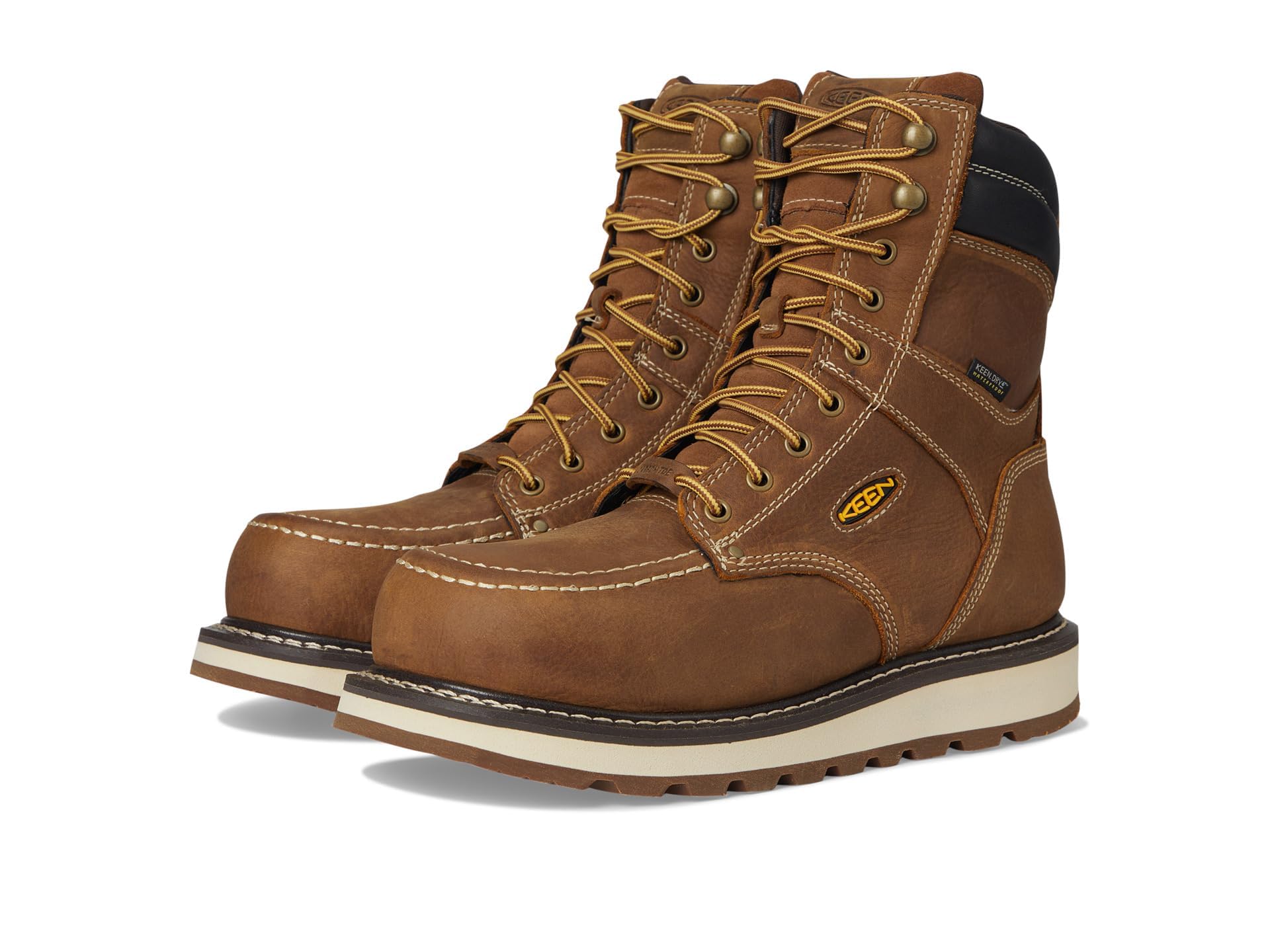
The KEEN Utility Cincinnati hits the sweet spot for roofers who need weight savings from a composite toe without sacrificing protection. The 8-inch shaft gives you solid ankle support for walking a slope and kneeling to nail shingles, while the wedge sole provides a wide, stable platform that distributes pressure evenly across the footbed. Real users consistently cite the roomy toe box as a game-changer for long days on their feet — no pinching or toe jamming even after hours of crouched work on a roof deck.
Waterproofing is reliable through morning dew and light rain, and the Luftcore insole absorbs shock from every step on hard sheathing. Reviewers note that the boot is comfortable straight out of the box with zero break-in period, which matters when you need to be productive on Day 1. The sole does attract asphalt residue in hot conditions, but the deep tread still holds grip on shingle granules when you need it most.
One durability concern emerged from a user who experienced sole separation at the toe after two years of heavy use in a shipyard. While that’s an outlier for most roofers, it suggests that very abrasive environments may accelerate wear on the cemented sole construction. Still, for the balance of comfort, low weight, and all-day support on a roof, this boot earns the top spot for most roofers.
Why it’s great
- Composite toe keeps weight low for agile roof movement
- Roomy toe box prevents foot fatigue on slopes
- Zero break-in required — comfortable from first wear
Good to know
- Wedge sole attracts hot asphalt
- Some reports of sole separation after extended heavy use
2. Thorogood 1957 Series 6″ Waterproof Steel Toe

Thorogood’s 1957 Series is an American-made work boot that roofers praise for its construction quality and comfort once properly broken in. The full-grain leather upper and Goodyear welted sole give it a rugged foundation that can handle debris, shingle scrapes, and water exposure without collapsing. The slip-resistant heel outsole features a defined pattern that grips shingle surfaces better than a flat sole, and the EH rating adds electrical hazard protection for roof work near power lines.
The break-in period is real — several reviewers noted tightness in the steel toe area and a stiff tongue that required mink oil and a week of wear before the boot molded to the foot. Once broken in, the sole design allows a comfortable rolling stride that reduces fatigue on the roof’s slope. The fit runs slightly narrow, so roofers with wider feet should size up to a 2E or full size larger for steel toe clearance.
Consistency in the handmade construction varies: some users reported uneven stitching and shape irregularities that are acceptable for the price point, while one reviewer found the fit so tight it was unwearable. If you have standard-width feet and can tolerate a moderate break-in, this boot repays the effort with exceptional longevity and support for daily roofing work.
Why it’s great
- USA-made full-grain leather for maximum durability
- Goodyear welt allows resoling for extended boot life
- Slip-resistant heel outsole with defined shingle grip
Good to know
- Narrow fit — wide sizes needed for many roofers
- Requires intentional break-in period
3. ARIAT Treadfast 8″ Waterproof Steel Toe
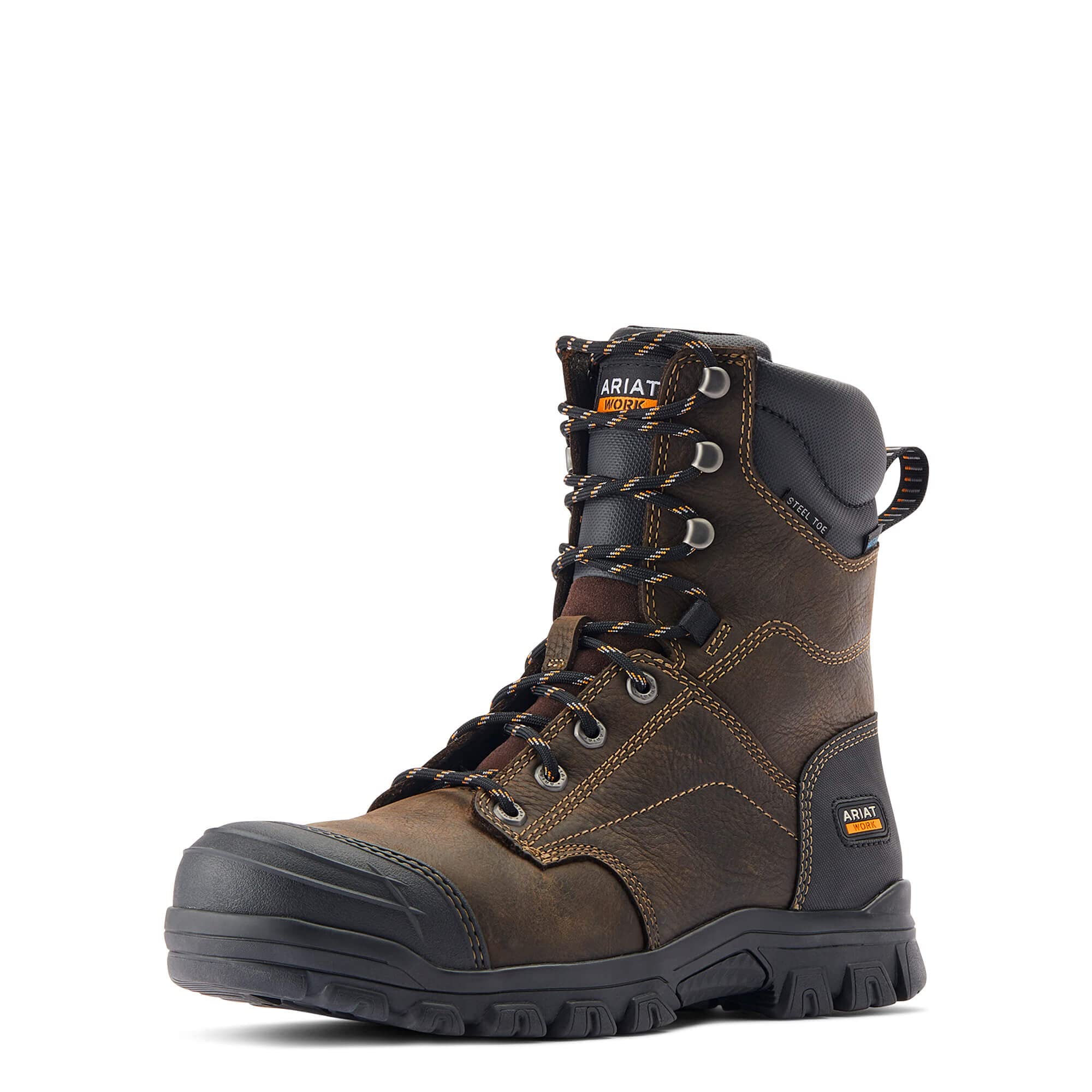
ARIAT’s Treadfast boot stands out for being comfortable right out of the box without custom insoles — a rare claim in the work boot world. The thick padding around the collar and tongue provides immediate cushioning for long hours on a roof, while the 8-inch shaft delivers generous ankle support for navigating steep pitches and ladder transitions. The block heel offers a stable base that reduces roll on uneven shingle surfaces.
Waterproofing holds up well in wet conditions, and the thick leather resists scuffs from shingle edges and tool drops. Reviewers in demanding trades like aircraft maintenance and wastewater treatment reported the boots lasting close to a year with daily abuse before needing replacement. The steel toe provides reliable impact protection without feeling overly heavy, and the sole offers good traction on concrete and wet surfaces.
The main complaint across multiple users is the laces — they tend to break after a couple months of heavy use. This is an easy fix with a replacement pair of heavy-duty laces, but it’s a recurring issue worth noting. For roofers who prioritize immediate comfort and are willing to swap laces, the Treadfast delivers strong performance in the mid-range tier.
Why it’s great
- Comfortable immediately — no break-in needed
- Thick padding for warm, supportive wear on long shifts
- Block heel design enhances slope stability
Good to know
- Stock laces break prematurely with heavy use
- Thick padding can feel warm in hot weather
4. Merrell Men’s Windoc Waterproof Steel Toe Mid
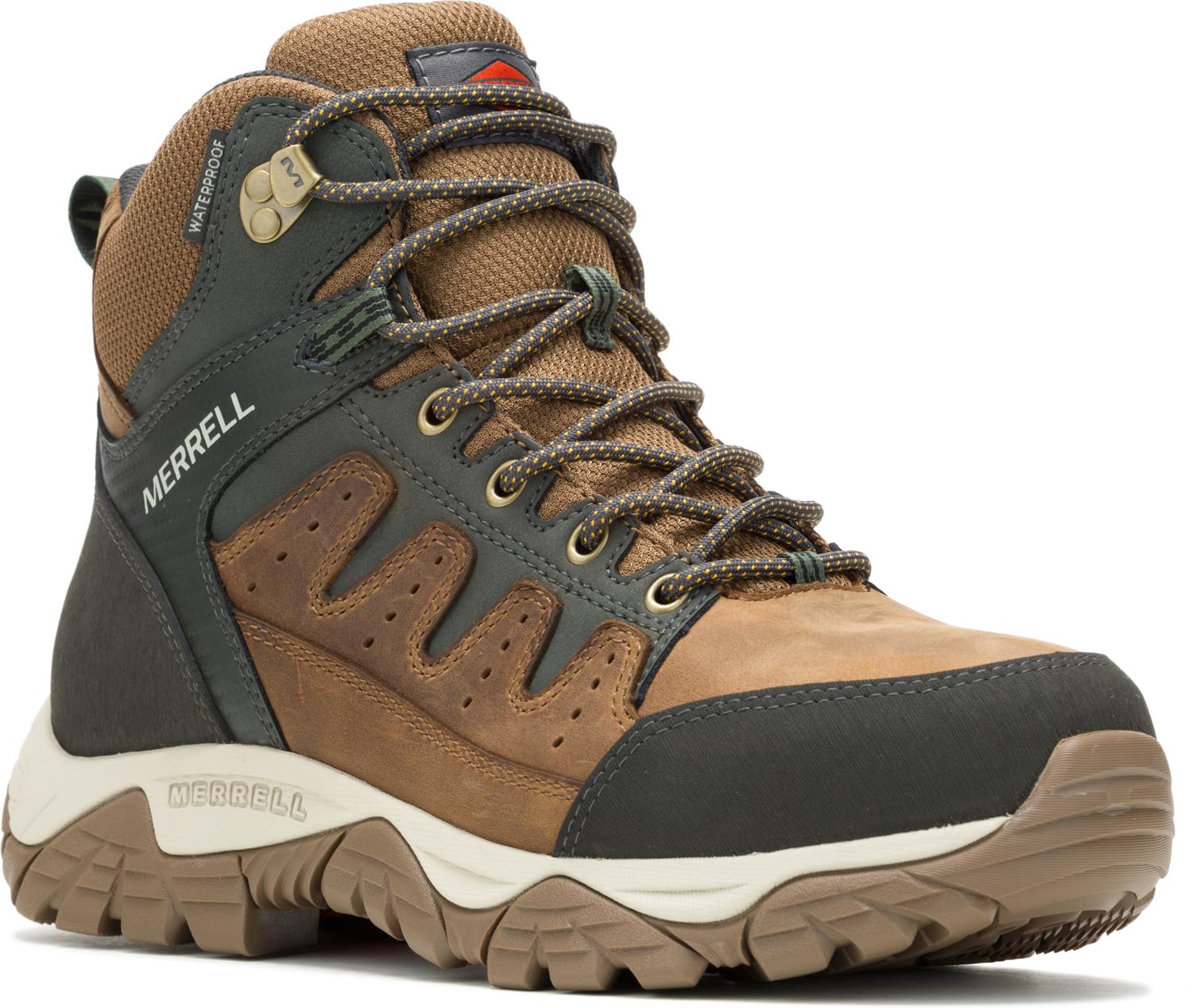
Merrell brings its hiking boot heritage to the work site with the Windoc, a steel toe mid-height boot that focuses on lightweight, nimble movement across uneven roof surfaces. At just over 4 pounds per pair, this boot reduces leg fatigue significantly compared to heavier work boots, which is critical when you’re climbing ladder rungs and balancing on a sloped deck all day. The waterproof membrane handles moderate to heavy rain without soaking through, and the easy-lace system makes tightening quick between jobs.
Multiple reviewers reported zero break-in pain, with one user wearing them right after knee surgery and finding them comfortable for all-day construction work. The steel toe protection is adequate for roofing hazards like dropped fasteners and falling shingles, though the boot’s lightweight construction means it’s less armored than heavy-duty logger styles. A lineman specifically praised the ankle support for uneven terrain, which translates well to the variable surface of a roof.
Durability is the trade-off: one heavy-use reviewer reported creasing at the steel toe that eventually led to waterproofing failure after six months of daily abuse in water and mud. The rubber sole can also rip at the toe with extreme use. This boot is best for roofers who value mobility and comfort over maximum longevity and are willing to replace boots more frequently.
Why it’s great
- Very lightweight — reduces fatigue on sloped surfaces
- Comfortable from first wear with no break-in
- Good ankle support for uneven roof terrain
Good to know
- Waterproofing may degrade within 6 months of heavy use
- Less armored than heavyweight work boots
5. CAT Men’s Invader Hi Steel Toe

The CAT Invader Hi is built with an aggressive outsole pattern that delivers strong grip on loose gravel, damp shingles, and dusty roof decks. The steel toe meets all safety requirements, and the waterproof construction has been verified by users who kept feet dry through rain and mud on the job site. Construction workers and mechanics alike report that the boots hold up well over a year of daily use with no major structural failures.
Comfort improves significantly after adding a quality insole — the stock padding is adequate but not exceptional for 10-hour roofing shifts. Reviewers note the boot runs fairly true to size but benefits from a half-size up if you wear heavy socks. The high-top design provides decent ankle support for roof navigation, though it’s not as tall as the 8-inch options from KEEN or ARIAT.
The primary complaint is the laces: like several boots in this tier, the stock laces snap after months of use. One user described them as “cheap” relative to the boot’s overall build quality. For the mid-range price point, the CAT Invader offers solid protection and grip for roofers who want a dependable work boot without spending premium dollars.
Why it’s great
- Aggressive outsole grips shingle debris and dust
- Waterproof membrane keeps feet dry in wet conditions
- Durable steel toe with long-term structural integrity
Good to know
- Stock laces break with heavy use
- Needs aftermarket insole for all-day comfort
6. Timberland PRO Men’s Pit Boss 6″ Steel Safety Toe

The Timberland PRO Pit Boss is a classic 6-inch steel toe work boot that offers reliable protection and comfort at a price point that appeals to roofers on a budget. The Goodyear welt construction gives it a solid, durable foundation that can be resoled if you wear out the tread. Users consistently praise the sturdy feel and roomy toe box, which allows enough space for your toes to spread on a slanted roof deck without feeling cramped.
Water resistance is decent but not fully waterproof — the leather needs mink oil or a waterproofing treatment before exposure to heavy rain or dew-soaked shingles. The boot runs slightly wide, which is a bonus for roofers with wider feet, but may require thick socks for a snug fit on narrow feet. Reviewers recommend going half a size up for heavy sock use to maintain comfort.
The steel toe does make the toe box feel shorter than classic Timberlands, which can press on longer toes. One user noted the steel toe version is narrower than the soft toe equivalent, so trying on before buying is advisable. For roofers who want a time-tested work boot with Goodyear welt quality at a reasonable investment, the Pit Boss delivers consistent performance.
Why it’s great
- Goodyear welt construction for durability and resoling
- Roomy toe box reduces pressure on slanted roof surfaces
- Classic work boot style with proven reliability
Good to know
- Not fully waterproof without treatment
- Steel toe version runs narrower than soft toe
7. Carhartt Men’s Chelsea Boots – Wedge Style Slip On

Carhartt’s Chelsea boot offers a unique option for roofers who prioritize speed and convenience: the slip-on wedge style eliminates laces entirely, allowing you to kick them on and off quickly between tasks. The Insite Technology footbed provides decent cushioning for standing on hard sheathing, and the slip-resistant outsole offers stable footing on flat surfaces. The wedge profile distributes weight evenly, reducing pressure points during long stationary periods like nailing underlayment.
Comfort is the strongest suit here — repeat buyers specifically mention these boots for standing long hours on concrete and roof surfaces. The roomy toe box accommodates wider feet comfortably, and the 6-inch shaft offers adequate ankle support for light roof work. However, the wedge sole lacks the aggressive lug pattern that most roofers need for steep slopes, making this boot better suited for flat or low-pitch roofs.
Durability is a concern: users report the leather scratches easily, and the boot is noticeably heavier than comparable Blundstone slip-ons. The absence of a defined heel means less bite on a slanted surface when walking downhill. For roofers working primarily on low-slope commercial roofs or flat decks where laces are a hassle, this Chelsea is a convenient alternative — but it’s not the best choice for steep residential slopes.
Why it’s great
- Easy slip-on design saves time between tasks
- Comfortable for standing long hours on flat surfaces
- Roomy toe box for wide feet
Good to know
- Wedge sole lacks slope-specific traction
- Leather scratches easily during roof work
8. Men’s Rubber Work Boots with Steel Toe & Shank
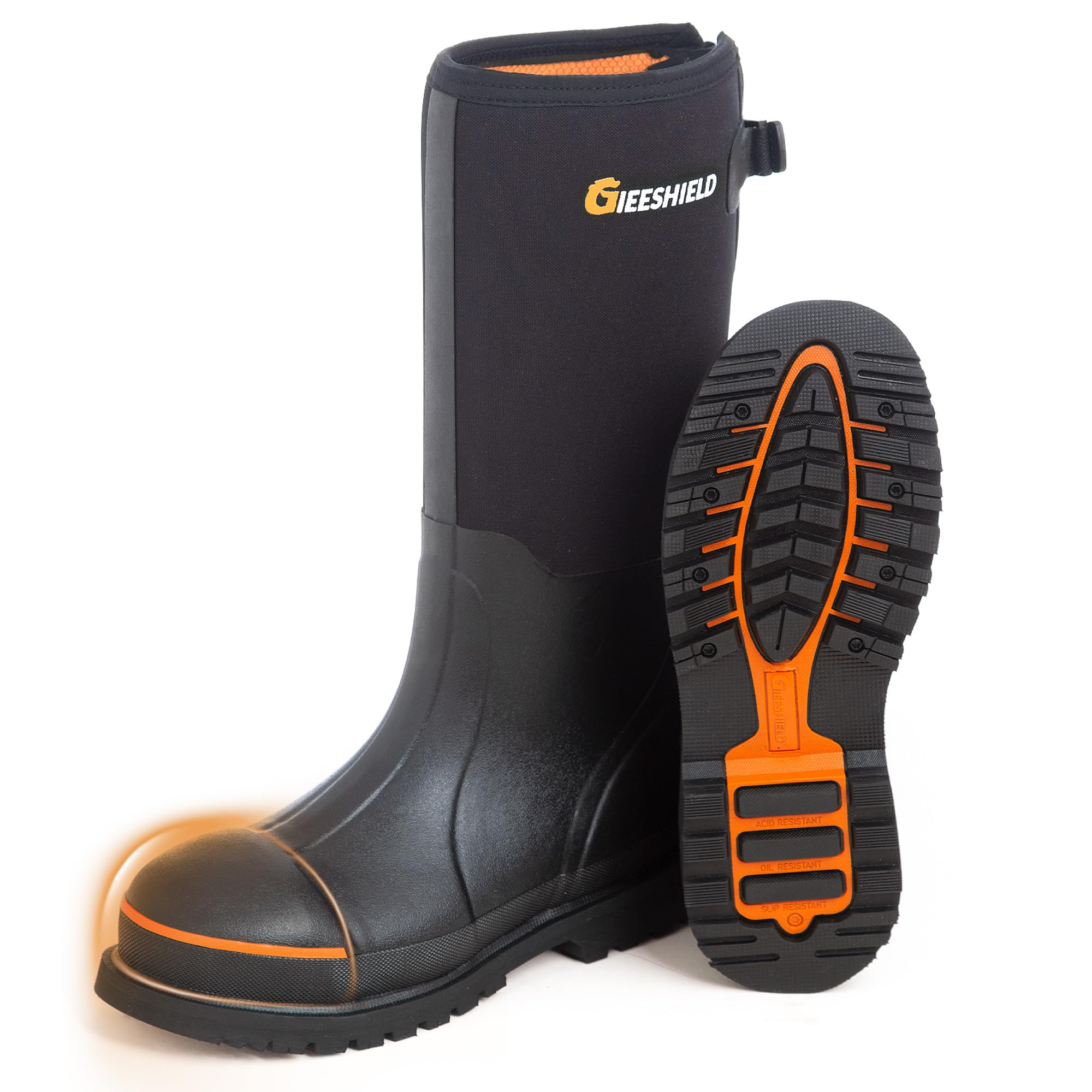
These rubber steel toe boots are purpose-built for the wettest roofing conditions: morning dew, rain-soaked shingles, and standing water on flat roof surfaces. The vulcanized rubber shell with 6mm neoprene lining provides absolute waterproofing — one reviewer reported standing in up to 4 inches of water and mud for hours without any leakage. The steel toe and shank add puncture protection for nails and debris, and the heavy-duty rubber outsole offers solid grip on wet concrete and metal surfaces.
The boots are heavy — that’s the main trade-off for the waterproofing — but the neoprene liner makes them comfortable against the skin and easy to pull on/off. The heel pull tab helps when removing them after a muddy day. Users describe them as “sturdy” and “durable” for construction and farming environments, though the rubber build can feel stiff for fine footwork on a sloped roof.
Cold weather performance is a weak point: one reviewer noted that toes got cold below freezing despite the steel toe and neoprene insulation. The thick sole also reduces ground feel, which is important for walking on shingle ridges and feeling for weak spots in the deck. This boot is best suited as a wet-weather backup for roofers who primarily wear traditional leather work boots but need full waterproof protection on rainy days.
Why it’s great
- 100% waterproof rubber construction
- Steel shank adds puncture protection from nails
- Vulcanized seams prevent leaks in standing water
Good to know
- Heavy weight reduces agility on slopes
- Not insulated for cold weather work
9. Carhartt Men’s Rugged Flex 6″ Steel Toe Work Boot
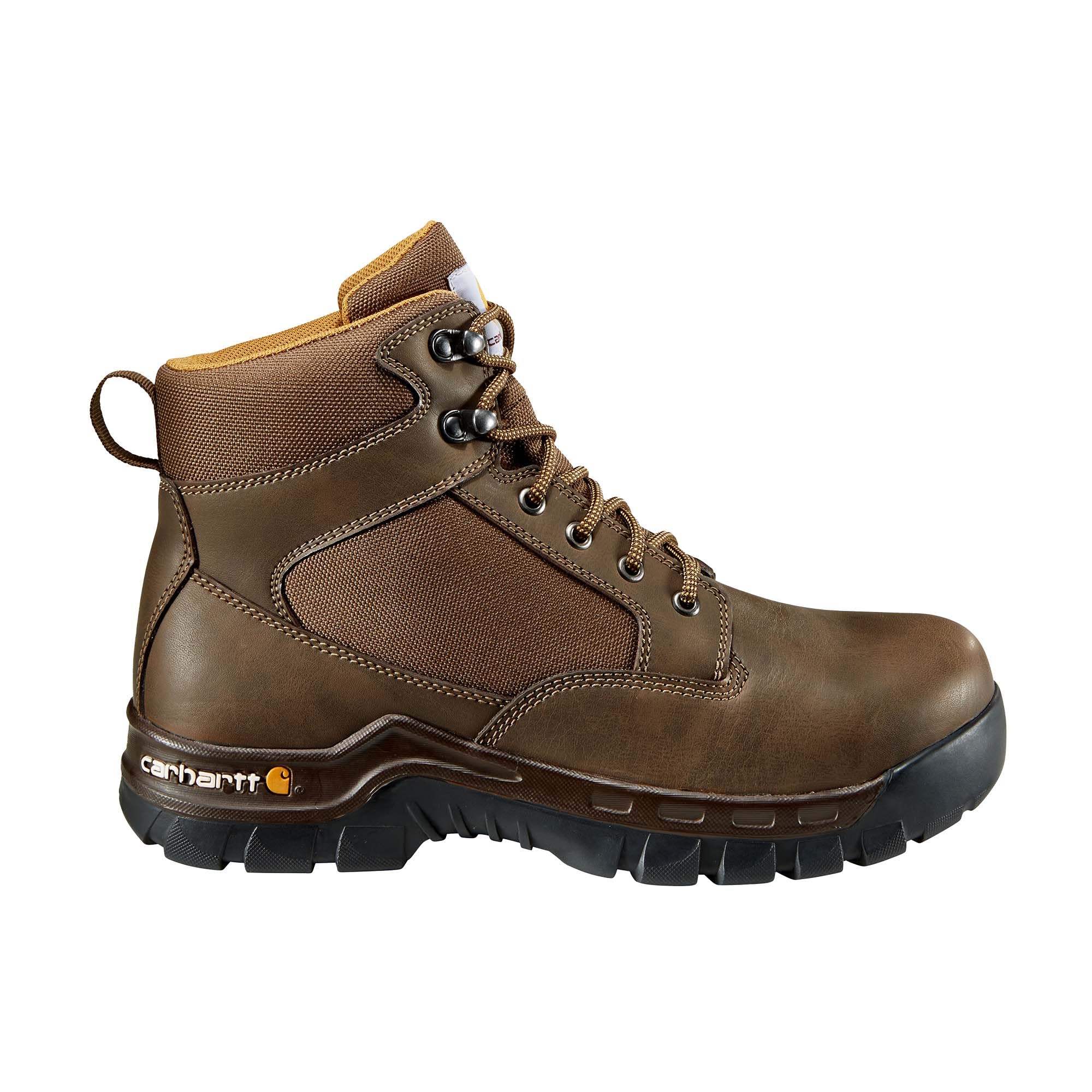
The Carhartt Rugged Flex 6-inch is an entry-level steel toe work boot that offers good value for roofers who need basic protection without a large upfront investment. The flexible design and lightweight construction make it easy to move around on a roof deck, and the slip-resistant tread provides reasonable traction on dry shingles. Users consistently rate the comfort highly once the boot is broken in, with several noting it’s the only boot that doesn’t hurt their feet after long hours on concrete.
The wide toe option accommodates feet that need extra space, and the boot runs true to size for most wearers. One user with a diabetic husband reported that these boots lasted a year on concrete floors — far longer than the 2-3 months of previous brands — while providing warmth in winter and breathability in summer. The leather and synthetic upper balances flexibility with durability for light to moderate roofing work.
Durability is inconsistent: one reviewer reported the boot falling apart after only 60 days of standard site work, describing it as “not rugged or durable” despite the Carhartt name. The insole is also basic and benefits from replacement with a higher-quality orthotic for all-day comfort. For a premium experience, roofers should look higher up this list, but the Rugged Flex serves well as a budget-friendly starter boot for new roofers or those on a tight budget.
Why it’s great
- Lightweight and flexible for roof movement
- Good value for entry-level protection
- Wide toe option available for foot comfort
Good to know
- Inconsistent durability — some pairs fail early
- Basic insole needs upgrading for long shifts
FAQ
Can I use regular work boots for roofing?
Should I get steel toe or composite toe for roofing?
How important is ankle support for roofing boots?
Final Thoughts: The Verdict
For most roofers, the boots for roofing winner is the KEEN Utility Cincinnati 8″ because it combines a lightweight composite toe, a roomy footbed, and reliable waterproofing in a zero-break-in package that supports all-day work on steep slopes. If you want USA-made craftsmanship and don’t mind a break-in period, grab the Thorogood 1957 Series. And for wet-weather roofing days where standing water is unavoidable, nothing beats the Men’s Rubber Steel Toe Boots for absolute waterproof protection.