
Our readers keep the lights on and the weekend projects moving. As an Amazon Associate, I earn from qualifying purchases.
An 8×32 binocular occupies a rare sweet spot in optics: enough magnification (8x) to bring distant birds, trail signs, or stage performers into crisp detail, paired with a 32mm objective lens that keeps the whole unit compact and light enough for all-day carry. The challenge is finding glass that delivers bright, sharp images without introducing chromatic aberration, edge softness, or a focus wheel that feels like it’s grinding sand.
I’m Rikta — the co-founder and writer behind FitlyFast. I’ve spent years analyzing optical coatings, prism types, and build tolerances across hundreds of binocular models to separate real optical performance from marketing hype.
After side-by-side comparisons of light transmission, field of view, and ergonomic comfort, these are the models that genuinely earn their place as the best 8×32 binoculars for outdoor enthusiasts, birders, and travelers who refuse to compromise on clarity or portability.
How To Choose The Best 8×32 Binoculars
The 8×32 format is popular because it balances usable magnification with a compact body that doesn’t feel like a burden on a long hike. But not all 8x32s are built equal. Understanding a few key optical principles will help you avoid a purchase that leaves you squinting at a dim, hazy image.
Optical Coatings: The Gatekeeper of Brightness
The number of glass-air surfaces inside a binocular is shocking — often ten or more per optical path. Each surface reflects away some light unless it’s treated with an anti-reflective coating. “Fully multi-coated” means every lens surface has multiple layers of coating, transmitting the most light to your eye. Any model that skips to “multi-coated” sacrifices noticeable brightness in dawn, dusk, or deep shade.
Prism Type and Quality: Roof vs. Porro
Roof prism binoculars are slimmer and more streamlined, but they require phase-correction coating to prevent image degradation — without it, colors look washed out and contrast suffers. Porro prisms (like the Vortex Raptor) deliver a naturally brighter, more 3D-like image for the same price, but the body is bulkier. For 8×32 in particular, the best roof prism models use BaK-4 glass, which has a higher refractive index than BK-7, producing a round, fully illuminated exit pupil instead of a clipped, dim one.
Field of View and Eye Relief
Field of view, measured in feet at 1,000 yards, determines how much landscape you can scan without moving the binocular. A wider field helps track birds in flight. Eye relief — measured in millimeters — is critical if you wear glasses: anything under 15mm will force you to press your glasses tight against the eyecups or remove them entirely. The best 8×32 models offer at least 15–17mm of eye relief with multi-stop twist-up eyecups.
Quick Comparison
On smaller screens, swipe sideways to see the full table.
| Model | Category | Best For | Key Spec | Amazon |
|---|---|---|---|---|
| ZEISS Terra ED 8×32 | Premium | Color-critical birding | SCHOTT ED glass / 88% light transmission | Amazon |
| Carson 3D ED Series 8×32 | Premium | Zero-chromatic-aberration viewing | ED glass / 19.5mm eye relief | Amazon |
| Hawke Endurance ED 8×32 | Mid-Range | Low-light hunting/scouting | ED glass / phase-corrected BaK-4 | Amazon |
| Nikon PROSTAFF P7 8×30 | Mid-Range | Wide-field scanning | 456ft field @ 1000yds / dielectric coating | Amazon |
| Nocs Provisions Field Issue 8×32 | Mid-Range | Modern adventure carry | IPX7 waterproof / 387ft field | Amazon |
| Opticron Oregon 4 PC Oasis 8×32 | Mid-Range | Bright-light birding value | Oasis high-transmission coating | Amazon |
| Celestron Nature DX 8×32 | Entry/Mid | Intro birding backpack | Phase-coated BaK-4 prisms | Amazon |
| Nikon TRAVELITE EX 8×25 | Compact | Ultra-light travel | 10.1 oz / 25mm objective | Amazon |
| Vortex Optics Raptor 8.5×32 | Budget | Family/shared use | Porro prism / 390ft field | Amazon |
In‑Depth Reviews
1. ZEISS Terra ED 8×32
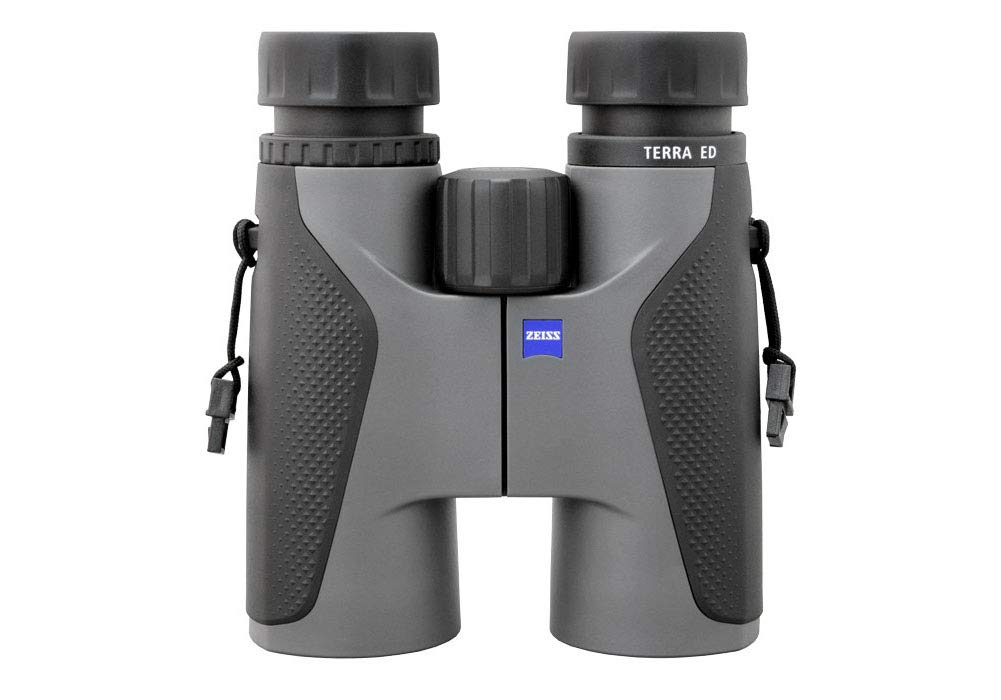
The ZEISS Terra ED sets a benchmark in the sub- category with SCHOTT Extra-low Dispersion glass that eliminates chromatic aberration entirely. Colors snap into focus with a neutrality that cheaper glass can’t touch — robin reds and oak bark browns look natural, not oversaturated. The LotuTec coating on the outer lenses beads off water and grease, making cleaning effortless after a morning in damp brush.
The large, smooth focus wheel falls naturally under your index finger — ZEISS clearly studied how fast a birder needs to acquire a moving warbler. At 21.2 ounces it’s light enough for a neck strap all day, but the rubber-armored polycarbonate body feels far denser than its weight suggests. The 16.5mm eye relief works well with glasses, and the twist-up eyecups have positive detents that stay put.
Some users report that the included case is basic for a binocular at this tier, and the field of view (315 feet at 1,000 yards) is narrower than some competitors. But the image quality — the sheer color fidelity and edge-to-edge sharpness — is what you’re paying for, and it delivers.
Why it’s great
- SCHOTT ED glass eliminates chromatic aberration completely
- LotuTec hydrophobic coating sheds water and oil easily
- Fast, smooth focus wheel with intuitive index-finger placement
Good to know
- Included case is basic for the price tier
- Field of view slightly narrower than some mid-range competitors
2. Carson 3D ED Series 8×32

The Carson 3D ED delivers ED-glass performance — zero chromatic aberration, crisp contrast, and a bright image — at a price that undercuts most European competitors by a wide margin. With 19.5mm of eye relief, it’s the most glasses-friendly model on this list, and the fully multi-coated optics with BaK-4 prisms produce a clean, round exit pupil that doesn’t dim at the edges.
The body feels slightly plasticky compared to the ZEISS — the rubber armor is thinner — and the eyecups only have one locking position, which some users find too short for full eye relief. But the included shoulder harness and deluxe carry case are far better than what ZEISS provides, adding genuine value for hikers who want hands-free carry.
Field of view measures 392 feet at 1,000 yards, which is solid for the class. Low-light performance is good but not class-leading; the real strength here is the daytime clarity and the complete lack of color fringing on high-contrast edges like a white egret against dark water. Backed by a lifetime warranty.
Why it’s great
- ED glass eliminates chromatic aberration completely
- 19.5mm eye relief is best-in-class for eyeglass wearers
- Includes quality harness and deluxe case
Good to know
- Body feels less rugged than premium competitors
- Eyecups have only one locking position
3. Hawke Endurance ED 8×32
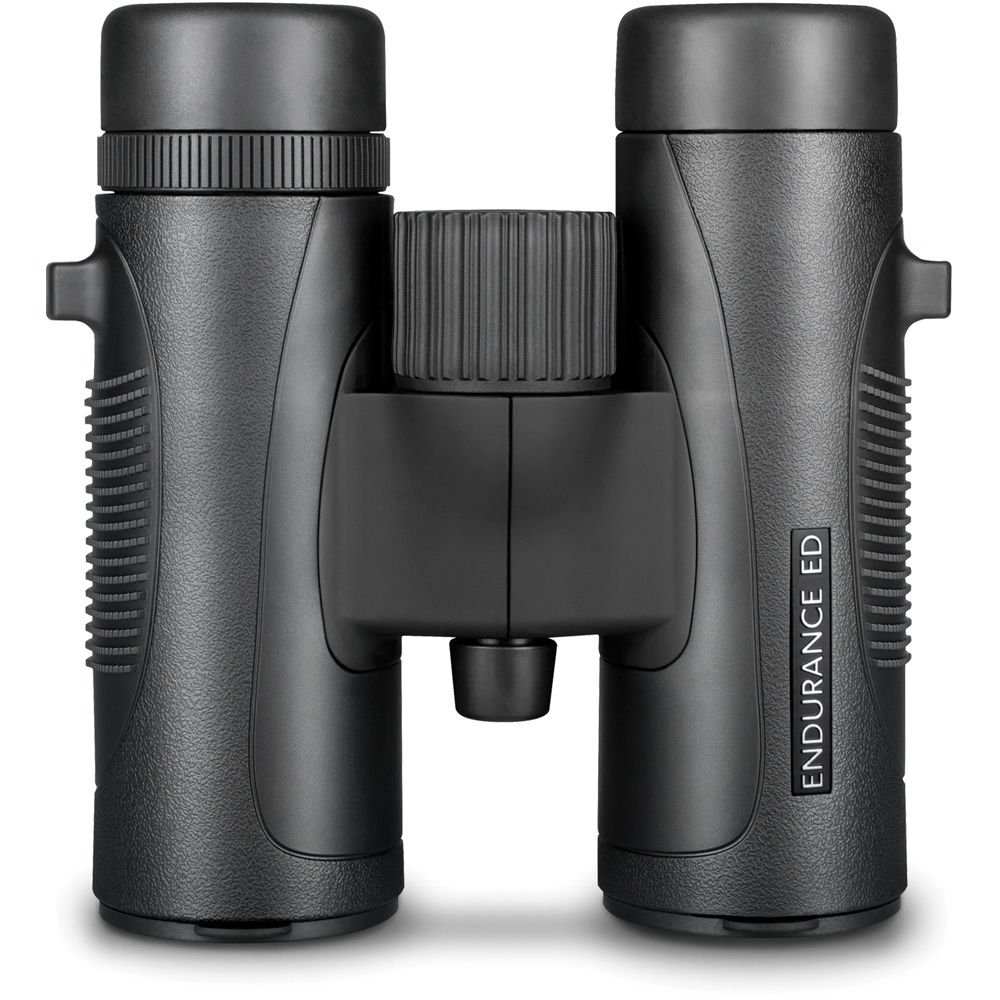
Hawke’s Endurance ED punches above its weight with Extra-low Dispersion glass that rivals models costing twice as much. Reviewers consistently note that these binoculars outperform the Vortex Diamondback 8×32 in both clarity and brightness, especially in the twilight hours when good glass separates itself from average glass. The fully multi-coated optics and phase-corrected BaK-4 roof prisms deliver a sharp, high-contrast image with minimal color fringing.
The focus knob takes 1.2 turns from close-focus to infinity — quick enough for tracking moving game, deliberate enough for fine-tuning. Eye relief is generous for eyeglass wearers, though some users report blackouts at the middle eye-cup settings if they press the binoculars too hard against their brow. The overall chassis is slightly larger than typical 8x32s, edging toward 8×40 dimensions, but still light enough for all-day hiking.
A recurring quality-control complaint involves the zipper on the included carrying case arriving broken. Hawke’s customer service handles replacements promptly, but it’s an annoyance. Stay-on lens covers protect the optics well during field use.
Why it’s great
- ED glass delivers near-premium clarity at a mid-range price
- Outstanding low-light performance for dawn/dusk use
- Quick 1.2-turn focus knob suits hunting and birding
Good to know
- Case zipper has reported quality issues
- Slightly larger than typical 8×32 dimensions
4. Nikon PROSTAFF P7 8×30

The Nikon PROSTAFF P7 8×30 offers the widest field of view in this roundup at 456 feet at 1,000 yards — that’s roughly 20% more panorama than the ZEISS Terra ED. For scanning a meadow for raptors or watching a soccer match unfold, this extra width translates to less head movement and easier subject tracking. Dielectric high-reflective prism coatings boost brightness noticeably compared to standard silver coatings, producing vivid, lifelike colors.
The locking diopter ring is a thoughtful touch — once you set it for your dominant-eye difference, it won’t drift out of adjustment in a pack or pocket. The 15.4mm eye relief is adequate for glasses, and the turn-and-slide eyecups offer multiple positions. At 18.2 ounces, it’s one of the lighter models here, and the fiberglass-reinforced polycarbonate body with rubber armor feels tough without being heavy.
The included neck strap and lens caps feel cheap relative to the binocular’s quality. You’ll likely want to upgrade the strap to a wider, padded version for all-day comfort. Some users with large hands find the body a bit small for a secure grip.
Why it’s great
- Widest field of view in class at 456ft
- Dielectric prism coatings boost brightness and color accuracy
- Locking diopter ring prevents setting drift
Good to know
- Strap and lens caps feel cheap for the price
- Small frame may not suit large hands
5. Nocs Provisions Field Issue 8×32

Nocs Provisions brings a modern, design-forward approach to the 8×32 format. The Field Issue binoculars sport a patented Rugged Wave Grip that feels secure even with wet or gloved hands, and the IPX7 rating means they can survive submersion in three feet of water for 30 minutes — genuine all-weather confidence. The Swiss-designed BaK-4 prism and fully multi-coated optics produce rich, saturated colors with good contrast, though the image shows slight edge softness compared to ED-glass models.
The oversized focus wheel is smooth and precise, and the close-focus distance of 9.3 feet lets you inspect butterflies or flowers without backing up. Three-position twist-up eyecups accommodate eyeglass wearers well, and the 16.8mm eye relief is comfortable. At 16.7 ounces, it’s light enough for a backpack pocket or hip pack.
The included drawstring sack and lens protectors are minimalist — fine for city use but less protective than a hard case for rugged travel. The “No-Matter-What” lifetime warranty adds peace of mind, though you’ll want to buy a better case for serious expeditions.
Why it’s great
- IPX7 waterproof rating for genuine submersion protection
- Ergonomic wave-grip design excels with wet hands
- Close focus at 9.3ft for detail observation
Good to know
- Included case is minimalist, not rugged
- Edge sharpness doesn’t match ED-glass competitors
6. Opticron Oregon 4 PC Oasis 8×32

Opticron’s Oregon 4 PC Oasis 8×32 is a well-kept secret among birders who want reliable roof-prism optics without paying for a big marketing budget. The Oasis high-transmission coating boosts light throughput through the phase-corrected BaK-4 prisms, producing an image that’s bright and color-accurate in good light. The field of view is narrower than the Nikon PROSTAFF P7 at 6.5 degrees, but the center sharpness is excellent for the price tier.
The twin-relief rubber covering provides a secure grip, and the nitrogen-purged waterproofing holds up in rain and high humidity without internal fogging. At 15mm of eye relief, it’s workable for glasses but not generous — you’ll want to test the fit before committing. The focus wheel is smooth but not as fast as the Hawke Endurance ED.
Some users note a slight glare when the sun is directly behind the viewer, a common issue at this price point that doesn’t affect most viewing angles. The included soft case, rainguard, and padded strap are functional but basic. The lifetime warranty is a nice bonus for the price.
Why it’s great
- Oasis high-transmission coating boosts brightness
- Secure dual-rubber grip for wet conditions
- Lifetime warranty at a competitive price point
Good to know
- Narrower field of view than class leaders
- Can show glare with sun directly behind viewer
7. Celestron Nature DX 8×32
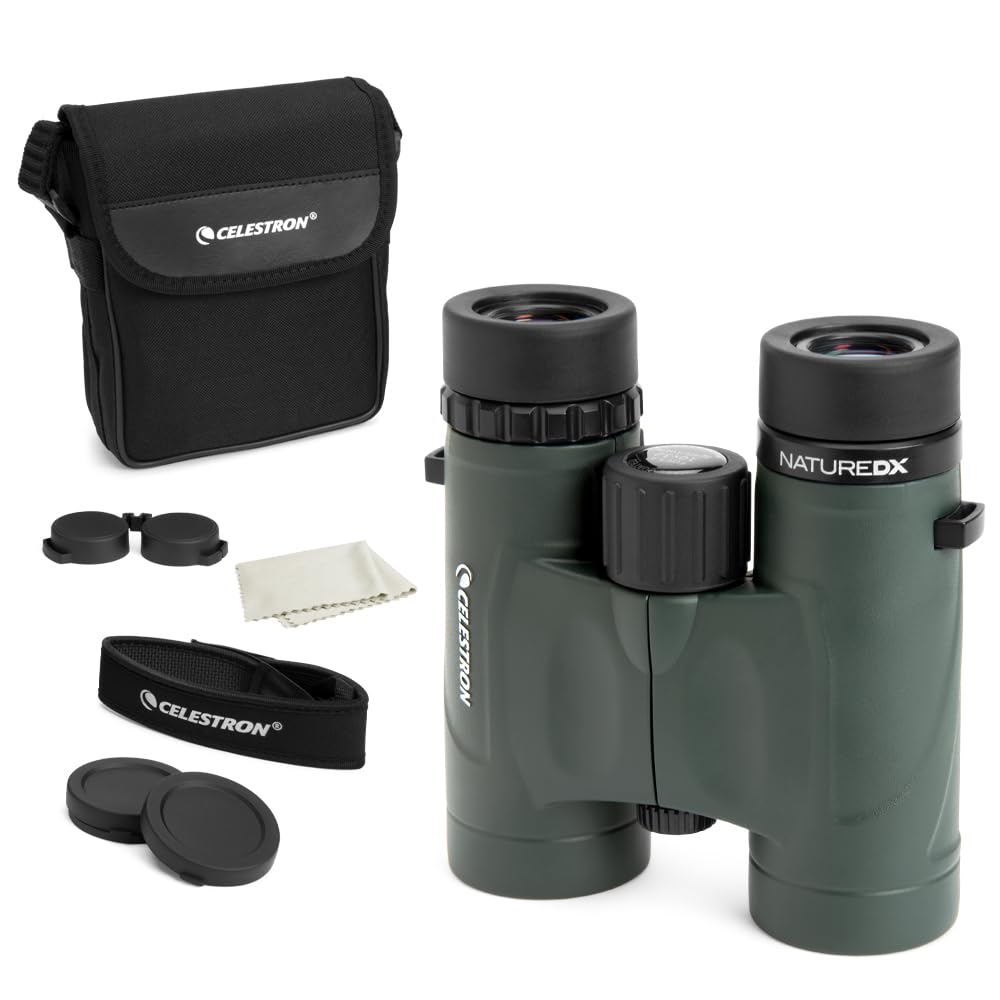
The Celestron Nature DX 8×32 is the entry point that doesn’t feel like a compromise. Phase-coated BaK-4 prisms and fully multi-coated lenses produce an image that’s bright and sharp for daytime birding, with good color accuracy that holds its own against models costing significantly more. The 7.4-degree angular field of view is generous for the class, making it easy to follow fast-moving songbirds through the canopy.
With 17.5mm of eye relief and twist-up eyecups, it works well for eyeglass wearers — among the best in this price range. The rubber-armored polycarbonate housing is waterproof and nitrogen-purged, and it includes a tripod adapter socket for stable long-distance viewing. At a touch under 20 ounces, it’s not the lightest 8×32 but remains packable for a day hike.
The autofocus listing on the spec sheet is misleading — it’s a manual center-focus system, not truly autofocus. Some users find the focus wheel slightly stiff when new, but it loosens with use. The close-focus distance is adequate for backyard birding but not as tight as the Nocs Provisions.
Why it’s great
- Phase-coated BaK-4 prisms deliver bright, sharp images
- 17.5mm eye relief is excellent for eyeglass wearers
- Tripod-adaptable for shake-free viewing
Good to know
- Focus wheel can feel stiff when new
- Not the lightest 8×32 option available
8. Nikon TRAVELITE EX 8×25

Strictly speaking, the Nikon TRAVELITE EX 8×25 is a 25mm objective, not a 32mm — but it earns a spot here because many travelers weighing the 8×32 vs. a pocketable alternative will land on this model for its incredible portability. Weighing just 10.1 ounces, it slips into a jacket pocket or daypack without a second thought. The multilayer-coated optics and aspherical eyepiece lenses deliver surprisingly sharp, distortion-free images for such a small package.
The die-cast aluminum body with rubber armoring feels tougher than the weight suggests. Nitrogen-purged and O-ring sealed, it’s waterproof to 2 meters for 5 minutes and completely fogproof. At 11.1mm of eye relief, glasses wearers will find it tight — you’ll likely need to press your glasses against the eyecups. The 8×25 format also means less light-gathering capability in low-light conditions compared to 32mm models.
Several long-term users report buying this as their third or fourth pair, praising the sweet spot of size, ruggedness, and optical quality for travel. The included case and strap are functional but minimal. If your priority is packing light for an extended trip where ounces matter, this is the choice.
Why it’s great
- Extremely lightweight at 10.1 ounces for ultralight travel
- Aspherical eyepiece lenses minimize edge distortion
- Waterproof and fogproof in a compact package
Good to know
- 25mm objective limits low-light performance vs 32mm
- Eye relief is tight for eyeglass wearers
9. Vortex Optics Raptor 8.5×32

The Vortex Raptor uses a porro prism design, which inherently delivers a brighter, more three-dimensional image than roof prisms at the same price point. The 8.5x magnification is a half-step above standard 8x, offering slightly more detail without introducing noticeable hand-shake. Fully multi-coated lenses transmit bright, crisp images with good color fidelity, and the wide 390-foot field of view at 1,000 yards makes scanning easy.
The rubber armor is rugged — reviewers describe it as nearly military-grade — and the nitrogen-purged body is both waterproof and fogproof. The twist-up eyecups have a half-detent position for non-eyeglass users and retract fully for glasses, though the 14mm eye relief is average. At 19.9 ounces, it’s not the lightest option, but the porro prism build gives it a solid, durable feel.
Quality control can be inconsistent — some units arrive with misaligned optics or other defects. Vortex’s legendary VIP unconditional lifetime warranty makes this less of a risk: they’ll repair or replace any damaged or defective unit, no questions asked, no receipt needed. This makes the Raptor a smart choice for families or first-time buyers who want absolute peace of mind.
Why it’s great
- Porro prism design delivers brighter, more 3D-like images
- VIP lifetime warranty covers any defect or damage
- Rugged rubber armor feels very durable
Good to know
- Quality control can be inconsistent out of the box
- Heavier than many roof prism 8x32s
FAQ
What does “8×32” actually mean on binoculars?
Is an 8×32 binocular good for birdwatching?
Can I use 8×32 binoculars for stargazing?
What’s the difference between BaK-4 and BK-7 prisms?
Final Thoughts: The Verdict
For most users, the best 8×32 binoculars winner is the ZEISS Terra ED 8×32 because it delivers true premium-grade SCHOTT ED glass clarity and color fidelity at a price that undercuts the Alpha-tier names by half. If you want the widest possible field of view for scanning wide landscapes or tracking fast-moving subjects, grab the Nikon PROSTAFF P7 8×30. And for ultralight travel where every ounce counts, nothing beats the Nikon TRAVELITE EX 8×25.