
Our readers keep the lights on and the weekend projects moving. As an Amazon Associate, I earn from qualifying purchases.
A well-designed balance bike transforms a wobbly toddler into a confident glider faster than you’d expect. The right frame geometry, tire type, and weight distribution mean the difference between a beloved toy and a wobbly frustration your child abandons under the porch.
I’m Rikta — the co-founder and writer behind FitlyFast. I’ve spent hundreds of hours analyzing toddler ride-on hardware, digging into frame materials, wheel durability, and ergonomic adjustability so you don’t have to guess.
After comparing seven contenders across weight, seat range, tire reliability, and real-family feedback, here is everything I know about securing the best balance bike for 2 year old for your child.
How To Choose The Best Balance Bike For 2 Year Old
Two-year-old riders have specific needs: short inseams (typically 10-16 inches), limited upper-body strength, and developing motor coordination. The wrong bike will be too heavy, too tall, or too inflexible. Here is what matters most.
Frame Material and Weight
A steel frame costs less and feels sturdy, but a steel-framed bike can weigh over 10 pounds — heavy for a toddler to lift, steer, or carry up a curb. Look for an aluminum or alloy steel frame that keeps the bike under 7 or 8 pounds. Lighter bikes give a two-year-old real control.
Seat Height Adjustability
The seat must go low enough that your child can sit flat-footed with a slight bend in the knee. For most two-year-olds, the minimum seat height should be 11-14 inches. A good model offers at least 3-4 inches of adjustability to last through age 3 or 4.
Tire Type and Terrain
Airless EVA or solid foam tires never go flat and roll smoothly on pavement, carpet, and packed dirt. Pneumatic rubber tires give better grip on grass and gravel but require occasional inflation. For indoor-to-outdoor versatility, flat-free tires are a practical starting pick.
Quick Comparison
On smaller screens, swipe sideways to see the full table.
| Model | Category | Best For | Key Spec | Amazon |
|---|---|---|---|---|
| Retrospec Cub | Premium Balance Bike | All-terrain durability | 12 inch airless tires | Amazon |
| Yvolution Y Velo Junior | Convertible | New walkers needing stability | Dual rear wheel mode | Amazon |
| banana bike LT | Aluminum Frame | Ultra‑lightweight gliding | 6.4 lbs frame weight | Amazon |
| Gotrax KS12 | Feature Rich | Fun extras (LED, Bell) | LED light system | Amazon |
| KRIDDO Toddler | Value Steel | Budget‑friendly durability | Carbon steel frame | Amazon |
| Bobike Toddler | Entry Classic | Simple, enclosed wheels | 135° steering limit | Amazon |
| Liberry Baby | 4‑Wheel Stable | Very young 12‑24 month riders | 4‑wheel base design | Amazon |
In‑Depth Reviews
1. Retrospec Cub

The Retrospec Cub strikes a balance between premium build quality and toddler-friendly ergonomics that few competitors match. Its 12-inch airless tires eliminate flat-tire concerns while providing smooth rolling across pavement, grass, and gravel — exactly the variety a curious two-year-old will demand. The alloy steel frame keeps weight manageable for a small child to lift and steer independently.
The seat adjusts from 11 to 14.5 inches, a wide enough window to accommodate a two-year-old with a short inseam and still leave room for growth through age 3. The low step-through frame means even a wobbly beginner can mount without help. Quick-release handlebar adjustments add another layer of fit customization without tools.
Real families report consistent durability even after a full year of daily use. The rounded edges, non-slip grips, and low center of gravity give parents peace of mind while the child gains confidence. If you want one bike that reliably covers the entire toddler period, this is the one.
Why it’s great
- Puncture-proof tires mean zero maintenance
- Generous seat adjustment range spans 3+ years of growth
- Low-frame design makes mounting intuitive for young toddlers
Good to know
- Weighs around 10 lbs, slightly heavier than aluminum alternatives
- No suspension or pneumatic tire option for ultra-rough terrain
2. Yvolution Y Velo Junior

The Y Velo Junior is engineered specifically for toddlers who are still mastering the walking stage. Its iconic dual-rear-wheel design provides a wide, stable platform that resists tipping, which is a huge confidence booster for the hesitant 18-to-24-month-old. The 9-inch wheels keep the ride low to the ground, so the child’s feet remain flat for emergency stops.
Once balance builds, the bike converts to a single rear wheel, essentially giving you two bikes in one. The seat adjusts from 11 to 14.2 inches, and the handlebar also adapts to match growth. Parents praise how easily their children learn to balance on this model without the intimidation of a traditional two-wheeler.
The alloy steel frame feels solid without being overly heavy, and the slightly larger wheel design provides better clearance over uneven patches than many micro-wheels on other starter bikes. If your child is on the timid side or very new to walking, the Y Velo Junior’s trike-to-bike transition makes learning less scary.
Why it’s great
- Dual rear wheel mode offers unmatched tip-over protection
- Convertible design extends useful life as skills advance
- Higher ground clearance handles bumps better than micro-bikes
Good to know
- Maximum weight limit of 44 lbs limits longer-term use for larger kids
- No hand brake — relies entirely on foot stopping
3. banana bike LT

At 6.4 pounds, the banana bike LT is the lightest model in this roundup, and that weight savings makes a real difference for a two-year-old who needs to heave the bike around. The aluminum frame and bowed low-step design offer an easy mount-and-dismount experience that independent toddlers love. The 11-inch wheels are slightly smaller than the standard 12-inch, but they roll smoothly on pavement and carpet.
The seat adjusts from 12.2 to 15.7 inches via a quick-release clamp, giving a solid range for growing children. Real-world feedback from parents highlights how quickly kids progress from tentative walking to confident gliding — often within two weeks. The powder-coated paint resists scratches from inevitable sidewalk spills.
One caveat: the steering lacks a sealed bearing, so some units feel slightly gritty during turns. It doesn’t impair function, but it is a reminder that this is a budget-priced lightweighter, not a precision machine. If your priority is the lightest possible bike that your child can control easily, the banana bike LT is a smart bet.
Why it’s great
- Aluminum frame keeps weight ultra-low for effortless kid handling
- Quick-release seat clamp simplifies height adjustments on the fly
- Banana-shaped frame makes step-through mounting natural
Good to know
- Steering lacks a proper bearing, may feel a little rough
- Wheels are 11 inches, slightly smaller than many competitors
4. Gotrax KS12
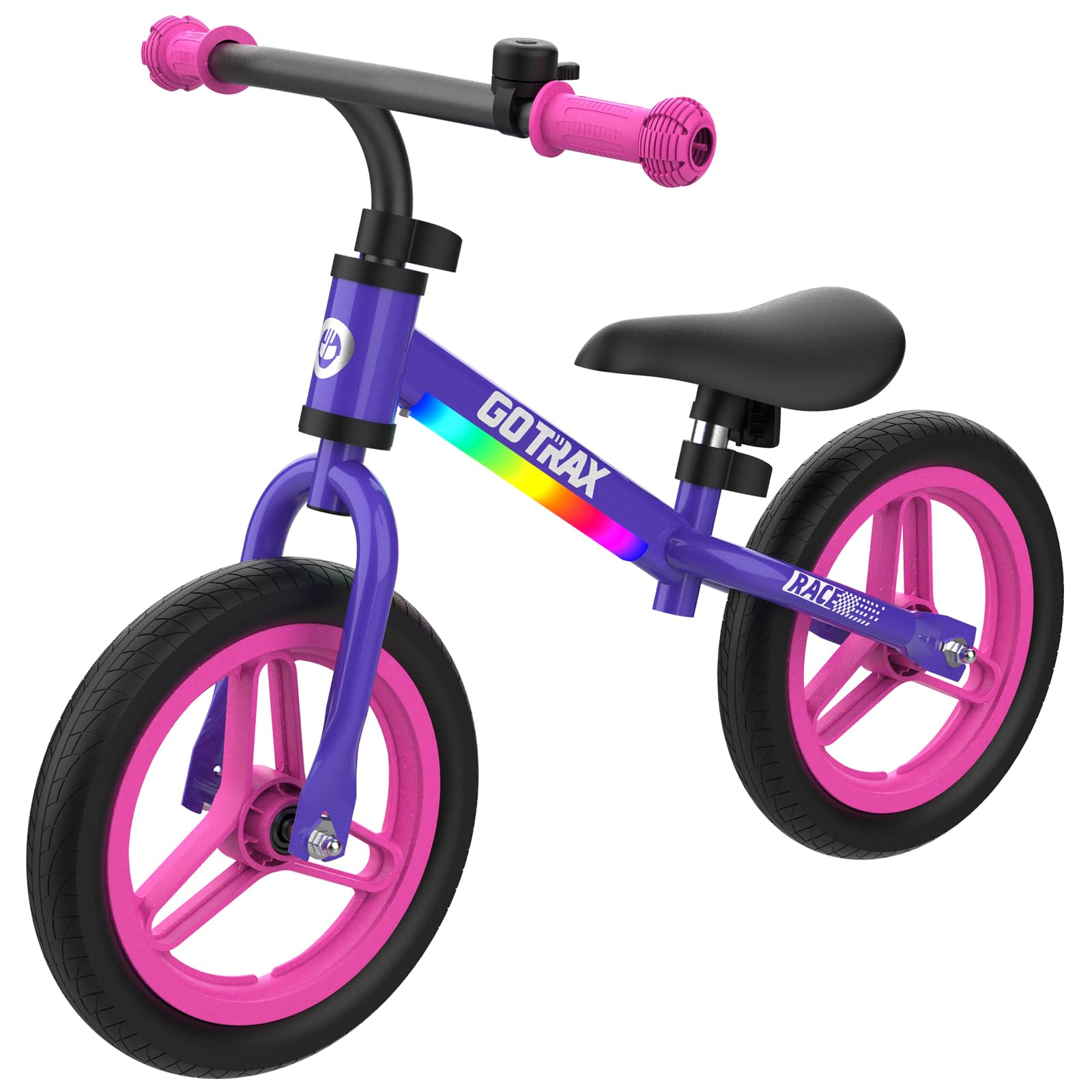
The Gotrax KS12 adds sensory appeal that few other balance bikes offer. The built-in LED lights in the wheels activate as the child rides, creating a visual reward that keeps toddlers engaged. A handlebar bell adds another interactive element. At 8.6 pounds, it sits in the middle of the weight pack — light enough for a three-year-old to carry but not as feathery as aluminum models.
The 12-inch EVA flat-free tires handle pavement, carpet, and grass without the risk of punctures. The seat adjusts from 16.5 to 18.3 inches, and the handlebar ranges from 22.8 to 26 inches, offering a taller overall fit that works well for bigger two-year-olds. The maximum load of 110 pounds means this bike can handle heavy riders well into the preschool years.
Assembly is simple at roughly five minutes, and the 1-year warranty adds confidence. The main trade-off is that the LED lights use batteries, so you will need to replace them over time. For a child who needs a little extra motivation to get outside, the lights and bell can be game-changers.
Why it’s great
- LED wheel lights add entertainment and encourage longer play sessions
- 120-lb weight capacity supports larger toddlers beyond typical age range
- Thick padded seat and silicone grips enhance comfort on longer rides
Good to know
- Iron frame is heavier than aluminum alternatives
- Battery-powered LED lights need eventual replacement
5. KRIDDO Toddler Balance Bike
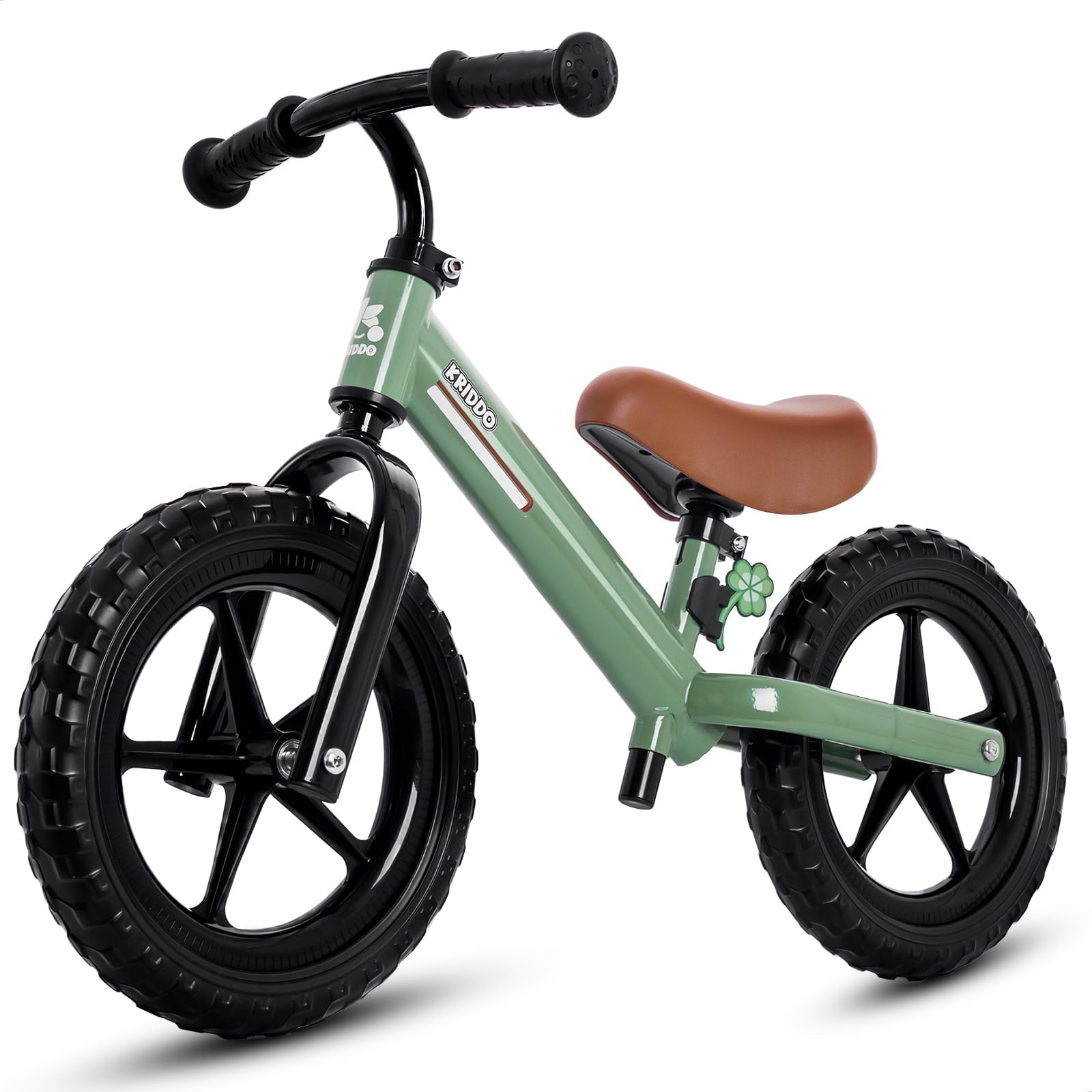
The KRIDDO stands out for its attention to personalization and smooth-rolling performance. The bike includes two cute plates — a flower and a clover — that attach under the seat, letting toddlers customize their ride. The dual-bearing wheel system reduces rolling resistance, meaning less effort per stride for little legs and longer glides across driveways and park paths.
The carbon steel frame is sturdy enough to survive multiple children, yet the bike remains manageable at a moderate weight. The seat adjusts from 14.17 to 18.5 inches, and the handlebar from 20.08 to 21.65 inches, providing a solid range for kids aged 2 to 5. The 12-inch puncture-proof tires work on tracks, grass, pavement, and even wood floors without leaving marks.
Customer reviews emphasize how easy assembly is — most people have it ready in under 10 minutes. The steel frame provides a stable ride, though the bike does weigh more than aluminum options. For families who want a strong, affordable bike with a touch of personality, the KRIDDO delivers.
Why it’s great
- Dual-bearing wheels provide noticeably smoother, lower-friction rolling
- Customizable plates under the seat appeal to toddlers’ sense of ownership
- Puncture-proof tires work across multiple surfaces without damage
Good to know
- Carbon steel frame is heavier than aluminum equivalents
- Seat clamp requires a tool for adjustment, not quick-release
6. Bobike Toddler Balance Bike

The Bobike emphasizes safety features that appeal to first-time parents. The 135-degree steering limiter prevents the handlebar from over-rotating and causing a sudden spill, a common hazard with cheap balance bikes. The fully enclosed, non-slip wheels protect little feet from getting pinched, and the low 40-pound weight limit keeps the bike small and easy to control.
The alloy steel frame feels sturdy without being overly heavy, and the ASTM F963-11 and EN71 certifications offer peace of mind. The seat adjusts to accommodate growth from age 1 up to roughly age 4. Parents describe the vintage-inspired pink color as charming, and the adjustable seat ensures the bike lasts through multiple seasons.
Assembly takes only a few minutes, though some customers note that the seller experience can be confusing if the product ships from a third-party distributor. If you want a balance bike that prioritizes safety limits and enclosed wheel protection for a very young rider, the Bobike is a strong entry-level choice.
Why it’s great
- Steering limiter prevents sharp, dangerous turns
- Enclosed wheels eliminate foot-pinch risks
- Vintage design with adjustable seat grows with the child
Good to know
- 35-pound weight limit may be outgrown quickly by heavier toddlers
- Seller sourcing can be inconsistent — verify the seller before purchasing
7. Liberry Baby Balance Bike
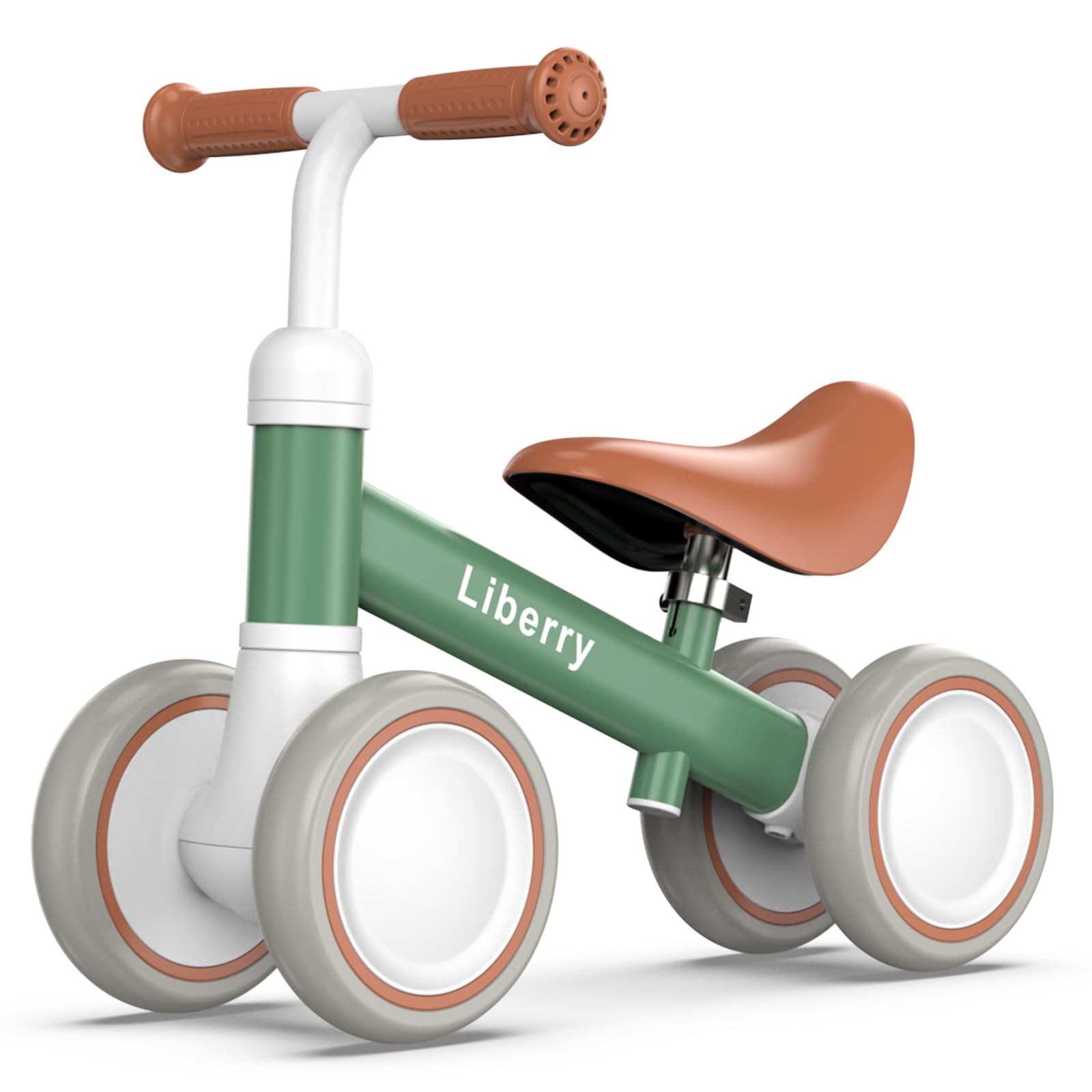
The Liberry is designed for the youngest riders — babies as young as 12 months who have just started walking. Its four-wheel base provides exceptional stability, making it nearly impossible to tip over. The closed wheels protect tiny feet, and the low 9.7-inch minimum seat height accommodates the shortest inseams. This bike is built for indoor cruising and smooth sidewalks, not rough trails.
The PU seat is adjustable from 9.7 to 11 inches, and the handlebar is made of rubber rather than foam for safer teething resistance. The EVA tires roll quietly and won’t scuff hardwood floors, a detail parents appreciate. Each bike comes with a set of letter stickers so you can personalize the frame with your child’s name.
The trade-off is clear: this bike is for the very early stage. Once your child reaches age 2.5 or develops strong balance, the four-wheel design no longer challenges their coordination the way a two-wheeler would. If your child is between 12 and 24 months, the Liberry offers a gentle, safe introduction to riding.
Why it’s great
- Four-wheel base offers maximal stability for brand-new walkers
- Closed wheels prevent foot injuries during indoor use
- Personalized letter stickers make the bike feel special
Good to know
- 4-wheel design limits balance development compared to 2-wheel alternatives
- Not suitable for uneven terrain like grass or gravel paths
FAQ
Should I get a balance bike with training wheels or a standard two-wheeler for my 2 year old?
How do I know if the bike seat is the right height for my toddler?
What is the ideal weight limit for a balance bike for a 2 year old?
Can a 2 year old use a balance bike indoors without damaging floors?
Final Thoughts: The Verdict
For most users, the balance bike for 2 year old winner is the Retrospec Cub because it combines a wide seat adjustment range, puncture-proof tires for worry-free outdoor use, and a durable alloy steel frame that survives multiple seasons. If you want the lightweight confidence of an aluminum frame, grab the banana bike LT. And for a toddler who needs extra stability while learning, nothing beats the dual-rear-wheel design of the Yvolution Y Velo Junior.