
Our readers keep the lights on and the weekend projects moving. As an Amazon Associate, I earn from qualifying purchases.
A flickering light and dead silence — that sinking feeling when the grid goes dark is exactly what a good battery backup eliminates. These lithium power stations don’t just keep the fridge running and the Wi-Fi humming; they do it silently, with zero fumes, and no wrestling a gas can in a storm. The right unit turns a blackout from a crisis into a minor inconvenience.
I’m Rikta — the co-founder and writer behind FitlyFast. I’ve spent years analyzing lithium chemistry, inverter efficiency, and charge controller performance to separate genuine long-term value from marketing fluff in the home backup space.
A quality battery backup for home power outage must balance cycle life, recharge speed, and enough AC wattage to run a refrigerator and a few lights without breaking a sweat.
How To Choose The Best Battery Backup For Home Power Outage
Home backup batteries are a long-term investment in peace of mind, so buying blindly can leave you short on runtime or stuck with a unit too heavy to move. Focus on a few hard specs before you click buy.
Battery Chemistry and Cycle Life
LiFePO4 (lithium iron phosphate) is the clear winner for home backup. It delivers 3,000 to 4,000 cycles before hitting 80% capacity, which translates to roughly a decade of daily use. Avoid older NMC (nickel manganese cobalt) chemistries — they degrade faster and pose higher thermal risk if stored indoors.
Inverter Wattage and Surge Capability
A refrigerator compressor can spike to 1,200W on startup even if it runs at 300W. Your battery inverter must handle that surge. Look for units with at least 1,800W continuous output and a surge rating of 3,000W or more. This ensures you can start a fridge, run a modem, and keep lights on simultaneously.
UPS Switchover Speed
If you plan to connect a desktop PC, network gear, or a CPAP machine, the transfer time from grid to battery matters. A sub-20ms switch (<10ms is ideal) keeps those devices running seamlessly. Slower switches cause a brief flicker that can reset routers or shut down a computer mid-work.
Quick Comparison
On smaller screens, swipe sideways to see the full table.
| Model | Category | Best For | Key Spec | Amazon |
|---|---|---|---|---|
| BLUETTI AC200L | Mid-Range | Expandable home backup | 2,400W / 3,600W surge | Amazon |
| EF ECOFLOW Delta 3 Classic | Mid-Range | Ultra-fast AC recharge | 45 min 0-80% charge | Amazon |
| Jackery Explorer 2000 v2 | Premium | Lightweight 2kWh unit | 39.5 lbs, CTB tech | Amazon |
| Anker SOLIX C2000 Gen 2 | Premium | Low standby draw | 9W standby, 58 min full | Amazon |
| DJI Power 2000 | Premium | Quiet, high-continuous power | 3,000W output, <30 dB | Amazon |
| PECRON F3000LFP | Premium | Large capacity 3kWh | 3,072Wh, 3,600W output | Amazon |
| AFERIY P210 | Mid-Range | 7-year warranty value | 2,400W / 4,800W surge | Amazon |
| DABBSSON 2000L | Mid-Range | Light 2048Wh semi-solid | 41 lbs, 3,300W boost | Amazon |
| VTOMAN Jump 600X | Budget | Entry-level + car jump start | 299Wh, 600W output | Amazon |
In‑Depth Reviews
1. BLUETTI AC200L Portable Power Station

The BLUETTI AC200L hits the sweet spot for serious home backup. Its 2,048Wh LiFePO4 battery delivers 2,400W continuous output with a 3,600W Power Lifting surge, easily starting a refrigerator compressor while powering a modem, router, and a few lamps simultaneously. The sub-10ms UPS switchover protects sensitive electronics like a desktop PC or NAS drive during a brownout.
Recharge speed sets this unit apart — you can hit 80% in just 45 minutes via AC input at 2,400W. The 30A RV port makes it a natural fit for an RV transfer switch, and the expandability to 8,192Wh with B300 or B210 batteries future-proofs the investment for multi-day outages. The included 11-port panel covers AC, USB-C 100W PD, and a 48V/8A DC port for off-grid charging.
At 61.4 pounds, this is not a toss-in-the-trunk portable, but the integrated handle and sturdy chassis make it manageable from garage to living room. The app monitors grid usage, solar input, and charge scheduling via Wi-Fi and Bluetooth. Five-year warranty from a brand with a strong track record in the category.
Why it’s great
- Fast 45-min 80% AC recharge with 2,400W input
- Expandable capacity up to 8,192Wh for extended outages
- 30A RV port enables direct transfer switch integration
- Reliable sub-10ms UPS for sensitive electronics
Good to know
- Heavy at 61.4 pounds, not for frequent carry
- Proprietary AC charging adapter may limit cable replacement
- Solar input maxes at 1,200W, which takes ~2 hours to full
2. EF ECOFLOW Portable Power Station Delta 3 Classic
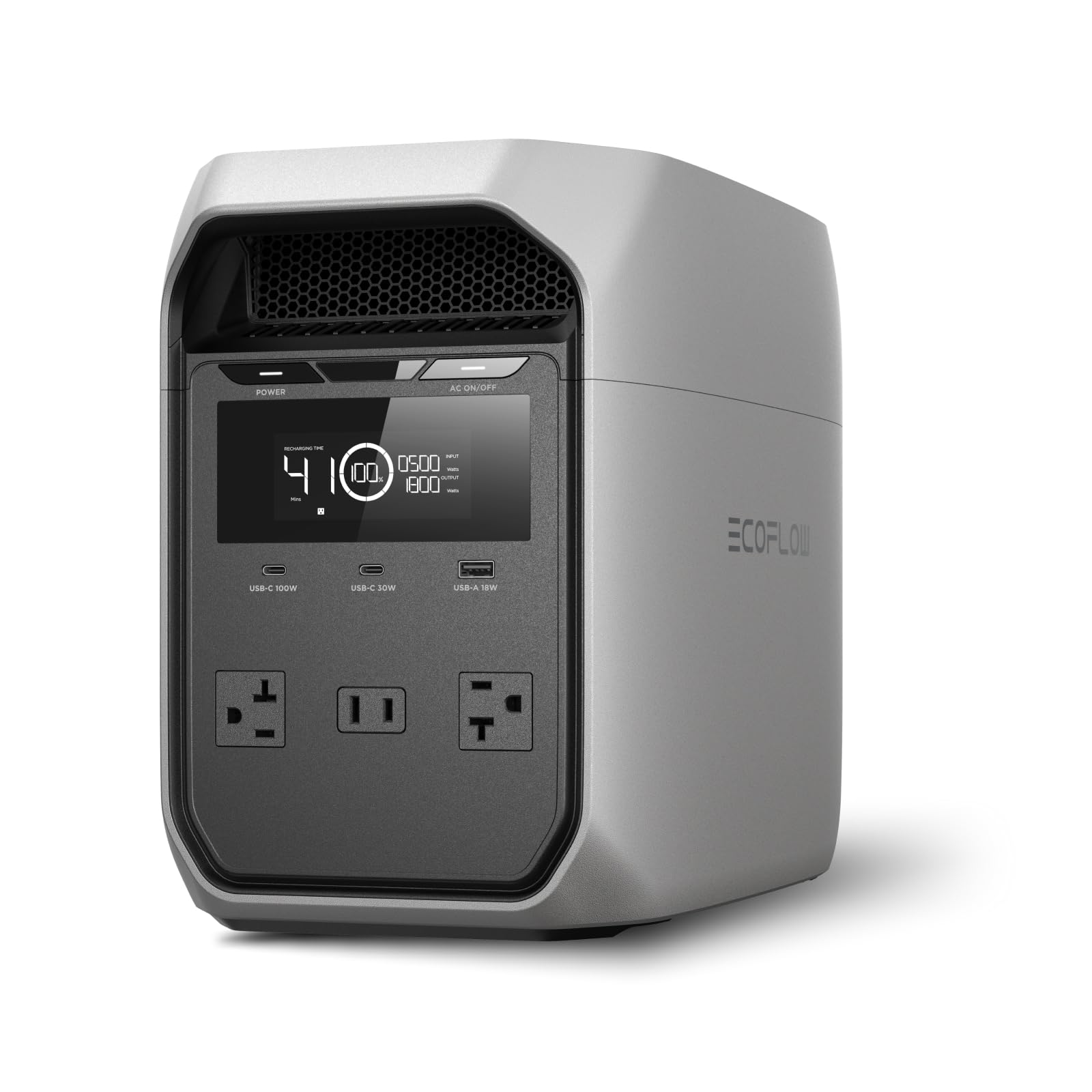
The EcoFlow Delta 3 Classic packs 1,024Wh of LiFePO4 capacity into a compact chassis with an 1,800W inverter (3,600W surge via X-Boost). What makes this unit stand out is the 45-minute 0-80% AC recharge — one of the fastest in its capacity class. For a home that sees rolling blackouts, being able to top up fully between outages is a game changer.
Build quality reflects thoughtful engineering: dual carry handles, non-skid rubber feet, a swing-up input cover, and side-oriented outlets that keep cables organized. The sub-10ms UPS is legitimate — real-world reviews confirm seamless transfer during grid flickers, protecting desktop PCs and networking gear without a hiccup. The app enables schedulable charging, storm alert mode, and self-powered mode that pulls from solar when available.
Two downsides matter for home backup. First, the Delta 3 Classic is not compatible with the Delta 2 Smart Extra Battery, so future expansion requires Delta 3 series batteries. Second, at 33 pounds (15 kg), it’s relatively light for this capacity, but still not a throw-in-a-bag portable. It will run a fridge for several hours plus lights and phones — ideal for short outages or apartment living where space is tight.
Why it’s great
- Blazing 45-min 0-80% AC recharge speed
- Legit sub-10ms UPS for PC and network gear
- Dual handles and thoughtful cable management design
- Schedulable charging via app with storm alert mode
Good to know
- Only expandable with Delta 3 series batteries
- 1,024Wh capacity limits runtime for large appliances
- No built-in 30A RV or high-voltage DC port
3. Jackery Explorer 2000 v2 Portable Power Station

Jackery’s Explorer 2000 v2 uses EV-grade CTB (Cell-to-Body) technology to achieve a 2,042Wh capacity in a 39.5-pound frame — 41% lighter and 34% smaller than typical 2kWh units. This makes it the easiest full-sized backup station to move from storage closet to living room during an outage. The 2,200W AC output handles a refrigerator, modem, lamp, and TV without issues.
AC fast charging hits 80% in 66 minutes, with an emergency super-charging mode via the app that reaches full in 102 minutes. The silent charging mode keeps the fan below 30 dB, so it won’t disturb sleep if placed in a bedroom for CPAP support. The UPS switchover at 20ms is UL1778 certified — sufficient for networking gear and medical devices, though slightly slower than the sub-10ms class leaders.
The 3 AC ports, dual USB-C (100W PD), and a single USB-A cover most needs. Real-world tests show 21+ hours of fridge runtime on a single charge. One limitation: the solar input tops out at 400W, meaning a full solar recharge takes 6+ hours. For most home backup scenarios where you have grid AC to recharge between outages, this is a non-issue.
Why it’s great
- Class-leading portability at 39.5 lbs for 2kWh capacity
- Fast 66-min 80% AC charge with silent mode option
- CTB construction provides structural rigidity and safety
- UL1778 certified UPS for medical and network devices
Good to know
- Solar input limited to 400W, slow for full off-grid recharge
- 20ms UPS is adequate but slower than sub-10ms alternatives
- No expandable battery option for future capacity growth
4. Anker SOLIX C2000 Gen 2 Portable Power Station

The Anker SOLIX C2000 Gen 2 is engineered for efficiency. Its standout spec is a 9W standby power consumption — the lowest in this lineup — which means it wastes almost nothing while waiting for an outage. Combined with a 2,048Wh LiFePO4 battery and 2,400W continuous output (4,000W peak), it can run a full-size refrigerator for 32 hours on a single charge.
Recharge speed is equally impressive: 58 minutes to full from AC. Six recharging methods include an 800W alternator input that fills the battery in 3 hours from a running vehicle — useful for hurricane evacuation scenarios. The expandable capacity with an extra battery brings total to 4kWh, extending fridge runtime to 64 hours.
At 41.7 pounds and 18.1 x 9.8 x 10.1 inches, it’s 25% lighter than similar competitors. The app provides remote monitoring and scheduling. One caveat: the fan can be audible during heavy draw, though reviews indicate it’s quieter than previous Anker generations. The 5-year warranty adds peace of mind for a premium investment.
Why it’s great
- Industry-leading 9W standby conserves battery between outages
- Full charge in 58 minutes with multiple input options
- Expandable to 4kWh for extended multi-day backup
- Compact and 25% lighter than many 2kWh competitors
Good to know
- Fan noise increases noticeably under high load
- Solar input requires compatible panels sold separately
- No built-in 30A RV port for transfer switch wiring
5. DJI Power 2000 Portable Power Station
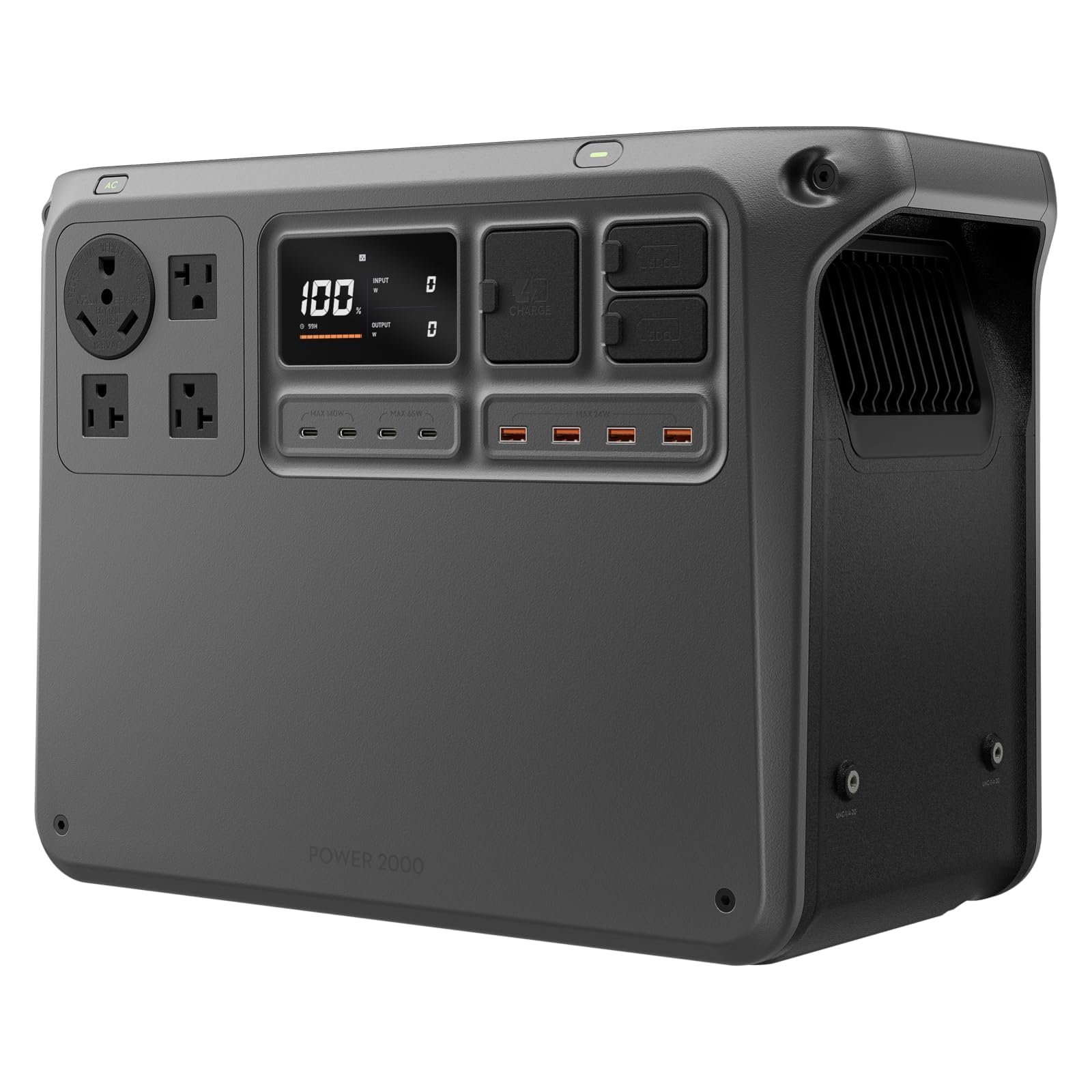
DJI brings drone-grade engineering to the home backup category. The Power 2000 delivers 3,000W continuous output (4,000W peak) from a 2,048Wh LFP battery — enough to run 99% of household appliances including kettles, space heaters, and power saws. The 0-80% recharge in 55 minutes and full charge in 90 minutes places it among the fastest in its class.
Noise performance is exceptional: <30 dB during operation, making it nearly silent. This matters for overnight use in an RV or bedroom where generator rumble would be disruptive. The UPS switchover time of <10ms is fast enough for sensitive electronics. The flame-retardant housing and sub-nano coating provide protection in wet or dusty storage conditions.
The expandability to 22.5kWh with additional batteries means this system can theoretically power essential home devices for 4-6 days. Fifteen ports including dual full SDC outputs cover multi-user scenarios. Two specific caveats: the app is required for advanced modes (no standalone LCD navigation for complex settings), and the proprietary connectors limit third-party accessory use. Five-year warranty.
Why it’s great
- Generous 3,000W continuous output runs heavy appliances
- Near-silent <30 dB operation ideal for indoor/RV use
- Ultra-fast 55-min 0-80% AC charge
- Expandable up to 22.5kWh for multi-day outage coverage
Good to know
- App required for advanced settings and monitoring
- Proprietary connectors limit aftermarket expansion options
- No built-in wheels, which would help at 48 pounds
6. PECRON F3000LFP Portable Power Station
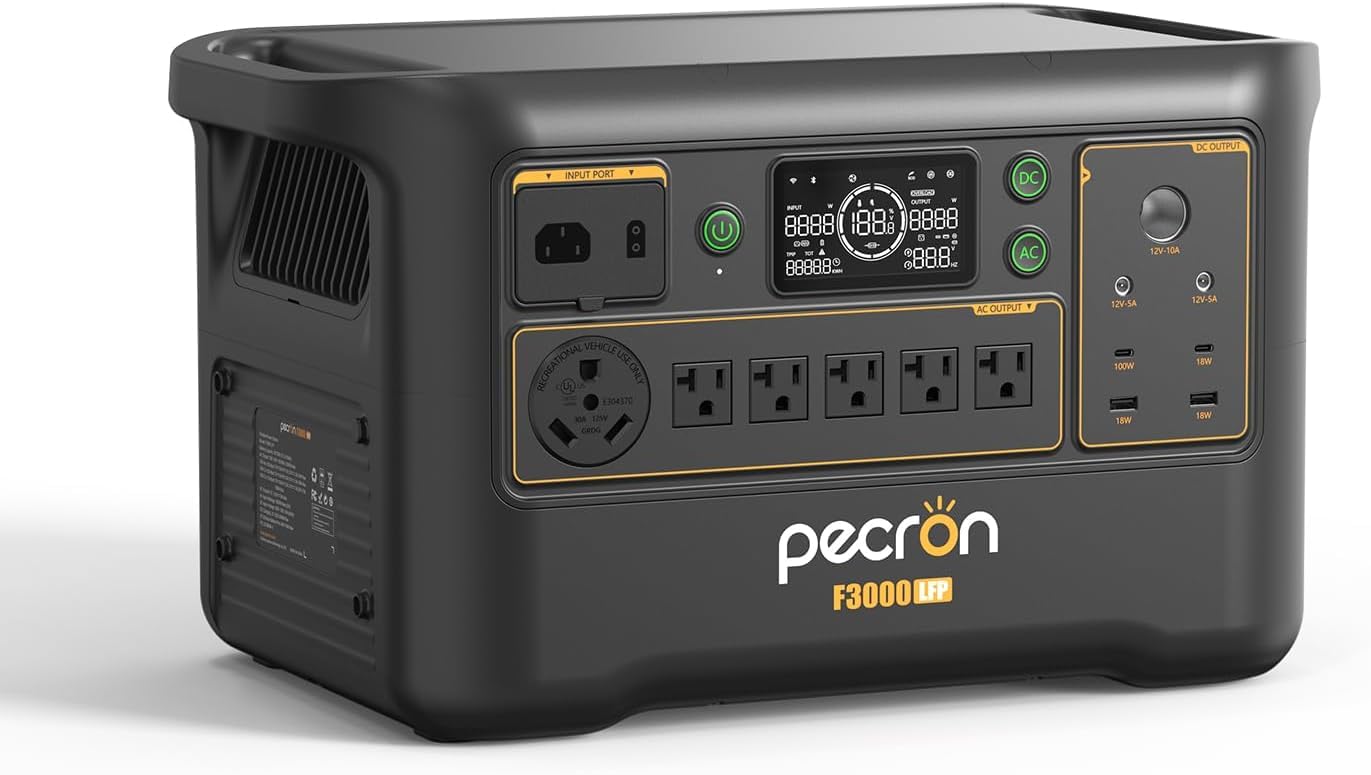
The PECRON F3000LFP offers the highest base capacity in this lineup at 3,072Wh, paired with a 3,600W pure sine wave inverter. This combination powers a refrigerator, freezer, and multiple electronics for 2-3 days without breaking a sweat. The 1,800W AC input recharges the full battery in just 2 hours, which is 30% faster than many similar-capacity units.
Thirteen ports cover six AC outlets, dual USB-C at 100W PD, two USB-A, a car port, and two DC 5525 outputs. The UPS mode switches in 8-20ms, sufficient for computer and medical device protection. The app provides real-time power monitoring and charge scheduling via Bluetooth — though not Wi-Fi, which means remote monitoring is limited to Bluetooth range.
Expandability to 10,752Wh via external battery packs makes this a serious long-duration system. The unit weighs 63.3 pounds, so it’s better placed semi-permanently than carried frequently. Solar input accepts up to 1,600W, enabling a full recharge in about 2 hours of good sun. The 2+3-year warranty (5 total) and responsive customer service add confidence for a premium buy.
Why it’s great
- 3,072Wh base capacity for multi-day appliance runtime
- Fast 2-hour full recharge at 1,800W AC input
- Expandable to 10,752Wh for extended backup scenarios
- 1,600W solar input for rapid off-grid replenishment
Good to know
- Heavy at 63.3 pounds, not easily portable
- App connects only via Bluetooth, no Wi-Fi remote access
- Fan noise noted during high charging rates
7. AFERIY 2048Wh Portable Power Station P210

The AFERIY P210 delivers 2,048Wh of LiFePO4 capacity with a 2,400W pure sine wave inverter (4,800W surge) at a price point that undercuts most competitors by a wide margin. The 10-year battery life (3,500+ cycles) paired with an industry-leading 7-year extended warranty makes this a low-risk long-term investment for home backup.
Noise performance is exceptional: <30 dB at full load and as low as 16 dB under normal load, meaning you can place this in a bedroom without sleep disruption. The <10ms UPS switchover protects computers and medical equipment during outages. Sixteen ports — including six AC outlets, four USB-C (one at 100W PD), and an XT60 300W port — handle large device loads simultaneously.
The 0-100% AC recharge takes about 2 hours, and the app enables energy monitoring and scheduling. At 54 pounds it’s not lightweight, but the handles are well-positioned. One limitation: the solar input maxes at 500W, which is lower than some competitors, so full solar recharge takes longer. Overall, this is the strongest value proposition for someone wanting a full-featured 2kWh station without premium pricing.
Why it’s great
- Exceptional 7-year warranty at a mid-range price
- Near-silent <30 dB operation at full load
- <10ms UPS protects sensitive electronics
- 16-port panel with six AC and 100W USB-C PD
Good to know
- Solar input limited to 500W, slower off-grid recharge
- Heavy at 54 pounds, no wheel attachment available
- LiFePO4 cannot charge below freezing temperature
8. DABBSSON Portable Power Station 2000L
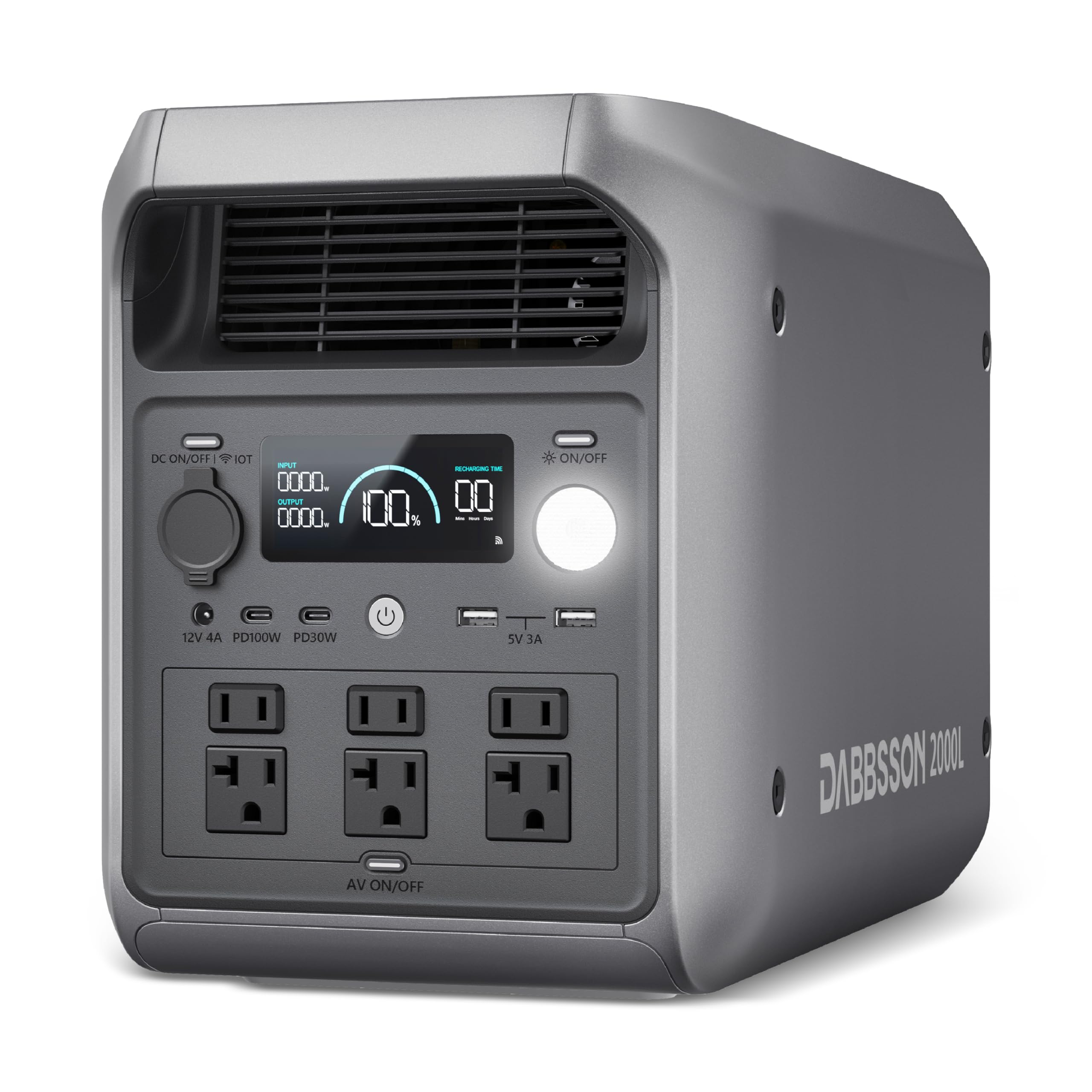
The Dabbsson 2000L uses semi-solid-state LiFePO4 cells to achieve a 2,048Wh capacity in a 41-pound chassis — one of the lightest 2kWh stations available. The semi-solid chemistry offers higher thermal stability than standard LFP, and the UL94-V0 flame-retardant housing provides an extra safety layer for indoor use. The 4,000+ cycle rating means this battery should last well over a decade.
The 2,200W rated output handles most appliances, with Power Boost surging to 3,300W for startup loads like fridge compressors. The six AC outlets are more than most competitors, allowing you to run multiple devices without daisy-chaining. AC fast charge hits 100% in just 1 hour, and the 800W MPPT solar input enables a full solar recharge in about 3 hours with adequate panels.
The <15ms EPS (Emergency Power Supply) switch is fast enough for computers and networking gear, though slightly slower than the sub-10ms class leaders. The app supports remote monitoring and charging schedules via Wi-Fi and Bluetooth. One notable con: the plastic chassis feels slightly less robust than metal competitors despite the UL flame rating. Five-year warranty with registration adds peace of mind.
Why it’s great
- Extremely light 41 pounds for 2,048Wh capacity
- Semi-solid LiFePO4 chemistry for enhanced safety
- 1-hour full AC charge with 800W solar MPPT input
- Six AC outlets for simultaneous appliance connections
Good to know
- Plastic housing feels less premium than metal chassis models
- UPS switch at 15ms is adequate but not the fastest
- Fan noise audible during high load, though not excessive
9. VTOMAN Jump 600X Portable Power Station

The VTOMAN Jump 600X is a hybrid device that combines a 299Wh portable power station with a car jump starter — a genuinely unique value proposition for roadside emergencies. The 600W inverter (1,200W surge) runs CPAP machines for 10+ hours, charges phones, laptops, and a mini fridge for several hours, and the jump start port can fire up a Dodge Ram even at 9% battery.
Capacity is expandable to 939Wh with a separate VTOMAN extra battery, though the base 299Wh is best viewed as a supplemental device rather than a primary home backup. The LiFePO4 chemistry delivers 3,000 cycles, and the regulated 12V DC outputs (120W total) are ideal for car refrigerators and tire inflators. The 2-in-1 form factor eliminates the need to carry a separate jump pack in the trunk.
AC recharge takes about 3 hours, solar recharge around 5-6 hours with a 110W panel. Pass-through charging allows simultaneous device power while recharging the unit. At 14.6 pounds and a compact 10.2 x 8.7 x 8.6 inches, it fits under a car seat or in a trunk corner. This is not for whole-home backup, but for apartment dwellers or commuters wanting a versatile emergency companion, it’s a smart entry point.
Why it’s great
- Unique 2-in-1 power station and car jump starter
- Compact and light at 14.6 pounds for trunk storage
- LiFePO4 battery with 3,000-cycle lifespan
- Regulated 12V DC output for automotive accessories
Good to know
- 299Wh capacity is insufficient for full-home backup
- Jumper cables sold separately despite jump start feature
- Slow AC recharge at 3 hours compared to larger units
FAQ
Can I run a refrigerator during a power outage with these batteries?
How do I charge the battery if the power is out for days?
Is LiFePO4 battery safer than traditional lithium-ion for indoor use?
Final Thoughts: The Verdict
For most users, the battery backup for home power outage winner is the BLUETTI AC200L because it combines fast 45-minute recharge, expandable capacity up to 8,192Wh, and a 30A RV port for seamless whole-home transfer. If you want ultra-portability for moving between rooms, grab the Jackery Explorer 2000 v2. And for budget-conscious buyers needing a versatile emergency companion, nothing beats the VTOMAN Jump 600X.