
Our readers keep the lights on and the weekend projects moving. As an Amazon Associate, I earn from qualifying purchases.
Beets are heavy feeders that require a precise balance of phosphorus and potassium to grow large, sweet, and bulbous roots — too much nitrogen and you get leafy tops with tiny, woody bulbs. The wrong fertilizer doesn’t just underwhelm; it actively ruins your harvest.
I’m Rikta — the co-founder and writer behind FitlyFast. I’ve spent years analyzing soil amendment formulations and researching how specific N-P-K ratios translate into real root crop performance for home gardeners.
After reviewing dozens of options based on phosphorus content, organic certification, and proven results from growers, this guide breaks down the best beet fertilizer choices to help you pick the perfect match for your garden’s needs.
How To Choose The Best Beet Fertilizer
Beets are root crops, and their success hinges on the soil’s phosphorus and potassium levels. Too much nitrogen fuels leafy top growth at the expense of the bulb, leading to small, misshapen, or woody roots. Selecting the right formula means understanding N-P-K ratios, organic versus synthetic sources, and the specific minerals that support sugar development and bulb density.
N-P-K Ratio: The Middle and End Numbers Matter Most
For beets, the second and third numbers in the N-P-K ratio are your primary concern. Look for fertilizers where the middle (phosphorus) and last (potassium) numbers are equal to or higher than the first (nitrogen). A 5-10-10 blend is classic because it provides just enough nitrogen for leafy growth while prioritizing root and bulb formation. Ratios like 0-46-0 (pure phosphorus) or 0-0-60 (pure potassium) are useful for targeted soil corrections but are best used after a soil test confirms your precise deficiency.
Organic vs. Synthetic: Microbes and Soil Health
Organic fertilizers, such as worm castings, bone meal, fish meal, and kelp, feed the soil microbiome rather than just the plant. This matters for beets because healthy microbial activity helps break down organic matter into the slow-release nutrients roots crave over the long growing season. Synthetic options like high-purity potassium sulfate provide immediate, precise boosts but can disrupt soil biology if over-applied. For most home gardens, an OMRI-listed organic blend is the smartest starting point.
Calcium and Micronutrients: Bulb Density and Rot Prevention
Beets are susceptible to internal brown spot and poor bulb density when calcium is low. A fertilizer containing added calcium, either from gypsum, bone meal, or a calcium supplement, helps prevent these issues. Similarly, boron and iron support sugar transport and leaf health, which directly influences root size and sweetness. Blends that include humic acids or mycorrhizal fungi further improve nutrient uptake efficiency.
Quick Comparison
On smaller screens, swipe sideways to see the full table.
| Model | Category | Best For | Key Spec | Amazon |
|---|---|---|---|---|
| FoxFarm Happy Frog | Granular | Bulb density + calcium | 5-7-3 + Mycorrhizae | Amazon |
| Down To Earth 4-6-2 | Granular | Organic soil building | 4-6-2 OMRI listed | Amazon |
| Cz Garden TSP 0-46-0 | Granular | Phosphorus correction | 0-46-0 high purity | Amazon |
| Cz Garden Potash 0-0-60 | Granular | Potassium boost | 0-0-60 soluble | Amazon |
| Cz Garden 5-10-10 | Granular | Balanced tomato/beet feed | 5-10-10 + Iron | Amazon |
| Farmer’s Secret Liquid | Liquid | Quick root boost | 3-8-7 liquid conc. | Amazon |
| Back to the Roots Worm | Granules | Gentle soil amendment | Slow release N | Amazon |
In‑Depth Reviews
1. FoxFarm Happy Frog Tomato & Vegetable Fertilizer

FoxFarm’s Happy Frog formula is engineered specifically for vigorous feeders, with a middle-number-heavy 5-7-3 ratio that delivers the phosphorus beets need for bulb initiation without overwhelming them with nitrogen. The inclusion of calcium directly targets blossom end rot, a common issue when beets are grown in calcium-deficient soils. Mycorrhizal fungi colonize root systems to increase water and nutrient uptake, making this a complete solution for dense, sweet bulbs.
Growers consistently report that this fertilizer corrects non-producing tomato plants, and the same phosphorus-driven logic applies to beet root formation. The granular formula is easy to side-dress or mix into the topsoil at planting time, and it releases nutrients steadily without burning roots. Users praise its lack of strong odor compared to fish-based organics, which is a practical bonus for raised beds near patios.
While it is priced higher per pound than basic single-source fertilizers, the balanced micronutrient package means you won’t need separate calcium or phosphorus supplements. For serious home gardeners who want one bag that covers beets, peppers, and tomatoes through the entire season, this delivers the most reliable results.
Why it’s great
- Calcium prevents blossom end rot in beets
- Mycorrhizal fungi boost root efficiency
- No strong smell, suitable for raised beds
Good to know
- Premium cost per pound
- Not suitable if you need a high-nitrogen top dress
2. Down To Earth All Natural 4-6-2 Tomato & Vegetable Mix

Down To Earth’s 4-6-2 mix is a thoughtfully blended organic fertilizer that sources phosphorus from rock phosphate and fish bone meal, potassium from langbeinite and greensand, and nitrogen from blood and feather meals. This diversity of organic inputs feeds soil bacteria that in turn make nutrients available to beet roots throughout the growing cycle. The gentle 4-6-2 ratio avoids the nitrogen spike that can cause forked or hairy beet roots.
OMRI listing confirms compliance with organic production standards, making it a trusted choice for certified organic gardens. User reports note that even pale, flimsy tomato plants showed visible improvement within two weeks, and the same response applies to sluggish beet seedlings. The 5-pound box lasts a full season for a medium-sized bed, and the resealable packaging keeps the granules fresh between uses.
One trade-off is that the fish and blood meal content can produce a noticeable smell immediately after application, though it dissipates within a few days. For gardeners who prioritize building long-term soil health with a diverse microbial food source over instant synthetic results, this fertilizer is an excellent match.
Why it’s great
- 8-ingredient organic blend feeds soil microbes
- OMRI certified for organic production
- Gentle ratio won’t burn beet roots
Good to know
- Noticeable fishy smell when fresh
- Slow release may not suit immediate deficiency fixes
3. Farmer’s Secret Tomato Booster Fertilizer 3-8-7
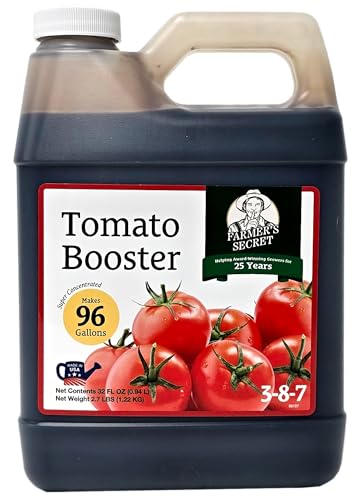
Farmer’s Secret takes a liquid approach with a super-concentrated 3-8-7 ratio that delivers phosphorus and potassium almost immediately to the root zone. This makes it ideal for mid-season corrections when soil tests reveal a phosphorus deficiency that granular fertilizers would take weeks to address. The added humic acid improves nutrient chelation, helping beet roots absorb more from the soil solution. Iron and calcium in the formula further support leaf health and prevent internal browning.
User reports describe tomato production increasing by 40% after one application, and a similar effect on beet bulb size is plausible given the high phosphorus and potassium content. The mixing ratio of just two teaspoons per gallon makes the 32-ounce bottle go a long way — expect it to cover a full season of weekly feedings for a large raised bed. The liquid form also allows for precise drip irrigation application.
Be aware that liquid fertilizers require more frequent application than granular options, and some users have noted needing a separate calcium supplement to fully prevent blossom end rot. It is also the most expensive option per use if you have a very large garden, though the concentration offsets that cost for small to medium spaces.
Why it’s great
- Instant phosphorus and potassium availability
- Super concentrated — 2 tsp per gallon
- Humic acid boosts nutrient uptake
Good to know
- Requires weekly application
- Some users add separate calcium supplement
4. Cz Garden 5-10-10 Tomato & Vegetable Fertilizer

Cz Garden’s 5-10-10 formula is a classic root-feeding blend that provides exactly the phosphorus and potassium balance beets demand without the high first number that encourages leafy overgrowth. The addition of 2% iron supports chlorophyll production and sugar transport, which directly correlates to sweeter, denser bulbs. This granular formula is made in the USA and comes in a resealable 4-pound pouch that keeps the product fresh for seasonal use.
Growers using this fertilizer report huge tomatoes and peppers, and the same phosphorus-driven logic applies to beet root formation. It’s an excellent all-purpose option if you’re growing beets alongside other fruiting vegetables. The instructions recommend 1-2 tablespoons per plant, applied once every two weeks during fruiting, which makes it easy to use without guesswork. Cost per pound is very competitive among balanced blends.
The main limitation is that it lacks added calcium or mycorrhizal fungi, so if your soil is known to be calcium-deficient, you may need to supplement separately. It also contains synthetic components rather than being fully organic, which matters if you’re maintaining a certified organic garden.
Why it’s great
- Perfect 5-10-10 ratio for root crops
- Added iron for sweeter beets
- Budget-friendly cost per pound
Good to know
- No added calcium or fungi
- Not OMRI certified organic
5. Cz Garden Triple Super Phosphate 0-46-0

Triple Super Phosphate (TSP) is a targeted phosphorus-only fertilizer with a 0-46-0 analysis that delivers one of the highest concentrations of available phosphate on the market. For beets grown in soils where phosphorus is the limiting factor — often indicated by stunted root growth and purplish leaf undersides — this product corrects the deficiency rapidly. The granular form is water-soluble enough to work into the root zone within a few waterings, though it’s slower than liquid phosphoric acid.
User reports from small farms show that using this alongside a separate potassium source improved fruit size in crop rotations involving beets. It’s also useful as a pre-plant soil amendment for beds that have been heavily cropped without phosphorus replenishment. The 5-pound resealable pouch is practical for spot treatments, and one bag can cover over 3,000 square feet of soil, making it extremely cost-efficient for larger plots.
Because this is a single-nutrient product, it should not be used as a standalone beet fertilizer unless you have precise soil test results confirming phosphorus deficiency. Over-application without balancing potassium and micronutrients can lock up other elements, so use it as a corrective tool rather than a general feed.
Why it’s great
- Extremely high 0-46-0 phosphate content
- Cost-effective for large areas
- Fast-acting granule formula
Good to know
- Requires soil test before use
- Must balance with potassium and calcium
6. Cz Garden Muriate of Potash 0-0-60

Muriate of Potash (MOP) is a concentrated potassium source with a 0-0-60 analysis that supports sugar synthesis and water regulation in beet roots. Potassium is directly tied to bulb firmness and sugar content — beets grown with adequate potassium are sweeter and store longer. This product is made in the USA from high-purity ingredients and is water-soluble for quick uptake. The 5-pound resealable pouch makes it easy to apply in controlled amounts.
Growers report that using this fertilizer in combination with a balanced base feed corrected poor fruit set in fruit trees, and the same logic applies to beet bulb development. It’s particularly useful in sandy soils that tend to leach potassium quickly, or for second-season plantings where previous crops have drawn down potassium reserves. Small farm operators appreciate the flexibility of adjusting potassium independently of nitrogen and phosphorus.
As a single-nutrient supplement, MOP must be used with caution. Over-application can lead to chloride sensitivity in some soil types, and it should always be paired with adequate phosphorus and calcium. A soil test is strongly recommended before use, as unnecessary potassium can create imbalances that harm root development.
Why it’s great
- High-purity 0-0-60 potassium concentrate
- Boosts sugar content and bulb firmness
- Excellent for sandy, leached soils
Good to know
- Requires soil test to avoid imbalance
- Contains chlorides, sensitive soils may react
7. Back to the Roots Organic Worm Castings

Back to the Roots worm castings are a gentle, no-burn soil amendment made from pure vermicompost. Unlike synthetic fertilizers, worm castings improve soil structure, water retention, and microbial diversity — all of which benefit beet root development over the long term. The nutrient content is mild and variable, but the real value is in the beneficial microbes that protect seedlings from soil-borne pathogens and slowly release nutrients as the worms’ digestion byproducts break down further.
Users report that this product holds more moisture than typical amendments, which can be an advantage in sandy soils but requires caution in heavy clay to avoid waterlogging. It works exceptionally well as a seed-starter amendment or a top-dress for established beet plants during their vegetative phase. The 5-pound bag is lightweight and easy to handle, and the resealable packaging keeps the castings from drying out.
Because worm castings are relatively low in concentrated phosphorus and potassium, they are best used as a soil conditioner alongside a targeted fertilizer rather than as a standalone beet feed. For gardeners looking to transition to fully organic soil management, this is an excellent starting point, but you will likely need a phosphorus or potassium supplement to achieve maximum bulb size.
Why it’s great
- Zero risk of burning roots
- Improves soil structure and water retention
- Inoculates soil with beneficial microbes
Good to know
- Low phosphorus and potassium concentration
- Holds moisture — use carefully in clay soil
FAQ
What N-P-K ratio is best for growing beets?
Can I use tomato fertilizer on beets?
How often should I fertilize beets during the growing season?
Final Thoughts: The Verdict
For most users, the best beet fertilizer winner is the FoxFarm Happy Frog Tomato & Vegetable Fertilizer because its calcium and mycorrhizal fungi package addresses the two most common roadblocks to bulb development — rot and poor nutrient uptake. If you want an OMRI-listed organic blend that builds long-term soil health, grab the Down To Earth 4-6-2. And for mid-season phosphorus corrections where you need results fast, nothing beats the Farmer’s Secret Liquid 3-8-7.