
Our readers keep the lights on and the weekend projects moving. As an Amazon Associate, I earn from qualifying purchases.
The right adhesive for rubber does more than stick — it flexes, seals against moisture, and survives vibration without turning brittle. Most people grab a tube of superglue and watch the repair crack apart within days because they skipped the neoprene or urethane chemistry that rubber actually requires.
I’m Rikta — the co-founder and writer behind FitlyFast. I’ve spent years analyzing adhesive formulations, studying real-world failure modes from tire shops to wader repairs, and cross-referencing ASTM peel strength data to separate temporary fixes from permanent welds.
This guide cuts through the confusion to break down the top formulations by use-case strength, cure time, and material compatibility — so you walk away knowing exactly which adhesive for rubber fits your job without wasting money on a tube that lets go.
How To Choose The Best Adhesive For Rubber
Rubber’s natural elasticity and low surface energy make it one of the hardest materials to bond permanently. A real rubber adhesive must handle flex, temperature swings, and moisture without delaminating. Here are the three criteria that matter most when choosing your tube or can.
Base Chemistry — Neoprene, Urethane, or Vulcanizing
Neoprene contact adhesives (like S-18) are the go-to for bonding rubber to metal, wood, or fabric because they remain flexible after cure and resist oil and water. Urethane formulations (like Aquaseal) excel on neoprene and wader material, creating a stretchy, abrasion-resistant seal. Vulcanizing fluid chemically cross-links with tire rubber for an air-tight, permanent repair. Cyanoacrylate and epoxy often fail on rubber because they cure rigid and crack under movement.
Application Environment — Indoor, Outdoor, and Submerged
If your repair lives outside or gets wet, water-resistance is non-negotiable. Urethane and neoprene adhesives handle submersion well; construction adhesives like Gorilla Max Strength survive rain but aren’t designed for constant immersion. For tire repairs, vulcanizing fluid must be paired with a patch or plug that creates a mechanical lock. Indoor furniture and shoe fixes can use lower-cost neoprene or specialized shoe glue without needing marine-grade waterproofing.
Cure Time and Workability
Fast-setting options (3–5 minutes for vulcanizing fluid) suit shop environments where speed matters. Contact adhesives often require a 10–15 minute open-air drying phase before mating surfaces — rushing this step causes weak bonds. Urethane sealants like Aquaseal need a full 2-hour cure to reach full strength but allow a longer adjustment window. For large surfaces, spray adhesives offer up to 60 minutes of repositioning time, which is crucial for laminating rubber sheets to substrates.
Quick Comparison
On smaller screens, swipe sideways to see the full table.
| Model | Category | Best For | Key Spec | Amazon |
|---|---|---|---|---|
| Smooth-On SIL-Poxy | Specialty Silicone | Silicone-to-silicone bonding | Flexible RTV silicone gel | Amazon |
| 3M Hi-Strength 94 ET | Spray Contact | Large-surface lamination | 19.75 oz can, 60-min open time | Amazon |
| Gear Aid Aquaseal .75oz | Urethane Sealant | Neoprene wader repair | Flexible urethane, 2-hr cure | Amazon |
| Gorilla Max Strength Construction Adhesive | Hybrid Paste | Gap-filling outdoor jobs | Crystal clear, 24-hr full cure | Amazon |
| RH Adhesives S-18 | Neoprene Contact | Rubber-to-metal bonding | Water-resistant, 24-hr cure | Amazon |
| StrongBond Shoe Glue | Flexible Liquid | Footwear sole repair | 100 ml, waterproof, clear-drying | Amazon |
| TECH Chemical Vulcanizing Fluid | Vulcanizing Cement | Tire patch and plug bonding | 8 oz, fast-drying 3–5 min | Amazon |
In‑Depth Reviews
1. Smooth-On SIL-Poxy Rubber Silicone Adhesive
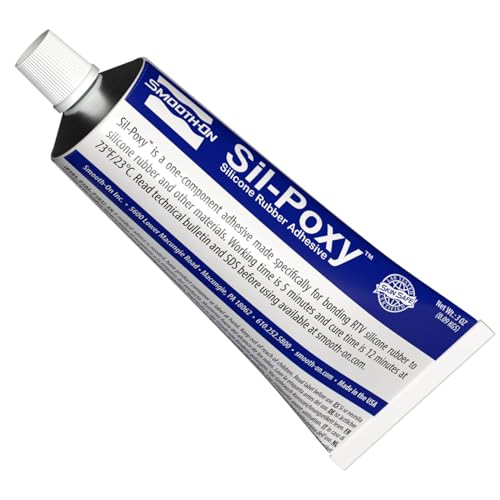
This is the only adhesive on the list specifically engineered for bonding silicone to silicone — a notoriously difficult task because most glues simply peel off elastomeric surfaces. SIL-Poxy is a flexible RTV silicone that chemically welds torn silicone molds, prosthetics, mermaid tails, and special effects pieces, creating a bond that stretches and returns without cracking. Users report seamless, invisible repairs that stay intact through repeated flex cycles, making it a category of its own for silicone materials.
The gel consistency stays where you put it and cures to a clear finish that blends into most silicone parts. It handles moisture, sunlight, and heat up to around 83°F before becoming slightly unstable, so avoid leaving bonded parts in a hot car in direct summer sun. The cure time is a full 24 hours, meaning you need patience to reach the final tear strength.
One trade-off is the potent odor — you must wear a respirator in a ventilated area during application. The 0.3-ounce tube is small but concentrated; a single tube stretches surprisingly far for small repairs, while larger projects (like a full costume) may need 2–3 tubes. For anyone working with silicone, this is the only real option that delivers a genuine elastomeric weld.
Why it’s great
- Only true silicone-to-silicone weld that stays flexible
- Clear, invisible bond on most silicone parts
- Weather, moisture, and UV resistant after full cure
Good to know
- Strong fumes require a respirator and good ventilation
- Full 24-hour cure before reaching peak bond strength
- Performance degrades above 85°F ambient temperature
2. 3M Hi-Strength 94 ET Spray Adhesive Glue
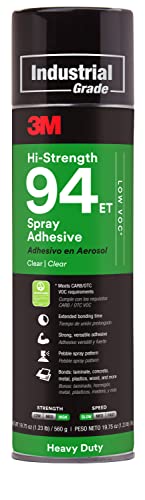
When you need to bond rubber sheet to a large surface like a van wall, foam panel, or laminate countertop, 3M’s Hi-Strength 94 ET delivers industry-standard contact adhesion in a spray format. It offers an exceptionally long open time of up to 60 minutes, giving you room to reposition substrates before the tack sets — a total game-changer for tricky alignments compared to fast-drying contact cements that lock instantly.
The aggressive tack grabs wood, metal, rubber, carpet, and many plastics on contact after the recommended 30-minute drying period. Users have successfully adhered foam soundproofing to plastic in freezing conditions, demonstrating its temperature resilience. The can is GREENGUARD certified and low VOC, which helps in enclosed workshop spaces, though the smell is still quite strong — wear a respirator and ventilate.
One note: this is not the adhesive for small repairs or point-bonding like fixing a shoe sole or a tire plug. It’s optimized for large-surface laminations and upholstery work, and the spray pattern can overspray onto surrounding surfaces if you’re not careful with masking. A single can lasts roughly 18 months for light hobbyist use, but heavy shop work will drain it faster. If your project involves a large area, this is the most efficient option available.
Why it’s great
- 60-minute open time allows careful repositioning
- Bonds well in cold temperatures and on diverse materials
- Low VOC and GREENGUARD certified for indoor use
Good to know
- Not designed for small-point repairs or fine tip work
- Requires a respirator and ventilation during spray
- Overspray can affect adjacent surfaces without masking
3. Gear Aid Aquaseal .75oz Waterproof Sealant Clear Adhesive Neoprene

Aquaseal is the quiet legend of the wader-and-wetsuit world — a flexible urethane adhesive that permanently bonds neoprene, rubber, nylon, and vinyl with a waterproof seal that survives full submersion. Hunters and anglers rely on it to fix cracked waders, leaky boot seams, and torn drysuit cuffs, often getting years of life from a single tube. The clear-drying, abrasion-resistant finish remains flexible enough to stretch with the base material without delaminating.
Unlike neoprene contact adhesives that require a dry-time window before assembly, Aquaseal is applied directly to the tear or seam and sets in about 2 hours to a tack-free state. Users report successfully sealing four separate cracks in rubber waders and surviving an entire duck season without a single leak. It’s also effective on rain boots, inflatable boats, and tent seams, though it’s not designed for large-area laminations.
The 0.75-ounce tube is small, and for larger repairs you may need multiple tubes. The urethane formula requires careful storage — if the tube is left open or exposed to moisture, the sealant can harden in the nozzle. For anyone who needs a stretchable, waterproof seam sealer for outdoor rubber goods, Aquaseal is the proven benchmark.
Why it’s great
- Flexible urethane bond that moves with neoprene and rubber
- Truly waterproof — survives full submersion and extreme temps
- Relatively fast 2-hour cure time for outdoor repairs
Good to know
- Small tube size limits use for larger projects
- Urethane can harden in nozzle if stored improperly
- Not ideal for rubber-to-metal or load-bearing bonds
4. Gorilla Max Strength Construction Adhesive
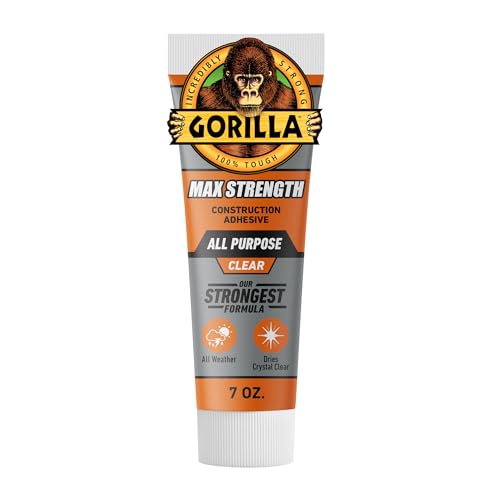
Gorilla’s Max Strength Construction Adhesive in clear is a versatile hybrid paste that bonds rubber to wood, metal, stone, or foam with a surprisingly discreet finish. The formula is two times stronger than Gorilla’s own Heavy Duty Construction Adhesive, and users have reported withstanding car interior heat to hold magnets on armrest latches and creating a waterproof seal on an outdoor wood air conditioner cover. The crystal-clear drying means no ugly glue lines on visible repairs.
The paste consistency is thick and gap-filling, which is ideal for uneven surfaces where a liquid adhesive would run off. It bonds in about 30 seconds and remains repositionable for roughly 5 minutes — long enough to align parts but not as generous as some contact adhesives. Full cure takes 24 hours, and clamping is recommended during that period because the initial tack is not strong enough to hold heavy, sliding components.
The big downside is the squeeze tube’s wide nozzle — users consistently note that the applicator hole is too large, causing blobs of glue rather than a controlled bead. You can manage this by applying carefully, but it adds friction to delicate work. For heavy-duty, multi-material bonding where appearance matters, this is a reliable mid-range contender.
Why it’s great
- Dries crystal clear for invisible repairs on visible surfaces
- Gap-filling paste works well on uneven or porous substrates
- Strong waterproof bond that survives outdoor and heat exposure
Good to know
- Wide nozzle makes it hard to apply a controlled small bead
- Needs clamping for 24 hours to prevent parts from sliding
- Not flexible enough for high-movement rubber applications
5. RH Adhesives S-18 All-Purpose Adhesive
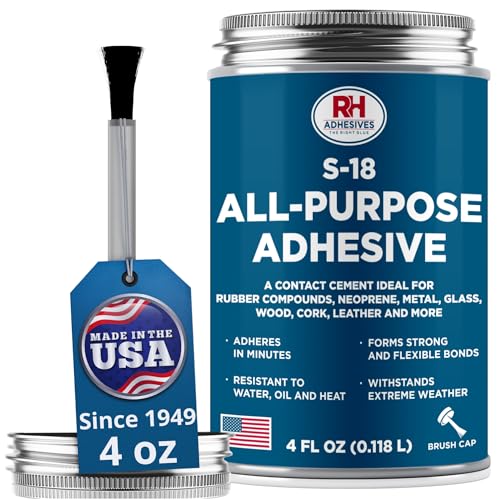
The S-18 is a classic neoprene-based contact adhesive that has been manufactured in the United States since 1949, and its formula reflects decades of refinement for rubber-to-metal and rubber-to-wood bonding. Users have successfully used it to glue SBR rubber and neoprene to metal parts, repair leather boot soles, and fix neoprene hail car covers. It forms a strong, flexible film with good oil resistance and excellent peel strength, making it a solid choice for DIY projects and commercial applications.
This is a true contact cement — you apply it to both surfaces, let it dry for 10–15 minutes until tacky, then press them together. The resulting bond is water-resistant and performs well across varied temperatures. Users caution that the glue can gum up at the can opening if exposed to air, and the setting time accelerates in heat, so work in moderate conditions and seal the can tightly after each use.
A notable limitation: one user reported that the bond failed in intense heat and rain when used on an outdoor car cover, suggesting it’s best suited for indoor or sheltered applications. The 4-ounce can is generous for small repairs, and for larger projects the S-18 line offers bigger sizes. For budget-conscious DIYers who need a proven neoprene adhesive, this is a reliable American-made option.
Why it’s great
- Proven neoprene formula for rubber-to-metal bonding
- Water-resistant and flexible with good oil resistance
- American-made with decades of manufacturing history
Good to know
- May fail under direct outdoor heat and heavy rain
- Gumming at can opening can occur with repeated use
- Requires planned 10-15 minute drying before assembly
6. StrongBond Shoe Glue, 100ML Professional Grade Super Glue for Shoes
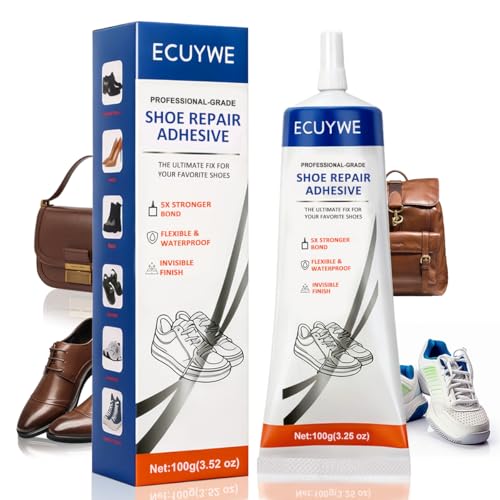
StrongBond is a purpose-specific adhesive for footwear fixes, formulated to remain flexible after curing so it moves with the sole rather than cracking apart. The 100-milliliter bottle uses a precision applicator tip that lets you lay a thin, controlled bead along the edge of a separated sole or heel, and the included rubber bands and spatulas help clamp the repair while it sets. Users report strong bonds that hold up to regular walking after several days of wear.
The formula dries clear, which is critical for shoe repairs where visible glue lines look sloppy. It bonds to leather, rubber, EVA, canvas, PVC, and fabric, covering essentially every material found in modern footwear. The fast-setting behavior means you have only a short window to get the alignment right — follow the instruction to heat the area with a hair dryer first for better penetration on thick rubber soles.
The main caution is durability over time — initial reviews are strong, but the long-term performance at 6–12 months is less documented compared to established brands like Barge or Aquaseal. For quick, affordable fixes on everyday shoes, boots, and sneakers, StrongBond is a solid entry-level choice that beats throwing away a perfectly good pair of footwear.
Why it’s great
- Remains flexible after curing for moving shoe parts
- Precision tip applicator for controlled, no-mess use
- Includes rubber bands and spatulas for clamping setup
Good to know
- Long-term durability beyond 6 months not yet proven
- Fast setting leaves little time for alignment adjustment
- Low viscosity can run on vertical surfaces if over-applied
7. TECH Chemical Vulcanizing Fluid, 8 Fl Oz
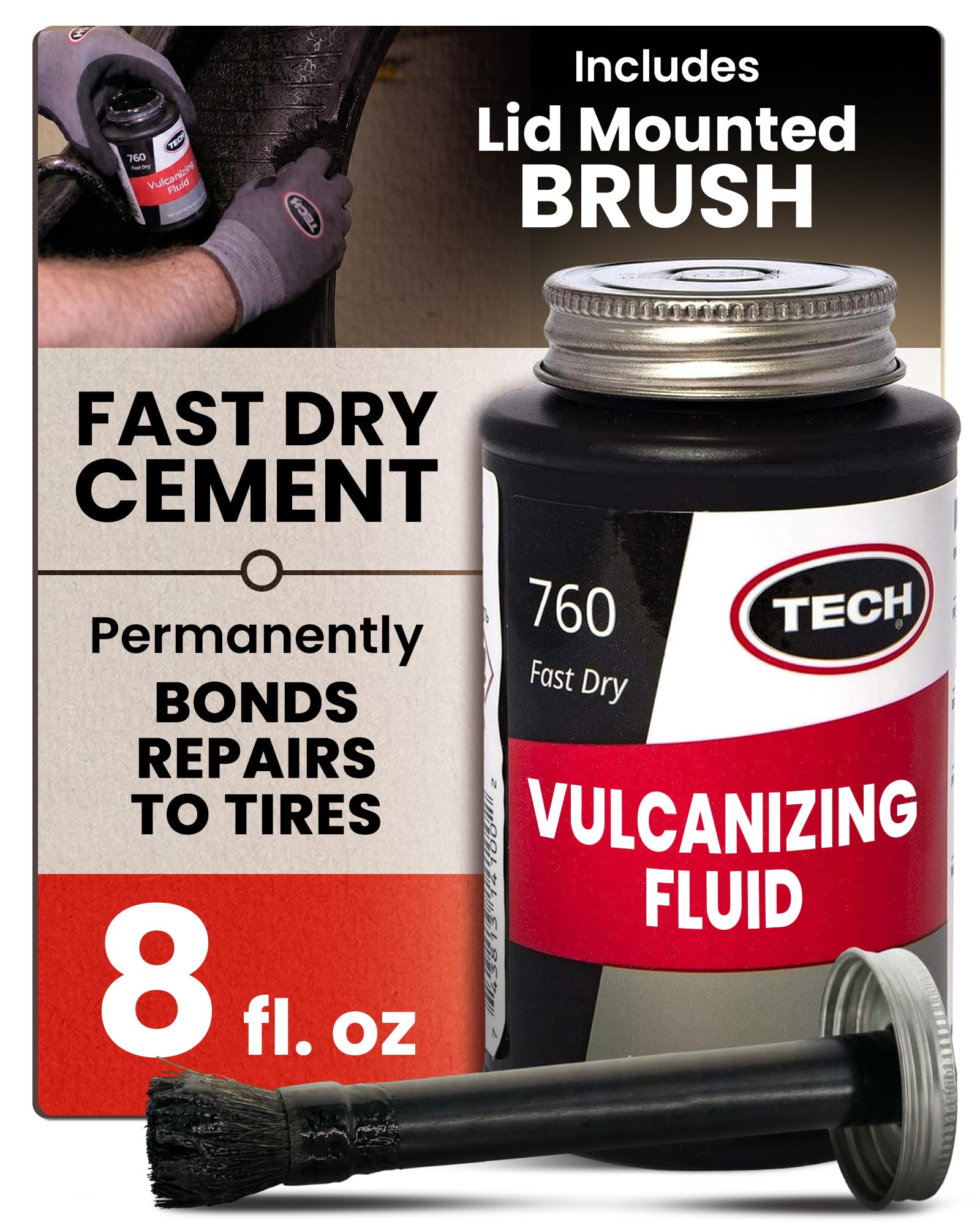
For tire repairs, nothing beats a true vulcanizing cement — and TECH’s formula is the industry standard among auto shops. Unlike surface adhesives that form a mechanical grip, vulcanizing fluid chemically softens and cross-links with the rubber itself, creating a permanent, air-tight bond that becomes part of the tire. When paired with a rope plug, mushroom plug, or patch, it delivers a repair that holds up to highway driving pressures and heat cycles.
The 8-ounce can is generous for shop use, and the fast-drying formula sets in 3–5 minutes — ideal for busy tire bays where you can’t wait hours for cure. Retired mechanics note that this is the best vulcanizing glue for not just tire plugs but also bicycle tubes and internal boots. The lid seals tightly to prevent air exposure, which keeps the fluid usable over time; if the lid is left off, the volatile solvent will evaporate and the cement will thicken.
The main critique is consistency — some users found it more watery than expected, requiring careful application to avoid dripping. It works best when both the repair surface and the plug are properly buffed and cleaned before application. For anyone repairing tires or inner tubes and wanting a professional-grade bond, TECH Vulcanizing Fluid is the proven go-to.
Why it’s great
- Chemically vulcanizes into rubber for permanent air-tight seal
- Fast 3-5 minute set time for efficient shop workflow
- Large 8-ounce can with tight-sealing lid for long shelf life
Good to know
- Watery consistency can drip if not applied carefully
- Requires proper surface buffing for best bond strength
- Solvent evaporates if lid is not sealed tightly after use
FAQ
Can I use superglue or epoxy on rubber parts?
How do I prepare a rubber surface for adhesive bonding?
What is the strongest adhesive for bonding rubber to metal?
Final Thoughts: The Verdict
For most users, the adhesive for rubber winner is the Gear Aid Aquaseal because it delivers a flexible, truly waterproof urethane bond that works on neoprene, rubber boots, and waders — the most common rubber repair scenarios people face. If you need a silicone-specific weld for prosthetics or costume parts, grab the Smooth-On SIL-Poxy. And for heavy-duty tire or inner tube repairs that must hold air pressure, nothing beats the TECH Chemical Vulcanizing Fluid.