
Our readers keep the lights on and the weekend projects moving. As an Amazon Associate, I earn from qualifying purchases.
Most earphones claim high-fidelity sound, but few deliver the precise instrument separation and balanced frequency response that define true audio quality. The difference between a decent pair and a genuinely revealing one comes down to driver configuration, tuning philosophy, and build integrity — factors that separate casual listening from critical monitoring.
I’m Rikta — the co-founder and writer behind FitlyFast. I’ve spent years tracking the shift in consumer audio from wireless convenience toward wired precision, analyzing IEM driver topologies and frequency response curves to identify which models actually serve discerning listeners.
This guide cuts through the marketing to evaluate the models that earn their reputation for clarity, soundstage, and neutral tuning. Whether you are an audiophile building a reference setup or a musician seeking reliable stage monitors, these audio quality earphones represent the current benchmark at their respective price points.
How To Choose The Best Audio Quality Earphones
Selecting earphones for critical listening requires understanding a few foundational concepts that directly impact what you hear. Driver type, tuning signature, and impedance are the three pillars that define an earphone’s performance character.
Tuning Signature
Every earphone has a frequency response curve that tilts toward neutral, warm, bright, or V-shaped. Neutral tuning aims for accuracy — what the recording engineer heard in the studio. Warm signatures emphasize lower mids and bass for a fuller, less fatiguing sound. Bright signatures lift treble for extra detail but can risk sibilance. V-shaped shapes boost both bass and treble while recessing mids, creating a fun, energetic sound that flatters pop and electronic music. Your listening preference determines which tuning works best.
Driver Configuration
Single dynamic drivers produce cohesive sound with natural bass decay and smooth treble roll-off. Hybrid designs combine dynamic drivers for low frequencies with balanced armatures for mids and highs, enabling greater technical performance but requiring sophisticated crossover implementation. Multi-BA (balanced armature) designs excel at detail retrieval and speed but can sound thin or analytical without proper voicing. More drivers do not automatically equal better sound — implementation quality matters far more than raw driver count.
Impedance and Sensitivity
Low-impedance, high-sensitivity earphones (below 32 ohms, above 110 dB) are designed for portable sources like phones and laptops. Higher-impedance models (above 50 ohms) benefit from dedicated headphone amplifiers or DACs to reach adequate volume and dynamic range. If you plan to use earphones with a phone dongle or laptop jack, choose models that are easy to drive to avoid a thin, underpowered presentation.
Quick Comparison
On smaller screens, swipe sideways to see the full table.
| Model | Category | Best For | Key Spec | Amazon |
|---|---|---|---|---|
| Moondrop Blessing 3 | Premium Hybrid | Critical listening & production | 2DD + 4BA hybrid, 10mm DD | Amazon |
| Shure SE535 PRO | Professional IEM | Stage monitoring & travel | Triple BA drivers, 30dB isolation | Amazon |
| Final A4000 | Single Dynamic | Instrument separation & detail | Single 6mm DD, V-shaped tuning | Amazon |
| Sennheiser IE 200 | Entry Hi-Fi | Neutral daily listening | 7mm TrueResponse DD, dual-tune | Amazon |
| Sennheiser IE 100 PRO | Pro Monitoring | Live performance & studio | 10mm dynamic broadband transducer | Amazon |
| TRUTHEAR Hexa | Value Hybrid | Neutral tuning on a budget | 1DD + 3BA, DLP 3D-printed shell | Amazon |
| BASN MMCX Triple Driver | Budget IEM | Entry-level monitoring | 2DD + 1BA, MMCX detachable cables | Amazon |
In‑Depth Reviews
1. Moondrop Blessing 3

The Moondrop Blessing 3 represents a serious step up in technical performance with its horizontally-opposed dual dynamic driver module paired with four balanced armatures. This 2DD+4BA hybrid configuration delivers triple-range frequency division that produces an open, detailed soundstage with surgical precision — sound designers and production engineers consistently praise its ability to reveal micro-details without coloration.
The 3D-printed high-precision acoustic filtering nozzle structure ensures consistent driver integration, while the stainless steel faceplate adds a premium tactile feel. Audiophile reviewers note that the Blessing 3 truly unlocks its potential with a silver 4.4mm balanced cable and a dedicated DAC/amp, transforming into a reference-grade monitoring tool that rivals far more expensive separates.
Some users find the stock cable and included ear tips underwhelming relative to the earphones themselves. The Blessing 3 also demands a powerful source — phones and laptops may struggle to drive them to satisfying volume levels without an external amplifier. For those willing to invest in upstream gear, this is a high-value gateway to serious audio reproduction.
Why it’s great
- Exceptional detail retrieval and soundstage width for critical listening
- Advanced hybrid driver topology with 3D-printed waveguide for precise crossover
Good to know
- Requires aftermarket cable and a DAC/amp to reach full performance potential
- Stock ear tips are low quality; expect to budget for replacements
2. Shure SE535 PRO

The Shure SE535 PRO has been a staple in professional monitoring for years, and its longevity speaks to its fundamentally sound design. Three balanced armature drivers — one dedicated to lows, one to mids, and one to highs — produce a natural, smooth, and incredibly realistic tone that many reviewers describe as “disappearing” during extended listening sessions. The foam sleeves provide up to 30dB of passive isolation, allowing critical monitoring at lower volumes without ear fatigue.
Musicians and touring professionals value the SE535 for its reliable fit and serviceable design — the detachable cable and replaceable components mean this earphone can last for years with proper maintenance. The tuning leans warm and relaxed compared to more analytical competitors, making it an excellent choice for long studio sessions or travel where harsh treble would be unwelcome.
The SE535’s bass presentation is understated — it has presence and punch but lacks the sub-bass extension of modern hybrid designs. Some users report that the earphones benefit noticeably from a quality headphone amplifier, and the over-ear wire routing can be finicky for users with glasses or long hair. Additionally, the soft plastic components may offgas initially and require airing out before use.
Why it’s great
- Exceptional passive noise isolation with foam sleeves suits noisy environments
- Detachable, replaceable cable extends service life significantly
Good to know
- Bass is polite and lacks the sub-bass rumble of hybrid competitors
- Soft plastic shell can offgas initially; allow several days of airing out before use
3. Final A4000

The Final A4000 is a fascinating single-dynamic-driver earphone that punches well above its weight class in detail retrieval. Despite using only one 6mm dynamic driver, the A4000 delivers a V-shaped sound signature with crisp, extended highs, punchy bass, and slightly recessed mids. The treble is smooth and well-extended without crossing into sibilance, making it a strong choice for acoustic music, string instruments, and complex mixes where instrument separation matters.
Drummers and instrumentalists consistently praise the A4000 for its ability to create a sealed fit that cuts ambient noise effectively — the lightweight resin shell and multiple ear tip options make long practice sessions comfortable. The soundstage is notably wide for a single-driver IEM, with precise imaging that helps locate instruments within the mix.
The A4000’s V-shaped tuning means vocals can sound slightly thin and recessed, which may be disappointing for listeners who prioritize midrange presence. The stock cable feels cheap despite the earphones’ premium sound quality, and the non-recessed 2-pin connectors limit aftermarket cable compatibility. Some users also report that sweat can soil the internal filter, requiring careful handling during active use.
Why it’s great
- Excellent instrument separation and soundstage for a single-driver design
- Lightweight, comfortable shell ideal for extended wear
Good to know
- V-shaped tuning recesses vocals; not ideal for midrange-focused listening
- Stock cable quality does not match the earphones’ performance level
4. Sennheiser IE 200

Sennheiser’s IE 200 brings the company’s TrueResponse transducer technology — a 7mm dynamic driver developed for their high-end IE series — to a more accessible price point. The tuning is neutral with natural bass extension and smooth treble that avoids fatigue, making it an excellent entry point into high-fidelity wired listening. The dual-position ear tip mounting allows users to choose between a tighter, more controlled bass response or a fuller, warmer presentation by adjusting how the tips sit on the nozzle.
The ergonomic fit is widely considered best-in-class at this price. The flexible over-ear hooks and lightweight construction allow all-day wear without discomfort, and the braided MMCX cable reduces handling noise compared to standard rubber cables. Audiophile reviewers note that the IE 200 reveals its full potential with lossless source files and a quality DAC, but remains listenable even from a phone dongle.
The stock cable’s 3.5mm termination and MMCX connectors are proprietary, limiting aftermarket cable upgrades. The IE 200 also has a relatively low sensitivity, meaning it requires more power from the source than many competitors — phones without a DAC dongle may produce insufficient volume. Some users find the plastic housing less premium than metal-shelled alternatives at the same price point.
Why it’s great
- Dual-position bass tuning adapts the sound signature to listener preference
- Exceptional comfort and secure fit for extended listening sessions
Good to know
- Low sensitivity requires a DAC or powerful phone dongle for adequate volume
- Plastic housing feels less premium than competitors with metal builds
5. Sennheiser IE 100 PRO
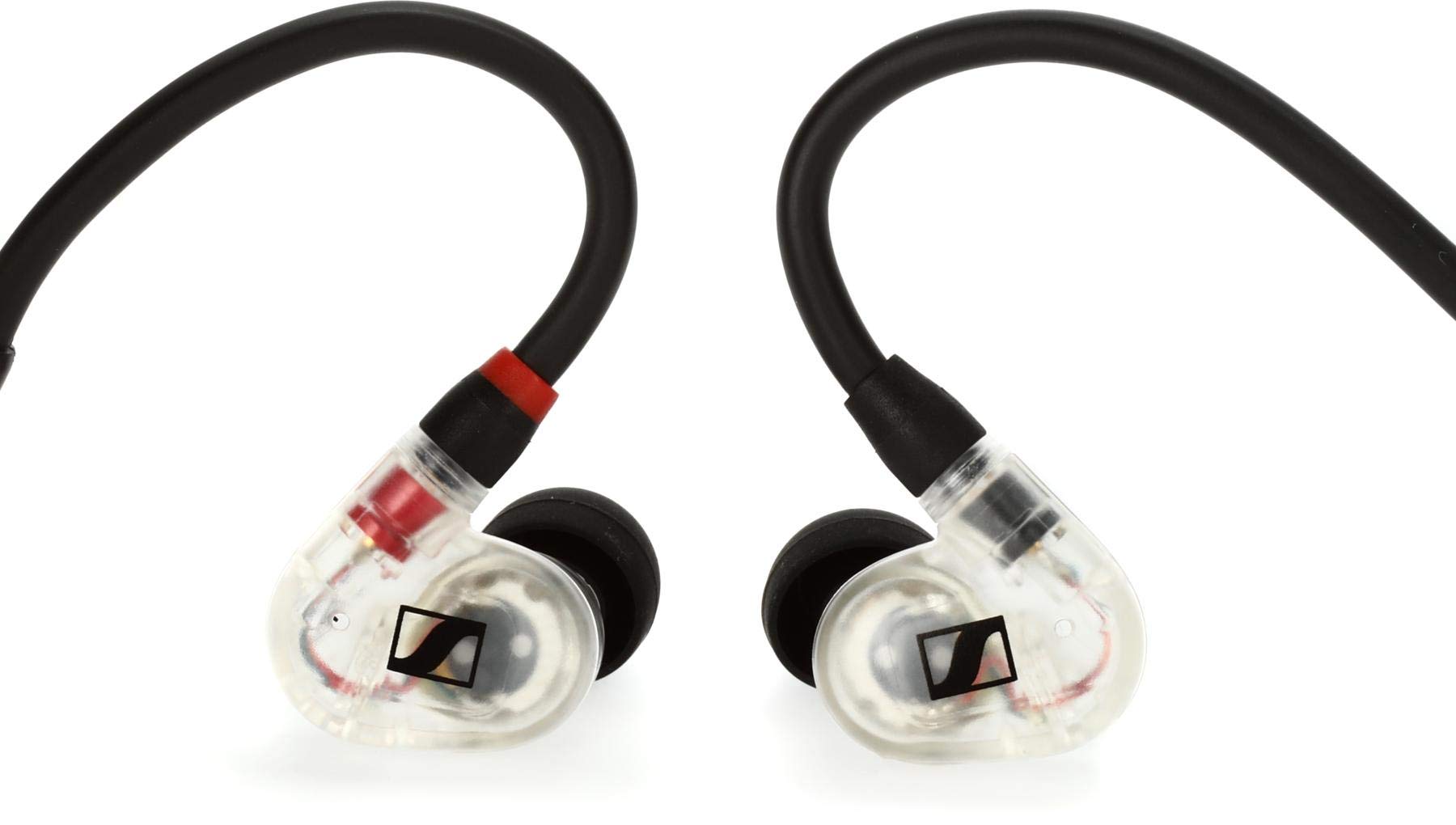
The Sennheiser IE 100 PRO is purpose-built for live performance and studio monitoring, employing a single 10mm dynamic broadband transducer designed for powerful, precise reproduction with minimal distortion. The tuning focuses on clarity and separation, with a slight treble emphasis that helps musicians hear their cues clearly on stage. The slim, ergonomic housing fits flush against the ear, and the included foam and silicone tips in multiple sizes create a secure seal even during active movement.
Musicians and sound engineers appreciate the IE 100 PRO’s robust build — the stage-proof cable with internal cable duct is designed to withstand the rigors of live use, and the detachable connection means a broken cable doesn’t end the earphones’ life. Reviewers consistently note that the IE 100 PRO reveals flaws in poor recordings, but rewards high-quality sources with excellent clarity and instrument separation.
The treble can be harsh on bright recordings, particularly with sibilant vocals or cymbals. The IE 100 PRO’s tuning is not neutral — it emphasizes the upper frequencies, which is intentional for stage monitoring but may be fatiguing for casual home listening. Some users find the cable microphonics noticeable unless routed over the ear properly, and the foam tips lose their shape after extended use and require replacement.
Why it’s great
- Purpose-built for live stage use with robust, detachable cable and secure fit
- Excellent clarity and instrument separation for monitoring applications
Good to know
- Treble emphasis can be harsh on bright recordings or for casual listening
- Foam tips degrade over time and require periodic replacement
6. TRUTHEAR Hexa

The TRUTHEAR Hexa has become a benchmark in the budget-to-mid-range IEM space for its remarkable neutral tuning at an accessible price point. The 1DD+3BA hybrid configuration — one polyurethane suspension dynamic driver and three balanced armatures — delivers a cohesive, balanced sound that leans slightly warm with controlled bass, clear mids, and detailed but non-fatiguing treble. The DLP 3D-printed resin shell from HeyGears ensures consistent acoustic properties across units.
Musicians and competitive gamers alike praise the Hexa for its precise imaging and balanced presentation. The lightweight, skin-friendly housing with CNC anodized aluminum faceplate is comfortable for extended wear, and the silver-plated copper cable with 0.78mm 2-pin connectors offers good value at this price. The included carrying case and variety of ear tips make it a complete package out of the box.
The Hexa’s soundstage is intimate rather than expansive — imaging is precise, but the stage width doesn’t match more expensive hybrids. The neutral-warm tuning may sound slightly dark to listeners accustomed to bright earphones, and the mid-bass can feel somewhat recessed compared to the sub-bass. Some users report that the 3D-printed finish shows wear over time with rough handling.
Why it’s great
- Excellent neutral tuning with controlled bass and clear mids for the price
- Lightweight, 3D-printed shell with comfortable ergonomics for long sessions
Good to know
- Soundstage is intimate and not as expansive as more expensive hybrids
- Mid-bass can feel recessed; may require EQ for bass-head listeners
7. BASN MMCX Triple Driver

The BASN MMCX Triple Driver earphones offer a 2DD+1BA hybrid configuration that delivers a bass-forward, energetic sound signature well-suited for pop, electronic, and rock genres. The dual dynamic drivers handle low frequencies with authority, producing rich bass with good impact, while the single balanced armature contributes detailed highs and clear vocals. The included memory foam ear tips and adjustable memory ear hooks create a solid seal with effective passive noise isolation.
Reviewers value the accessory package — the BASN comes with two detachable MMCX cables (one with an inline microphone and volume control, one upgraded silver cable for improved sound quality), nine pairs of silicone tips, and three pairs of foam tips. This makes it a versatile option for musicians who need a backup cable for stage use or for everyday listeners who want voice call capability alongside listening.
The bass emphasis can cause some muddiness on complex tracks, particularly in the lower midrange where bass bleed can obscure vocals. Some users report QC issues with the left channel failing after several weeks of use, though manufacturer customer service appears responsive for replacements. The over-the-top packaging reflects the price point but the earphones themselves feel durable enough for daily use.
Why it’s great
- Rich, punchy bass with good impact for bass-forward genres
- Comprehensive accessory bundle with two cables and multiple tip options
Good to know
- Bass emphasis can cause muddiness on complex tracks with overlapping instruments
- Occasional QC issues reported with channel imbalance
FAQ
Why do some earphones need a separate DAC or amplifier to sound good?
What is the difference between neutral, V-shaped, and warm tuning?
How do I know if an earphone has good soundstage and imaging?
Can I use high-impedance earphones with my phone for daily listening?
Final Thoughts: The Verdict
For most users, the audio quality earphones winner is the Moondrop Blessing 3 because it offers the highest technical performance — 2DD+4BA hybrid topology with exceptional detail retrieval and soundstage — for those serious about critical listening. If you want a comfortable, neutral-sounding daily driver that works with portable sources, grab the Sennheiser IE 200. And for budget-conscious buyers who still demand balanced tuning, nothing beats the TRUTHEAR Hexa.