
Our readers keep the lights on and the weekend projects moving. As an Amazon Associate, I earn from qualifying purchases.
A beginner ballet shoe should feel like a second skin—snug enough to feel the floor through the sole but with zero pinching across the widest part of your foot. The wrong fit masks turnout, deadens your pointed foot, and can turn a first plié into a painful experience. Choosing the right pair is about matching your foot shape, arch height, and the specific demands of split versus full soles.
I’m Rikta — the co-founder and writer behind FitlyFast. I’ve analyzed sizing conversions, sole material durability, and drawstring adjustability across dozens of models to cut through the noise for new dancers.
ballet shoes for beginners must balance structural support with a soft, flexible feel that lets young feet develop strength and articulation without resistance from stiff leather or a bulky toe box.
How To Choose The Best Ballet Shoes For Beginners
The biggest mistake new dancers make is ordering their regular street shoe size. Ballet slippers are measured to the millimeter in European or Bloch sizing, and every brand—even every model within a brand—can run half a size to two sizes off. Always measure your foot in centimeters and cross‑reference the manufacturer’s chart before clicking buy.
Leather vs. Canvas: Which Material Fits Your Training Style?
Leather slippers stretch over time and mold to your foot, offering a long lifespan and reliable support for weekly classes. They suit dancers with narrow feet who want a snug, custom feel. Canvas slippers are lighter, breathe better, and resist the “diaper bag” sagging that leather sometimes develops after heavy sweat. Beginners who prefer a lighter shoe with less break‑in time often lean toward canvas, but note that canvas can wear through at the toe after a season of regular use.
Split Sole vs. Full Sole: Stability vs. Foot Articulation
Full‑sole shoes are traditional: a single continuous piece of suede or leather runs the length of the shoe, giving beginners a stable platform for first tendus and pliés. Split‑sole shoes have a separate patch under the ball of the foot, allowing the arch to bend freely and making a pointed foot look cleaner. For a true beginner who is still building core and leg strength, a full sole can help prevent sickling by providing tactile feedback across the entire foot. A split sole rewards those who already point their toes with confidence.
Vamp Height and Toe Box Width
Vamp height refers to how far the fabric or leather extends up the top of your foot. A low vamp is ideal for high insteps because it won’t dig in when you point your foot. A high vamp offers more security across the mid‑foot, which helps if you feel the slipper slipping off your heel. The toe box width should allow your toes to lie flat without bunching—never order a wider size to accommodate toe width if the shoe is too narrow; instead, look for models explicitly cut for wide feet. A snug heel pocket is non‑negotiable: any gap here means the shoe will slip during allegro jumps.
Quick Comparison
On smaller screens, swipe sideways to see the full table.
| Model | Category | Best For | Key Spec | Amazon |
|---|---|---|---|---|
| Bloch Dansoft II | Mid‑Range | Slender Feet / Strong Arch | Split sole, leather upper | Amazon |
| Capezio Hanami | Premium | Wide Feet / Durability | Canvas upper, split sole | Amazon |
| Bloch Prolite II | Premium | Wide Feet / Pointe Prep | Split sole, soft leather | Amazon |
| So Danca SD16 Bliss | Mid‑Range | Barre / Growing Feet | Split sole, stretch canvas | Amazon |
| Sangeeson Leather Full Sole | Premium | Returning Dancer / Stability | Full sole, genuine leather | Amazon |
| Sansha Pro 1 Canvas | Budget‑Friendly | Wide Feet / Custom Fit | Split sole, lightweight canvas | Amazon |
| Bloch Performa Stretch Canvas | Mid‑Range | Wide / Flat Feet (Men) | Split sole, stretch canvas | Amazon |
In‑Depth Reviews
1. Bloch Dansoft II Split Sole

The Bloch Dansoft II has been a studio staple for years because the leather upper molds to the foot without stretching into an unsightly shape, and the split sole lets beginners show off a clean point early in their training. The elastic crosses the arch diagonally and stays put during grand battements—no slipping off the heel even after two hours of barre work.
Sizing is the trickiest part: women who wear a street size 7 generally need a Bloch size 4.5 or 5, and the length runs generous, so a half‑size down from the Bloch chart often gives a snugger toe box. The leather is soft enough to break in after two classes, and the suede sole provides controlled slide on Marley floors.
Multiple reviewers praised the grip during turns and the clean look of the split sole. A few noted the sides can dig into the narrow part of the foot initially, but the leather relaxes with wear. For beginners who want a shoe that transitions smoothly from plié to pointe preparation, this remains the gold standard.
Why it’s great
- Supple leather molds quickly to narrow feet
- Excellent arch definition from split‑sole design
- Strong stitching holds up through heavy use
Good to know
- Runs large; sizing down by 1.5–2 sizes is typical
- Initial side tightness requires a short break‑in period
2. Capezio Hanami
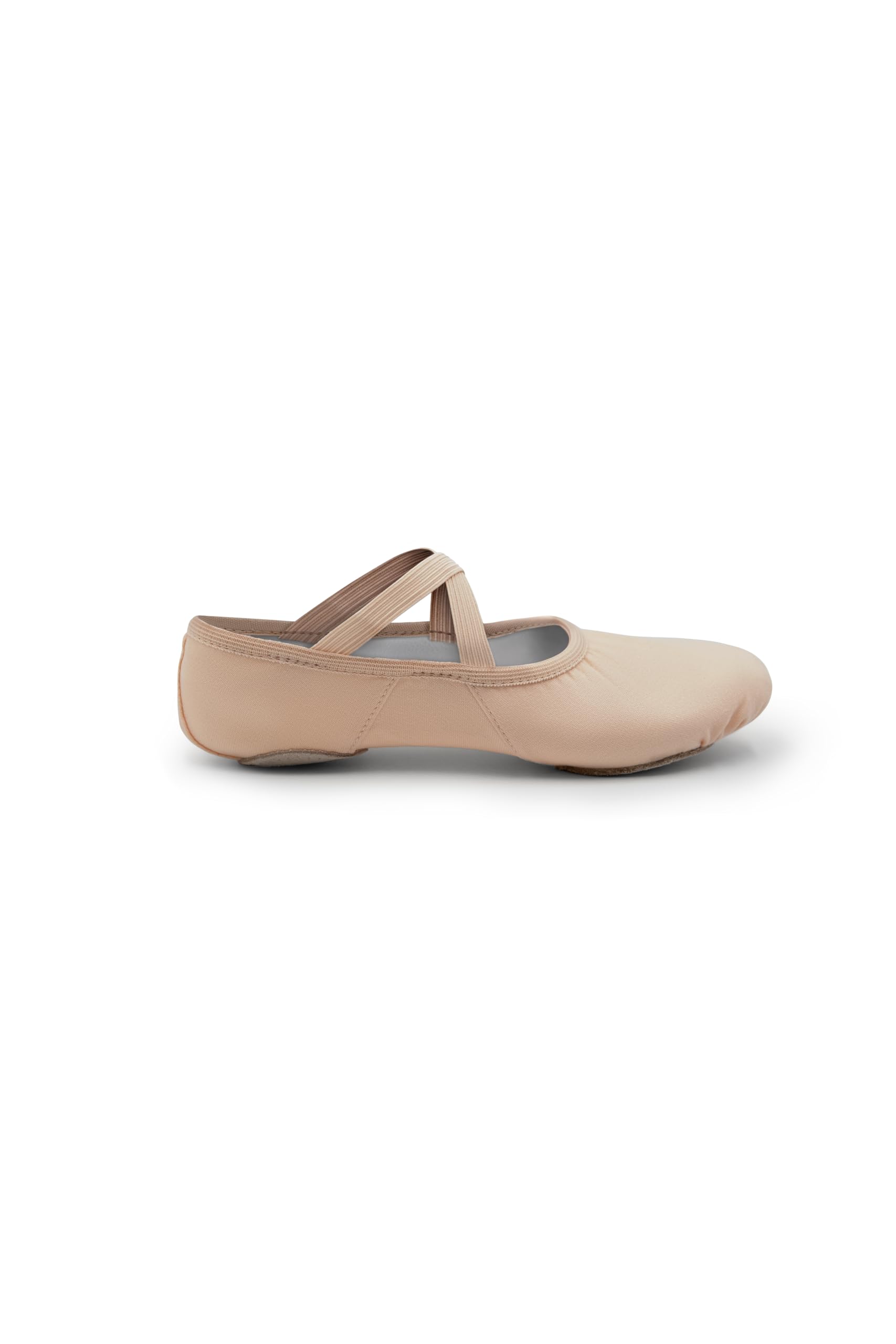
The Capezio Hanami is built for dancers who need a wide toe box and a soft canvas that adapts quickly without the sagging some canvas models develop. The metatarsal pad is integrated smoothly—no ridge under the ball of the foot—which reduces strain during relevés and allows a more natural demi‑plié.
Canvas breathes better than leather, making this a top pick for warmer studios or dancers whose feet run hot. The split sole is reinforced with an extra suede patch under the ball, which increases lifespan for dancers who drag their toes during floor work. The sizing runs small and narrow; many wearers size up 1.5 to 2 full sizes and select the wide width, even if they normally wear a medium.
Customer reviews consistently mention the Hanami’s durability—several wearers reported getting two full seasons of weekly classes before holes appeared. The only trade‑off is that canvas does not hold its shape as firmly as leather after heavy use, but for the price and comfort, this is a brilliant entry‑level shoe for dancers with wider feet.
Why it’s great
- Generous width accommodates bunions and wide forefeet
- Canvas breathes well and breaks in within two classes
- Reinforced suede patches extend sole life
Good to know
- Runs very small and narrow; size up 1.5–2 sizes
- Canvas toes wear through faster than leather
3. Bloch Prolite II Split Sole

The Prolite II is the upgraded cousin of the Dansoft: same Bloch heritage but with a softer, pre‑broken‑in leather that feels comfortable out of the box. The split sole is designed to sit under the metatarsal heads, giving a smooth platform for balances and a clear arch line during fondu.
Wide‑footed dancers report that the Prolite II’s cut accommodates bunions without pressure points, and the elastic is pre‑sewn across the arch—no hand‑stitching required. Sizing is the catch: Bloch’s own size chart can lead to ordering two sizes too small, so measure your foot in inches and use the manufacturer’s dedicated Prolite sizing guide rather than a generic conversion.
Reviewers who correctly sized down found the Prolite II extremely comfortable for both flat exercises and beginner pointe prep. The white upper color is a bright white rather than an ivory taupe, so it stands out clearly on stage. For a dancer ready to commit to a premium shoe that lasts, this is a strong investment.
Why it’s great
- Supple leather requires essentially no break‑in period
- Wide cut suits dancers with bunions or wide forefeet
- Clean arch line with split‑sole design
Good to know
- Sizing is wildly inconsistent; must check specific Prolite chart
- Color is stark white, not the apricot shown online
4. So Danca SD16 Bliss

The So Danca SD16 Bliss uses a two‑way stretch canvas that combines the comfort of canvas with a firmer structure than typical unlined canvas slippers. The heel pocket is contoured to reduce slippage, and the split sole has a full suede bottom that grips well without sticking to the floor during glissades.
Sizing is where this model creates confusion: the So Danca website chart, Amazon’s chart, and general street shoe sizing disagree with each other. Reviewers recommend ordering 1 to 1.5 sizes down from your US street shoe size and testing two nearby sizes if possible. The color is a pale pink‑peach that flatters most skin tones without looking washed out under stage lights.
For barre classes and beginner center work, the SD16 Bliss offers a soft yet durable option that resists the sagging some canvas slippers develop. The easy‑to‑clean surface means a quick wipe keeps them looking fresh. If you can navigate the sizing puzzle, you get a high‑value shoe that performs well above its tier.
Why it’s great
- Stretch canvas molds snugly without sagging
- Contoured heel pocket minimizes slipping
- Easy to wipe clean after sweaty sessions
Good to know
- Sizing is inconsistent between charts and actual fit
- Pale pink color may not suit all costumes
5. Sangeeson Leather Full Sole

The Sangeeson full‑sole slipper returns to the traditional ballet aesthetic with a single piece of genuine suede leather running from heel to toe. For absolute beginners who are still learning to point their feet without sickling, the continuous sole provides tactile feedback across the entire foot—making it harder to hide a weak point.
The leather is thicker than studio rental shoes, and reviewers note it offers better toe support during percussive exercises like battement frappés. Sizing is a known challenge: the shoe runs long and narrow, so dancers with wide feet may find their toes squished sideways even with an inch of extra length. Ordering your exact street shoe size often leads to a poor fit—return policies are essential here.
For a returning dancer or an adult beginner, the Sangeeson delivers a nostalgic feel with modern comfort. The arch support is mild but present, and the elastic holds the foot securely without digging in. If you have narrow feet and prefer a full sole for stability, this shoe punches well above its price point in build quality.
Why it’s great
- Full sole provides superior stability for early training
- Thick leather sole offers durable toe support
- Classic look works for recitals and class
Good to know
- Runs long and narrow; difficult fit for wide feet
- Arch support is mild, not pronounced
6. Sansha Pro 1 Canvas

The Sansha Pro 1 is an impressively affordable canvas slipper that does not compromise on construction. The canvas is lightweight and airy, and the split sole encourages proper foot articulation from the first class. The elastics arrive unattached, which sounds like a chore but actually allows you to sew them exactly where your arch bends—resulting in a truly custom fit.
You must size up 1.5 sizes from your street shoe. Once fitted, the shoe feels like a snug sock: no bagginess, no heel gap. The high vamp suits dancers with high arches who fear the dreaded “gaping” at the top of the foot. A mesh bag is included for letting the shoes air out after sweaty rehearsals, a thoughtful touch for the price.
For a first pair, the Sansha is hard to beat. It lacks the durability of leather—canvas will wear through at the toe after a season—but for the cost, you can buy two pairs and still be under what a single premium shoe costs. The color options (black, tan, pink) cover standard studio requirements.
Why it’s great
- Unattached elastics allow fully custom placement
- Lightweight canvas keeps feet cool during long classes
- Included mesh bag for proper ventilation
Good to know
- Elastics require hand‑sewing before first use
- Canvas can wear through at the toe after regular use
7. Bloch Performa Stretch Canvas

The Bloch Performa is specifically cut for the male foot—wider through the ball and heel, with a boxier toe box—but women with wide, flat feet also praise it for the same reason. The stretch canvas material gives just enough give to accommodate a broad forefoot without creating a loose heel pocket.
Size down by half a size from your street shoe (a men’s 10.5 street converts to a Bloch men’s 10). The split sole is subtle and emphasizes a natural demi‑plie without forcing the arch. A few wearers reported a squeaky sound on certain studio floors, though it typically fades as the suede sole wears in.
For a beginner who needs a wider platform, the Performa offers exceptional comfort for adagio and center exercises. The canvas is thick enough to resist early wear but thin enough to feel the floor. If you have been frustrated by narrow women’s models, this cross‑over shoe is worth serious consideration.
Why it’s great
- Wider cut suits flat, wide feet and men’s foot shape
- Stretch canvas molds without constricting
- Thick canvas resists premature wear
Good to know
- May squeak on certain vinyl or Marley floors initially
- Limited color options compared to women’s models
FAQ
How do I know my ballet shoe size if I can’t try them on in person?
Can I wear canvas ballet shoes if I have very sweaty feet?
When should a beginner switch from a full sole to a split sole shoe?
Final Thoughts: The Verdict
For most users, the ballet shoes for beginners winner is the Bloch Dansoft II because it combines supple leather, a reliable split‑sole design, and the brand’s long‑standing reputation for consistent quality across studios worldwide. If you need a wider toe box and prefer the breathability of canvas, grab the Capezio Hanami. And for a budget‑friendly starter that lets you custom‑sew the elastics and includes a mesh bag, nothing beats the Sansha Pro 1 Canvas.