
Our readers keep the lights on and the weekend projects moving. As an Amazon Associate, I earn from qualifying purchases.
Eight hours in a static office chair often translates to a dull ache that settles deep in the lower back by mid-afternoon. The real issue isn’t sitting itself—it’s the gap between your lumbar spine and the chair’s backrest. When that gap isn’t filled, your muscles have to stabilize your torso all day, which leads to fatigue and pain.
I’m Rikta — the co-founder and writer behind FitlyFast. I’ve spent years analyzing how seat depth, foam density, and lumbar adjustment range affect posture during prolonged desk sessions, specifically for home-office setups.
This guide breaks down the core specs that determine whether a back support for office chair actually works for your body type and work habits, not just what looks good on a listing page.
How To Choose The Best Back Support For Office Chair
Your lower back has a natural inward curve (lumbar lordosis) that needs continuous support while seated. A chair-buying mistake is assuming one fixed lumbar pad fits every spine length. You need to look at adjustability range, cushion mapping, and construction stability.
Adjustable Lumbar Depth and Height
A lumbar support that only moves up and down is limited. Look for a 2D or 4D system that pushes inward (depth) and shifts vertically. This fills the curve for 5’2″ to 6’2″ users without forcing a forward slouch. The ProtoArc EC200 and the CASASIO model both offer depth + height adjustments, a feature that separates real ergonomic chairs from basic shells.
Seat Cushion Foam Resilience
If the seat cushion collapses after a month, your hips sink, your pelvis tilts backward, and your lumbar curve flattens. Virgin foam (55-density high-resiliency) or molded foam (QLTPLUS at 4 inches thick) maintains shape under sustained load and prevents the “bottoming out” feeling. Standard sponge fillers lose support quickly, especially for users over 200 lbs.
Seat Depth Adjustment
A seat that is too long presses behind the knees; too short leaves your thighs unsupported. A sliding seat pan with 5-position lock lets you match your femur length. This is critical for remote workers, programmers, or writers sitting 8+ hours. The ProtoArc EC200 is the only model in this roundup with seat-depth sliding, giving it an edge for varied leg lengths.
Quick Comparison
On smaller screens, swipe sideways to see the full table.
| Model | Category | Best For | Key Spec | Amazon |
|---|---|---|---|---|
| ProtoArc EC200 | Premium Ergonomic | Seat-depth & lumbar customization | 5-pos seat depth + 4D lumbar | Amazon |
| CASASIO Full Adjust | Premium Ergonomic | Neck & lumbar precision | 2D lumbar + 3D headrest | Amazon |
| QLTPLUS Contour | Premium Comfort | Extended sitting with thick foam | 4″ molded foam cushion | Amazon |
| Sweetcrispy High-Back | Mid-Range | Budget-friendly full chair with headrest | Adjustable headrest + mesh back | Amazon |
| CASASIO Extra-Thick | Mid-Range | Plush seat with 4-way lumbar | 3.54″ seat cushion + 4D lumbar | Amazon |
| Keratee Ergonomic | Mid-Range | 300-lb support with adjustable lumbar | S-curve backrest + flip arms | Amazon |
| Youhauchair Mesh | Mid-Range | Built-in solid lumbar for upright posture | 30° rocking + flip arms | Amazon |
In‑Depth Reviews
1. ProtoArc EC200 Ergonomic Office Chair
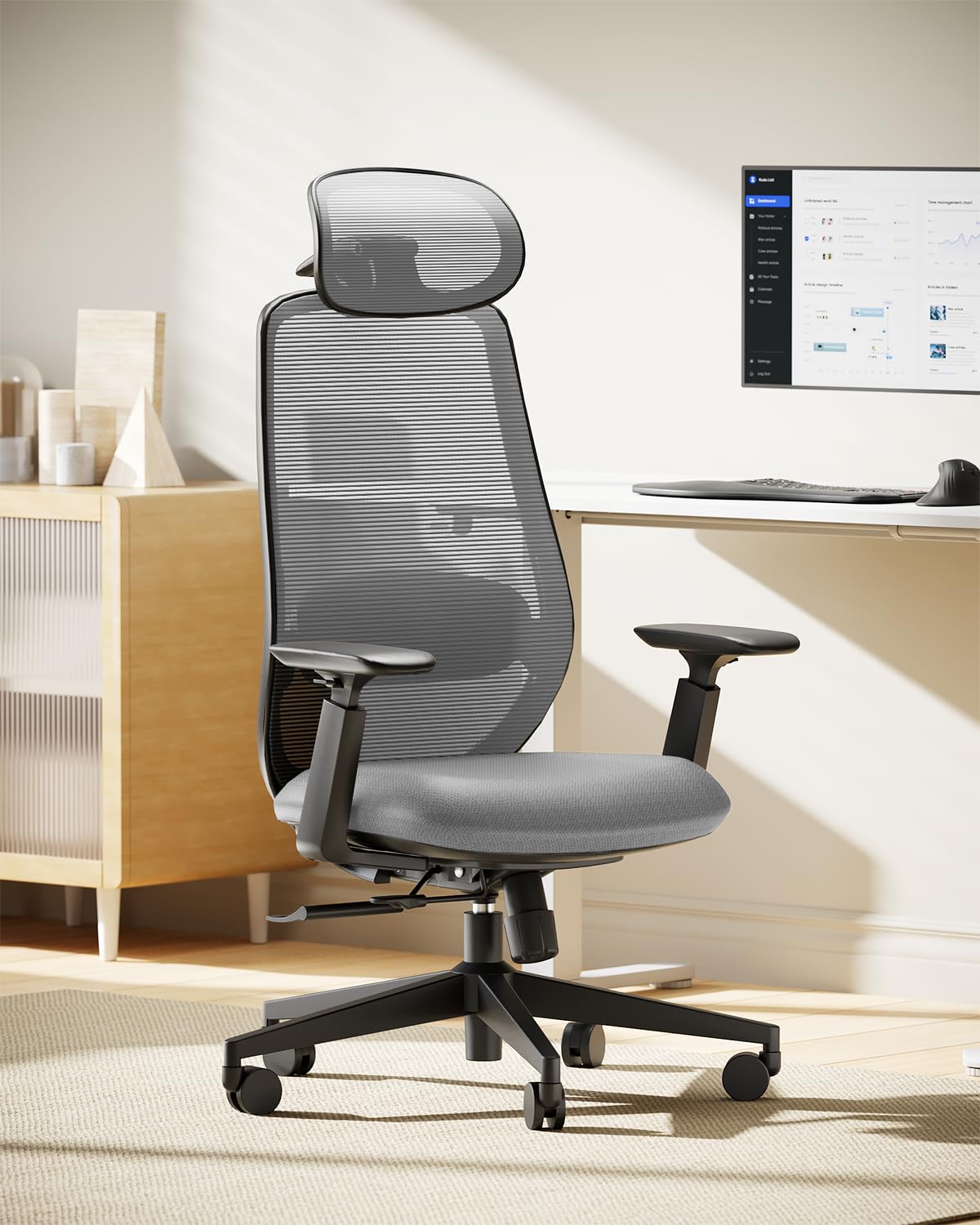
The ProtoArc EC200 stands apart because it addresses the two most overlooked ergonomic variables: seat depth and lumbar depth. The 5-position sliding seat pan adjusts from shallow to deep, so a 5’4″ user won’t feel knee pressure, and a 6’0″ user gets full thigh support. The 2-way adjustable lumbar moves 2.36 inches vertically and 0.8 inches inward, filling the lower back curve without poking the spine.
The high-density 55-resiliency foam seat is intentionally firm—soft cushions collapse and tilt the pelvis backward. The mesh back breathes well, and the 4-level backrest tilt (90° to 130°) lets you shift between focused typing and relaxed reading without losing lumbar contact. Assembly is notably frustration-free with labeled hardware and a visual guide.
It’s optimized for users 5’4″ to 6’0″ under 220 lbs. The TÜV Rheinland-tested Class 4 gas lift and BIFMA X5.1 certification confirm durability. If you sit 8+ hours coding, writing, or designing, the seat-depth adjustment alone justifies the step-up in investment.
Why it’s great
- 5-position sliding seat depth prevents thigh pressure
- 4-direction lumbar (height + depth) adapts to different spine lengths
- 55-density high-resiliency foam resists sagging
Good to know
- Weight limit of 220 lbs restricts larger users
- Armrests are 2D (height + pivot) but not width-adjustable
2. CASASIO Ergonomic Office Chair with 3D Headrest
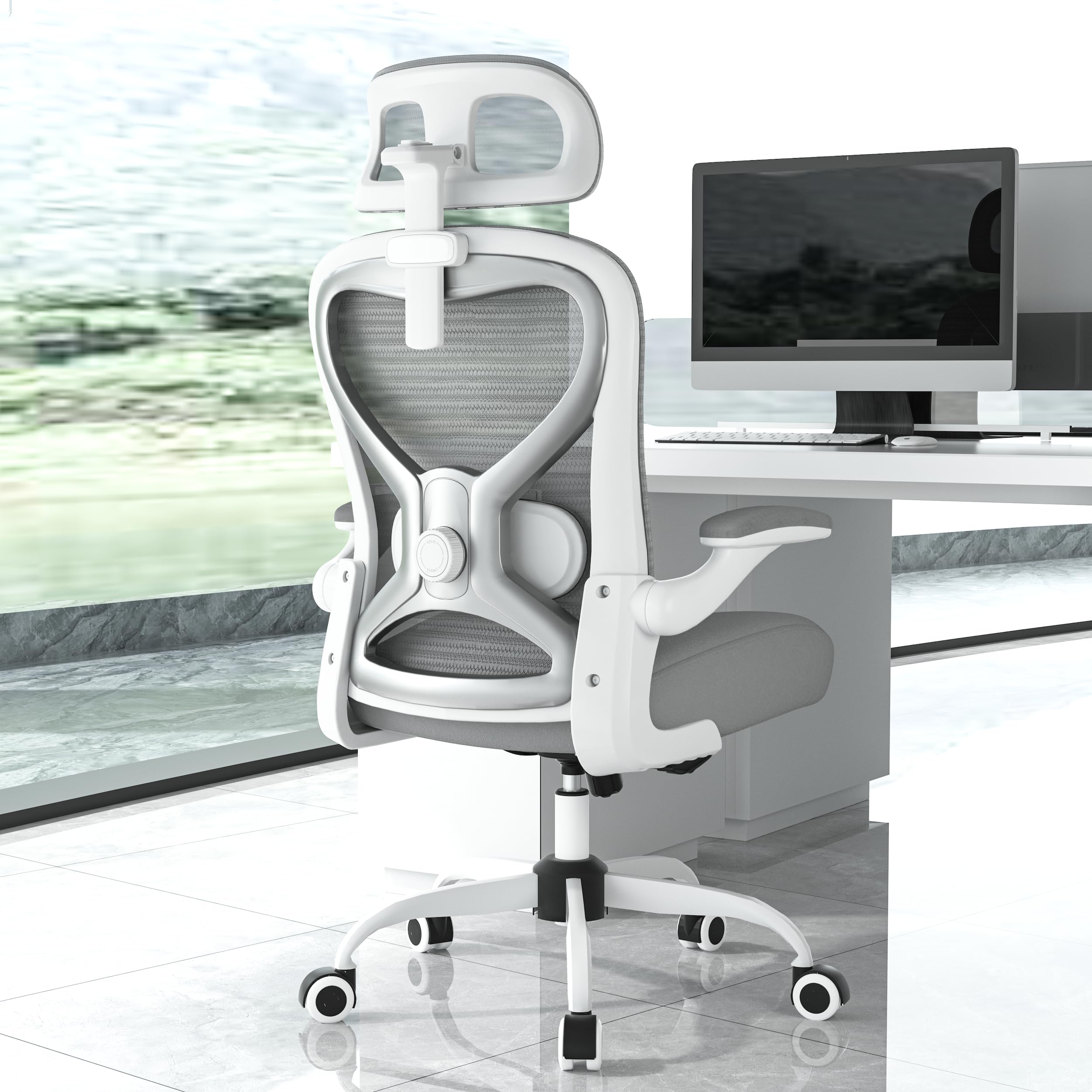
Where most chairs offer a fixed headrest that hits the wrong spot, the CASASIO model uses a 3D dual-axis headrest—height, depth, and angle—so a 5’2″ user can align it to cradle the neck without pushing the head forward. The virgin foam seat (3.5 inches thick) distributes weight evenly and retains shape longer than recycled foam blends.
The 2D adjustable lumbar cushion moves vertically and in depth, which is uncommon at this tier. The contoured mesh back follows the hourglass spine shape rather than a flat plane, reducing the “empty back” feeling. The tilt-and-rock mechanism moves naturally with subtle body shifts, and the tension knob lets you dial in resistance.
Users consistently report comfort through 8-hour shifts without tailbone numbness. The flip-up arms save space, and the assembly process is straightforward with labeled parts. If you also deal with neck strain from craning toward a monitor, the 3D headrest makes this a stronger choice than competitors with non-adjustable head pads.
Why it’s great
- 3D headrest adjusts in height, depth, and angle
- Virgin foam cushion resists compression over months
- 2D lumbar support customizes to your curve
Good to know
- Armrests are flip-up but not height-adjustable
- Maximum weight capacity is 300 lbs
3. QLTPLUS Office Desk Chair with 4-Inch Foam
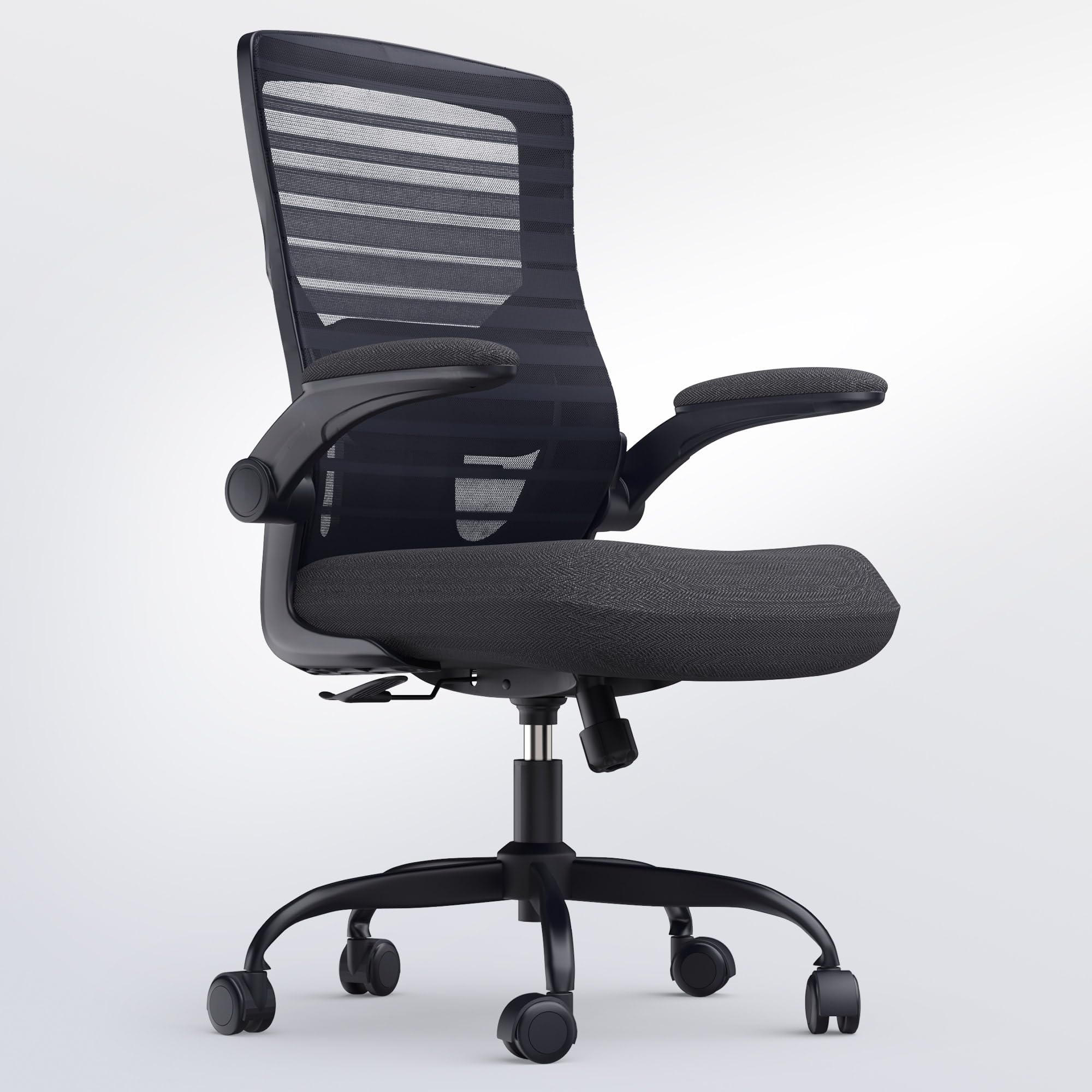
The QLTPLUS prioritizes one thing that matters most for lower back health: a thick, stable seat foundation. The 4-inch molded foam cushion is a full inch thicker than most mid-range chairs, meaning heavier users (up to 350 lbs) won’t sink through to the hard seat pan. This prevents the pelvis from tilting backward, which keeps the lumbar curve intact.
The contoured mesh back aligns with the spine, and the adjustable lumbar cushion adds targeted lower-back support. The tilt-and-rock mechanism includes adjustable tension, so you can customize how much the chair gives when you lean back. The flip-up armrests tuck the chair under a shallow desk when not in use.
Assembly takes longer than average (roughly one hour) due to multiple bolt points, but the instructions are clear. A 5-year warranty backs the build. If you’re a larger-framed person or someone who prioritizes seat cushion longevity over extra adjustability, this chair delivers where thinner foams fail.
Why it’s great
- 4-inch molded foam prevents bottoming out
- 350 lb weight capacity suits larger builds
- 5-year warranty for long-term confidence
Good to know
- Armrests are narrow (2 inches wide)
- Casthers may need upgrading for hardwood floors
4. Sweetcrispy Home Office Desk Chair

The Sweetcrispy is the most affordable full-chair option in this roundup, offering a high-back mesh design with a prominent lumbar curve built into the backrest. It’s not adjustable—you get one fixed curve—but the ergonomic shaping fits average torso lengths (5’6″ to 5’11”) reasonably well. The mesh back keeps air moving, and the high-density sponge seat cushion is firm enough for 6-hour sessions.
The adjustable headrest moves in height and angle, which is rare at this price tier. The flip-up armrests and 107° to 144° rocking mode add utility for short breaks. The pneumatic height adjustment range (18.5 to 22.2 inches) works with standard desk heights. Assembly takes about 30 minutes with the included hex key.
Customer feedback notes that taller users (6’5″) find the chair surprisingly accommodating, and the build feels stable for daily use. It does not include seat-depth adjustment or a separate lumbar pad, so users with very long femurs or specific spinal conditions may need to add a lumbar pillow. It’s a solid entry point for a home office setup on a tight budget.
Why it’s great
- High-back mesh with built-in lumbar curve
- Adjustable headrest at an entry-level price
- Rocking mode from 107° to 144°
Good to know
- Lumbar support is fixed—no height or depth adjustment
- Seat cushion may pill after months of use
5. CASASIO Desk Chair with 4-Way Lumbar
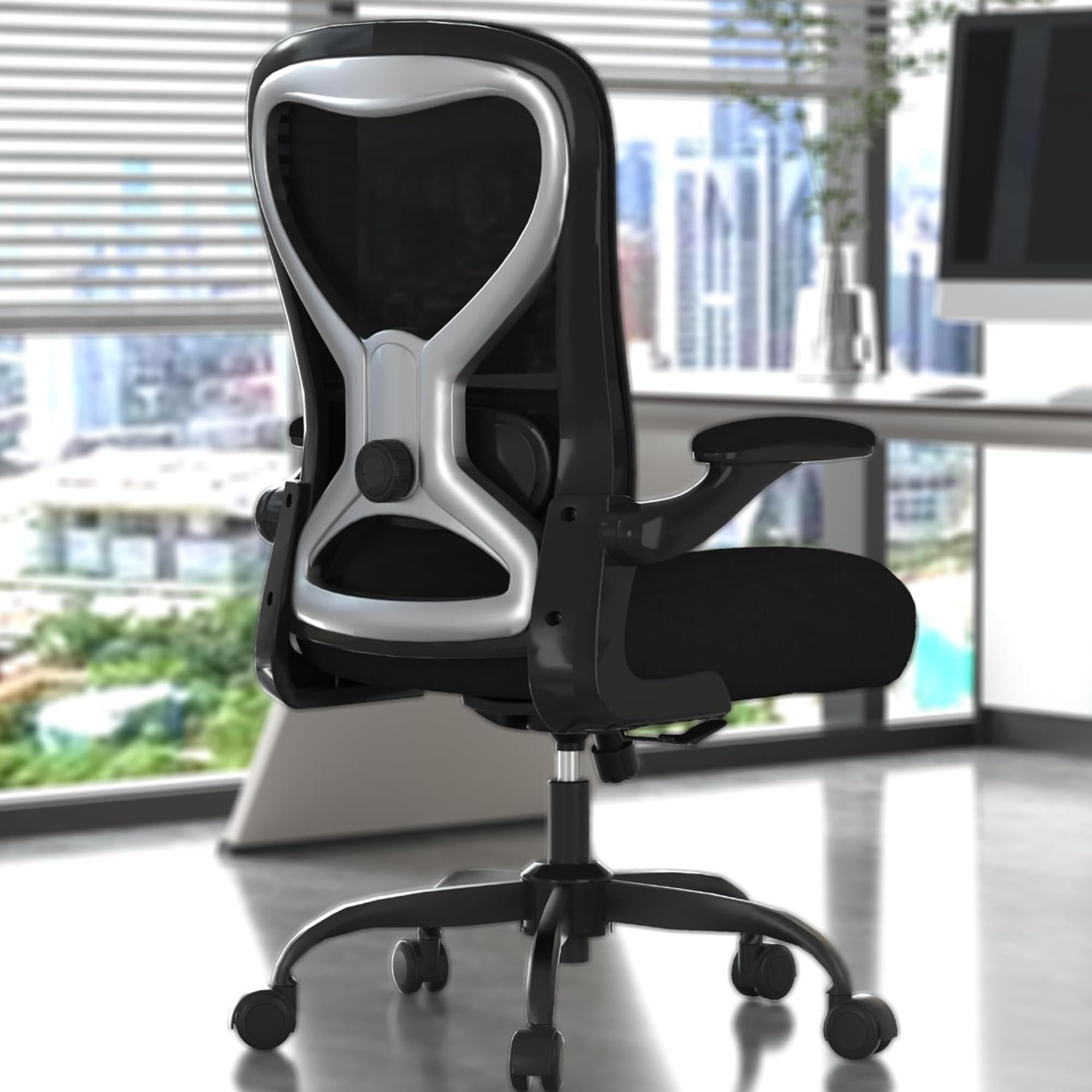
The CASASIO stands out because the lumbar support moves in four directions: up, down, inward, and outward. This level of adjustability is rare near this price point, and it makes a real difference for users whose lower back curve sits slightly higher or deeper than average. The 3.54-inch seat cushion (1 inch thicker than standard) uses high-density foam that stays plush without collapsing.
The hourglass backrest mirrors the natural spine curve, and the breathable mesh prevents sweat buildup during long sessions. The flip-up arms make it easy to slide under a desk, and the tilt-and-rock mechanism moves naturally with your body. The weight capacity is rated for 330 lbs, and the nylon base feels solid under load.
Assembly is manageable with clear instructions, though some users noted that armrest height isn’t adjustable. The cream/white color option looks premium and fits modern home offices. If you find most office chairs leave your lower back floating, the 4-way lumbar on this model compensates better than fixed-pad alternatives.
Why it’s great
- 4-way lumbar (height + depth) for custom fit
- 3.54-inch cushion is 1 inch thicker than standard
- 330 lb weight capacity
Good to know
- Armrests are not height-adjustable
- Some users report arm pads need extra padding
6. Keratee Ergonomic Office Chair
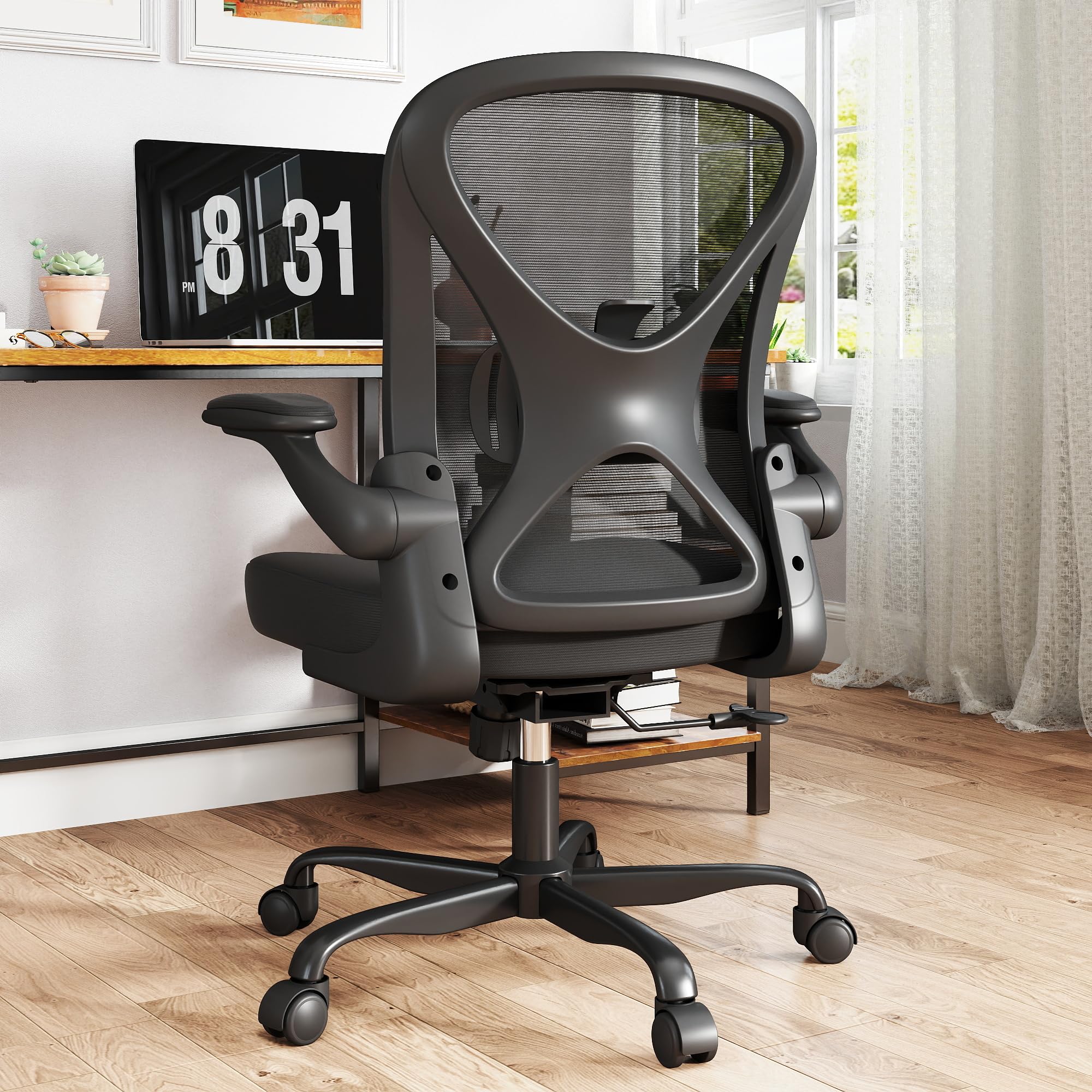
The Keratee chair uses an S-curve backrest designed to match the spine’s natural shape, with a separate adjustable lumbar pad that moves vertically to hit the right spot. The extra-thick seat cushion distributes weight evenly, and the mesh back promotes airflow. The flip-up armrests and tilt-recline mechanism add flexibility for shifting positions throughout the day.
The reinforced 5-star base and SGS-tested gas lift support up to 300 lbs reliably. The chair is narrower than standard (16.73-inch backrest width), which makes it ideal for tight corner desks or small home offices. Assembly is straightforward, and the overall build feels stable without excessive wobble.
Customer feedback is consistent on comfort for prolonged sitting, but some note that the armrest fabric feels rough on bare elbows. The lumbar support helps with lower back fatigue, but users above 6’ tall may find the backrest height insufficient. It’s a solid mid-range chair that balances adjustability and durability for users who need reliable support without premium-tier cost.
Why it’s great
- S-curve backrest mirrors natural spine shape
- Adjustable lumbar pad for targeted relief
- Narrow width fits small desk spaces
Good to know
- Armrest fabric may irritate bare elbows
- Backrest height may be short for very tall users
7. Youhauchair Mesh Office Chair
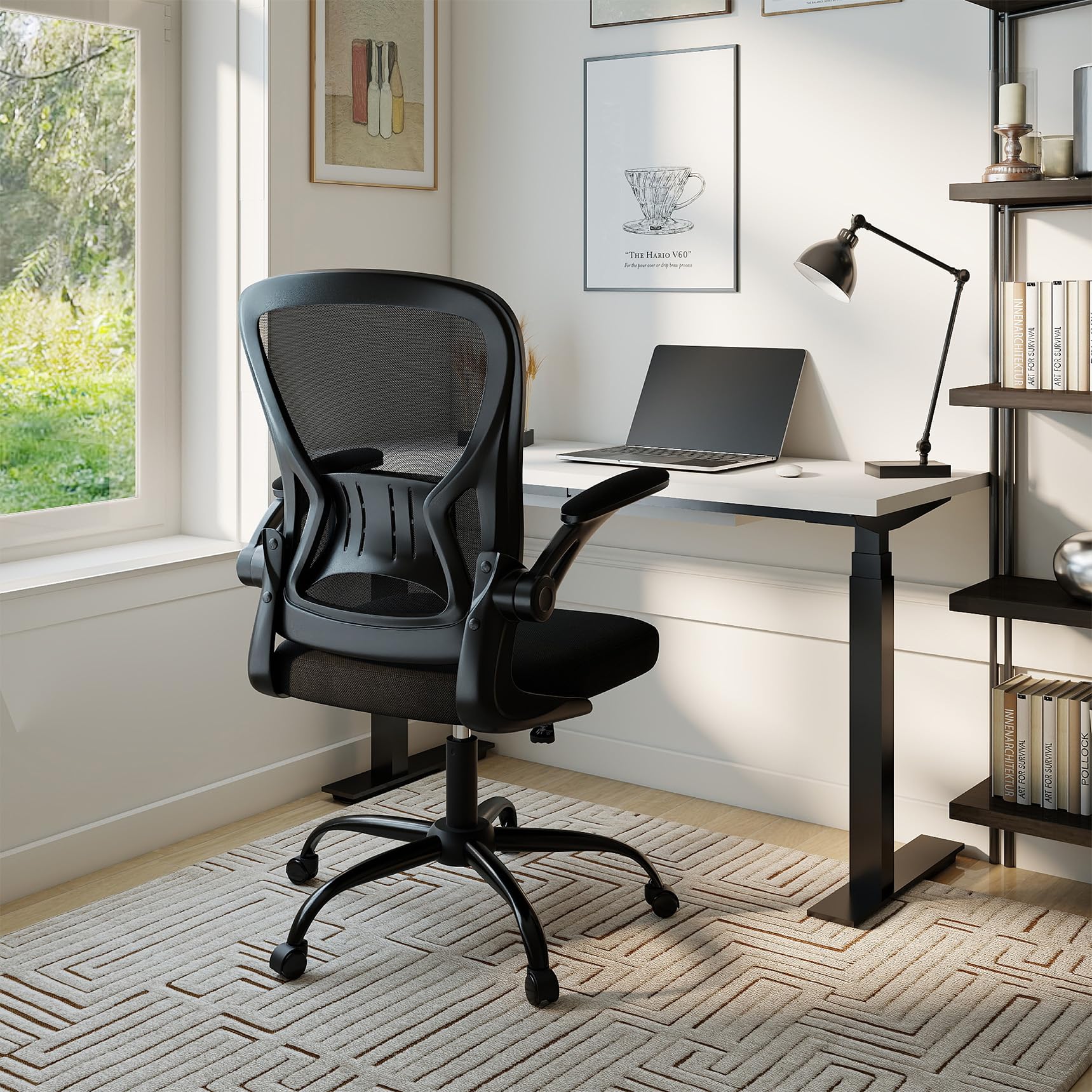
The Youhauchair is the simplest pick in this list: a fixed but well-shaped lumbar curve built into the mesh backrest, no separate pad to fiddle with. This works best for users who want straightforward support without extra adjustments. The high-resilience foam seat cushion provides even pressure distribution, and the mesh back keeps you cool during long typing sessions.
It includes a 30° rocking mechanism, 360° swivel, and flip-up armrests. The SGS-certified gas lift and durable 5-point base support up to 300 lbs. Assembly is the quickest of the group—around 15 minutes with clear instructions and all tools included. The chair is compact, rolling smoothly on nylon casters.
Long-term users note that the foam seat holds up well after months of daily use, and the mesh back remains comfortable. The lumbar curve is fixed, so users with very straight or very curved spines may need an additional lumbar pillow. It’s a no-fuss, reliable chair for standard desk work, priced at a mid-entry point.
Why it’s great
- Simple fixed lumbar curve works for average builds
- Quickest assembly at 15 minutes
- Foam seat maintains shape over months
Good to know
- Lumbar is not adjustable
- Back pad may feel hard after 4+ hours
FAQ
Does seat depth adjustment really affect lower back support?
Is a separate lumbar pad better than a built-in lumbar curve?
Can a thicker seat cushion improve lower back comfort?
What does “2D lumbar” mean on an office chair?
Final Thoughts: The Verdict
For most users, the back support for office chair winner is the ProtoArc EC200 because it combines seat-depth sliding, 4-way lumbar, and high-resiliency foam in a build that accommodates a wide range of body types. If you prioritize neck relief and a 3D adjustable headrest, grab the CASASIO Ergonomic Chair. And for thick cushion durability that handles larger frames up to 350 lbs, nothing beats the QLTPLUS Contour.