
Our readers keep the lights on and the weekend projects moving. As an Amazon Associate, I earn from qualifying purchases.
A medical alert button is only as good as the network it speaks to. When that network drops a call or fails to reach a tower, the entire purpose of the device collapses. For seniors living alone, active adults who hike off-trail, or anyone whose daily routine takes them beyond a single zip code, nationwide coverage isn’t a luxury—it’s the single feature that decides whether help arrives or doesn’t.
I’m Rikta — the co-founder and writer behind FitlyFast. I’ve spent the last several years analyzing the technical specifications, carrier partnerships, battery architectures, and monitoring-center response protocols that separate a true safety device from a plastic brick with a button.
This guide breaks down the seven most credible alert buttons with nationwide coverage on the market today, comparing their cellular networks, battery strategies, fall-detection accuracy, and real-world activation workflows so you can choose the one that genuinely fits your life.
How To Choose The Best Alert Button With Nationwide Coverage
Picking the right alert button means looking past the “nationwide” label on the box and digging into which cellular carrier the device actually uses, how long the battery holds a charge under real daily use, and whether the fall detection logic is adjustable or a one-size-fits-all algorithm that triggers falsely every time you sit down too fast.
Carrier Compatibility Is The Real Coverage Map
A device that runs on Verizon’s 4G LTE network will behave differently in rural or mountainous terrain than one that runs on AT&T or T-Mobile. Check which carrier your specific area has the strongest signal for, then choose a device that rides that network. “Nationwide” means the device works across the country where that particular carrier has towers—not that it works on every tower in the country.
Battery Life Dictates Real-World Reliability
A button that needs charging every two days is a button that will be dead when an emergency happens. Look for devices that last at least five days between charges. The monthly-charge models remove all charging anxiety, but they are larger and heavier. Weigh the trade-off between form factor and forgetability carefully.
Fall Detection Accuracy Is A Spec, Not A Promise
There is no universal standard for fall detection. Some devices are overly sensitive and trigger on sudden stops or hard bumps. Others fail to detect genuine falls. Look for a device that lets you test the fall detection manually during the return window. That is the only way to know if the algorithm works for your specific movement patterns.
Quick Comparison
On smaller screens, swipe sideways to see the full table.
| Model | Category | Best For | Key Spec | Amazon |
|---|---|---|---|---|
| Senior Safety Device Verizon 4G | Mobile Alert | 30-day battery life with zero charging anxiety | 30-day battery on single charge | Amazon |
| Bay Alarm Medical SOS Mobile GPS | Mobile Alert | Caregiver tracking app with location history | 144-hour battery (6-day) | Amazon |
| Home&Wellness Gemini Go Anywhere | Mobile Alert | Advanced AVA fall detection on AT&T | IP67 water resistance | Amazon |
| Lively Mobile2 | Mobile Alert | Fastest call response time and small form factor | Waterproof, no base station needed | Amazon |
| ADT On-The-Go Mobile | Mobile Alert | 150-year reputation with US-based monitoring | Waterproof pendant, 40-hour battery | Amazon |
| SecuLife Medical Alert Pendant | Mobile Alert | Direct-to-family alerts with no call center fee | 1000 mAh battery, up to 6 days | Amazon |
| ACR ResQLink View | PLB | Global satellite coverage with no subscription | 406 MHz satellite, 5-year battery | Amazon |
In‑Depth Reviews
1. Senior Safety Device Verizon 4G Cellular Medical Alert

This device achieves something few alert buttons manage: a genuine 30-day battery life under normal use. That is not a marketing claim stretched from lab conditions—real users consistently report charging it once a month. The slow drain removes the single biggest failure mode of daily-wear alert buttons, which is the dead battery at the moment of need. It runs on Verizon’s 4G network, has no base station requirement, and ships with four months of service included so you can test the coverage without immediate financial commitment.
The activation process is refreshingly low-friction: fill out a texted form, and the device is live within a day. Test calls are answered inside 15 seconds, which matches the response speed of more expensive monitored systems. The built-in speaker is loud enough for users with mild hearing loss, and the large button is easy to press even with reduced dexterity. The pendant can be worn on a lanyard or clipped to a belt, giving flexibility for users who dislike neck wear.
One design limitation warrants attention: the charging circuit lacks overcharge protection. Leaving it plugged in beyond ten hours can damage the battery, per the instruction manual. That is a notable omission in a safety device, though for users who charge on a simple monthly schedule, the risk is manageable. The 2/5-star review citing this issue is isolated but credible—adhere strictly to the charging guidance and this device is a rock-solid choice.
Why it’s great
- True 30-day battery eliminates weekly charging worry
- Verizon 4G reliability with indoor and outdoor coverage
- Four months of service included for risk-free trial
Good to know
- Charging over 10 hours can damage battery—set a timer
- No fall detection built into the base unit
2. Bay Alarm Medical SOS Mobile GPS

Bay Alarm Medical positions the SOS Mobile GPS as a full-featured tracking and alert device, and it delivers on that promise with a dedicated caregiver app that lets family members check the wearer’s real-time location, device battery level, and even set step-count goals. That combination of emergency alert and daily activity monitoring is rare in this price bracket. The device uses Verizon’s 4G LTE network, weighs under two ounces, and is IP67 water-resistant so it can survive shower and rain exposure without issue.
The battery life lands at approximately five to six days, which is solid for a device with continuous GPS polling. Low-battery email alerts reduce the chance of the device dying unnoticed. The activation process is straightforward—either by phone or through the brand’s online portal—and the monthly monitoring starts at a competitive rate with no hidden fees for emergency calls. The two-way speaker is clear, and the US-based dispatch centers have a reputation for quick pickup.
Where the device falls short is customization depth. The core alerting works flawlessly, but users cannot configure emergency contacts, medical information, or door codes through the device itself. The caregiver app notifications may not break through silent mode on iPhones, which could delay family acknowledgment of an alert. For users who prioritize rugged tracking and caregiver visibility over advanced personalization, this is a strong mid-range contender.
Why it’s great
- Real-time GPS tracking with caregiver app visibility
- Ultra-light 2-ounce build for comfortable all-day wear
- IP67 water resistance for shower and rain use
Good to know
- Battery lasts 5-6 days, not the longer cycle of competitors
- No emergency contact or medical info customization onboard
3. Home&Wellness Gemini Go Anywhere
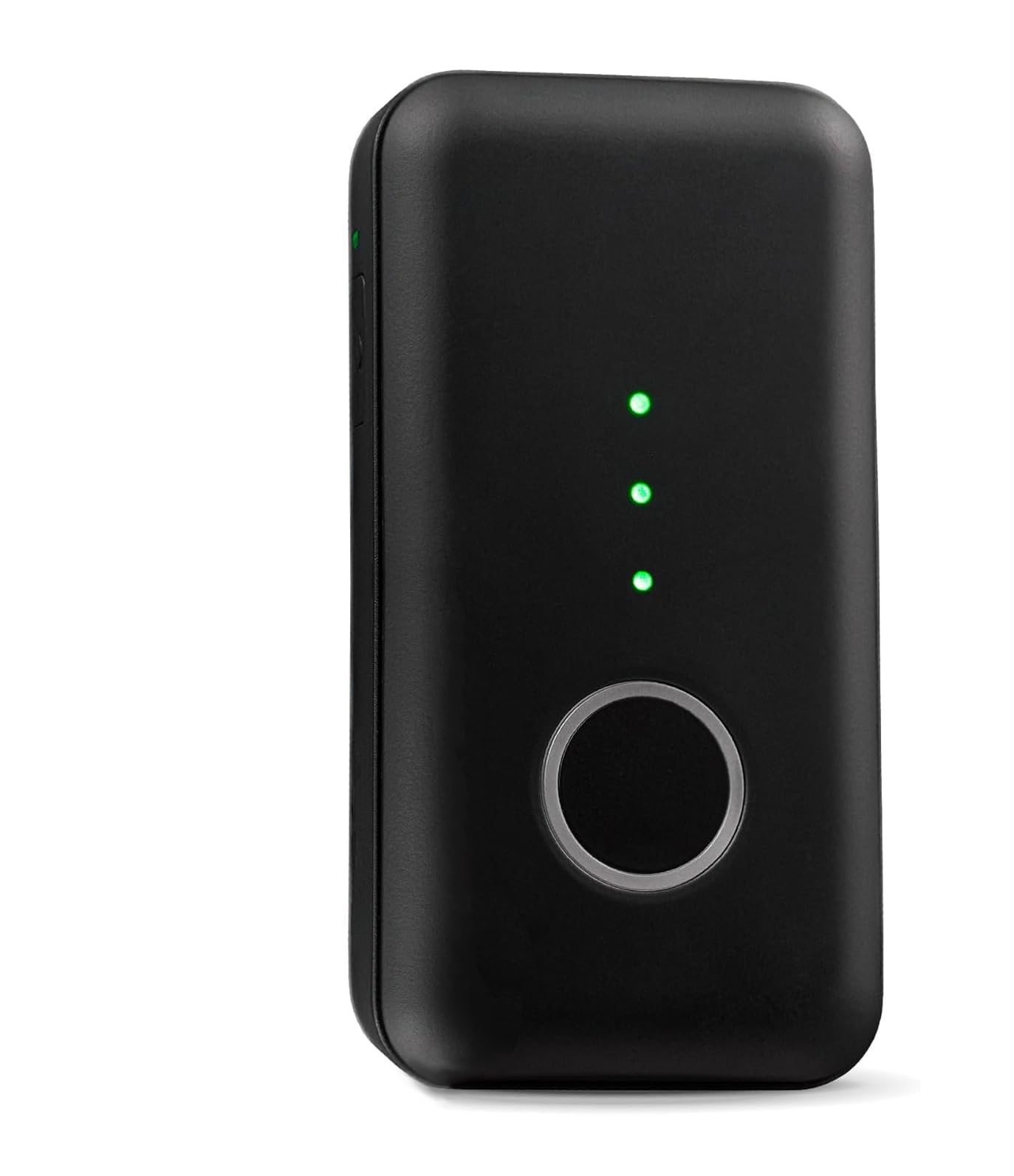
The Home&Wellness Gemini stands on AT&T’s 4G LTE network and integrates what the manufacturer calls AVA fall detection technology. Real-world testing suggests this algorithm is noticeably sensitive—multiple reviewers report it detected falls successfully within the first day of use, including one reviewer who intentionally tested it and received a confirmed alert. That level of sensitivity is a double-edged sword: it catches genuine falls reliably but may trigger on sudden movements like sitting down hard or dropping the pendant from waist height.
The device is larger and heavier than most competitors, which is the trade-off for its extended battery life of two to three days under normal usage. An email reminder system helps compensate for the shorter charge cycle. The pendant includes a bright LED that some users found distracting at night, though a small piece of tape resolves the issue. Customer service reviews are overwhelmingly positive, with responsive support that has sent replacement units when needed.
Pricing is all-inclusive with no activation fees, hidden tiers, or long-term contracts. The monthly rate sits competitively among monitored solutions. The IP67 rating means it can be worn in the shower, and the GPS tracking provides location data to the monitoring center during an alert. For AT&T customers who want aggressive fall detection, the Gemini is a compelling choice, but be prepared for the larger form factor.
Why it’s great
- Sensitive fall detection verified in real-world user tests
- All-inclusive pricing with no hidden fees or contracts
- GPS location relayed to monitoring center during alerts
Good to know
- Bulky pendant may be uncomfortable for petite users
- Bright LED light needs tape to dim in bedroom use
4. Lively Mobile2

Lively markets the Mobile2 as having the fastest call response time among medical alert systems, and the user experience backs that claim. Setup takes about an hour, the device connects quickly, and the two-way voice is clear. The real draw here is the physical design: the Mobile2 is noticeably smaller and lighter than the bulkier pendants from Home&Wellness and Senior Safety Device. That compact form factor makes it easier to wear under clothing or clip discreetly to a belt, which directly improves compliance rates among users who dislike obvious medical devices.
The optional fall detection features a false-alarm confirmation step—when a fall is detected, the system asks if you are okay before dispatching help, reducing unnecessary emergency calls. The companion caregiving app automatically notifies family members when an alert is triggered, creating a multi-layer response chain. The waterproof rating covers shower, pool, and rain exposure, and the device requires no landline or base station, so it travels with the user anywhere.
Where the Mobile2 stumbles is in its fall detection reliability. Multiple user reports cite false alarms and at least one instance where the system failed to detect an actual fall. The cancellation process has been described as frustrating, requiring a phone hold and occurring at inconvenient early-morning hours for some users. For those who prioritize the smallest possible device and fast response times, the Mobile2 delivers, but the fall detection is best considered a bonus feature rather than a primary safety mechanism.
Why it’s great
- Compact, lightweight design for high wear compliance
- Fastest claimed response time with clear two-way voice
- Automatic family notifications through companion app
Good to know
- Fall detection has inconsistent real-world accuracy
- Cancellation process requires phone call and can be frustrating
5. ADT On-The-Go Mobile Medical Alert System

ADT brings 150 years of professional monitoring experience to this mobile alert system, and that institutional weight shows in the infrastructure behind the button. The monitoring centers are US-based and company-owned, not outsourced third-party operations. That means consistent training standards, direct accountability, and a level of dispatch coordination that smaller brands struggle to match. The device runs on AT&T’s 4G nationwide network and comes with a waterproof wristband or necklace pendant.
The fall detection pendant uses an embedded personal safety alarm that activates with a single button press. Multiple reviewers confirm that the fall detection functioned correctly, alerting care home staff within moments of a real fall event. The device is lightweight at 1.76 ounces and compact enough for comfortable 24/7 wear. The step-by-step update system keeps emergency contacts informed through the entire response timeline, including updates from first responders. That is a meaningful feature for family members who live far away.
The downsides are twofold. The monthly subscription sits at a premium price point, and the fall detection pendant has generated some reports of false alarms during sleep and failures to detect actual falls. ADT’s return policy is notably short—just 30 days—which is not enough time for some users to fully evaluate fall detection reliability. For buyers who value brand reputation and US-based dispatch above all else, ADT is a safe choice, but the high monthly cost and mixed fall detection accuracy demand careful consideration.
Why it’s great
- 150-year brand reputation with US-based, company-owned monitoring
- Waterproof pendant with wristband and necklace options
- Real-time updates to emergency contacts throughout response
Good to know
- Premium monthly subscription cost compared to most competitors
- Short 30-day return window for fall detection evaluation
6. SecuLife Medical Alert Pendant
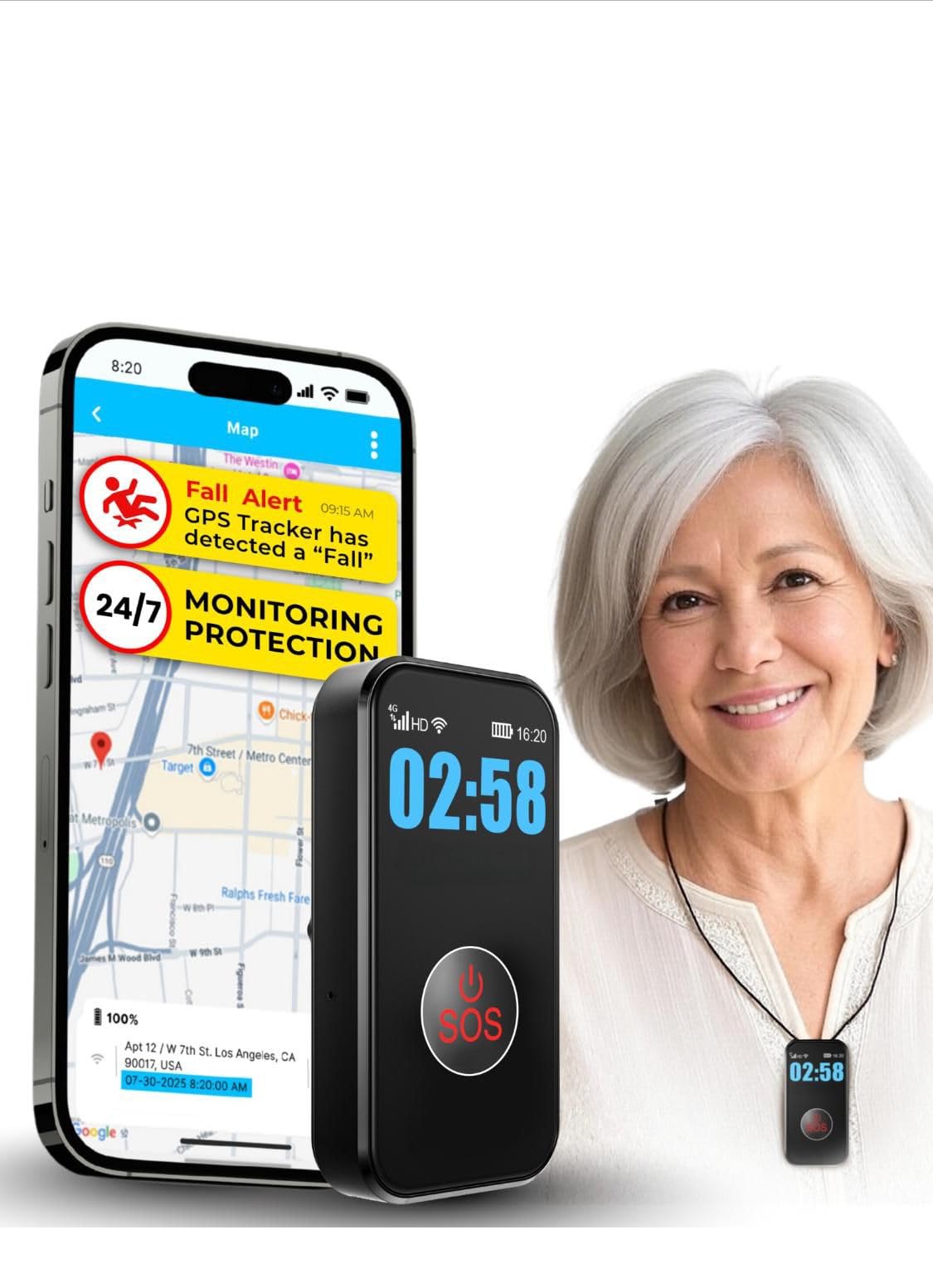
SecuLife takes a fundamentally different approach: instead of routing alerts through a third-party call center, this pendant calls and sends SOS notifications directly to your preselected emergency contacts—family members, neighbors, or personal caregivers. That eliminates monthly monitoring fees entirely, with the subscription costing a fraction of traditional monitored systems. The pendant is a full 4G LTE device with GPS tracking, geo-fence zones that alert when the wearer leaves a designated safe area, and two-way voice calling so family can speak directly through the pendant.
The battery is a 1000 mAh unit that delivers up to six days of life with one-hour interval tracking, which is excellent for a device with always-on GPS. The magnetic charging cable makes reconnecting easy for arthritic hands. The display shows time, battery percentage, and signal strength, adding utility beyond pure emergency use. Setup involves configuring the app and adding authorized contacts, and once complete, the system runs independently without any ongoing monitoring center relationship.
The trade-off is that no external monitoring center means no professional dispatch of emergency services. The pendant dials your contacts, and those contacts must then decide whether to call 911. One user reported that the SOS button did nothing during a fall, and customer service did not offer a refund. For families who want to be the first line of response and save on monthly costs, the SecuLife is a smart buy. For those who need guaranteed ambulance dispatch, the monitored models above are safer.
Why it’s great
- Low monthly cost with direct-to-family alerts, no call center
- GPS tracking with geo-fence safe-zone notifications
- 1000 mAh battery with up to six days of life
Good to know
- No professional monitoring center for 911 dispatch
- Reliability concerns reported with fall detection activation
7. ACR ResQLink View RLS

The ACR ResQLink View is not a typical medical alert button—it is a 406 MHz satellite personal locator beacon (PLB) that communicates directly with search and rescue satellites orbiting the Earth. It provides global coverage everywhere on the planet, with no cellular towers, no monthly subscription, and no dead zones. When activated, it transmits your GPS coordinates to the international COSPAS-SARSAT satellite network, and the Return Link Service (RLS) confirms on the digital display that rescue authorities have received the signal.
The built-in digital display is a standout feature: it shows a visual confirmation that the distress signal was received, removing the anxiety of wondering whether the alert went through. The infrared strobe aids nighttime visibility for rescue teams, and the device is buoyant enough to float if dropped in water. The battery lasts five years in standby and provides over 28 hours of continuous operation during an active emergency. It is compact at 5.28 ounces and includes multiple clip options for attachment to life jackets, backpacks, or belts.
This device is specifically for outdoor adventurers—hikers, boaters, backcountry campers, and off-grid travelers. It is not designed for daily senior fall detection or routine medical alerts. The initial purchase cost is significantly higher than any other device on this list, and once activated, the beacon cannot be turned off without manual override, which could lead to accidental false alerts. For its intended use case—extreme remote environments where cell coverage does not exist—the ResQLink View is the most reliable alert option money can buy.
Why it’s great
- True global satellite coverage with no subscription fees
- Digital display confirms signal receipt by rescue authorities
- 28+ hour operational battery, 5-year standby life
Good to know
- High upfront cost appropriate for extreme outdoor use only
- Not suitable for daily senior fall detection or home use
FAQ
Does nationwide coverage mean the button works in every rural area of the country?
Can I use an alert button without a monthly subscription?
How long should the battery last on a mobile alert button?
Final Thoughts: The Verdict
For most users, the alert buttons with nationwide coverage winner is the Senior Safety Device Verizon 4G because its 30-day battery life eliminates the single biggest failure point of personal alert systems—forgetting to charge. If you want real-time GPS tracking and caregiver app visibility, grab the Bay Alarm Medical SOS Mobile GPS. And for outdoor adventurers who travel beyond cellular reach entirely, nothing beats the ACR ResQLink View for global satellite rescue coverage.