
Our readers keep the lights on and the weekend projects moving. As an Amazon Associate, I earn from qualifying purchases.
Ammonia spikes are the single fastest way to lose fish, and the only permanent fix is a massive, stable colony of nitrifying bacteria living on a high-surface-area substrate inside your filter. The porous ceramic, sintered glass, or roughened plastic media you choose determines exactly how many of those bacteria your system can support and how quickly they can process waste.
I’m Rikta — the co-founder and writer behind FitlyFast. I have spent years analyzing aquarium filtration hardware, from pore density measurements to real-world ammonia oxidation rates, to separate media that truly cycles a tank from marketing claims.
After reviewing dozens of options, I have identified the seven strongest contenders that reliably house beneficial bacteria and keep nitrite levels at zero. This guide covers everything you need to confidently choose the right bio filter media for freshwater aquarium setups.
How To Choose The Best Bio Filter Media For Freshwater Aquarium
Selecting biological filter media is not about brand loyalty — it is about matching the physical properties of the media to your filter type, stocking level, and maintenance tolerance. The three metrics that actually determine performance are surface area per unit volume, water flow characteristics, and chemical inertness.
Surface Area and Pore Architecture
Nitrifying bacteria colonize surfaces, so total surface area directly limits how much ammonia your system can process per day. High-end sintered glass media claims around 1,800 square feet per gallon, while standard ceramic rings offer roughly 200 to 400 square feet per gallon. The pore size distribution matters too — micro-pores under 10 microns provide the most colonization area, while macro-pores above 100 microns allow water to flow through and prevent dead zones.
Water Flow and Clog Resistance
Media that restricts water flow forces your pump to work harder and reduces the volume of water contacting bacteria. Hollow ceramic rings and open-cell sintered glass maintain high porosity even as biofilm accumulates. Dense, tightly packed media with small channels can trap debris and require frequent rinsing, which disrupts the bacterial colony. A good rule is to choose media with interconnected cavities that permit free water passage.
Chemical Composition and Longevity
Inert ceramic or sintered glass does not alter pH, hardness, or other water parameters. Some cheap media can leach aluminum or phosphates over time, which stresses sensitive fish or fuels algae blooms. Quality bio media lasts years without degrading — you should only need to rinse it in aquarium water every few months, never replace it entirely unless it has physically broken down.
Quick Comparison
On smaller screens, swipe sideways to see the full table.
| Model | Category | Best For | Key Spec | Amazon |
|---|---|---|---|---|
| EHEIM Substrat Pro | Sintered Glass | Ultra-high bacteria capacity | 1,800 sq ft surface per gallon | Amazon |
| Fluval BIO-FX | Ceramic Pellets | Large canister filters | 5 liters volume | Amazon |
| ALEGI Sphere 4 lbs | Ceramic Spheres | Beginner sump setups | 4 free mesh bags included | Amazon |
| AQUAPAPA 6 lbs Rings | Ceramic Rings | Overstocked cichlid tanks | 6 lbs in 6 mesh bags | Amazon |
| Fluval BioMax 500g | Ceramic Granules | Fluval canister owners | 500 g granules | Amazon |
| Reefing Art 24 pcs | Ceramic Blocks | Small biocube retrofits | 24 pieces per box | Amazon |
| AQUACITY 5 Lbs Rings | Ceramic Rings | Pond waterfall boxes | 5 lbs bulk bag | Amazon |
In‑Depth Reviews
1. EHEIM Substrat Pro 1L

The EHEIM Substrat Pro uses sintered glass rather than fired clay, resulting in a pore structure that claims 1,800 square feet of surface area per gallon — dramatically more than standard ceramic rings. In practical terms, this means a single liter can support the biological load of a heavily stocked 55-gallon tank without measurable ammonia or nitrite. The round, beaded shape allows water to flow evenly around every particle, minimizing dead spots that reduce effective colonization.
Users consistently report that this media never crumbles or degrades even after years of use in canister filters, and it rinses cleanly without losing its porous structure. The trade-off is cost — it sits at the premium end of the market. However, because it does not need replacement like sponges or cartridges, the per-year cost often beats cheap media that must be swapped every six months.
One common feedback point is that the small, lightweight pellets can scatter during filter maintenance. Placing them inside a fine mesh bag solves this problem entirely. For freshwater aquarists who want the highest possible bacterial density in the smallest footprint, this is the definitive choice.
Why it’s great
- Highest surface area per volume of any media tested
- Does not degrade or crumble over years of use
- Maintains stable water chemistry even with heavy feeding
Good to know
- Premium price point compared to ceramic rings
- Small pellets require a mesh bag to prevent scattering
2. Fluval BIO-FX 5 Liters

Fluval’s BIO-FX is a ceramic pellet media engineered with deep pore structures and interconnected micro-tunnels that create a massive internal surface area without restricting water flow. At 5 liters, this box provides enough media to fill a large canister like the FX6 completely, supporting heavy bioloads from large cichlids or community tanks. The linked cavities discourage blockages and keep water moving through the full depth of the media bed.
User reviews highlight how quickly this media cycles a new tank — several noted that ammonia dropped to zero within two weeks when used alongside a seeded sponge. The ceramic material is completely inert, so it will not shift pH or hardness, and it rinses easily in dechlorinated water without breaking apart.
The main consideration is that 5 liters is a large volume — it makes sense only if you have a canister or sump with enough capacity to house it. For smaller filters, the single-liter version is more appropriate. This is a set-and-forget media that delivers exactly what it promises.
Why it’s great
- Extremely porous with interconnected micro-tunnels
- Large 5-liter volume suits big canisters and sumps
- Inert ceramic does not alter water parameters
Good to know
- Bulk size is overkill for small tanks under 20 gallons
- Requires rinsing every few months to remove debris buildup
3. ALEGI 4 lbs Ceramic Sphere

The ALEGI 4 lbs Ceramic Sphere media offers a rare combination of convenience and value. It arrives in four reusable mesh bags, which saves the hassle of bagging the media yourself and makes placement in sumps or canisters immediate. The spherical shape allows water to flow around each ball evenly, which aids gas exchange and prevents the channeling that can occur with irregular media shapes.
Users report that this media quickly colonizes with beneficial bacteria and keeps tanks clean even under moderate stocking levels. The ceramic is non-metallic and will not leach aluminum, an issue with some budget media. One creative review even noted using the balls as a cat deterrent on houseplant soil, but their primary function as bio media is solid — pore density is decent for the price tier.
The main caveat is that in high-flow canisters, water may bypass the spheres if they are not packed tightly. The included bags help with this, but you should ensure the bags are snug in the filter chamber. For beginners setting up their first sump or a medium-sized canister, this is the most cost-effective entry point.
Why it’s great
- Comes pre-bagged in 4 reusable mesh bags
- Spherical shape promotes even water flow
- Safe, non-metallic ceramic composition
Good to know
- May need tight packing to prevent bypass in high-flow filters
- Pore density is lower than premium sintered glass
4. AQUAPAPA 6 lbs Premier Bio Ceramic Rings

This 6-pound bag of ceramic rings from AQUAPAPA is a workhorse option designed for high-bioload freshwater tanks. The hollow center of each ring allows water to pass through the interior, doubling the effective surface area compared to solid pellets. Users with overstocked cichlid tanks report that this media fills multiple canister trays or sump baffles without running out, providing stable biological filtration even with heavy feeding.
The rings are individually packed in six mesh bags, which makes distribution across filter stages simple. The zippers on the bags are plastic rather than metal, which avoids rust issues in saltwater, though they are primarily marketed for freshwater. The ceramic material is porous enough to seed quickly — several reviews noted active nitrite consumption within two weeks of installation.
A minor drawback reported is that some rings arrived with slight manufacturing odors or dust from shipping abrasion. A thorough rinse in dechlorinated water before use eliminates this. For tanks with aggressive bioloads, this is a reliable bulk solution that outperforms budget sponge blocks.
Why it’s great
- Hollow design allows interior surface colonization
- 6 lbs provides ample media for large setups
- Pre-bagged in six separate mesh bags
Good to know
- May have slight manufacturing dust on arrival
- Plastic zippers, not metal — fine for freshwater
5. Fluval BioMax 500g Granules

Fluval BioMax is a direct drop-in biological media for the entire Fluval canister line, from the 106 up to the FX6. It comes in rough, porous granules that provide a textured surface ideal for nitrifying bacteria to grip and colonize. Many users confirm that this media reduces ammonia spikes noticeably within the first week of installation, especially when rinsed only in aquarium water to preserve existing bacterial colonies.
The granular form fits snugly into Fluval’s media trays, leaving minimal dead space. It is also suitable for saltwater, making it a flexible option for reef keepers who also run freshwater tanks. One experienced review noted that the media lasts for years without disintegration, though monthly rinsing is recommended to prevent debris buildup that can reduce flow.
The main limitation is that the granules are somewhat bulky compared to sintered glass or fine ceramic rings, meaning they occupy more volume for the same surface area. In small filters like the 106 or 206, 500 grams may fill only one tray. Still, for Fluval owners who want a guaranteed fit, this is the safest and most convenient choice.
Why it’s great
- Perfect fit for all Fluval canister filter trays
- Rough texture promotes rapid bacterial colonization
- Does not alter water chemistry
Good to know
- Granules are bulky — lower surface area per volume than premium options
- Only fills one tray in larger Fluval models
6. Reefing Art 24-Piece Ceramic Blocks

Reefing Art’s 24-piece ceramic block set is a clever option for Biocube owners or anyone with a tight filter compartment. The blocks are square and stackable, allowing you to pack them into irregular spaces that round media cannot fill efficiently. The porosity is well-regarded — users report that the internal structure supports a robust bacteria colony without being fragile enough to crumble during handling.
At 1.75 pounds total, this is a smaller-volume media, but the block shape means you waste almost no space in the filter. Multiple reviewers noted that these blocks replace the disposable cartridges in all-in-one tanks, saving money over time. The ceramic is non-metallic and 100% aquarium safe, so there is no risk of aluminum leaching.
The biggest complaint is that the blocks produce a noticeable amount of ceramic dust from shipping abrasion, even though the packaging is tight. A thorough rinse before use is mandatory. Also, because they are rigid blocks, they cannot conform to curved filter chambers — they work best in rectangular compartments.
Why it’s great
- Stackable blocks maximize space in compact filters
- Durable ceramic that does not chip easily
- 100% safe, non-metallic material
Good to know
- Significant ceramic dust from shipping requires rinsing
- Blocks are rigid — not ideal for curved chambers
7. AQUACITY 5 Lbs Ceramic Rings
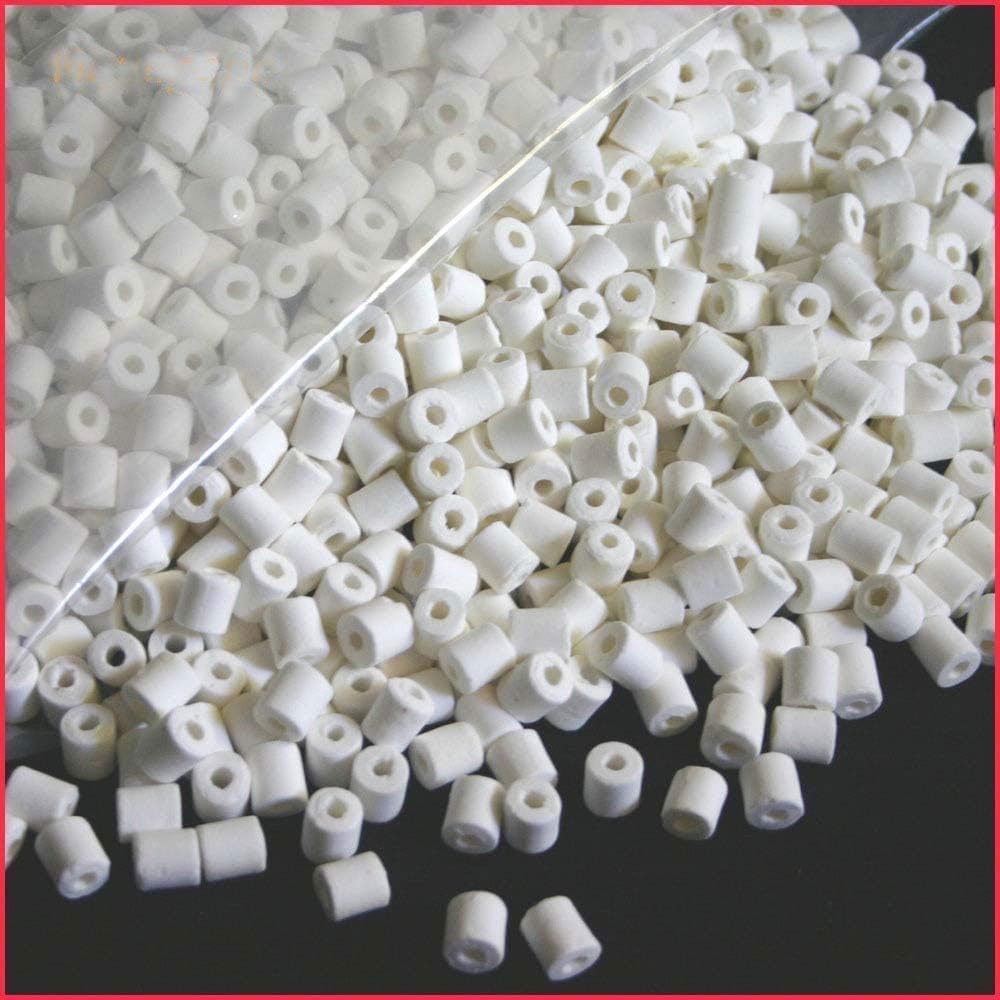
The AQUACITY 5-pound bag of ceramic rings is a straightforward bulk option for pond keepers or large freshwater tanks. Each ring measures roughly half an inch, which is a useful size for waterfall boxes, sump chambers, or intake pipe bags. The ceramic is extremely porous with fine pores that provide ample surface area for bacteria, and the rings are durable enough to survive rough handling during cleaning.
Several pond owners confirmed that this media handled the bioload of a 3,500-gallon pond with medium fish stock when used in mesh bags placed in the waterfall box. The bulk packaging keeps the per-pound cost low, making it a budget-friendly choice for filling large volumes. The manufacturer includes a lifetime warranty, which is rare at this price tier.
A consistent note from reviews is that the rings run on the small side, which can restrict water flow if packed too densely in a canister. For high-flow applications, the small size may cause channeling where water finds the path of least resistance around the media. It is best used in wide, shallow chambers where flow distribution is naturally even.
Why it’s great
- Extremely cost-effective for large pond or tank volumes
- Porous ceramic supports fast bacterial colonization
- Lifetime warranty included
Good to know
- Small ring size can restrict flow in canisters
- Not eligible for Prime shipping in some regions
FAQ
How often should I replace bio filter media in a freshwater tank?
Can I use ceramic rings from a saltwater tank in freshwater?
Why does my bio media produce a smell after a few months?
Final Thoughts: The Verdict
For most users, the bio filter media for freshwater aquarium winner is the EHEIM Substrat Pro 1L because it delivers the highest surface area per volume, which translates directly into faster ammonia processing and more stable water chemistry. If you want a large volume of reliable media for a canister filter, grab the Fluval BIO-FX 5 Liters. And for a budget-friendly entry-level setup with pre-bagged convenience, nothing beats the ALEGI 4 lbs Ceramic Sphere.