
Our readers keep the lights on and the weekend projects moving. As an Amazon Associate, I earn from qualifying purchases.
Every new parent knows the helpless feeling of watching a baby squirm in discomfort from gas, colic, or irregular digestion. Baby probiotic drops have emerged as a targeted solution to reintroduce beneficial bacteria into an infant’s developing gut, but not all formulations are created equal — strain selection, colony-forming units (CFUs), and delivery method directly impact whether those drops actually soothe or simply sit on the shelf.
I’m Rikta — the co-founder and writer behind FitlyFast. I’ve spent years analyzing supplement market data, reviewing clinical research on infant microbiome strains, and comparing the manufacturing standards of the leading brands in this narrow category to separate evidence-backed formulas from marketing fluff.
This guide breaks down the most effective formulas currently available so you can confidently choose the best baby probiotic drops for your little one’s specific needs — whether that’s colic relief, post-antibiotic recovery, or daily digestive maintenance.
How To Choose The Best Baby Probiotic Drops
Selecting baby probiotic drops requires more than grabbing the first bottle on the shelf. You need to match the strain to your baby’s specific issue — colic, constipation, immune support — while ensuring the delivery format fits your baby’s age and feeding routine.
Strain Selection: The Most Critical Factor
Not all probiotics are equal in an infant’s gut. Lactobacillus rhamnosus GG (LGG) is the most studied strain for immune and digestive health in babies. Bifidobacterium animalis ssp. lactis (BB-12) has strong clinical backing for reducing colic and fussiness. Saccharomyces boulardii is a yeast-based probiotic that survives antibiotic use well, making it ideal for post-medication recovery. Look for products that specify the strain on the label — generic “probiotic blend” without strain names is a red flag.
CFU Count: More Isn’t Always Better
Infant formulas typically range from 1 billion to 10 billion CFU per serving. For newborns, 1–4 billion CFU is generally sufficient and gentle. Higher CFUs (10 billion+) are better suited for toddlers or after antibiotic courses. Excessively high CFUs in a sensitive newborn can actually cause temporary gas or loose stools as the gut adjusts.
Delivery Method: Drops, Powders, or Sachets
Liquid drops are the most convenient for newborns because you can administer them directly into the mouth or mix them into breast milk, formula, or expressed milk without changing the taste. Powder sachets must be dissolved in liquid or soft food, which works better for older babies who eat solids. Dropper bottles with clear markings ensure accurate dosing, while shaker tops (common on some vitamin D combo bottles) can be less precise.
Quick Comparison
On smaller screens, swipe sideways to see the full table.
| Model | Category | Best For | Key Spec | Amazon |
|---|---|---|---|---|
| BioGaia Baby Probiotic Drops | Liquid Drops | Colic & Gas Relief | L. reuteri DSM 17938 strain | Amazon |
| Florastor Baby Sachets | Powder Stick | Antibiotic Recovery | 5 billion CFU S. boulardii | Amazon |
| Nordic Naturals Baby’s Flora | Powder Packet | Odorless Daily Support | 4 billion CFU LGG + BB-12 | Amazon |
| Enfamil Dual Probiotic Drops | Liquid Drops | Colic + Vitamin D Combo | LGG + BB-12 with Vitamin D | Amazon |
| BioGaia Nurture & Grow | Liquid Drops | Toddler Immune & Oral | L. reuteri (Oral health strain) | Amazon |
| Zahler Kidophilus Drops | Liquid Drops | Fruit Punch Flavor | 10 million CFU B. coagulans | Amazon |
| Wellements Organic Constipation | Liquid Syrup | Gentle Constipation Relief | Prune + Chicory Fiber | Amazon |
In‑Depth Reviews
1. BioGaia Baby Probiotic Drops

BioGaia is arguably the most clinically studied baby probiotic brand for colic in the world, with over 20 years of research backing its specific Limosilactobacillus reuteri DSM 17938 strain. This strain is naturally found in breast milk, which gives it a unique compatibility with infant digestive systems. The liquid drop format makes it incredibly easy to administer to newborns — even on day one of life — directly into the mouth or mixed into milk.
Parents consistently report noticeable reductions in crying time, gas discomfort, and spit-up episodes within the first two weeks of use. The formulation is free from all major allergens — dairy, soy, gluten, and sugar — making it a safe starting point for most babies, including those with suspected sensitivities. The dropper provides clear milliliter markings for precise daily dosing.
The main limitation is that this product targets colic and general digestive discomfort specifically; it does not include any added vitamin D or additional strains for oral health. Some parents note that the bottle is relatively small (0.34 oz) and may not last a full month depending on dosing frequency, though the concentrated drops deliver a potent per-drop dose.
Why it’s great
- Clinically proven L. reuteri strain for colic relief
- Safe for newborns from day one of life
- Free from dairy, soy, gluten, and sugar
Good to know
- Small bottle may require frequent repurchases
- No added vitamin D or multi-strain blend
2. Florastor Baby Daily Probiotic Sachets

Florastor Baby takes a different approach by using Saccharomyces boulardii CNCM I-745, a yeast-based probiotic rather than a bacterial one. This distinction matters because yeast probiotics are naturally resistant to antibiotics — while bacterial probiotics are often killed during antibiotic treatment, S. boulardii thrives. This makes Florastor the top choice for babies on antibiotics or recovering from a course of them.
The powder format comes in individual stick packets that mix easily into formula, breast milk, or soft foods. Parents report rapid resolution of antibiotic-induced diarrhea, often within days. The product also helps flush out pathogenic bacteria in cases of C. diff or H. pylori, as confirmed by multiple reviews noting that initial “cleaning out” symptoms resolved within a week.
One downside is that the powder can develop an unpleasant smell if left sitting in liquid for too long before serving, so it needs to be mixed fresh immediately before feeding. Additionally, the sachet format is slightly less convenient than ready-to-use drops for parents of very young newborns who aren’t yet eating solids.
Why it’s great
- Resistant to 16 common oral antibiotics
- Single-serving packets prevent contamination
- Vegan, gluten-free, lactose-free formulation
Good to know
- Develops a weird smell if left in liquid too long
- Not a liquid drop format
3. Nordic Naturals Baby’s Nordic Flora Probiotic Powder
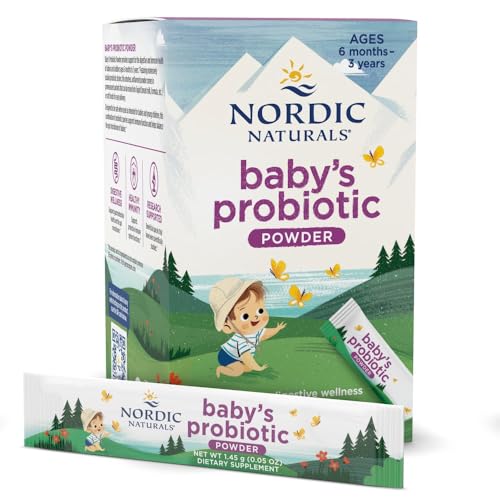
Nordic Naturals combines two of the most widely researched strains for pediatric use — Lactobacillus rhamnosus GG and Bifidobacterium animalis ssp. lactis — delivering 4 billion CFU per packet. This dual-strain approach targets both digestive health and immune support, with research suggesting the combination may reduce the risk of common daycare infections and shorten the duration of colds in toddlers.
The powder is completely odorless and tasteless, which is a major advantage for parents of picky eaters. It dissolves instantly in cold or room-temperature liquids, mixing invisibly into milk, yogurt, or purees without changing texture or flavor. Parents of newborns and toddlers alike report that it resolves constipation and promotes regular bowel movements within two to four weeks of daily use.
The primary drawback is the powder format itself — unlike liquid drops, you cannot administer it directly into a newborn’s mouth. It must be mixed into something the baby will consume entirely, which can be tricky with very young infants who don’t finish every bottle. Some parents have also noted that the packet design makes it difficult to split doses if the pediatrician recommends starting with a half-packet.
Why it’s great
- Undetectable taste and smell — ideal for picky eaters
- Clinically studied LGG + BB-12 dual strain blend
- Third-party tested for purity and freshness
Good to know
- Must be mixed into food or liquid
- Not ideal for newborns who don’t finish bottles
4. Enfamil Dual Probiotic & Vitamin D Drops

Enfamil’s dual-action drops deliver both LGG and BB-12 probiotics alongside vitamin D, addressing two infant supplementation needs in one daily dose. Vitamin D is especially important for breastfed babies, who often fall short of the recommended daily intake, so this combination simplifies the morning routine for parents — one dropper instead of two separate products.
Parents report noticeable improvement in colic symptoms, including reduced crying and less frequent gas discomfort, with many noting results within a couple of weeks. The drops have no strong taste, which helps with baby acceptance. This product is also SNAP-eligible, making it accessible for families using federal nutrition assistance programs.
The bottle uses a shaker top rather than a traditional dropper, which means dosing is based on drops falling from the top rather than a precisely measured milliliter draw. Some parents find this less accurate than a marked dropper. Additionally, the manufacturer recommends this for ages 0–1 years, so it is not suitable for older toddlers needing ongoing probiotic support.
Why it’s great
- Combines probiotics with vitamin D in one dose
- Clinically studied LGG + BB-12 dual blend
- No artificial sweeteners, flavors, or silicone dioxide
Good to know
- Shaker top is less accurate than a dropper
- Only recommended for babies up to 12 months
5. BioGaia Nurture & Grow for Toddlers

BioGaia Nurture & Grow extends the same clinically studied L. reuteri platform to children aged 1 and up, with the added benefit of supporting oral health in addition to digestive and immune function. This triple-benefit profile is unique — most infant probiotics focus solely on the gut, but BioGaia’s specific strain has been shown to promote healthy oral microbiome balance, which can reduce the frequency of cavities in toddlers.
Parents report excellent results using these drops during and after antibiotic courses, with rapid normalization of digestion and resolution of antibiotic-related diaper rash. The drops are unflavored and can be added to water, smoothies, or given directly under the tongue without taste complaints. The glass bottle design preserves potency better than plastic, though some users note that extracting the last few drops is more difficult.
One trade-off compared to the original BioGaia baby drops: the bottle produces a slightly oily residue that can coat feeding bottle nipples, requiring more thorough cleaning. Additionally, the 25-day supply per bottle means more frequent repurchases than larger-format probiotics. This formula does not contain vitamin D, so parents must still supplement that separately.
Why it’s great
- Triple benefit: digestive, immune, and oral health
- Clinically studied with 30 years of research backing
- Unflavored drops mix easily into any drink
Good to know
- Oily residue on bottle nipples after use
- No vitamin D included
6. Zahler Kidophilus Liquid Drops
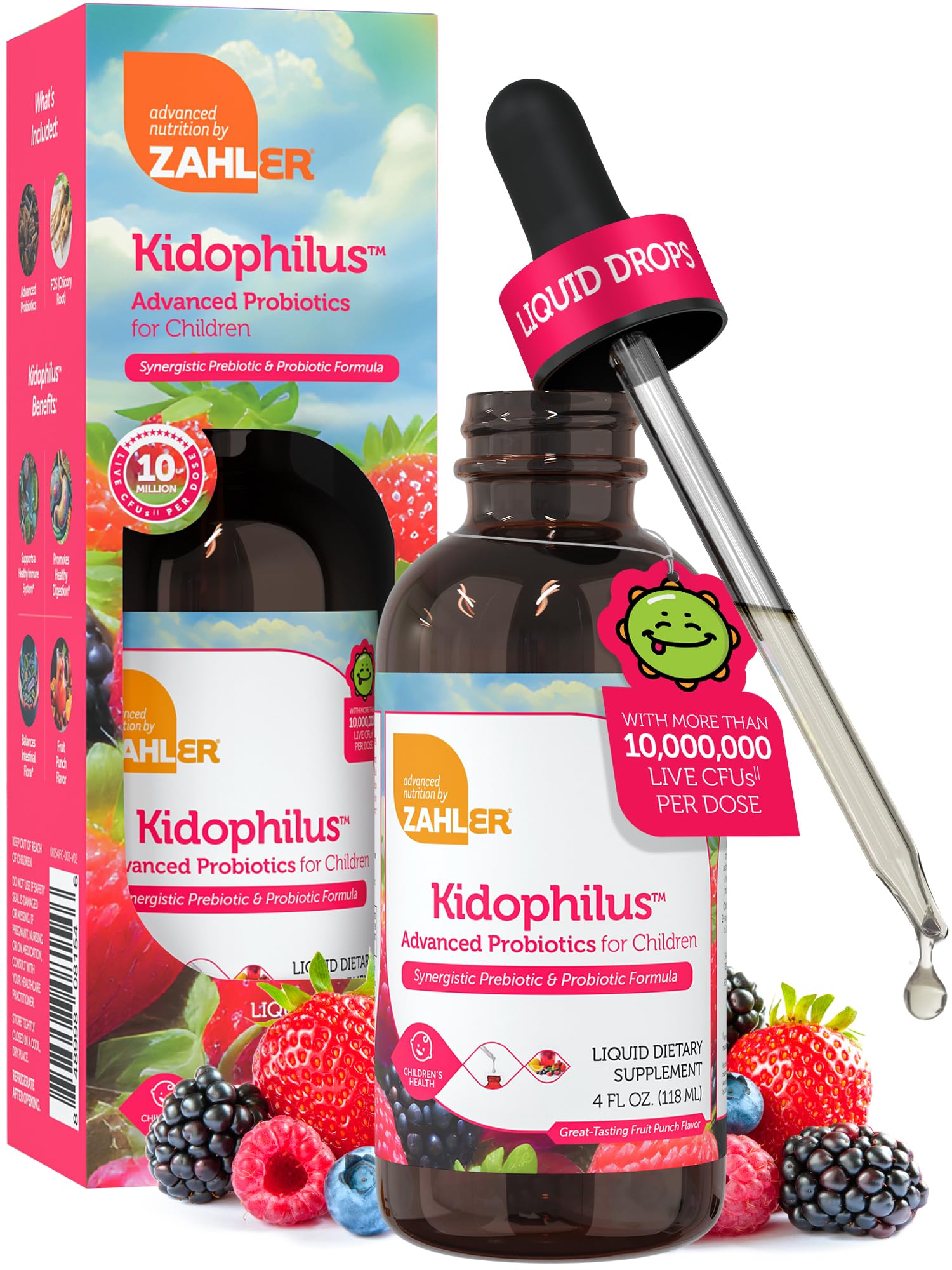
Zahler’s Kidophilus delivers 10 million CFU of Bacillus coagulans — a spore-forming probiotic strain known for its exceptional shelf stability and ability to survive stomach acid without refrigeration. The fruit punch flavor is a clear differentiator for older babies and toddlers who may reject unflavored drops. Parents consistently report that their children actually look forward to taking this one, which eliminates the daily battle.
The formula is certified Kosher and made in GMP-certified facilities in the USA, providing a solid manufacturing pedigree. It is free from peanut, tree nut, dairy, gluten, soy, and egg, making it one of the most allergen-free options on this list. The glass bottle with a dropper is a step up from plastic, though some users note that the 2ml dosing can be slightly imprecise with the included dropper design.
The main limitation is that Bacillus coagulans is less researched in infants compared to LGG or BB-12, so parents of newborns may prefer a strain with more pediatric-specific clinical data. The recommended serving of 10 million CFU is significantly lower than typical infant doses from other brands, which could be either a benefit for sensitive tummies or a limitation depending on the specific digestive issue being addressed.
Why it’s great
- Pleasant fruit punch flavor kids actually enjoy
- Spore-forming strain — no refrigeration needed
- Certified Kosher and free from top allergens
Good to know
- Bacillus coagulans has less infant-specific research
- Dropper can be imprecise for exact 2ml dose
7. Wellements Organic Baby Constipation Support

Wellements takes a fundamentally different approach than the other products on this list — it is not a probiotic but a prebiotic fiber and herbal formula. It uses organic prune concentrate as a natural gentle laxative and organic chicory root fiber (inulin) as a prebiotic to feed beneficial gut bacteria. For parents specifically targeting chronic constipation rather than general digestive maintenance, this targeted approach often works faster than probiotics alone.
The formula is USDA Organic, Non-GMO Project Verified, Vegan Certified, and NSF Certified — one of the most extensively certified options available for infants 6 months and older. Parents describe it as a “miracle product” for toddlers with severe stool withholding issues, with results seen within days rather than weeks. The liquid format comes with a dispenser for easy measurement, and the taste is pleasant enough that children take it willingly when mixed into juice or applesauce.
Because this is not a probiotic, it does not directly introduce live bacteria to the gut. It is best used as a complementary product alongside a daily probiotic for babies with stubborn constipation. It also requires careful dosing — too much can cause loose stools or mild bloating as the fiber ferments. The 6-month age minimum means it is not suitable for younger newborns.
Why it’s great
- USDA Organic and Non-GMO certified
- Natural prune and chicory fiber — no harsh laxatives
- Rapid relief for chronic constipation cases
Good to know
- Not a probiotic — does not add live bacteria
- Only suitable for babies 6 months and older
FAQ
Can I give probiotic drops to a newborn?
How long does it take for baby probiotic drops to work for colic?
Should I use probiotic drops if my baby is on antibiotics?
Can I mix probiotic drops directly into a bottle of warm formula?
Final Thoughts: The Verdict
For most users, the baby probiotic drops winner is the BioGaia Baby Probiotic Drops because its clinically studied L. reuteri strain offers the highest evidence base for colic and gas relief in newborns. If you want a versatile option that supports toddlers through daycare immunity and oral health, grab the BioGaia Nurture & Grow. And for antibiotic recovery, nothing beats the Florastor Baby Sachets with their unique S. boulardii formulation.