
Our readers keep the lights on and the weekend projects moving. As an Amazon Associate, I earn from qualifying purchases.
Standing on one foot shouldn’t feel like a gamble. Whether you’re recovering from an ankle sprain, navigating the wobbles of aging, or simply trying to lock in a deeper squat, the unstable surface of a balance pad forces your stabilizing muscles to wake up and work. The problem is that too many pads flatten out, slip across the floor, or fail to provide the right level of firmness to actually challenge your proprioception.
I’m Rikta — the co-founder and writer behind FitlyFast. Every month I analyze the mechanical specs, foam densities, and real-world durability data of over a hundred physical therapy aids to separate the gear that genuinely retrains your nervous system from the flimsy cushions that compress into pancakes after a week.
After cross-referencing customer use patterns across several top models, the best balance pad options came down to those that maintained their structural integrity under repeated load and offered a surface texture that kept your feet locked in during one-leg stands.
How To Choose The Best Balance Pad
A balance pad works by creating an unstable surface that forces your ankle, knee, and hip stabilizers to constantly micro-adjust. But not all pads create the same kind of instability. The wrong pad either collapses under your weight, leaving you on the floor, or is so stiff it offers no training stimulus at all. Here are the three factors that matter most.
Foam Material and Density
This is the single most important spec. TPE (thermoplastic elastomer) pads offer a dense, rubbery feel that resists permanent compression even after months of daily use. Closed-cell foam is lighter and slightly more forgiving, but can develop surface cracks if used aggressively. Avoid open-cell foam or low-density EVA — these feel soft for the first week but will develop permanent body indentations that ruin the uniform instability you need for proper training.
Surface Area and Dimensions
A standard pad around 15″ x 13″ works fine for single-leg stance exercises and simple standing balance work. If you plan to perform heel-to-toe tandem stance, wider stances, or use the pad as a kneeling support, look for an extra-large option at least 19″ x 15″. The extra inches prevent your feet from hanging off the edges, which is both unsafe and ineffective.
Thickness and Weight Capacity
Most pads are 2 to 2.4 inches thick. Thinner pads (under 2 inches) don’t create enough wobble to challenge advanced users. Thicker pads (over 2.5 inches) can feel unstable for beginners and may cause ankle strain. Always check the stated weight capacity — a pad rated for 300 pounds is fine for most users, but higher-density models support up to 500 pounds without bottoming out.
Quick Comparison
On smaller screens, swipe sideways to see the full table.
| Model | Category | Best For | Key Spec | Amazon |
|---|---|---|---|---|
| Therapist’s Choice XL | Premium | PT-grade durability | 19″ x 15″ x 2.3″ closed-cell foam | Amazon |
| StrongTek Extra Wide | Premium | Wide stance training | 19″ x 15.8″ x 2.4″ high-density TPE | Amazon |
| THERABAND Blue Pad | Mid-Range | PT-clinic intermediate | 16.4″ x 10.3″ x 2.3″ foam | Amazon |
| Vive Oval Pad | Mid-Range | Home knee rehab | Oval TPE foam, 300 lb capacity | Amazon |
| ANVICTOX L Pad | Mid-Range | Compact portability | 15.8″ x 13.2″ x 2″ TPE, 350 lb cap | Amazon |
| Aiweitey Stability Pad | Budget | Entry-level elderly use | 15.7″ x 13″ x 2″ TPE, 300 lb cap | Amazon |
| HAPBEAR Dual-Sided Pad | Budget | Dual-color grip variety | 15.8″ x 13″ x 2.4″ TPE foam | Amazon |
In‑Depth Reviews
1. Therapist’s Choice X-Large Balance Pad
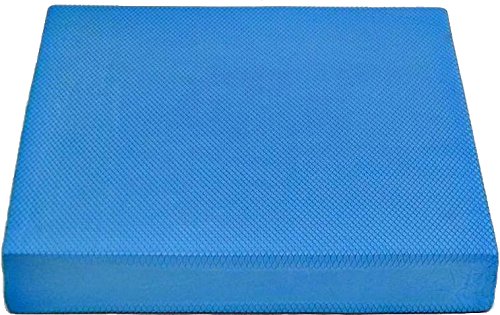
The Therapist’s Choice pad is the same closed-cell foam unit you’ll see in actual PT clinics. Its 19″ x 15″ surface gives you enough real estate to perform tandem stance drills without your back foot slipping off the edge. The 2.3-inch thickness hits the sweet spot between enough wobble for real training and enough stability for seniors recovering from hip surgery.
The closed-cell structure is the key differentiator here — it doesn’t absorb sweat or moisture, so it stays hygienic between uses without any chemical smell. Users report that it holds its shape even after months of daily use, with no permanent creasing. It’s latex-free, which matters if you have any rubber sensitivities.
One reviewer noted that it’s genuinely difficult to balance on, which is exactly the point — the pad is designed to be challenging enough that your balance measurably improves within days. It doubles as a kneeling pad for wrist and knee exercises, and some users place it under their desk to engage their core during work hours.
Why it’s great
- PT-clinic grade closed-cell foam resists permanent compression
- XL surface area supports heel-to-toe and wide-stance exercises
- Latex-free and moisture-resistant for daily hygiene
Good to know
- Surface can develop minor cracks if used aggressively with shoes
- Firmer feel may be too challenging for absolute beginners
2. StrongTek Extra Wide Foam Balance Pad
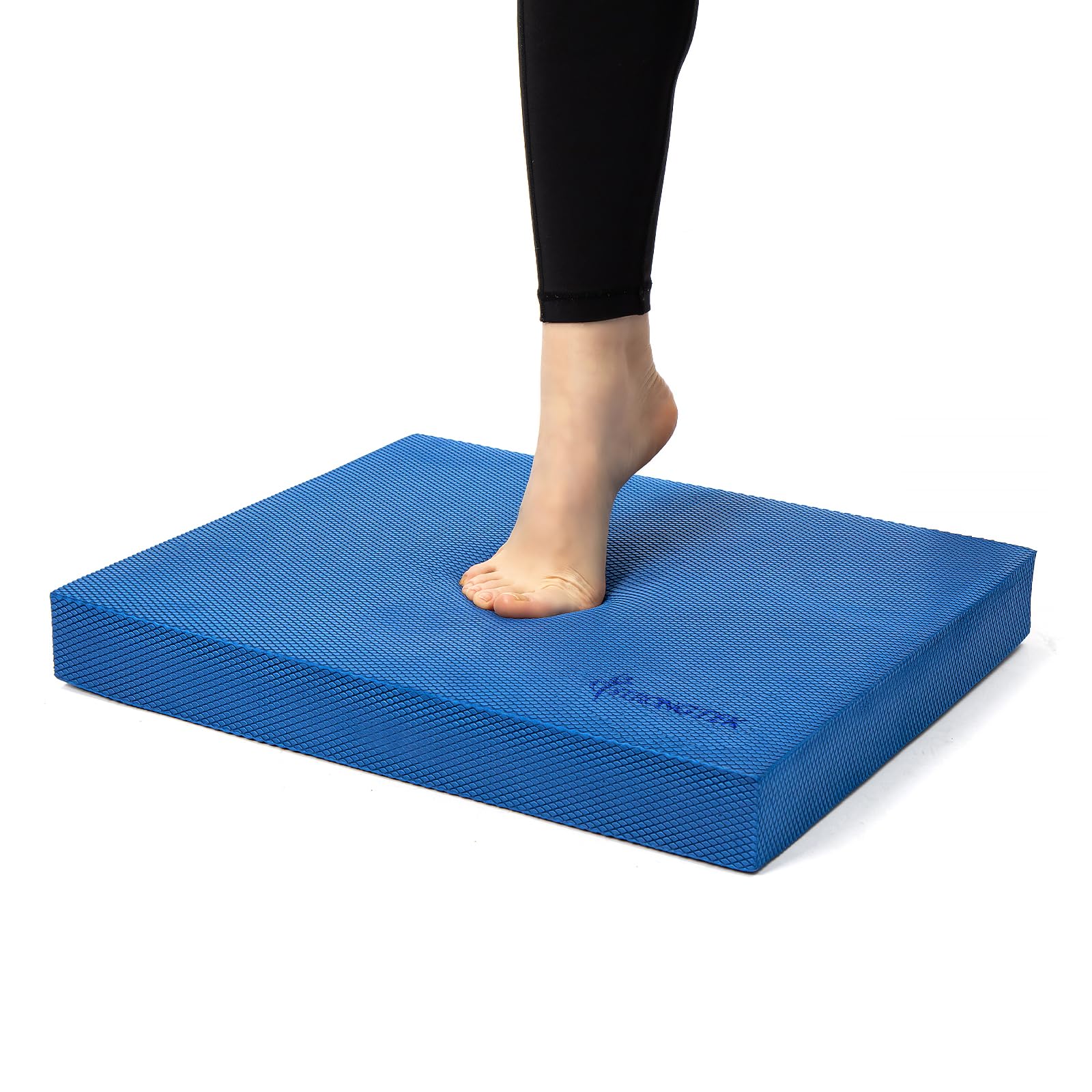
The StrongTek pad edges out most competitors with its 19″ x 15.8″ footprint — the longest dimension in this lineup. That extra nearly inch of width means you can place your feet diagonally heel-to-toe without any part of your foot sitting on the edge. The high-density TPE foam provides a firm, dense feel that doesn’t bottom out, even under the 500-pound weight rating.
Users consistently mention that this pad feels identical to the one their physical therapist uses. The non-slip diamond-grid texture provides reliable grip on hardwood and tile floors. The water-resistant surface wipes clean easily, which is important if you’re using it for sweaty workouts or placing it on a yoga mat.
One reviewer specifically highlighted that the generous size allowed them to perform the exact exercises their PT prescribed, which smaller pads wouldn’t accommodate. It’s suitable for beginners and advanced athletes alike, making it a versatile long-term investment for anyone serious about balance training.
Why it’s great
- Generous 19 x 15.8 inch surface for comfortable wide-stance work
- High-density TPE supports up to 500 pounds without deformation
- Water-resistant surface cleans easily after sweaty sessions
Good to know
- Heavier than basic foam pads at 1.5 pounds
- May feel too firm for users seeking a soft cushion
3. Vive Oval Balance Pad
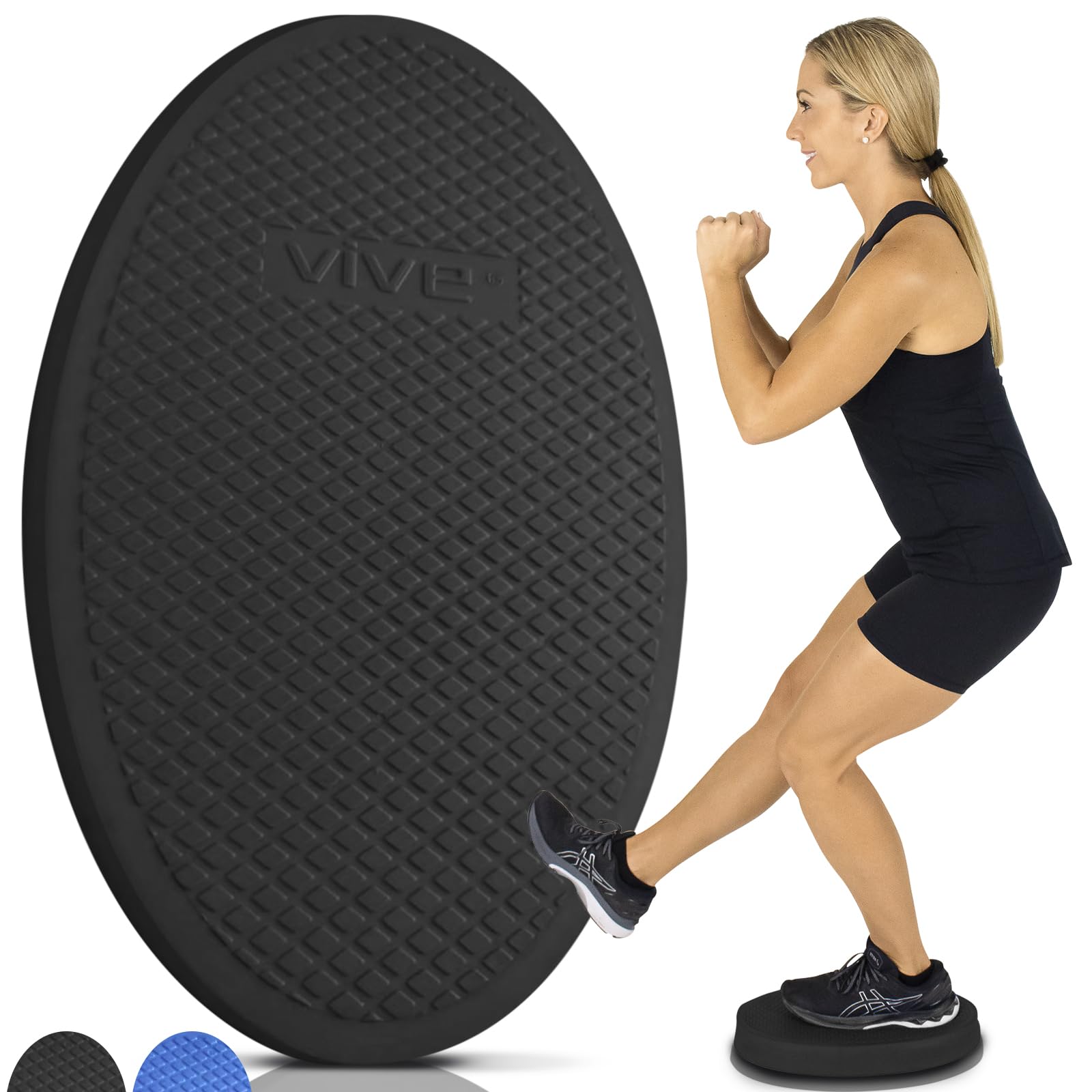
The Vive Oval Balance Pad takes a different shape approach with its rounded oval design. While the surface area is slightly smaller than rectangular pads, the oval form factor works well for single-leg stance work and allows for subtle adjustments in foot placement. The TPE foam hits a middle ground between soft and firm, which multiple users described as “right in the middle” — not too mushy, not too stiff.
One of the standout qualities of this pad is its portability. It’s lightweight and compact enough to toss in a gym bag or keep under your desk. Users have reported using it for two-minute intervals while brushing their teeth, which is an easy habit to build. The grippy surface keeps everything stable, and the pad has held up well after months of daily use.
It’s worth noting the pad is firmer than the ones used in some clinical PT settings, which some users found surprising. But that firmness translates to better durability — the pad doesn’t develop the same kind of surface creasing seen in cheaper foam pads. The 300-pound weight capacity covers most users comfortably.
Why it’s great
- Versatile TPE foam with ideal medium firmness for most users
- Lightweight and compact for easy transport
- Maintains structural integrity better than inflatable alternatives
Good to know
- Firmer feel than some clinical PT pads
- Oval shape limits heel-to-toe tandem stance exercises
4. THERABAND Stability Trainer Pad (Blue)
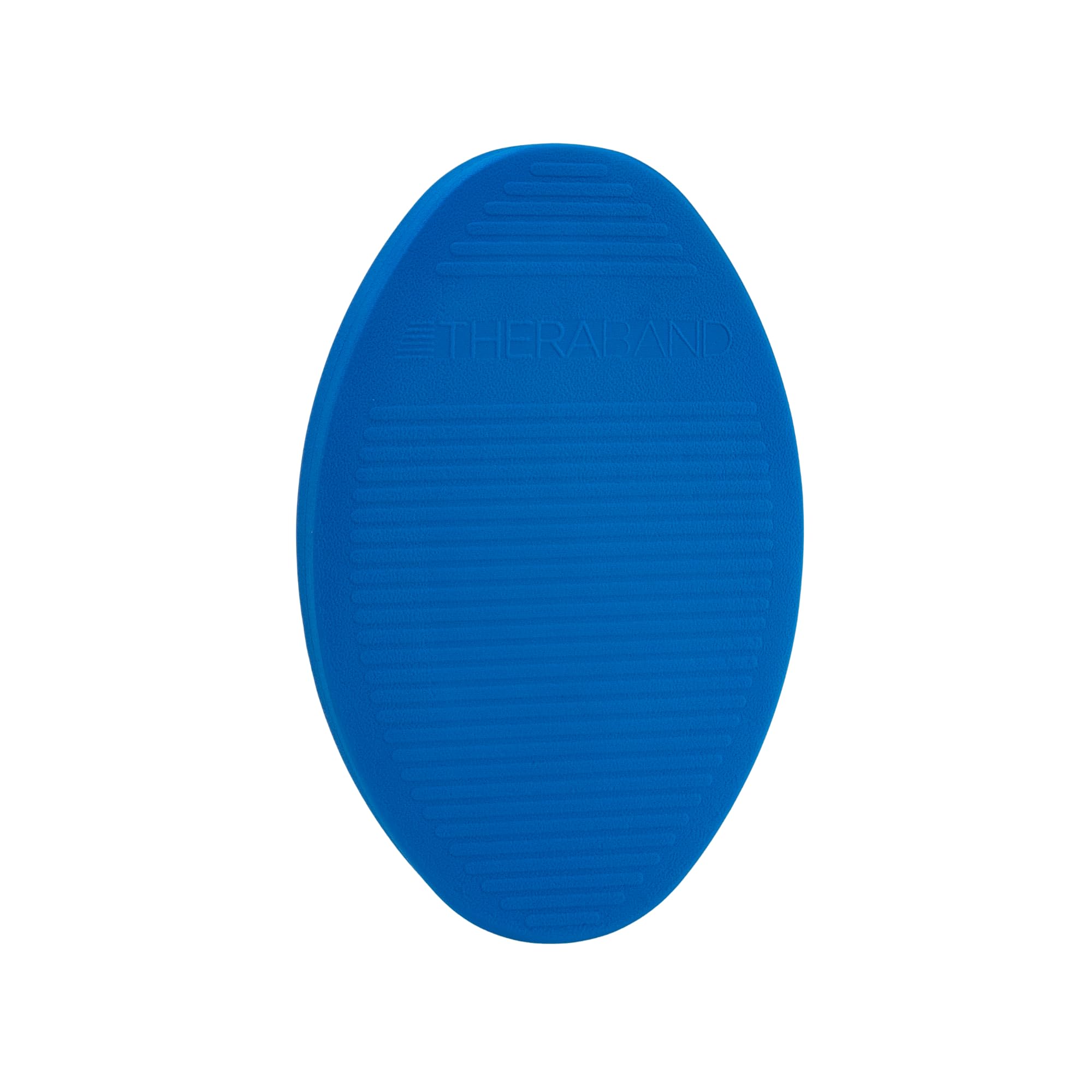
THERABAND’s stability trainer pad has been a clinic staple since 2003, and for good reason. The blue color indicates intermediate level — softer than the green beginner pad, but more stable than the black advanced pad. This specific density provides a controlled wobble that challenges your balance without threatening your ankles. The compact 16.4″ x 10.3″ size is intentionally smaller to increase the instability challenge.
Users report noticeable improvements in single-leg balance after just a few days of 10-minute daily use. The included full-body balance training guide is a nice bonus — it provides structured exercises beyond just standing on the pad. The non-slip textured surface keeps the pad planted on any floor surface, which is critical for safe training.
Runners find this pad particularly effective for shin splint exercises and ankle strengthening. The foam material provides just enough give to work the tiny stabilizer muscles without causing joint strain. It’s also used extensively in knee rehab protocols for controlled weight-bearing exercises.
Why it’s great
- Proven PT-clinic design with color-coded stability levels
- Includes structured balance training guide
- Noticeable balance improvements reported within days
Good to know
- Smaller surface area limits heel-to-toe exercises
- Blue level may feel too easy for advanced users
5. ANVICTOX L Balance Pad

The ANVICTOX L pad packs solid TPE construction into a portable 15.8″ x 13.2″ footprint. The 2-inch thickness is slightly thinner than other models, but the TPE material is dense enough to provide a stable training surface. With a 350-pound weight rating, it handles heavier users better than some similarly sized budget options.
Physical therapists have recommended this specific pad for sleeping support and lower back positioning, where the firm foam provides consistent support without sagging. The pad holds its shape well, though one user reported a small corner crumble after extended use. The compact size makes it a natural choice for travel or for use as a chair cushion at a standing desk.
The manufacturer offers a one-year warranty, which adds some confidence for a pad in this price tier. It’s worth noting that the instructions warn against placing feet on the edges — a good reminder that proper foot placement is essential to avoid damaging the pad and injuring yourself.
Why it’s great
- Dense TPE foam holds shape under consistent load
- Compact size ideal for travel or desk use
- 350-pound weight capacity for heavier users
Good to know
- Corner material can crumble with edge-heavy use
- 2-inch thickness provides less wobble than 2.4-inch pads
6. Aiweitey Stability Trainer Pad
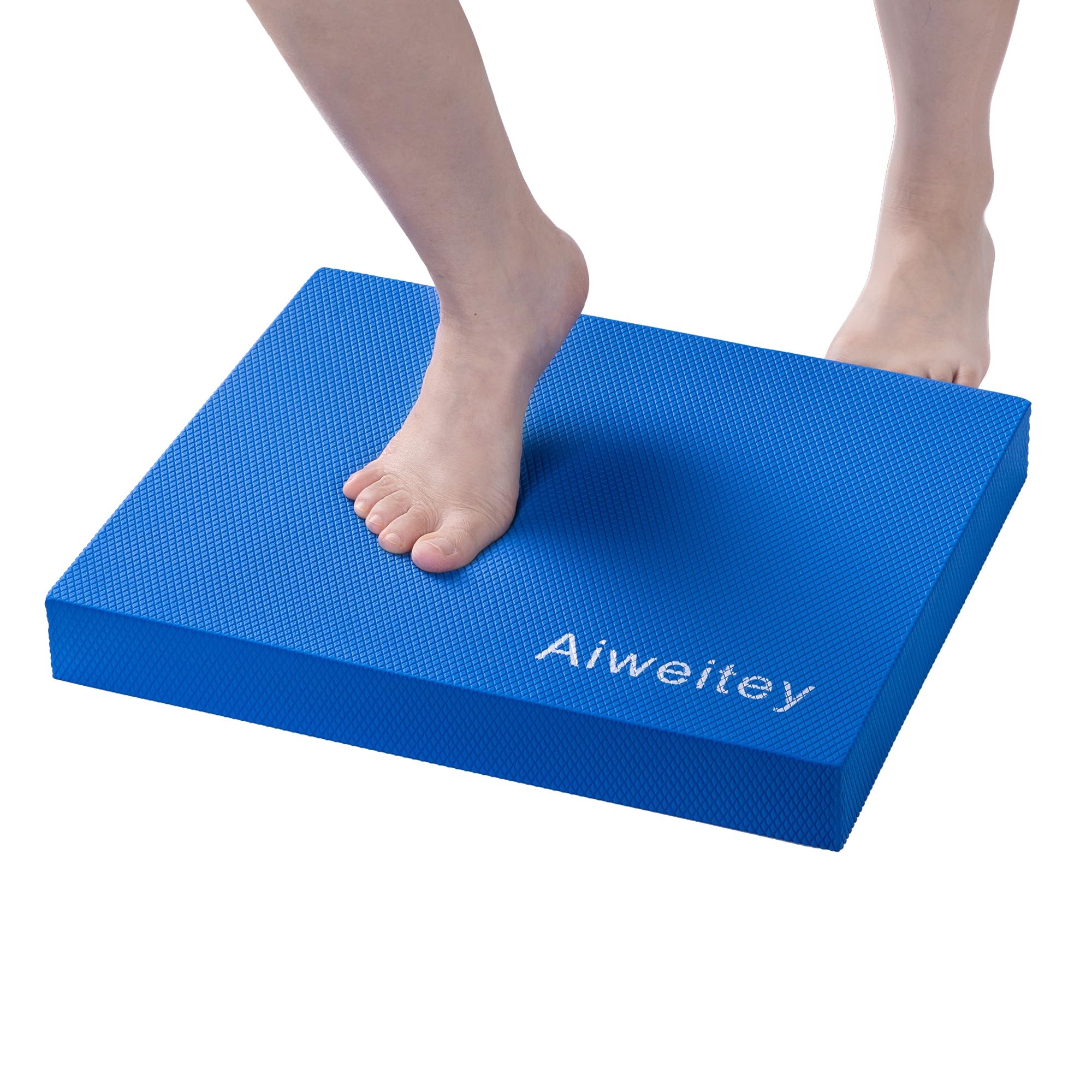
The Aiweitey Stability Trainer Pad is an entry-level TPE pad that does its job without fuss. At 15.7″ x 13″ x 2″, it’s on the smaller side, but it’s still large enough for basic single-leg stance work and simple balance exercises. The 2-inch thickness provides a mild instability that’s appropriate for elderly users and beginners just starting balance training.
One user shared that their 85-year-old mother used this pad for two months for prescribed rehab exercises, and it maintained its shape and firmness throughout. That’s solid performance for a pad at this level. The non-slip design and water-resistant surface are standard features that work well, keeping the pad in place on smooth floors and allowing easy cleaning.
The main trade-off with this pad is long-term durability. Multiple users noted that while the foam quality is good for the price, the outer layer develops creases and indentations that don’t fully recover. This doesn’t affect functionality for basic balance work, but it means the pad won’t look new after several months of daily use. Perfect for light use or as a first pad to see if balance training fits your routine.
Why it’s great
- Budget-friendly entry point for balance training beginners
- Maintains firmness and shape for basic elderly rehab use
- Non-slip water-resistant surface stays put on floors
Good to know
- Outer layer develops creases and indentations over time
- Thinner profile provides less challenge for advanced users
7. HAPBEAR Exercise Balance Pad
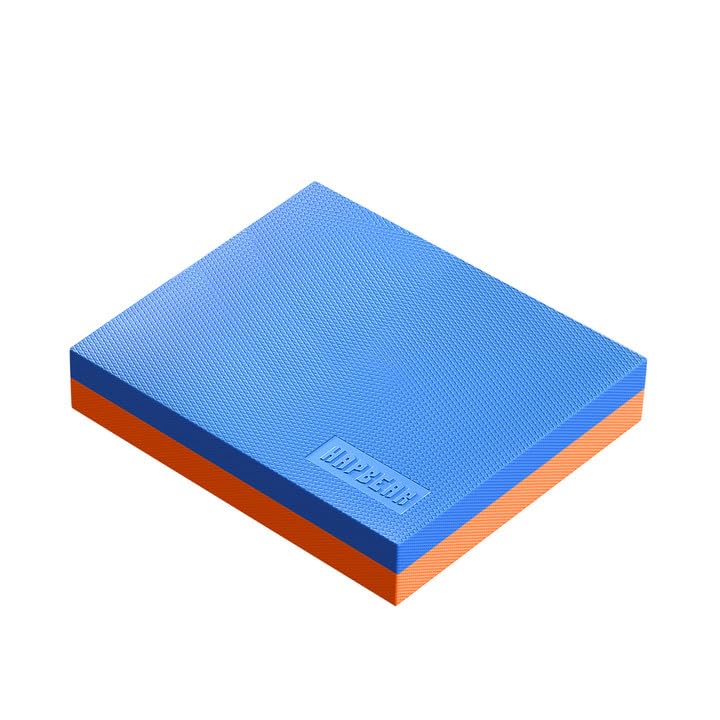
The HAPBEAR pad distinguishes itself with a dual-color, dual-sided design. Each side features a different color but both offer the same secure grip — it’s primarily an aesthetic feature that some users appreciate for their home gym setup. The TPE foam construction at 2.4 inches thick provides a generous amount of cushioning and instability, making it suitable for stretching and core training in addition to balance work.
Users have found creative applications for this pad, including using it for equestrian therapy — one vet reported it works well under hoof weight for engaging SI joint muscles in horses. The diamond-grid textured surface provides reliable traction on multiple floor types, and the waterproof material makes cleanup straightforward after sweaty sessions.
The main concern with this pad is that the foam tends to crease after several uses, even under moderate weight. A 160-pound user noted visible indentation lines forming. This doesn’t make the pad unusable, but it’s a reminder that the TPE compound used here is on the softer side. It’s best suited for users who plan to use it for stretching and light balance work rather than daily high-intensity training.
Why it’s great
- Dual-sided design adds aesthetic variety to home gyms
- 2.4-inch thickness provides good instability for core work
- Versatile enough for human and veterinary therapy use
Good to know
- Foam creases easily after multiple uses
- Not as durable as higher-density TPE options
FAQ
How long should I stand on a balance pad each day to see improvement?
Can a balance pad help with ankle instability or chronic sprains?
Final Thoughts: The Verdict
For most users, the best balance pad winner is the Therapist’s Choice X-Large because it delivers PT-grade closed-cell foam in a generous 19×15 inch size that withstands daily use without losing its shape. If you want the widest surface for comfortable heel-to-toe and wide-stance exercises, grab the StrongTek Extra Wide. And for a compact, portable pad that bridges home therapy and gym travel, nothing beats the Vive Oval Pad.