
Our readers keep the lights on and the weekend projects moving. As an Amazon Associate, I earn from qualifying purchases.
Chronic bloating, unexplained fatigue, recurring skin issues, or brain fog that no doctor seems to decode — the frustration of feeling unwell without a clear root cause is a drain on both your energy and your trust in the medical system. At-home food allergy tests promise to bridge that gap by revealing which everyday foods might be triggering your symptoms, all without a needle or a trip to the lab. The challenge is separating kits backed by real methodology from those that overpromise on vague science.
I’m Rikta — the co-founder and writer behind FitlyFast. I’ve spent years comparing the scientific claims, panel sizes, and real-world customer outcomes of these kits to help you decide which one actually delivers usable data for your diet.
After analyzing lab certifications, test-item counts, and user results across seven leading options, I’ve curated the actionable list of the best at home food allergy test kits that provide clear, practical guidance without the guesswork.
How To Choose The Best At Home Food Allergy Test
Choosing the right test comes down to understanding the methodology, the breadth of the screening, and what you plan to do with the results. A test that screens 100 items but uses a validated IgG blood draw may be more actionable than a 1,000-item bioresonance scan if your priority is clinical reproducibility.
Methodology: Blood vs. Hair
Blood-based tests (like Everlywell) measure IgG antibody levels in a finger-prick sample, a method with peer-reviewed data connecting elevated IgG to delayed inflammatory responses. Hair-based bioresonance tests measure electromagnetic resonance patterns; they are faster and painless but sit outside the diagnostic mainstream. Choose IgG blood for science-backed precision; choose hair for broad, non-invasive screening.
Panel Size and Relevance
A larger panel gives you more data points, but only if the items tested overlap with your actual diet. Look for kits that test common triggers like gluten, dairy, eggs, soy, corn, and nuts. Tests with 1,000+ items may include environmental factors and additives that a doctor would rarely screen for, which can be a double-edged sword — broad but potentially overwhelming.
Lab Certification and Support
CLIA certification for blood tests or ISO accreditation for hair labs indicates a facility meets quality standards. Also check if the kit includes an elimination diet guide or nutritionist access — raw data is useless without a plan to act on it. The best guides help you systematically remove and reintroduce foods to confirm triggers.
Quick Comparison
On smaller screens, swipe sideways to see the full table.
| Model | Category | Best For | Key Spec | Amazon |
|---|---|---|---|---|
| AFIL 1000+ Premium | Hair Bioresonance | Broad Wellness Screening | 1,000+ Items | Amazon |
| Everlywell Food Sensitivity | IgG Blood Test | Science-Backed Results | 96 Foods Tested | Amazon |
| 5Strands Nutrition Test | Hair Nutrient Scan | Nutrient Absorption Insight | 112 Vitamins & Minerals | Amazon |
| Check My Body 1,750 Items | Hair Bioresonance | Maximum Panel Coverage | 1,750 Items | Amazon |
| UCARI 1,500+ Test | Hair Bioresonance | Digestive & Energy Insight | 1,500+ Items | Amazon |
| 990 Items Complete Test | Hair Bioresonance | Intro Budget-Friendly Kit | 990 Items | Amazon |
| AFIL Primal 350+ Test | Hair Bioresonance | Compact & Fast Results | 350+ Items | Amazon |
In‑Depth Reviews
1. AFIL 1000+ Premium
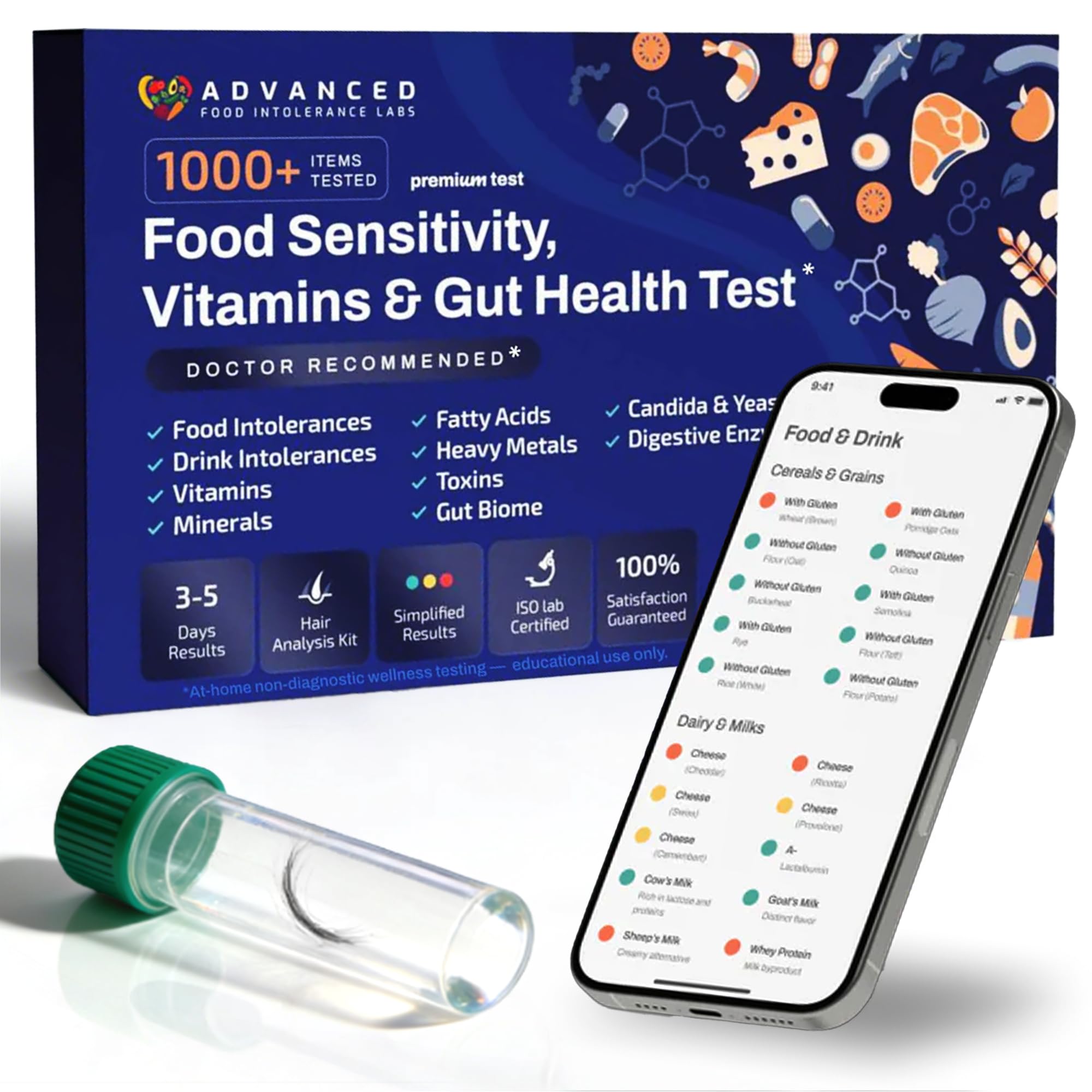
The Advanced Food Intolerance Labs (AFIL) Premium kit hits a rare sweet spot: broad coverage of 1,000+ foods, drinks, and household items combined with ISO 27001 certification for data protection. The non-invasive hair sample collection takes minutes, and results land in your secure portal within 72 hours of lab receipt — one of the fastest turnaround windows among mid-range hair tests.
What sets it apart is the interactive clickable report that lets you drill down into each flagged item with explanations of potential wellness connections. This isn’t a medical diagnostic, but it’s an excellent complementary tool for anyone whose symptoms are dismissed as “nothing wrong.” The family-owned branding and commitment to not selling user data add a layer of trust that mass-scale competitors lack.
Some customers report that the broad panel occasionally flags items they eat without issues, so you’ll still need to verify triggers through elimination. However, the speed, ease, and sheer volume of data make it the most versatile all-rounder for general sensitivity discovery.
Why it’s great
- Massive 1,000+ item panel with environmental and household factors
- 72-hour turnaround from lab receipt to digital report
- ISO 27001 data security standard
Good to know
- Not a diagnostic — results require personal verification through elimination
- Hair bioresonance methodology not widely accepted in clinical medicine
2. Everlywell Food Sensitivity Test
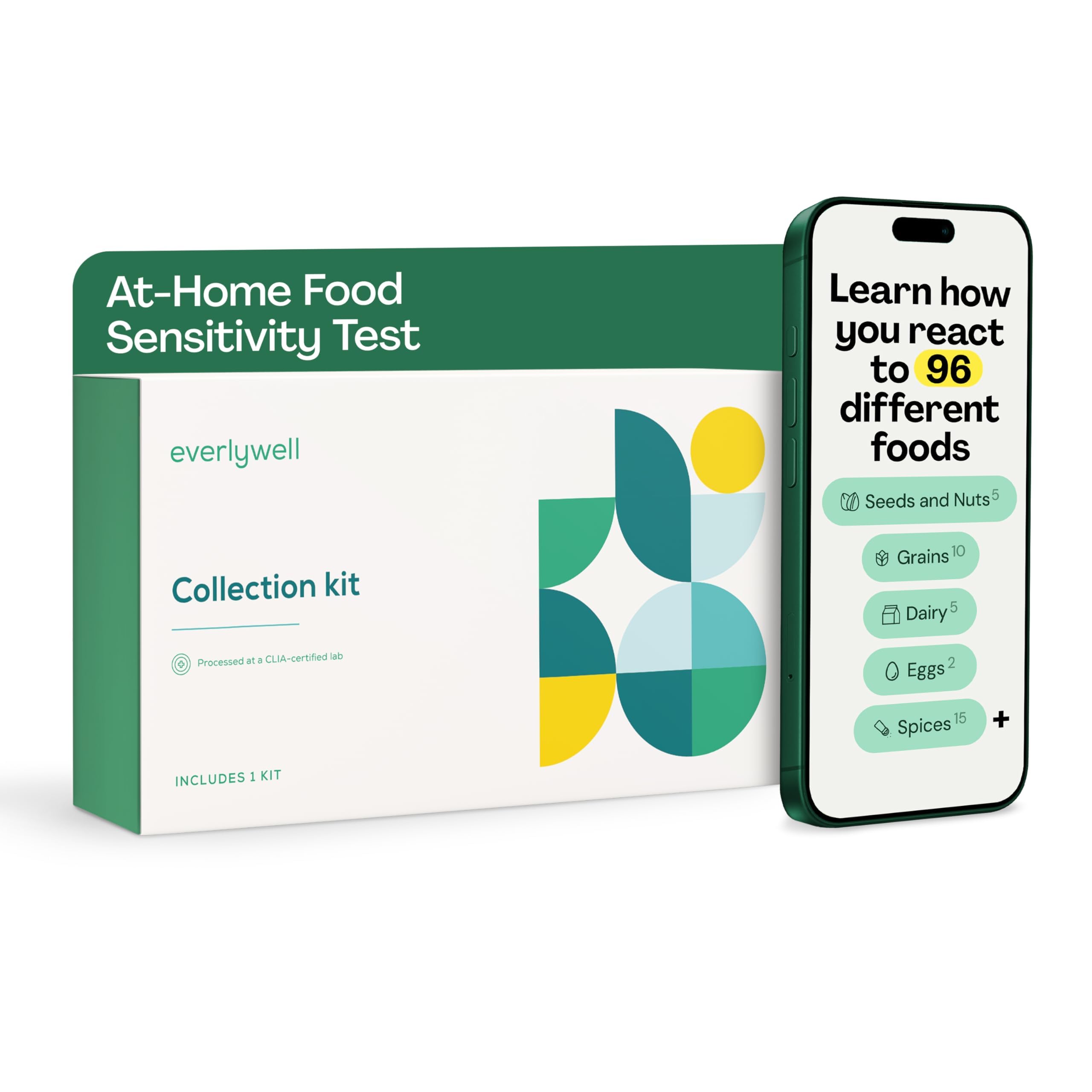
Everlywell is the only entry on this list that uses an IgG blood-based finger-prick method analyzed in a CLIA-certified lab. That means the results carry more weight if you’re planning to share them with your primary care provider or functional medicine doctor. The 96-food panel covers the most common dietary triggers — gluten, dairy, shellfish, eggs, soy, and key grains — making it a focused rather than scattershot test.
User reviews consistently report that eliminating the flagged high-reactivity foods (especially wheat and dairy) dramatically reduced migraines, bloating, and skin flare-ups. Because the results are reviewed by a board-certified physician, you get a level of clinical oversight you won’t find in hair-based tests. The digital dashboard is clean, and results typically arrive within 3–5 business days.
On the downside, the 96-food panel is narrow compared to 1,000+ item kits, and you won’t get data on environmental triggers, vitamins, or additives. Some users also note that the test may miss certain sensitivities because it only measures IgG antibodies — not IgA, IgE, or non-immune reactions. If clinical accuracy matters more than panel size, this is the pick.
Why it’s great
- CLIA-certified lab with board-certified physician oversight
- IgG blood testing is the most clinically studied at-home methodology
- Results are easy to share with your doctor
Good to know
- Only 96 foods tested — no environmental or nutrient items
- Not available in New York state
3. 5Strands Nutrition Test
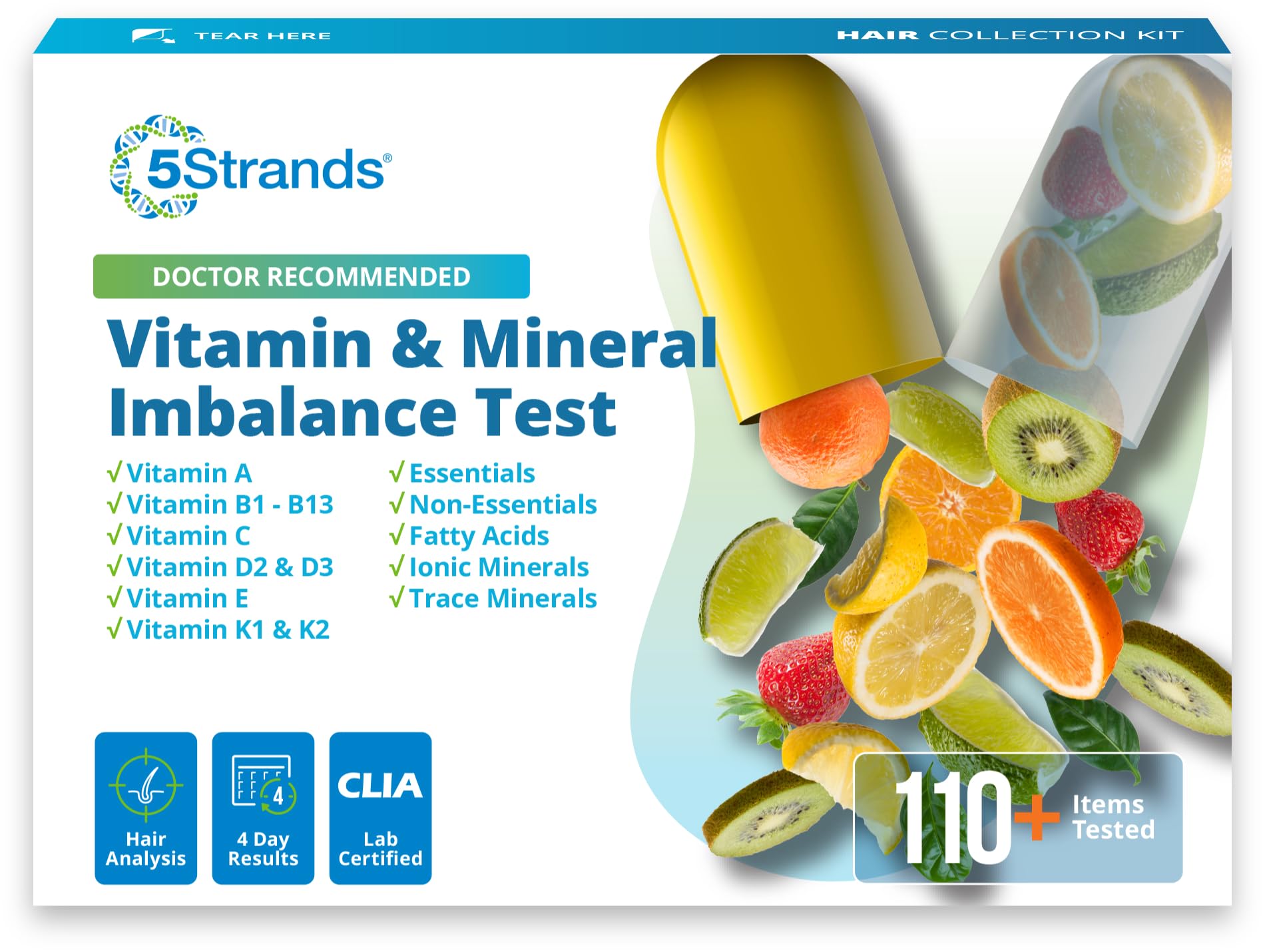
Unlike standard food sensitivity tests, the 5Strands Nutrition Test focuses on whether your body is absorbing the vitamins, minerals, and amino acids you consume. It screens 112 items including Vitamin A, B-Complex, C, D, E, K, Calcium, Magnesium, Zinc, Iron, Selenium, and Omega fatty acids — making it uniquely useful if your symptoms point toward a nutrient deficiency (brittle nails, hair shedding, low energy) rather than a food intolerance.
The hair sample analysis uses a double-scan process in a US-based lab, and results are delivered within 4 days. Many users report that the test confirmed deficiencies that their standard blood work missed, allowing them to make targeted supplement adjustments. The color-coded response levels make it easy to see which nutrients your body struggles with most.
Keep in mind that this test does not screen for food triggers like gluten, dairy, or eggs — it’s purely a nutrient absorption assessment. Some users have found discrepancies when comparing results to doctor-ordered blood panels, so treat it as a directional guide rather than a definitive diagnosis.
Why it’s great
- Fills a unique niche — nutrient absorption, not just food triggers
- Double-scan lab process for consistency
- Quick turnaround at 4 days from lab receipt
Good to know
- Does not test for specific food sensitivities or environmental triggers
- Results may not always match clinical blood panel findings
4. Check My Body 1,750 Items
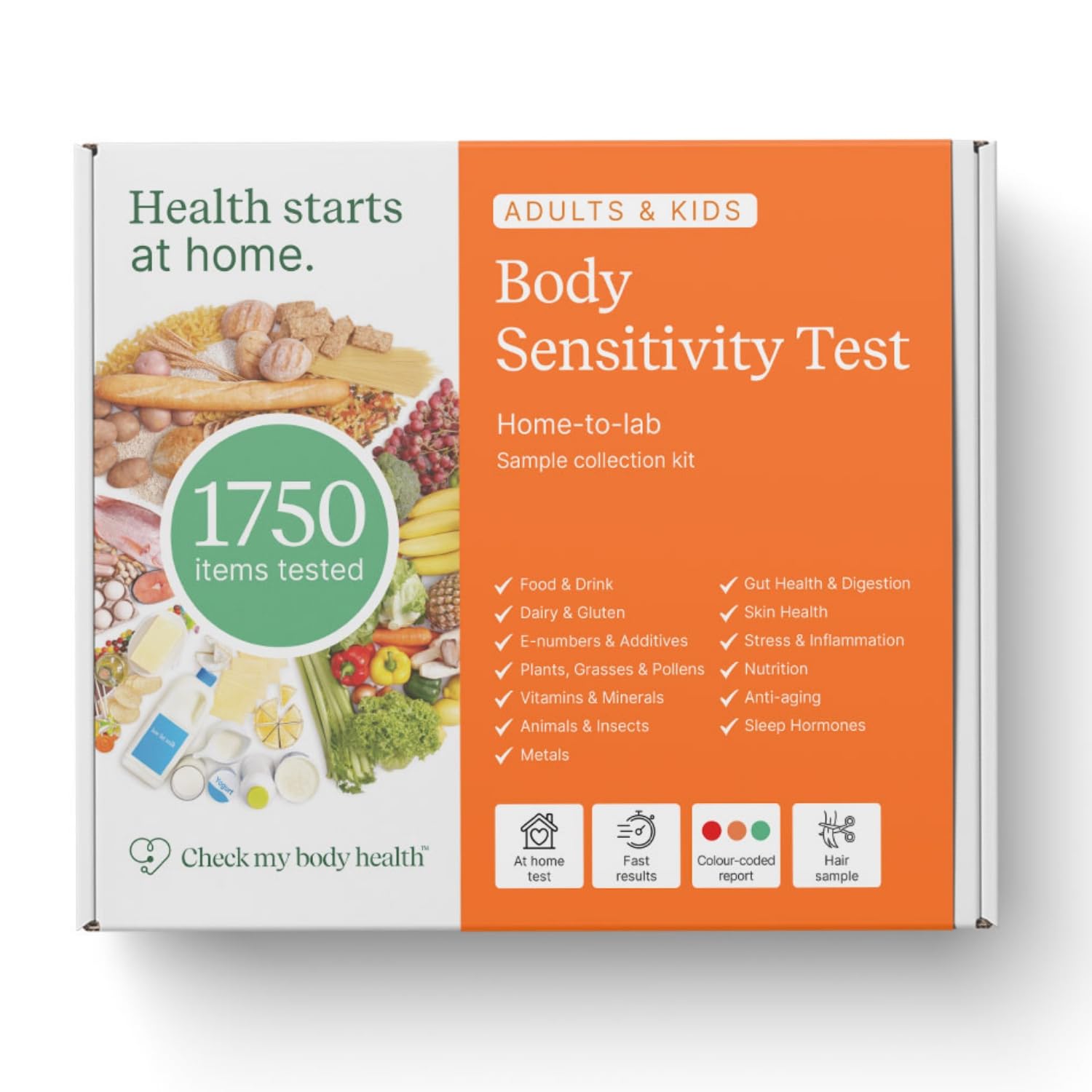
If you want to leave no stone unturned, the Check My Body kit screens 1,750 food, drink, and environmental items — over 2.5 times the count of most competitors. The non-invasive hair sample method is identical to the 990-item version from the same manufacturer, but the expanded panel includes more obscure additives, chemical compounds, and vitamins A through K. Results arrive in 3–5 days via email.
The standout value here is the included access to certified nutritionists and a 30-day meal planning system, which helps you transition from raw data to a structured elimination and reintroduction protocol. The Elimination Diet Guide is practical, giving you week-by-step steps to remove high-reactivity foods without feeling deprived.
While the panel breadth is impressive, the underlying bioresonance methodology remains unproven in clinical trials, and some users complain that the test flags too many items to be actionable. The packaging quality and customer service have also drawn skepticism in some reviews, so the extras (nutritionist support) are what elevate this above the basic 990-item kit.
Why it’s great
- Largest available panel at 1,750 items including additives and chemicals
- Includes certified nutritionist access and meal planner tools
- Painless, at-home hair collection with no needles
Good to know
- Bioresonance science is not FDA-approved for diagnosis
- Some users find the broad results overwhelming to action
5. UCARI 1,500+ Test

UCARI’s 1,500+ item profiling test boasts one of the fastest reporting windows — typically 2 business days after your hair sample arrives at the US-based lab. The color-coded report organizes results by severity, helping you identify patterns in your digestion, energy, and skin comfort without sifting through raw data. The kit also includes downloadable wellness guidance for structuring an elimination-style plan.
Users with chronic, hard-to-pin symptoms (like eye irritation or brain fog) have found surprisingly specific connections — one customer discovered a severe potato sensitivity that six doctors had missed. The test covers not just foods but also skincare ingredients and environmental factors, making it broader than most pure-food panels.
The main limitation is that UCARI explicitly states it is not an allergy test and not intended for diagnosis. A small number of users found the results too broad to be actionable, with dozens of moderate-level items creating confusion about where to start. Pair this kit with the provided guidance to prioritize the highest-reactivity items first.
Why it’s great
- Expedited result delivery — often just 2 business days
- 1,500+ items covering food, skincare, and environment
- Structured severity levels for easy prioritization
Good to know
- Results may flag too many items to be immediately actionable
- Explicitly marketed as a wellness screening, not a medical test
6. 990 Items Complete Test
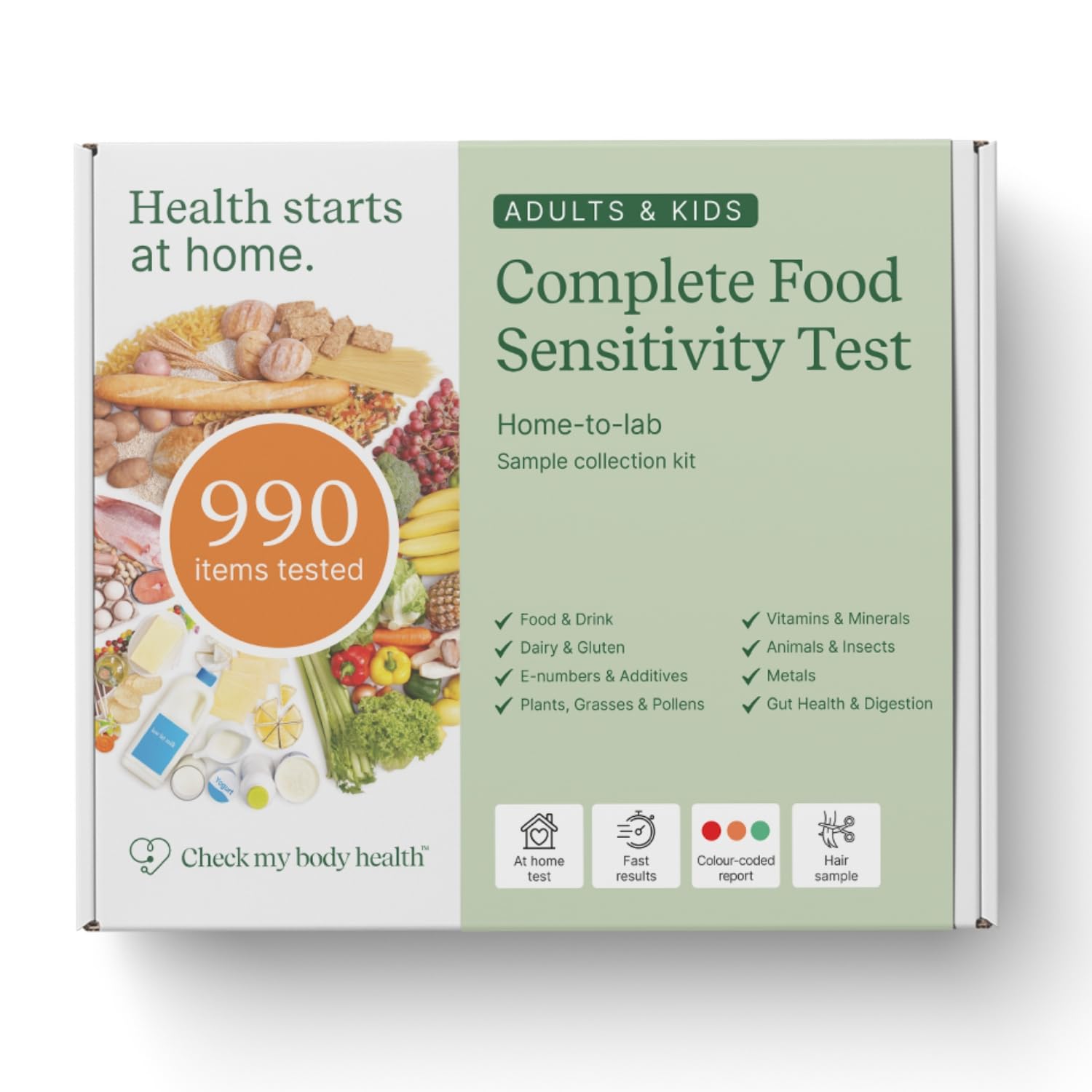
This is the entry-level bioresonance test from Check My Body Health, screening 990 items at a lower investment point than its 1,750-item sibling. The test covers nuts, gluten, dairy, eggs, caffeine, chemicals, and vitamins A–K, and uses the same hair-sample-to-email-report protocol — results in 3–5 days. The included Elimination Diet Guide is the same useful resource, helping you turn your results into a structured plan.
Customer reviews are mixed but largely positive: many users report discovering previously unknown triggers (almonds, dairy, gluten) that, when removed, resolved chronic gastrointestinal pain within days. The hair collection is straightforward, and the sample size is manageable for most adults.
However, the same concerns about bioresonance science apply — this is not a diagnostic tool. A notable minority of users reported never receiving their results or facing challenges with customer support. At its price point, it’s a reasonable first step into food sensitivity exploration, but not the most reliable option if consistent support matters to you.
Why it’s great
- Strong 990-item coverage for the entry-level price
- Includes a practical Elimination Diet Guide
- Non-invasive, quick at-home collection
Good to know
- Reports of missing results and unresponsive customer service
- Bioresonance method lacks published clinical validation
7. AFIL Primal 350+ Test
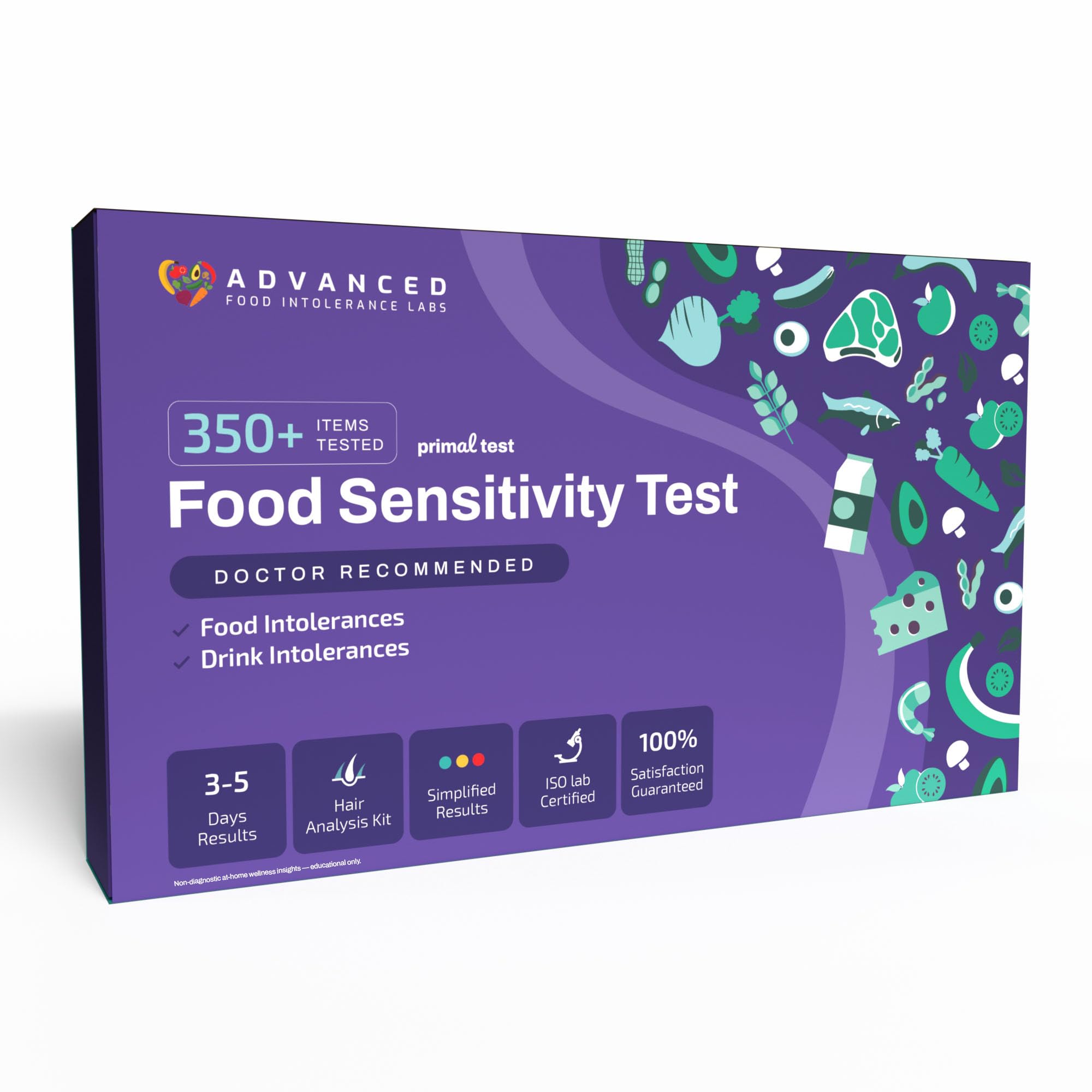
The AFIL Primal kit pares down the panel to 350+ food and drink items, making it a focused, budget-friendly option for those who aren’t overwhelmed by choice. The testing methodology is the same ISO-accredited biofeedback technology used in the pricier AFIL Premium kit, and results are delivered within 3 business days of sample receipt — making it one of the fastest options overall.
Users consistently praise the easy-to-navigate member portal, which includes access to diet plans, recipes, and a knowledge base of 1,000+ articles tailored to your results. If you’re new to food sensitivity testing and worried about data overload, the compact panel makes it easier to identify and test the top 3–5 triggers without drowning in 1,000 data points.
The biggest trade-off is the reduced panel — you won’t catch less common trigger foods or environmental factors. Some customers also reported slower shipping or delayed sample processing, so track your kit carefully. For a first-time tester looking for a manageable, science-trusted brand, this is a solid entry point.
Why it’s great
- Fast results in 3 business days with ISO-accredited lab
- Comprehensive member portal with meal plans and educational content
- Accessible panel size — less overwhelming for beginners
Good to know
- Only 350+ items — fewer than many competitors
- Shipping delays reported; use tracking for peace of mind
FAQ
Can an at-home test replace a doctor-diagnosed food allergy test?
What is the difference between a food allergy and a food sensitivity?
How should I use the results to change my diet?
Final Thoughts: The Verdict
For most users, the best at home food allergy test winner is the AFIL 1000+ Premium because it combines an enormous 1,000-item panel with ISO data security, a fast 72-hour turnaround, and an interactive report that helps you prioritize your dietary changes. If you want science-backed IgG blood testing you can share with your doctor, grab the Everlywell Food Sensitivity Test. And for targeted nutrient absorption insights that most food panels miss, the 5Strands Nutrition Test is your best bet.