
Our readers keep the lights on and the weekend projects moving. As an Amazon Associate, I earn from qualifying purchases.
Few things tank a planted aquarium faster than investing in delicate live plants only to watch them melt into a brown, slimy mess within a week. The difference between a lush underwater garden and a costly, frustrating cycle of replanting comes down to picking species that actually tolerate your specific water parameters and lighting. The right plants don’t just survive—they outcompete algae and stabilize the entire ecosystem.
I’m Rikta — the co-founder and writer behind FitlyFast. I spend my time analyzing substrate chemistry, PAR requirements, and tissue-culture shipping methods so you can skip the trial and error of assembling a reliable freshwater plant collection.
This guide covers rooted foregrounds, background runners, and floating surface mats built to handle the conditions real aquarists face. Whether you want a dense carpet or a low-maintenance backdrop, these picks represent the best aquarium plants for a stable, long-term setup.
How To Choose The Best Aquarium Plants
Your tank’s light spectrum, substrate depth, and CO₂ level determine which species thrive. Plants sold as “easy” still require stable temperature between 72–82°F and moderate flow. Failing to match a plant’s growth habit to your tank’s zone (foreground vs. background) leads to constant trimming and eventual die-off.
Light and Nutrient Demands
Low-light species like Anubias and Java Fern need under 30 PAR and no injected CO₂. Carpet plants such as Dwarf Sagittaria require moderate light at least 8 hours daily. Overestimating your light kills just as fast as underestimating—low-light plants left under high output grow stringy algae on their leaves.
Growth Rate and Maintenance
Slow growers (Anubias, Red Root Floater) require minimal trimming and excel in low-tech tanks. Fast runners like Jungle Val and Water Spangles consume nitrates rapidly but demand weekly thinning to avoid shading out lower plants. Choose based on how much maintenance time you can commit.
Propagation Method and Placement
Rhizome plants (Anubias) must be attached to hardscape, not buried in substrate—burying the rhizome causes rot. Stem plants like Vallisneria prefer deep sand or fine gravel. Floating plants need gentle surface flow; heavy agitation drives them underwater and prevents growth.
Quick Comparison
On smaller screens, swipe sideways to see the full table.
| Model | Category | Best For | Key Spec | Amazon |
|---|---|---|---|---|
| AquaLeaf Aquatics Potted Bundle | Starter Bundle | Variety in one order | 4 species, potted for instant planting | Amazon |
| AquaLeaf Aquatics Rooted 6-Pack | Species Mix | Helping timid fish hide | 6 rooted plants, 6–8 inch height | Amazon |
| Red Root Floater | Floating Mat | Nitrate reduction & shade | 60+ leaves, moderate light required | Amazon |
| Marcus Fish Tanks Dwarf Sagittaria | Foreground Carpet | Front-of-tank ground cover | 15 plants, 2–3 inch height | Amazon |
| Marcus Fish Tanks Jungle Val | Background Runner | Tall vertical accents | 6 plants, runner-propagated | Amazon |
| Water Spangles (Salvinia Minima) | Surface Cover | Fast surface coverage | 60+ leaves, floating | Amazon |
| Marcus Fish Tanks Anubias Nana Petite | Rhizome Foreground | Low-light hardscape accent | Potted, 20–30 leaves | Amazon |
In‑Depth Reviews
1. AquaLeaf Aquatics 4 Potted Bundle (Anubia, Amazon Sword, Kleiner Bar, Narrow Leaf)

This four-pot bundle covers the fundamental zones of a planted aquarium in a single order: an Anubias species for hardscape attachment, an Amazon Sword for midground height, a Kleiner Bar Sword for bold leaf texture, and a Narrow Leaf Sword for background density. Each plant arrives in a rock-wool pot, which makes planting straightforward—just separate the roots and place them in the substrate or wedge the pot into a crevice. Buyers consistently report deep green leaves and strong root structures upon arrival.
Amazon Swords are heavy root feeders; they benefit from root tabs if your substrate is inert gravel. The Narrow Leaf Sword can show brown tips during the initial transition from emersed (grown above water) to submerged growth—this is normal melt that subsides after a few weeks. The Anubias in the bundle is typically the standard broad-leaf variety, not the petite form, so it works better as a midground focal point than a foreground accent.
Because all four species have different growth rates, you may need to trim the swords more aggressively to prevent them from shading the Anubias. Several buyers noted that the pots needed to be cut open to free roots, but the trade-off is zero transplant shock compared to bare-root alternatives. For a first planted tank or a quick fill, this set delivers the widest variety without forcing you to track down four separate sellers.
Why it’s great
- Four proven easy species in one shipment
- Low to moderate light tolerance across all plants
- Minimal melting compared to bare-root bundles
- Roots already established in rock wool
Good to know
- Narrow Leaf Sword may show temporary emersed-to-submerged melt
- Species mix varies slightly by season
- Swords need root tabs in inert substrate
2. AquaLeaf Aquatics Rooted Live 6-Pack (6 Easy Species)

This six-species bundle from AquaLeaf Aquatics is built for aquarists who want to replicate a natural biotope without sourcing individual plants. Each order contains one rooted plant from six different easy species—typically including Amazon Sword, Jungle Val, Red Melon Sword, and other staple varieties. The plants ship at 6 to 8 inches tall, giving them an immediate presence in tanks as small as 5 gallons. The root systems are well-developed, reducing the recovery period after planting.
The most common feedback is that the “snail-free guarantee” is inconsistent—several buyers report finding bladder snails hitchhiking on the leaves, and one noted hydra in a first order. A bleach dip or alum soak before introduction is strongly recommended regardless of the seller’s guarantee. That aside, the plants themselves are described as hearty, with high survival rates even when shipped during summer heat under 90°F conditions. The variety means you get foreground, midground, and background coverage in a single box.
Because the species mix can vary based on availability, you may not receive the exact set shown in the listing photos. The Sword plants are grown emersed and will shed their original leaves over the first 10–14 days before producing submerged growth. Plan for this transition by leaving the dying leaves attached until they fully rot, as the plant draws nutrients from them. If you want a varied collection with minimal ordering legwork, this pack delivers strong value despite the occasional hitchhiker.
Why it’s great
- Six distinct species for zone coverage
- Plants arrive 6–8 inches tall
- Strong root systems reduce transplant shock
- Good survival rate in warm shipping conditions
Good to know
- Hitchhiker snails common; quarantine or dip required
- Species selection varies per shipment
- Sword plants melt back before regrowing submerged leaves
3. Red Root Floater — Phyllanthus Fluitans (60+ Leaves)
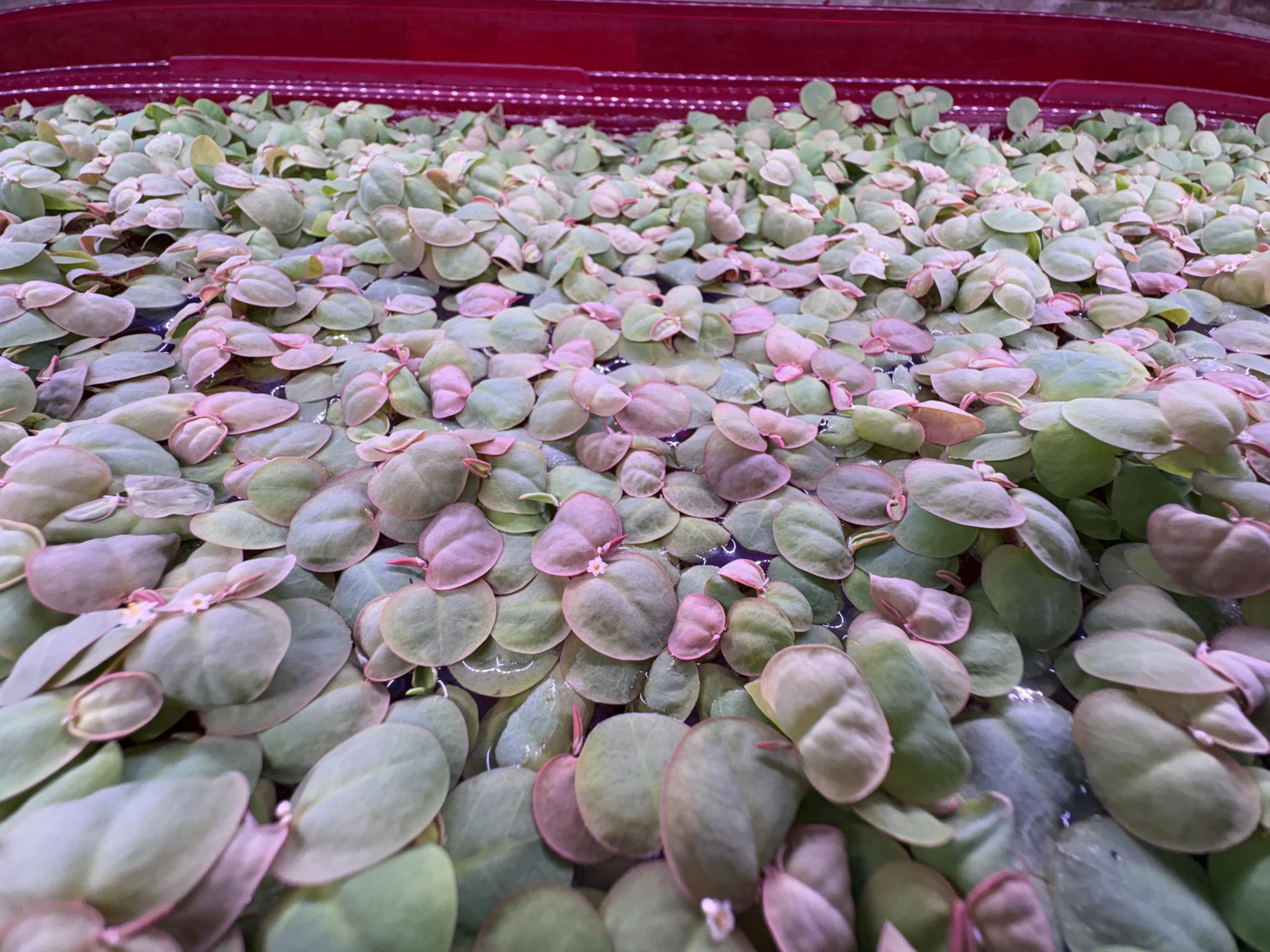
Red Root Floater stands apart from common floaters like Duckweed or Frogbit because of its vivid red-purple root system and leaf undersides. Under moderate to high light and low nitrate conditions, the roots turn a deep burgundy that contrasts beautifully with green stem plants below. This package ships 60+ healthy leaves in a 4-ounce cup of water, keeping the plants hydrated and reducing the rot risk associated with wet-paper-towel packaging. Most buyers receive a generous portion that covers roughly a 6×6 inch surface area immediately.
The species is sensitive to surface agitation—strong filter outflow pushes the leaves underwater, where they will die from constant submersion. A sponge filter or a spray bar aimed at the tank wall provides the gentle flow it requires. To maximize red coloration, keep nitrates below 10 ppm and use a full-spectrum light on an 8-hour photoperiod. Reducing nitrogen slows growth, meaning it will not overrun the tank as fast as Salvinia or Water Lettuce, which is a benefit for low-maintenance setups.
Because it reproduces via runners and not seeds, Red Root Floater forms a continuous floating mat rather than individual clumps. Weekly thinning keeps it from blocking light to rooted plants below. The long, feathery roots also provide excellent refuge for shrimp fry and small nano fish. For planted tanks that need a pop of color at the surface without aggressive overgrowth, this floating species is a reliable choice that outperforms standard green floaters in visual impact.
Why it’s great
- Distinctive red and purple coloration
- Provides shade that helps control algae
- Absorbs ammonia and nitrates efficiently
- Excellent shrimp and fry shelter
Good to know
- Hates surface agitation; needs gentle flow
- Red color requires low nitrate and strong light
- Cannot tolerate water droplets on leaves
4. Marcus Fish Tanks 15x Dwarf Sagittaria Subulata

Dwarf Sagittaria is one of the most forgiving foreground plants available, and this 15-plant bundle from Marcus Fish Tanks gives you enough stock to cover a 10-gallon front zone in a single planting. Each plant ships trimmed to 2–3 inches with roots already cut to encourage fresh growth. Unlike tissue-culture carpet plants (Monte Carlo, HC Cuba), Dwarf Sag does not require CO₂ injection or high PAR to produce a decent carpet—it will send out runners in moderate light over a few weeks.
The plants arrive vacuum-sealed in small bags with visible water, which keeps them hydrated during transit. Several buyers noted that a single leaf might appear damaged from shipping, but the crown and root system remain viable. One common finding is the occasional bladder snail hitchhiker despite the live-arrival guarantee—an alum dip is advisable if you run a snail-free tank. The roots grow deep, so a substrate depth of at least 2 inches is recommended to allow runner establishment.
Under medium light (around 30–40 PAR) and standard fertilizer dosing, these plants will fill in to create a 4-inch tall lawn that does not require weekly mowing. They will also grow taller in low light, forming a grassy midground look rather than a tight carpet. The buy-2-get-1-free promotion makes this an efficient way to expand into multiple tanks. If you want a reliable, low-tech foreground solution without the complexity of CO₂-demanding species, this is a top contender.
Why it’s great
- Thrives in low to medium light, no CO₂ needed
- 15 plants provide dense coverage from day one
- Hardy enough for shrimp and community tanks
- Runner propagation fills empty spots naturally
Good to know
- Hitchhiker snails occasionally present
- Shipping delays can cause yellowing
- Grows taller (not carpet low) in very low light
5. Marcus Fish Tanks 6 Jungle Val (Jungle Vallisneria)

Jungle Vallisneria is the go-to background plant for tall tanks, capable of reaching 24–36 inches from a single runner. This six-plant clump from Marcus Fish Tanks ships bare-root, and the seller explicitly warns that Vallisneria tends to melt back significantly during the first week after transplant. This is not a defect—the plant is reabsorbing old leaves to grow new ones adapted to your specific water chemistry. Trimming the tops before planting reduces the melt severity.
Buyers consistently praise the packaging and root health, with multiple reviews noting that the plants survived a week in transit without issue. The Jungle Val grows vigorously once established, sending out runners that will quickly fill a 20-gallon background. It will also absorb nitrates at a high rate, making it a natural filter for overstocked tanks. However, it does best with moderate to high light—under dim conditions the leaves become thin and translucent.
One drawback reported is inconsistency between batches; one customer received thin, wilting specimens while others received lush, vibrant clumps. Seasonal variation and harvest timing may play a role. The planter notes that Sandy Soil works best, as fine sand allows runners to spread without compacting. If you want tall vertical structure that grows quickly and propagates on its own, Jungle Val delivers, but be prepared for the temporary melting phase upon arrival.
Why it’s great
- Fast-growing background cover for tall tanks
- Runners fill empty space without replanting
- Absorbs excess nitrates efficiently
- Survives varied water parameters
Good to know
- Expect significant melting during transition
- Needs moderate to high light to grow thick
- Some batches show inconsistent quality
6. Water Spangles — Salvinia Minima (60+ Leaves)
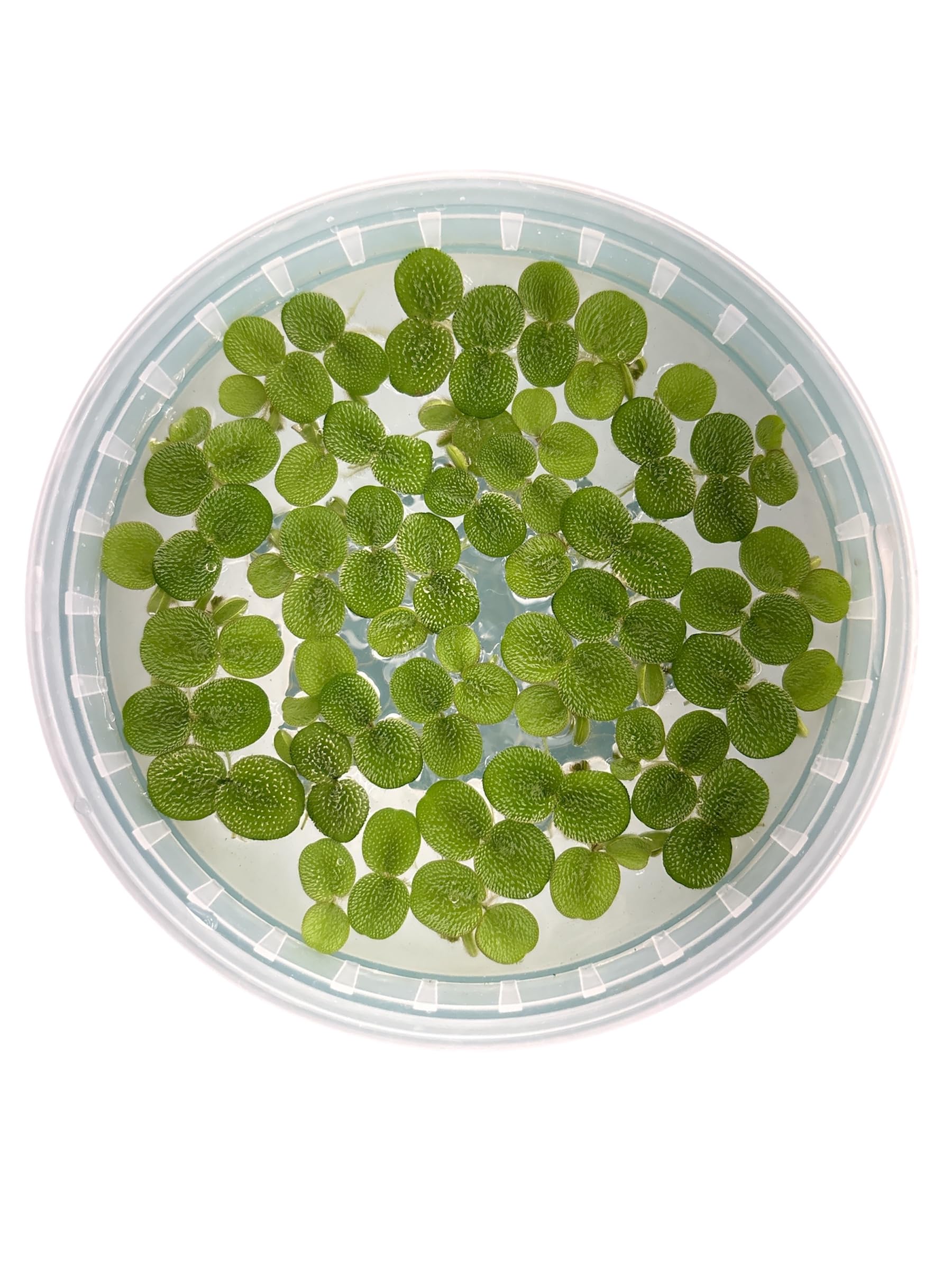
Salvinia Minima, commonly called Water Spangles, forms a dense floating mat that blocks excess light and reduces algae growth. This listing ships over 60 individual leaves, and buyers almost universally report receiving far more than advertised—many describe the quantity as double the promised count. The plants arrive in a water-filled cup or in moist packaging with long, healthy root systems already visible. Within a week in a moderately lit tank, the colony doubles in size.
The primary advantage of Water Spangles over Duckweed is its manageable size—each leaf is roughly the diameter of a dime, making manual thinning easier. The plant is also less likely to stick to your hands or get sucked into filter intakes. It thrives in medium to high light and can survive both indoor aquariums and outdoor water features in partial sun. The roots are feathery and provide excellent cover for fry and small shrimp.
Because it grows so quickly, this plant will require weekly removal to prevent it from covering the entire surface and starving lower plants of light. Simply scoop out handfuls and dispose or transfer to another tank. It is also sensitive to extreme temperatures—the seller advises avoiding shipment when temperatures exceed 90°F or drop below 35°F, especially to the West Coast where transit takes longer. For a cost-effective, fast-growing surface cover that outcompetes algae, Water Spangles is a solid entry-level choice.
Why it’s great
- Rapid growth starves out algae
- Dense roots provide fry and shrimp refuge
- Generous quantity—often exceeds 60 leaves
- Works in indoor and outdoor setups
Good to know
- Needs weekly thinning to control coverage
- Not suitable for high-surface-agitation tanks
- Sensitive to heat and cold during shipping
7. Marcus Fish Tanks Anubias Nana Petite (Potted)

Anubias Nana Petite is the smallest variety of the Anubias genus, with mature leaves staying under an inch long—ideal for nano tanks or attaching to driftwood and rock crevices where larger Anubias would overwhelm the scape. This potted plant from Marcus Fish Tanks ships with 20–30 leaves already attached to a central rhizome, which means you get an established plant rather than a cutting. The rock-wool basket makes it simple to wedge into hardscape without burying the rhizome, which is critical to prevent rot.
Buyers consistently praise the vibrant leaf color and robust root system upon arrival. Because it is grown out of water (emersed) before shipping, the leaves are thicker and more resistant to transplant melt than submerged-grown portions. The plant is incredibly tolerant of low light, soft or hard water, and a wide pH range (6.0–8.0). It is also one of the few plants that will survive in a tank with goldfish or cichlids that uproot everything else, as the rhizome clings tightly to hardscape.
The primary limitation is growth speed—Anubias Nana Petite is slow, producing new leaves every few weeks. Do not expect it to fill empty space quickly. It also does not perform as a carpet plant; it should be used as an accent piece rather than a ground cover. For a low-effort, bulletproof plant that adds a refined green accent to driftwood or stones, this petite Anubias is the easiest choice on this list. The seller also runs a B2G1 promotion, making it even more accessible for multi-tank setups.
Why it’s great
- Almost impossible to kill—tolerates low light, variable pH
- Perfect size for nano tanks and hardscape accents
- Thick, pre-grown leaves resist melt
- Rhizome attaches securely to driftwood and rock
Good to know
- Extremely slow growth rate
- Not a carpet plant; requires hardscape attachment
- Rhizome must never be buried in substrate
FAQ
Why do my aquarium plants melt after I plant them?
Can I use gravel instead of plant substrate for the species in this guide?
How do I kill hitchhiker snails before adding new plants to my tank?
Final Thoughts: The Verdict
For most users, the best aquarium plants winner is the AquaLeaf Aquatics Potted Bundle because it delivers four distinct, low-tech species in a single order, covering every zone of a planted tank without demanding CO₂ or high light. If you want a vibrant floating accent that actively reduces nitrates and algae, grab the Red Root Floater. And for a low-tech foreground carpet that fills in without expensive lighting, nothing beats the Marcus Fish Tanks Dwarf Sagittaria.