
Our readers keep the lights on and the weekend projects moving. As an Amazon Associate, I earn from qualifying purchases.
A lot of AV receivers claim to be music-friendly, but the reality is most are optimized for explosions, not vocals and instrument separation. What makes the difference is not HDMI ports or 3D sound codecs — it is the digital-to-analog converter (DAC), the amplifier topology, and room correction software that stops your speakers from sounding thin or veiled. If you care how your turntable, CD collection, or hi-res streamer actually sounds, you need a receiver built for stereo integrity first.
I’m Rikta — the co-founder and writer behind FitlyFast. I have spent years dissecting amplifier specs, measuring channel separation, and comparing DAC chips across dozens of music-oriented AVRs to understand which components actually deliver a clean, linear signal path for two-channel listening.
This guide breaks down real-world DAC performance, power delivery at low impedance, and streaming platform quality to help you find the best amp for your speakers and your ears. Here is your curated list of the best av receiver for music.
How To Choose The Best AV Receiver For Music
Most buyers get distracted by HDMI 2.1 ports and Atmos channels. For music, the priority order is different: DAC quality, amplifier current, room correction behavior, and streaming platform support matter far more than video pass-through specs.
DAC Architecture and Signal Purity
The digital-to-analog converter is the heart of any music-capable AVR. Look for ESS Sabre or AKM DAC chips — they typically offer lower noise floors and better channel separation than budget Burr-Brown or Cirrus Logic alternatives. A Pure Direct or Analog Direct mode that bypasses DSP processing is essential for preserving the signal integrity of your source.
Power Delivery at Real-World Impedance
Rated wattage at 8 ohms tells only half the story. A receiver that can double its power into 4 ohms (high current capability) will drive demanding speakers with more control and less distortion. Check for two-channel drive ratings into 4 ohms — this is the spec that separates musical AVRs from home theater boxes.
Room Correction That Doesn’t Ruin Stereo
Audyssey MultEQ XT32 and Dirac Live are the two dominant platforms. For music, Dirac Live is generally preferred because it applies phase correction without oversmoothing transients. Audyssey’s Reference mode can remove too much treble energy for some listeners. Many audiophiles use Pure Direct to disable room correction entirely when listening to critical recordings.
Quick Comparison
On smaller screens, swipe sideways to see the full table.
| Model | Category | Best For | Key Spec | Amazon |
|---|---|---|---|---|
| Yamaha R-N600A | Stereo Receiver | Pure two-channel hi-res streaming | ESS SABRE ES9010K2M DAC | Amazon |
| Denon AVR-X1700H | 7.2 AVR | Music + occasional movie use | Audyssey MultEQ room correction | Amazon |
| Marantz Cinema 60 | 7.2 AVR | Musical warmth + 8K video | HDAM discrete circuitry | Amazon |
| Onkyo TX-RZ50 | 9.2 AVR | Dirac Live calibration for stereo | Dirac Live + THX Select | Amazon |
| Pioneer VSX-935 | 7.2 AVR | Budget-friendly Dolby Atmos music | Dolby Atmos Height Virtualization | Amazon |
| Yamaha RX-V6A | 7.2 AVR | MusicCast multi-room + gaming | YPAO R.S.C. calibration | Amazon |
| Marantz NR1510 | 5.2 Slim AVR | Compact stereo system with phono | 0.5 dB volume increments | Amazon |
| Onkyo TX-NR6100 | 7.2 THX AVR | High power + THX-certified stereo | 210W/Ch THX Select | Amazon |
| Denon AVR-S670H | 5.2 AVR | Entry-level stereo with phono input | 75W x 5 channels | Amazon |
| Yamaha RX-V4A | 5.2 AVR | Compact 5.2 with MusicCast | YPAO automatic calibration | Amazon |
| Sony STRAZ5000ES | 11.2 Premium AVR | 360 Spatial Sound for stereo upmix | 130W x 11 channels | Amazon |
In‑Depth Reviews
1. Yamaha R-N600A Network Receiver

This is a dedicated stereo receiver, not a home theater AVR, and that clarity of purpose shows. The ESS SABRE ES9010K2M DAC delivers low-noise, high-resolution playback for DSD 11.2 MHz and PCM up to 384 kHz. Pure Direct mode bypasses all tone controls and DSP, preserving the original signal path from your streamer, CD transport, or phono input.
The phono stage is quiet and clear for a unit in this class, though gain is a bit low for low-output moving magnet cartridges. MusicCast multi-room streaming works reliably for TIDAL, Qobuz, and Amazon Music HD. The brushed aluminum faceplate and sturdy knobs give it a vintage-modern aesthetic that fits nicely in a two-channel system.
There is no HDMI input, so this unit is not for a TV-connected setup. But if your goal is high-fidelity stereo from a network streamer, turntable, or CD transport, this receiver delivers the cleanest signal path in its bracket. The 80W per channel into 8 ohms drives most bookshelf and floorstanders with ease.
Why it’s great
- ESS SABRE ES9010K2M DAC with DSD 11.2 MHz support
- Pure Direct mode for undigitized stereo signal path
- Built-in phono input for turntable connectivity
- MusicCast multi-room streaming works reliably
Good to know
- No HDMI inputs — TV connection not possible
- Phono stage gain is lower than some competing models
- Plastic knob caps feel less premium than brushed metal chassis
2. Marantz Cinema 60 7.2-Ch Receiver

Marantz’s HDAM (Hyper Dynamic Amplifier Module) discrete circuitry is the standout feature here. Unlike generic op-amp output stages, HDAM delivers faster slew rates and wider bandwidth, which translates to better transient response and instrument separation on acoustic and vocal material. The current feedback amplifier topology keeps the soundstage stable even at elevated listening levels.
The Cinema 60 includes Audyssey MultEQ XT32, which is one of the better room correction systems for music. You can store multiple calibration profiles and toggle between Reference (flat) and Bypass L/R modes to preserve your main speakers’ natural response. The HEOS streaming platform supports TIDAL, Spotify, and Amazon Music HD with gapless playback.
It is priced at the upper end of the mid-range bracket, and the sound quality reflects that. Dialogue clarity from TV and movies is excellent, but the real win is stereo performance — this receiver makes good speakers sound like much better speakers. The remote is a welcome upgrade from previous Marantz designs.
Why it’s great
- HDAM discrete output stage for superior stereo imaging
- Audyssey MultEQ XT32 with Bypass L/R mode
- HEOS multi-room with gapless streaming support
- 100W per channel into 8 ohms with high current reserve
Good to know
- Firmware must be updated sequentially for full functionality
- 8K HDMI inputs are not fully future-proof for all formats
3. Onkyo TX-RZ50 9.2-Channel AV Receiver

The TX-RZ50 is the most affordable AVR that ships with Dirac Live out of the box. Dirac Live applies phase correction and impulse response optimization that can significantly tighten bass response and center imaging in untreated rooms. For music listeners with challenging room acoustics, this is a transformative feature — it can make a muddy stereo pair sound focused and articulate.
THX Select certification means the amplifier stage has been tested for clean power delivery across the audible spectrum. The 11.2-channel processing capability allows for a 7.2.4 setup with an external two-channel amplifier, but even in a simpler 5.1 or 7.1 configuration, the stereo performance is notably robust. The pre-outs for all channels give you upgrade flexibility to external power amps.
The remote is not backlit, and the HDMI switching takes a noticeable 12-15 seconds. But for pure music performance, the Dirac Live integration at this price point is unmatched. The dual subwoofer outputs share a single channel, so true independent sub calibration is not available.
Why it’s great
- Full Dirac Live license included without extra cost
- THX Select certification for clean amplifier output
- Pre-outs for all channels enable future external amp upgrade
- Independent crossover frequency per channel
Good to know
- HDMI switching delay of 12-15 seconds
- Dual subwoofer outputs are not independently configurable
4. Denon AVR-X1700H 7.2 Channel AV Receiver

The AVR-X1700H is a strong mid-range option for music listeners who also need occasional movie support. The 80W per channel (8 ohms, two channels driven) is conservatively rated, and actual power delivery into 4-ohm loads is better than many competitors at the same tier. Audyssey MultEQ (the standard version, not XT32) provides a noticeable improvement in bass integration without overly damping treble.
One of the key music-friendly features is the built-in phono input, which supports both moving magnet and moving coil cartridges — rare at this price point. The HEOS streaming platform supports TIDAL, Amazon Music HD, and Spotify Connect. The Denon AVR Remote app is well-designed for controlling music playback without the on-screen display.
The setup assistant on screen is genuinely helpful, though the included calibration microphone cable is shorter than ideal for large rooms. Some users report HDMI handshake issues with certain streaming sticks. The overall build quality is solid, with a stable power supply that does not audibly buzz.
Why it’s great
- Phono input supports MM/MC cartridges
- HEOS multi-room streaming with gapless playback
- Audyssey MultEQ improves bass integration
- 8K HDMI with eARC for future video upgrades
Good to know
- Standard Audyssey, not XT32 for advanced room EQ
- Calibration mic cable is short for large rooms
5. Sony STRAZ5000ES Premium ES 11.2 CH A/V Receiver

Sony’s 360 Spatial Sound Mapping is a genuinely unique approach to stereo reproduction. It analyzes the room and speaker positions to create phantom presence channels that fill the space between physical speakers. For two-channel music, this creates a wider, taller soundstage without the phase artifacts that some upmixers introduce. The Digital Cinema Auto Calibration IX (D.C.A.C. IX) adds precision delay and level adjustments.
The amplifier section delivers 130W per channel into 8 ohms (two channels driven), with a toroidal transformer power supply that gives it high dynamic headroom. The build quality is heavy — 34.7 pounds — and the front panel includes a cover plate for a clean, professional look. Chromecast built-in, Spotify Connect, Apple AirPlay 2, and Wi-Fi streaming cover all major music platforms.
There is no HDR10+ support, and the unit runs quite hot during extended use, so forced ventilation is required. The DAC performance is excellent for stereo, but the auto-calibration can be finicky if you are not using a 7.1.4 configuration — some channels need manual port reassignment. This is a premium choice for listeners who want Sony’s spatial audio approach to music.
Why it’s great
- 360 Spatial Sound Mapping for immersive stereo stage
- 130W per channel into 8 ohms with toroidal PSU
- D.C.A.C. IX calibration for precise room integration
- Chromecast built-in, AirPlay 2, and Spotify Connect
Good to know
- Runs hot — needs AC Infinity or similar cooling fan
- No HDR10+ support for future video content
6. Yamaha RX-V6A 7.2-Channel AV Receiver

The RX-V6A is Yamaha’s most popular mid-range AVR, and it handles music well thanks to the YPAO R.S.C. (Reflected Sound Control) calibration. YPAO focuses on early reflections and multipoint measurement, which helps tighten stereo imaging in rooms with hardwood floors or large windows. The high slew rate amplifier design preserves detail on fast transients like piano hits and snare drum cracks.
MusicCast is Yamaha’s multi-room platform, and it supports TIDAL, Qobuz, Deezer, and Amazon Music HD. The integration with Spotify Connect is responsive, and the app allows grouping of different MusicCast speakers across zones. The 7.2-channel layout supports 5.1.2 Atmos for when you want to expand beyond stereo.
The remote has a steep learning curve, and some units require a firmware update out of the box to stabilize eARC performance. The front display is small and not particularly informative. For a mixed-use system where music listening is primary but gaming and movies are frequent, this receiver offers a good balance without breaking the budget.
Why it’s great
- YPAO R.S.C. multipoint calibration improves stereo imaging
- MusicCast supports TIDAL, Qobuz, and Amazon Music HD
- High slew rate amplifier for transient detail
- 8K/60Hz and 4K/120Hz HDMI connectivity
Good to know
- eARC sometimes unstable without firmware update
- Remote control is not intuitive for new users
7. Onkyo TX-NR6100 7.2 Channel THX Certified Network AV Receiver
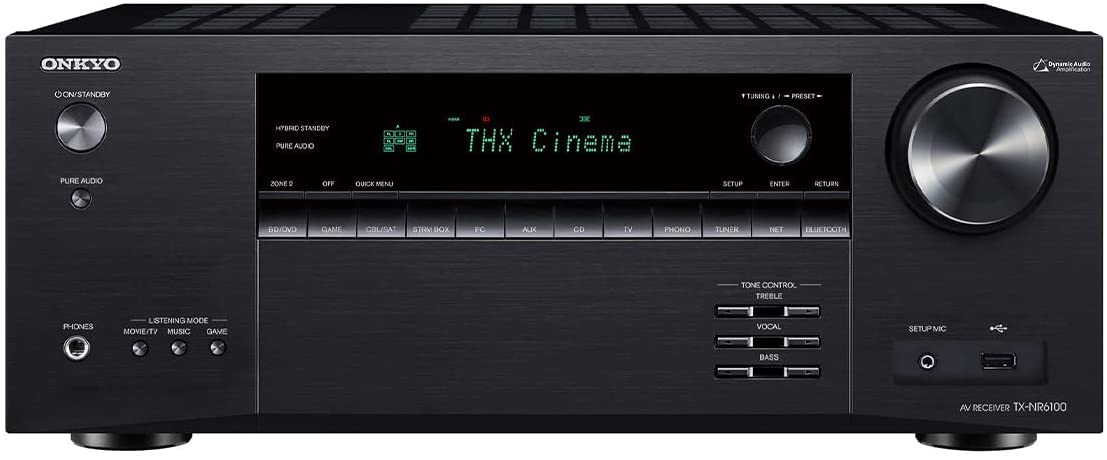
The TX-NR6100 earns its spot with THX Select certification, which ensures the amplifier maintains accurate frequency response and low distortion up to reference level in a medium-sized room. The 210W per channel dynamic power rating (6 ohms, 1 kHz, 10% THD) provides substantial headroom for demanding speakers. This receiver drives low-sensitivity speakers with significantly more authority than most at the same price.
The sound signature is forward and detailed, which works well for rock, electronic, and orchestral music where instrument separation is critical. The AccuEQ room calibration is less sophisticated than Dirac Live or Audyssey XT32, but it sets levels and distances cleanly without over-processing the signal. The 8 HDMI inputs (with three 8K-capable) give you extensive source connectivity.
The remote feels flimsy with no backlighting, and the fan can be audible during quiet passages if the unit is not well-ventilated. Some users report HDMI switching delays. For listeners who want maximum amplifier power for their speakers without stepping into the premium tier, this receiver delivers the most clean wattage.
Why it’s great
- THX Select certification for low-distortion reference playback
- 210W dynamic power per channel for demanding speakers
- 8 HDMI inputs with extensive source support
- Bi-amp capability for select front speakers
Good to know
- Fan is audible in very quiet listening environments
- Remote control is not backlit and feels low quality
8. Pioneer VSX-935 7.2 Channel Surround Sound Network Receiver
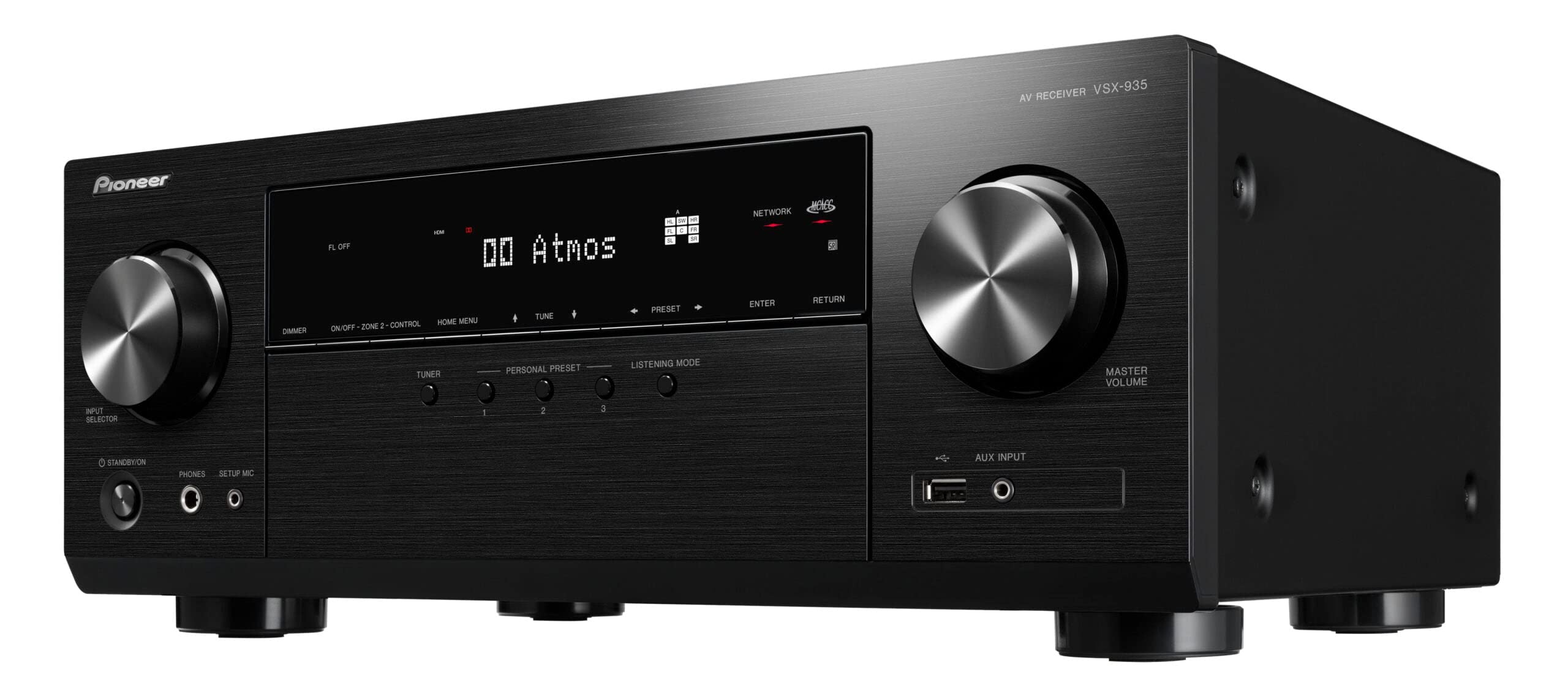
The VSX-935 surprises with its DAC performance — it handles DSD128 and high-resolution PCM up to 192 kHz with solid jitter rejection. The direct signal path when using Pure Audio mode bypasses unnecessary digital processing, giving you a clean stereo signal that works well with CD transports and hi-res streamers. The amplifier section is rated at 80W per channel (8 ohms, 20 Hz–20 kHz, 0.08% THD), which is honest and repeatable.
Dolby Atmos Height Virtualization is included for creating a more immersive stereo sound field without height speakers — it does not replace real heights but does widen the image for music that mixes height information. The setup menu is older in design but functional, and the MCACC room calibration sets levels and distances adequately.
The Bluetooth implementation is two-way, which is useful for transmitting audio to wireless headphones, but users report pairing complications. The remote is nothing special. For the price, this receiver offers competitive DAC performance and solid amplifier construction for music-first listeners who also want to dabble in Atmos content.
Why it’s great
- Clean DAC performance with DSD128 and 192 kHz support
- Pure Audio mode bypasses DSP for direct stereo path
- Dolby Atmos Height Virtualization for wider soundstage
- Two-way Bluetooth for headphone transmission
Good to know
- Bluetooth pairing can be unreliable
- Setup interface feels dated compared to newer models
9. Marantz NR1510 UHD AV Receiver – Slim 5.2 Channel

The NR1510 is only 4.1 inches tall, making it the only slim-chassis option on this list that does not sacrifice music performance. The 50W per channel (8 ohms, 20 Hz–20 kHz, 0.08% THD) is modest, but the current feedback topology delivers clean power at low listening levels. The 0.5 dB volume increments allow fine-grained level matching that many listeners prefer for critical stereo listening.
The built-in phono input with moving magnet support means you can connect a turntable without an external preamp. HEOS multi-room streaming supports TIDAL, Spotify Connect, and Amazon Music HD. The slim form factor fits into AV cabinets where full-height receivers cannot go, and the heat dissipation is well-managed with side vents.
The 5.2-channel limitation means you cannot expand beyond a basic surround setup. For listeners building a compact two-channel system with occasional TV use, this receiver offers the best form factor-to-performance ratio. The remote is basic, but the HEOS app handles most streaming duties adequately.
Why it’s great
- Ultra-slim 4.1-inch chassis fits narrow AV cabinets
- 0.5 dB volume increments for precision level setting
- Phono input with moving magnet support
- HEOS multi-room streaming with major platforms
Good to know
- Limited to 5.2 channels — no expansion possible
- 50W per channel may not drive low-sensitivity speakers loudly
10. Yamaha RX-V4A 5.2-Channel AV Receiver with MusicCast

The RX-V4A is the most affordable entry point into the MusicCast ecosystem, and for casual music listeners, it delivers solid performance. The amplifier section drives 140W towers with ease, and the YPAO calibration corrects timing and helps mask minor speaker placement errors. The sound is clean and detailed for the price, though it lacks the DAC refinement of higher-tier models.
MusicCast is the main selling point — it integrates seamlessly with Yamaha’s wireless speakers and supports TIDAL, Qobuz, and Spotify Connect. The 5.2-channel layout limits expansion to a simple surround setup, but for a living room stereo system with a subwoofer, it is adequate. Spotify Connect works reliably with the MusicCast app.
HDMI switching issues are reported by some users, including failure to pass video from certain sources. The remote buttons are small and difficult to use in dim lighting. This is a solid entry-level option for listeners who want MusicCast streaming without overspending, but it is best treated as a stereo receiver with bonus surround capability.
Why it’s great
- Affordable entry into the MusicCast multi-room system
- YPAO calibration improves stereo timing and detection
- Drives 140W towers cleanly for the price
- Wi-Fi 2.4/5 GHz with AirPlay 2 support
Good to know
- HDMI switching issues reported by multiple users
- Small, hard-to-press remote buttons in low light
11. Denon AVR-S670H 5.2 Ch Home Theater Receiver

The AVR-S670H is Denon’s entry-level offering, and it includes a phono input — a rarity at this tier. The 75W per channel (8 ohms, 20 Hz–20 kHz, 0.08% THD) is adequate for small to medium-sized speakers. The Audyssey MultEQ calibration (basic version) sets levels and distances cleanly, though it does not perform the advanced frequency-domain correction of the XT32 variant.
HEOS streaming is built in, giving you access to Spotify Connect, TIDAL, and Amazon Music HD. The setup is straightforward — the on-screen assistant works well for first-time users. The phono input works cleanly with most moving magnet cartridges, making this a viable option if you have a turntable and want a single-box solution for music streaming and occasional TV sound.
HEOS wireless streaming can be laggy and occasionally disconnects, which is frustrating during critical listening sessions. The amplifier is not designed for low-sensitivity speakers or large rooms. This is a budget-conscious choice for listeners who need a phono stage and HEOS in one box, but it is best considered a starter receiver rather than a long-term music system.
Why it’s great
- Built-in phono input at entry-level price point
- HEOS multi-room streaming with major music services
- Audyssey MultEQ calibration improves stereo staging
- Simple on-screen setup wizard for new users
Good to know
- HEOS wireless streaming can lag or disconnect
- 75W per channel limits speaker and room choices
FAQ
Does a home theater AVR sound worse than a dedicated stereo amplifier for music?
Should I turn off room correction for stereo music listening?
Do I need a separate phono preamp with my AV receiver?
Does DAC chip brand matter for real-world music listening?
Final Thoughts: The Verdict
For most users, the best av receiver for music winner is the Yamaha R-N600A because it delivers the purest stereo signal path with its ESS Sabre DAC and Pure Direct mode, without the noise of video processing. If you want Dirac Live calibration for challenging rooms, grab the Onkyo TX-RZ50. And for a compact, slim system with phono input and musical current feedback, nothing beats the Marantz NR1510.