
Our readers keep the lights on and the weekend projects moving. As an Amazon Associate, I earn from qualifying purchases.
Golf course maintenance means long hours on wet turf, sloping fairways, and muddy bunkers — standard work boots fail when your day starts at dawn and ends with soaked feet and aching arches. The combination of moisture, mower vibration, and uneven terrain demands a boot built for grip, waterproofing, and all-day foot support, not just a casual hiking shoe repurposed for the job.
I’m Rikta — the co-founder and writer behind FitlyFast. I’ve spent hundreds of hours digging into the materials, sole compounds, and safety certifications that separate a true course-maintenance boot from one that’ll leave you slipping on dew-soaked grass by mid-morning.
This guide breaks down the nine best options for staying dry, stable, and comfortable shift after shift, with practical advice on waterproof membranes, outsole design, and toe protection you need before buying your next pair of boots for golf course maintenance.
How To Choose The Best Boots For Golf Course Maintenance
The right boot for golf course maintenance balances waterproof protection, robust outsole traction, and lightweight comfort for walking 8–12 miles per shift. You need a design that handles wet grass in the morning, hard cart paths midday, and sloped bunker edges without causing foot fatigue. Prioritize these three factors before anything else.
Waterproof Membrane vs. Water-Resistant Coating
A sealed liner like Gore-Tex or a proprietary waterproof membrane stops moisture from seeping through the upper during hours of dew-covered walking. Many budget boots rely on a spray-on DWR coating that wears off after a few weeks. For course maintenance, look for a full membrane boot — the difference between dry feet at hour eight versus squelching socks is the difference between a membrane and a coating.
Outsole Grip on Wet Turf and Sloped Fairways
Not all rubber is equal. A lug pattern with moderate depth and horizontal tread bars gives you lateral stability on side slopes without tearing up the turf you’re paid to maintain. Too aggressive a tread chews up the greens; too flat a tread slips on morning dew. A non-marking, oil-and-slip-resistant outsole is ideal for mowers, cart paths, and wet grass alike.
Toe Protection: Composite vs. Steel
Composite toes are lighter and don’t conduct cold, making them the smarter choice for 10-hour shifts on foot. Steel toes offer higher impact protection but add weight and can feel cold in winter. For course maintenance — where you’re more likely to drop a rake or step onto a hidden root than face heavy falling objects — a composite safety toe provides the right balance of protection and walking comfort.
Quick Comparison
On smaller screens, swipe sideways to see the full table.
| Model | Category | Best For | Key Spec | Amazon |
|---|---|---|---|---|
| Timberland PRO Titan EV | Mid Range | All-day wet turf | Composite toe + waterproof membrane | Amazon |
| ARIAT Turbo Waterproof | Mid Range | Dry feet on long shifts | Carbon toe + waterproof leather | Amazon |
| Thorogood 1957 Series | Premium | Premium comfort & build | Full-grain leather, wedge outsole | Amazon |
| Georgia Boot Logger GTX | Premium | Rough terrain & steep slopes | Gore-Tex, steel shank, 8-inch | Amazon |
| Timberland PRO Boondock | Premium | Maximum protection & warmth | Composite toe, Thinsulate, waterproof | Amazon |
| ARIAT Workhog XT Venttek | Premium | Ventilated hot-weather work | VentTEK mesh, waterproof, composite toe | Amazon |
| Timberland White Ledge Mid | Budget | Entry-level dry protection | Waterproof leather, mid-height | Amazon |
| KEEN Utility Kenton Mid | Budget | Lightweight shop & course mix | Comp toe, oil-resistant outsole | Amazon |
| Carhartt FA5016 Sneaker Boot | Budget | Sneaker-like feel for casual shifts | Non-marring outsole, lightweight | Amazon |
In‑Depth Reviews
1. Timberland PRO Titan EV 6″ Composite Toe
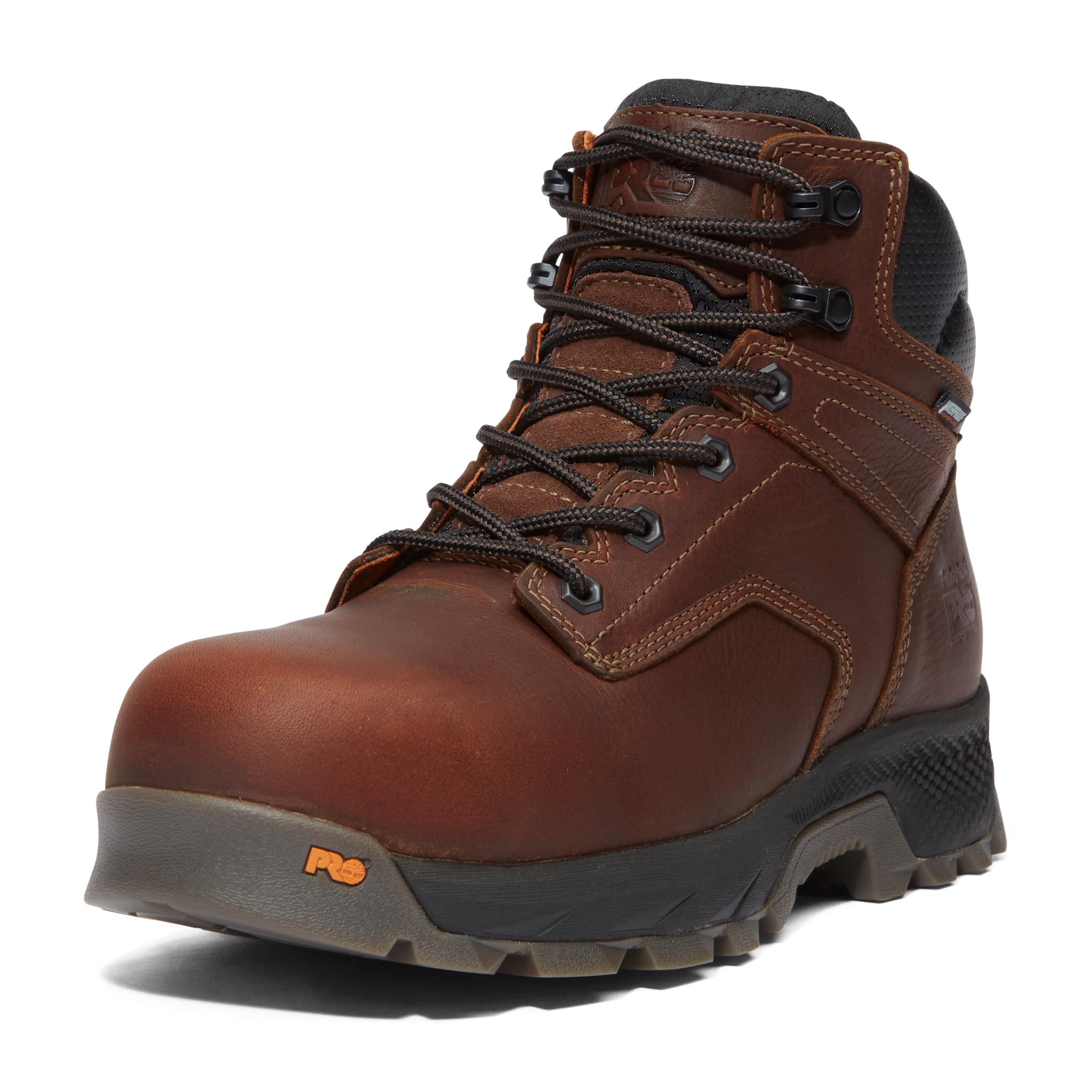
The Titan EV delivers the most balanced package for course maintenance: a composite safety toe keeps weight low, a sealed waterproof membrane handles dew-soaked fairways, and the slip-resistant outsole grabs wet grass without tearing turf. Multiple reviewers confirm zero break-in pain — rare for a work boot with safety toe protection — and the arch support holds up across 10-hour shifts on concrete cart paths.
The leather upper is bulkier than a hiking boot but breathes well enough for spring and fall work. Traction on wet surfaces gets high marks from guys doing construction and solid waste work, which mirrors the slippery conditions of a morning golf course. The roomy toe box accommodates thicker socks for colder months without cramping.
Reviewers with plantar fasciitis and neuropathy report significant relief compared to stiffer boots. The only tradeoff is a slight heft — you feel the weight at the end of a 12-mile day, but the composite toe eliminates the cold-sucking problem steel toes cause in winter. For the blend of protection, dry feet, and walkability, this is the course-maintenance benchmark.
Why it’s great
- Zero break-in with excellent arch support from day one
- Composite toe keeps weight down and feet warm in cold weather
- Reliable waterproof membrane for wet turf conditions
Good to know
- Slightly heavier than a lightweight sneaker boot
- Leather upper runs warm in summer without ventilation
2. ARIAT Turbo 6″ Waterproof Carbon Toe

The Ariat Turbo has a dedicated following among guys who work 50–60 hours a week on industrial floors, and the same features translate to golf course maintenance: waterproof leather keeps dew out, the carbon toe is lighter than steel, and the outsole tread lasts four-plus years before the lugs wear flat. Multiple repeat buyers mention they replace their pair every two years due to upper wear, not sole failure.
The boot runs true to size for normal-width feet but some reviewers found they needed a half-size down in wide. Break-in is short but real — the ankle collar can chafe for the first three days before the leather softens. Once broken in, the boot feels stable on all terrains except ice and snow, where the tread pattern lacks bite.
For course maintenance, the Turbo excels in dry to damp conditions. The waterproofing holds up in morning dew and light rain, but reviewers note it’s not a submersion boot. The carbon toe meets safety standards without the thermal conductivity of steel, making it a smart choice for fall and spring shifts. If you want a boot that disappears on your feet after a week, this is it.
Why it’s great
- Extremely comfortable for normal-width feet after short break-in
- Outsole tread lasts for years with minimal wear
- Waterproof leather keeps feet dry in dew and light rain
Good to know
- Not ideal on ice or packed snow — lacks aggressive lugs
- Upper may wear out before the sole; expect ~2 years per pair
3. Thorogood 1957 Series 8″ Waterproof Moc Toe

Thorogood’s 1957 Series is the boot you buy when you want maximum comfort and a resoleable wedge outsole that won’t churn up turf. The full-grain leather upper is thick enough to shrug off rake handles and mower pedals, while the waterproof membrane keeps morning dew at bay. Multiple reviewers who work in welding and pipefitting swear by these for concrete work — same slippery conditions you face on cart paths after rain.
The wedge outsole is the star for course maintenance: flat profile spreads your weight evenly on soft grass, reducing divots and fatigue. The tradeoff is a slight loss of deep mud traction compared to a lug sole. Break-in takes about a week, with the insole conforming to your arch faster than competitors. The 8-inch shaft gives more ankle support than mid-height boots, which helps when you’re walking side slopes on hillside fairways.
Reviewers note that the boots run slightly large — consider a half-size down. The lacing system is functional but not premium; a few owners wished for speed hooks near the top. For a boot that will last three to five years with resoling, and will keep your feet dry through four seasons of course maintenance, the Thorogood is a legitimate investment in daily comfort.
Why it’s great
- Wedge outsole reduces turf damage and spreads weight evenly
- Full-grain leather offers exceptional durability and resoleability
- Excellent ankle support for sloped terrain
Good to know
- Heavier than mid-height or sneaker-style boots
- Runs about half-size large; order down
4. Georgia Boot Low Heel Logger GTX
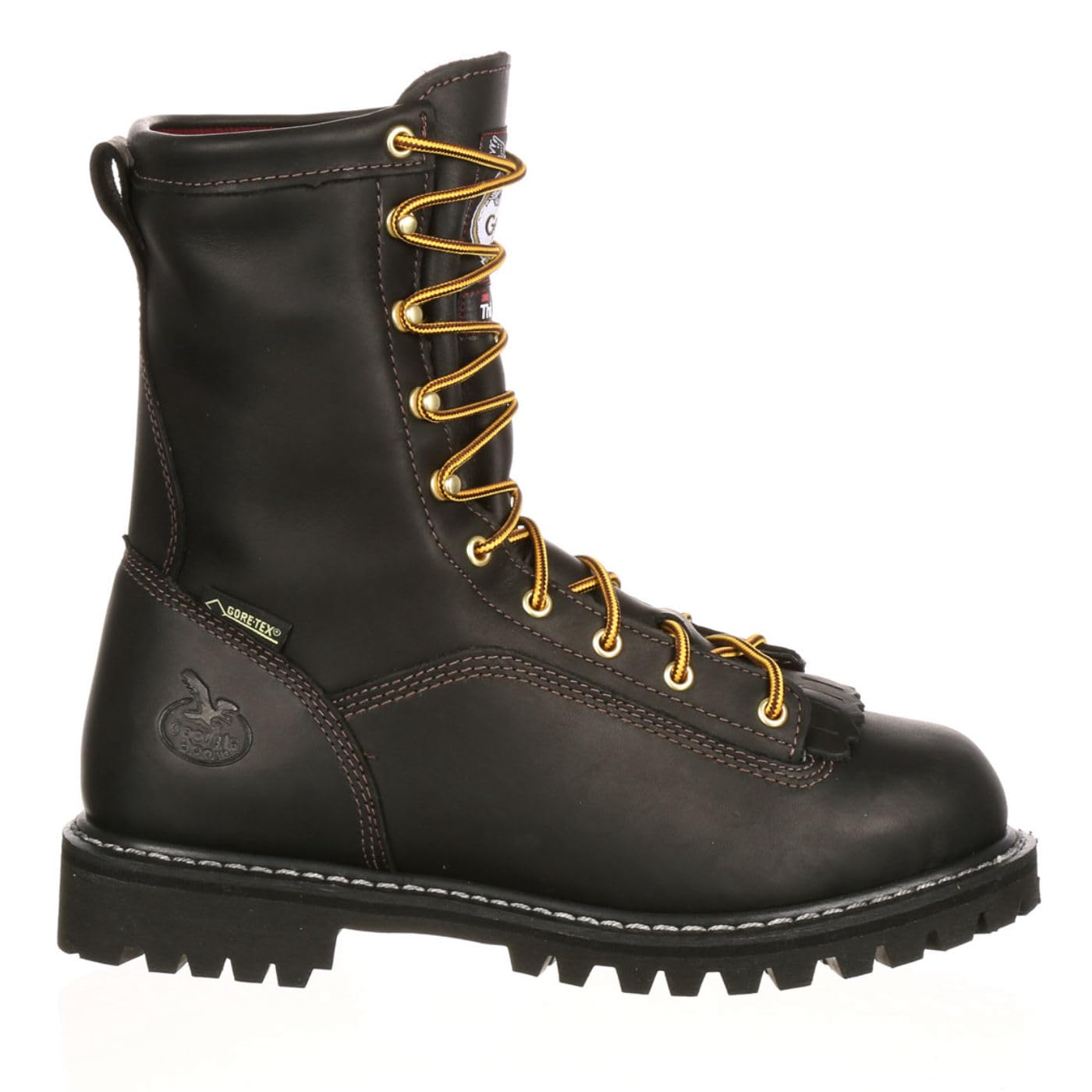
The Georgia Boot Logger is built for the kind of ground that chews up lesser boots — steep bunker slopes, muddy drainage areas, and rough utility terrain. The Gore-Tex membrane provides genuine waterproofing that doesn’t quit after a season, and the steel shank adds torsional rigidity for carrying heavy gear across uneven ground. Reviewers who own both this and the Danner Rainforest say the Georgia saves about with only minor differences in leather thickness.
The ankle leather is stiff out of the box and requires a proper break-in period of a week or more — one reviewer described the break-in as “painful.” After that, the ankle support is exceptional for side-hill walking. The outsole is a rugged logger pattern that won’t damage turf but provides excellent bite on loose soil and wet grass. The boot is heavy, with an 8-inch shaft and steel shank adding noticeable weight compared to a mid-height boot.
For year-round course maintenance in cooler climates, the insulated version keeps feet warm down to freezing. Above about 20°C, the insulation makes feet uncomfortably hot. Consider the uninsulated version if you work in a warmer region. The wide sizes are genuinely generous — a 12EE has extra room that works well with thicker socks. If your course involves serious walking on rough terrain, this boot earns its premium price.
Why it’s great
- Genuine Gore-Tex membrane for long-term waterproofing
- Steel shank provides excellent stability on uneven ground
- Wide sizes available for thicker socks and broader feet
Good to know
- Long break-in period with very stiff ankle leather
- Insulated version runs hot above 20°C
5. Timberland PRO Boondock Waterproof ST
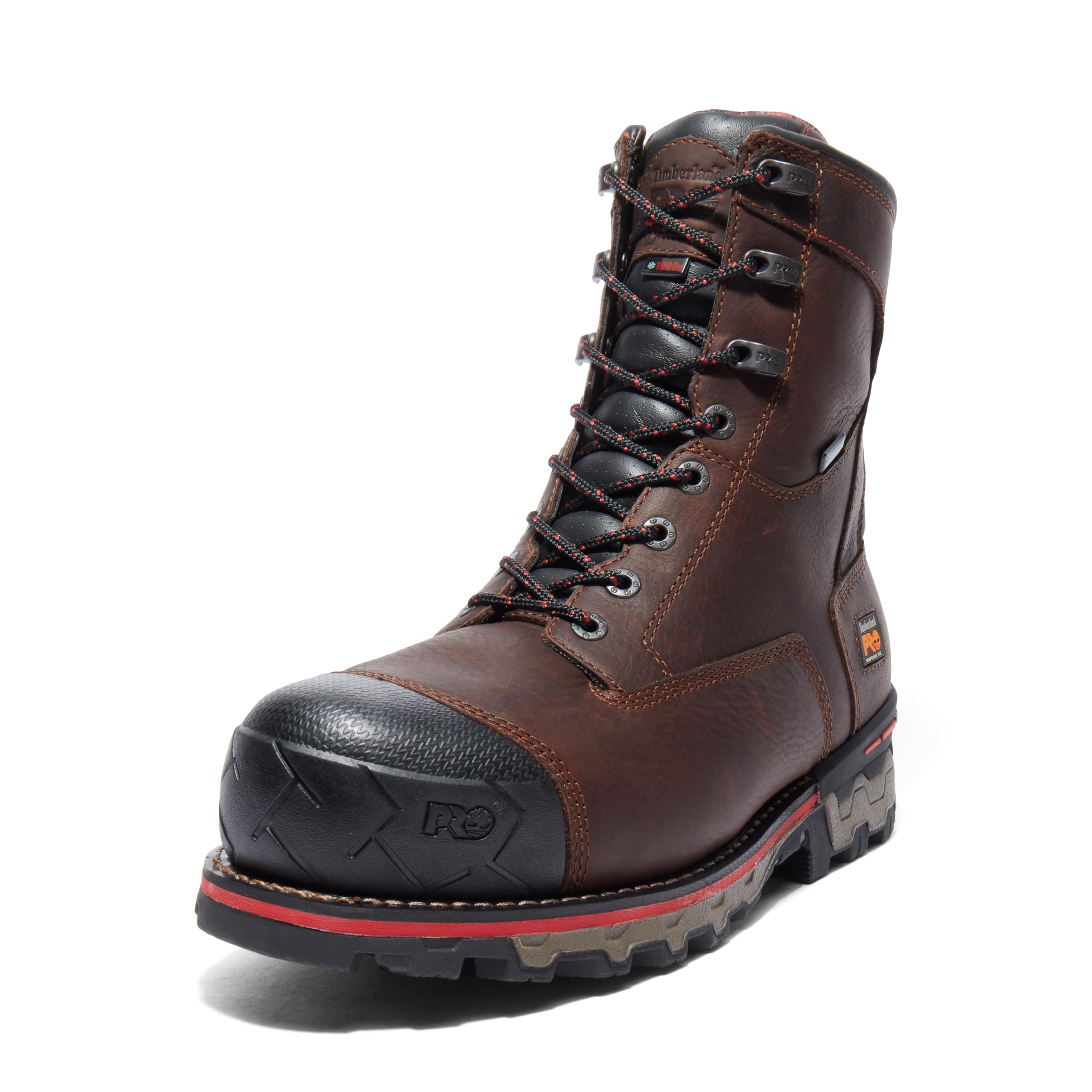
The Boondock is the boot you reach for when your day involves standing water, frozen ground, or heavy equipment. It’s composite-toe and Thinsulate-insulated with a puncture-proof plate and a waterproof membrane that multiple reviewers confirm stands up to daily submersion. Several long-term owners report getting three years of heavy use before needing a replacement — double the lifespan of cheaper alternatives.
For course maintenance, the Boondock shines in winter and early spring when the ground is saturated or frozen. The insulation keeps feet warm at temperatures down to 10°F with wool socks, and the waterproofing holds up in standing water around drainage areas. The boot is bulky, which is the main tradeoff — it feels heavy at the end of a long shift, and the thick insulation makes it less ideal for summer use.
Reviewers consistently praise the out-of-box comfort, with several noting that the boot is comfortable from day one with minimal to no break-in. The slip-resistant outsole performs well on wet surfaces including concrete and metal grates. The main downside is the bulk — this is not a boot for fast walking or maneuvering around mowers. If you need maximum protection in cold, wet conditions and can handle the weight, the Boondock is hard to beat.
Why it’s great
- Excellent waterproof performance in standing water
- Thinsulate insulation keeps feet warm in sub-freezing temps
- Puncture-proof plate adds protection around debris
Good to know
- Very bulky and heavy; not ideal for summer or fast walking
- Runs warm due to insulation in mild weather
6. ARIAT Workhog XT Venttek Bold H2O

The Workhog XT Venttek solves the one problem no other boot on this list fully addresses: keeping your feet cool during hot summer maintenance shifts. The VentTEK mesh panels let air circulate while the waterproof membrane still blocks moisture — a rare engineering feat. Multiple reviewers in construction and oilfield work confirm the ventilation genuinely works, keeping feet dry without sacrificing waterproofing when stepping into wet grass or puddles.
The pull-on design is another practical advantage for course maintenance: no laces to untie when you need to kick off boots after a muddy morning mowing. The composite toe meets safety standards without adding cold-weather heat loss, and the outsole is tough enough to survive dropped mortar and brick strikes with only scratches. Some reviewers find the boots heavy, but the easy-on design offsets that for quick transitions between truck and turf.
The main downside is the price, which sits at the top of this list. For guys working year-round in warm climates where sweaty feet are a real problem, the ventilation justifies the investment. The boot is also less ideal for cold winter mornings — the mesh panels let in cold air despite the waterproof liner. If your course maintenance season runs 12 months in a moderate climate, this is the best hot-weather option available.
Why it’s great
- VentTEK mesh keeps feet cool in hot conditions without losing waterproofing
- Pull-on design makes for easy on/off after muddy shifts
- Composite toe meets safety standards with minimal weight
Good to know
- Premium price point makes it a significant investment
- Not ideal for cold winter mornings due to ventilated panels
7. Timberland White Ledge Mid Waterproof

The White Ledge is a hiking boot that earns its place on this list because it handles the core demands of course maintenance — waterproof leather, decent traction on grass and gravel, and mid-height ankle support — at a fraction of the cost of a dedicated work boot. Reviewers consistently call it the most comfortable boot in its price range, with a large toe box that accommodates wide feet and inserts like Dr. Scholls without crowding.
The waterproofing is effective but requires maintenance: if the leather gets fully soaked, you must air-dry it slowly and treat it with mink oil to avoid delamination. Several reviewers note that the boot is not designed for heavy ankle support — it’s best for easy walking on fields and fairways rather than carrying heavy gear on steep slopes. The outsole grip is excellent on rocks, grass, and gravel, but less reliable on wet ice.
For a groundskeeper who mostly walks, mows, and does light maintenance on a well-maintained course, the White Ledge offers surprising value. It’s not a safety-toe boot, so skip it if your course requires steel or composite protection. The sole holds up well after a year of daily wear according to multiple reviews, making it a solid entry-level choice for new crew members or as a backup pair.
Why it’s great
- Extremely comfortable with a roomy toe box for inserts
- Excellent value for the level of waterproofing and grip
- Versatile on grass, gravel, snow, and mud
Good to know
- Not a safety toe boot; no fall protection rating
- Leather requires regular care to maintain waterproofing
8. KEEN Utility Kenton Mid Composite Toe

The Kenton Mid is a lightweight composite-toe boot that bridges the gap between course maintenance and shop work. Its outsole resists oils and chemicals common in equipment maintenance, while the wide KEEN toe box prevents cramping during long walking days. Reviewers in automotive shops and construction confirm these boots last about two years of daily abuse before they need replacement — a solid lifespan for an entry-level safety boot.
The most critical limitation for course maintenance is the lack of waterproofing. Every reviewer explicitly states these are not waterproof boots — water seeps in quickly when walking through wet grass or puddles. This makes them unsuitable as a primary boot for dewy mornings or rain. However, for dry-weather shifts where you’re splitting time between mowing and equipment repair, the Kenton shines with its grip on oily concrete and lightweight feel.
Break-in is real and uncomfortable for the first few days, with one reviewer describing “actual pain” during the first week. After that, the boots settle into comfortable daily drivers. The composite toe meets safety standards without adding significant weight. If your course maintenance includes significant time in the shop and you don’t need waterproofing, this is the best hybrid option in the budget tier.
Why it’s great
- Excellent grip on oily and slick concrete surfaces
- Wide toe box prevents foot cramping during long shifts
- Composite toe is lightweight for all-day wear
Good to know
- Not waterproof; water seeps in immediately on wet grass
- Painful break-in period of several days
9. Carhartt FA5016 Lightweight Sneaker Boot
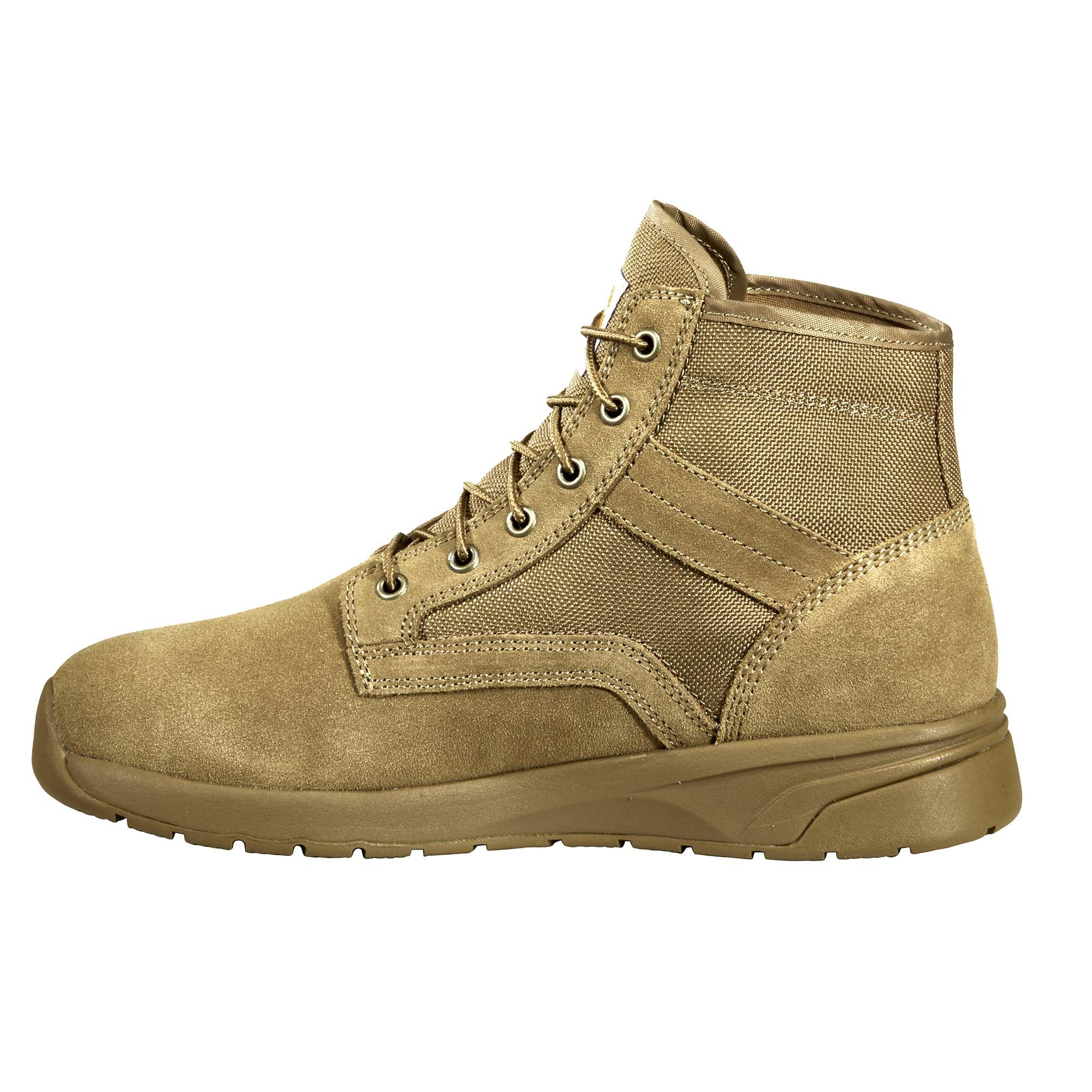
The Carhartt FA5016 is a sneaker-boot hybrid that feels more like athletic footwear than a work boot, making it ideal for groundskeepers who prioritize all-day walking comfort over heavy protection. The non-marring outsole is a practical advantage on golf greens and cart paths where rubber scuff marks are a concern. Reviewers describe the boot as extremely lightweight, with an interior that fits narrow to medium feet well and provides good arch support.
The boot lacks waterproofing and a safety toe, which limits its role in wet conditions or environments requiring toe protection. However, the breathable upper makes it a strong choice for summer shifts where heat retention is the main enemy. The sole is durable enough to last two years according to repeat buyers, though the laces fray faster than the rest of the boot — a minor annoyance that’s easy to fix.
Several reviewers bought multiple pairs, one praising the ankle panel that scrunches down for easier entry. The boot fits best with orthotics if you size up half a size. For a course maintenance worker who does mostly walking, light mowing, and hand work on dry days, the FA5016 offers unmatched comfort. But for anyone facing dew, rain, or heavy equipment, it’s best as a secondary boot for specific conditions.
Why it’s great
- Lightweight sneaker-like feel for all-day walking comfort
- Non-marring outsole protects greens and cart paths
- Good arch support and breathable for hot weather
Good to know
- No waterproofing or safety toe protection
- Laces fray quickly; plan to replace them
FAQ
Can I use regular hiking boots for golf course maintenance?
Why are composite safety toes preferred over steel toes for course work?
How often should I replace boots used for daily course maintenance?
Final Thoughts: The Verdict
For most users, the boots for golf course maintenance winner is the Timberland PRO Titan EV because it balances waterproof protection, composite-toe safety, and all-day walking comfort at a mid-range price that doesn’t require a second mortgage. If you want premium build quality with a resoleable wedge outsole that protects turf, grab the Thorogood 1957 Series. And for hot-weather maintenance where ventilation makes or breaks your shift, nothing beats the ARIAT Workhog XT Venttek.