
Our readers keep the lights on and the weekend projects moving. As an Amazon Associate, I earn from qualifying purchases.
Every ounce in your pack competes for space against food, water, and shelter. A camera that weighs you down without delivering sharp, reliable images is dead weight. The right body and lens combo captures alpine glow and forest detail without punishing your spine on a 20-mile day.
I’m Rikta — the co-founder and writer behind FitlyFast. I’ve spent years analyzing sensor readout speeds, weather-sealing ratings, and lens ecosystem weights to separate true trail cameras from gear-room paperweights.
This guide walks through the ruggedness, image quality, and portability trade-offs you need to weigh before your next trip, helping you find the best backpacking camera for the terrain you actually hike.
How To Choose The Best Backpacking Camera
Picking a camera for the backcountry means balancing three forces that push against each other: body weight, lens reach, and ruggedness. A full-frame body with a fast f/2.8 zoom delivers stunning images, but the rig can weigh as much as your cook kit. A compact point-and-shoot slips into a hip belt pocket but struggles in twilight under tree cover. Know which spec trade-offs matter most to your style of travel before you commit.
Weight and Packability
Body weight plus the lens you actually carry defines the real load. A mirrorless body like the Canon R8 at under a pound paired with a compact prime lens keeps the total under two pounds. An action camera or 1-inch sensor pocket cam trades absolute image quality for vanishing weight — under 10 ounces for the whole rig. The question isn’t whether lightweight cameras exist; it’s whether you can afford the low-light compromise on a week-long traverse.
Weather Sealing and Build Toughness
Rain, dust, and accidental drops are part of hiking. Look for cameras with explicit weather sealing around buttons, memory card doors, and lens mounts. The OM System Tough TG-7 is the gold standard here — waterproof to 50 feet, shockproof from 7 feet, and freezeproof to 14°F. Mirrorless bodies in the premium tier, like the Sony Alpha 6700, offer sealed chassis but still require compatible weather-sealed lenses. Action cameras, by design, handle submersion and falls without needing a housing.
Battery Life and Charging Logistics
On a multi-day trip without power, you cannot charge a battery. Cameras that shoot 400+ shots on a single charge — like the Panasonic G85 — stretch your time between swaps. Action cameras and pocket gimbals manage 90 to 160 minutes of continuous video, which can vanish in a single afternoon of clips. If you rely on in-camera USB charging, verify the battery door allows pass-through power. Otherwise, pack two to three spares and keep them warm in your sleeping bag overnight.
Lens Ecosystem and Focal Length Versatility
A body is only as good as the glass in front of it. Interchangeable lens systems (Canon RF, Sony E, Nikon Z) give you the option to carry a single compact zoom, like a 16-50mm, for daytime landscape work, and add a fast prime or telephoto for wildlife. For fixed-lens cameras, the Ricoh GR IIIx’s built-in 40mm equivalent lens is sharp and pocketable but locks you into one field of view. If you want wide-angle, macro, and telephoto reach without swapping lenses, an action camera or a bridge-style zoom like the TG-7 is a simpler, albeit bulkier, solution.
Quick Comparison
On smaller screens, swipe sideways to see the full table.
| Model | Category | Best For | Key Spec | Amazon |
|---|---|---|---|---|
| DJI Osmo Action 6 Enhanced | Action Camera | Waterproof trail POV | 1/1.1″ sensor, 8K / 4hr battery | Amazon |
| DJI Osmo Pocket 3 Creator | Pocket Gimbal | Ultra-stable hike vlogs | 1″ CMOS, 3-axis stabilization | Amazon |
| Insta360 X5 Essentials | 360° Action Camera | Full-trail reframing | Dual 1/1.28″ sensors, 8K/30fps | Amazon |
| Sony Alpha 6700 + 18-135mm | Mirrorless APS-C | Advanced wildlife & landscape | 26 MP, AI tracking, 4K/120p | Amazon |
| Canon EOS R8 Body | Mirrorless Full-Frame | Lightest full-frame rig | 24.2 MP, 4K/60p oversampled | Amazon |
| Nikon Z 30 + 16-50mm | Mirrorless APS-C | Lightweight vlogger kit | 20.9 MP, flip screen, USB-C | Amazon |
| Sony ZV-E10 Body | Mirrorless APS-C | Versatile content creation | 24.2 MP, 4K oversampled | Amazon |
| Canon EOS R100 + 18-45mm | Mirrorless APS-C | Budget-friendly entry | 24.1 MP, 4K/24p | Amazon |
| Panasonic G85 + 12-60mm | Mirrorless MFT | Weather-sealed durability | 16 MP, 5-axis IBIS, splash-proof | Amazon |
| OM System Tough TG-7 Red | Rugged Compact | Diving & tough environs | Waterproof 50ft, shockproof 7ft | Amazon |
| Ricoh GR IIIx | Premium Compact | Pocketable street & travel | 24.2 MP APS-C, fixed 40mm f/2.8 | Amazon |
In‑Depth Reviews
1. DJI Osmo Action 6 Enhanced Combo
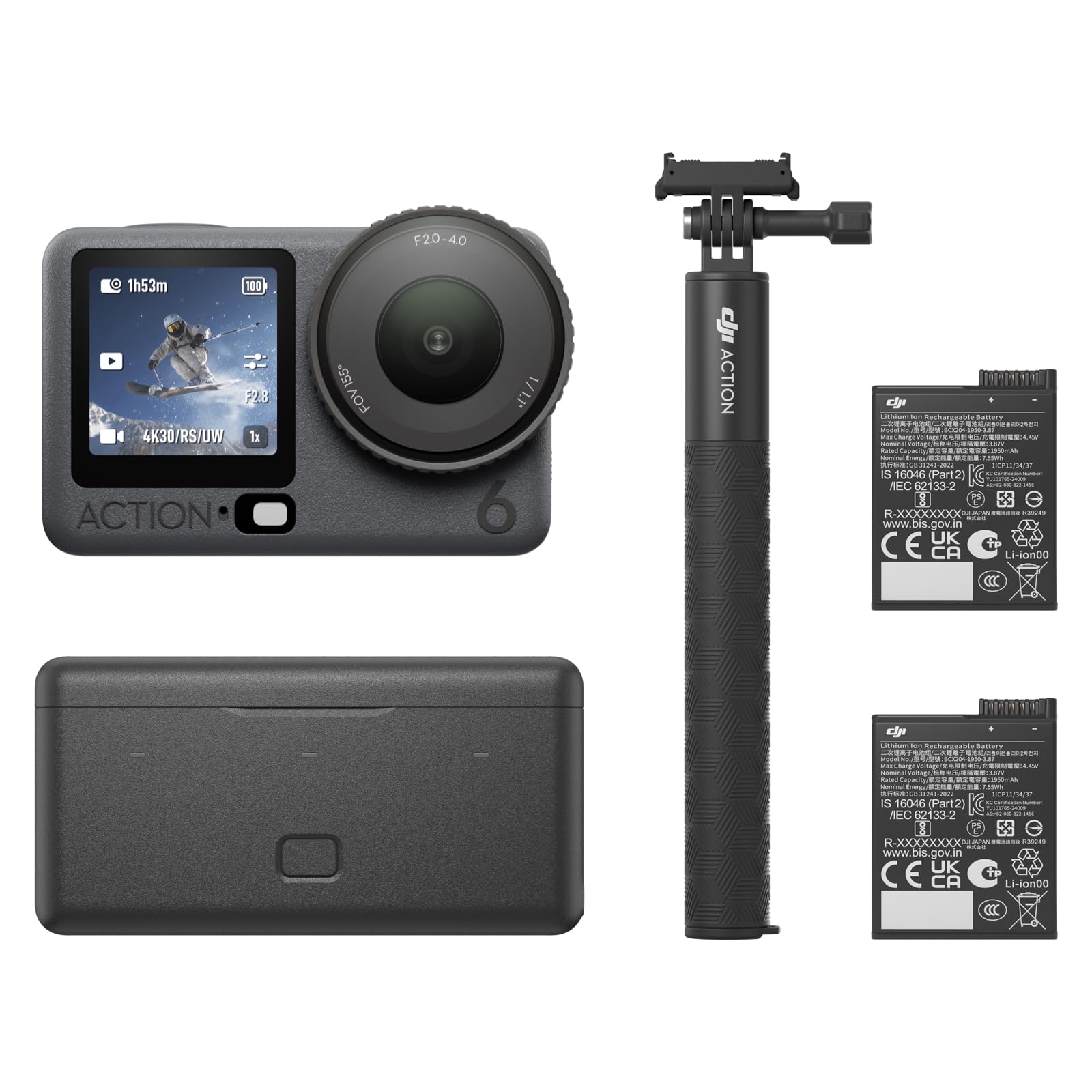
The DJI Osmo Action 6 packs a 1/1.1-inch square sensor into an action-cam chassis that goes 20 meters deep without a housing. The variable aperture, f/2.0 to f/4.0, adjusts automatically to changing light — useful when you emerge from a forest tunnel onto a ridgeline at golden hour. RockSteady 3.0 and 360° HorizonSteady keep the horizon level even when you’re scrambling over boulders or crossing a talus field.
Battery life stretches to 4 hours in moderate temperatures, and the Enhanced Combo includes two Extreme Batteries plus a multifunctional case, which covers a full day of filming without recharging. The 50GB of onboard storage acts as a buffer if you forget your microSD card. Audio capture benefits from DJI’s built-in noise reduction, though a dedicated external mic still outperforms the internal mics in windy passes.
Gesture and voice controls let you start recording hands-free when you’re gripping a trekking pole. The magnetic quick-release mount system snaps the camera onto a helmet strap or pack shoulder strap in seconds. If you prioritize rugged waterproofing, stabilization, and all-day battery over a large sensor and interchangeable lenses, this is the most trail-friendly option in the lineup.
Why it’s great
- Waterproof to 20m without a housing
- Variable aperture adapts to changing trail light
- 4-hour battery covers a full day of capture
Good to know
- Audio from internal mics is acceptable but not cinematic
- Sensor size is smaller than APS-C, limiting deep bokeh
2. DJI Osmo Pocket 3 Creator Combo

The 1-inch CMOS sensor inside the Pocket 3 captures significantly more light than typical action-camera sensors, producing cleaner footage in late-afternoon shade and pre-dawn camp scenes. The 3-axis mechanical gimbal eliminates shake entirely — run down a trail or ride a mountain bike single-track and the footage stays buttery smooth. ActiveTrack 6.0 locks onto a subject automatically, which is useful for self-filming while hiking solo.
The Creator Combo adds the DJI Mic 2 transmitter, a wide-angle lens, a battery handle, and a mini tripod. The Mic 2 clips onto a collar or pack strap and delivers clear voice-over wind noise effectively. The 2-inch rotatable touchscreen flips to portrait mode for social media clips without cropping. Battery life hits 166 minutes of continuous recording, and the USB-C PD port charges the camera quickly during a lunch break.
D-Log M and 10-bit color depth give post-production flexibility for grading moody mountain scenes. The gimbal is mechanically fragile compared to a sealed action camera — you cannot drop it from waist height onto granite without risk. For hikers who prioritize smooth, stabilized footage and a larger sensor over rugged submersion, this is a near-unbeatable lightweight companion.
Why it’s great
- 1-inch sensor delivers clean low-light footage
- 3-axis gimbal eliminates all shake
- Creator Combo includes valuable audio and support gear
Good to know
- Gimbal is not shockproof — protect from drops
- Not waterproof without an optional housing
3. Insta360 X5 Essentials Bundle

The Insta360 X5 captures everything around you in 8K using dual 1/1.28-inch sensors, so you shoot first and frame later in the Insta360 app. On the trail, this means you never miss a moment because the camera was pointing the wrong way — the entire 360-degree sphere is recorded. The invisible selfie stick effect creates a third-person drone-like view without an actual drone, which is compelling for ridgeline walks and river crossings.
FlowState Stabilization and full 360° Horizon Lock keep the horizon perfectly level even during bumpy descents. The new four-mic array with a built-in wind guard cuts down trail noise, making voiceover in windy passes clearer than most action cameras. Waterproofing to 49 feet (15 meters) without a housing lets you film in streams, lakes, and waterfalls without extra gear.
The replaceable lens system is a practical upgrade — if you scratch a lens on a rock scree, you swap it in seconds instead of sending the camera for repair. The Essentials Bundle includes a 114 cm invisible selfie stick, a utility fast charge case, and standard lens guards. The battery lasts up to 208 minutes, and fast charging hits 80% in 20 minutes. Editing 360° footage requires the app or desktop software, which adds a step after the hike.
Why it’s great
- Shoots 360° — impossible to miss a shot direction
- Replaceable lenses add longevity
- 15m waterproof without a case
Good to know
- 360° editing adds post-production time
- MicroSD card sold separately
4. Sony Alpha 6700 + 18-135mm

The Sony Alpha 6700 combines a 26 MP back-illuminated APS-C sensor with a dedicated AI processor that tracks people, animals, birds, insects, and vehicles. On a backpacking trip, that means the autofocus can reliably lock onto a marmot scurrying across a talus field or a hawk circling above a valley. The 4K/60p video oversampled from 6K resolves fine detail like bark texture and cloud edges with no pixel binning.
The 18-135mm kit lens (27-202.5mm equivalent) covers wide landscape through mid-telephoto, eliminating the need to carry a separate lens for wildlife. The 5-axis in-body stabilization (IBIS) keeps handheld shots sharp in low light. The body itself is compact for an APS-C interchangeable-lens system, and the build includes weather sealing around ports and seams. Battery life is rated for about 570 shots per charge, which holds up well on a multi-day trip with a second battery in reserve.
S-Log and 10-bit 4:2:2 internal recording offer professional color-grading flexibility if you plan to produce edited videos. The main caveats are the single SD card slot (no redundancy) and the lack of a built-in flash. For hikers who want real telephoto reach and advanced autofocus in a still-manageable package, this is the most capable APS-C option on the list.
Why it’s great
- AI-powered real-time tracking for animals and vehicles
- 18-135mm kit lens covers wide to telephoto
- 5-axis IBIS for stable handheld shooting
Good to know
- Single SD card slot may concern redundancy-minded users
- No built-in flash built-in
5. Canon EOS R8 Body

The Canon EOS R8 is the lightest full-frame RF-mount camera Canon makes, weighing roughly the same as many APS-C bodies. The 24.2 MP sensor paired with the DIGIC X processor delivers clean files up to ISO 6400, which is critical for shooting inside dense forests or at dusk. The 4K/60p video is oversampled from 6K, providing extra sharpness and the ability to pull high-resolution stills from footage.
Dual Pixel CMOS AF II covers 100% of the frame with 1,053 AF zones, and the deep-learning subject detection now includes aircraft, trains, and horses alongside people and animals. The 0.39-inch OLED EVF runs up to 120 fps, making composition in bright sun easy. The vari-angle 3-inch LCD flips out for overhead or ground-level shots, which is useful for shooting wildflower fields or camp scenes from a low tripod.
The camera lacks in-body stabilization (IBIS), so you rely on stabilized RF lenses or a steady hand. Battery life is moderate at roughly 370 shots per charge, which means carrying at least two spares for a multi-day trip. The body-only design lets you pick your own lightweight lens, such as the RF 35mm f/1.8 or the RF 24-50mm kit zoom, keeping the total rig under two pounds.
Why it’s great
- Lightest full-frame RF body — comparable to APS-C weight
- Exceptional low-light ISO range
- 6K oversampled 4K/60p video
Good to know
- No in-body stabilization requires stabilized lenses
- Single SD card slot
6. Nikon Z 30 + 16-50mm

Nikon’s Z 30 is built specifically for vloggers and creators who want a compact interchangeable-lens camera with a flip-out selfie screen. The 20.9 MP DX sensor and EXPEED 6 processor produce vibrant JPEG colors straight out of camera, reducing time spent editing trail images. The 16-50mm retractable lens (24-75mm equivalent) collapses to a pancake-like profile when turned off, making the whole kit easy to stow in the top lid of a backpack.
The 4K video captures crisp detail, and the eye-detection autofocus for people and pets keeps faces sharp while moving. The built-in stereo microphone includes adjustable sensitivity, and a red REC light on the front confirms you’re rolling without looking at the display. USB-C provides constant power for long time-lapse sessions or live-streaming from the trailhead.
The Z 30 lacks a built-in electronic viewfinder, which can be a problem in harsh midday sun when the LCD becomes hard to see. There’s no weather sealing, so a rain cover or protective bag is advised in wet conditions. For its weight and price, this is one of the most accessible mirrorless starter kits for hikers who want to grow their lens collection over time.
Why it’s great
- Ultra-compact 16-50mm retractable lens
- Flip-out selfie screen ideal for solo hiking vlogs
- Eye-detection AF for people and pets
Good to know
- No built-in viewfinder — relies on LCD only
- No weather sealing — needs protection in rain
7. Sony ZV-E10 Body

The ZV-E10 uses the same 24.2 MP APS-C sensor found in the popular Sony Alpha 6400 but packages it in a vlogger-focused body with a flip-out screen, a dedicated defocus button, and a built-in directional microphone. The 4K video is oversampled from 6K, giving you sharp 4K files with minimal moiré. Product Showcase mode transitions focus from your face to an object held up to the lens, which is useful for demonstrating gear on the trail.
The Sony E-mount ecosystem offers hundreds of lens choices, from lightweight pancakes like the 16mm f/2.8 for ultra-portable hiking to telephoto zooms for wildlife. The camera supports S-Log and HLG profiles for color grading, and the background defocus button instantly opens the aperture to blur backgrounds. Battery life is modest — around 440 shots on a full charge — so budget for at least one spare for a full-day shoot.
The biggest drawbacks are the lack of in-body stabilization and the severe rolling shutter in 4K mode. Handheld walking shots will show wobble unless you use a lens with optical stabilization or a small gimbal. The electronic viewfinder is absent, so framing in bright sun requires a hood or the LCD’s adjustable brightness. If you are comfortable using stabilized lenses and want the best E-mount value for vlogging, this is a strong contender.
Why it’s great
- 6K-oversampled 4K video with S-Log support
- Dedicated defocus button for instant background blur
- Large E-mount lens ecosystem
Good to know
- No in-body stabilization — use stabilized lenses
- Severe rolling shutter in 4K mode
8. Canon EOS R100 + 18-45mm

The Canon EOS R100 is the lightest and most affordable body in the EOS R series, pairing a 24.1 MP APS-C sensor with the DIGIC 8 processor. It includes the 18-45mm retractable kit lens (29-72mm equivalent), which is small enough to leave attached without adding noticeable bulk. Dual Pixel CMOS AF covers 143 zones with face and eye detection for people and animals, and continuous shooting hits 6.5 fps in One-Shot AF mode.
Video recording tops out at 4K/24p, which looks cinematic but may be too jerky for fast-paced trail footage if you prefer higher frame rates. Full HD recording at 120 fps is available for smooth slow-motion clips of waterfalls or streams. The camera lacks the flip-out touchscreen found on Canon’s newer bodies, using a fixed 3-inch LCD instead, which can be tricky for overhead or waist-level compositions.
The RF mount provides an upgrade path to Canon’s excellent RF and RF-S lenses over time. The body does not include a battery charger in the box — USB charging is required or a separate LP-E17 charger. For a hiker stepping up from a smartphone who wants the image quality and lens flexibility of a MILC at the lowest entry cost, the R100 package delivers tremendous value.
Why it’s great
- Lightest, most affordable EOS R body
- Compact 18-45mm retractable kit lens
- Dual Pixel AF with face/eye detection
Good to know
- 4K capped at 24p — not ideal for fast action
- No battery charger included in the box
9. Panasonic LUMIX G85 + 12-60mm

The Panasonic G85 remains a favorite among budget-conscious backpackers who need splash-proof build and stabilization. The magnesium-alloy front chassis and weather-sealed lens mount make it more rain-tolerant than most mirrorless cameras at this tier. The 5-axis in-body image stabilization (IBIS) works with non-stabilized lenses, allowing crisp handheld shots at shutter speeds up to 2 stops slower than normal.
The 16 MP Micro Four Thirds sensor has no low-pass filter, which boosts fine details compared to earlier 16 MP sensors. The kit 12-60mm Power O.I.S. lens (24-120mm equivalent) covers wide to portrait-length telephoto, and the dual stabilization combines IBIS and lens O.I.S. for smooth 4K video. The OLED live viewfinder (2,360K dots) is sharp and responsive, with a 0.74x magnification that feels larger than many sub- options.
The G85 records 4K at 30fps and includes Lumix 4K Photo mode for extracting 8 MP stills from video at up to 30 fps. The battery life is average — around 330 shots — so a spare battery is essential for full-day hikes. The autofocus uses contrast detection, which hunts more in low light than phase-detect systems. For hikers who routinely shoot in mist or drizzle, the weather sealing alone justifies the G85’s place in the pack.
Why it’s great
- Weather-sealed magnesium-alloy construction
- 5-axis IBIS for stable handheld shots
- 12-60mm kit lens covers wide to telephoto
Good to know
- Contrast-detect AF hunts in dim conditions
- Battery life moderate — carry spare
10. OM System Olympus Tough TG-7 Red

The OM System Tough TG-7 is purpose-built for environments that destroy other cameras: coral reefs, mud-soaked rainforests, snowy summits, and dusty canyon trails. It’s waterproof to 15 meters (50 feet) without a housing, shockproof from 2.1 meters (7 feet), crushproof to 100 kgf, and freezeproof to -10°C (14°F). The back-illuminated CMOS sensor and f/2.0 lens (25-100mm equivalent) produce decent images in good light, with optical zoom replacing digital cropping.
The variable macro system is a standout for small subjects — you can focus as close as 1 cm from the lens, revealing insect details and plant textures that larger sensors with kit lenses cannot match. Five underwater modes, including underwater microscope and underwater HDR, simplify diving photography. The 4K video records at 30fps, and 120 fps high-speed recording is available for slow-motion in Full HD.
Image quality drops noticeably in low light due to the small sensor — expect noise above ISO 800. The camera is bulkier than a typical point-and-shoot and uses a proprietary USB cable for charging. The menu system is dense, but the built-in field sensor system (GPS pressure sensor, temperature, and compass) adds valuable data to your photo metadata. If your backpacking trips involve river crossings, summit pushes in snow, or multi-day kayak camping, this is the most survivable camera on the list.
Why it’s great
- Waterproof to 50ft without housing
- Shockproof, crushproof, and freezeproof
- Macro focus at 1cm from lens
Good to know
- Small sensor struggles in low light
- Proprietary USB cable for charging
11. Ricoh GR IIIx

The Ricoh GR IIIx packs an APS-C 24.2 MP sensor and a sharp 40mm equivalent f/2.8 lens into a body that slides into a jacket pocket. The focal length mimics the human field of view, producing natural-looking images without the wide-angle distortion common in phone cameras. The GR Engine 6 delivers snappy performance with a startup time of roughly 0.8 seconds, so you can pull it out and shoot without missing the moment.
The lens elements are legendary for their resolving power — you can see individual hairs and skin pores in portraits, and distant mountain texture in landscape shots. In-body image stabilization helps keep shots sharp in twilight. The camera also supports 1:1 and 3:2 aspect ratios in-camera, and the built-in film simulations (Positive Film, Hi BW) produce share-ready JPEGs with little editing.
The GR IIIx has no zoom lens, no viewfinder (optional add-on), no built-in flash, and no 4K video — it records only Full HD. Battery life is poor at around 200 shots per charge, so you need at least two or three spares for a multi-day trip. It also lacks weather sealing, making it vulnerable in heavy rain or dusty environments. For minimalist hikers who obsess over ultimate image quality per gram and shoot strictly stills, this is the purest pocket camera money can buy.
Why it’s great
- APS-C sensor in a true pocket size
- Sharp 40mm f/2.8 prime lens
- In-body image stabilization
Good to know
- Poor battery life — carry 2–3 spares
- No weather sealing, no viewfinder, no 4K video
FAQ
What is the best all-around lens focal length for backpacking?
Is a full-frame camera worth the extra weight on a multi-day hike?
How many batteries should I bring for a 5-day backpacking trip?
Can I use my phone instead of a backpacking camera?
Is video stabilization important for hiking footage?
Final Thoughts: The Verdict
For most hikers, the best backpacking camera winner is the DJI Osmo Action 6 Enhanced Combo because it delivers rugged waterproofing, reliable stabilization, and all-day battery life in a package that weighs under a pound and fits in a hip pocket. If you want a larger sensor for creative depth-of-field and plan to edit color-graded video, grab the DJI Osmo Pocket 3 Creator Combo for its gimbal-stabilized 1-inch sensor and included pro audio kit. And for wildlife and landscape shooters who need telephoto reach and advanced autofocus in a still-portable mirrorless system, nothing beats the Sony Alpha 6700 with the 18-135mm kit lens.