
Our readers keep the lights on and the weekend projects moving. As an Amazon Associate, I earn from qualifying purchases.
Finding a family game that actually holds a preschooler’s attention without frustrating them is a specific kind of parenting challenge. The best options use bright colors, simple matching, and physical interaction to keep little minds fully engaged without relying on reading skills.
I’m Rikta — the co-founder and writer behind FitlyFast. I have spent years analyzing early childhood development products, evaluating how game mechanics, material durability, and rule simplicity determine whether a tabletop activity becomes a nightly favorite or gathers dust on a shelf.
This guide breaks down the seven most reliable board games for this exact age window. After researching components, play styles, and developmental fit, I have ranked the top choices for parents seeking the best board games for 4 and 5 year olds that truly work in real homes.
How To Choose The Best Board Games For 4 And 5 Year Olds
Preschoolers have short attention spans and developing motor control, so the wrong game can cause frustration instead of fun. Focus on three core factors to ensure the game fits your child’s current ability level and keeps them coming back to the table.
No-Reading Mechanics Are Non-Negotiable
At ages four and five, most children are pre-readers or just beginning to sound out letters. A game that requires reading text or complex instructions will exclude them immediately. Look for color-matching, picture recognition, or symbol-based play where the child can understand their turn simply by looking at the board or a card.
Physical Component Fit & Durability
Small, fragile pieces pose a choking hazard and are hard for small hands to manipulate. Thick cardboard tiles, larger plastic movers, and tools like tongs or squeezers build fine motor skills. Check that the board itself is sturdy and that cards or tiles have a laminated or thick cardstock feel to survive repeated drops and spills.
Game Length and Emotional Complexity
A round should last between ten and twenty minutes maximum. Longer games cause attention drift. Cooperative games are ideal for sensitive children who struggle with losing, while simple competitive games with clear win conditions teach emotional regulation. Avoid games with punitive mechanics like aggressive take-that cards at this age.
Quick Comparison
On smaller screens, swipe sideways to see the full table.
| Model | Category | Best For | Key Spec | Amazon |
|---|---|---|---|---|
| The Sneaky, Snacky Squirrel Game | Fine Motor | Dexterity & Color Matching | Squirrel squeezer tool | Amazon |
| Zingo Bingo | Matching | Pre-Reading & Hand-Eye | 72 double-sided tiles | Amazon |
| Rainbow Unicorn Rescue | Cooperative | Teamwork & Imaginative Play | 10-15 minute rounds | Amazon |
| Dragomino (My First Kingdomino) | Strategy | Simple Tile Placement | 28 exploration dominoes | Amazon |
| Scrabble Junior | Word | Alphabet Familiarity | Two-sided board | Amazon |
| Candy Land Disney Princess | Classic | Princess-Themed Introduction | 3 character movers | Amazon |
| Bed Bugs | Action | Vibrating Motor Activity | 36 plastic bugs | Amazon |
In‑Depth Reviews
1. Educational Insights The Sneaky, Snacky Squirrel Game

This game stands apart because the squirrel squeezer tool directly builds hand strength and pincer grip in a way no card-based game can. The premise is simple: spin the spinner and use the plastic squirrel tongs to grab an acorn of the matching color from the tree-shaped board. The precision required to pick up those acorns without dropping them keeps four- and five-year-olds intensely focused on their turn.
The strategic layers emerge naturally when the spinner lands on a “steal an acorn” or “lose an acorn” space. Children learn to manage mild disappointment and celebrate small wins, all while practicing color recognition and counting as they fill their log with five acorns. The tree-shaped game board doubles as the storage box, which simplifies cleanup and prevents lost pieces between sessions.
Parents report that games last roughly ten minutes, which matches the ideal attention window for this age group. The only real downside is that the acorns are small enough to be a choking hazard for younger siblings, so keep the game fully assembled during play and store it out of reach of toddlers.
Why it’s great
- The squeezer builds fine motor skills in a fun, repeated motion
- Teaches turn-taking and sportsmanship without relying on reading
- Tree-shaped box design makes storage and setup effortless
Good to know
- Acorns are a potential choking hazard for children under three
- Gameplay is quite simple and may be outgrown by age six
2. ThinkFun Zingo Bingo Award Winning Preschool Game

Zingo takes the familiar bingo format and turbocharges it with a plastic “Zinger” device that shoots out two double-sided tiles at once. The fast-paced reveal creates a genuine sense of excitement, and the act of spotting a matching picture on your card and slapping down the tile keeps kids physically engaged rather than passively waiting for their turn.
The double-sided cards offer two difficulty levels. The simpler side uses picture matching only, which is perfect for four-year-olds who cannot read yet. The advanced side includes simple words beneath the pictures, allowing the same game to grow with a five-year-old who is beginning to decode short words. With enough cards for up to seven players, this works well for playdates or larger family gatherings.
Component quality is noticeably high. The tiles are thick and the Zinger mechanism feels solid. One smart tip from experienced players: set aside the unused tiles before starting so you do not have to open the Zinger repeatedly during the game. The entire round takes about fifteen minutes, and the matching rhythm feels fresh every time due to the random tile draws.
Why it’s great
- The Zinger tile dispenser creates a tactile, thrilling moment every round
- Two difficulty levels extend the game’s lifespan from age four to seven
- Supports up to seven players, ideal for larger groups
Good to know
- Initial setup requires sorting tiles, which takes a minute
- The advanced word side may still challenge early pre-readers
3. Rainbow Unicorn Rescue Board Game

This is the best choice for families who want to avoid the emotional tension of direct competition. In the cooperative mode, all players work together to rescue unicorns before time runs out, which means every turn is a contribution to a shared goal rather than an attempt to beat a sibling. The Rainbow Cards inject physical comedy by prompting silly animal sounds and goofy movements that get everyone laughing.
The wooden game pieces are a welcome upgrade over flimsy plastic tokens. The board is simple to navigate and the rainbow path feels intuitive even for a four-year-old. Two ways to play — cooperative versus head-to-head — means the same box can serve different moods and family dynamics. A round runs between ten and fifteen minutes, fitting into a bedtime routine without dragging on.
One minor issue reported by buyers involves the spinner initially sticking. A quick spray of cooking lubricant resolves the problem, and after that the spinner works smoothly. The instructions originally included a slight packaging error for some units, but the rules are easy to find online. The preschool audience absolutely loves the unicorn theme and colorful art style.
Why it’s great
- Cooperative mode removes losing anxiety for sensitive children
- Rainbow Cards add physical humor that keeps kids engaged
- Solid wooden components hold up well to rough handling
Good to know
- Spinner may require initial lubrication for smooth operation
- Printed instructions had a mismatch in some early editions
4. Blue Orange Games Dragomino (My First Kingdomino)

Dragomino takes the tile-placement mechanic from the award-winning Kingdomino franchise and scales it down for young children. Instead of reading numbers or text, kids simply pick a domino-shaped tile showing two terrain types — forest, field, desert, or water — and try to match at least one side to a tile already in their growing kingdom. Matching correctly earns an egg token, which may or may not contain a baby dragon illustration.
This game introduces spatial reasoning and pattern recognition without requiring any reading ability. The thick cardboard tiles are satisfying to hold and durable enough for preschool handling. The Mommy Dragon meeple adds a tactile, cute element that makes the game feel special. Rounds last about fifteen minutes, and the random egg reveal creates a natural “one more round” pull.
The strategic depth increases over time as children learn to plan ahead which terrain they need. However, very competitive children may find the egg-reveal luck-based element frustrating when they consistently draw empty eggs. The box recommends age five and up, and most four-year-olds grasp the concept quickly with a parent’s initial explanation of matching rules.
Why it’s great
- Builds spatial awareness and planning through tile placement
- Thick cardboard components withstand heavy use
- Egg-reveal mechanic keeps each round exciting and unpredictable
Good to know
- Younger four-year-olds may need help grasping the matching rule at first
- Luck element in egg draws can frustrate some children
5. Hasbro Gaming Scrabble Junior Board Game

Scrabble Junior solves the problem of an advanced game that a preschooler cannot touch. The double-sided board offers a beginner side where pre-printed words show children exactly where to place their letter tiles. This letter-matching mechanic builds alphabet recognition and reinforces the connection between written letters and sounds without requiring actual spelling ability.
Once a child outgrows the beginner side, flipping the board reveals a traditional Scrabble grid where they create their own words. This transition makes Scrabble Junior one of the longest-lasting options in this lineup, potentially serving a family from age five through early elementary school. The colorful character tokens for scorekeeping add visual appeal that keeps young players interested in tracking their progress.
The main limitation for the youngest end of this age range is attention span. Many four-year-olds find the beginner side engaging for only one or two rounds before losing interest. The game works best as a short-duration activity combined with parent participation. The letter tiles are small, so supervision is required around siblings who still mouth objects.
Why it’s great
- Two difficulty levels extend the game’s lifespan significantly
- Colorful board and tokens maintain visual interest
- Builds pre-reading letter recognition in a natural way
Good to know
- Four-year-olds may lose focus after one or two rounds
- Small letter tiles require careful supervision with younger siblings
6. Hasbro Gaming Candy Land Disney Princess Edition

The Disney Princess edition of Candy Land inherits all the simplicity of the original while adding themed artwork featuring Cinderella, Rapunzel, and Ariel. The gameplay is purely color-matching: draw a card, move your princess piece to the matching color on the rainbow path, and race to the castle. No reading, no counting, no decisions — just straightforward forward movement.
The appeal here is almost entirely thematic. Children who love Disney princesses will immediately connect with the character movers and the illustrated board showing scenes from multiple movies. This emotional engagement often overrides the lack of strategic depth, making it a strong entry-level game for children who are not yet ready for more complex rules. The board folds into quarters for storage.
Some buyers note that the board thickness feels thinner than older editions and the cards are somewhat flimsy. The game only includes three player pieces, so families with more than three children will need to take turns. The complete lack of strategic decision-making means that many five-year-olds outgrow the novelty after a few plays, but for a themed introduction to board games, it reliably delivers.
Why it’s great
- Princess theme creates strong emotional buy-in for young fans
- Zero reading required, pure color matching
- Quick setup and simple rules for first-time players
Good to know
- Board and card quality feel less durable than older editions
- Only three movers, limiting larger group play
7. Hasbro Gaming Bed Bugs Board Game
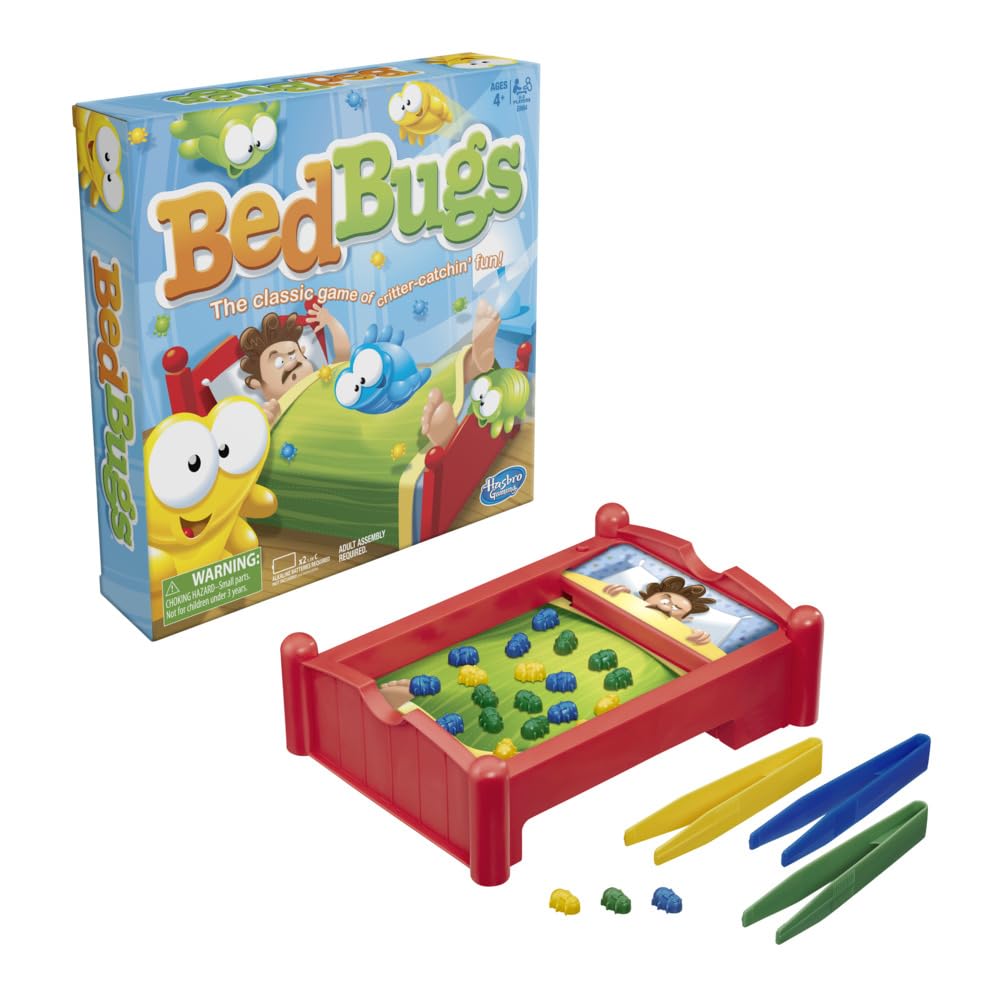
Bed Bugs stands out as the only motorized game in this group. The game board vibrates, causing plastic bugs to bounce and scatter across the surface. Players use color-matched tongs to grab their bugs as fast as possible, turning a matching game into a hilarious physical challenge. The chaotic bug movement creates genuine laughter that few static board games can match.
The game excels at building hand-eye coordination because the child must track a moving target while operating the tongs. The color-matching element is simple enough that a four-year-old can play independently after one demonstration. Rounds are very short, which works perfectly for children who struggle to sit still, and the physical activity helps burn off some energy before bedtime.
The main drawback is that pressing too hard on the board stops the vibration, which can frustrate younger children. The game also becomes repetitive after several rounds because the bugs bounce in similar patterns. Some families find that the novelty wears off after a few sessions, so this works best as a rotational game rather than a daily staple. The bugs and tongs are durable enough for enthusiastic play.
Why it’s great
- Motorized vibration creates unique physical excitement
- Tongs build dexterity and hand-eye coordination
- Very short rounds suit short attention spans
Good to know
- Pressing too hard on the board halts the vibration
- Repetitive bug movement pattern may reduce long-term replay value
FAQ
How long should a board game round last for a four-year-old?
Are cooperative or competitive games better for a five-year-old?
Can a four-year-old play strategy games like Dragomino?
Final Thoughts: The Verdict
For most users, the board games for 4 and 5 year olds winner is the The Sneaky, Snacky Squirrel Game because it perfectly balances fine motor skill development, color matching, and turn-taking without requiring any reading ability. If you want a cooperative experience that eliminates competitive pressure and gets everyone laughing, grab the Rainbow Unicorn Rescue. And for a high-energy game that builds hand-eye coordination through physical activity, nothing beats the Bed Bugs Board Game.