
Our readers keep the lights on and the weekend projects moving. As an Amazon Associate, I earn from qualifying purchases.
Standard thiamine mononitrate or hydrochloride pills often pass through your system without delivering meaningful levels to your tissues, leaving you wondering why your energy and nerve function haven’t improved. Your body’s ability to absorb and utilize B1 depends far more on the specific molecular form of the supplement than on the milligram count printed on the bottle.
I’m Rikta — the co-founder and writer behind FitlyFast. I’ve spent years analyzing bioavailability pathways, third-party testing reports, and customer outcomes across the B1 supplement landscape to separate genuinely effective formulations from those that merely fill a capsule.
Whether you need support for nerve health, metabolic energy, or cognitive clarity, selecting your best b1 supplement means understanding the difference between ordinary thiamine salts and advanced forms like benfotiamine or TTFD that your cells can actually use.
How To Choose The Best B1 Supplement
Selecting a thiamine supplement requires looking past the label’s bold numbers and understanding the form, purity, and manufacturing rigor behind each capsule or dropper. The market offers four distinct molecular structures, each with a different fate once swallowed.
The Four Forms of B1 and Their Bioavailability
Thiamine mononitrate and thiamine hydrochloride are the cheapest and most common forms, but they are water-soluble and poorly absorbed — your kidneys flush most of the dose out before tissues can use it. Benfotiamine is a fat-soluble synthetic derivative that bypasses this limitation; it delivers far higher blood levels of thiamine and is the form most often chosen for nerve support and neuropathy management. TTFD (thiamine tetrahydrofurfuryl disulfide) is another fat-soluble variant known for crossing cell membranes efficiently, including the blood-brain barrier, making it a strong candidate for cognitive and neurological applications. Allithiamine, a natural garlic-derived form, behaves similarly to TTFD but is rarer in supplements.
Dosage: More Is Not Always Better
Standard RDI for thiamine sits around 1.1–1.2 mg per day, but therapeutic doses used for neuropathy, fatigue, or metabolic support range from 100 mg to 600 mg. The key is that higher doses of poorly absorbed forms still yield low tissue saturation. A 100 mg dose of TTFD or benfotiamine often outperforms 500 mg of thiamine HCl in raising cellular thiamine levels. Look for the actual active compound listed in the supplement facts, not just the total milligram weight.
Purity and Manufacturing Standards
Third-party testing for heavy metals, microbial contaminants, and potency verification separates serious manufacturers from bottlers. Certifications like GMP (Good Manufacturing Practice), NSF certification, and explicit non-GMO and vegan labeling provide a baseline of trust. Pay attention to excipients — many cheaper capsules contain magnesium stearate, silicon dioxide, or rice flour as fillers. Clean-label products disclose all ingredients and avoid artificial colors, preservatives, and common allergens like soy, gluten, and dairy.
Quick Comparison
On smaller screens, swipe sideways to see the full table.
| Model | Category | Best For | Key Spec | Amazon |
|---|---|---|---|---|
| Pure Encapsulations BenfoMax | Premium | Advanced nerve & metabolic support | 200 mg benfotiamine per capsule | Amazon |
| Objective Nutrients Thiamax TTFD | Premium | Cognitive clarity & cellular energy | 100 mg TTFD form per capsule | Amazon |
| HoneyCombs B1 Drops | Liquid | Gentle dosing & easy swallowing | Thiamine mononitrate in glycerin | Amazon |
| Nutricost Benfotiamine | Fat-Soluble | High-dose benfotiamine value | 600 mg benfotiamine per serving | Amazon |
| LongLifeNutri Benfotiamine | Fat-Soluble | Sustained 6-month supply | 300 mg benfotiamine per capsule | Amazon |
| Swanson Vitamin B1 | Mid-Range | Budget-friendly metabolism support | 100 mg thiamine HCl per capsule | Amazon |
| Carlyle Vitamin B1 500mg | Entry-Level | Standard high-dose thiamine HCl | 500 mg thiamine HCl per serving | Amazon |
In‑Depth Reviews
1. Pure Encapsulations BenfoMax

BenfoMax uses Japanese-sourced benfotiamine, the most clinically studied fat-soluble B1 precursor for raising blood thiamine levels. Each capsule delivers 200 mg of benfotiamine, and the label recommends 1–3 capsules daily depending on your therapeutic target, giving you titration flexibility that fixed-dose products lack.
Pure Encapsulations is known for rigorous allergen control — this formula is free from gluten, soy, dairy, eggs, peanuts, and artificial additives, making it a safe choice for sensitive individuals. The brand’s GMP-certified manufacturing and emphasis on non-GMO ingredients reinforce its position as a premium practitioner-grade brand often recommended by functional medicine clinicians.
Customer reports consistently cite improvements in nerve pain, neuropathy symptoms, and overall energy when taken consistently, with several users noting a noticeable decline in well-being on days they skip their dose. The capsule size is manageable, and the bottle provides 90 servings at the standard single-capsule serving.
Why it’s great
- Clinically preferred benfotiamine form for nerve and metabolic health
- Rigorous allergen-free formulation from a trusted practitioner brand
- Flexible dosing (1–3 capsules daily) for tailored support
Good to know
- Premium tier pricing reflects the higher cost of benfotiamine sourcing
- Some users may require more than one capsule for higher therapeutic doses
2. Objective Nutrients Thiamax TTFD

Thiamax uses the TTFD (thiamine tetrahydrofurfuryl disulfide) form of vitamin B1, which is fat-soluble and capable of crossing the blood-brain barrier directly. Each capsule provides 100 mg of TTFD along with magnesium, a cofactor required for thiamine-dependent enzymatic reactions, creating a more complete metabolic support package than standalone B1 supplements.
This formula targets cognitive function and neurological health specifically, with user reports describing relief from brain fog, fatigue, and SIBO-related digestive symptoms. The capsules are small and easy to swallow, and the formula is third-party tested with no unnecessary fillers or preservatives.
TTFD is the most potent form of B1 available, and some users report a strong initial response that requires proper cofactor preparation — adequate hydration, electrolyte balance, and a nutrient-dense diet. A small subset of users feels no immediate effect, which may relate to individual cofactor status or dosing timing relative to meals.
Why it’s great
- Highly bioavailable TTFD form crosses the blood-brain barrier effectively
- Contains magnesium as a cofactor for enhanced enzymatic activity
- Strong user reports for cognitive clarity, energy, and GI symptom relief
Good to know
- Requires dietary cofactor preparation for optimal results
- Premium pricing and occasional stock availability issues
3. Nutricost Benfotiamine 600 mg
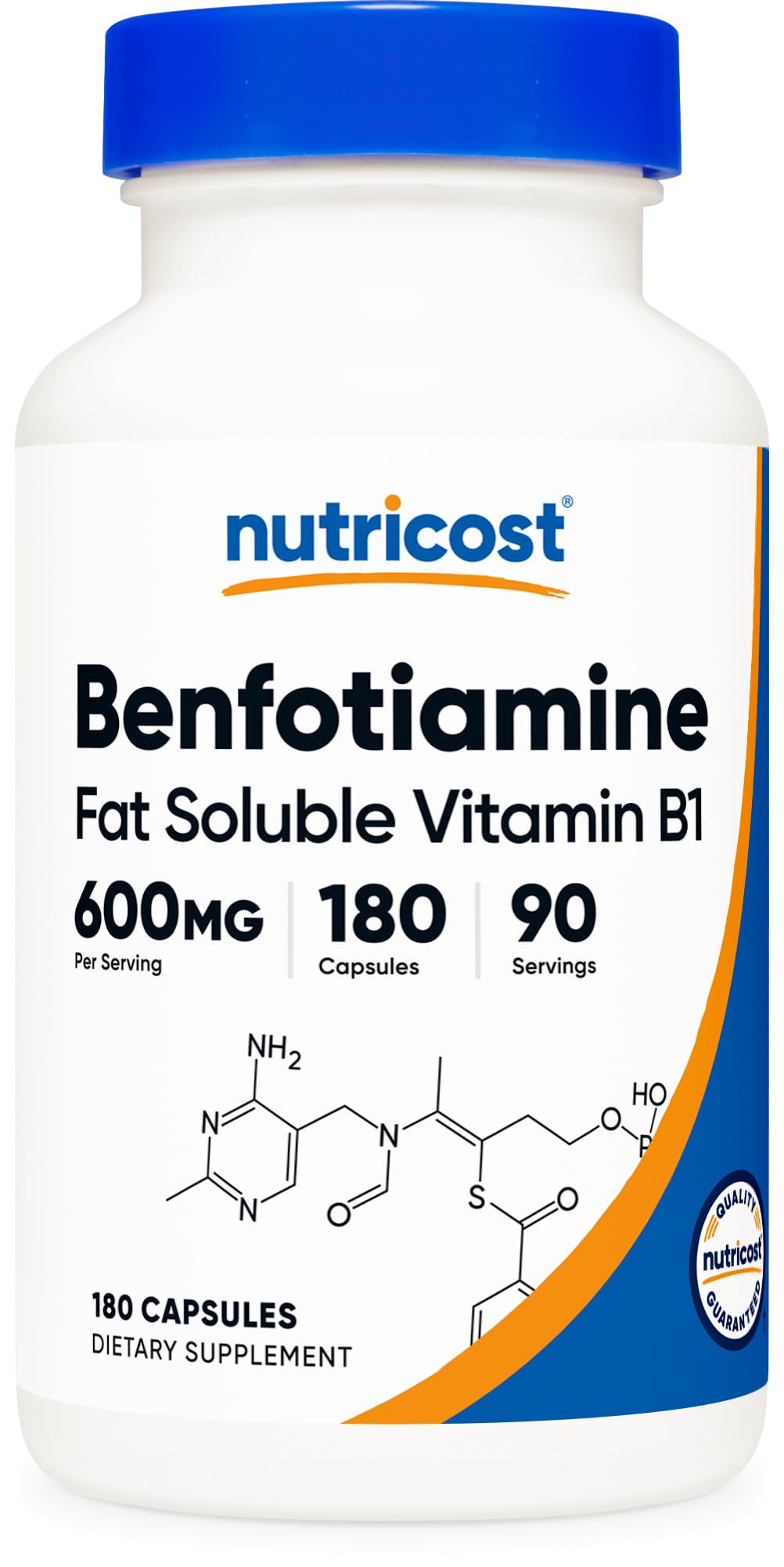
Nutricost delivers a potent 600 mg of benfotiamine per serving (two capsules) at a per-milligram cost that undercuts most competitors. This fat-soluble B1 form is the same clinically studied variant used in neuropathy research, making it a strong choice for those seeking high-dose benfotiamine without the typical premium markup.
The 180-capsule bottle provides 90 servings, and the formula is non-GMO, gluten-free, and vegan. Manufacturing takes place in an NSF-certified, GMP-compliant, FDA-registered facility, giving you third-party quality assurance at a mid-range price point.
Customer feedback highlights reduction in nighttime hand numbness, arthritic discomfort, and improved sleep quality. One user reported digestive slowing from a single capsule — a rare but notable reaction that may relate to individual sensitivity to benfotiamine at high doses.
Why it’s great
- High-dose benfotiamine at a competitive per-serving cost
- NSF-certified, GMP-compliant manufacturing facility
- Non-GMO, vegan, and gluten-free formulation
Good to know
- Two-capsule serving may be less convenient for some users
- Individual GI sensitivity reported at this dosage level
4. HoneyCombs Vitamin B1 Liquid Drops
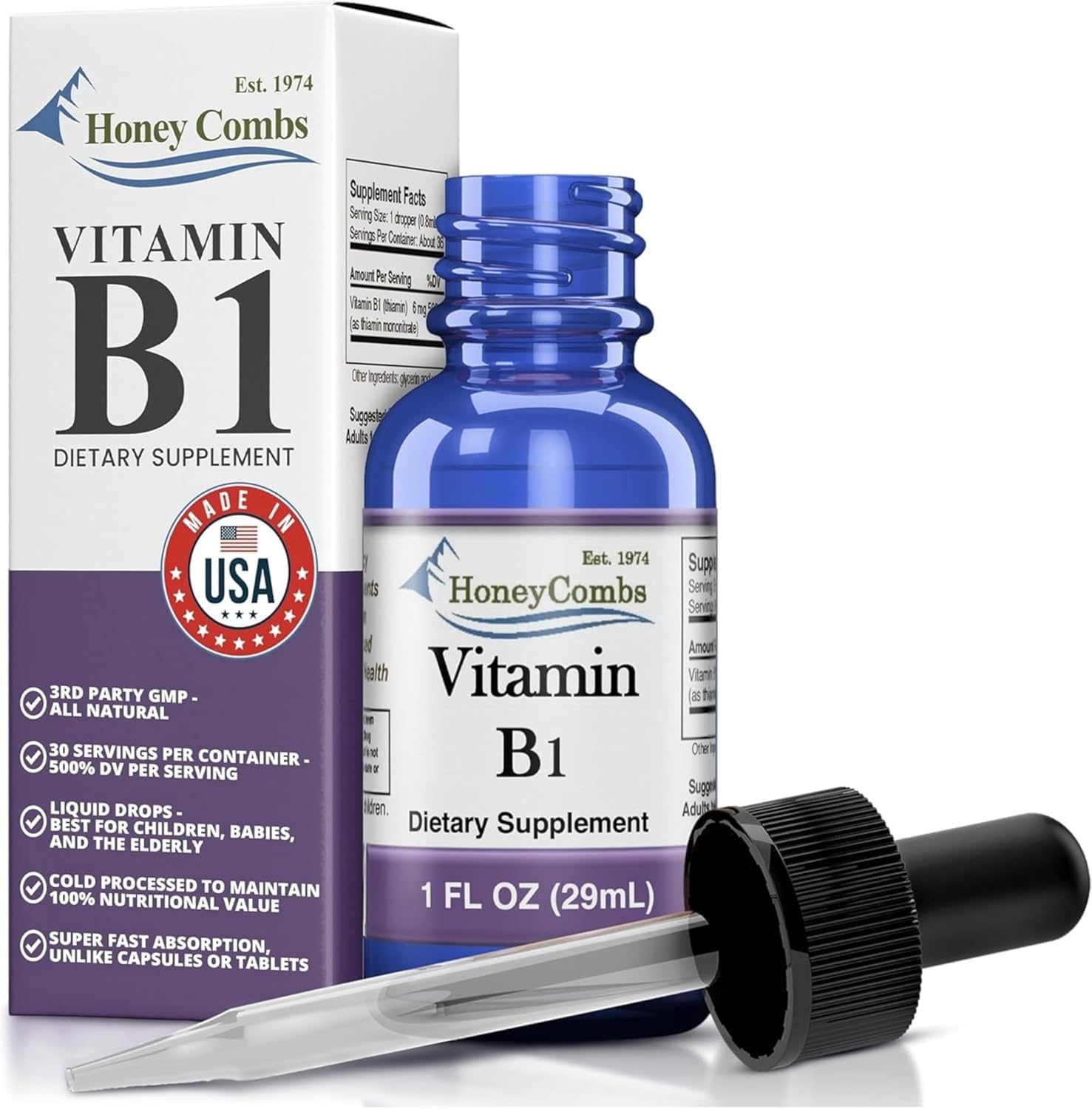
This liquid B1 uses thiamine mononitrate suspended in a pure glycerin carrier, offering a sublingual or add-to-beverage option for those who cannot or prefer not to swallow capsules. The 1-ounce bottle provides a flexible dosing mechanism — each dropper delivers approximately 6 mg, allowing precise titration for sensitive individuals or those seeking lower maintenance doses.
The formula is vegan, alcohol-free, non-GMO, and free from gluten, soy, milk, and egg. Liquid administration bypasses potential GI irritation that some users experience with oral thiamine capsules, particularly at higher doses. The clean label approach includes no artificial preservatives, colors, or flavors.
Users report dramatic energy improvements, anxiety relief, and mental clarity. The primary limitation is the relatively low dose per dropper — achieving therapeutic levels (100 mg or more) requires consuming roughly 17 droppers full, which is impractical for most. This product suits maintenance dosing or those who prefer low-dose B1 alongside a whole-foods diet.
Why it’s great
- Ideal for those with capsule aversion or GI sensitivity to oral B1
- Alcohol-free glycerin base with clean, allergen-free formulation
- Precise low-dose titration for sensitive users
Good to know
- Impractical for high therapeutic doses due to low per-dropper concentration
- Unmarked dropper requires careful counting for consistent dosing
5. LongLifeNutri Benfotiamine 300 mg

LongLifeNutri provides 300 mg of benfotiamine per capsule in a 180-count bottle, delivering a full six-month supply at a single-capsule-per-day serving. The fat-soluble B1 form is identical in mechanism to other benfotiamine products but packaged for long-term consistency without frequent repurchasing.
The product is made in the USA and third-party tested for purity and potency. A complimentary pill organizer is included with purchase, a practical touch for those building a consistent daily supplementation habit. The formula contains no fillers and is manufactured under strict quality control standards.
Elderly users and those managing neuropathy report meaningful improvements in mobility, reduced foot burning sensations, and better blood sugar control when combined with dietary adjustments. Results typically appear after a month of consistent use, suggesting the benfotiamine form requires cumulative saturation to produce noticeable benefits.
Why it’s great
- Six-month supply reduces reordering frequency and cost per day
- Includes free pill organizer for habit consistency
- Third-party tested, made in USA with no fillers
Good to know
- Results may take up to one month of consistent use to appear
- 300 mg per capsule may be lower than some users’ target dose
6. Swanson Vitamin B1 100 mg
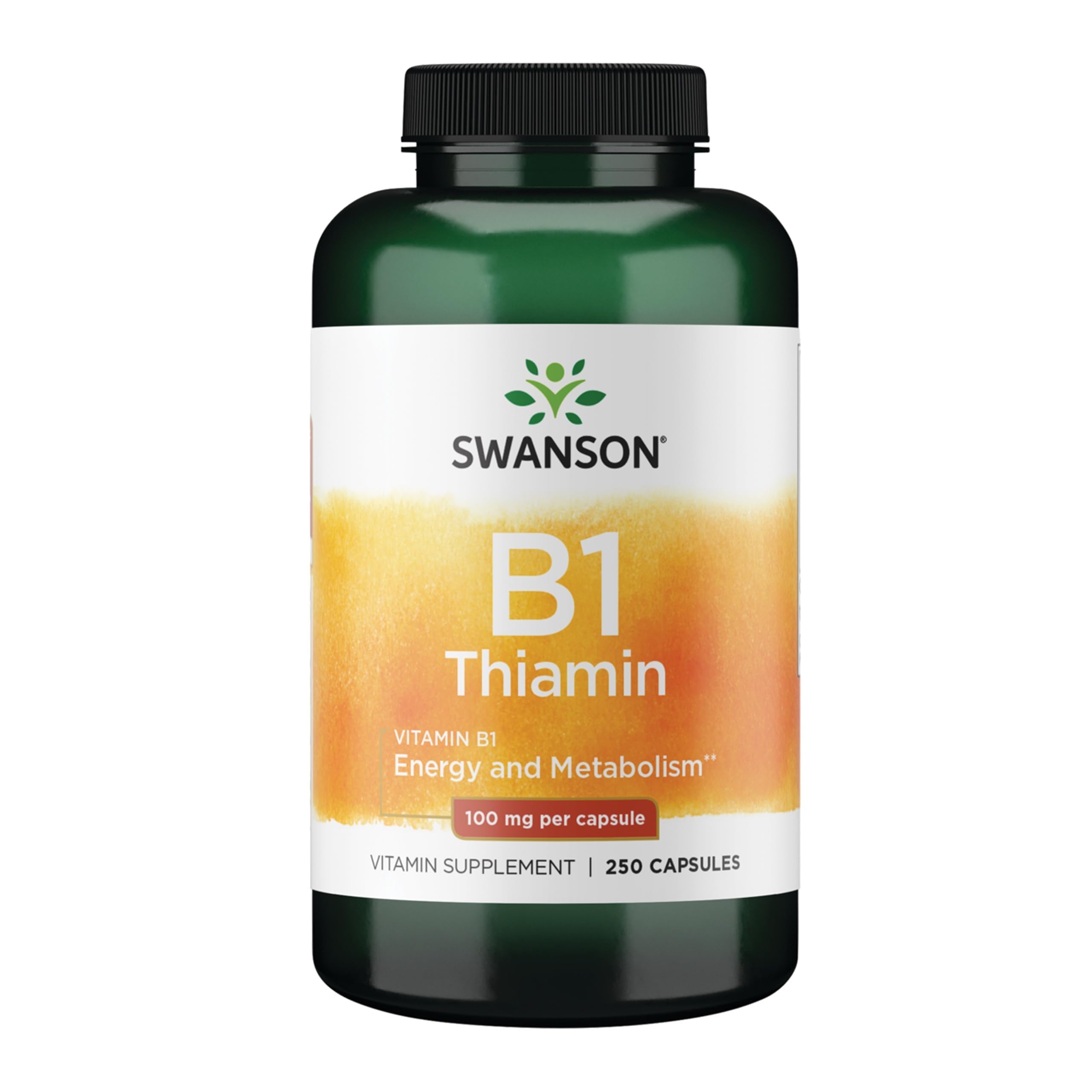
Swanson’s Vitamin B1 uses the standard thiamine hydrochloride form at 100 mg per capsule, a dose well above the RDI but delivered in the most common and least expensive molecular form. The 250-capsule count provides exceptional value for general metabolic and energy support, particularly for those without absorption concerns.
The product is manufactured in Swanson’s GMP-certified facilities in Fargo, North Dakota, and has been on the market since 2004, demonstrating long-term stability and customer trust. Capsules are odorless, tasteless, and easy to swallow, sized appropriately for daily use.
Customer reports include life-changing mood improvements, with one user describing elimination of lifelong depression within days. Others use it as a mosquito repellent — the sulfur content in thiamine is excreted through skin pores and may deter biting insects. At 100 mg, this is a solid entry-point dose for those new to B1 supplementation.
Why it’s great
- Very affordable per-capsule cost with 250-count supply
- GMP-certified, long-standing manufacturer since 2004
- Odorless, tasteless capsules with easy-swallow design
Good to know
- Standard thiamine HCl form has lower bioavailability than fat-soluble variants
- Shipping may take longer than Amazon Prime expectations
7. Carlyle Vitamin B1 500 mg

Carlyle packs 500 mg of thiamine hydrochloride into each vegetarian caplet, offering the highest milligram count in this list at the lowest absolute cost. For those simply wanting a large dose of standard B1 without concerns about absorption form, this is the most straightforward and economical option available.
The formula is non-GMO, gluten-free, and free from wheat, yeast, lactose, soy, artificial flavor, and preservatives. Carlyle manufactures in laboratory-tested facilities and provides a 100% satisfaction guarantee, reducing the risk of trying an unknown brand.
Customer feedback is mixed but generally positive for neuropathy support — one user with neuropathy describes it as the best B1 they have tried, while another saw no digestive benefits. The variability likely reflects the absorption limitation of thiamine HCl rather than product quality, as 500 mg of HCl yields far lower tissue levels than 100 mg of benfotiamine or TTFD.
Why it’s great
- Highest milligram count at the lowest cost per bottle
- Vegetarian caplets with no common allergens or artificial ingredients
- Laboratory-tested with a 100% satisfaction guarantee
Good to know
- Standard thiamine HCl form limits cellular absorption despite high dosage
- Large caplet size may be difficult for some to swallow
FAQ
What is the difference between thiamine mononitrate and thiamine hydrochloride?
Can B1 supplements help with neuropathy and nerve pain?
How do I know if I have a B1 deficiency?
Can I take B1 with other B vitamins?
Final Thoughts: The Verdict
For most users, the best b1 supplement winner is the Pure Encapsulations BenfoMax because it combines the clinically preferred benfotiamine form with practitioner-grade manufacturing standards and flexible dosing for both metabolic and neurological support. If you want a form that crosses the blood-brain barrier for cognitive clarity, grab the Objective Nutrients Thiamax TTFD. And for sustained value with a six-month supply of fat-soluble B1, nothing beats the LongLifeNutri Benfotiamine 300 mg.