
If you wake up with a stuffy nose or find yourself sneezing in your own living room, the culprit is likely floating right in front of you. Allergens like pollen, dust mites, pet dander, and mold spores hang in the air, and only a purpose-built filtration system will pull them out and keep your respiratory system clear.
I’m Rikta — the co-founder and writer behind FitlyFast. I’ve spent years researching air quality solutions, filtering through the exaggerated CADR claims and misleading particle sizes to find the machines that actually trap what triggers your allergies.
This guide breaks down the top-rated models so you can confidently pick the best air cleaner for allergies without second-guessing your choice.
How To Choose The Best Air Cleaner For Allergies
Not every air purifier is built to handle seasonal allergies. The difference lies in the filter technology, the air movement rate, and the size of particles the machine can trap. Focus on these three areas to avoid wasting money on a unit that just circulates dust.
HEPA Filter Grade — True HEPA is Non-Negotiable
Only a True HEPA filter is certified to capture 99.97% of particles as small as 0.3 microns — which covers the typical size range for pollen, dust mite debris, mold spores, and pet dander. Avoid units labeled “HEPA-type” or “HEPA-like,” as these lack independent testing and often let smaller irritants slip through. For allergy sufferers, this is the single most important spec to verify.
CADR — The Number That Tells You How Fast It Works
The Clean Air Delivery Rate (CADR) measures how many cubic feet of clean air the machine produces per minute for smoke, dust, and pollen. A CADR of at least 200 for pollen is ideal for a standard bedroom. Higher CADR means faster filtration, and the number should match the square footage of your room. Ignore inflated maximum room size claims — always check CADR for realistic performance.
Pre-Filter and Carbon Layer
A washable pre-filter catches large debris like pet hair and visible dust, extending the life of the main HEPA filter. An activated carbon layer is essential if odors from pets, cooking, or smoke are part of your allergy triggers. Without carbon, VOCs and smells simply recirculate. Look for units with a substantial carbon filter, not a thin adhesive sheet.
Quick Comparison
On smaller screens, swipe sideways to see the full table.
| Model | Category | Best For | Key Spec | Amazon |
|---|---|---|---|---|
| Coway Airmega AP-1512HH | Premium | Wirecutter pick, strong CADR | CADR: 240 Dust / 246 Pollen | Amazon |
| WINIX 5510 | Premium | Large room app control | CADR 392 at 1881 ft² | Amazon |
| HEAPETS P358 | Premium | Pet hair and odor control | U-shaped inlet, H13 HEPA | Amazon |
| Clorox Turbo | Mid-Range | Quick cleaning, quiet operation | 3-stage 360° True HEPA | Amazon |
| LEVOIT Core 300-P | Mid-Range | Flexible filter choices | CADR: 143 Smoke / 167 Pollen | Amazon |
| LEVOIT Core 200S-P | Budget-Friendly | Smart dorm or small room | 27 dB Sleep Mode, 140 ft² | Amazon |
| Honeywell HPA3100 | Budget-Friendly | Reliable HEPA for medium rooms | HEPA+ carbon pre-filter | Amazon |
In‑Depth Reviews
1. Coway Airmega AP-1512HH(W)
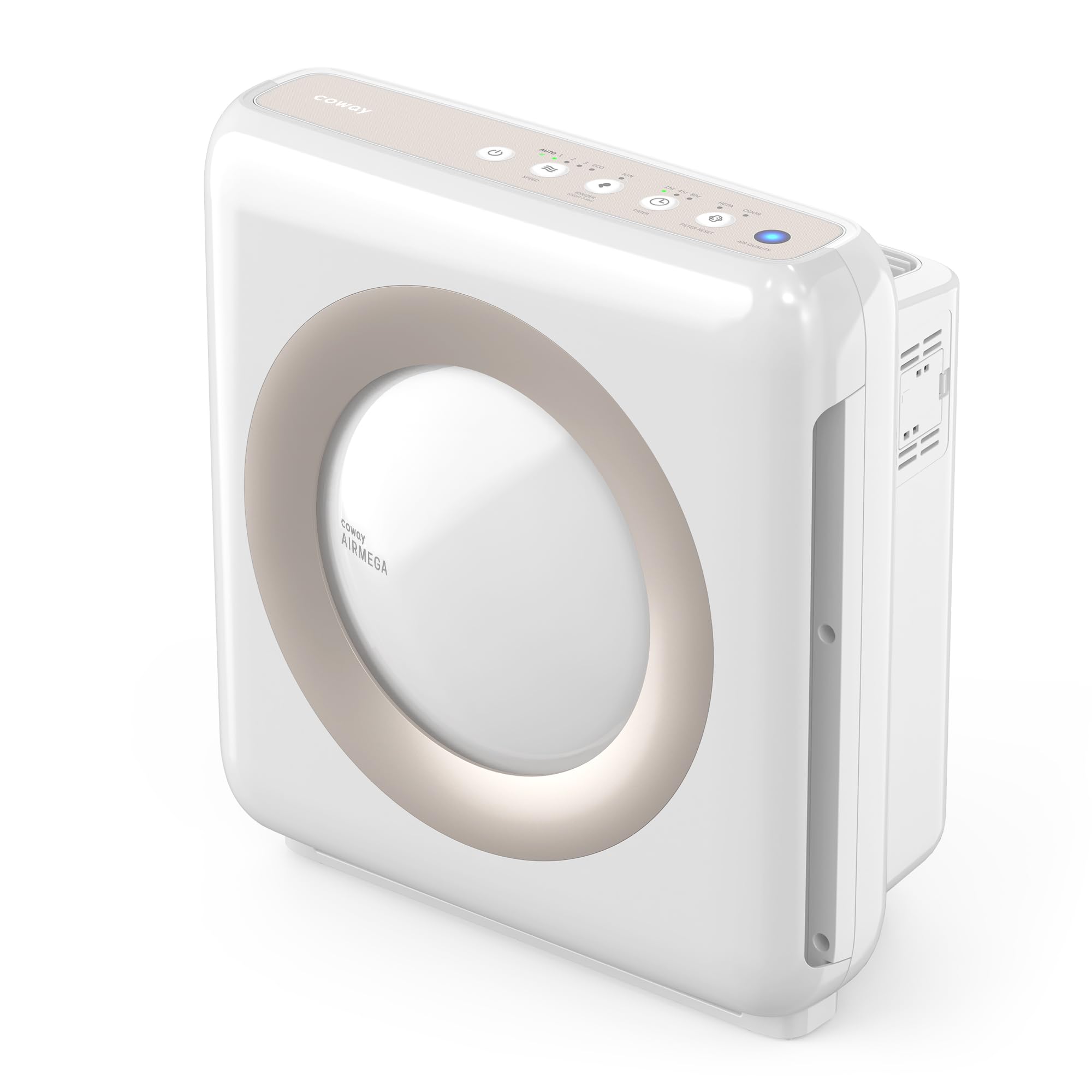
The Coway Airmega AP-1512HH is the most consistently recommended air purifier for allergies, and for good reason. Its four-stage system — washable pre-filter, deodorization carbon filter, True HEPA, and Vital Ion — captures 99.97% of particles down to 0.3 microns. With a CADR of 246 for dust and 240 for pollen, it ranks at the top of independent lab tests for allergy-prone rooms up to 361 square feet.
Real-time air quality monitoring via a colored LED gives you immediate feedback, and the Auto mode adjusts fan speed without manual intervention. When no pollution is detected for 30 minutes, Eco mode kicks in to save energy. The noise level ranges from a near-silent 24.4 dB on low to 53.8 dB on high, making it suitable for bedrooms and nurseries alike.
Users report dramatic improvements during wildfire smoke and cooking smoke events, with the sensor visibly clearing the air within minutes. The filter replacement indicator checks both the pre-filter and main HEPA separately, and the top-facing air outlet prevents drafts. It won the Wirecutter Best Air Purifier award and continues to be a gold standard for allergy filtration.
Why it’s great
- Highest CADR in its class for pollen and dust
- Washable pre-filter extends HEPA life
- Eco mode and auto sensors
- Very quiet on low settings
Good to know
- Higher sticker price than entry-level units
- Carbon filter is not replaceable separately from the HEPA
2. WINIX 5510 Air Purifier

The WINIX 5510 is a premium large-room model that brings smart connectivity to allergy management. It features a washable fine mesh pre-filter, a carbon filter for odor control, and a True HEPA filter that captures 99.99% of airborne allergens as small as 0.01 microns. AHAM Verified at 392 square feet, it can cycle air in rooms up to 1,882 square feet every hour.
Smart sensors adjust fan speed automatically, and the ambient light sensor triggers Sleep Mode when the room darkens — perfect for uninterrupted rest. The Winix Smart App allows you to control and monitor the unit remotely, and it works with Alexa and Google Assistant. The ultra-quiet operation at 23.5 dB on the slowest setting means it won’t disturb your sleep.
Customer reviews highlight its effectiveness against pet odors and cooking smells, and the air quality indicator provides clear real-time feedback. The PlasmaWave technology is optional and can be turned off if you prefer zero ionization. The washable pre-filter catches large particles first, extending the life of the main filters, which generally last around 12 months.
Why it’s great
- Smart app control and voice assistant integration
- Large room coverage with high CADR
- Automatic Sleep Mode with ambient light sensor
- Washable pre-filter and long-lasting HEPA
Good to know
- Digital power draws current even when off
- PlasmaWave may produce minimal ozone (can be disabled)
3. HEAPETS P358 Pet Air Purifier

The HEAPETS P358 is built specifically for homes where pet hair and dander dominate the allergen load. Its unique U-shaped air inlet and static pre-filter aggressively pull in floating pet hair without clogging — a common issue with traditional grid inlets. The H13 HEPA filter and pet-formula activated carbon layer target both particles and odors, including litter box smells and wet dog odor.
Dual-sided air intake delivers purification twice as fast as single-intake models, with a CADR of 176 CFM covering rooms up to 2,500 square feet over an hour. The built-in PM2.5 monitor and air quality indicator display real-time data, and five fan speeds (including Pet Mode and Auto Mode) give you precise control. The sleep mode dims lights and reduces noise for light-sensitive users.
Users report that the pre-filter extends the main HEPA’s life to six months, reducing replacement costs by roughly 50%. It’s ETL, EPA, FCC, and CARB certified, and comes with a 12-month warranty. For allergy sufferers with dogs or cats, this machine’s specialized inlet and odor control are a genuine upgrade over general-purpose purifiers.
Why it’s great
- U-shaped inlet traps pet hair without clogging
- PM2.5 real-time monitor
- Extended filter life with washable pre-filter
- Quiet sleep mode
Good to know
- Performance best when placed near pet activity
- Main HEPA not washable
4. Clorox Turbo Air Purifier
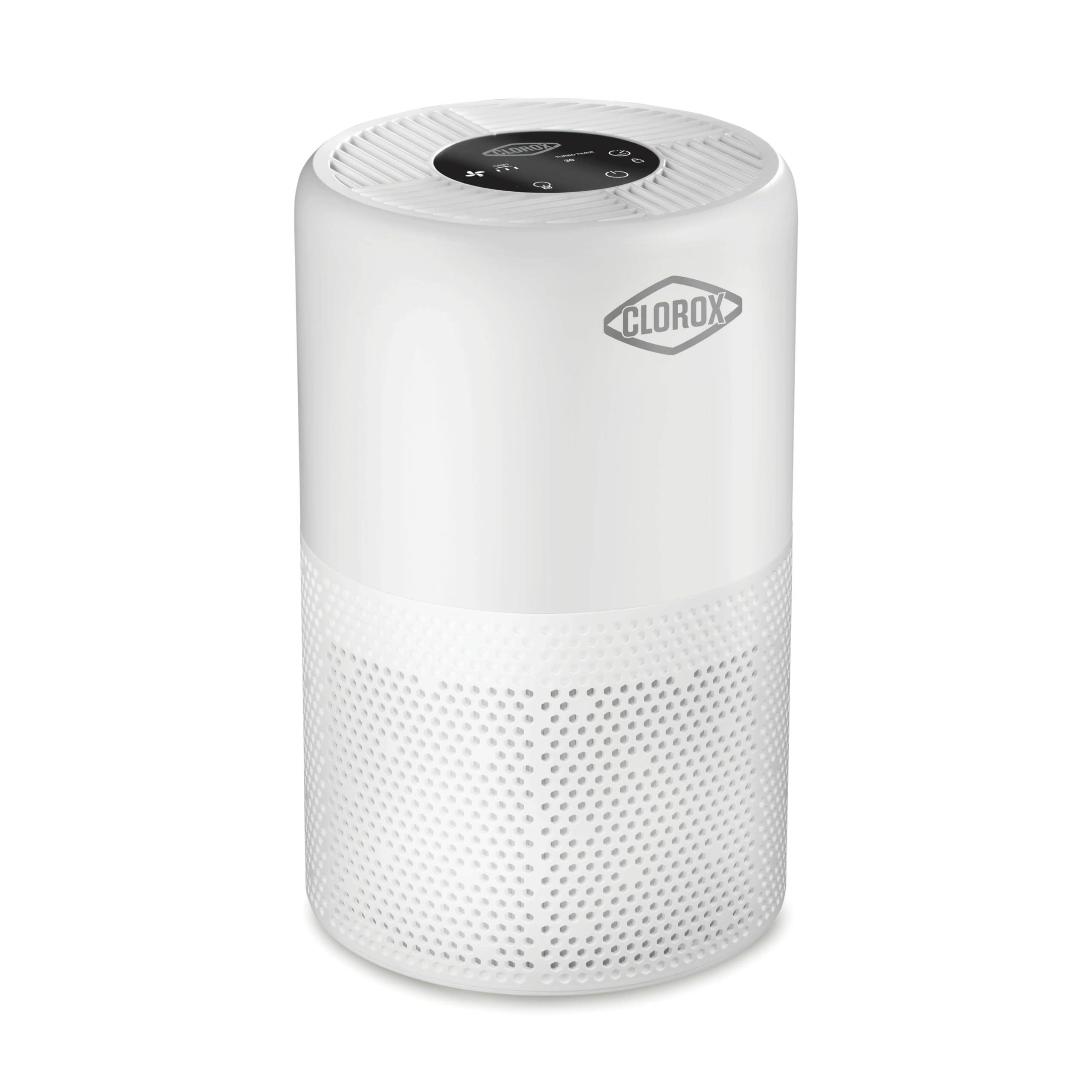
The Clorox Turbo Air Purifier combines a compact footprint with serious filtration performance for medium rooms. Its True HEPA filter captures 99.97% of allergens and particulates, while the active carbon layer reduces VOCs and odors. The 360° airflow pulls in air from all directions, cleaning rooms up to 215 square feet five times per hour and up to 1,000 square feet once per hour.
What sets this model apart is the Turbo Timer — a dedicated quick-cleaning mode that runs at maximum airflow for 10, 20, or 30 minutes. This is ideal for clearing smoke after cooking or capturing a spike in pollen after opening a window. Four fan speeds plus a dimmable display make it customizable for day or night use, and customers confirm it runs whisper quiet.
Multiple verified buyers note that their allergies and sleep quality improved after placing this unit in their bedroom. The three-stage filtration includes a pre-filter that catches large particles so the HEPA can focus on finer irritants. With a recent December 2024 release, it also includes updated energy efficiency standards and modern manufacturing.
Why it’s great
- Turbo Timer for rapid allergen removal
- 360° intake for even coverage
- Very quiet operation
- Affordable price point for True HEPA
Good to know
- Carbon filter layer is thinner than premium models
- No smart or app connectivity
5. LEVOIT Core 300-P

The LEVOIT Core 300-P is a mid-range powerhouse that offers unusual flexibility in filter choice. It uses a high-torque 56W motor with a CADR of 143 CFM for smoke, 153 for dust, and 167 for pollen, refreshing a 222-square-foot room 4.8 times per hour. AHAM Verified, the unit can also clean a 1,073-square-foot room once per hour — making it one of the more versatile options in this segment.
What makes it especially relevant for allergy sufferers is the optional filter upgrade path. You can swap in a Toxin Absorber Filter for VOCs, a Smoke Remover filter for wildfire smoke, or a Pet Allergy filter that specifically targets dander. The QuietKEAP technology drops noise to a near-silent 24 dB in Sleep Mode, and all display lights can be turned off for zero light pollution.
Users praise its effectiveness against dust and allergens, and many report that replacing the filter every 6-8 months keeps performance consistent. The unit is compact (8.7 inches square) and fits easily on a nightstand or desk. With Alexa compatibility and multiple timer settings (2/4/6/8 hours), it’s a very accessible entry into serious allergy filtration.
Why it’s great
- Interchangeable specialty filters for different allergies
- Low power consumption and ultra-quiet sleep mode
- Compact footprint for small rooms
- Alexa voice control compatible
Good to know
- Replacement filters are relatively expensive
- No air quality sensor or auto mode
6. LEVOIT Core 200S-P

The LEVOIT Core 200S-P is the budget-friendly smart option for small rooms, dorms, and nurseries. It uses a 360° air intake system combined with a 3-in-1 filter (nylon pre-filter, activated carbon, and main HEPA-grade filter) to capture 99.97% of airborne particles down to 0.3 microns. It refreshes a 140-square-foot room 4.8 times per hour, which is excellent for its size.
Smart WiFi control through the VeSync app allows you to set schedules, check air quality trends, and monitor filter life remotely. The Sleep Mode drops noise to just 27 dB — barely audible — and the display-off button eliminates any light interference. Users also appreciate the timer (2/4/6/8 hours) and the check filter indicator that ensures you replace the media at the right time.
Multiple verified buyers report significantly less dust buildup and clearer breathing within a few days of use. The compact design (just 8 inches wide) makes it easy to place on desks or nightstands without sacrificing floor space. While it won’t cover a large living area, it’s arguably the best entry-level unit for targeted allergy relief in a single room.
Why it’s great
- WiFi app control and voice assistant support
- Extremely quiet sleep mode
- Compact and lightweight for small spaces
- Affordable replacement filters
Good to know
- No air quality sensor or auto mode
- Does not restart automatically after power outage
7. Honeywell PowerPlus HPA3100
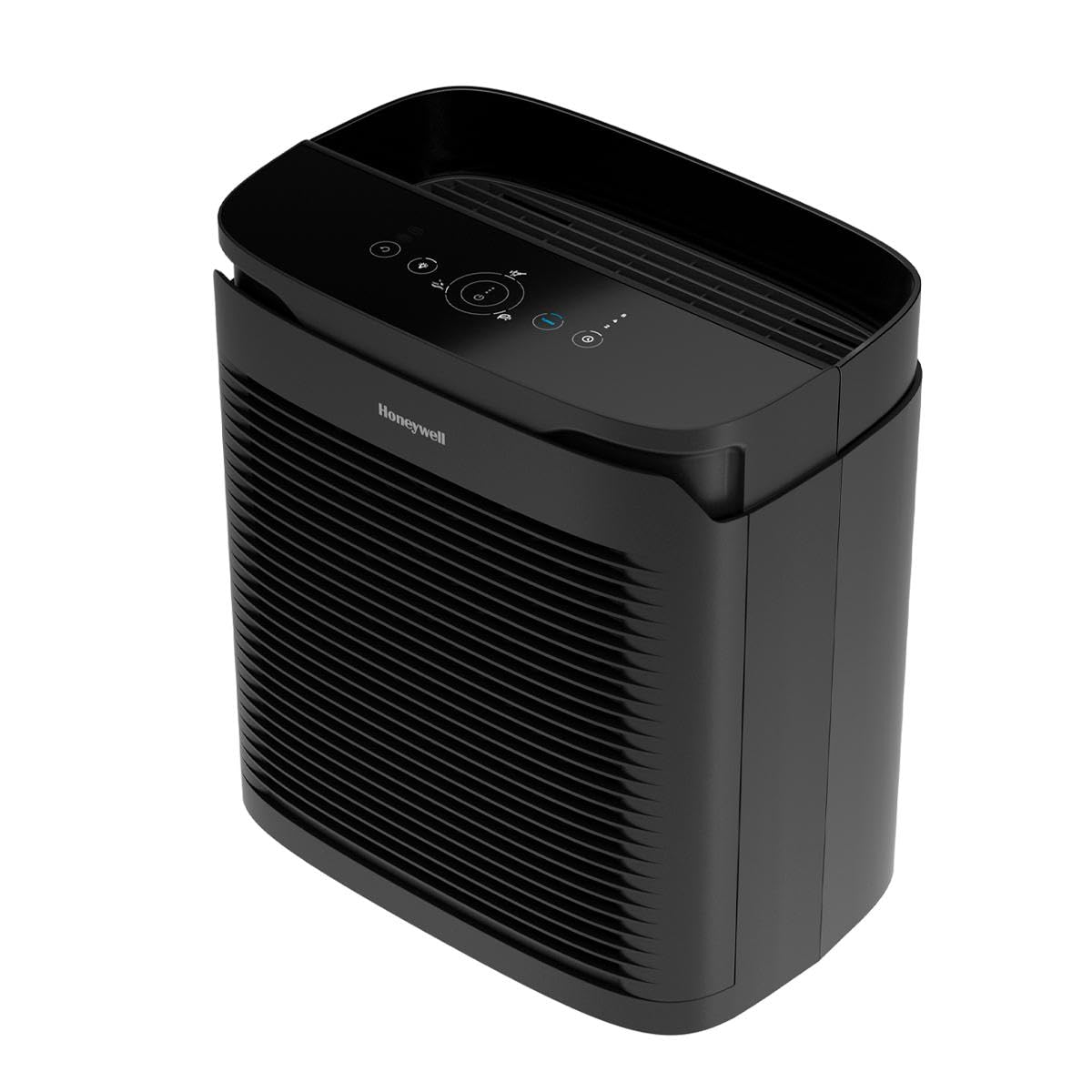
The Honeywell PowerPlus HPA3100 is a straightforward, no-nonsense HEPA air purifier for medium to large rooms. It features a True HEPA filter combined with a carbon pre-filter that captures over 99.99% of microscopic airborne particles — including dust, pet dander, pollen, smoke, and mold spores. It circulates air 4.8 times per hour for a 200-square-foot room, and can process 968 square feet once per hour.
The unit offers four cleaning levels plus an Auto Mode that adjusts fan speed based on current air quality. Touch controls and a timer make daily use simple, and the AHAM Verified badge confirms independent performance testing. Users consistently note that it helps reduce their reliance on allergy medication when run consistently in a bedroom or office.
Customer feedback highlights the importance of cleaning the coarse pre-filter every 30 days and replacing the HEPA filter every 2-3 months for best results. The noise on low is comparable to a whisper, making it suitable for background operation during work calls or sleep. It’s not the fanciest option, but its reliability and proven filtration make it a solid choice for anyone who just wants the allergens gone.
Why it’s great
- AHAM Verified for independent performance testing
- Auto mode with touch controls
- Effective against a wide range of allergens
- Reliable brand with proven long-term use
Good to know
- Turbo mode is louder than some competitors
- No smart features or app support
FAQ
Does an air cleaner for allergies actually help with seasonal pollen?
Should I choose a unit with an activated carbon filter for allergies?
How often should I replace the HEPA filter in an allergy air cleaner?
Is a higher CADR always better for allergy relief?
Final Thoughts: The Verdict
For most users, the best air cleaner for allergies winner is the Coway Airmega AP-1512HH because it combines the highest CADR scores, true four-stage HEPA filtration, and automatic sensors in a compact, quiet package. If you want pet-specific features with a U-shaped inlet that traps fur without clogging, grab the HEAPETS P358. And for budget-conscious buyers who need smart WiFi control in a small room, the LEVOIT Core 200S-P offers the best value per dollar.