
The difference between a world-class espresso and a bitter, watery mess comes down to one thing: the bean. A dark roast that’s baked beyond recognition will destroy your shot before it hits the cup, while a properly roasted, fresh Arabica or Arabica-Robusta blend can deliver thick, honey-colored crema, a velvety body, and a clean finish without a trace of ashiness. This guide cuts through the marketing wrapper to find the whole beans that actually perform under pressure.
I’m Rikta — the co-founder and writer behind FitlyFast. I’ve tracked hundreds of roast profiles, freshness reports, and machine-specific feedback from serious home baristas to separate the real contenders from the shelf-stable pretenders.
After analyzing dozens of bags for crema density, roast evenness, grinder-friendliness, and flavor clarity, these are the top-tier whole beans that earn a permanent spot on your countertop. Whether you need a reliable daily driver, a bold Italian powerhouse, or a velvety blend that won’t gum up your grinder, this roundup of the beans for espresso will help you dial in a better shot every morning.
How To Choose The Best Beans For Espresso
Not every bag labeled “espresso” is built for the 9-bar pressure of your home machine. The right whole bean balances crema output, solubility, and roast depth without producing unwanted bitterness. Here are the three non-negotiable factors to evaluate before you buy.
Roast Level & Oil Content
Espresso roasts tend to be darker than filter roasts, but the best examples stop at Full City or Vienna — not beyond. Beans that appear shiny and greasy on the surface are often over-roasted to mask low-quality green stock, and that excess oil can clog your grinder’s burrs and cause uneven puck extraction. A matte or lightly satin finish signals a clean roast that will pull smoothly and won’t degrade your machine over 20 lb of use.
Arabica vs. Robusta — The Crema Trade-Off
100% Arabica beans deliver complex acidity and sweet fruit notes but produce relatively thin crema under normal pressure. Robusta, by contrast, generates a thick, persistent foam thanks to its higher lipid and soluble-solid content. Most traditional Italian espresso blends use 10–40% Robusta to boost body and crema without overwhelming bitterness. Pure Arabica fans should look for beans labeled specifically for espresso, as their roast profile is calibrated to maximize crema from Arabica alone.
Freshness & Packaging
Espresso beans peak between 4 and 14 days post-roast. Beans bagged immediately after roasting need a few days to degas; after that window, flavor declines steadily. Look for a one-way degassing valve on the bag, and avoid any packaging that feels puffy or shows no roast date at all. Beans roasted within two to four weeks of delivery offer the best balance of crema stability and flavor clarity — older beans will still pull a shot, but the crema will be thin and the taste flat.
Quick Comparison
On smaller screens, swipe sideways to see the full table.
| Model | Category | Best For | Key Spec | Amazon |
|---|---|---|---|---|
| Jo Espresso Organic | Organic / Fair Trade | Daily consistent crema | Medium/Dark Roast, 100% Arabica | Amazon |
| Nicoletti Original | Artisan Blend | Thick crema & machine health | 70% Arabica / 30% Robusta | Amazon |
| Lavazza Gusto Forte | Italian Bold | High-intensity straight shots | Intensity 10/10, 100% Arabica | Amazon |
| Kimbo Extra Cream | Italian Cream | Luxury crema & smooth body | Blend with Robusta | Amazon |
| Cafe La Llave Cuban | Cuban-Style | Bold, full-bodied milk drinks | Dark Roast, 100% Arabica | Amazon |
| illy Intenso Bold | Premium Italian | Consistency & grinder safety | Bold Roast, 100% Arabica | Amazon |
| Supreme Bustelo | Cuban Bold | Budget-friendly bold flavor | Medium Dark Roast | Amazon |
In‑Depth Reviews
1. Jo Espresso Organic

Jo Espresso knocks it out of the park with a medium-dark roast that lands firmly on the sweet side of the spectrum — heavy dark chocolate, no ash or burnt-rubber notes. Multiple reports confirm 24-to-28-second pulls produce a caramel-to-light-brown crema that holds up beautifully in both super-automatic and semi-auto machines. The sealable tin-tie bag is a welcome practical touch for a 2 lb bag that will last a few weeks.
Every batch is hand-crafted in a small roastery, and the beans are sourced from the top 2% of specialty-grade organic Arabica worldwide. The roast is forgiving enough for beginners dialing in their first grinder setting, but the flavor depth keeps experienced baristas happy. Users report clean puck ejection and zero clumping, which is a strong indicator that the grind consistency matches the roast profile.
Certifications — USDA Organic, Fair Trade, and Kosher — cover ethical sourcing without sacrificing performance. The only trade-off is a lack of bright fruit or floral notes; this is a chocolate-forward, savory-leaning bean that works best black or in milk drinks. If you want a single origin with crisp acidity, look elsewhere, but for a daily driver espresso, this is the most balanced pick on the list.
Why it’s great
- Very smooth, non-bitter flavor even on first dial-in
- Produces consistent caramel-colored crema across machines
- Organic, Fair Trade, and Kosher certified
Good to know
- Lacks fruity or wine-like notes — purely chocolate-forward
- Some bags may arrive without a visible roast date
2. Nicoletti Coffee Original Espresso
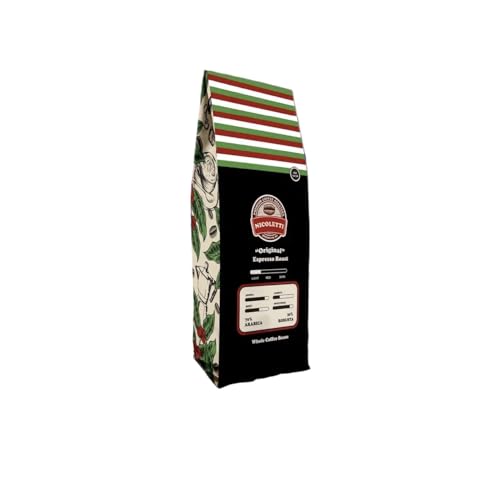
Nicoletti’s “Original” blend uses a classic Italian 70% Arabica / 30% Robusta split, and that Robusta content is the secret to its absurdly thick, golden crema — users describe shots that look like melted butter with a micro-foam head. The roast is deliberately light for an espresso bean (Full City, not Vienna), which means the Robusta’s crema-boosting lipids shine without introducing harshness, and the Arabica side provides a quiet sweetness and velvety body.
Roasted and packed in Brooklyn since 1972, Nicoletti ships with a clearly printed roast date — usually within days of when you order. That freshness translates into a 30-second pour at grind setting 7 on a standard Baratza-style grinder, with zero channeling. Multiple long-term users note that the beans are not oily on the surface, making them safe for machines with ceramic burrs.
The flavor profile leans towards smooth, sweet chocolate with no acidity or bitterness. This is an ideal bean for milk-based drinks or for drinkers who want a full-bodied straight shot without the punch of a dark roast. The 2.2 lb bag is sold at a value that undercuts many local roasters, making it an easy daily-driver recommendation.
Why it’s great
- Exceptional crema thickness from the Robusta blend
- Freshly roasted and dated within days of delivery
- Non-oily beans protect grinder burrs from buildup
Good to know
- Light roast may surprise buyers expecting dark espresso
- Robusta content gives higher caffeine — reduce dose if needed
3. Lavazza Gusto Forte
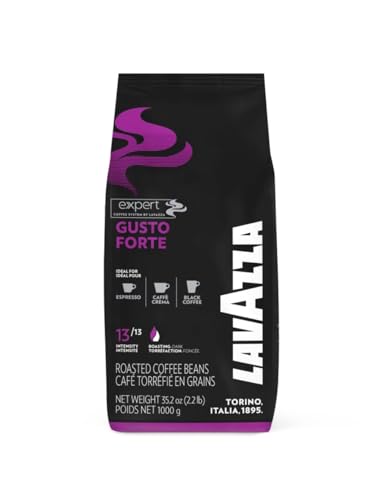
Lavazza’s Gusto Forte is the highest-intensity entry in the Italian roaster’s line, rated 10 out of 10. This roast is built for drinkers who want a bold, almost syrupy body with a thick crema that stays intact through a 10-second stir. The beans are 100% Arabica but the roast profile is pushed far enough to create a flavor that borders on dark chocolate nibs and a dry, lingering finish.
True to Italian tradition, the oil level is moderate — the beans are not greasy, which keeps super-automatic machines like the Gaggia Bravia free from internal gunking. Users consistently report clean grinder operation and predictable extraction times. The 1 kg bag includes Lavazza’s patented freshness valve, and once opened, the beans stay lively for about two weeks if stored correctly.
This is not a subtle or fruity espresso. It works best as a straight ristretto (18g in, 22–24g out in 28 seconds) or in a cappuccino where its muscular flavor stands up to milk without disappearing. Lighter alternatives within the Lavazza family, such as Super Crema or Gran Crema, are better for drinkers who prefer sweetness over power.
Why it’s great
- Extremely bold, intense flavor for hardcore espresso fans
- Consistent crema and clean extraction every time
- Low oil level protects grinder burrs and internal gaskets
Good to know
- Can be too harsh for straight espresso unless you prefer bite
- No roast date — relies on global brand freshness standards
4. Kimbo Extra Cream
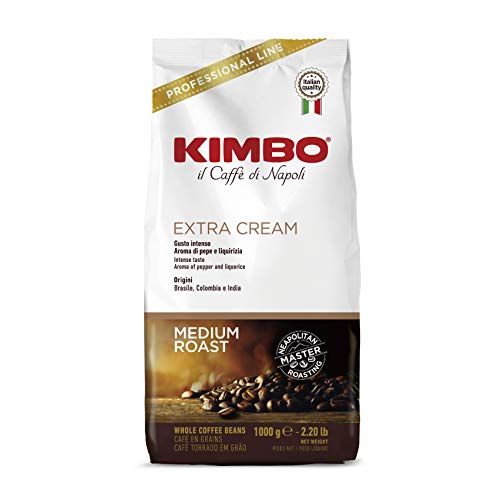
Kimbo’s Extra Cream blend lives up to its name: the crema is dense, persistent, and tinted a warm hazelnut shade — similar to what you’d get from a Neapolitan cafe lever machine. The flavor profile is smooth and balanced with subtle notes of peppermint that most drinkers describe as a clean, cooling undertone beneath the chocolate base. It’s a unique aromatic signature that sets it apart from the chocolate-and-nut profiles of other Italian blends.
The roast is medium-dark, producing a rich body without slipping into bitterness. Users with self-grinding machines note that the caffeine content is noticeably higher than comparable 100% Arabica bags — a common trait when Robusta is part of the blend. The 2.2 lb bag holds up well when the valve is intact, and the beans arrive with minimal chaff and a uniform color that signals even roasting.
Kimbo is a premium-priced bean, but the crema quality and flavor clarity justify the cost for those who prioritize texture and aroma. The peppermint note may not appeal to everyone, but for fans of nuanced Italian roasts, this is a standout competitor to Lavazza Super Crema.
Why it’s great
- Uniquely rich, hazelnut-toned crema
- Smooth, balanced taste with a subtle minty high note
- High caffeine content — reduces the need for a second shot
Good to know
- Peppermint note is divisive — not a pure chocolate flavor
- Premium tier pricing compared to other Italian 2.2 lb bags
5. Cafe La Llave Cuban-Style

Cafe La Llave brings over 143 years of Cuban coffee tradition to the bag, and the flavor lives up to the legacy: strong, thick, and slightly sweet with a full body that handles milk and sugar like a champ. The dark roast produces a bold cup without the ashen bitterness that plagues many mass-market dark roasts — users specifically mention that there is no unpleasant aftertaste, just a clean coffee bite.
The 4.5 lb pack (two 32 oz bags) comes with a one-way degassing valve on each bag to preserve freshness over several weeks of use. These beans are 100% Arabica, so the crema is more moderate than Robusta-heavy blends, but it holds up well for milk drinks and Americanos. The roast is consistent across bags, and multiple long-term buyers report zero variability — a critical factor for machine calibration.
This is a classic Cuban-style espresso: robust enough for a colada but smooth enough for a straight single shot. The only downside is the sheer volume — if you don’t drink two to four shots a day, the second bag may start to stale before you finish it. For heavy households or small offices, however, this is a fantastic value.
Why it’s great
- Very smooth, bold flavor with zero aftertaste
- Excellent for traditional Cuban espresso or café con leche
- Two-bag pack at a strong per-pound value
Good to know
- Large volume may stale if you don’t use it within 4 weeks
- Crema is moderate compared to Robusta blends
6. illy Intenso Bold
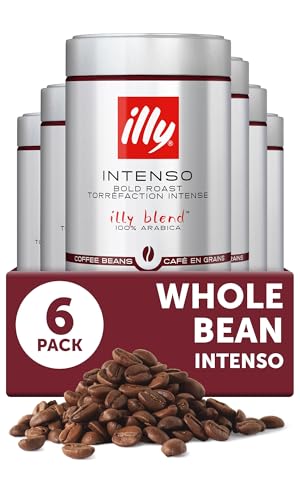
illy’s Intenso Bold roast is a masterclass in consistency. The nitrogen-pressurized packaging locks in freshness for months, which means the bag you open three months from now will taste exactly like the one you finished yesterday. The beans themselves are 100% Arabica, ethically sourced and B Corp certified, with a roast profile that brings out cocoa and dried fruit notes without ever tipping into bitterness.
Owners of high-end machines like the Jura (+) report years of trouble-free use with illy beans because the surface oil level is exceptionally low — the beans grind cleanly and leave almost no residue on conical burrs. The flavor is balanced and dynamic, with a full body that works perfectly for straight espresso, cappuccino, or a moka pot. The roast is dark but not burnt, a distinction very few mass-market dark roasts achieve.
The 6-pack of 8.8 oz bags is designed for long-term storage without degradation. The downside is the per-pound cost: you pay a clear premium for the packaging technology and the brand’s notoriously strict quality control. For multi-machine households or coffee enthusiasts who hate waste, the premium is often worth the price of admission.
Why it’s great
- Patented pressurized packaging keeps beans fresh for months
- Extremely low oil level – safe for premium super-automatics
- Consistent flavor batch to batch, year to year
Good to know
- Per-pound cost is higher than most competitors
- Some drinkers find it less exciting than fresh local roasts
7. Supreme Bustelo Whole Bean
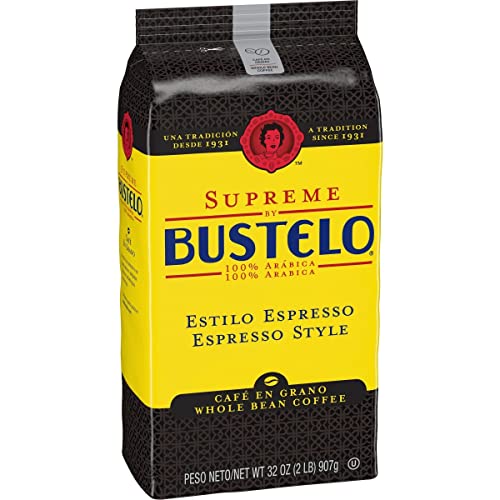
Supreme Bustelo is the whole-bean version of the classic Cuban espresso brand that has been a corner-store staple for decades. The medium-dark roast delivers exactly what the brand is known for: a bold, vibrant flavor that punches through milk and sugar without ever tasting charred. Users upgrading from the pre-ground version consistently report that grinding the whole beans fresh produces a noticeably richer cup with better crema head and less sediment.
The 32 oz bag is straightforward — no degassing valve, no roast date, no fancy packaging — but the beans themselves are fresh enough to pull a decent shot when stored in an airtight container. The flavor profile is straightforward and unapologetic: strong, slightly smoky, and robust enough to hold its own in a cortadito or an iced latte. The grind consistency is forgiving, making this a good first espresso bean for new machine owners.
This is not a specialty bean, and the crema will be thinner than blends with Robusta or high-grade Arabica. But for drinkers who prioritize straight-up bold flavor at a low per-pound entry point, Bustelo is the most accessible recommendation on this list. It’s the espresso equivalent of a reliable workhorse boot — it gets the job done without pretension.
Why it’s great
- Bold, rich flavor at a very accessible price point
- Familiar Cuban-style taste that works well in milk drinks
- Forgiving grind window — great for beginners dialing in
Good to know
- No degassing valve or roast date on the bag
- Crema is thinner than Italian or Robusta blends
FAQ
Should I avoid oily beans for my super-automatic espresso machine?
How long should I wait after the roast date before pulling a shot?
Can I use regular drip coffee beans for espresso?
Why is Robusta used in espresso blends and is it safe for my health?
Final Thoughts: The Verdict
For most users, the beans for espresso winner is the Jo Espresso Organic because it delivers the best balance of smooth chocolate flavor, reliable crema output, and ethical certifications without breaking the bank. If you want the thickest possible crema with a velvety body that rivals a Naples cafe, grab the Nicoletti Original — the 30% Robusta blend is a crema machine that also respects your grinder. And for a high-intensity, machine-safe bean that stays shelf-stable for months, nothing beats the illy Intenso Bold.