
Our readers keep the lights on and the weekend projects moving. As an Amazon Associate, I earn from qualifying purchases.
Adhesives marketed as “super glue” often fail on plastic because they lack the flexibility to survive the material’s natural expansion, contraction, and flexing. The result is a brittle joint that snaps under the slightest physical stress, leaving you frustrated with a broken part and a tube of wasted glue. Choosing the right adhesive for plastic means understanding specific polymer chemistry and the bonding requirements of your project, rather than reaching for a universal tube.
I’m Rikta — the co-founder and writer behind FitlyFast. I have spent over a decade analyzing construction and repair consumables, from sealants to structural epoxies, and I evaluate plastic adhesives on tensile strength, chemical compatibility, and real-world application data from thousands of verified buyer reports.
This guide cuts through the marketing by breaking down specific formulas that actually bond to polyethylene, polypropylene, acrylic, ABS, nylon, and composite plastics without brittle failure. We examine key specs like cure time, viscosity, and clamp force so you can confidently select a best adhesive for plastic that matches your specific repair task.
How To Choose The Best Adhesive For Plastic
Plastics are not a single material family. Polyethylene and polypropylene (often marked with a #2, #4, or #5 recycling symbol) are low-surface-energy plastics that require either a specialized primer or a two-part epoxy to achieve a strong bond. ABS, PVC, and acrylic are easier to bond but still benefit from adhesives formulated for their specific polymer structure. Ignoring polymer compatibility is the most common mistake that leads to joint failure.
Surface Preparation Is Non-Negotiable
No adhesive works well on a greasy or mold-release-coated surface. Wipe the plastic with isopropyl alcohol, lightly sand with 220-grit sandpaper for mechanical grip, and then clean again. This step alone often transforms a failed repair into a lasting one, especially on molded automotive parts or kitchen items that have accumulated oils.
Work Time vs. Cure Time Trade-Off
Cyanoacrylate (super glue) sets in seconds but offers zero repositioning. Epoxies provide 2-30 minutes of working time depending on the formula, allowing you to clamp parts and adjust alignment. For large gaps, choose a gap-filling epoxy paste rather than a water-thin cyanoacrylate that will run off the joint. For a flush, invisible seam on clear acrylic, use a solvent-based cement that chemically welds the plastic.
Quick Comparison
On smaller screens, swipe sideways to see the full table.
| Model | Category | Best For | Key Spec | Amazon |
|---|---|---|---|---|
| 3M DP100 Plus | Epoxy | High-heat engine parts | UL 94 HB, 1 hour cure | Amazon |
| Starbond 5-Min Epoxy | Epoxy | Flexible vibration joints | 2,600 PSI shear strength | Amazon |
| J-B Weld Plastic Bonder | Urethane | Bumper & dent repairs | 3,770 PSI tensile | Amazon |
| 3M PR100 Instant | Cyanoacrylate | Silicone & EPDM bonding | 20 sec handling time | Amazon |
| J-B Weld SuperWeld UV | UV-Cured | Small precision repair | 2,800 PSI, UV cure 10 sec | Amazon |
| Loctite Vinyl & Fabric | Contact | Vinyl/fabric upholstery | Flexible, 24 hr full cure | Amazon |
| Berkland Acrylic Cement | Solvent | Plexiglass & acrylic sheets | Capillary action, 1 day cure | Amazon |
In‑Depth Reviews
1. 3M Scotch-Weld Epoxy Adhesive DP100 Plus
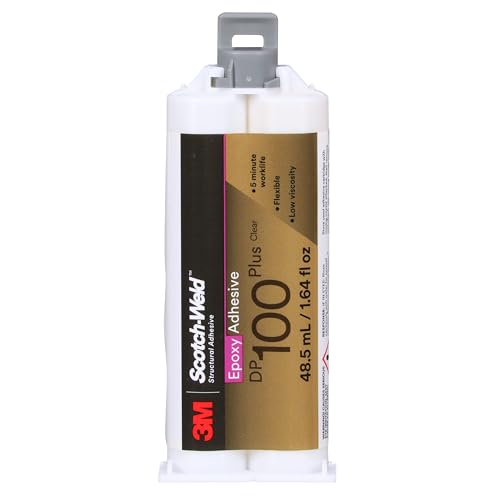
The 3M DP100 Plus is a two-part epoxy formulated for thermal cycling applications where heat expansion could snap a rigid bond. Its clear cure and UL 94 HB certification make it a reliable choice for engine components and HVAC parts. With a 2-5 minute working window, you have just enough time to position parts before the bond begins to set, and full cure occurs in roughly one hour instead of the typical 24 hours.
This product comes in a 48.5 mL duo-pak cartridge that requires a mixing gun, which is sold separately. The mixing gun ensures a consistent 1:1 ratio every time, eliminating guesswork. Verified buyer reports show it fixing a loose well-nut in a plastic valve cover on a 2015 Ford Explorer, saving the owner the cost of a replacement. The cured epoxy withstands engine bay temperatures without softening or cracking.
The main drawback is the upfront investment in the dispensing gun if you don’t already own one. The cartridge also produces more than you may need for tiny repairs, making it better suited for medium to large-area bonding. For those who need a professional-grade plastic bond that handles temperature swings, this is the top performer.
Why it’s great
- Cures crystal clear, ideal for visible repairs
- Withstands engine heat without softening
- Achieves handling strength in under one hour
Good to know
- Requires separate dispensing gun (not included)
- Not ideal for very small spot repairs due to cartridge size
2. J-B Weld Plastic Bonder Black 25ml Syringe – 2 Pack
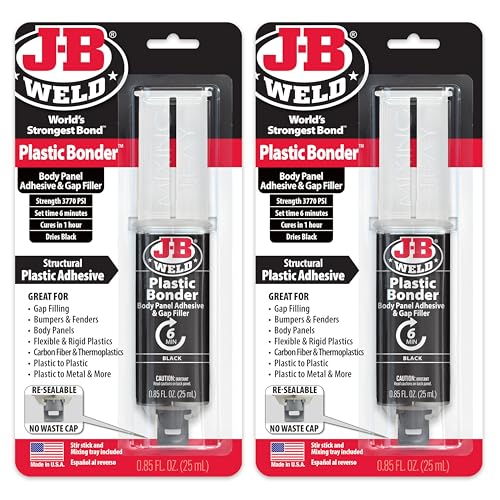
The J-B Weld Plastic Bonder is a two-part urethane adhesive that delivers a remarkable 3,770 PSI tensile strength, which is higher than many structural epoxies. The black color is intentional — it blends into automotive-grade plastics like bumpers, trim, and body panels. The syringe package includes a mixing tray and stir stick, and the resealable cap prevents the remaining product from drying between uses.
This formula sets in 15 minutes and cures fully in 30 hours, providing a long window for clamping and shaping. Buyers report using it to repair cracked wiper covers, reattach broken bumper brackets, and fill dents on scooters. The cured material sands like hard plastic, which is critical for cosmetic finish work. The gap-filling consistency also means it will not sag out of vertical joints.
The odor is noticeable, and the thick paste can be messy to mix. It is not compatible with polypropylene or polyethylene without a primer, so check your plastic type before application. For rigid plastics like ABS, nylon, and fiberglass composites, this is a budget-friendly structural solution that outperforms most epoxies.
Why it’s great
- Highest tensile strength in this guide at 3,770 PSI
- Sands and paints like original plastic
- Resealable syringe for multiple uses
Good to know
- Strong chemical odor during application
- Will not bond PP/PE without surface primer
3. Starbond 5 Minute Epoxy Pro Kit

The Starbond 5 Minute Epoxy is engineered with a toughened formula that absorbs vibration and impact without brittle cracking. With a shear strength of 2,600 PSI, it is slightly less rigid than the J-B Weld Plastic Bonder, but that flexibility is a feature when bonding parts that experience bending loads — such as furniture joints, outdoor equipment, or tool handles. The clear cure keeps the repair invisible on transparent plastics.
This Pro Kit includes screw-cap bottles instead of syringes, which prevent the cap from bonding shut, plus reusable mixing trays and spatulas. The 1:1 mix ratio is simple to measure by volume, and the 5-minute working time is enough for clamping without feeling rushed. Users report it working over cured UV resin and bonding well to ABS and PVC without surface etching.
The epoxy is not designed for polypropylene or polyethylene. On a crown molding butt joint test, a competing epoxy held one side while the Starbond failed both, indicating it may not be the best choice for high-tension wooden joints. For plastic-on-plastic repairs that need flexibility and a clean finish, however, this kit provides excellent value and includes all the mixing tools you need.
Why it’s great
- Toughened formula resists vibration cracking
- Complete kit with bottles, trays, and spatulas
- Clear cure for invisible repairs
Good to know
- Not suitable for high-tension wood joints
- Will not bond untreated polyolefin plastics
4. 3M Scotch-Weld Plastic & Rubber Instant Adhesive PR100

The 3M PR100 is a low-viscosity cyanoacrylate that excels where standard super glues fail: bonding plasticized PVC, silicone rubber, EPDM, and Santoprene. Its water-like capillary action wicks into tight joints, and it reaches handling strength in under 20 seconds. The flexible bottle tip lets you control drop size — pinch for a tiny drop or squeeze for a steady bead.
This adhesive is designed for industrial/occupational use, not general consumer retail. The bond line is extremely thin, which is ideal for gasket attachment and small joint assembly where a thick epoxy would be visible or impractical. Verified buyers report it bonding silicone to silicone after using a 3M primer, and repairing a cracked blender pitcher that held up to daily use.
The smallest bottle is 0.7 ounces, which translates to about per ounce — far more expensive than generic cyanoacrylate. The product also has a limited shelf life; check the expiration date and store it in the refrigerator to extend its usability. For difficult-to-bond elastomers and heavily plasticized rubber, this is the most effective option available.
Why it’s great
- Bonds silicone rubber and EPDM where others fail
- Capillary action reaches tight joints
- Handling strength in under 20 seconds
Good to know
- Expensive per ounce compared to standard CA glue
- Short shelf life; requires refrigerated storage
5. J-B Weld Light-Activated Superglue, Clear, 5g, 2-Pack

The J-B Weld SuperWeld Light Activated Instant Glue is a UV-cured cyanoacrylate that reaches full hardness in 10 seconds when exposed to the included UV light. The 2,800 PSI tensile strength is competitive with many two-part epoxies, and the clear finish is glass-hard, making it ideal for jewelry, model work, and repairing delicate non-porous items like ceramics and car exterior trim.
The precision tip applicator allows mess-free drops, and the glue will also cure without light — it sets in 1 minute and cures in 24 hours if you skip the UV step. Buyers praise its ability to repair high-torque items like eyeglass frames and 3D printed parts, where standard cyanoacrylate bonds would fail. The UV light is built into the cap, which is easy to remove and use as a handheld wand.
The major flaw is that the cap permanently adheres to the tube despite cleaning precautions, wasting unused product. The UV light can also burn skin in seconds if not handled carefully. For small, fast repairs where you cannot wait for epoxy to cure, this glue is a time-saving tool — but expect to lose some product to cap adhesion.
Why it’s great
- Full cure in 10 seconds with UV light
- Dries glass-hard and perfectly clear
- Works on non-porous surfaces like ceramic and glass
Good to know
- Cap frequently bonds shut, wasting product
- UV light can cause skin burns if mishandled
6. Loctite Vinyl, Plastic, and Fabric Adhesive, Pack of 2 Clear

The Loctite Vinyl, Plastic, and Fabric Adhesive is a paste-formula contact adhesive that remains flexible after curing, making it the best choice for reupholstery, soft-top repairs, and attaching fabric to vinyl or plastic surfaces. It dries clear and works on glass, paper, wood, and leather as well. The 24-hour full cure time is standard for contact adhesives, but the bond reaches handling strength much earlier.
Application is straightforward — apply to both surfaces, let them dry until tacky, then press together. Verified buyers used it to reattach padding to a lawn mower seat, repair fabric blinds to vinyl slats, and fix vinyl bar stools. The flexible bond survived an entire mowing season without delaminating, which is a strong test of durability for a contact adhesive.
The main drawback is that the paste can string during application if you pull the nozzle away too quickly. It also works best on porous or semi-porous materials; for rigid, non-porous plastic-to-plastic bonding, you would benefit more from an epoxy or cyanoacrylate. For fabric and vinyl upholstery repairs, this is the most reliable product in the lineup.
Why it’s great
- Bonds fabric to vinyl without peeling
- Clear finish works for cosmetic repairs
- Flexible bond withstands movement and sitting load
Good to know
- Paste can string if nozzle is pulled quickly
- Not ideal for rigid plastic-to-plastic structural joints
7. Berkland Acrylic Bonding Cement with Applicator Bottle 4 oz
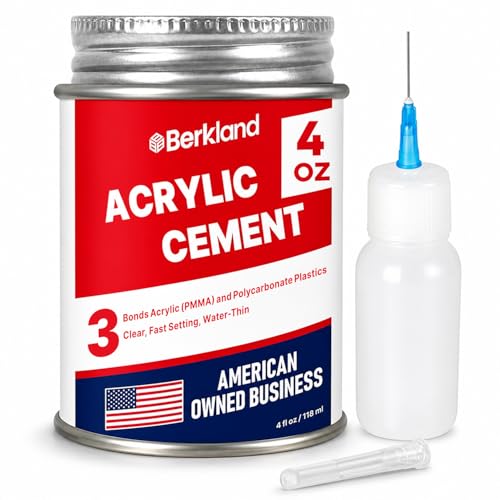
The Berkland Acrylic Bonding Cement is a water-thin solvent-based adhesive that works via capillary action — you hold the pieces together and touch the applicator needle to the seam, and the liquid wicks into the joint, chemically fusing the acrylic into a single monolithic piece. This is the standard technique for fabricating plexiglass displays, signs, and models. The cement sets in minutes and reaches full strength after 24 hours.
The included applicator bottle with a needle tip provides controlled, mess-free use. Users report bonding 1/2-inch thick plexiglass into a box shape with seamless results, and repairing a cracked Lexan windshield that held strong after just one hour. It also works on PLA, ABS, and HIPS for 3D printing projects, making it versatile beyond just acrylic sheets.
The liquid is so thin that it can drip from vertical surfaces and mar the finish if spilled. High humidity may cause slight whitening in the bond line. The strong solvent odor requires good ventilation. For any project involving clear acrylic or polycarbonate sheeting, this solvent cement delivers the cleanest, strongest invisible seam available.
Why it’s great
- Creates an invisible welded seam on acrylic
- Capillary action bonds without clamping pressure
- Works on PLA, ABS, and HIPS for 3D prints
Good to know
- Water-thin consistency can drip and mar surfaces
- Strong solvent odor requires ventilation
- Humidity may cause slight whitening
FAQ
Can I use super glue on polyethylene or polypropylene plastic?
What is the difference between a solvent cement and an epoxy for plastic?
How long should I clamp two plastic parts together for the strongest bond?
Final Thoughts: The Verdict
For most users, the best adhesive for plastic winner is the J-B Weld Plastic Bonder because it delivers the highest tensile strength at 3,770 PSI, sands like original plastic, and works across ABS, nylon, and fiberglass composites. If you need a flexible bond that resists vibration, grab the Starbond 5 Minute Epoxy Pro Kit. And for high-heat engine bay repairs, nothing beats the 3M DP100 Plus Epoxy.