
Finding the right alternating pressure mattress for a bedridden loved one is often a stressful search filled with technical jargon and fear of choosing a unit that fails. The core goal is simple: redistributing body weight to prevent tissue damage on vulnerable bony areas like the sacrum, heels, and hips. A system that cycles air cells properly can mean the difference between a healing environment and a worsening stage of a bedsore.
I’m Rikta — the co-founder and writer behind FitlyFast. My deep market research focuses on analyzing pump cycle patterns, cell construction materials, and weight capacity thresholds to separate genuine therapeutic tools from overpriced, noisy alternatives within the medical mattress category.
After comparing nine distinct models across budget and premium tiers, I’ve built this guide to help you confidently choose the right unit for your specific care situation. This is your complete resource for finding the best alternating pressure mattress for bedsores.
How To Choose The Best Alternating Pressure Mattress For Bedsores
An alternating pressure mattress works by cycling air through rows of cells, creating a constant, gentle wave of inflation and deflation. This rhythmic motion shifts pressure points every few minutes, promoting blood flow and preventing tissue ischemia. The challenge is matching the system’s capabilities to the patient’s weight, risk level, and care setting.
Cell Depth and Cycle Type
Deeper cells (6-8 inches) provide better immersion and reduce the risk of “bottoming out” against the bed frame, especially for larger users under 250 pounds. Shallow overlays (4-5 inches) are suitable for lightweight seniors as preventative toppers. A two-cell cycle (alternating rows) is the standard for stage I-II prevention, while more advanced systems offer one-cell cycles for higher-risk patients.
Pump Noise and Static Mode
A pump rated under 25 dBA is considered whisper-quiet for a bedroom environment. Some users find even low hums disruptive, so consider systems with adjustable cycle speeds. A static mode is a valuable feature that keeps all cells fully inflated, providing a stable surface for sitting up during meals or transfers without turning the pump off.
Weight Capacity and Cover Material
Most standard units support up to 300 pounds, but bariatric-friendly models (350-500 pounds) require stronger pumps and deeper air cells. The cover material matters for hygiene and comfort: flocked or quilted nylon tops reduce friction and wick moisture better than bare vinyl, which can be hot and sticky. Look for waterproof, low-shear, and vapor-permeable covers that are easy to wipe down.
Quick Comparison
On smaller screens, swipe sideways to see the full table.
| Model | Category | Best For | Key Spec | Amazon |
|---|---|---|---|---|
| Drive Medical Med-Aire | Low Air Loss | High-risk prevention | 20 replaceable 8-inch bladders | Amazon |
| MedVance Low Air Loss | Replacement | Digital control + low noise | 8-inch cells, 450 lb capacity | Amazon |
| Invacare MA500 | Alternating | Stages I-III pressure sores | Cell-in-cell design, 350 lb cap | Amazon |
| Invacare Premier Foam | Foam | Non-electric pressure redistribution | 3-zone foam, 500 lb capacity | Amazon |
| Vive 5-Inch Topper | Overlay | Budget-friendly overlay | 16 air chambers, 5-inch depth | Amazon |
| Vive Foam Frame System | Alternating | Stability with foam frame | Sturdy foam frame, 4-inch cells | Amazon |
| Lunderg Queen Size | Overlay | Queen bed fit + static mode | 53×77 inches, 320 lb capacity | Amazon |
| Lunderg Flocking Pad | Overlay | Soft flocking surface | Patented flocking, 23 dBA pump | Amazon |
| Livaclean Gel Foam | Foam | Gel memory foam comfort | Gel foam, 6-inch depth, 242 lbs | Amazon |
In‑Depth Reviews
1. Drive Medical Med-Aire Low Air Loss Mattress System
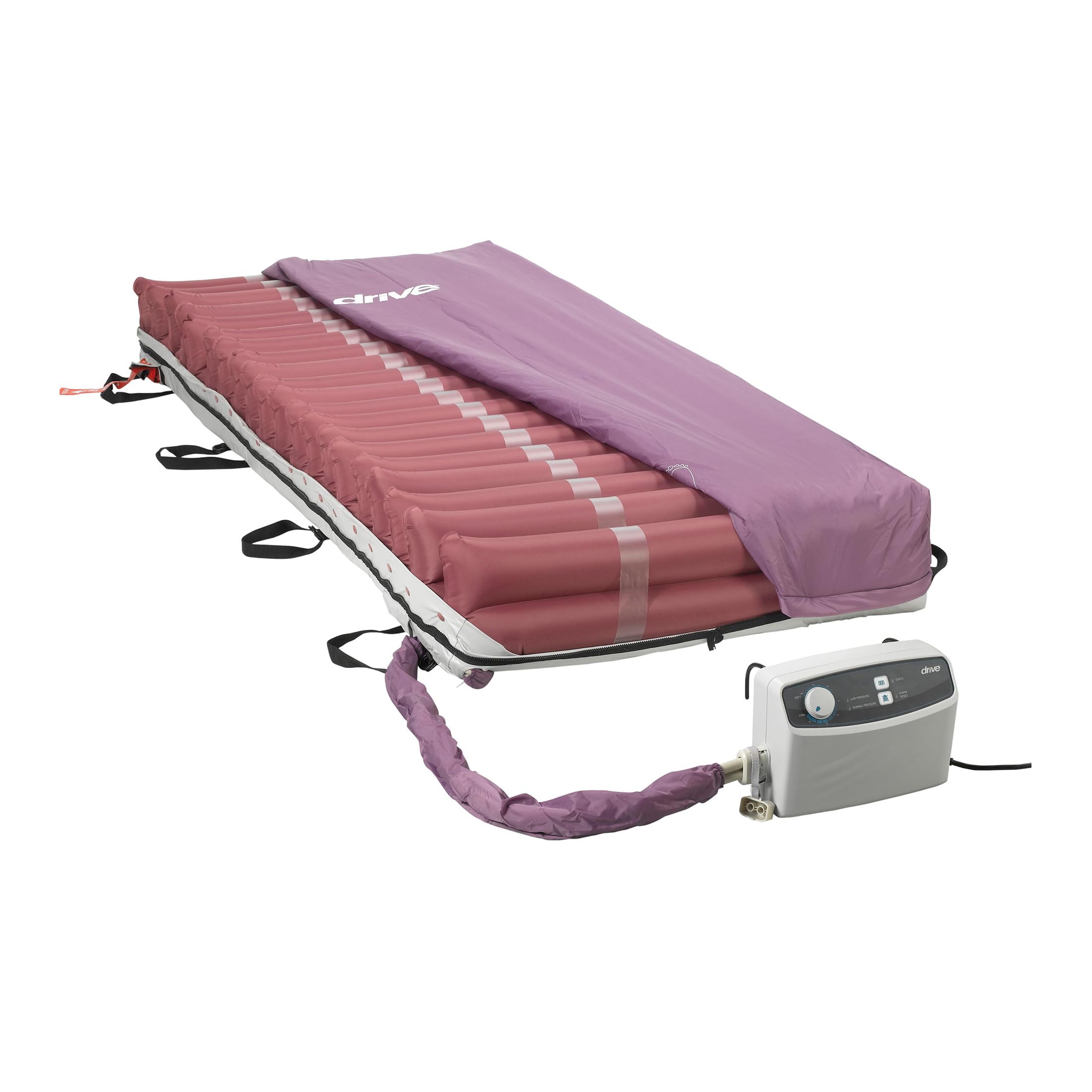
Drive Medical’s Med-Aire is a full replacement mattress designed for high-risk pressure injury prevention. Its 20 individual 8-inch air bladders provide deep immersion and can be replaced individually if punctured, extending the life of the system significantly compared to sealed overlays.
The low air loss feature continuously circulates air through a vapor-permeable cover, reducing moisture and heat buildup that accelerate skin breakdown. The pump includes an audio-visual alarm for low pressure, and the alternating cycle can be switched off for static support during transfers.
Some users report the pump is moderately noisy, and the mattress requires a protective sheet underneath to prevent punctures from bed frame hardware. Weighing the long-term durability against the upfront investment, this unit offers hospital-grade therapy without a hospital bill.
Why it’s great
- Individual replaceable 8-inch bladders for extended lifespan
- Low air loss reduces moisture and heat for high-risk patients
- Audio-visual alarm alerts caregivers to pressure drops
Good to know
- Pump noise may be noticeable in a quiet room
- Requires padding underneath to prevent frame punctures
2. MedVance Low Air Loss Mattress Replacement System

The MedVance system is built around a digitally controlled pump with an LED screen that displays weight and pressure settings, making adjustments intuitive for caregivers. The 8-inch deep air cells prevent bottoming out for users up to 450 pounds, and the cell-on-cell design offers up to 24 hours of power outage protection.
A rapid CPR deflation tag and a sitting mode (which firms the mattress for 20 minutes) add safety and convenience. The quilted nylon cover is water-resistant and anti-slip, though the wireless remote has poor IR range and is considered largely decorative by many users.
The pump operates under 20 dBA, making it one of the quieter premium options on the market. For a bariatric-friendly system with hospital-grade digital controls and a realistic backup battery, this is a strong contender for long-term home care.
Why it’s great
- Ultra-quiet pump under 20 dBA for peaceful sleep
- Cell-on-cell design with 24-hour power outage backup
- Digital LED panel for precise weight and pressure adjustment
Good to know
- Wireless remote has limited range and poor IR sensitivity
- Initial setup requires careful attachment of straps to prevent shifting
3. Invacare MA500 Alternating Pressure Mattress System
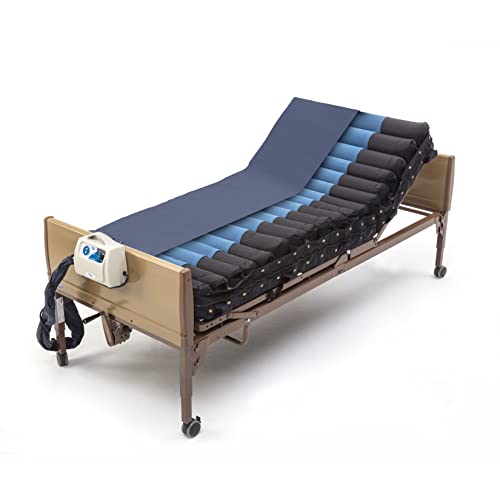
The Invacare MA500 is designed for patients at low-to-medium risk of pressure sores or those in stages I through III. It features a two-cell alternating cycle with a natural heel slope that decreases pressure in the vulnerable heel area, a common trouble spot for bedridden individuals.
The cell-in-cell design provides a safety buffer: if a power failure occurs, the inner cells maintain some air to prevent the user from fully bottoming out. The quilted nylon top cover is highly vapor permeable to reduce shear and friction, while the soft urethane-backed cells are easy for caregivers to clean.
Some users report the pump noise at around 50 dBA, which is noticeably louder than competitors. While effective for healing bedsores within weeks, the noise level makes it less ideal for sensitive sleepers or shared rooms without a noise mitigation strategy.
Why it’s great
- Cell-in-cell design prevents full bottoming out during power loss
- Natural heel slope reduces pressure on sensitive heel areas
- Clinically proven to heal stage I-III bedsores within weeks
Good to know
- Pump noise measured around 50 dBA, louder than some alternatives
- Heavier than comparable replacement systems
4. Invacare Premier Softform Mattress

The Invacare Premier is a high-density foam mattress designed for patients who need pressure redistribution without the mechanical noise of a pump. Its 3-zone construction provides a firm mid-section for support and softer head/foot zones for immersion, helping reduce pressure injury risk for users up to 500 pounds.
The fluid-resistant four-way stretch polyurethane cover reduces shear during repositioning and is easy to wipe clean. While this is not an alternating pressure system, its single-piece U-core and contoured foam insert deliver excellent weight distribution for very high-risk patients who cannot tolerate pump noise.
Reviewers note the foam takes up to three days to fully expand to its 6-inch depth. The non-electric nature means zero power needs, making it a practical choice for facilities or homes where pump maintenance is a concern.
Why it’s great
- Zero noise and no pump maintenance required
- 3-zone support with 500-pound weight capacity
- Fluid-resistant cover reduces shear and friction
Good to know
- Not an alternating pressure system; no cycle therapy
- May take 3 days to fully expand after unboxing
5. Vive 5-Inch Alternating Pressure Mattress
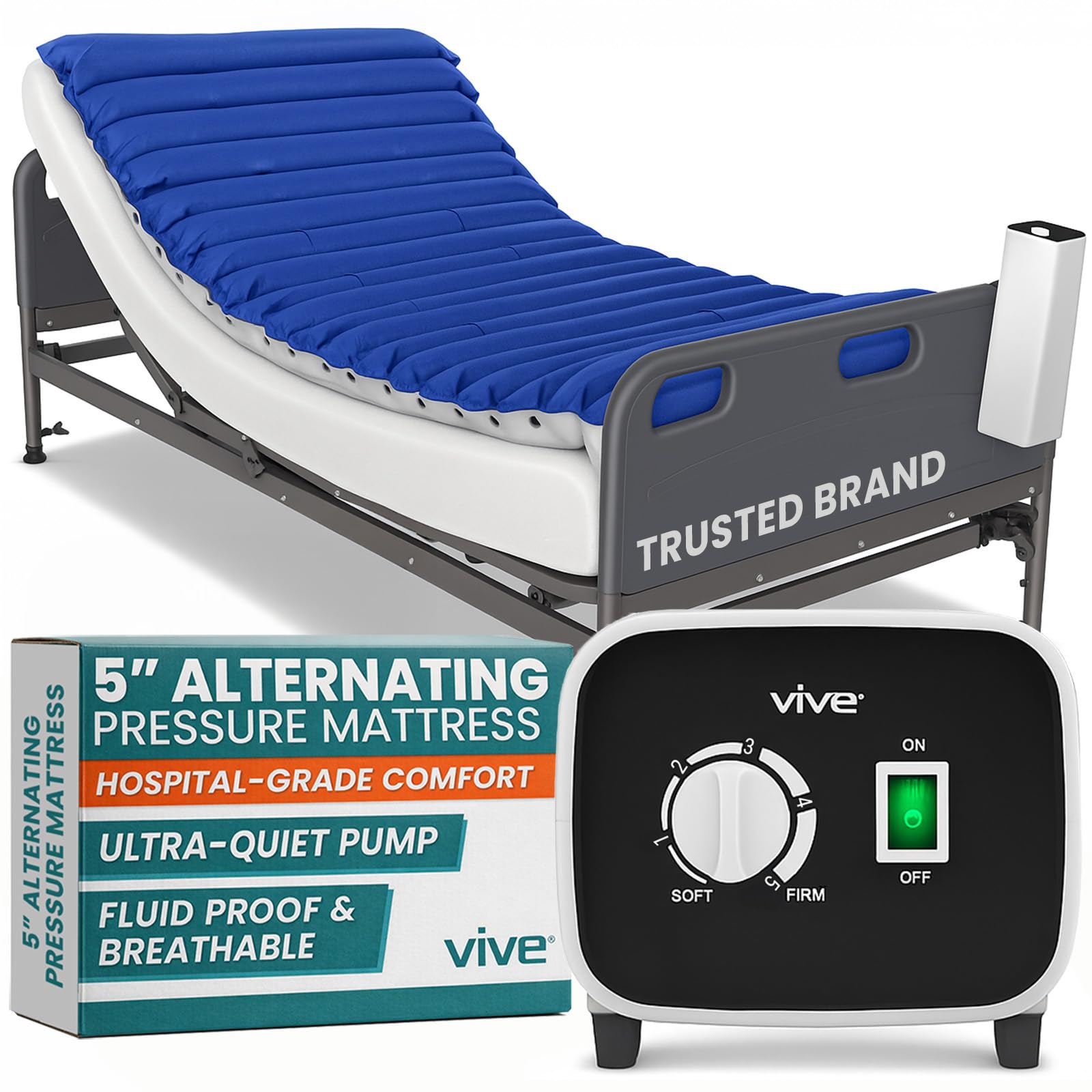
Vive’s 5-inch overlay is an entry-level alternating pressure solution for those on a tight budget. The 16 sealed air chambers are powered by an adjustable dial pump that ranges from soft to firm, and the pump is relatively quiet for its price tier. The waterproof vinyl cover is latex-free and breathable to dissipate heat.
The overlay is designed to sit on top of an existing mattress, making it a cost-effective upgrade without a full replacement. Users have reported success in healing massive bedsores for MS patients over months of use, though the system lacks a true CPR deflate function and the securing straps are weak.
Some customers experienced pump failure within a few months, leading to deflation. As a temporary or budget-limited solution, it works, but the lower build quality means it may not withstand long-term daily use for heavier individuals.
Why it’s great
- Affordable overlay for existing home mattresses
- Quieter pump than many alternatives in its price range
- Adjustable pressure dial for personalized comfort
Good to know
- Reported pump failures within 3 months for some users
- Straps do not hold the pad in place effectively
6. Vive Foam Frame Alternating Pressure Pad

This Vive system incorporates a sturdy foam frame that encases the alternating bubble mattress, preventing the pad from shifting during use. The frame adds stability for users who reposition frequently, though the 4-inch cell depth is shallower than premium alternatives and may not suit heavier patients.
The ultra-quiet pump is a standout, with users noting it sounds like a gentle fan. The adjustable pressure dial allows fine-tuning of firmness, and the foam frame provides a more secure feel compared to overlay pads that often slide on fitted sheets.
Some reports indicate pump failure within three months, with the pump unable to reinflate under a 140-pound load. The 30-day guarantee on the pad is limited, so purchasing an extended warranty is advised for long-term use.
Why it’s great
- Foam frame prevents pad shifting during use
- Very quiet pump suitable for sensitive sleepers
- Easy setup and comfortable pressure relief
Good to know
- 4-inch cells may bottom out for users over 200 lbs
- Some pump failures reported after a few months
7. Lunderg Queen Size Alternating Pressure Pad
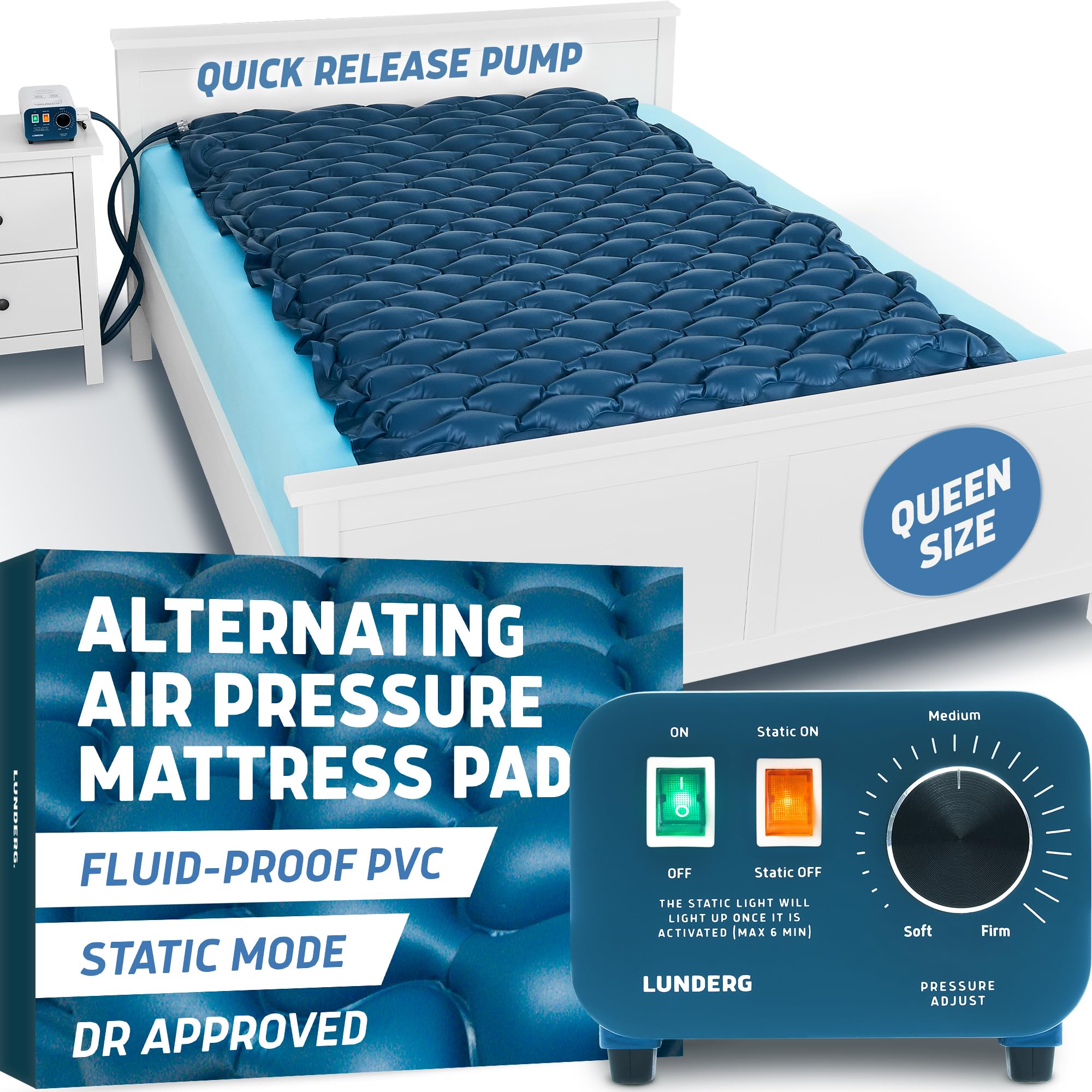
The Lunderg Queen pad is sized at 53×77 inches, designed to fit standard queen beds and larger body frames up to 320 pounds. The pump is whisper-quiet at 23 dBA and includes a static mode that keeps all cells inflated for stable sitting support.
The waterproof design includes a mattress topper and easy quick-connect hoses. Users report that the queen inflatable section is slightly smaller than the full queen dimensions, leaving some overhang, but the pressure relief for bedridden patients is effective, with no red marks after a month of use.
Some heavier users find the pad flattens under the butt area when sitting up, but for laying and sleeping, the alternating motion works well. The static mode is a helpful feature for caregivers during repositioning or meal times.
Why it’s great
- Queen size fits larger beds and supports 320 lbs
- Whisper-quiet 23 dBA pump is nearly silent
- Static mode provides stable surface for sitting up
Good to know
- Inflatable area slightly smaller than full queen dimensions
- Flattens under butt area when sitting up for heavier users
8. Lunderg Flocking Alternating Pressure Pad
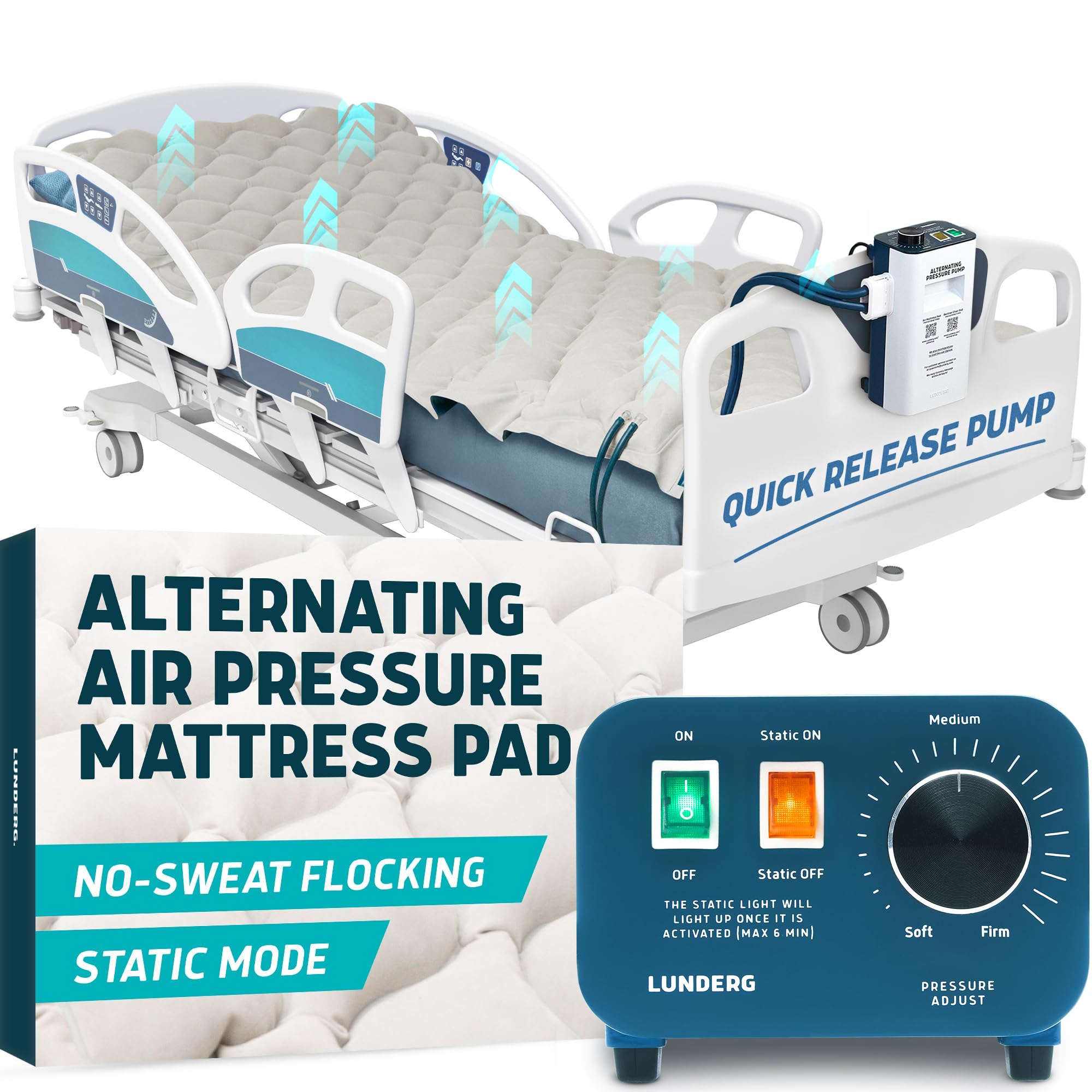
This Lunderg pad uses patented flocking technology to create a soft, fabric-like surface that feels much less like a plastic hospital mattress. Standard vinyl pads trap heat and sweat; the flocking provides breathability and comfort for long-term bed rest.
The pump includes a static mode and operates at only 23 dBA, making it virtually silent in a bedroom setting. It supports up to 300 pounds and works over a home mattress or standard hospital bed. The setup involves a quick connector and takes about 20 minutes to fully inflate over three cycles.
Users describe the surface as cloud-like and the alternating motion as pleasant rather than jarring. Some mentioned they accidentally left the static button on and still felt relief, which shows the pad’s comfort even without full alternating function. The patch kit included is a nice safety net for punctures.
Why it’s great
- Flocking surface reduces heat and sweat compared to bare vinyl
- Extremely quiet 23 dBA pump for uninterrupted sleep
- Includes patch kit for quick repairs
Good to know
- Not a full replacement mattress; fits over existing beds
- Static mode must be toggled off to engage alternating therapy
9. Livaclean Health Gel Memory Foam Mattress

Livaclean offers a 6-inch gel memory foam mattress that is a static alternative to alternating pressure systems. The gel layer helps dissipate body heat while the high-density support foam provides spinal alignment and pressure relief for less-mobile patients. It fits standard hospital beds and comes with a waterproof, removable cover.
This is a good option for patients who do not require cycle therapy but still need improved pressure distribution over a standard hospital mattress. The twin XL dimensions accommodate adjustable bed frames, and four corner straps keep the mattress secure during head/leg elevation changes.
Some users note the 6-inch thickness feels thinner than expected, especially on low bed frames where clearance is tight. The support limit of 242 pounds is lower than many alternating systems, so it is best suited for smaller or average-weight individuals.
Why it’s great
- Gel memory foam reduces heat retention for comfort
- Removable waterproof cover for easy hygiene maintenance
- Compatible with adjustable hospital beds
Good to know
- No alternating pressure therapy for active sore prevention
- Weight capacity limited to 242 lbs
FAQ
Can I use an alternating pressure mattress on a regular home bed?
How long does it take to see results for existing bedsores?
What is the difference between low air loss and alternating pressure?
How do I clean and maintain the mattress for hygiene?
Final Thoughts: The Verdict
For most users, the alternating pressure mattress for bedsores winner is the Drive Medical Med-Aire because it combines low air loss therapy with 20 replaceable bladders and reliable safety alarms for high-risk home care. If you need ultra-quiet operation with a digital display and bariatric support, grab the MedVance Low Air Loss System. And for a budget-friendly flocking pad that keeps users cool and comfortable, nothing beats the Lunderg Flocking Pad.