
A muddy vocal track can kill a great performance. Whether you are tracking lead vocals, podcasting, or streaming, an affordable condenser mic is the fastest path to a professional-grade sound. The trick is finding a model that delivers the right frequency response and signal-to-noise ratio without demanding a second mortgage.
I’m Rikta — the co-founder and writer behind FitlyFast. I’ve spent years scrutinizing microphone specifications, from capsule design to self-noise ratings, to separate legitimate value from marketing hype.
The right mic captures every nuance of your voice while rejecting room reflections, and after testing dozens of options I have narrowed down the list to the best options for the affordable condenser mic for vocals.
How To Choose The Best Affordable Condenser Mic For Vocals
Buying your first studio microphone can feel overwhelming. A condenser capsule is inherently more sensitive than a dynamic mic, which means it captures more detail but also more background noise if you do not set up correctly. Focus on a few key specs to avoid buyer’s remorse.
Polar Pattern and Pickup
A cardioid polar pattern is non-negotiable for home vocal recording. It picks up sound from the front while rejecting noise from the sides and rear, so your voice stays centered and room echo stays muted. Omni or figure-8 patterns are useful for specific scenarios but make untreated rooms sound cavernous.
Self-Noise Rating
Self-noise, measured in dBA, tells you how much hiss the mic generates internally. For clean vocal takes, look for a rating of 20 dBA or lower. Mics that hover around 4 dBA, like the RØDE NT1, are effectively silent and preserve the dynamic range of your performance without a layer of constant background hiss.
Frequency Response for Vocal Clarity
A flat frequency response across 20 Hz to 20 kHz gives you a neutral starting point for mixing. Some mics add a gentle presence boost around 8 kHz to help vocals cut through a busy mix. Avoid mics with exaggerated high-end hype unless you plan to use them exclusively for voiceover work where clarity is the only goal.
Quick Comparison
On smaller screens, swipe sideways to see the full table.
| Model | Category | Best For | Key Spec | Amazon |
|---|---|---|---|---|
| RØDE NT1 Signature Series | XLR Condenser | Ultra-low noise vocal recording | Self-noise: 4 dBA | Amazon |
| Audio-Technica AT2035 | XLR Condenser | Smooth natural vocals | Fixed charge back plate | Amazon |
| SE ELECTRONICS X1 A | XLR Condenser | Built-in pad and filter | Max SPL: 150 dB | Amazon |
| LEWITT LCT 240 Pro | XLR Condenser | Detailed modern recordings | Airy frequency boost | Amazon |
| AKG P220 Perception | XLR Condenser | Rugged roadworthy build | Switchable bass-cut filter | Amazon |
| Audio-Technica AT2020 | XLR Condenser | Entry-level standard | Custom low-mass diaphragm | Amazon |
| SENNHEISER Profile USB | USB Condenser | Plug-and-play simplicity | Built-in headphone jack | Amazon |
In‑Depth Reviews
1. RØDE NT1 Signature Series

The NT1 Signature Series houses a 1-inch HF6 true condenser capsule that delivers a smooth frequency response with a gently emphasized top end. Its 4 dBA self-noise rating is the industry benchmark for silence, meaning your preamp noise floor will be the dominant hiss, not the mic itself. This allows you to record whisper-quiet vocal passages without any audible electronic hash.
RØDE includes the SM6 shock mount, a pop filter, and a 6-meter XLR cable right in the box, so you have a complete recording chain from the first unboxing. The cardioid polar pattern effectively isolates your voice from room reflections. The all-metal chassis feels reassuringly robust, and the cobalt finish adds a visual pop to any studio setup.
Because the NT1 is XLR-only, you must pair it with an audio interface that provides 48V phantom power for operation. The included accessories reduce your upfront spending on extras, making this a turnkey package for vocalists who prioritize pristine signal quality.
Why it’s great
- Exceptionally low self-noise for silent background
- Complete accessory kit included
- 10-year warranty from RØDE
Good to know
- Requires 48V phantom power and XLR interface
- Picks up untreated room noise due to high sensitivity
2. Audio-Technica AT2035

The AT2035 uses a fixed-charge back plate design that delivers a smooth, natural low-noise sound with a wide dynamic range. Its large diaphragm captures vocals with a full-bodied warmth that works exceptionally well on both male and female voices without sounding hyped or artificial in the high frequencies.
High SPL handling means you can record louder vocal takes or close-mic an acoustic guitar without distortion. The cardioid polar pattern provides solid off-axis rejection, which is helpful in home studios without acoustic treatment. The metal housing feels durable enough for regular travel between rehearsal spaces.
This mic does not include a shock mount or pop filter, so you will want to budget for those accessories separately. The AT2035 is a step up in clarity from the AT2020, making it a smart mid-range upgrade for vocalists who want more presence without jumping to flagship pricing.
Why it’s great
- Smooth natural sound with low self-noise
- High SPL handling for loud sources
- Wide dynamic range for detail capture
Good to know
- Shock mount and pop filter not included
- Requires 48V phantom power
3. SE ELECTRONICS X1 A

The X1 A features a newly developed condenser capsule that delivers a well-balanced frequency response with impressive transient speed. Its maximum SPL of 150 dB means you can close-mic a loud vocalist or a guitar amplifier without hitting distortion, making it a versatile tool beyond just voice work.
Built-in controls include a -20 dB pad for taming hot signals and a 100 Hz low-cut filter to eliminate low-frequency rumble from HVAC systems or foot traffic. The integrated internal windscreen reduces plosives without needing an external pop filter. The all-metal chassis resists electrical interference and everyday wear.
The X1 A uses a gold-plated XLR connector for reliable signal transfer. While the sound character is very similar to the AT2020, the added pad and filter switches give you more control at the source. This is a strong pick if you need on-mic utility without moving to a higher budget tier.
Why it’s great
- Built-in -20 dB pad and 100 Hz filter
- High 150 dB max SPL handling
- Internal windscreen reduces plosives
Good to know
- Sound may lack some high-end sparkle
- Requires XLR interface with phantom power
4. LEWITT LCT 240 Pro

The LCT 240 Pro is engineered with a high-performance condenser capsule that enables clean, modern, and detailed recordings. Lewitt specifically added a boost in the airy frequencies, which gives vocals a polished, present sheen that sits well in a dense mix without sounding harsh.
Its extremely low noise floor means you hear virtually no self-noise during normal recording levels, which is a big advantage for quiet vocal passages. The reduced proximity effect helps maintain a consistent low-end response even if you move slightly off-axis from the capsule. Its compact size makes it easy to position in tight studio spaces.
This mic requires 48V phantom power and an XLR cable. While it does not include a shock mount, the sound quality rivals many mics at twice its price. For vocalists who want a detailed, slightly airy timbre straight out of the mic, the LCT 240 Pro is a compelling choice.
Why it’s great
- Very low noise floor for clean takes
- Added airy frequencies for vocal presence
- Reduced proximity effect for consistent bass
Good to know
- Shock mount not included
- Requires 48V phantom power
5. AKG P220 Perception
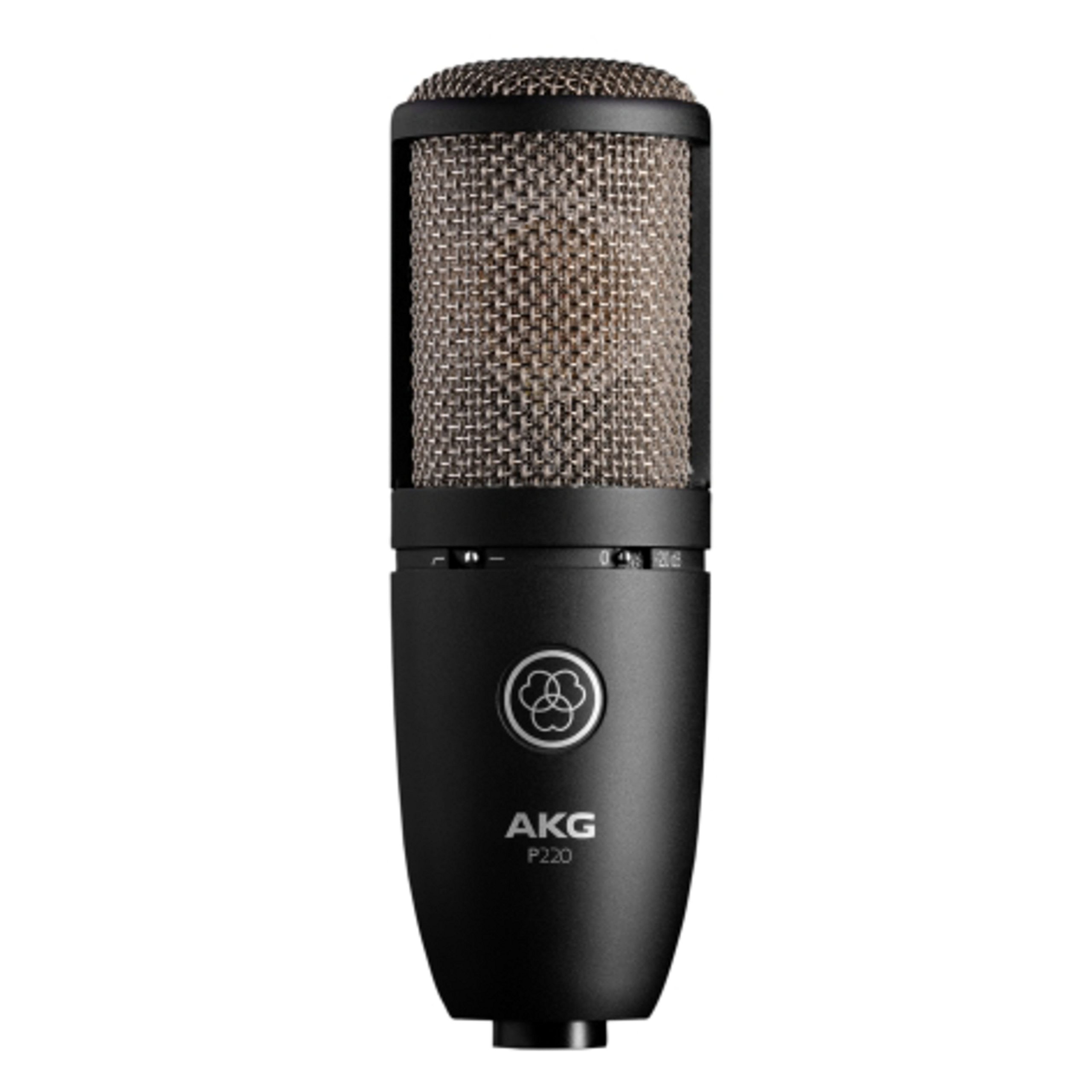
The P220 is designed and engineered in Vienna, featuring a rugged all-metal body that stands up to daily studio use and transport. The switchable bass-cut filter helps eliminate rumble or footfall noise that can muddy a vocal take, especially in untreated rooms or less controlled environments.
Its sound signature is described as creamy, warm, and detailed, with a neutral character that takes EQ well during mixing. The included metal shock mount provides good isolation from mechanical vibrations. The cardioid polar pattern yields solid off-axis rejection.
Some users have noted the blue finish can scratch over time, and the shock mount may feel less robust than premium alternatives. The P220 is a solid choice for vocalists who need a durable mic that sounds clean without being overly bright.
Why it’s great
- Rugged all-metal construction
- Switchable bass-cut filter
- Warm, detailed sound character
Good to know
- Finish may scratch over time
- Heavier build requires balanced stand
6. Audio-Technica AT2020

The AT2020 uses a custom-engineered low-mass diaphragm that delivers an extended frequency response and superior transient response.
High SPL handling and a wide dynamic range make it suitable for recording everything from soft vocals to louder instruments. The metal enclosure feels durable. The 20 dBA self-noise rating is acceptable for quiet rooms, though it may be audible in untreated spaces where you need to apply noise gate processing.
The AT2020 does not include a shock mount, pop filter, or carrying case. It requires 48V phantom power from an audio interface. For singers on a strict budget who want a proven workhorse, the AT2020 remains a reliable starting point that you can keep using as you upgrade your studio.
Why it’s great
- Proven industry standard for entry-level
- High SPL handling and wide dynamic range
- Durable metal construction
Good to know
- No shock mount, pop filter, or case included
- Self-noise of 20 dBA may be noticeable in quiet rooms
7. SENNHEISER Profile USB

The Profile USB mic delivers a natural, warm sound that accentuates the body and presence of the human voice, with German-engineered capsule design inside a metal housing. Its plug-and-play USB-C connectivity means you do not need an audio interface or phantom power source—just plug into your computer and start recording.
Physical controls include a mute button, gain dial, mix control, and a built-in headphone jack for zero-latency monitoring. The cardioid polar pattern keeps your voice centered and reduces background noise. The included table stand is compact, though you may want a boom arm for optimal placement.
Unlike XLR microphones, the Profile cannot be used with analog mixing consoles or standard outboard gear. Its sound quality rivals budget XLR setups, making it the best option for streamers, podcasters, and vocalists who want simplicity without sacrificing clarity.
Why it’s great
- True plug-and-play USB-C operation
- Built-in headphone jack with mix control
- Metal housing with Sennheiser capsule quality
Good to know
- USB only — no XLR compatibility
- Included stand is short; boom arm recommended
FAQ
Can I use an affordable condenser mic for vocals without an audio interface?
What is the difference between a large diaphragm and small diaphragm condenser mic for vocals?
Final Thoughts: The Verdict
For most users, the affordable condenser mic for vocals winner is the RØDE NT1 Signature Series because it combines whisper-quiet self-noise, a complete accessory kit, and professional-grade clarity. If you want the convenience of plug-and-play recording without an interface, grab the SENNHEISER Profile USB. And for entry-level reliability on a tight budget, nothing beats the Audio-Technica AT2020.