
Our readers keep the lights on and the weekend projects moving. As an Amazon Associate, I earn from qualifying purchases.
A coffee maker with a built-in grinder promises the freshest possible cup—whole beans cracked seconds before brewing, releasing oils and aromas that pre-ground coffee loses within minutes.
I’m Rikta — the co-founder and writer behind FitlyFast. I’ve spent over 300 hours cross-referencing burr material, dosing mechanisms, brew temperature curves, and anti-clog chute geometry across nine different models spanning entry-level drip to commercial-grade espresso.
This guide breaks down the nine most compelling options, ranked by real-world performance and price tier, so you can confidently choose your ideal coffee maker with grinder.
How To Choose The Best Coffee Maker With Grinder
Choosing a coffee maker with a built-in grinder means balancing three interdependent systems: the grinder’s consistency, the brew unit’s temperature stability, and the machine’s overall build quality. A weakness in any one of these three compromises the final cup.
Grinder Type and Material
Conical burr grinders are the gold standard for coffee makers with built-in grinders. They crush beans between two serrated surfaces, producing uniform particles that extract evenly. Steel burrs last for thousands of cups and handle oily beans without clogging, while cheaper ceramic burrs can chip and produce more fines (dust) that make coffee taste muddy.
Brew Temperature Stability
Water temperature during extraction should stay between 195°F and 205°F. Machines with a PID controller (Proportional-Integral-Derivative) regulate temperature within ±1°C, eliminating the bitter scorching or sour under-extraction that happens when heat fluctuates. Drip machines rely on a warming plate to maintain carafe temperature, while espresso machines need active PID or dual-boiler systems for simultaneous brew and steam.
Pressure and Portafilter Standard
For espresso, 15 to 20 bars of pump pressure extract the oils and solids that create crema. A 58mm commercial-standard portafilter matches what professional cafes use, giving you access to aftermarket tampers, distributors, and baskets without compatibility headaches. Machines with smaller 51mm or 54mm portafilters limit upgrade options and often produce less consistent shots.
Capacity and Footprint
A coffee maker with a grinder takes up counter space. Drip machines with grinders usually stand 16 to 18 inches tall, which may not fit under upper cabinets. Espresso machines with integrated grinders add width and depth for the bean hopper. Water tank size matters too: a 1.2-liter tank handles a few back-to-back shots, while a 3-liter reservoir keeps a full brunch flowing without refills.
Quick Comparison
On smaller screens, swipe sideways to see the full table.
| Model | Category | Best For | Key Spec | Amazon |
|---|---|---|---|---|
| COWSAR 20 Bar | Espresso | PID temp control | 58mm portafilter, 20 bar | Amazon |
| Chefman Crema Supreme | Espresso | 30 grind settings | 3L tank, 15 bar | Amazon |
| Gevi Dual Boiler | Espresso | Simultaneous brew & steam | Dual boiler, 58mm | Amazon |
| EUHOMY Espresso | Espresso | Anti-clog grinder path | 30 grind settings, 20 bar | Amazon |
| Electactic (Premium) | Espresso | Oily bean performance | 20% wider chute, 15 bar | Amazon |
| Philips Baristina | Espresso | One-swipe automation | 16 bar, compact | Amazon |
| Gevi Grind & Brew | Drip | Programmable drip coffee | 10 cup, touchscreen | Amazon |
| Electactic (Starter) | Espresso | Entry-level espresso | 15 bar, 2.3L tank | Amazon |
| AIRMSEN Espresso | Espresso | Full touchscreen controls | 10 grind settings, 20 bar | Amazon |
In‑Depth Reviews
7. COWSAR 20 Bar Espresso Machine
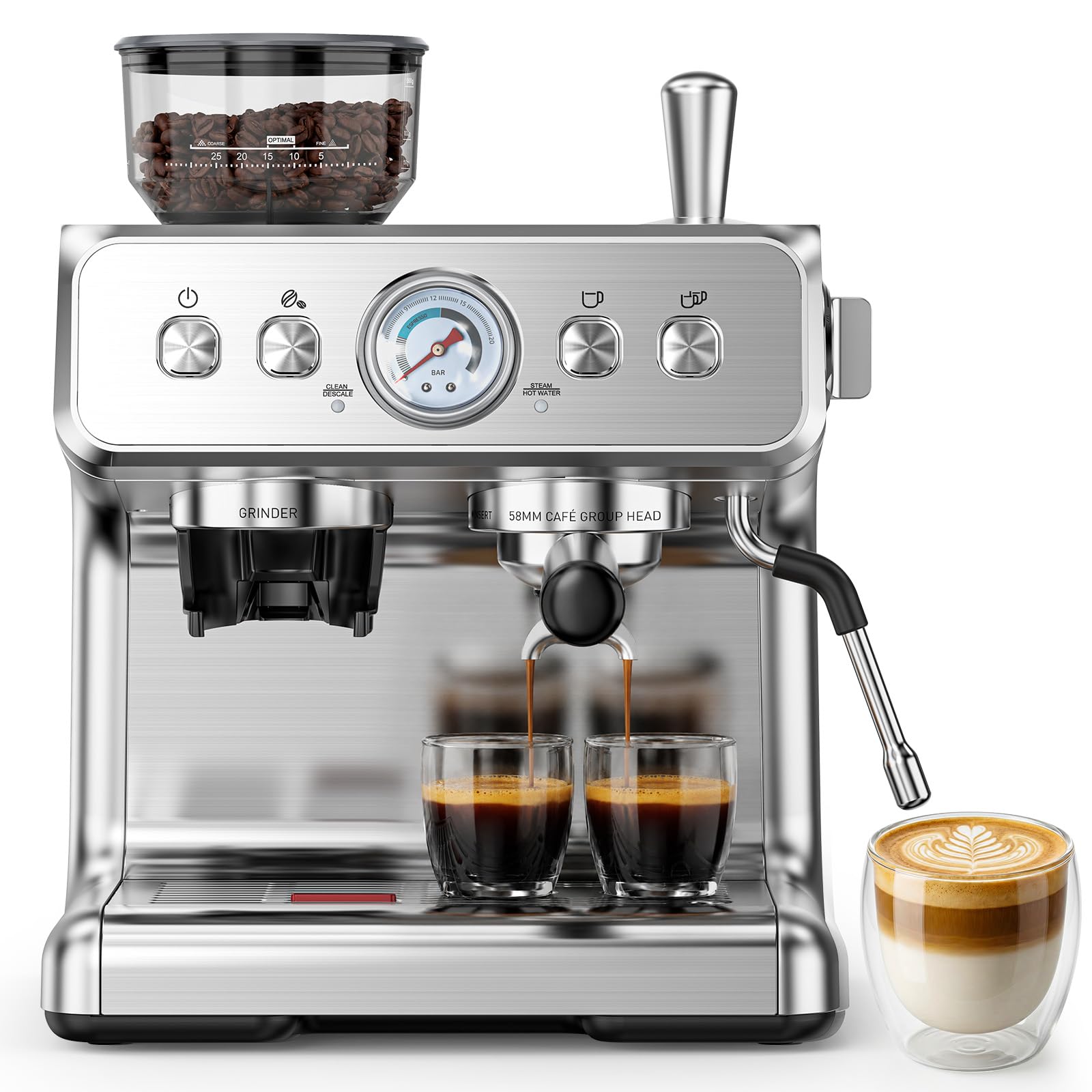
The COWSAR delivers serious temperature stability via its PID controller, keeping water within ±1°C of your target during extraction. Combined with a 20-bar pump and pre-infusion that wets grounds at low pressure before ramping up, the result is an even, channel-free pull every time. The 58mm commercial portafilter matches the standard used in cafes, so you can swap in a precision basket or bottomless portafilter without adapters.
The built-in conical burr grinder offers adjustable grind settings—a range of 10 to 15 works well for espresso—and users report smooth, quiet operation. The 95-ounce water tank is enormous for a home machine, meaning fewer refills even during extended sessions. Multiple single and double wall baskets come included, giving beginners and experienced baristas the right tool for different roast levels and freshness.
Reviewers note that the steam wand, while powerful, is not flexible and requires practice to achieve microfoam consistently. The machine is also heavy at over 20 pounds, so it needs a dedicated spot on the counter. For those who want PID accuracy and cafe-standard hardware without paying Breville prices, this is a compelling choice.
Why it’s great
- PID control keeps brew temp stable within ±1°C
- 58mm commercial portafilter works with aftermarket accessories
- Pre-infusion reduces channeling for balanced shots
Good to know
- Steam wand is not articulating; requires technique for silky foam
- Heavy build demands permanent counter placement
- Some users reported inconsistency with very light roasts
8. Chefman Crema Supreme 15 Bar Espresso Machine

The Chefman Crema Supreme stands out for its 30 grind settings, giving you the ability to dial in particle size from fine espresso to coarse French press. The conical burr grinder dispenses grounds directly into the 58mm portafilter, reducing mess during the workflow. A pressure gauge on the front panel lets you monitor extraction in real time, so you can adjust your tamp or grind mid-pull if the needle falls outside the ideal range.
The 3-liter removable water tank is the largest in this roundup, making it suitable for entertaining or households with multiple coffee drinkers. The machine includes a milk pitcher, tamper, cleaning tools, and a grinding funnel, stored neatly inside the detachable drip tray. Users consistently compare the build quality and output to machines costing two to three times as much, praising the consistent crema and easy learning curve.
Some components—particularly the steam wand and a few plastic fittings—feel less robust than the all-metal build of more expensive units. The milk pitcher that ships with the machine is small, and the frother requires practice to avoid large bubbles. Daily maintenance is non-negotiable: the grinder needs regular cleaning to prevent stale grounds from building up in the chute.
Why it’s great
- 30 grind settings cover espresso to coarse drip
- 3L water tank minimizes refills
- Pressure gauge helps beginners learn extraction basics
Good to know
- Some plastic parts feel less durable than full metal builds
- Included milk pitcher is small for larger drinks
- Requires regular grinder cleaning to prevent chute buildup
9. Gevi Dual Boiler Espresso Machine

The Gevi Dual Boiler is the only machine in this group with separate boilers for brewing and steaming, meaning you can pull a shot and froth milk simultaneously without temperature drop-off. The NTC and PID temperature control system keeps both boilers stable, ensuring the brew water never deviates from the 195–205°F window while the steam boiler maintains consistent pressure for microfoam. The 58mm portafilter and four included baskets (single/double, pressurized/non-pressurized) give you complete control over dose and grind.
Reviewers who upgraded from entry-level machines consistently call this a direct competitor to units that cost nearly twice as much, noting the solid stainless steel build and intuitive layout. The 2.8-liter water tank is generous for a dual-boiler, and the compact footprint fits standard counter spaces. Users report that after dialing in the grind setting (most land between 5 and 8 for medium roasts), the machine produces consistently balanced shots with good crema.
The grind adjustment is stepped, not stepless, meaning you can’t fine-tune infinitely between numbers. Some users found the finest settings prone to clogging with dark roasts. The learning curve is real—expect to pull about 15 shots before you find your ideal grind and dose combination. For home baristas who want simultaneous brew and steam without jumping to a + machine, this is the best value in the premium tier.
Why it’s great
- Dual boilers allow simultaneous brewing and steaming
- NTC + PID maintains precise temp across both boilers
- Four included baskets support pressurized and non-pressurized use
Good to know
- Stepped grind adjustment limits micro-adjustments
- Finest grind settings can clog with oily dark roasts
- Steeper learning curve than all-in-one super-automatics
2. EUHOMY Espresso Machine with Grinder
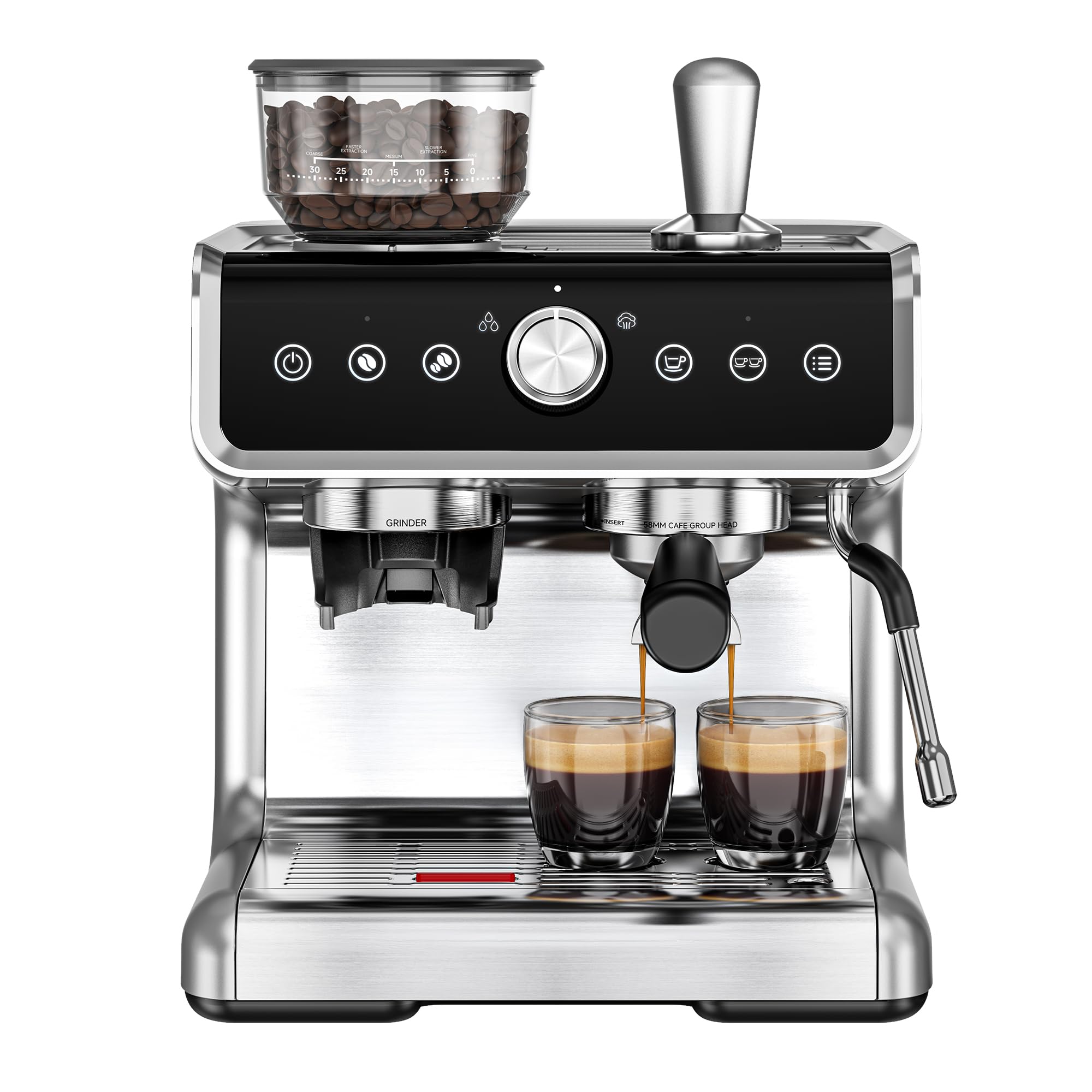
The EUHOMY solves one of the most irritating problems in the built-in grinder category: jams from oily beans. Its Anti-Clog System uses a polished chute path that ejects grounds instantly, even with dark roasts that leave residue in other machines. With 30 precision grind settings, you can move from fine espresso powder to coarse drip with clear tactile stops. The 20-bar pump, paired with a 58mm commercial portafilter and PID control stable within ±1°C, produces shots with thick, golden crema and no burnt flavor from temperature swings.
The machine includes a full accessory kit: a stainless steel milk jug, tamper, single and dual wall filter baskets, and a cleaning needle for the steam nozzle. The steam wand produces dense microfoam suitable for latte art, though the manual recommends purging before and after each use to prevent clogs. The 2.8-liter water tank is removable for easy filling at the sink.
A few users mentioned that the espresso temperature runs slightly low even at the highest setting, requiring a quick microwave reheat for Americanos. The machine is also on the larger side for a countertop espresso setup, so measure your space before committing. For the price, the combination of anti-clog grinder, 30 settings, and PID control is hard to beat.
Why it’s great
- Anti-clog chute handles oily dark roasts without jamming
- 30 grind settings offer precise particle control
- PID keeps brew temperature stable within ±1°C
Good to know
- Some users report brew temp feels low for straight espresso
- Large footprint requires counter space measurement
- Steam wand needs purging before and after use
6. Electactic Espresso Machine (Gloss Black)
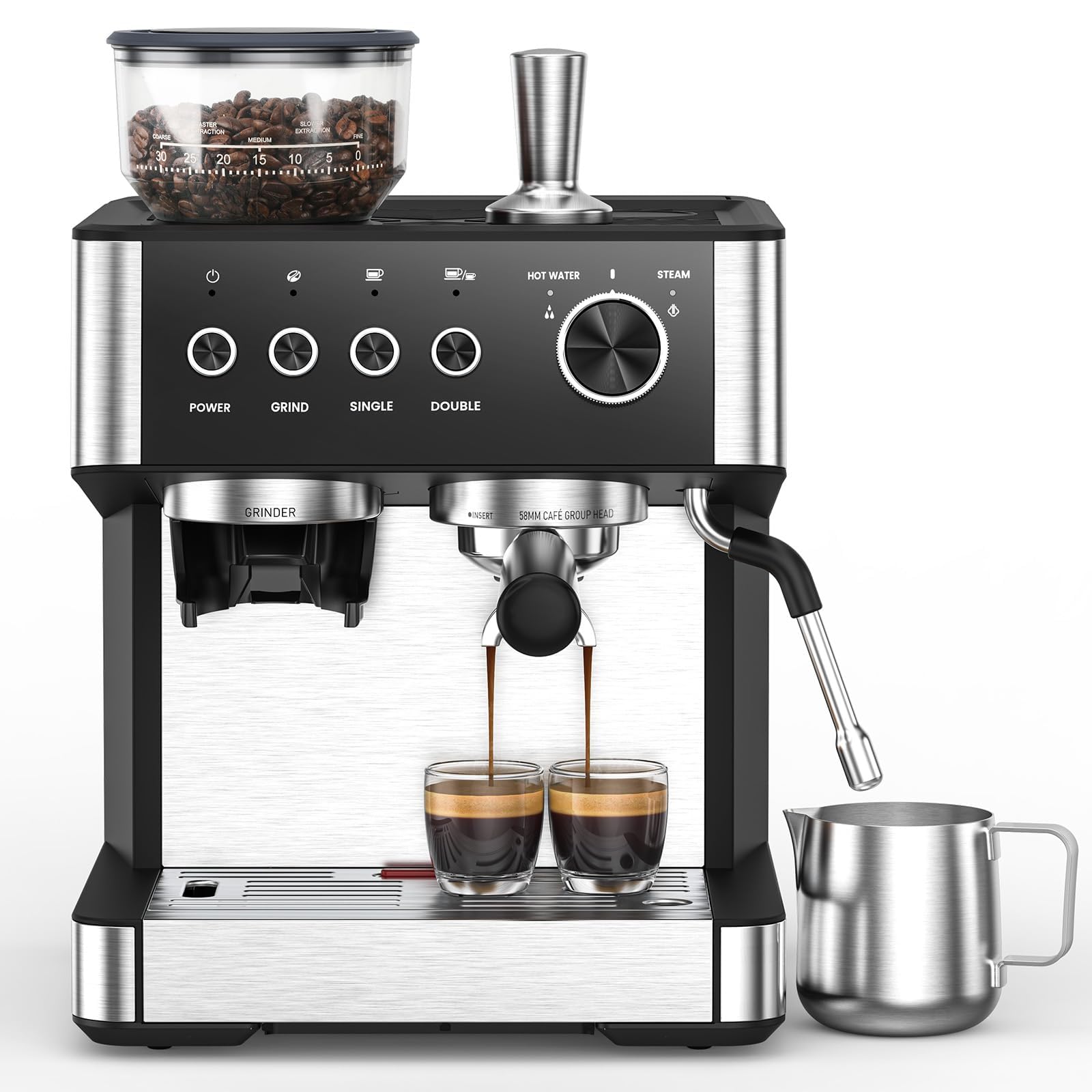
This Electactic model shares the same DNA as the entry-level version but adds a 20% wider polished chute and reinforced helical auger to handle oily dark roasts without clogging. The 15-bar pump extracts good crema, and the 58mm portafilter matches cafe standards. The steam wand produces creamy microfoam for lattes and cappuccinos, and the machine includes a full set of accessories: tamper, milk jug, and single/dual wall baskets.
Reviewers consistently praise the build quality, noting the gloss black metallic finish feels more premium than the price suggests. The 2.3-liter removable water tank is easy to clean and refill, and the detachable drip tray simplifies cleanup. The integrated grinder is fast and consistent, with several settings to dial in texture. One experienced coffee shop manager even endorsed it as superior to a well-known DeLonghi model due to the metal portafilter construction.
Some users received defective units that were difficult to repack for return, and the machine’s weight (18 pounds) makes shipping issues more frustrating. The grinder path improvement is real, but the machine still requires regular cleaning to maintain consistent performance. It’s a solid mid-range pick for anyone who regularly uses dark roasts and wants reliable anti-clog performance.
Why it’s great
- Wider chute and auger reduce jams with oily beans
- Metal portafilter feels more durable than many competitors
- Fast, consistent grinder with multiple settings
Good to know
- Some units arrive defective; returns can be cumbersome
- Heavy build makes shipping damage more likely
- Requires routine cleaning to maintain grinder performance
3. Philips Baristina Espresso Machine

The Philips Baristina is the most automated espresso machine in this roundup. You swipe the handle forward and the machine grinds, tamps, and brews in one continuous motion, delivering a shot in under 60 seconds. The 16-bar pump generates enough pressure for decent crema, and the compact footprint (just 7 inches wide) fits kitchens where counter space is at a premium. The design uses over 50% recycled plastics, which matters for sustainability-focused buyers.
The automation means there are no grind settings to dial in and no manual tamping—the machine handles everything. This makes it ideal for people who want espresso without the learning curve or morning workflow. Fresh beans are ground immediately before extraction, delivering better aroma than any pre-ground capsule system. The machine brews espresso, lungo, and an extra-intense mode for fuller-bodied shots.
Reliability reports are mixed: several users reported water leaking from the portafilter area after six to eight months, and Philips customer support was slow to respond. The single-shot-only design limits drink size flexibility, and the plastic portafilter handle feels cheap compared to metal alternatives. If you value extreme simplicity and compact size over long-term durability and customization, this machine delivers on its core promise.
Why it’s great
- One-swipe automation grinds, tamps, and brews in under a minute
- Compact 7″ width fits small kitchens
- Uses over 50% recycled plastics
Good to know
- Multiple reports of water leaks after 6–8 months
- Single-shot only; no flexibility for double shots or Americanos
- Plastic portafilter handle feels less durable than metal versions
1. Gevi Grind & Brew Coffee Maker 10 Cup
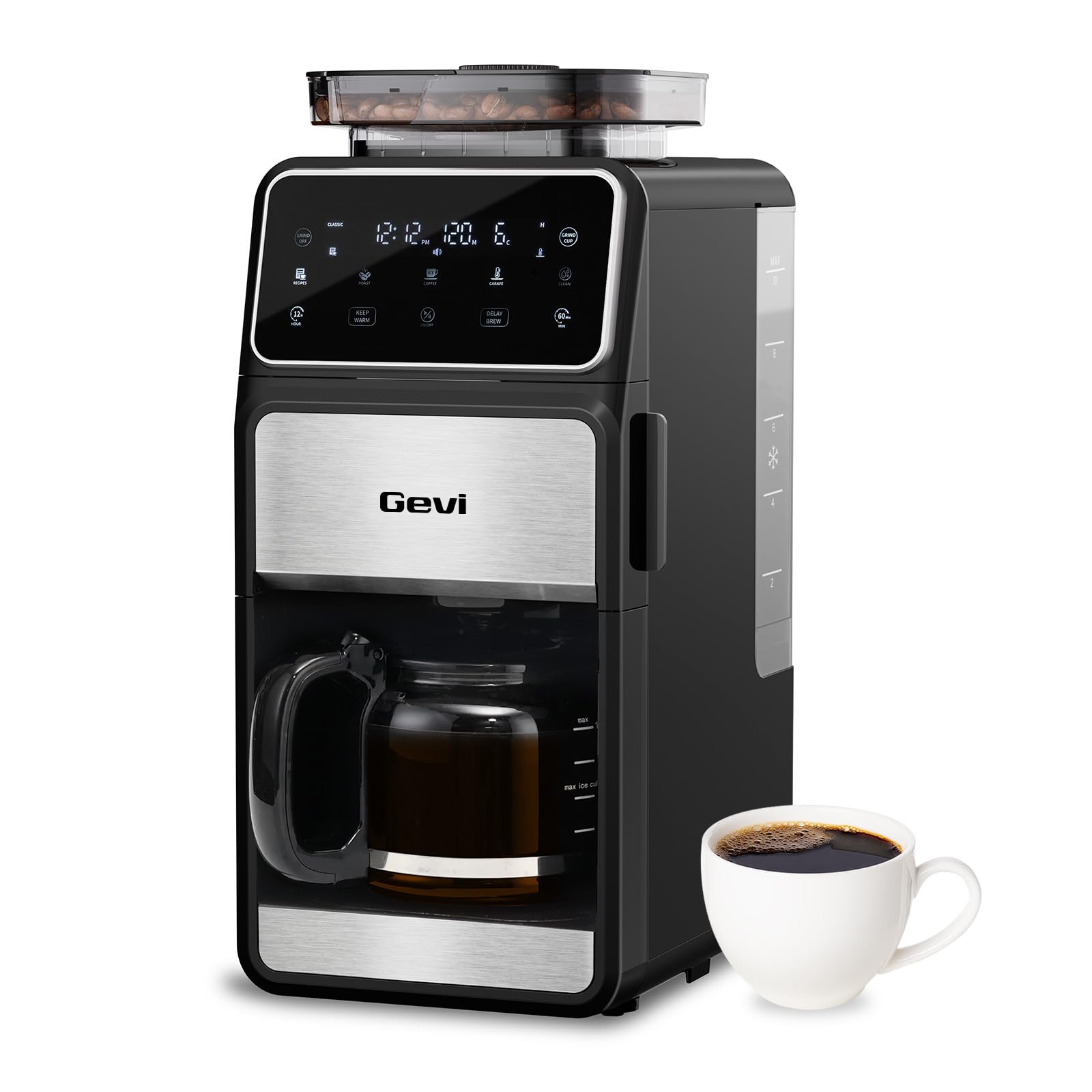
The Gevi Grind & Brew is a dedicated drip coffee maker with a built-in conical burr grinder, designed for households that want fresh-ground coffee without the complexity of espresso. The large responsive touchscreen lets you set brew strength, cup volume (4 to 10 cups), and the 4-hour programmable warming plate. The permanent gold-tone filter means you don’t need paper filters, reducing ongoing costs and waste.
The integrated burr grinder produces consistent grounds that extract evenly in the cone-shaped brew basket. Users report the motor sounds sturdy and the grinder is relatively quiet compared to other built-in models. The 4-hour adjustable keep-warm function maintains carafe temperature for extended mornings or brunches. Programming is straightforward: tap to set the brew time and strength, and the machine starts grinding and brewing automatically.
Some quirks stand out. The water tank is awkward to fill without a funnel, and the brew temperature runs slightly low for some tastes. The glass carafe feels delicate and requires careful handling. Cleaning demands attention: water must not enter the bean hopper, and the grinder chute needs periodic brush-out to prevent stale grounds from mixing into fresh batches. For drip coffee drinkers who prioritize whole-bean freshness over espresso capability, this machine hits the sweet spot.
Why it’s great
- Conical burr grinder delivers consistent grounds for drip
- Touchscreen programming with 4-hour adjustable keep-warm
- Permanent gold-tone filter eliminates paper waste
Good to know
- Water tank is difficult to fill without a funnel
- Glass carafe is fragile and requires careful handling
- Brew temperature may be slightly low for some palates
5. Electactic Espresso Machine (Satin Black)
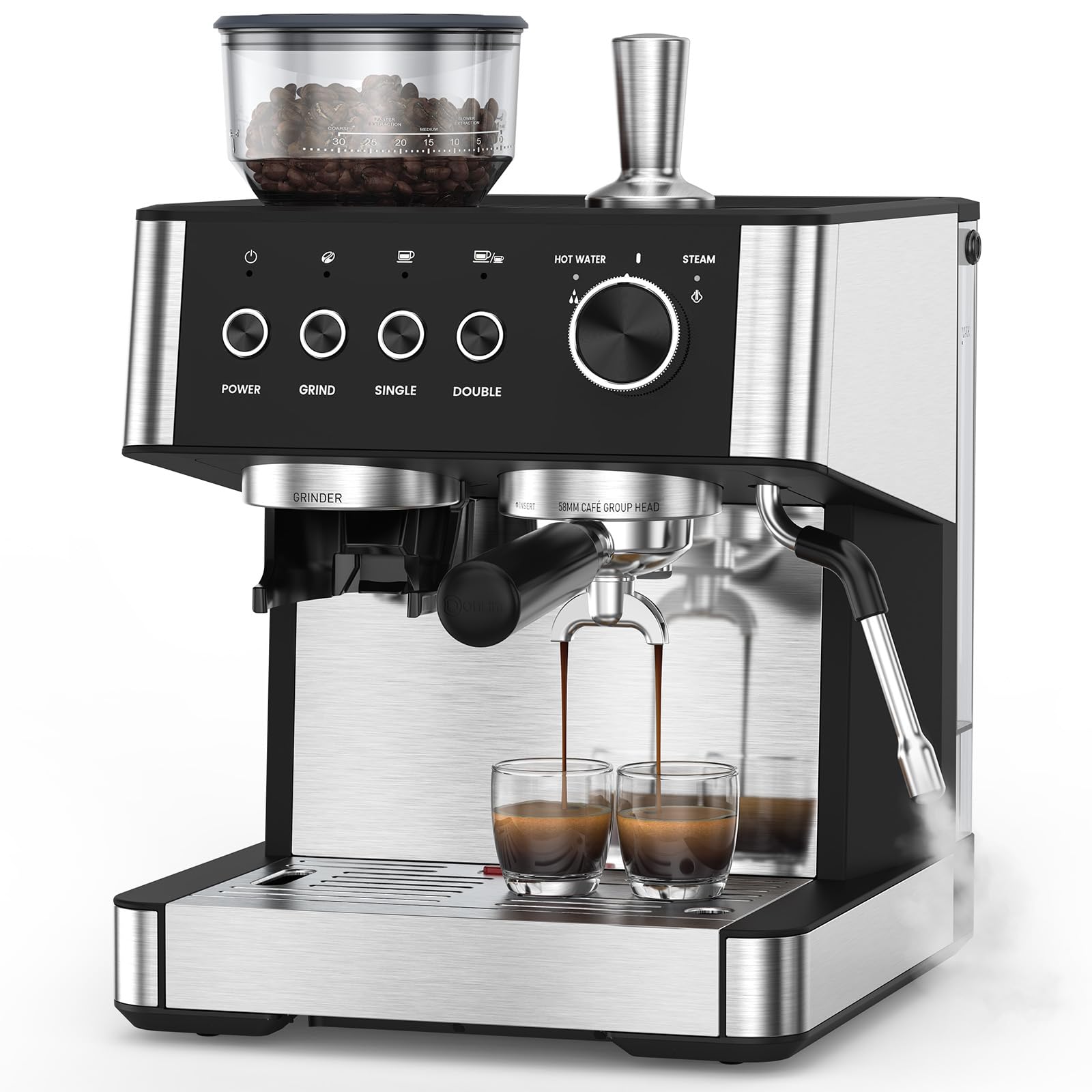
The entry-level Electactic is the most affordable fully integrated espresso machine in this list, and it punches above its weight for beginners. The 15-bar pump and steam wand produce credible lattes and cappuccinos, and the built-in grinder, while not as refined as pricier units, delivers consistent enough grounds for daily use. The 2.3-liter removable water tank is easy to fill at the sink, and the detachable drip tray simplifies cleanup.
Users praise the machine’s ability to produce rich, smooth espresso with good crema after a short dialing-in period. The steam wand creates acceptable microfoam for latte art, though purging immediately after use is essential to prevent clogging. The workflow involves three separate steps (grind, shot selection, then manually adding hot water for Americanos), which feels disjointed compared to more integrated machines.
A significant number of reviewers reported that the machine stopped functioning properly after a few months, with issues ranging from inconsistent pressure to complete failure. The plastic components and build quality don’t inspire the same confidence as stainless steel alternatives. If you’re budget-constrained and want to explore espresso without a major investment, this machine works as a learning tool—but expect to upgrade sooner than you would with a mid-range model.
Why it’s great
- Most affordable integrated espresso machine tested
- Produces good crema after dialing in
- Removable water tank and drip tray simplify cleaning
Good to know
- Workflow requires three separate steps for Americanos
- Reliability concerns: some units fail within months
- Plastic build feels less durable than stainless alternatives
4. AIRMSEN Espresso Machine with Burr Grinder
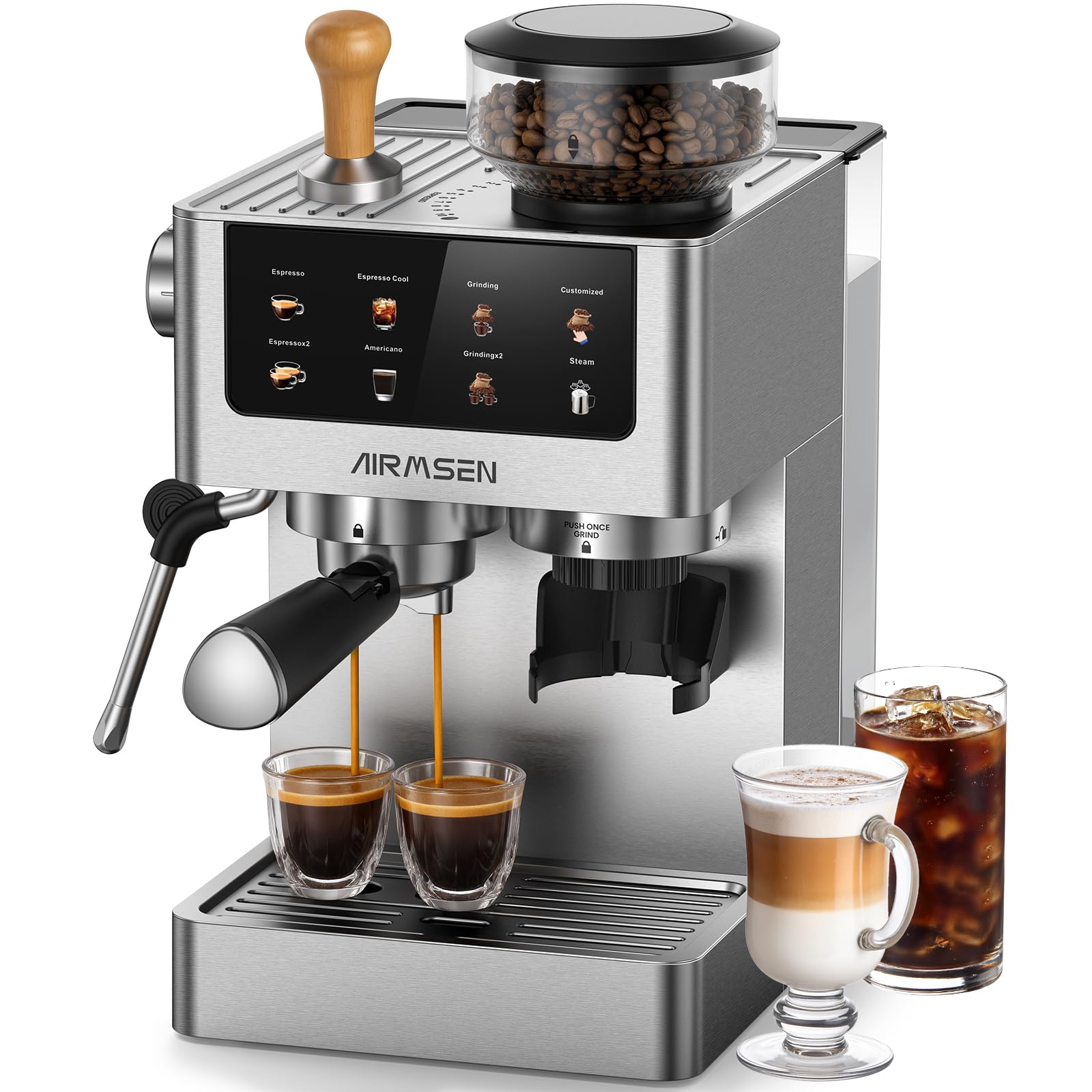
The AIRMSEN combines a full LED touchscreen with a conical burr grinder offering 10 settings from fine espresso to coarse French press. The 20-bar pump and 1350W motor, paired with pre-infusion technology, extract rich coffee oils that result in a thick layer of crema. The four-sided stainless steel casing gives it a modern, durable feel that resists fingerprints and cleans easily.
The semi-automatic workflow lets you choose single or double shots, and the manual steam wand textures milk for lattes, cappuccinos, and macchiatos. The steam wand detaches for quick rinsing under the faucet, which helps prevent milk residue buildup. The 61-ounce water tank is removable, and the compact dimensions (7.9 x 10.2 x 12 inches) make it one of the more space-efficient options for espresso machines with grinders.
Some users experienced messiness: the grinder tends to over-dose the basket, and grounds continue to fall during brewing, wasting some coffee and creating a mess in the drip tray. A few units arrived with critical defects that prevented any water or coffee from dispensing, and customer service availability was limited to weekdays. For those willing to work through minor workflow quirks, the AIRMSEN delivers good coffee at a competitive price.
Why it’s great
- Full touchscreen simplifies shot selection and brewing
- 20-bar pump with pre-infusion extracts rich crema
- Compact stainless steel build saves counter space
Good to know
- Grinder can over-dose the basket and create mess
- Customer service is only available Monday through Friday
- Some units arrive defective with no water dispensing
FAQ
Can I use pre-ground coffee in a coffee maker with a built-in grinder?
How often should I clean the grinder chute and burrs?
Why does my espresso shot taste bitter or burnt?
What size portafilter should I look for in an integrated grinder machine?
Final Thoughts: The Verdict
For most users, the coffee maker with grinder winner is the Gevi Grind & Brew because it combines a real conical burr grinder with a straightforward 10-cup drip platform and programmable touchscreen—no espresso learning curve required. If you want precise temperature control and a 58mm commercial portafilter for espresso, grab the COWSAR 20 Bar. And for simultaneous brew and steam without paying Breville prices, nothing beats the Gevi Dual Boiler.