
That spinning wheel of doom halfway through a movie isn’t your internet—it’s the cheap streaming stick you picked up at the checkout counter. When you commit to an Android TV Stick, you’re not just plugging a dongle into an HDMI port; you’re deciding how responsive your entire living-room experience will feel for the next several years. The wrong choice delivers buffering, clunky navigation, and buyer’s remorse. The right one disappears into your setup and just works—smooth, quiet, and fast.
I’m Rikta — the co-founder and writer behind FitlyFast. I spend my days dissecting streaming hardware specs, comparing SoC performance, codec support, RAM/storage ratios, and real-world heat-throttling data so you don’t have to guess which stick actually delivers on its promise.
After side-by-side comparison of seven models ranging from pocket-sized dongles to full-fledged media hubs, I’ve put together this deep-dive on the best android tv stick for every type of viewer—whether you prioritize raw speed, future-proof codecs, or a clean Google TV interface.
How To Choose The Best Android TV Stick
A streaming stick is a long-term device—you’ll live with its speed, interface quirks, and storage limits for years. The goal is to match the stick’s hardware to how you actually watch content, not what looks good on the box.
Processor and RAM: The Real Responsiveness Driver
Every App Store install, every launch of Netflix or Plex, every back-and-forth between menus lives and dies by the SoC (System on Chip) and how much RAM is available. A quad-core CPU clocked at 1.7 GHz with 2GB of RAM is the baseline for a fluid 4K experience. Step down to an older chip with 1.5GB and you’ll feel stutter. Step up to 3GB with a Tegra X1+ and you enter game-streaming territory. Don’t get seduced by sticker specs like “4K support” alone—check the chip generation and RAM size.
Storage: 8GB is Tight, 16GB is Comfortable, 128GB is a Media Library
Android TV sticks ship with 8GB of internal storage as a baseline, but after the OS reserves its footprint, you’re left with roughly 4-5GB for apps. Gamers, sideloaders, and users who maintain a large app rotation will quickly feel the squeeze. 16GB doubles your breathing room for app downloads and game installs. The high-capacity outliers (128GB) exist for users who want to store local media files, emulator ROMs, or a full library of apps without ever thinking about space again.
Codec Support and HDR Standards
Not all 4K is created equal. Dolby Vision, HDR10+, and HLG are distinct HDR formats, and your TV may support one, two, or all three. A stick that only handles HDR10 will look fine on most screens but won’t unlock the dynamic metadata that Dolby Vision delivers on compatible panels. Similarly, audio codec support (Dolby Atmos, DTS:X, passthrough) matters if you route audio through a soundbar or AVR. Check your display’s HDR compatibility list before making a final pick.
Quick Comparison
On smaller screens, swipe sideways to see the full table.
| Model | Category | Best For | Key Spec | Amazon |
|---|---|---|---|---|
| NVIDIA Shield TV Pro | Premium | High-end performance & AI upscaling | 3GB RAM / Tegra X1+ | Amazon |
| Amazon Fire TV Stick 4K Max | Mid-Range | Fluid 4K with Wi-Fi 6E | 16GB storage | Amazon |
| Amazon Fire TV Stick 4K Plus | Mid-Range | Budget 4K with Dolby Vision | Wi-Fi 6 support | Amazon |
| Chromecast with Google TV (4K) | Mid-Range | Clean Google TV & casting | Includes pouch & cloth | Amazon |
| XIAOMI TV Stick 4K (2nd Gen) | Mid-Range | Pocketable & travel-friendly | 8GB storage / Wi-Fi 6 | Amazon |
| Onn 4K Plus (Google TV) | Mid-Range | Value 4K with Google TV | 16GB / 2GB RAM | Amazon |
| MINIX U8K-Ultra | Premium | 8K local playback & 128GB storage | 8GB RAM / 128GB eMMC | Amazon |
In‑Depth Reviews
1. NVIDIA Shield TV Pro

The NVIDIA Shield TV Pro sits at the top of the streaming food chain for one reason: the Tegra X1+ chip with dedicated AI upscaling. It takes 1080p and lower-resolution content and upscales it in real-time to 4K using a neural network—subtle but real improvement that makes older YouTube videos and live TV look noticeably sharper on a large panel. The 3GB RAM ensures zero navigation lag, even when flipping between heavy apps like Kodi, Plex, and Netflix.
Dolby Vision and Dolby Atmos are both supported, and the dual USB 3.0 ports let you attach external drives for Plex Media Server duty or plug in a DAC for high-resolution audio. The remote is backlit and includes a locator function—small touches that matter in a dark home theater. Owners report that the AI upscaling also cleans up compression artifacts from streaming sources, a feature unique to NVIDIA.
Gamers will appreciate GeForce Now and Xbox Game Pass streaming support with minimal input latency. The only real hang-up is the premium entry point, but for anyone who uses their streaming device as a daily driver for both content and gaming, the Shield TV Pro justifies every penny with raw horsepower that outlasts cheaper sticks by years.
Why it’s great
- AI upscaling transforms lower-res content into near-4K clarity
- 3GB RAM and Tegra X1+ deliver zero-lag navigation
- Dual USB 3.0 ports for storage expansion and Plex server
Good to know
- Premium price point; overkill for casual streaming-only users
- Remote has a learning curve and may need orientation adjustment
2. Amazon Fire TV Stick 4K Max
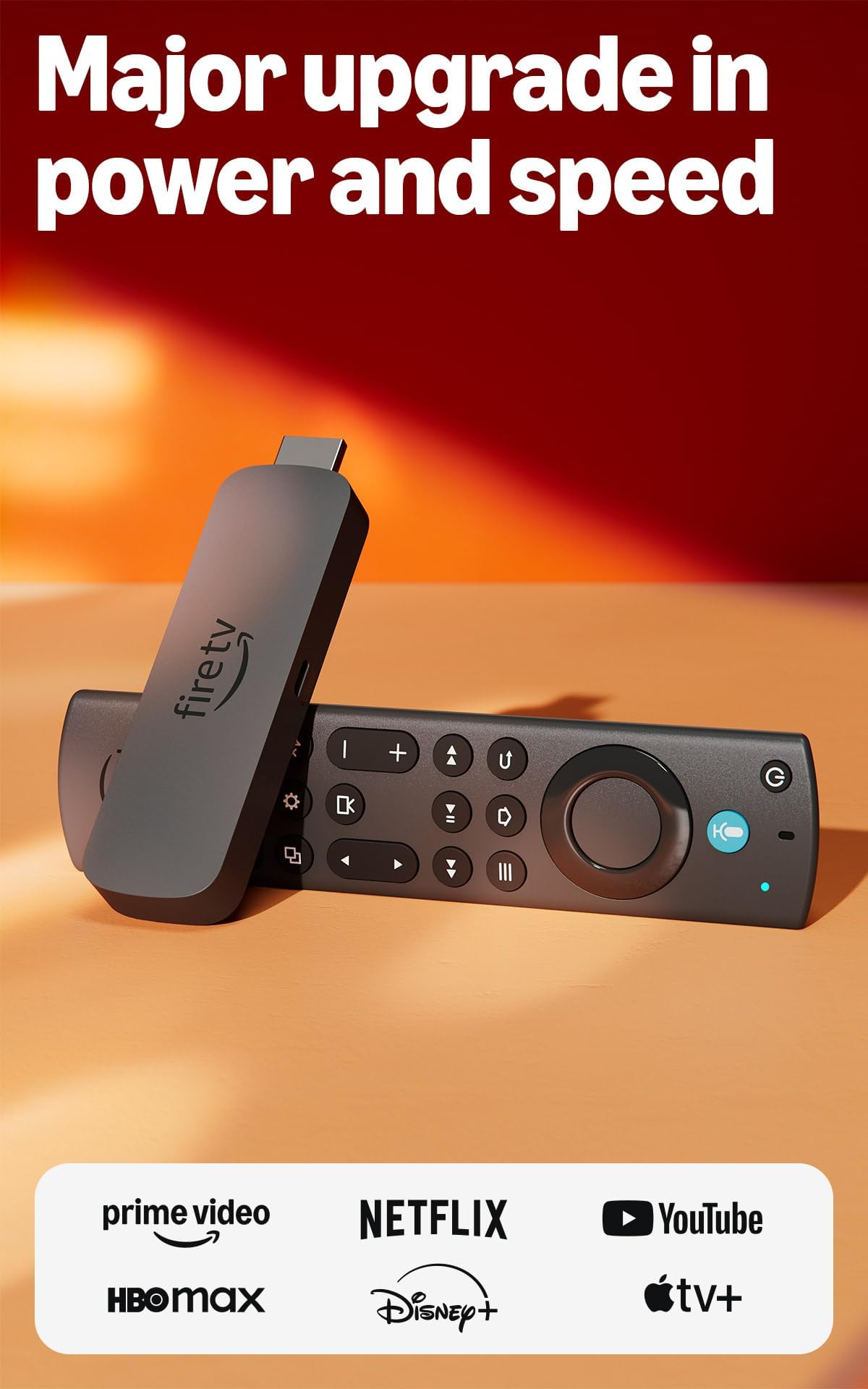
The Fire TV Stick 4K Max is the fastest streaming stick Amazon has ever made, and the addition of Wi-Fi 6E is the headline feature. If you live in a dense apartment or have multiple devices competing for bandwidth, 6E’s 6 GHz band gives your stream a dedicated lane—noticeably less buffering during peak hours. The 16GB of storage doubles the capacity of the standard 4K Plus, which means more game installs and downloaded apps before you hit the “manage storage” warning.
Dolby Vision, HDR10+, and Dolby Atmos are all present, but the Fire OS interface is Amazon’s own—heavily promotional and occasionally cluttered with ads for Prime content. That said, users who are already in the Amazon ecosystem will appreciate the deep Alexa integration and the ability to control smart home devices from the remote. The processor handles app starts with zero hesitation, and the new Fire TV experience (2026) streamlines navigation.
One recurring complaint is that you cannot fully remove Amazon’s pre-installed apps from the taskbar. Also, the power cable is short—plan your outlet placement carefully. For anyone who wants the fastest possible Fire OS experience with the best wireless connectivity, the 4K Max delivers a noticeable speed bump over the Plus model.
Why it’s great
- Wi-Fi 6E provides a dedicated 6 GHz band for ultra-stable streaming
- 16GB storage handles game installs and app hoarding without issue
- Lightning-fast app starts and fluid interface navigation
Good to know
- Amazon bloatware cannot be removed from the taskbar
- Short power cable may require an extension in certain setups
3. Amazon Fire TV Stick 4K Plus
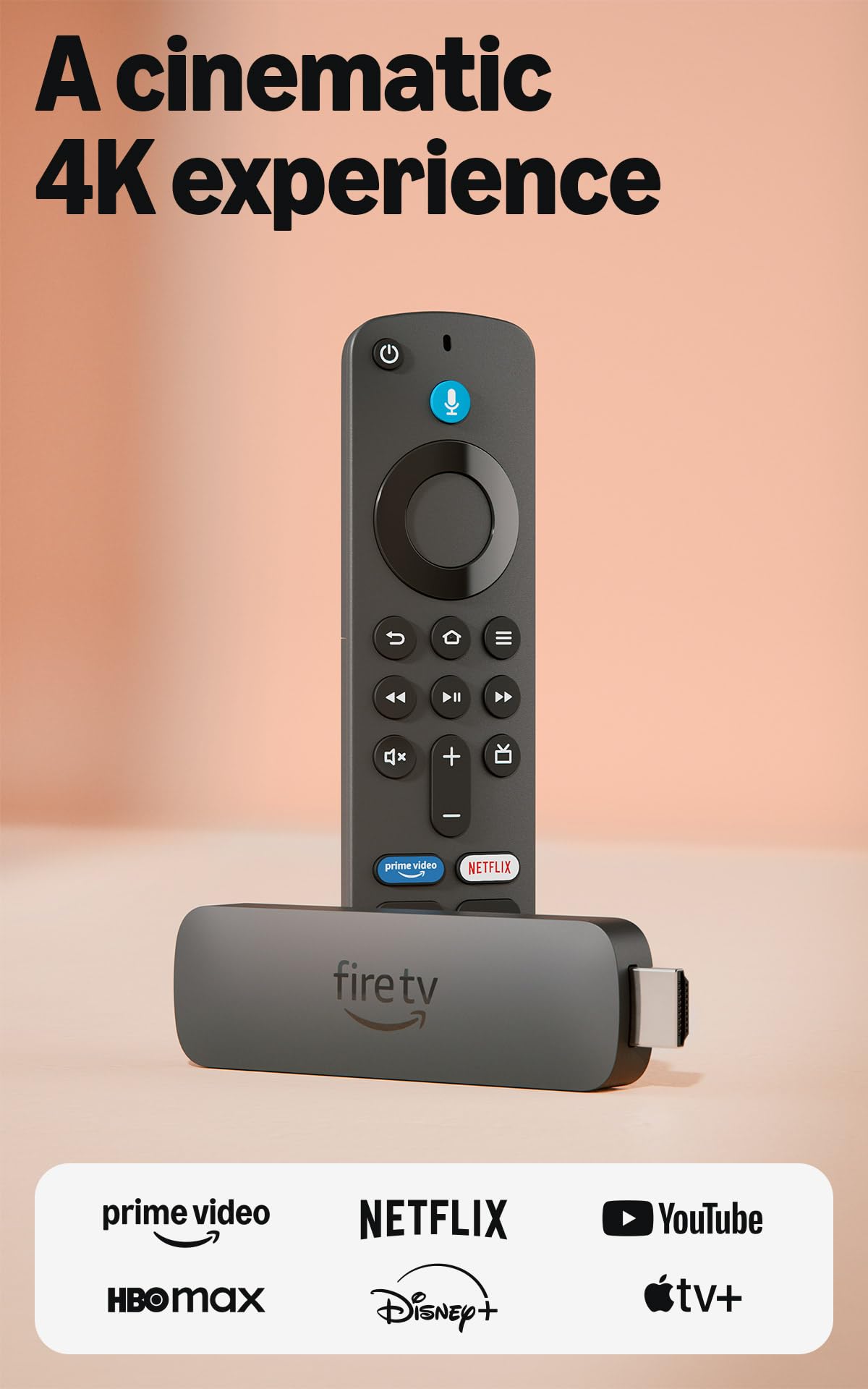
The Fire TV Stick 4K Plus is the sweet spot for most households—it delivers the same core 4K, Dolby Vision, and Dolby Atmos experience as the Max model, but at a lower entry point. The new AI-powered Fire TV Search lets you find movies by plot, actor, or even quotes, which is genuinely useful when you only remember that one line from a scene. Wi-Fi 6 support keeps streaming stable even on a busy home network.
Xbox Game Pass cloud gaming is supported, although the processor is slightly less powerful than the Max variant, so you may notice marginal differences in loading times for very large game streams. In daily use—Netflix, Disney+, Prime Video, YouTube—most viewers won’t perceive any lag. The Alexa Voice Remote controls TV power and volume, reducing remote clutter on the coffee table.
On the downside, storage is capped at 8GB, so you’ll need to manage app space if you install several games. Audiophile users have reported that Plex FLAC playback can occasionally cut out after extended listening sessions. For the vast majority of streamers who just want a clean 4K picture with voice control, the 4K Plus is the value champion of the Fire TV lineup.
Why it’s great
- Delivers 4K Dolby Vision/Atmos at a reasonable tier
- AI-powered search finds content by plot or quotes
- Wi-Fi 6 maintains smooth streaming on crowded networks
Good to know
- 8GB storage fills quickly with multiple games installed
- Some Plex users report audio cutouts during high-resolution FLAC playback
4. Google Chromecast with Google TV (4K)

The Chromecast with Google TV is the gold standard for anyone who wants a purely Google-curated interface without Amazon’s ad-heavy Fire OS. The home screen aggregates recommendations from your subscribed services into a single feed, so you see recommended shows from Netflix, Disney+, and HBO Max in one scrollable list. Voice search via Google Assistant is fast and understands natural language queries like “show me comedies from the 90s.”
Picture quality is excellent with 4K HDR support, and the compact dongle design hangs cleanly behind the TV—this version even includes a soft pouch and cleaning cloth for travel. Casting from a phone or tablet is seamless, and the remote controls both the stick and your TV’s power/volume via IR or CEC. The interface has no bloatware beyond Google’s own apps, which is refreshing compared to the competition.
The main drawbacks are the modest 8GB storage (which gets tight after installing several apps) and the processor, which handles navigation smoothly but can feel a notch slower than the Fire TV 4K Max under heavy app switching. It’s also priced higher than the Fire TV 4K Plus for similar hardware. Still, if you value a clean ad-free interface and Google ecosystem integration, this is the stick to get.
Why it’s great
- Clean Google TV interface with no Amazon bloat or ads
- Excellent voice search accuracy for content discovery
- Compact design with travel-friendly accessories included
Good to know
- 8GB storage fills quickly; limited for heavy app users
- Processor is less snappy than top-tier Fire TV Max during rapid app switching
5. XIAOMI TV Stick 4K (2nd Gen)
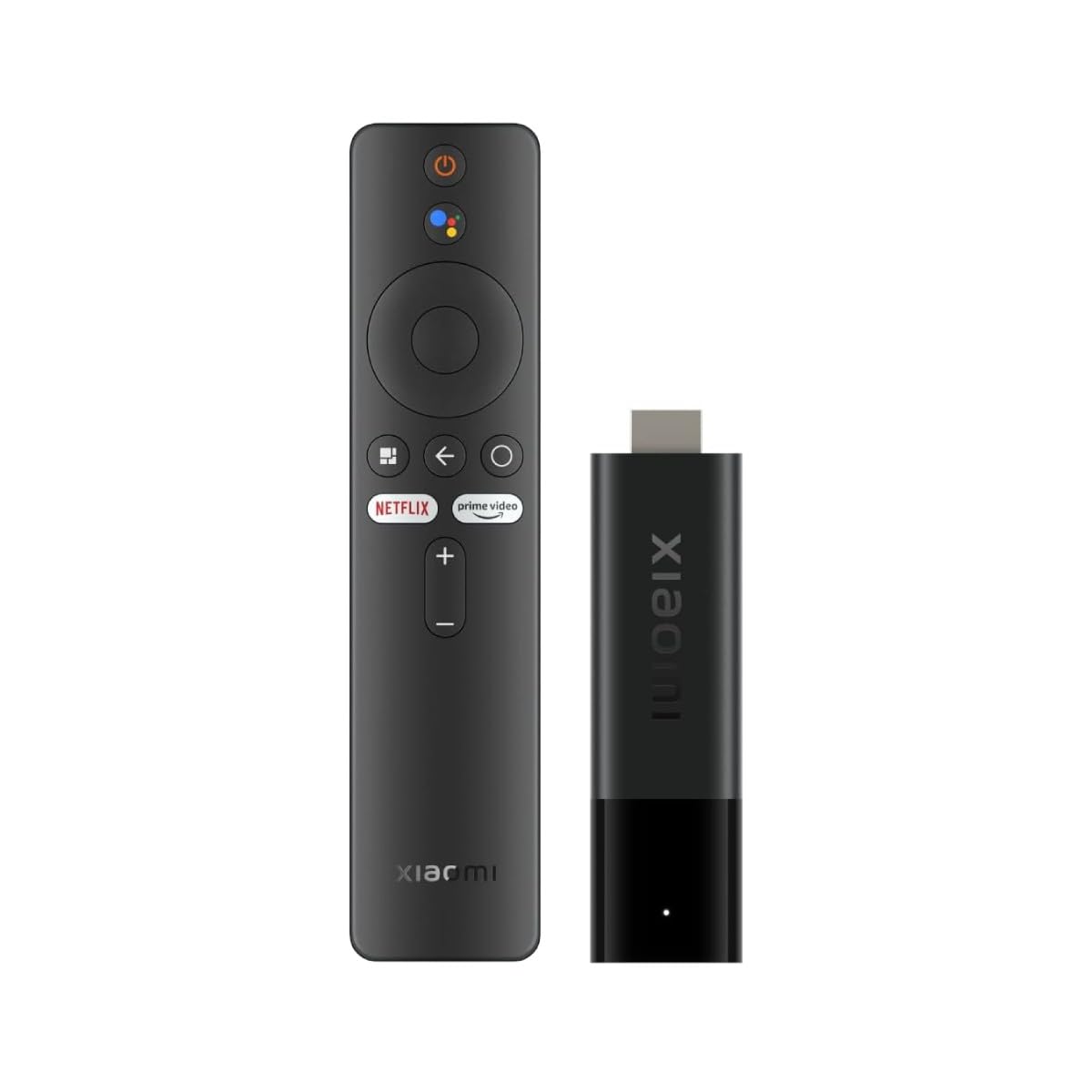
The XIAOMI TV Stick 4K (2nd Gen) is built for portability—it weighs just 28 grams and slides into a pocket, making it the ideal companion for hotel TVs or vacation rentals. The 6nm quad-core CPU and Wi-Fi 6 support ensure that even in unfamiliar Wi-Fi environments, the stick finds a stable connection and streams 4K without buffering. Google TV is the interface here, which means a clean ad-light experience with voice search via the Bluetooth remote.
Dolby Vision, HDR10+, Dolby Atmos, and DTS:X are all supported, so movie nights in a hotel room can actually look and sound impressive. The remote has dedicated buttons for streaming services, and Google Cast works natively for beaming content from a phone. Setup is genuinely plug-and-play: HDMI in, power via USB-C, connect to Wi-Fi, and you’re done in under three minutes.
The trade-off is 8GB of storage—tight for app hoarders—and the 2GB RAM, while adequate for 4K streaming, won’t handle heavy gaming or multitasking as smoothly as the Shield or Fire Max. Some users also report that the interface can feel a fraction slower than the competition during first boot. But for its size, weight, and feature set, it’s the best travel stick on this list.
Why it’s great
- Ultra-light 28-gram design fits in any pocket for travel
- Full Dolby Vision/Atmos and DTS:X support in a dongle form
- Wi-Fi 6 ensures stable streaming on varied networks
Good to know
- 8GB storage is limiting for app-heavy users
- Interface can feel slightly slower than higher-end sticks on first load
6. Onn 4K Plus (Google TV)
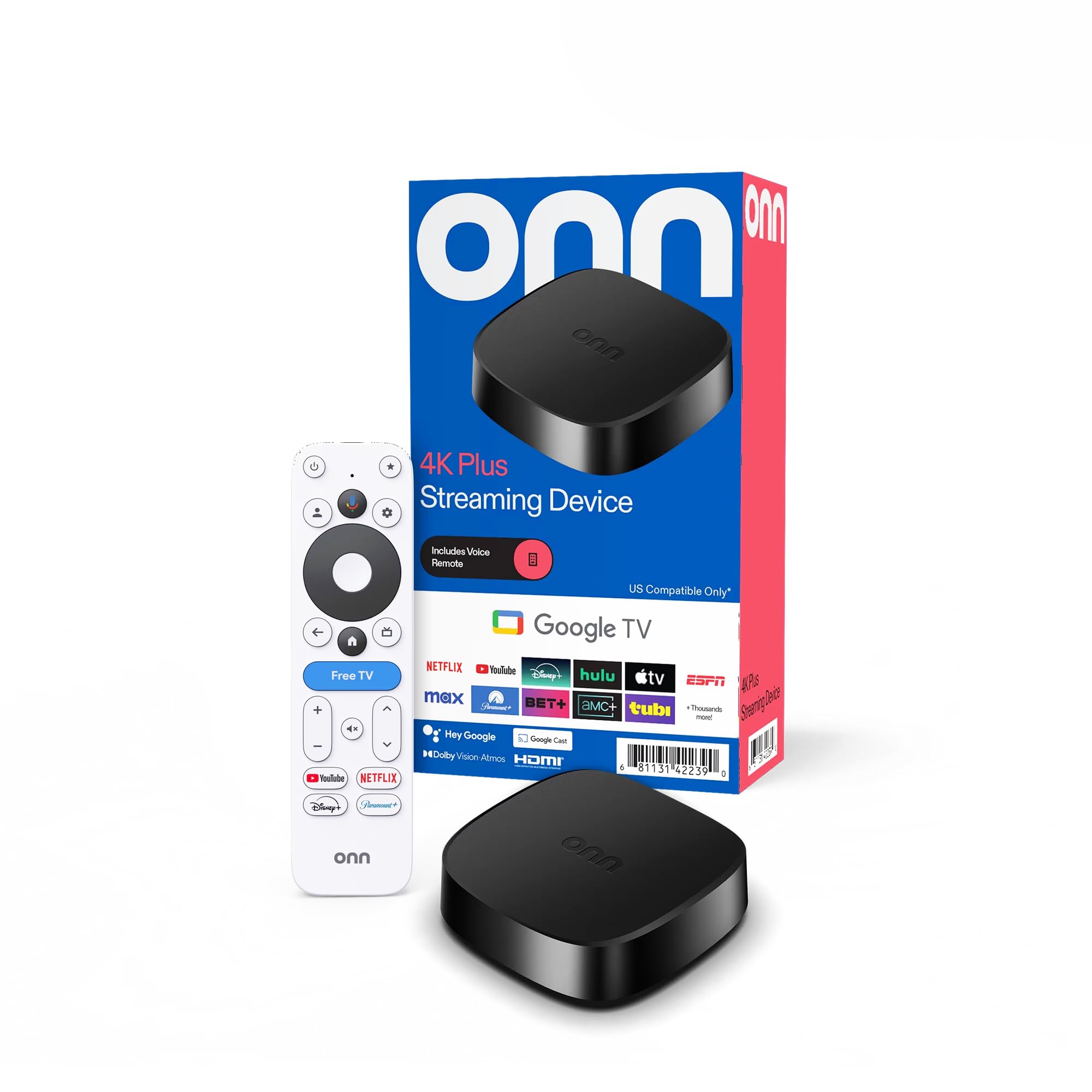
The Onn 4K Plus is the sleeper hit for budget-conscious streamers who refuse to compromise on storage or interface. At its accessible tier, it delivers 2GB of RAM and 16GB of internal storage—matching the Fire TV 4K Max’s capacity at a lower entry point. Google TV runs cleanly here, with the same personalized home screen and voice search you get on the Chromecast, just via a slightly bulkier box form factor.
Dolby Vision and Dolby Atmos are both supported, and Wi-Fi 6 (802.11ax) keeps the stream stable. Setup is straightforward, and the remote is responsive without the lag that sometimes plagues ultra-budget boxes. Users with a US-based Google account will have the smoothest experience, as some features are region-locked to the United States. For domestic buyers, it’s a near-flawless drop-in replacement for a lagging smart TV interface.
International buyers have reported that initial setup outside the US can be tricky, requiring workarounds to access the full app library. The plastic remote also lacks backlighting, which is a minor inconvenience in darkened rooms. If you live in the US and want the most storage and RAM per dollar, the Onn 4K Plus is the value king.
Why it’s great
- 2GB RAM and 16GB storage at a very accessible entry point
- Clean Google TV interface with Dolby Vision/Atmos support
- Wi-Fi 6 keeps 4K streaming consistent without drops
Good to know
- Region-limited to US; setup outside the US requires workarounds
- Remote lacks backlighting for dark room use
7. MINIX U8K-Ultra

The MINIX U8K-Ultra is not a streaming stick—it’s a media hub disguised as a small box. Powered by the Amlogic S928X-K chip with an 8K-capable GPU and a massive 8GB of RAM paired with 128GB of eMMC storage, it’s built for users who play back local 8K/4K remux files, navigate BD menu navigation, and demand AI-powered resolution upscaling. The AI-SR upscaler intelligently sharpens 480p to 4x detail, making old SD content watchable on big screens.
Unlike the Google TV devices on this list, the U8K runs Android AOSP 11—a full open Android environment without the TV-optimized launcher. This means you can install any Android app, including sideloaded games and full desktop-class browsers. Dual-band Wi-Fi 6 and Gigabit Ethernet provide maximum wired stability for high-bitrate 8K streams. The included BLE Air Mouse remote is a nice touch for text input and web navigation.
The main caveats are software polish and compatibility. The interface feels like stock Android from several years ago, and the locked bootloader prevents custom ROM development. Some users report initial units with stability issues, though replacements have been solid. If you’re a local media collector who wants to future-proof for 8K and refuses to compromise on storage, the U8K-Ultra is unparalleled. For standard streaming service users, it’s overbuilt and overpriced.
Why it’s great
- 8K video playback with AI upscaling for old SD content
- 8GB RAM and 128GB storage for massive local libraries
- BD menu navigation and Gigabit Ethernet for high-bitrate files
Good to know
- Runs AOSP 11, not Android TV—dated interface and no Google TV launcher
- Locked bootloader; limited community ROM support
FAQ
Can I install Kodi or Plex on any Android TV Stick?
What is the difference between AOSP Android and Android TV?
Final Thoughts: The Verdict
For most users, the best android tv stick winner is the NVIDIA Shield TV Pro because its AI upscaling, 3GB RAM, and long-term software support deliver unmatched performance for both streaming and gaming. If you want a fast, modern interface with Wi-Fi 6E for crowded networks, grab the Amazon Fire TV Stick 4K Max. And for pure travel portability with Dolby Atmos support, nothing beats the XIAOMI TV Stick 4K (2nd Gen).