
A 30 amp generator is the sweet spot for RV travel and home backup — enough power to run a 15,000 BTU air conditioner and a refrigerator simultaneously, light enough to load into a truck bed, and quiet enough for campground harmony. The problem is sifting through the misleading peak wattage claims and noisy open-frame models that violate campsite rules and leave you shouting over the hum.
I’m Rikta — the co-founder and writer behind FitlyFast. I’ve spent months analyzing inverter generator output curves, certified noise measurements, and real-world customer runtime logs across the to price band so you know exactly which model delivers the stable, clean power your RV or critical home circuits demand.
Whether you are plugging into a TT-30R outlet at a campground or keeping your fridge and sump pump running during a blackout, finding the best 30 amp generator means weighing fuel type versatility, decibel ratings, and total harmonic distortion to match your specific load profile and environment.
How To Choose The Best 30 Amp Generator
Selecting a 30 amp generator is not about the highest number you see on the box — it is about matching the generator’s real continuous output to the starting surge of your largest appliance while staying within your weight and noise tolerance. Here are the four filters that separate a smart buy from a regretful one.
Inverter vs. Conventional: Clean Power Matters
Inverter generators produce a clean sine wave with total harmonic distortion (THD) below 3%. This is essential for running modern RV converter/chargers, sensitive home electronics like computers and LED TVs, and variable-frequency appliances without damaging their internal power supplies. Conventional “open-frame” generators often exceed 10% THD, which can cause erratic operation and premature component failure. Every model on this list is an inverter generator for that reason.
Real-World Wattage: Don’t Fall for Peak Numbers
Peak (surge) watts only last for a brief moment — enough to start a motor, but not enough to keep it running. The number that matters is running (continuous) watts. For a 30 amp RV outlet (TT-30R), you need at least 3,000 running watts to handle the AC startup surge plus the fridge and battery charger simultaneously. Anything below that will trip the overload circuit the first time the compressor kicks in on a hot afternoon.
Fuel Type: The Runtime and Storage Trade-Off
Gasoline is widely available but degrades within months, requiring fuel stabilizer and carburetor draining. Propane (dual fuel) burns cleaner, lasts indefinitely in a tank, and is easier on engine oil. Natural gas (tri-fuel) offers unlimited runtime during grid failures if you have a fixed line, but reduces peak wattage output by about 10-15%. For emergency preparedness, a dual-fuel model gives you flexibility without the hassle of gummed-up carburetors.
Noise Level and Weight: The Campground Constraint
Most RV parks enforce a 60-65 dBA sound limit at 23 feet during quiet hours. A generator rated at 52-58 dBA will let you run the AC at night without complaints from neighboring sites. Weight also matters — anything above 80 pounds becomes difficult to lift into a truck bed without a ramp. Look for models under 65 pounds with a telescoping handle and built-in wheels for solo operation.
Quick Comparison
On smaller screens, swipe sideways to see the full table.
| Model | Category | Best For | Key Spec | Amazon |
|---|---|---|---|---|
| Westinghouse 4023 | Premium Dual Fuel | RV + Home Backup | 52 dBA, 3300W rated, 1.69 gal tank | Amazon |
| WEN DF480iX | Mid-Range Dual Fuel | High-power Dual Fuel | 4800W peak, 4000W rated, 224cc engine | Amazon |
| Westinghouse 4021 | Premium Gas | Quiet Camping | 52 dBA, remote start, telescoping handle | Amazon |
| WEN DF360iX | Mid-Range Dual Fuel | Lightweight Dual Fuel | 49 lb, 3600W peak, TT-30R outlet | Amazon |
| AIVOLT 4300W | Mid-Range Gas | Lightweight High Output | 51 lb, 60 dBA, 3450W rated | Amazon |
| Champion 4000W | Mid-Range Gas | RV AC Power | 48 lb, 64 dBA, 3-year warranty | Amazon |
| AMERISUN 3800W | Mid-Range Gas | CO Safety Priority | 50 lb, 70 dBA, CO sensor, electric start | Amazon |
| PowerSmart 3600W | Mid-Range Gas | Budget Inverter | 50 lb, 3200W rated, 1.3 gal tank | Amazon |
| Aceup Energy 4000W | Entry-Level Gas | Basic Camper Use | 50 lb, 3200W rated, 5-in-1 knob | Amazon |
| Generac GP3300i | Premium Gas | Electronics Safety | 60 dBA, PowerRush tech, 3300W rated | Amazon |
| Generac GP9500 Tri-Fuel | Premium Tri-Fuel | Whole-Home Backup | 12.5kW peak, tri-fuel, electric start | Amazon |
In‑Depth Reviews
1. Westinghouse 4000W Dual Fuel Portable Inverter Generator (iGen4000DFc)

The Westinghouse 4023 hits the perfect trifecta for a 30 amp generator: dual fuel capability (gas and propane), a 52 dBA noise rating that satisfies the strictest campground quiet hours, and a remote start key fob that lets you fire it up from inside the RV or your home. At 3300 running watts on gas, it easily handles a 15K BTU RV air conditioner plus a refrigerator and converter charger without breaking a sweat. The CO sensor and automatic low-oil shutdown add a vital safety layer for overnight operation.
Owners consistently report that the unit starts on the first or second pull and sips fuel — roughly 5 gallons of gas over 14 hours in eco mode running a fridge, TV, and lights. The telescoping handle and wheels make solo transport manageable despite the 63-pound weight. A minor drawback is that the battery charger plug has a gap that some users reinforce with a rubber washer, but this is an easy fix.
Noise output is genuinely quiet: measured at 52 dBA from 23 feet, it is quieter than a typical conversation and will not disturb neighbors at a campground or a job site. The dual fuel flexibility gives you peace of mind during emergencies when gasoline may be scarce but propane tanks are still available.
Why it’s great
- Remote start from up to 80 feet away
- 52 dBA noise level — among the quietest for its class
- Dual fuel (gasoline and propane) with included propane hose
- Telescoping handle and wheels for easy maneuvering
Good to know
- Battery charger connection may need a small washer for a secure fit
- Propane reduces peak output by about 10%
- Only two 120V household outlets
2. WEN 4800W Dual Fuel Electric Start Inverter Generator (DF480iX)
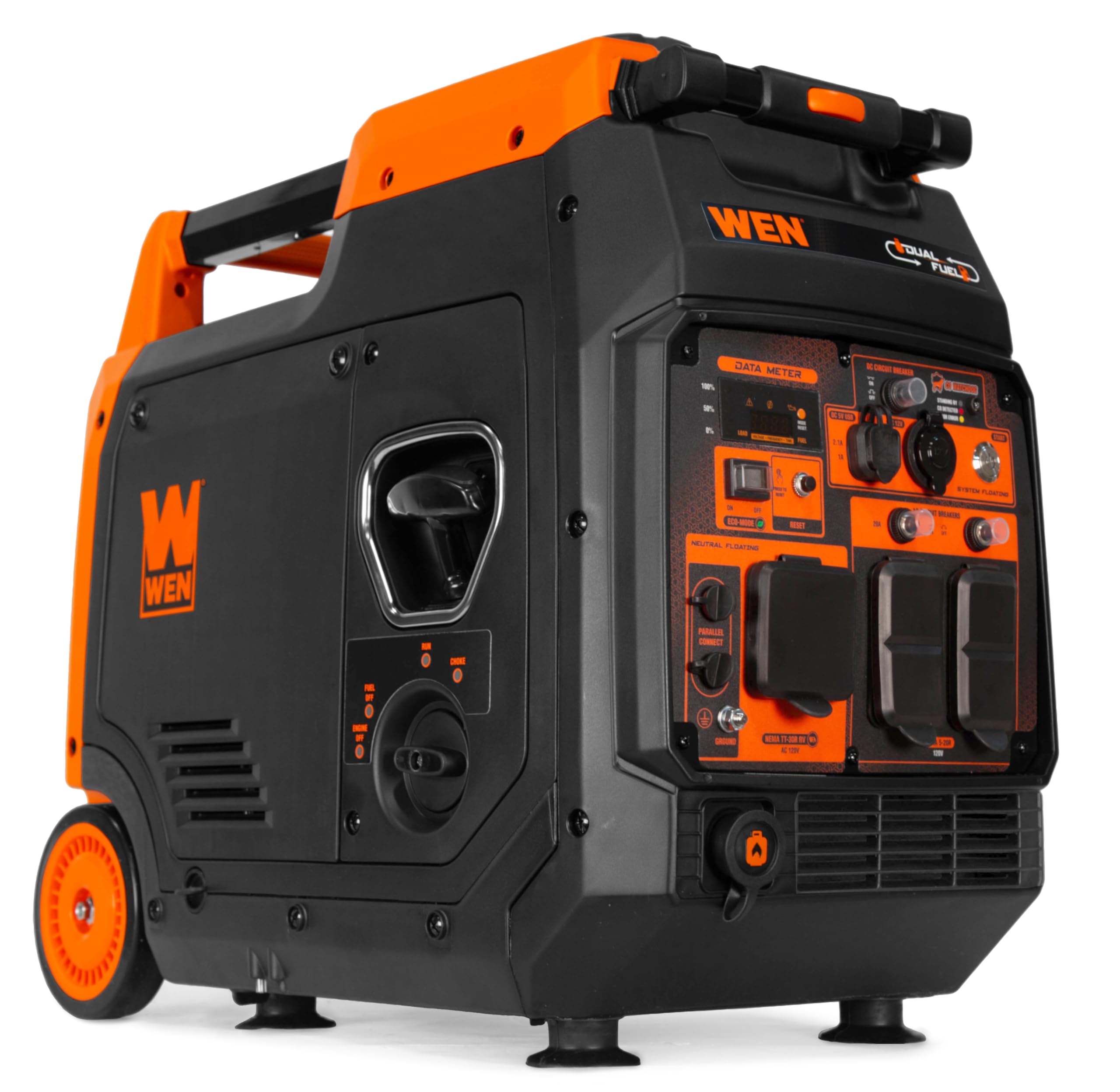
With a 224cc engine pushing 4800 surge watts and 4000 running watts on gasoline, the WEN DF480iX is the most powerful inverter generator in this roundup that still maintains a compact footprint. The electric start with a simple push-button makes this model accessible to users who may struggle with recoil starters — including elderly family members who rely on oxygen concentrators or CPAP machines during outages. On propane, the rated output stays at 4000 watts, giving you consistent power without worrying about stale gas.
The WEN Watchdog CO sensor automatically shuts the unit down if carbon monoxide accumulates, and the included fuel shut-off lets you run the carburetor dry before storage — a feature that prevents gummed-up fuel lines. The telescoping pull handle and onboard wheels make moving the 78-pound unit manageable, though it is heavier than most pure-gas competitors. Some users noted that the battery polarity was reversed in early units, requiring a quick lead swap, but this seems to have been corrected in recent production runs.
Noise levels are conversational, and the dual-fuel capability works seamlessly with a tool-free LPG quick-connector. During a 36-hour power outage, one owner powered lights, refrigerator, water pump, and a space heater without any overload trips.
Why it’s great
- 4000 running watts — enough for multiple heavy-draw appliances
- Electric start with reliable push-button ignition
- Dual fuel with tool-free propane hose connection
- Fuel shut-off for easy long-term storage
Good to know
- 78 lb weight requires a ramp for truck loading
- Hidden oil drain plug under a blank bolt — check manual before first change
- Side panel for battery access is difficult to reattach
3. Westinghouse 4000W Portable Inverter Generator (iGen4000)

If you do not need dual fuel and want the lightest premium option available, the Westinghouse 4021 delivers the same 52 dBA quiet operation and remote start feature as its dual-fuel sibling but in a slightly lighter 62-pound package. The rotating LED display shows fuel level, power output, remaining runtime, voltage, and lifetime hours — giving you full situational awareness at a glance. The telescoping handle is sturdy enough to drag the unit over gravel and grass without bending.
Real-world testing shows this generator can run a 28-foot fifth wheel RV’s AC plus all appliances on a single tank of gas for about 6 hours at full load, extending to 7 hours in economy mode. The remote key fob reliably starts and stops the unit from inside the RV, which is a massive convenience during rain or cold weather. The only hardware limitation is the panel layout — the two 120V outlets are placed close together, making simultaneous use of bulky plugs a bit tight.
Customer reviews consistently praise the first-pull start reliability after the initial break-in, and the three-year warranty provides solid peace of mind. For pure gasoline users who prioritize ultra-quiet operation and remote convenience, this is the best choice.
Why it’s great
- 52 dBA — whisper-quiet for its output class
- Remote start key fob included
- Rotating LCD data center shows all key metrics
- Telescoping handle with wide wheels for stability
Good to know
- Gasoline only — no propane compatibility
- Only two 120V household outlets
- Battery may need an initial charge before first start
4. WEN 3600W Dual Fuel Inverter Generator (DF360iX)

At 49 pounds, the WEN DF360iX is the lightest dual-fuel inverter generator in this comparison, making it the obvious choice for tailgaters, tent campers, and anyone who needs to lift the generator into a truck bed solo. It produces 3600 surge watts and 2900 running watts on gasoline, with 3500/2600 on propane — plenty for running a small RV AC, a portable electric heater, and typical household electronics simultaneously. The CO Watchdog sensor adds a crucial safety buffer for overnight runs.
The tool-free LPG quick-connector makes switching between gas and propane fast, and the fuel shut-off lever lets you run the carburetor dry before storing the unit — eliminating the most common cause of generator failure (stale gas). Owner feedback highlights the intuitive info display that shows volts, frequency, runtime, load percentage, and fuel level at a glance. One minor complaint: the 20A household outlets hold hardwired plugs somewhat loosely, so check connections before relying on a heavy load.
Break-in is straightforward — fill with oil, add fuel, and it typically starts on the first or second pull. On propane, a 20-gallon tank can run for well over 24 hours at light load, making this a strong choice for extended emergency backup without worrying about fuel degradation.
Why it’s great
- Lightest dual-fuel inverter at 49 lb
- Dual fuel with tool-free propane connection
- CO Watchdog auto-shutdown for safety
- Informative digital display with multiple readouts
Good to know
- 20A outlets may hold plugs loosely
- Rated output on propane is 2600W — less than gasoline
- Single pull-start design (no electric start)
5. AIVOLT 4300W Inverter Generator
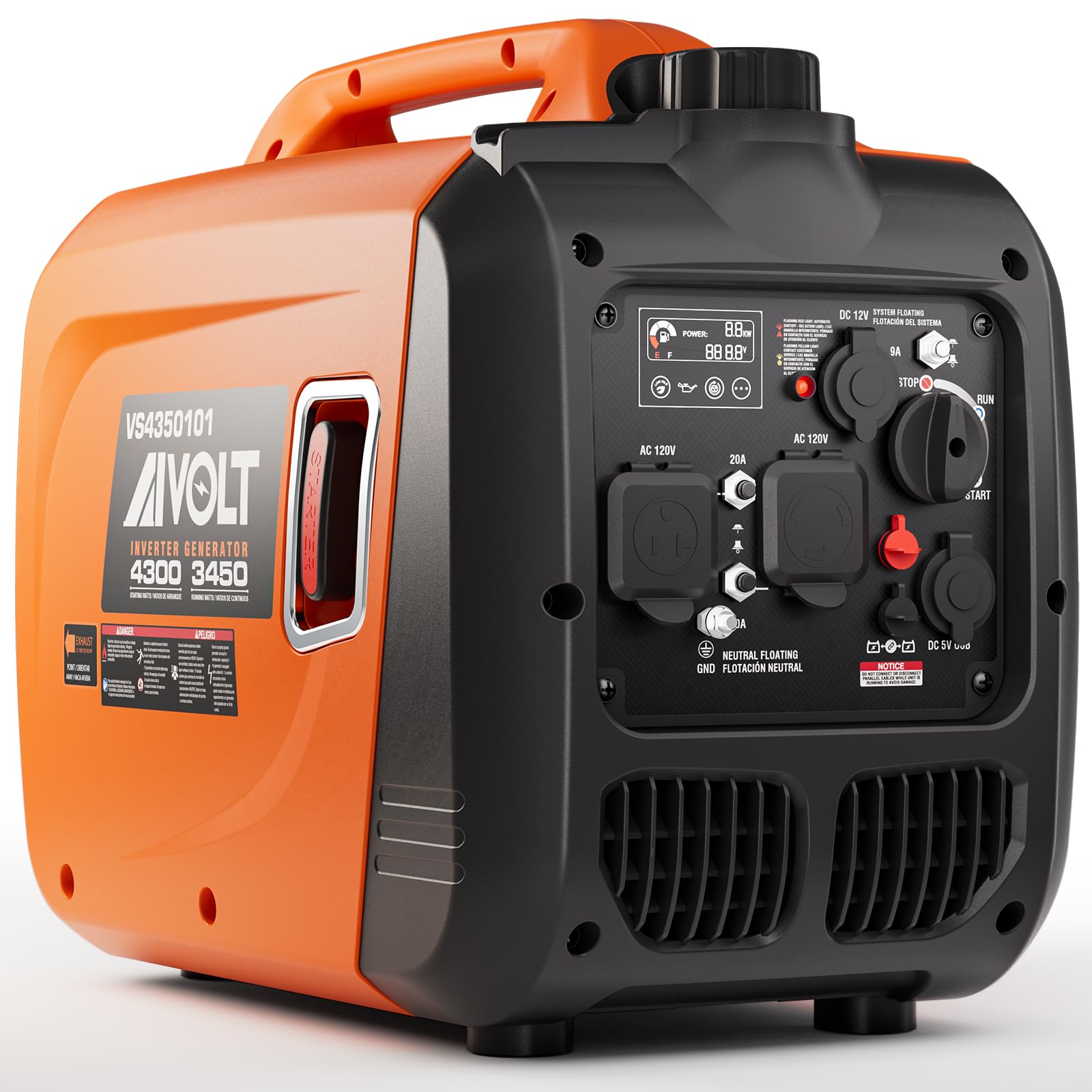
The AIVOLT 4300W generator packs 3450 running watts into a 51-pound frame that is 20% lighter and 10% smaller than many competitors in the same output tier, making it the best option for tent campers and pop-up trailer owners who need maximum horsepower per pound. The 60 dBA noise rating is comparable to a normal conversation at 23 feet, so it will not draw complaints in quieter campgrounds. The 5-in-1 LCD display shows oil level, fuel level, overloading warnings, and current operating status in one easy-to-read panel.
The control panel includes a 120V 30A locking outlet, a standard 20A outlet, a 12V DC outlet, and both USB-A and USB-C ports — covering everything from RV hookup to phone charging without needing adapters. The CO Alert technology automatically shuts the unit down if carbon monoxide levels climb, and the eco switch improves fuel efficiency to over 5.5 hours at 25% load. Some users reported that the generator needs to cool completely (up to an hour) before restarting after being shut down hot, so plan for that if you run it hard and need a quick restart.
Copper winding engine construction and parallel-ready capability (sold separately) make this a solid mid-range investment for those who prioritize weight savings and clean power output under 3% THD.
Why it’s great
- Excellent power-to-weight ratio — 3450W at 51 lb
- USB-C and USB-A ports for direct device charging
- CO Alert auto-shutdown for safety
- Compact footprint saves truck bed space
Good to know
- Must cool down before restarting after a hot shutdown
- Engine oil not included with purchase
- Noise level rises under significant load
6. Champion Power Equipment 4000W Inverter Generator

At 48 pounds, the Champion 4000W inverter generator is the lightest in the 4000-watt class, making it an easy lift for a single person to load into a vehicle. It delivers 4000 starting watts and 3000 running watts, with a clean sine wave (less than 3% THD) that is safe for the sensitive electronics in modern RVs. The 64 dBA noise level is louder than premium models but still falls within most campground daytime limits, and the CO Shield auto-shutdown system adds protection against carbon monoxide buildup.
Real-world reports show this generator can run a 15K BTU RV air conditioner plus lights and the refrigerator, though it will trigger the overload reset if you try to run the microwave simultaneously. The optional parallel kit allows linking two Champion units to double output for larger rigs. Customers consistently praise the first-pull start reliability and the free lifetime technical support that Champion provides. One user noted that the engine slightly bogs under a full startup surge from a large AC unit, so consider a soft-start capacitor for your RV’s AC if you plan to run it continuously.
The three-year warranty is the longest in this comparison, and the included oil funnel and engine oil mean you can start running it immediately after filling the gas tank.
Why it’s great
- Lightest in the 4000W class at 48 lb
- Three-year warranty with lifetime technical support
- CO Shield auto-shutdown for safety
- Parallel ready for output expansion
Good to know
- 64 dBA is louder than premium 52-58 dBA models
- May bog when starting large RV AC without soft-start
- Gasoline only — no dual fuel option
7. AMERISUN 3800W Inverter Generator
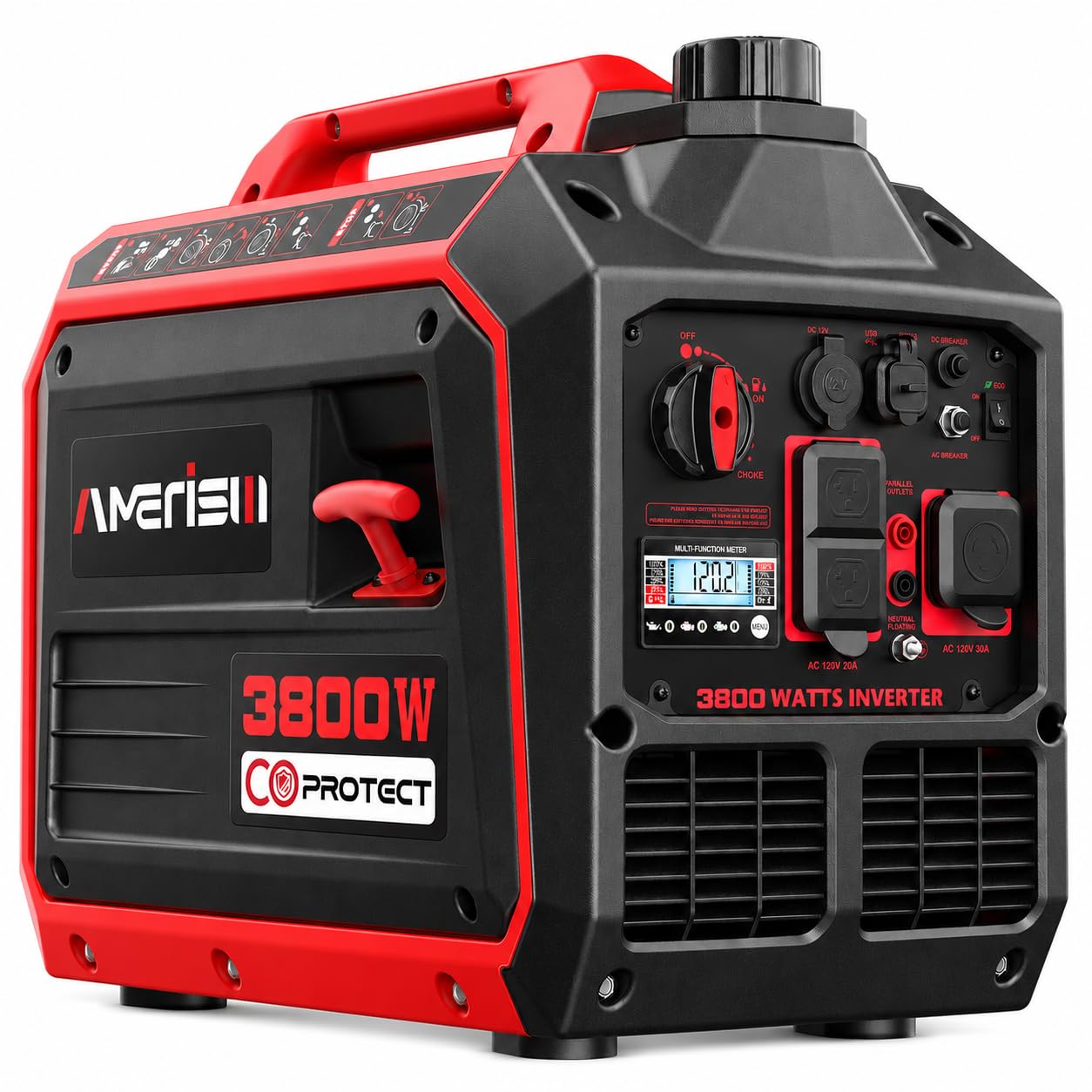
With an electric start that eliminates elbow grease, a built-in CO sensor, and a 70 dBA noise profile that strikes a balance between performance and consideration for neighbors, the AMERISUN 3800W is a versatile choice for RV owners who value convenience. The 149cc 4-stroke engine produces 3800 peak watts and 3300 running watts with less than 3% THD, making it safe for laptops, smartphones, and CPAP machines. The RV-ready 30A L5-30R outlet is standard, and the parallel-ready capability lets you pair two units for up to 7600 watts.
Users report consistent first-pull starts after the initial break-in period, and the eco mode extends runtime significantly — one reviewer ran 8 lights, a refrigerator, a washing machine, a 55-inch TV, a PS5, two fans, and a CPAP simultaneously with no voltage surges. The 1.3-gallon tank provides about 4.75 hours at 50% load. A few buyers noted that the unit is labeled as USA-made but is manufactured in China, so adjust expectations accordingly. The 3-year limited warranty and free lifetime technical support offset this marketing quibble.
At 50.7 pounds, it is easy to carry with one hand, and the included components (oil, funnel, spark plug wrench) mean you are ready to run right out of the box.
Why it’s great
- Electric start for easy, one-button operation
- Built-in CO sensor for automatic safety shutdown
- Parallel ready with separate kit for doubled output
- Lightweight at 50.7 lb with solid handle
Good to know
- 70 dBA is louder than premium quiet models
- Marketing may overstate USA manufacturing
- Initial starts may require many pulls before breaking in
8. PowerSmart 3600W Inverter Generator

The PowerSmart 3600W is a solid entry-level inverter generator that delivers the core specifications most 30 amp users need without the higher price tag of premium models. With 3600 starting watts and 3200 running watts from a 149cc engine, it can start a 15,000 BTU RV air conditioner and power essential appliances simultaneously. The advanced inverter technology keeps THD below 3%, protecting your laptop and smartphone chargers from damaging voltage fluctuations.
The 1.3-gallon fuel tank provides up to 8 hours of runtime at 25% load — good for overnight runs without refueling. The integrated carry handle and 50.7-pound weight make it easy to transport between home and RV. User feedback highlights quiet operation comparable to units costing significantly more, along with reliable first-pull starts after proper oil and gas filling. One limitation is the lack of a built-in CO sensor, so you must place the generator well away from windows, doors, and vents in accordance with safety guidelines.
The two-year warranty provides reasonable coverage, and parallel capability (kit sold separately) allows you to double output if your power needs grow.
Why it’s great
- Strong 3200 running watts at a budget-friendly price
- 8-hour runtime at 25% load on 1.3 gallons
- Clean sine wave for sensitive electronics
- Parallel ready for future expansion
Good to know
- No CO sensor — user must manually ensure safe placement
- Gasoline only with no dual fuel option
- Recoil start only (no electric start)
9. Aceup Energy 4000W Inverter Generator
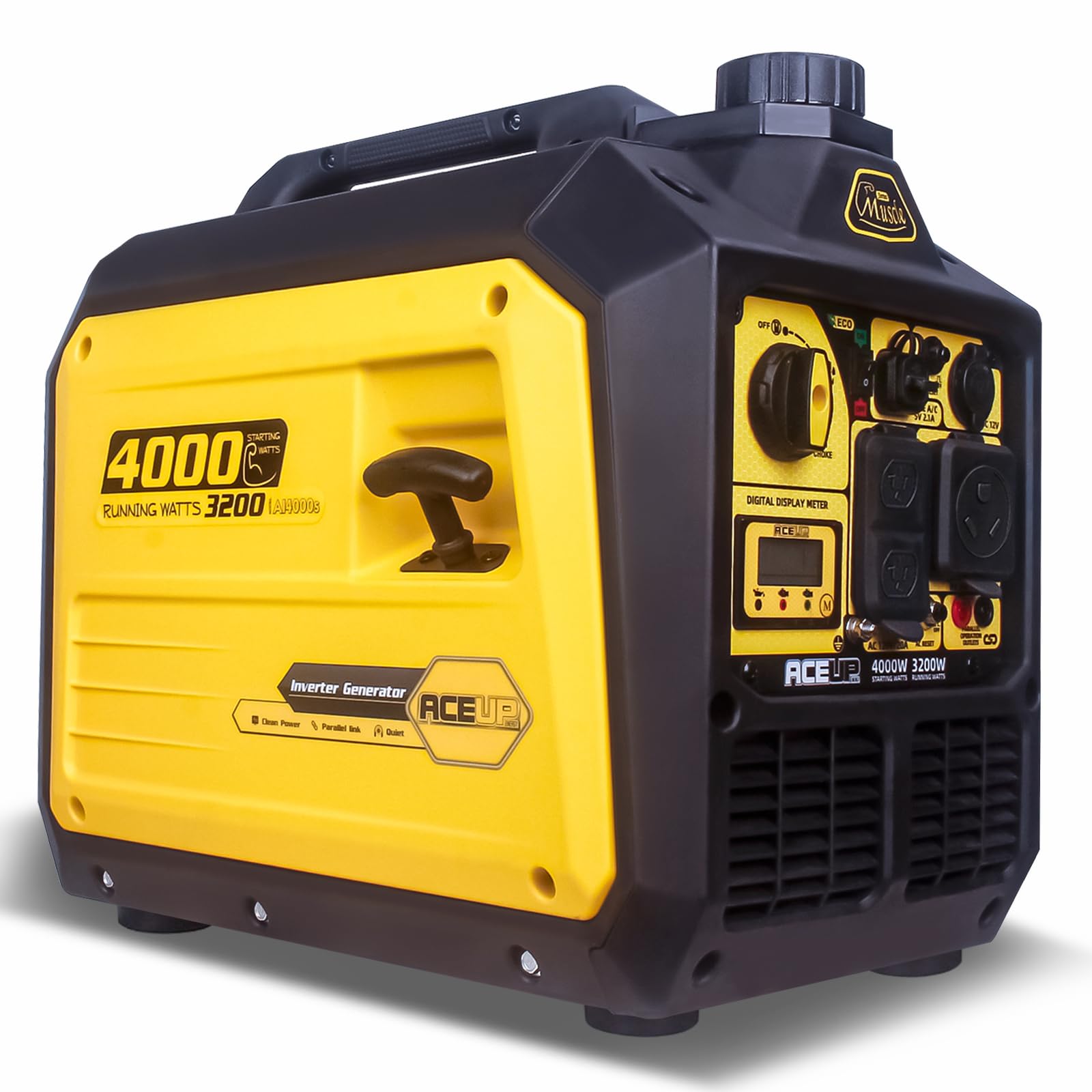
The Aceup Energy 4000W inverter generator is a cost-effective option for budget-conscious buyers who need a clean power source for a camper or small home backup setup. The 149cc 4-stroke engine produces 4000 peak watts and 3200 running watts, with a fully enclosed design that keeps noise lower than conventional open-frame models. The intelligent gauge displays voltage, runtime, gas level, hertz, and power output in one central readout, and the low-oil shutdown protects the engine from damage during extended use.
The 5-in-1 knob integrates fuel shut-off, engine on/off, and choke into a single control — simplifying startup and reducing the risk of leaving the fuel valve open during storage. Owners report that the generator fits perfectly in the side compartment of a camper, runs a refrigerator and fans for two weeks during outages on roughly 1 gallon of gas per 4-6 hours. A few users noted that the unit runs loud in normal mode but quiets down significantly in eco mode. Some reports mention a potential tank collapse issue, so emptying the tank before long-term storage is advisable.
It comes with engine oil, a spark plug wrench, and an oil funnel — everything you need to start immediately. The 2-year limited warranty and lifetime technical guidance add a layer of support for first-time generator buyers.
Why it’s great
- Budget-friendly with essential features for basic 30A use
- 5-in-1 knob simplifies operation and storage
- Intelligent gauge shows all key metrics
- Compact size fits in camper compartments
Good to know
- No electric start or remote start option
- Some reports of tank collapse if stored with fuel
- Loud in normal mode; quieter in eco mode only with reduced output
10. Generac 3300W Inverter Generator (GP3300i)

Generac’s GP3300i leverages PowerRush Advance Technology to deliver over 50% more starting capacity than conventional inverters, giving you an extra buffer when your RV’s air conditioner or a well pump tries to draw locked-rotor amps. The TruePower Technology keeps THD at less than 3%, and the COsense system automatically manages engine speed to reduce emissions and avoid dangerous carbon monoxide accumulation. Economy Mode lets the generator idle down to match the load, significantly extending fuel economy during light use.
At 59.5 pounds with a compact 22.3-by-13.4-inch footprint, this unit is portable enough for camping trips and job sites. The dual USB ports are a nice touch for directly charging devices without a separate adapter. One caveat: at altitudes above 5,000 feet, the effective running wattage drops to about 2,000 watts, so high-country RVers should account for altitude derating. Some owners reported long-term durability issues — a small percentage of units failed after 500-1100 hours — so consider this a mid-tier option rather than a buy-it-for-life purchase.
For short-term use, weekend camping, and home backup events lasting 1-2 days, the Generac GP3300i performs admirably and starts easily on the first or second pull after break-in.
Why it’s great
- PowerRush gives 50% more starting capacity for motor loads
- TruePower clean sine wave for sensitive electronics
- COSense automatic speed management for safety
- Economy Mode optimizes fuel consumption
Good to know
- Effective output drops to ~2000W above 5000 ft elevation
- Long-term reliability reports are mixed beyond 500 hours
- Gasoline only; no dual fuel capability
11. Generac 12,500W Tri-Fuel Portable Generator (GP9500)
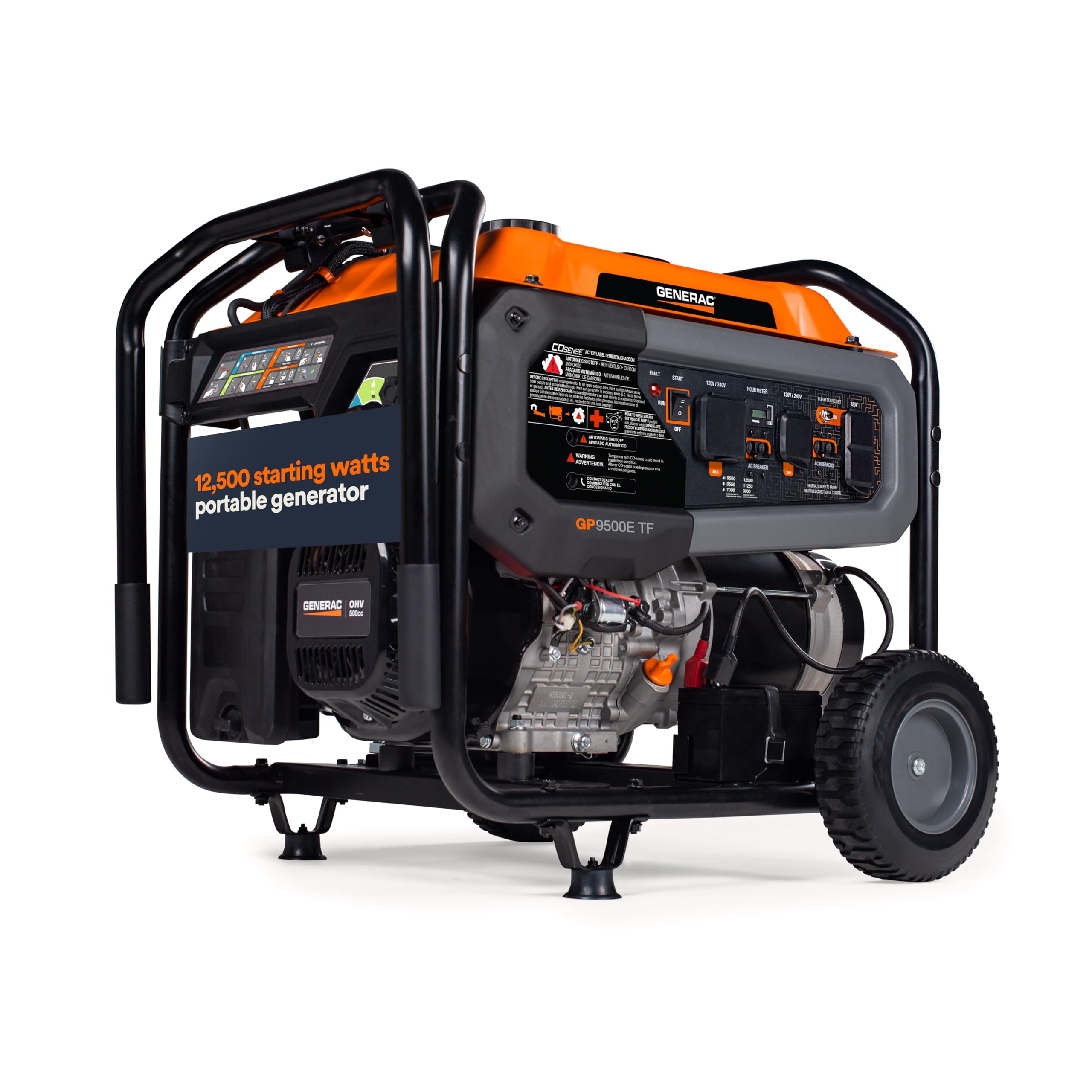
The Generac GP9500 is not a typical 30 amp portable inverter — it is a tri-fuel heavy-duty generator designed for whole-house backup that can run simultaneously on gasoline, propane, or natural gas. With 12,500 starting watts and 9,500 running watts, it easily powers an entire home including central air, well pump, furnace, refrigerator, lights, and entertainment systems. The electric start with included battery eliminates pull-cord strain, and the fuel source selector lets you switch between gas, propane, or natural gas without shutting down the unit.
The large steel fuel tank with built-in gauge delivers up to 10.5 hours of runtime at 50% load on gasoline. The COsense technology automatically shuts down the generator if dangerous carbon monoxide levels are detected, adding a critical safety layer for long-duration indoor-adjacent use. At 227 pounds, the unit is heavy but rolls on never-flat wheels and a sturdy steel-tube cradle, making it manageable to position near a transfer switch. The covered outlets protect connections from rain and debris, and the 50-state compliant emissions certification means it is legal everywhere in the US.
Customer reviews highlight outstanding performance during multi-day outages, with users able to power full homes including air conditioning without issue. The tri-fuel flexibility is especially valuable in areas where natural gas is available during storms, providing unlimited backup power without refueling.
Why it’s great
- Tri-fuel operation — gasoline, propane, and natural gas
- 12,500 peak watts powers an entire house
- Electric start with integrated battery
- 50-state compliant and COsense safety system
Good to know
- 227 lb — requires two people or a ramp for loading
- Not an inverter generator; THD may be higher than 3%
- Overkill for RV and small camping use cases
FAQ
How many watts do I need for a 30 amp RV outlet?
Can I run my whole house on a 30 amp generator?
Is propane better than gasoline for a portable generator?
How quiet should a campground generator be?
Final Thoughts: The Verdict
For most users, the best 30 amp generator winner is the Westinghouse 4023 because it combines dual fuel flexibility, ultra-quiet 52 dBA operation, and a remote start that makes power available on demand without leaving the RV or home. If you want the highest output in a still-portable package, grab the WEN DF480iX with 4000 running watts and electric start. And for whole-house backup that runs on gas, propane, or natural gas, nothing beats the Generac GP9500 tri-fuel unit.