
Finding a toy that genuinely helps an ADHD brain settle instead of overstimulating it is the real challenge—cheap plastic gadgets break in minutes, while the right tool offers a tactile anchor that makes focusing feel natural rather than forced. The best ADHD toys work by giving restless hands a satisfying job to do, freeing the mind to concentrate on the task at hand.
I’m Rikta — the co-founder and writer behind FitlyFast. I’ve spent years analyzing the ergonomics, material science, and therapeutic design of sensory tools for neurodivergent users, cutting through marketing hype to find what actually delivers measurable calm and focus.
This guide breaks down the strongest options across every tier—magnetic sliders, textured balls, stretchy strings, and motion-based seating—so you can match the right sensory profile to your needs and find the best adhd toys that will actually last past the first week.
How To Choose The Best ADHD Toys
Not every fidget is built equally. The most effective ADHD toys target a specific sensory channel—tactile, proprioceptive, or vestibular—rather than just providing visual distraction. Understanding which input your nervous system craves is the first step toward a tool that actually quiets the noise instead of adding to it.
Understand Your Sensory Profile: Tactile vs. Proprioceptive vs. Vestibular
Tactile seekers need varied textures and surfaces to touch—this group does well with textured balls, stretchy strings, and maze toys. Proprioceptive seekers crave deep pressure and resistance, making metal sliders with strong magnets or heavy cubes ideal. Vestibular seekers need movement and rotation, which makes a spinning chair or swivel seat the correct fit. Choosing a toy that matches your primary sensory need ensures it gets used daily rather than tossed in a drawer.
Prioritize Build Quality and Material
A fidget that breaks after three days is worse than no fidget at all. Look for metal housings with sealed magnets in sliders, medical-grade silicone over plastic shells in magnetic balls, and reinforced seams in stretchy toys. For seating, check the weight capacity and the bearing quality—silent 360-degree rotation on a stainless steel frame holds up far longer than plastic pivot joints. The cost per use drops dramatically when the toy survives months of daily handling.
Match the Form Factor to Your Environment
A loud clicking metal slider is perfect for a private desk but disruptive in a quiet classroom or library. Silicone-wrapped magnetic balls and stretchy strings produce near-silent operation, making them ideal for shared spaces. Cube-style shape shifters offer a middle ground—satisfying to manipulate but quiet enough for meetings. For home use, a spinning chair provides the most sensory output but requires floor space. Always audit the noise level and footprint before buying.
Quick Comparison
On smaller screens, swipe sideways to see the full table.
| Model | Category | Best For | Key Spec | Amazon |
|---|---|---|---|---|
| Shashibo Shape Shifting Cube | Premium Cube | Working memory & spatial reasoning | 36 ultra-strong magnets, 100+ shapes | Amazon |
| WSHWXY Metal Fidget Slider | Magnetic Slider | Quiet haptic feedback & desk focus | 14 magnets, 1.8 x 1.18 x 0.51 inches | Amazon |
| AotBlcer Magnetic Balls Set | Tactile Balls | Discreet office & therapy use | 8 balls, 4 texture types, silicone shell | Amazon |
| LESONG Stretchy Noodles | Stretch Toy | Young children & portable calm | 8 strings, stretches to 7.5 feet each | Amazon |
| Demilong Squishy Maze Tubes | Sensory Maze | Visual & auditory sensory stimulation | 4 tubes, BPA-free, latex-free | Amazon |
| VNAMO 160-Piece Variety Pack | Variety Pack | Classroom rewards & party favors | 25 toy types, 160 pieces total | Amazon |
| BABAMU Spinning Chair | Vestibular Seat | Vestibular input & whole-body regulation | 220 lbs capacity, silent 360° swivel | Amazon |
In‑Depth Reviews
1. Shashibo Sensory Shape Shifting Cube

The Shashibo cube stands apart because it demands active cognitive engagement rather than passive fidgeting. Each fold sequence requires working memory to track steps, turning the repetitive motion into a spatial reasoning workout that channels restless energy into problem-solving. The 36 neodymium magnets are arranged along the internal hinges, producing a crisp, satisfying snap with each transformation that provides clear proprioceptive feedback.
At 2.28 inches per side, the cube fits comfortably in an adult palm while offering enough resistance to feel substantial. The Mystic Ocean variant features a durable printed laminate that resists peeling, though some users report edge wear after several weeks of aggressive folding. It connects magnetically to other Shashibo cubes for expanded builds, making it collectible for those who enjoy scaling complexity.
This is not a silent fidget—the magnets click audibly during folds—but the sound is contained rather than jarring. It works best as a desk toy for meetings or a car-trip companion where the mental challenge of shape recovery provides extended engagement beyond the five-second dopamine hit of simpler fidgets.
Why it’s great
- Builds working memory and spatial reasoning through complex fold sequences
- Strong internal magnets provide crisp, identifiable haptic feedback
- Expandable system—connect multiple cubes for larger structures
Good to know
- Surface laminate can show wear along seams with heavy daily use
- Audible clicking may not suit silent environments
- Learning curve to return to cube shape is steep for some users
2. WSHWXY Metal Fidget Slider

The WSHWXY slider delivers a surprisingly dense, premium-feeling weight for its compact 1.8-inch length. Eight magnets on the top piece and six on the bottom create a free-floating magnetic field that produces a unique crinkling sound—similar to tinsel paper being crumpled—rather than a sharp metal-on-metal click. This quieter auditory profile makes it appropriate for shared workspaces where a louder slider would draw attention.
The matte black finish and rectangular form factor fit neatly into a jeans coin pocket or pencil case, and the raised Lego-style grip texture on the sides prevents slipping during rapid slides. Some users note that the black plastic sheath covering the magnets cannot be removed, and disassembly for cleaning causes the small magnets to fly out and realign incorrectly. It is a sealed unit best kept intact.
For those seeking a fidget that combines the heft of a metal worry coin with the linear motion of a T-slider, this model hits a sweet spot. It excels as a concentration aid for reading or desk work where the user wants tactile satisfaction without the volume of a mechanical clicker.
Why it’s great
- Dense metal construction feels substantial and durable in hand
- Unique crinkling sound is quieter than metal-on-metal alternatives
- Compact rectangular shape fits discreetly in small pockets
Good to know
- Plastic magnet sheath cannot be removed without risking magnet misalignment
- Crinkling noise may still annoy sensitive coworkers
- No clicking ledge or ramped track for varied slide patterns
3. AotBlcer Magnetic Balls Set
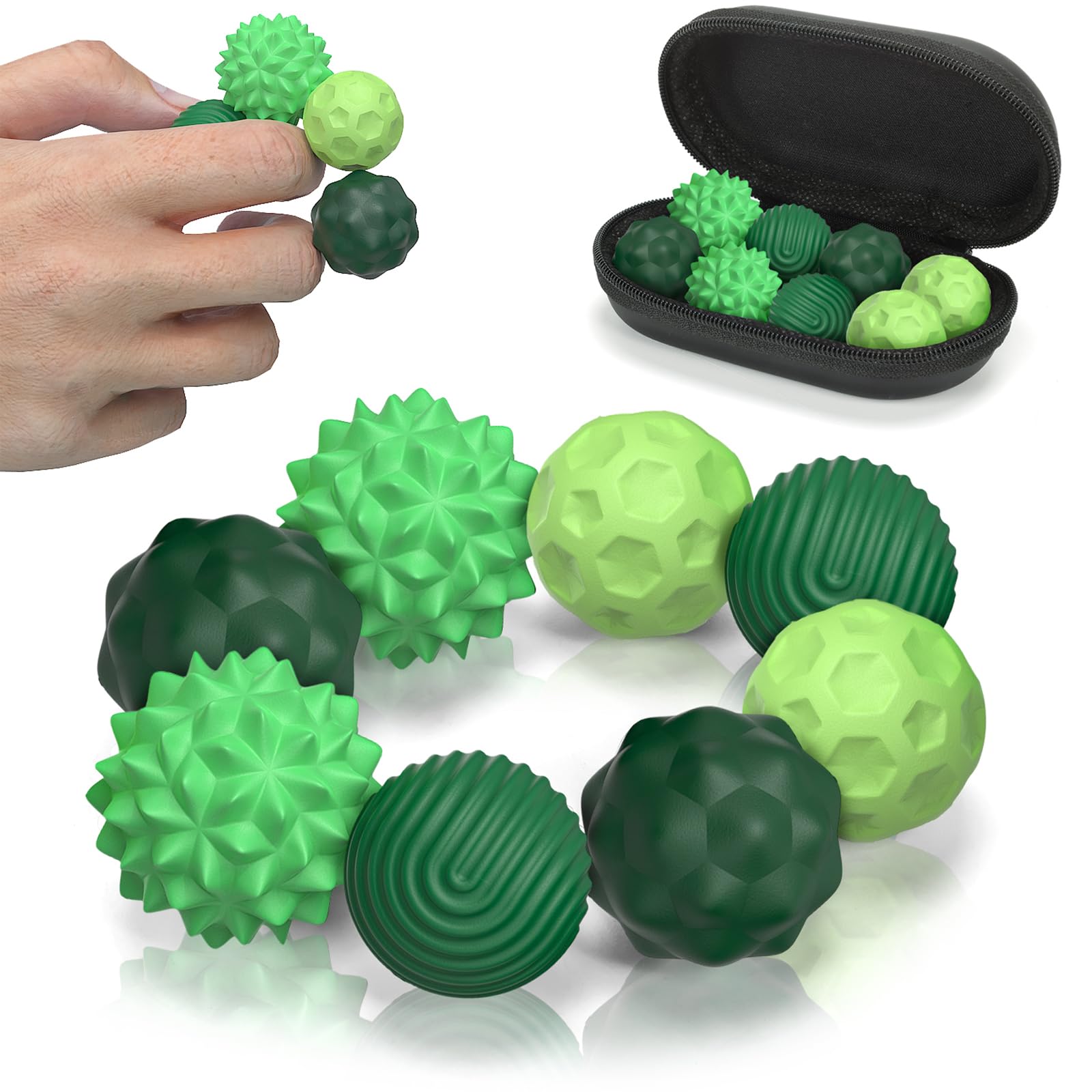
This set of eight magnetic balls distinguishes itself through texture diversity—four distinct surface patterns including bubbles, indents, ridges, and spikes, with two balls per texture. The spiky texture provides significant tactile input for grounding during anxiety spikes, while the smooth indented surfaces work better for passive rolling between fingers. The silicone shell dampens the magnetic pull, resulting in a soft resistance that feels more like kneading putty than snapping magnets together.
The included purple storage case is a practical addition, preventing the balls from migrating across a desk or backpack. Each ball measures 1.14 inches in diameter, which is small enough to palm two at a time but large enough to avoid being a choking hazard for older children and adults. The magnetic strength is moderate—sufficient to stack them into small towers but not strong enough to pinch skin.
Therapy professionals report using these successfully with both youth and adult clients during sessions, citing the visual appeal and the variety as reasons engagement stays high. The quiet operation makes them suitable for telehealth backgrounds where clicking noises would be distracting. A minor trade-off is that the silicone reduces magnetic sensation compared to raw neodymium balls, so users seeking strong resistance should look elsewhere.
Why it’s great
- Four distinct textures in one set provide graduated sensory input
- Silent operation ideal for therapy sessions and quiet offices
- Storage case prevents loss and keeps balls organized
Good to know
- Silicone shell significantly dampens magnetic pull strength
- Small size may not satisfy users seeking deep pressure input
- Spiky texture is limited to only two of the eight balls
4. Demilong Squishy Maze Tubes

Demilong’s maze tubes combine three sensory channels in one package: visual (liquid and glitter flow), auditory (beads colliding inside), and tactile (squeezing the soft plastic walls). Each tube contains a sealed maze-like channel filled with colored liquid, sequins, and small beads that shift when the tube is squeezed from side to side. This triple stimulation makes them particularly effective for individuals who need high sensory input to regulate.
The plastic is latex-free, phthalate-free, and BPA-free, with leak-proof seals that have held up in classroom environments across dozens of student uses. Each tube measures roughly 7 inches in length, making them easy to grip for small hands while still being portable for backpack storage. The four-pack includes three color variants—green, blue, and red—that provide enough variety to prevent boredom.
These are not silent fidgets; the beads create a consistent rattling sound during use. However, the noise level is moderate and tends to blend into ambient classroom chatter rather than cutting through it. Teachers and therapists report they work well as a calm-down tool during transitions, redirecting restless energy into the repetitive squeezing motion required to move the liquid through the maze.
Why it’s great
- Triple sensory engagement—visual, auditory, and tactile in one motion
- BPA-free, latex-free, and phthalate-free materials ensure child safety
- Leak-proof seals withstand repeated classroom use without breaking
Good to know
- Beads produce audible rattling that may distract in silent spaces
- Single-action motion (squeezing) limits manipulation variety
- Not suitable for children under 3 years due to small internal beads
5. VNAMO 160-Piece Variety Pack
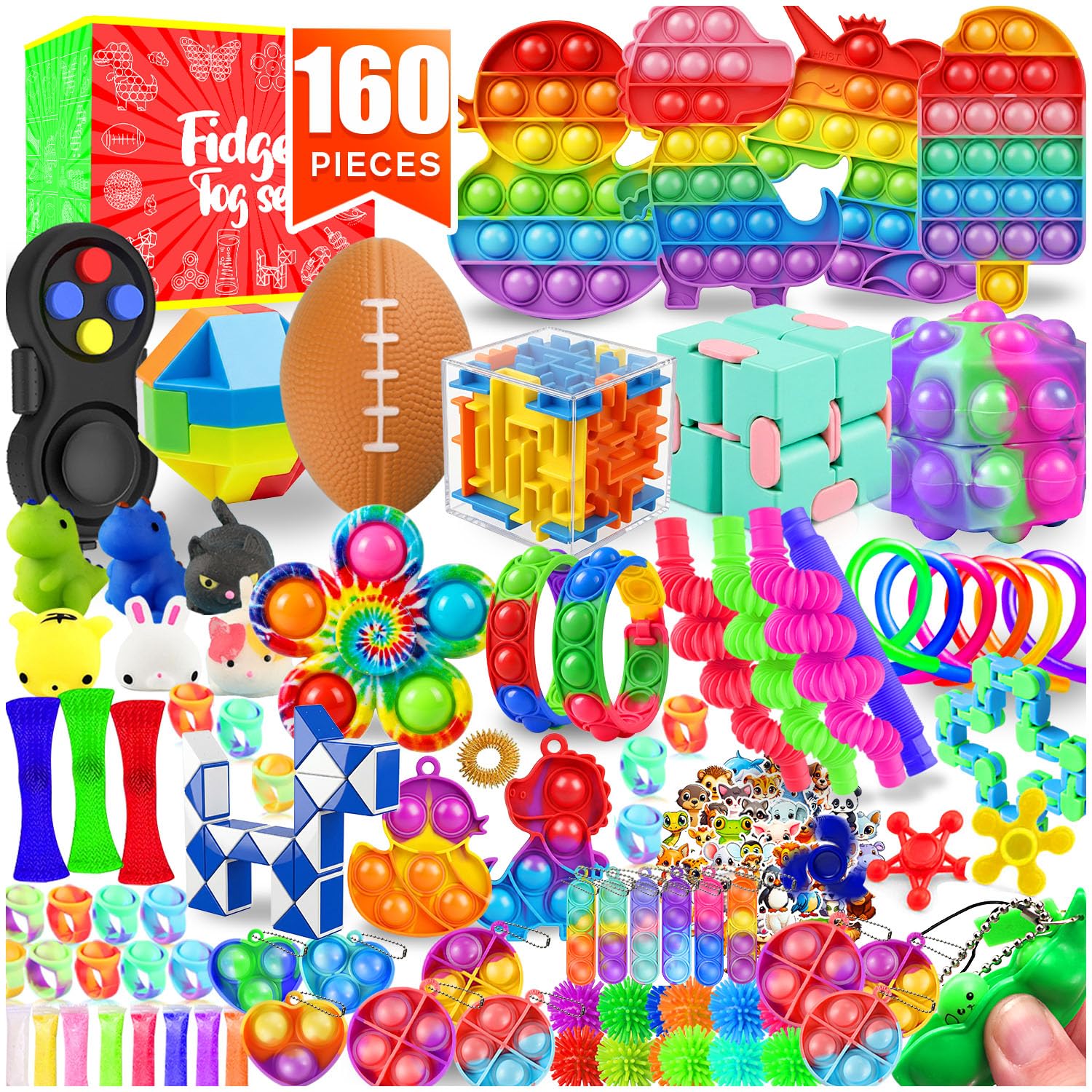
This bulk pack from VNAMO contains 160 individual items spread across 25 toy types, including pop bubbles, mochi squishies, stretchy strings, marble mesh toys, puzzle cubes, spiky rings, and mini spinners. The sheer variety makes it a practical solution for teachers running classroom treasure boxes, parents filling goodie bags, or therapists needing a rotating selection of sensory tools for different clients.
The construction quality is appropriate for the volume—these are not museum-grade fidgets, but they meet US toy safety standards and lack the strong plastic smell common in ultra-cheap party favors. The variety prevents the boredom that sets in when a single fidget loses novelty, and the compact 1-inch cube dimensions of the packaging mean the entire collection fits in a standard backpack pocket. Included stickers and pop bracelets add a reward-system component useful for behavioral reinforcement.
The trade-off is that individual pieces are not built for daily heavy use—they are intended as short-duration engagement tools or rewards rather than long-term sensory anchors. For a classroom setting where items go home with different students each day, this disposable durability is actually an advantage, as lost or broken pieces are easily replaced without significant cost.
Why it’s great
- Massive variety keeps sensory engagement fresh and prevents boredom
- Meets ASTM toy safety standards with no offensive chemical smell
- Compact storage and included stickers make it ideal for reward systems
Good to know
- Individual pieces are not designed for long-term daily use
- Some items (pop bubbles, spinners) are novelty-grade rather than therapeutic
- Not a replacement for a single high-quality daily fidget tool
6. LESONG Stretchy Noodles

LESONG’s stretchy noodles are deceptively simple—each 10.2-inch string stretches up to 7.5 feet while retaining its original shape, and they glow in the dark for added visual appeal. The set of eight includes distinct textures and tension levels across the colors, meaning one noodle may resist stretching more than another, providing graded proprioceptive input that keeps the user engaged in comparing their feel.
The material is a soft, flexible plastic that passes ASTM F963 international toy standards. It is non-toxic and easy to clean with soap and water—a critical feature for classroom or therapy environments where items are shared between children. The portability is excellent; they weigh virtually nothing and can be coiled into a pocket. Adults with ADHD have reported finding them useful for staying focused during meetings and church services where larger fidgets would be inappropriate.
Durability is a strong suit: reviewers report the strings surviving rain exposure and repeated stretching without tearing. The primary caution is that the glow-in-the-dark charge requires exposure to bright light beforehand, and the effect fades after 30-40 minutes in darkness. These are best used as a backup or secondary fidget rather than a primary daily tool, because the linear stretching motion lacks the variety of a magnet-based or multi-axis fidget.
Why it’s great
- Varying tension between colors provides graded sensory feedback
- Glow-in-the-dark feature adds visual engagement for children
- Extremely portable, lightweight, and easy to clean
Good to know
- Single-axis motion (stretching) limits manipulation variety
- Glow effect fades after 30-40 minutes without recharging
- Not ideal for users who need strong magnetic or deep pressure input
7. BABAMU Spinning Chair
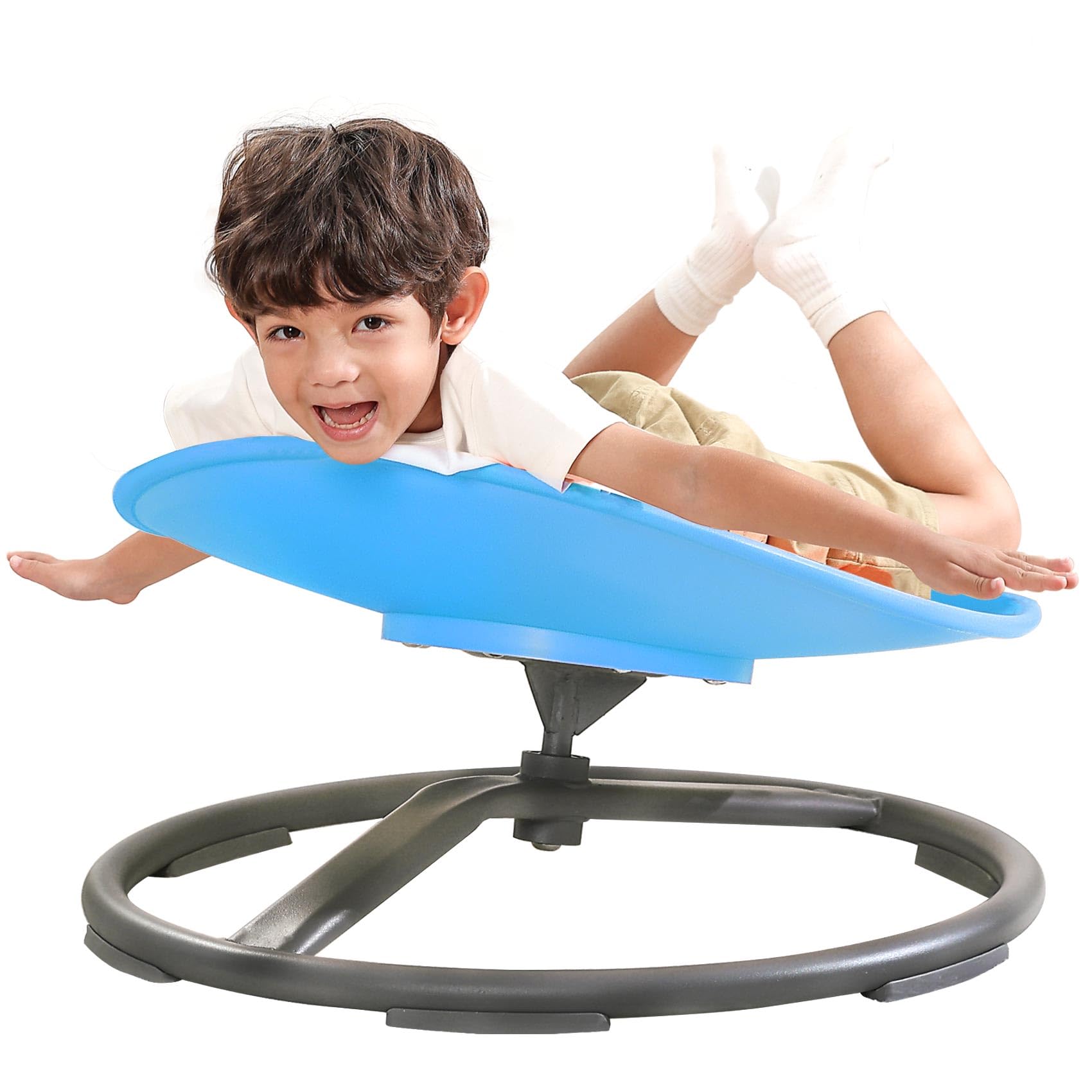
The BABAMU spinning chair targets the vestibular system directly, providing the rotational input that many individuals with ADHD and autism find deeply regulating. Unlike sit-and-spin toys aimed at toddlers, this chair supports up to 220 pounds with a stainless steel frame and powder-coated finish, making it appropriate for older children and smaller adults. The 360-degree silent rotation mechanism uses a sealed bearing, producing no squeaking or grinding even after months of daily use.
The egg-shaped seat is armless and features a flat cushion that allows multiple positioning options—sitting upright, kneeling backward, or lying across the stomach. This versatility means the sensory input can be customized: slow rocking for calming vestibular input versus fast spinning for alerting sensory stimulation. Assembly takes under 15 minutes with the included tools and instructions, and the anti-slip base adds stability on hardwood or tile floors.
Parents of children with sensory processing needs report it functions as a daily co-regulation tool, with the child seeking out the chair unprompted during moments of dysregulation. The compact footprint allows it to live in a living room corner or bedroom without dominating the space. It is not a toy for roughhousing—users should spin at a controlled pace—and the cushion cover is removable for machine washing, which is essential for hygiene in multi-user settings.
Why it’s great
- Direct vestibular input supports regulation for sensory seekers
- Silent rotation bearing prevents distracting noise during therapy or home use
- 220-pound capacity extends usability through pre-teen and adult years
Good to know
- Requires floor space and is not portable like handheld fidgets
- Fast spinning may overstimulate rather than calm some users
- Cushion is flat rather than contoured—not designed for extended static seating
FAQ
What is the difference between tactile, proprioceptive, and vestibular sensory input in ADHD toys?
How do I know if a metal fidget slider will be too loud for my office?
Can ADHD toys improve focus for adults, or are they just for children?
Final Thoughts: The Verdict
For most users, the best adhd toys winner is the Shashibo Shape Shifting Cube because it combines cognitive engagement with satisfying tactile feedback, offering a challenge that scales with the user’s skill level rather than becoming repetitive. If you need a silent and discreet desk companion, grab the WSHWXY Metal Fidget Slider for its dense build and unique quiet operation. And for whole-body vestibular regulation at home, nothing beats the BABAMU Spinning Chair for providing the rotational input that settles a dysregulated nervous system.