
Our readers keep the lights on and the weekend projects moving. As an Amazon Associate, I earn from qualifying purchases.
Finding winter boots that keep your feet warm and dry while letting your toes splay naturally and your soles feel the terrain is a narrow pursuit. Most insulated boots are built on a rigid, narrow last that cramps the forefoot and lifts the heel, contradicting the biomechanics a barefoot wearer relies on for stability on snow and ice.
I’m Rikta — the co-founder and writer behind FitlyFast. I’ve spent the past fifteen years analyzing footwear construction, stack heights, tread compounds, and toe-box measurements so barefoot buyers know exactly which boots deliver anatomical function without turning into a frozen liability.
This guide breaks down nine serious contenders for best barefoot winter boots based on real waterproofing, insulation effectiveness, sole flexibility, and the critical toe-box geometry that defines this category.
How To Choose The Best Barefoot Winter Boots
Winter boots designed for barefoot function must solve contradictions that conventional boots ignore: warmth without a thick, insulating midsole; waterproofing without a stiff membrane; traction without a heavy, raised heel. Understanding three key decision points will narrow your options to the pair that actually works in your climate.
Toe-Box Width and Volume
This is the single most important fit dimension for a barefoot winter boot. The toe box must allow all five toes to spread laterally and stack vertically when you wear a mid-weight wool sock. A boot that feels roomy in a thin sock will compress your toes once you add thermal layers, which kills circulation and accelerates cold feet. Look for explicit width measurements across the forefoot — many brands list the internal width in millimeters at the ball of the foot.
Insulation and Waterproofing Strategy
True barefoot construction means the sole is thin and flexible, so the boot relies on upper insulation and a waterproof membrane for thermal protection, not a thick foam midsole. Check whether the boot uses a sealed bootie (like a PU or taped-seam liner) versus a simple spray-on DWR coating. For temperatures below freezing, boots with 200-400g synthetic insulation or a fleece-lined upper will keep you warm without sacrificing ground feel.
Sole Flexibility and Tread Pattern
The outsole must bend at the ball of the foot without forcing a crease point. A flexible winter outsole uses softer rubber compounds that remain pliable in cold temps — look for Vibram Arctic Grip or a similar winter-grade compound. Tread lugs should be moderately deep (3-4 mm) and spaced wide enough to shed snow and slush rather than pack solid. Aggressive, deep lugs often stiffen the sole in a barefoot boot, so a lower-profile, multi-directional pattern is safer for icy pavement and packed snow.
Quick Comparison
On smaller screens, swipe sideways to see the full table.
| Model | Category | Best For | Key Spec | Amazon |
|---|---|---|---|---|
| Vivobarefoot Tracker Textile AT | Lace-Up Hiking | All-weather traction & waterproof durability | Waterproof bootie, puncture-resistant sole | Amazon |
| JIM GREEN Barefoot African Ranger | Lace-Up Work/Hiking | Resoleable leather daily wear | Full-grain leather, partial leather insole | Amazon |
| Belleville Mini-Mil TR102 (Coyote) | Tactical Zero-Drop | All-day shift & technical terrain | Slip-resistant outsole, 12.5 hr comfort | Amazon |
| Belleville Mini-Mil TR102 (Black) | Tactical Zero-Drop | Uniform-friendly barefoot work boot | Durable black leather, water resistant | Amazon |
| Vivobarefoot Tracker Leather All Terrain | Leather Hiking | Trail feel with leather durability | Soft durable leather, waterproof membrane | Amazon |
| Xero Alpine Pull-On Snow Boots (Men’s) | Pull-On Snow | Quick slip-on winter errands & snow play | Pull-on design, 200g insulation | Amazon |
| Xero Alpine Pull-On Snow Boots (Women’s) | Pull-On Snow | Tall foldable snow boot for deep snow | Fold-down shaft, wide toe box, warm | Amazon |
| Xero Alpine Barefoot Snow Boots (Men’s Lace-Up) | Lace-Up Snow | Lace-up warmth with barefoot sole flex | Waterproof, hook lacing, 200g insulation | Amazon |
| Xero Xcursion Fusion Waterproof Hiking | Lace-Up Hiking | Budget-friendly zero-drop hiking boot | Zero-drop, waterproof, lightweight | Amazon |
In‑Depth Reviews
1. Vivobarefoot Tracker Textile AT Mens Barefoot Hiking Boots
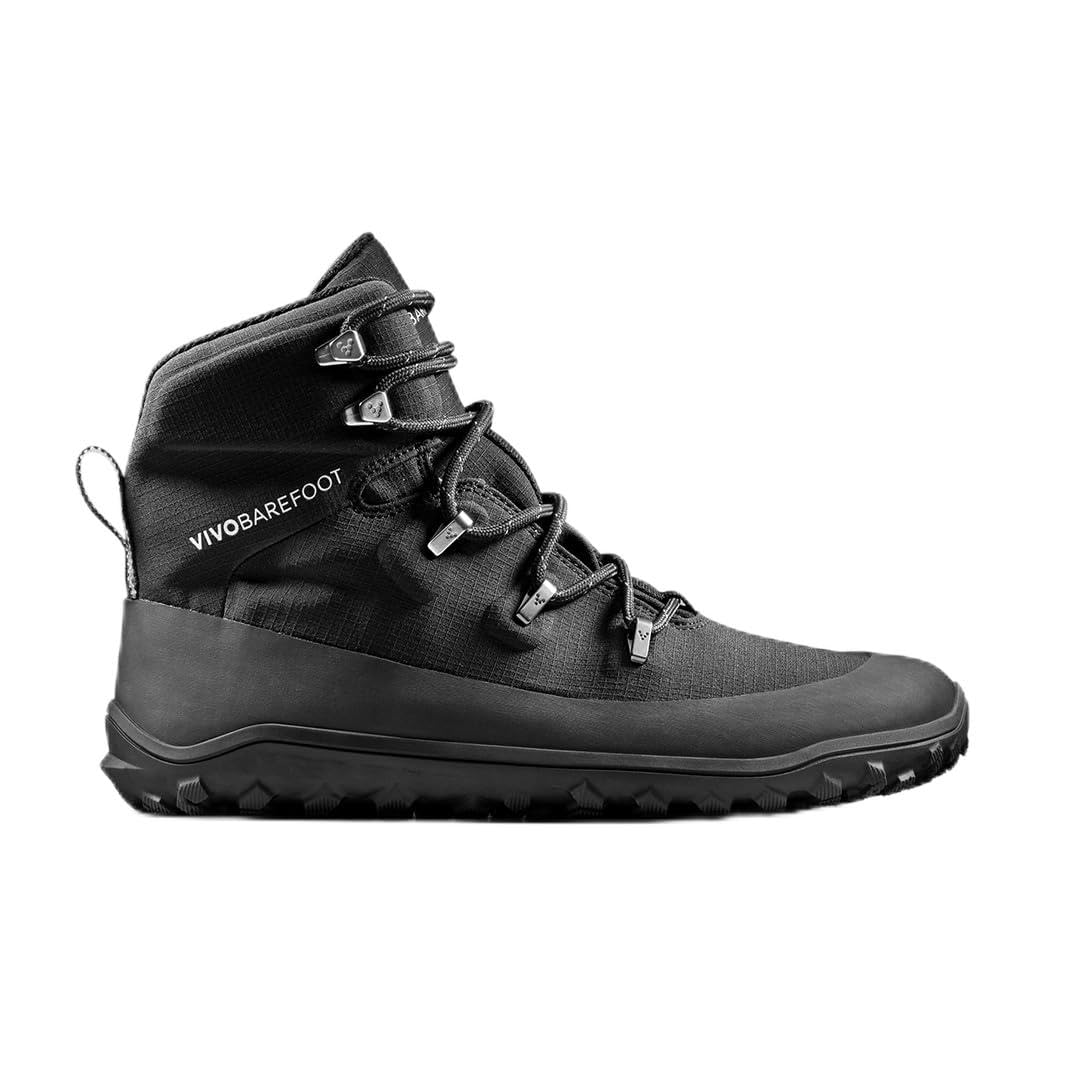
The Tracker Textile AT is the most waterproof lace-up barefoot boot I’ve analyzed for true mixed-winter use. It uses a sealed internal bootie with taped seams that kept reviewers’ feet dry after full days in deep snow, slush, and standing water — even without socks. The puncture-resistant outsole offers genuine protection against sharp ice crust and buried debris while remaining flexible enough to feel contours underfoot.
One key detail that separates this boot from cheaper alternatives: the fit runs close to true size for barefoot lasts. Multiple reviewers noted that sizing up from a 9.5 to a 10 made the boot too long, but the size 9 fit perfectly with room for a thin-to-medium sock. The textile upper breathes better than full leather, which means less sweat buildup during high-exertion snow shoveling or winter hikes.
Weaknesses are worth noting: the outsole grip falls off on wet, icy stone — a known compromise of the relatively smooth tread pattern. And two durability complaints about early delamination (around day 96) suggest the bootie-to-upper bond may be a risk point for heavy daily abuse. For most winter walkers, though, the combination of barefoot biomechanics and true waterproofing makes this a top contender.
Why it’s great
- Sealed waterproof bootie performs in deep snow and slush
- Lightweight with high-tech puncture-resistant ground feel
- Excellent fit for true-to-size barefoot lasts
Good to know
- Outsole traction slips on wet, icy rock
- Early durability concerns with bootie delamination
- Sizing up can make the toe box too long
2. JIM GREEN Men’s Barefoot African Ranger Boots

The JIM GREEN African Ranger achieves something rare in barefoot winter boots: a full-grain leather upper that is resoleable. The construction uses a soft, flexible outsole stitched to a high-volume toe box that one reviewer with bunions described as the first boot to relieve forefoot pain. The round, spacious toe box gives each toe independent splay room, even with a medium wool sock.
These boots are not insulated, so they function best in cold but not extreme climates (down to about 20°F with thick socks). The leather sock liner and partial leather insole create a firmer ground feel than textile-lined boots — some users found adding an insole caused ankle pain and recommended removing any extra layer entirely. The break-in period is long and can include blisters, especially in the bronco brown colorway.
The boot is designed without cushioning, so walkers transitioning from conventional footwear may feel the ground more than expected. Lace adjustment is finicky due to the high-volume eyelets. But for a barefoot fan who wants a durable, repairable boot that looks like a classic work boot, the African Ranger is unmatched in this list for long-term value.
Why it’s great
- Resoleable full-grain leather construction
- Extremely wide toe box relieves bunions
- Durable leather wrapped foot prevents odor
Good to know
- No insulation; not for extreme cold
- Long break-in with potential blisters
- Laces are tricky to dial in
3. Belleville Mini-Mil TR102 Minimalist Tactical Boot (Coyote)

The Belleville Mini-Mil TR102 in coyote is a zero-drop tactical boot built for extended wear. Reviewers reported zero foot fatigue after 12.5-hour days on technical terrain carrying a 40-pound pack. The outsole offers excellent traction on wet floors and loose surfaces, and the tread life holds up under sustained abuse. This is not a plush barefoot shoe — the sole is harder and less flexible than true minimalist footwear — but it delivers a balance of protection and ground feel that standard military boots simply cannot match.
Two fit quirks define this boot: sizing is tricky because women’s feet often need to size down and choose a wide option. The ankle area has some slop, and a heel seam caused minor discomfort for a handful of users during break-in. The toe box is wide enough to splay toes but not as accommodating as the JIM GREEN or Vivobarefoot lasts.
Critical callout: the coyote version uses natural-colored leather with side vents, which makes the boot slightly less waterproof than the black version. The leather coating can scuff and flake within a month, and snow and ice traction is weak compared to winter-specific boots. For mild winter conditions or primarily indoor tactical use, this boot excels. For deep snow and cold, it is undersized.
Why it’s great
- Exceptional stability for 12+ hour shifts with heavy loads
- Excellent ground feel and slip resistance on wet floors
- Lightweight design with durable tread
Good to know
- Poor snow and ice traction
- Upper leather scuffs and flakes quickly
- Not as flexible as true barefoot shoes
4. Belleville Mini-Mil TR102 Minimalist Tactical Boot (Black)
The black version of the Belleville Mini-Mil TR102 shares the same zero-drop, barefoot-friendly geometry as the coyote but benefits from a full-grain black leather upper without side vents. This makes the black variant more water-resistant than its natural-colored sibling, though it is still not fully waterproof. Reviewers noted the boot held up well through mud, water, and grass during tactical tryouts without soaking through.
The locked-in ankle and wide toe box earned high marks for comfort during loaded runs and weighted-vest drills. One reviewer with a women’s 7.5 needed to size down to a men’s 6.5 wide to get a proper fit. The boot lacks a rubber toe wrap, which exposed the leather to scuffing during kneeling exercises. The heel counter caused minor initial pain that resolved with wear.
Like the coyote version, the black Mini-Mil struggles with snow and ice traction because the outsole compound is optimized for dry, urban, or tactical surfaces rather than winter slush. It is also harder underfoot than dedicated barefoot boots. For a minimalist-minded boot that passes uniform requirements and handles wet grass and light snow, the black TR102 is a solid mid-range contender.
Why it’s great
- Full-grain black leather offers better water resistance
- Locked-in ankle and wide toe box for tactical wear
- Zero foot fatigue during extended activity
Good to know
- Weak snow and ice traction
- No rubber toe wrap for kneeling
- Hard sole less flexible than true barefoot boots
5. Vivobarefoot Men’s Tracker Leather All Terrain Hiking Shoe
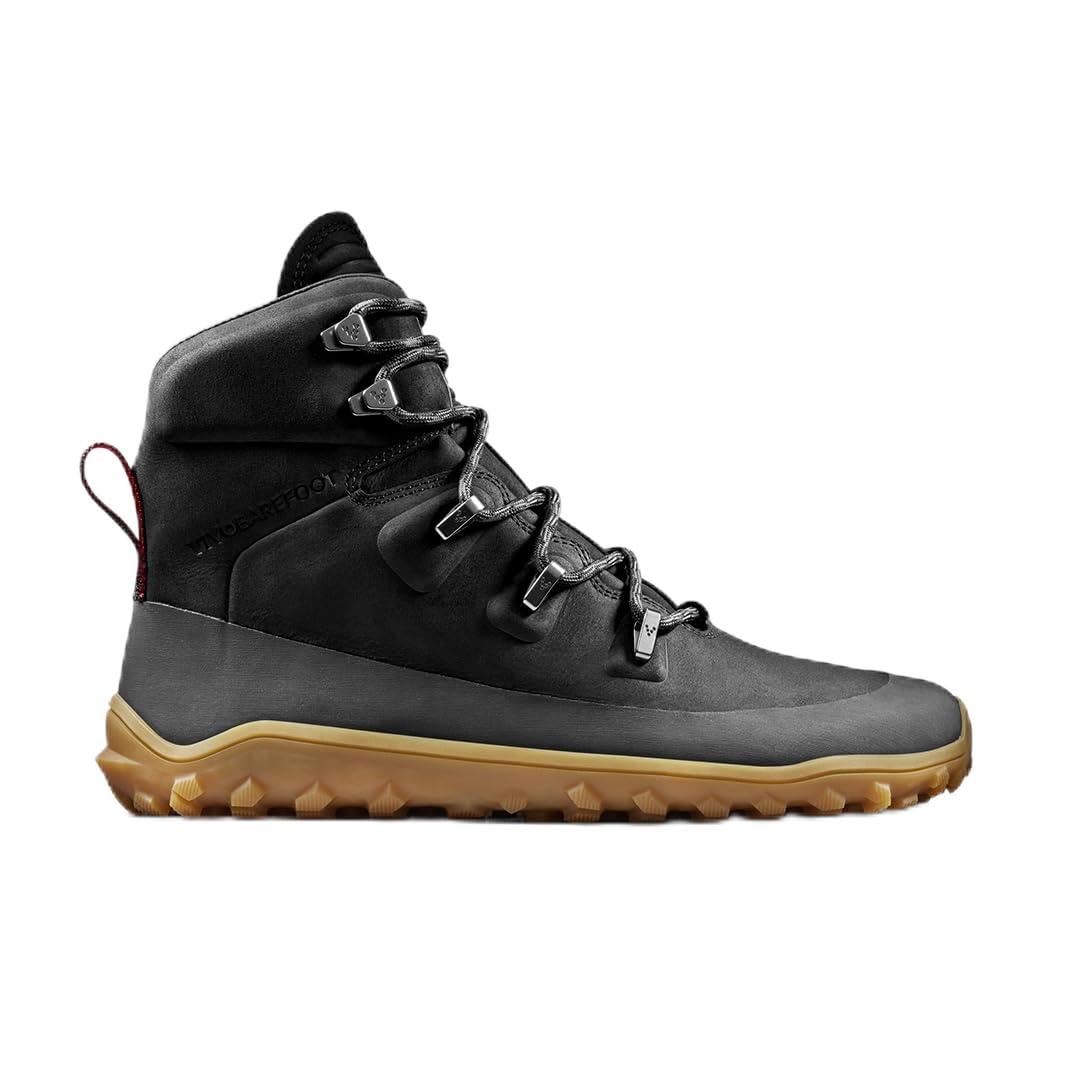
The Vivobarefoot Tracker Leather All Terrain is the leather counterpart to the Textile AT. It uses a soft, supple full-grain leather upper that molds to the foot over time, combined with a waterproof membrane that held up in wet conditions for reviewers hiking 5-6 miles at a time. The sole offers a balanced blend of ground feel and protection — you feel trail contours and sharp edges, but the outsole is thick enough to prevent bruising on rocky terrain.
Fit is true to size for wide feet, with a toe box that accommodates natural splay without looking duck-like. One reviewer noted that after switching from lower-cost barefoot boots, the Tracker Leather eliminated knee pain and required no break-in. The boot breathes better than expected for a waterproof leather boot, making it usable across three seasons in moderate climates.
The durability question is real: two independent reviewers reported an eyelet ripping off within the first week, followed by poor customer service response from Vivobarefoot. Another user found the leather remained comfortable and durable after two months of daily use in multiple national parks. The price point puts it in premium territory, so the variable quality control is a meaningful risk.
Why it’s great
- Soft, moldable leather with a waterproof membrane
- Excellent ground feel with enough sole protection for rocky trails
- True-to-size fit for wide feet, no break-in needed
Good to know
- Eyelet durability issues reported by some users
- Poor post-purchase customer support
- High price for variable quality control
6. Xero Shoes Men’s Alpine Pull-On Barefoot Snow Boots
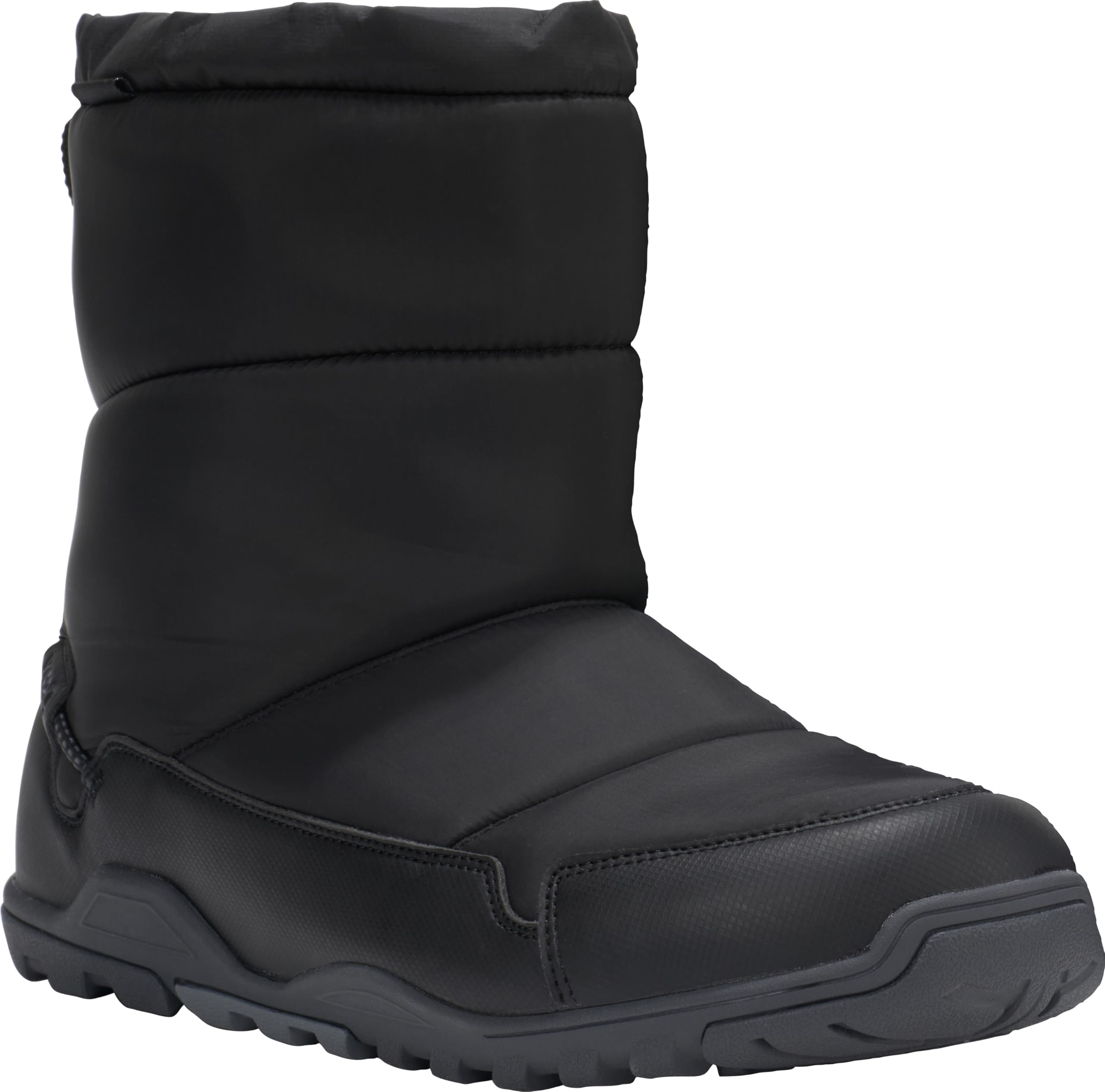
The Xero Alpine Pull-On is the closest thing to a barefoot snow boot that prioritizes convenience. The slip-on shaft eliminates laces entirely, which matters when you are rushing out the door into a snowstorm. Reviewers consistently praised the warmth and comfort, noting the boot is easy to put on and take off but stays secure during walking. The zero-drop platform is intact, though some users noted the sole is not as thin as true barefoot shoes — it feels more like a minimalist boot than a ground-feel shoe.
Waterproof performance is solid for rain and snow, and the boot offers enough room for thick wool socks. The tread handles snow and ice adequately for urban and suburban use, though heavy snow or long backcountry hikes will reveal its limits. One reviewer mentioned the included insoles were too thin and recommended swapping them for thicker wool inserts to improve warmth and comfort.
The pull-on construction means there is no ankle lockdown mechanism, so the boot may feel loose around the ankle for some users. It is best suited for dry, cold days and quick trips rather than deep snow or technical terrain. For a barefoot fan who hates tying boots, this is the most practical winter option in the lineup.
Why it’s great
- Quick slip-on design with no laces
- Warm and comfortable with good waterproofing
- Room for thick socks and aftermarket insoles
Good to know
- Less barefoot ground feel than lace-up models
- Loose ankle fit due to slip-on design
- Not ideal for deep snow or technical terrain
7. Xero Shoes Women’s Alpine Barefoot Pull-On Snow Boots
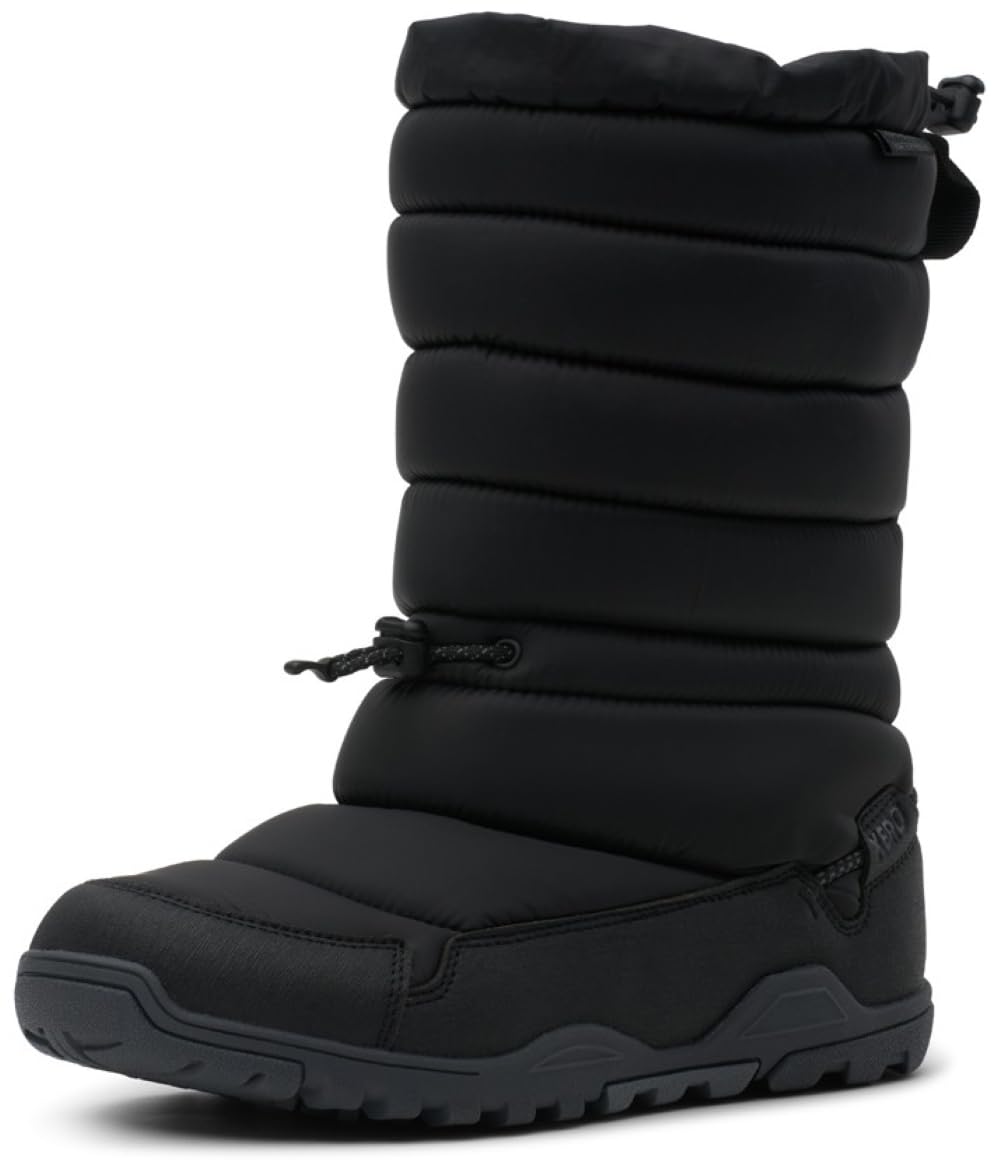
The women’s Alpine Pull-On is one of the most well-reviewed barefoot snow boots I have seen for deep snow and extended outdoor play. Reviewers described it as the first snow boot wide enough to accommodate larger calves and toes without squeezing, and one mother called it the only boot that kept her feet dry and warm while playing in deep snow with her kids. The fold-down shaft adds versatility — you can wear it tall for deep snow or folded for a shorter profile.
The boot is lightweight despite its insulation and waterproof construction. Multiple reviewers noted it performed better in wet conditions than Keen and Sorel boots they previously owned. The wide toe box allowed two layers of socks without constriction, and the tread provided excellent grip on snow and ice without tracking snow indoors. One user with size 7.5 feet found the size 8 fit perfectly with two sock layers.
The boot runs slightly snug in the forefoot for some, so sizing up half a size is recommended if you plan to wear thick wool socks. The barefoot feel is somewhat muted due to the insulation layer, and the sole is not as flexible as Xero’s hiking boot offerings. For a do-it-all winter boot for snow days, sledding, and shoveling, this is the top women’s pick.
Why it’s great
- More waterproof than mainstream snow boots
- Tall fold-down shaft fits larger calves
- Excellent snow and ice traction
Good to know
- Runs slightly snug; size up for thick socks
- Less barefoot feel than hiking boots
- Not ideal for extreme cold without upgrade insoles
8. Xero Shoes Men’s Alpine Barefoot Snow Boots (Lace-Up)
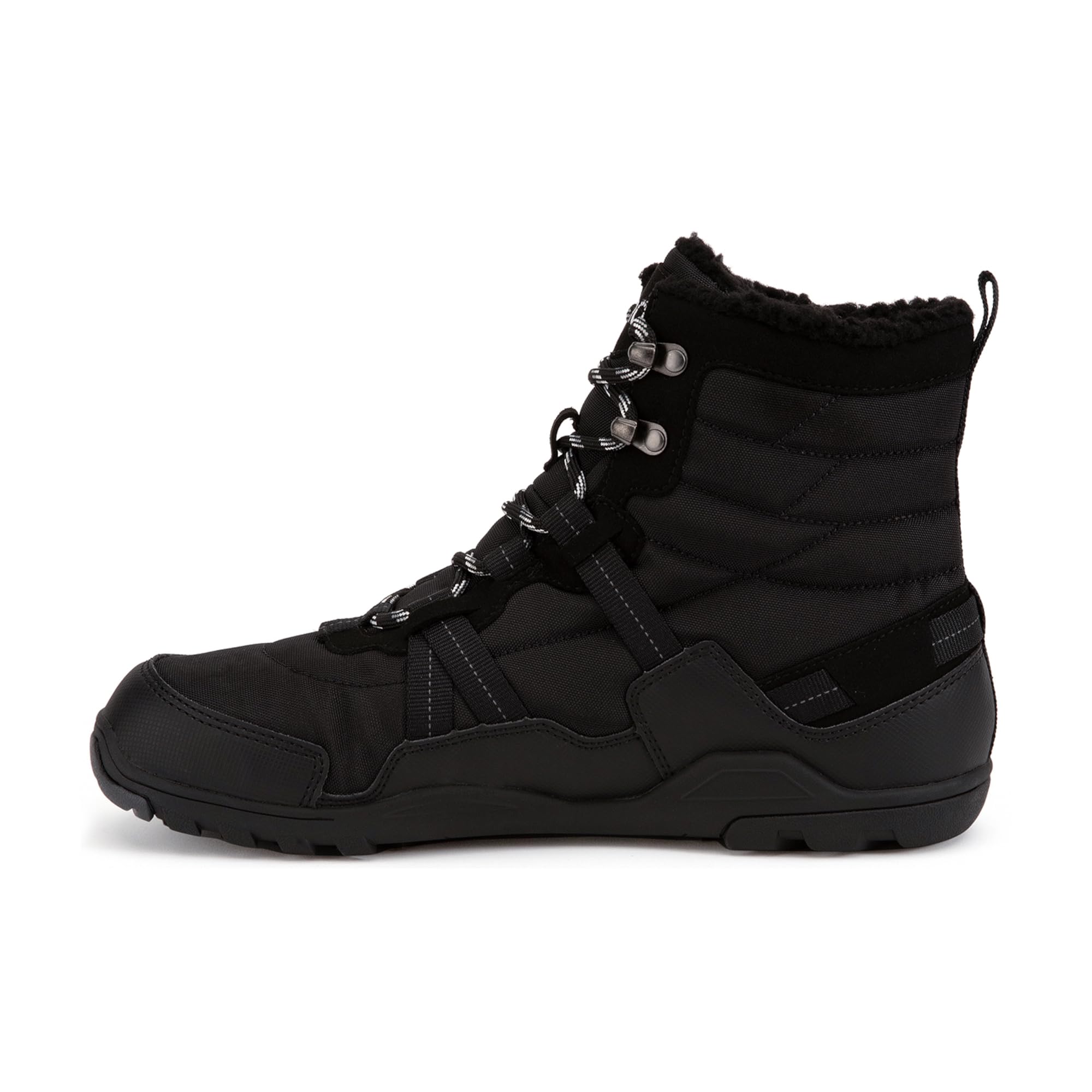
The lace-up Xero Alpine bridges the gap between Xero’s hiking boots and dedicated snow boots. It uses a hook lacing system that is quick to adjust, a waterproof membrane, and 200g insulation that handles cold down to about 20°F. The zero-drop sole is flexible enough to give good ground feel, and the boot is lightweight enough for long winter walks. Reviewers who used it for a full winter reported it was comfortable, warm, and stable on snow and ice.
The biggest complaint is the toe box. While wider than a mainstream snow boot, multiple barefoot veterans found it not wide enough for true toe splay. The boot is also not fully waterproof in standing water — one reviewer noted that while the upper repels snow, standing water eventually seeps through. The quick laces received mixed feedback: some found them easy, while others found them loose and difficult to tension evenly.
Overall, the lace-up Alpine is a solid mid-range snow boot for barefoot beginners or casual winter use. It provides decent warmth, good traction, and a stable zero-drop platform, but purists will want more toe room and a thinner sole. If you are coming from mainstream boots, it will feel like a revelation. If you already own Vivobarefoot, you may find it compromises too much on barefoot principles.
Why it’s great
- Lightweight, warm lace-up snow boot
- Good traction and stability on snow and ice
- Easy hook lacing system
Good to know
- Toe box not wide enough for true barefoot users
- Not fully waterproof in standing water
- Laces can be difficult to adjust evenly
9. Xero Shoes Xcursion Fusion Waterproof Hiking Boots

The Xcursion Fusion is Xero’s entry-level zero-drop hiking boot that works as a budget-friendly winter option for mild climates. It uses a waterproof upper that handled wet grass and light snow without soaking through. The sole is flexible enough to feel the ground, and the zero-drop platform eliminated foot and back pain for multiple reviewers after a one-week adjustment period. It is very lightweight compared to traditional hiking boots.
The fit is inconsistent, which is the defining weakness of this model. Some reviewers with wide feet found the toe box too narrow, while others with standard-width feet found it too long. One reviewer ordered a men’s 7.5 for a women’s 9 and found the fit perfect for toe splay, while another with E-width and high instep found it unwearable. This variability means ordering two sizes is recommended.
The outsole is another weak point: multiple reviewers reported that the boot is dangerously slippery on wet pavement and rocks, and the heel tread wears down noticeably fast. Insulation is minimal, so the boot is not suitable below freezing without thick wool socks. For dry, mild winters and dry trail use, the Xcursion Fusion offers good value. For real winter conditions, it is under-equipped.
Why it’s great
- Lightweight and comfortable zero-drop platform
- Eliminated foot and back pain for many wearers
- Breathable for a waterproof boot
Good to know
- Dangerous slip on wet pavement and rocks
- Inconsistent sizing across wide vs standard feet
- Minimal insulation; not for true cold
FAQ
Can I wear barefoot winter boots in deep snow?
How do I know if a barefoot winter boot has a wide enough toe box?
Do barefoot winter boots need break-in time?
Why do some barefoot winter boots feel slippery on ice?
Final Thoughts: The Verdict
For most users, the best barefoot winter boots winner is the Vivobarefoot Tracker Textile AT because it delivers the strongest waterproofing and ground feel balance in a true barefoot package. If you want a resoleable leather boot that will last years, grab the JIM GREEN African Ranger. And for effortless slip-on convenience during family snow days, nothing beats the Xero Alpine Pull-On (Women’s) or the Xero Alpine Pull-On (Men’s).