
Our readers keep the lights on and the weekend projects moving. As an Amazon Associate, I earn from qualifying purchases.
Choosing an allergy medication during pregnancy means balancing two urgent needs: quieting miserable sneezing, congestion, and itchy eyes while safeguarding your developing baby. Standard over-the-counter options that once seemed harmless now demand scrutiny of active ingredients, dosages, and formulation types. The wrong choice can introduce unnecessary risk; the right one restores your comfort and peace of mind.
I’m Rikta — the co-founder and writer behind FitlyFast. After months of analyzing FDA pregnancy categories, clinical guidelines from the American College of Obstetricians and Gynecologists, and real-world reports of antihistamine safety profiles, I’ve broken down exactly which formulas deserve your trust.
This guide ranks the safest, most effective options available, with clear explanations of why each product made the cut so you can choose with confidence. Here is my curated selection of the best allergy medicine for pregnant women.
How To Choose The Best Allergy Medicine For Pregnant Women
Selecting an allergy medication while pregnant isn’t about finding the strongest option — it’s about finding the safest one that still works. The key is knowing which active ingredients have the longest track record of safe use during pregnancy and which delivery method (oral vs. nasal) best targets your specific symptoms without crossing the placental barrier at concentrations that raise concern.
Active Ingredient & FDA Pregnancy Category
Look for drugs classified as FDA Pregnancy Category B — that means animal reproduction studies failed to demonstrate a risk to the fetus and there are no adequate human studies, or the drug is safe based on decades of widespread use. Loratadine (found in Claritin and generic equivalents) and cetirizine (Zyrtec) are both Category B. Diphenhydramine (Benadryl) is Category B too but is a first-generation antihistamine that causes sedation and should be used only occasionally. Avoid any product with pseudoephedrine (a decongestant) during the first trimester due to a small link to certain birth defects.
Delivery Method: Oral vs. Nasal Spray
Oral antihistamines like loratadine or cetirizine work systemically and are a first-line choice for sneezing, runny nose, and itchy eyes. For nasal congestion specifically, corticosteroid nasal sprays such as Flonase (fluticasone) are considered very safe in pregnancy because the drug is applied directly to the nasal passages with minimal systemic absorption. Many women find that a low-dose nasal spray provides targeted relief without the systemic effects of a pill. Never use oral decongestant sprays like oxymetazoline (Afrin) for more than three days — they can cause rebound congestion and may affect blood pressure.
Non-Drowsy Is the Rule
Pregnancy already disrupts sleep and energy levels. First-generation antihistamines like Benadryl cause significant drowsiness that can compound fatigue and make daytime functioning difficult. Whenever possible, choose a non-drowsy second-generation antihistamine (loratadine, cetirizine, fexofenadine) or a nasal spray. If you do use Benadryl, reserve it for severe occasional episodes and take it only at bedtime to avoid daytime sedation.
Quick Comparison
On smaller screens, swipe sideways to see the full table.
| Model | Category | Best For | Key Spec | Amazon |
|---|---|---|---|---|
| Flonase Sensimist Allergy Relief | Nasal Spray | Nasal congestion & eye symptoms | 240 sprays total / Fine scent-free mist | Amazon |
| Hilma Natural Sinus Support | Herbal Capsule | Plant-based daily maintenance | 120 vegan capsules / Clean Label Certified | Amazon |
| Herbs Etc. Allergy ReLeaf System | Herbal Kit | Non-drowsy herbal support | 30 softgels + tablets / Fresh Mullein | Amazon |
| Amazon Basic Care All Day Allergy | Oral Tablet | Generic cetirizine value | 365 ct / Cetirizine HCl 10 mg | Amazon |
| GoodSense Allergy Relief Loratadine | Oral Tablet | Generic loratadine value | 365 ct / Loratadine 10 mg | Amazon |
| Hyland’s Seasonal Allergy Relief | Homeopathic Tablet | Quick-dissolving homeopathic | 240 tablets / Quick-dissolving | Amazon |
| NaturalCare by bioAllers | Homeopathic Drops | Liquid homeopathic support | 1 fl oz / Homeopathic liquid drops | Amazon |
In‑Depth Reviews
1. Flonase Sensimist Allergy Relief Nasal Spray
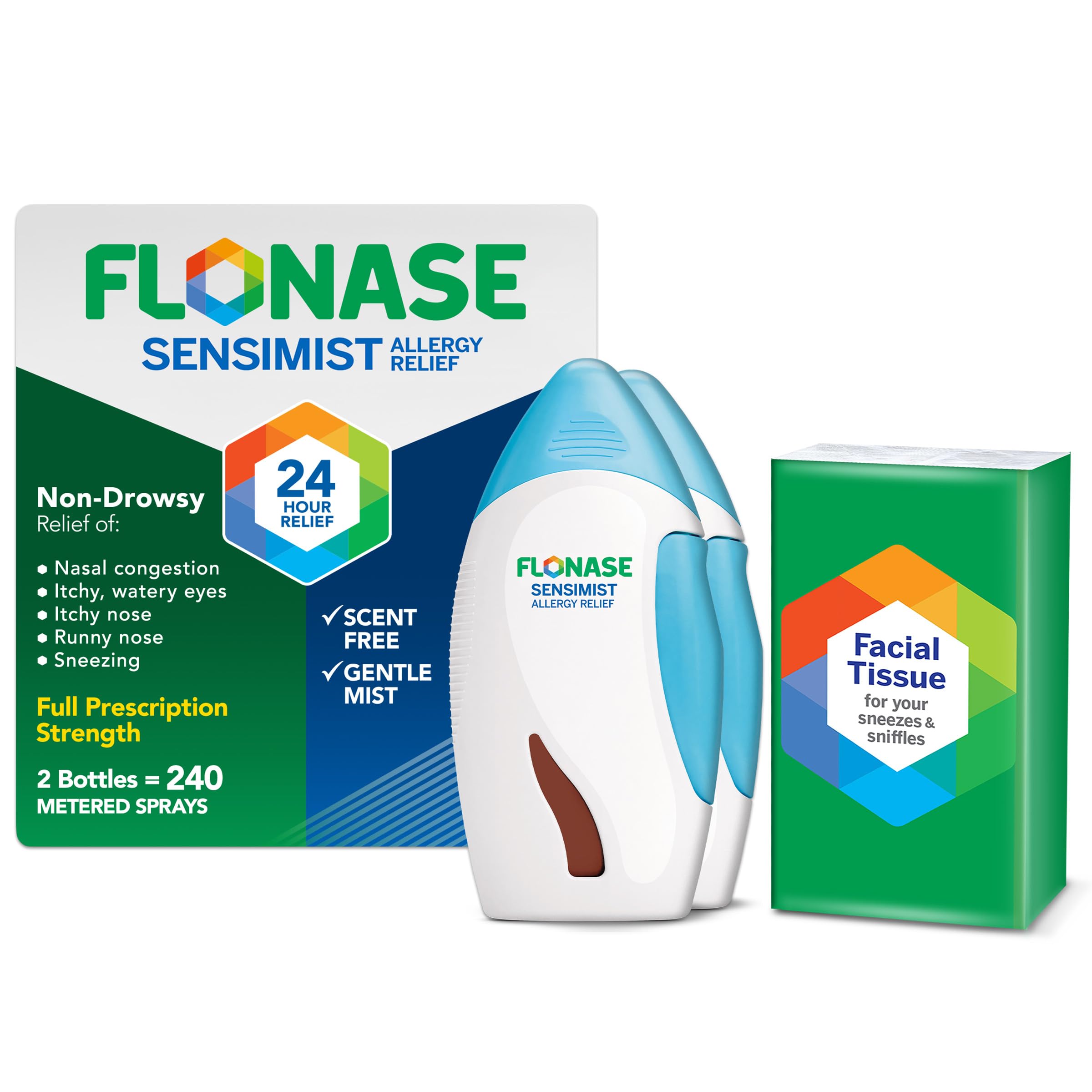
Flonase Sensimist delivers full prescription-strength fluticasone proprionate (a Pregnancy Category C drug with minimal systemic absorption) in a gentle scent-free mist that users barely feel. Unlike oral antihistamines, it directly targets nasal inflammation — the root cause of congestion — and is the only option on this list that treats all six major allergy symptoms, including itchy watery eyes. The fine spray design avoids the bad taste and drip associated with older nasal sprays, making it far more pleasant for daily use during pregnancy when nausea may already be an issue.
Clinical data show most women experience relief within eight hours of the first dose, with maximum benefit after three to four days of consistent use. Because the corticosteroid stays primarily in the nasal passages, systemic exposure is extremely low, which explains why the American Academy of Allergy, Asthma & Immunology lists it as a preferred option during pregnancy for moderate-to-severe nasal symptoms. Each bottle lasts roughly four weeks, and the two-pack provides nearly two months of daily coverage.
It is non-drowsy, FSA/HSA eligible, and works year-round for both seasonal and perennial allergies. The only catch is that you must use it daily for full effect — it is not a fast-acting rescue medication for sudden flare-ups. For pregnant women whose primary complaint is nasal congestion that oral antihistamines alone cannot resolve, this is the single most effective and safest targeted solution available.
Why it’s great
- Treats nasal congestion that oral antihistamines miss
- Minimal systemic absorption — very low risk profile
- Scent-free fine mist with no bad taste or drip
- Non-drowsy, non-habit forming
- Doctor-recommended brand for pregnancy
Good to know
- Requires 3-4 days daily use for maximum effect
- Not a rescue medication for immediate symptoms
- Must blow nose before each spray
2. Hilma Natural Sinus Support

Hilma Sinus Support takes a science-backed herbal approach with four clinically studied ingredients: nettles, butterbur, tinospora, and spirulina. Each ingredient has been evaluated in human trials for supporting healthy sinus passages in response to pollen and dust triggers. The Clean Label Project certification means it is verified free of synthetic colors, fillers, dyes, sweeteners, and over 400 common contaminants — a meaningful guarantee when every additive matters during pregnancy.
The two-capsule-per-dose formulation (taken twice daily) provides consistent non-drowsy defense without the systemic load of oral antihistamines. Users report noticeable relief from watery eyes and sinus pressure within the first week, though total dryness is not the goal. The formula is vegan, gluten-free, nut-free, and Non-GMO, which makes it compatible with most dietary restrictions common in pregnancy. The women-owned brand prioritizes third-party lab testing for purity, adding a layer of trust that many pregnant users find essential.
Because butterbur has been traditionally used for allergy support and has a strong safety profile when processed to remove pyrrolizidine alkaloids (PAs), Hilma sources only PA-free butterbur extract. The main limitation is that it works best for mild-to-moderate symptoms and may not suffice for severe congestion. If you prefer to minimize pharmaceutical exposure and have mild seasonal allergies, this is the most rigorously tested plant-based option.
Why it’s great
- Clean Label Project certified — rigorously purity-tested
- Clinically studied herbal ingredients
- Vegan, gluten-free, Non-GMO, nut-free
- Non-drowsy with no synthetic additives
Good to know
- Best for mild-to-moderate symptoms only
- Requires twice-daily dosing schedule
- Does not replace prescription-strength options
3. Herbs Etc. Allergy ReLeaf System
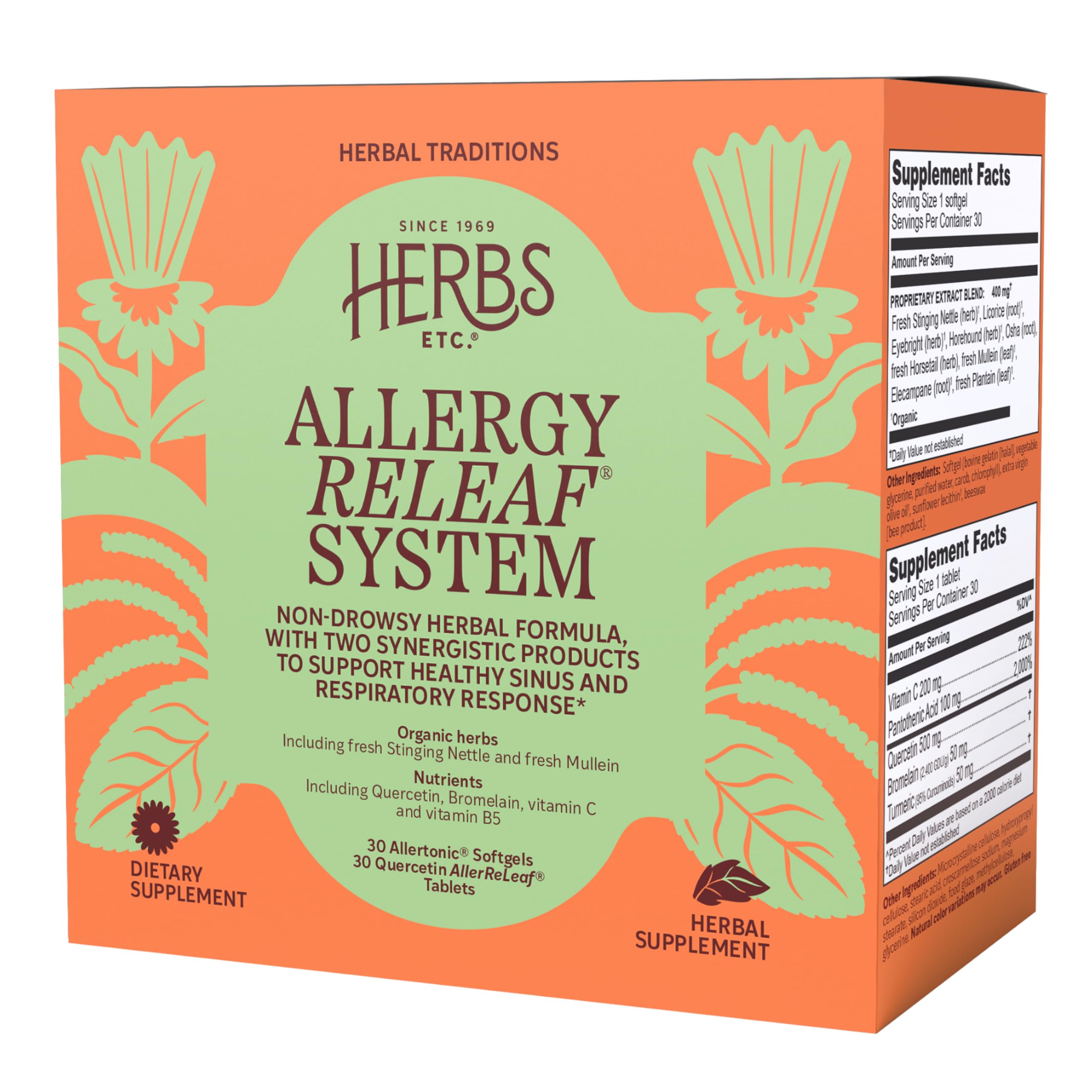
The Herbs Etc. Allergy ReLeaf System is a two-part kit combining Allertonic softgels (with fresh mullein and organic eyebright) and Quercetin AllerReLeaf tablets (quercetin-based). This dual-action approach aims to provide both immediate comfort and ongoing support for healthy sinus function during seasonal transitions. The fresh mullein is harvested using a proprietary extraction method that the company claims preserves more plant constituents than dried herb formulas.
Users consistently report that this system resolves chronic allergy symptoms like red eyes, wheezing, and sneezing within a few days of starting it, with no side effects. The quercetin component — a flavonoid known to stabilize mast cells — acts as a natural antihistamine mechanism without the drowsiness of Benadryl. Many reviewers note that they have been able to stop prescription allergy medications entirely after switching to this kit, though individual results vary depending on allergy severity.
The main consideration is dosing: you take one softgel and one tablet every two to three hours until comfort is achieved, then reduce to a maintenance dose. This frequent dosing schedule may be inconvenient for some pregnant women, especially those juggling work and nausea. Also, because it is an herbal supplement rather than an FDA-regulated drug, there is no pregnancy-specific safety data. Discuss with your OB-GYN before using, especially during the first trimester.
Why it’s great
- Whole-plant extraction with fresh herbs
- Quercetin provides mast-cell stabilizing effect
- No known interactions with medications
- Non-drowsy, no jitters
Good to know
- Frequent dosing (every 2-3 hours)
- No pregnancy-specific clinical data
- Not intended for severe acute symptoms
4. Amazon Basic Care All Day Allergy (Cetirizine 10 mg)

Amazon Basic Care All Day Allergy contains cetirizine hydrochloride 10 mg — the same active ingredient as Zyrtec and a Pregnancy Category B drug. Cetirizine is a second-generation antihistamine that starts working faster than loratadine (often within one hour) and provides 24-hour relief from sneezing, runny nose, itchy eyes, and throat irritation. Because it does not cross the blood-brain barrier to the same extent as first-generation drugs, it is non-drowsy for most users, though some women report mild sedation at the 10 mg dose.
This generic equivalent matches name-brand Zyrtec in clinical efficacy at a fraction of the cost. With 365 tablets per bottle, you have a full year of daily medication — a practical consideration for pregnant women managing chronic allergies throughout all three trimesters. The tablets are gluten-free and manufactured in FDA-registered facilities. Many pregnant users find cetirizine slightly more effective than loratadine for stubborn symptoms like post-nasal drip and sinus pressure.
The potential downside is that cetirizine can cause mild drowsiness in a subset of users, especially at the full 10 mg dose. If you experience any sleepiness, try halving the tablet (5 mg) for maintenance; several reviewers confirm that the half-dose still provides adequate relief for mild allergies. Avoid sudden discontinuation after prolonged use — some users report a withdrawal-like itching sensation for a day or two.
Why it’s great
- Pregnancy Category B with decades of use data
- Faster onset than loratadine (~1 hour)
- 365 count — year of daily supply
- Generic price for name-brand equivalent
Good to know
- May cause mild drowsiness in some users
- Withdrawal itching possible if stopped abruptly
- Not recommended for severe nasal congestion alone
5. GoodSense Allergy Relief Loratadine (10 mg)
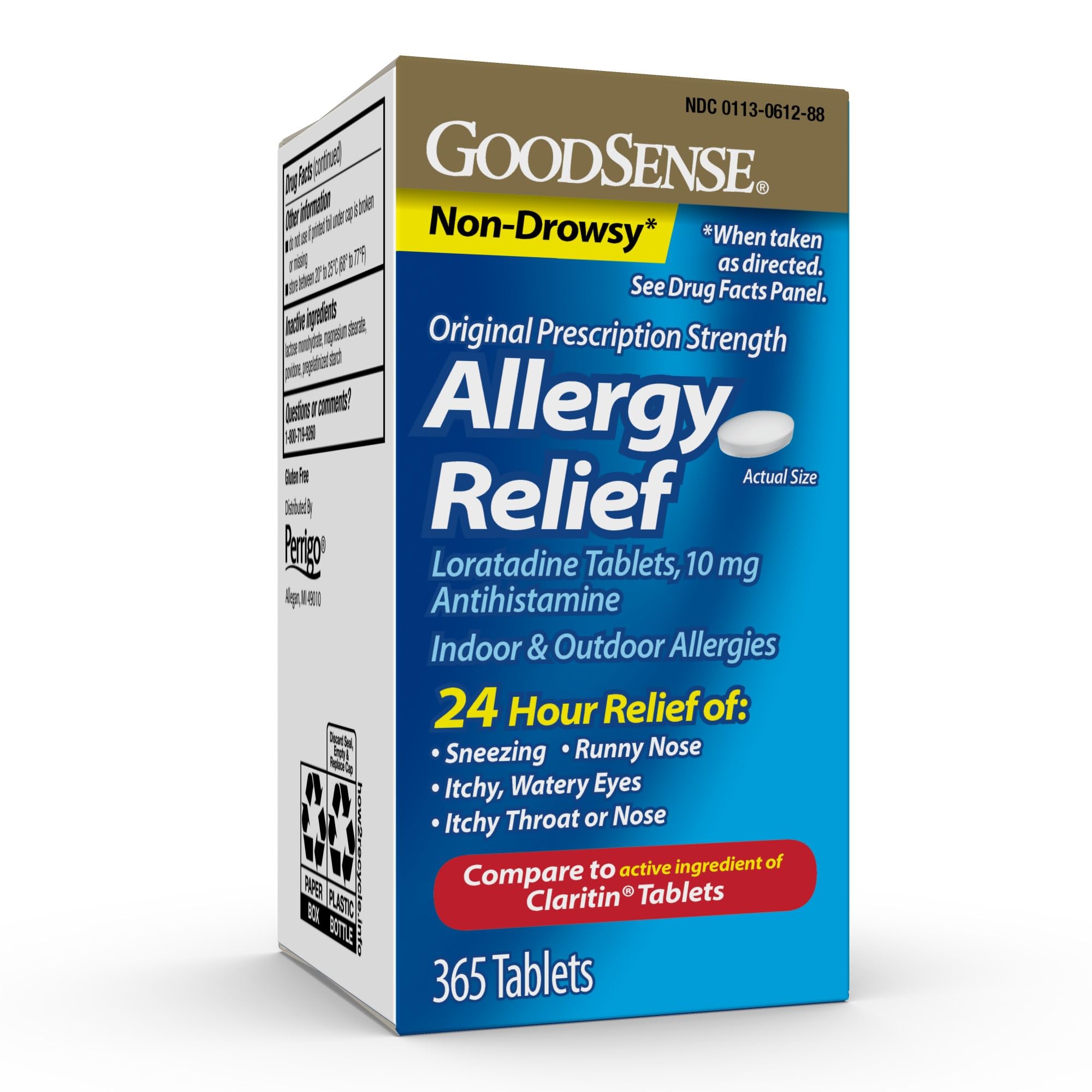
GoodSense Allergy Relief delivers loratadine 10 mg — the identical active ingredient in Claritin — making it a Pregnancy Category B antihistamine with a long safety track record. Loratadine is the most rigorously studied second-generation antihistamine in pregnant women, with multiple large-scale observational studies showing no increase in major congenital malformations. For pregnant women who prioritize maximum safety data over speed, loratadine is the benchmark choice.
The 365-count bottle provides exceptional value: one year of daily allergy protection for a budget-friendly price. Users consistently report that it works effectively against dust, pollen, and pet dander when taken about 30 minutes before exposure. It is completely non-drowsy for virtually all users, which makes it the safest bet for daytime functioning during pregnancy when fatigue is already a factor. The tablets are small and easy to swallow, even for those experiencing nausea.
The trade-off is that loratadine is slower-acting than cetirizine — it typically takes two to three hours to reach peak concentration in the bloodstream. For sudden flare-ups, you may need to wait longer for relief. Some users also find it slightly less potent than cetirizine for severe symptoms. If you have mild to moderate allergies and want the pregnancy safety data gold standard, this is the one.
Why it’s great
- Most pregnancy safety data of any oral antihistamine
- Pregnancy Category B — decades of research
- Completely non-drowsy for nearly all users
- 365-count — exceptional long-term value
Good to know
- Slow-acting (takes 2-3 hours for peak effect)
- May be less potent for severe allergies
- Not ideal for immediate rescue relief
6. Hyland’s Seasonal Allergy Relief Quick-Dissolving Tablets

Hyland’s Seasonal Allergy Relief offers a homeopathic approach that many pregnant women choose specifically because they want to avoid all chemical antihistamines during gestation. These quick-dissolving tablets melt in the mouth within seconds with a subtly sweet, bland taste — no pills to swallow, no water needed. The formula uses micro-diluted plant-based active ingredients designed to temporarily relieve hay fever symptoms from pollen, ragweed, animal dander, and mold.
User reports are surprisingly strong for a homeopathic product: many reviewers say it works as well as Claritin and nearly as well as Benadryl for histamine-type allergies, with zero drowsiness. The fast-dissolving format makes it easy to take even when nauseous, and the tablets can be taken at the first sign of symptoms for quicker relief. With 240 tablets (up to 120 doses), the supply lasts through a full allergy season. Because it is homeopathic, there are no known medication interactions, making it safe to combine with prenatal vitamins and other prescriptions.
The scientific caveat is important: homeopathic remedies are not FDA-regulated for safety or efficacy, and no pregnancy-specific clinical trials exist. What works for some users may not work for others, and results are anecdotal. If you are comfortable with the principles of homeopathy and want a truly drug-free option, this is the most popular and well-reviewed choice. For severe allergies, it likely won’t replace a pharmaceutical antihistamine.
Why it’s great
- Completely drug-free — no chemical antihistamines
- Quick-dissolving — no swallowing pills while nauseous
- No known side effects or medication interactions
- Non-drowsy, non-habit forming
Good to know
- No FDA pregnancy safety data
- Anecdotal results — may not work for everyone
- Not sufficient for severe allergy symptoms
7. NaturalCare by bioAllers Allergy Treatment Homeopathic Drops

NaturalCare by bioAllers is a liquid homeopathic formula designed to address allergies triggered by mold, yeast, and household dust — common indoor allergens that can be especially bothersome during pregnancy when women spend more time at home. The liquid drop format allows for flexible dosing (adjusting the number of drops based on symptom severity) and can be taken directly on the tongue or mixed into a small amount of water. The formula uses the principle of isopathy (the same substance that causes the allergy, in micro-diluted form, can help treat it), which the manufacturer claims offers more targeted support for mold and dust sensitivities.
Users report that the drops work within seconds for some symptoms — particularly clogged ears and sinus pressure — and provide cumulative immunity building over about two weeks of consistent use. The non-drowsy nature and absence of known medication interactions make it a popular choice for pregnant women who need to avoid all pharmaceutical antihistamines. Many reviewers note that it works best when taken preventatively at the first sign of allergen exposure rather than after symptoms have fully escalated.
The biggest limitation is that it targets a narrower range of allergens (mold, yeast, dust) compared to broad-spectrum antihistamines. It is less effective for pollen and pet dander allergies. The liquid format also requires careful dosing (not as convenient as a tablet) and has a mild herbal taste that some users dislike. For pregnant women whose primary triggers are indoor allergens and who want a liquid homeopathic option, this is the most established brand.
Why it’s great
- Flexible liquid dosing for customized relief
- Fast relief for sinus pressure and clogged ears reported
- No known interactions with medications
- Non-drowsy, non-habit forming
Good to know
- Narrow target: mold, yeast, dust only
- Liquid format less convenient than tablets
- No FDA pregnancy safety studies
FAQ
Is loratadine or cetirizine safer during pregnancy?
Can I use Benadryl during pregnancy?
Are nasal decongestant sprays safe during pregnancy?
Can I combine an oral antihistamine with a nasal spray?
Is it safe to take allergy medicine every day while pregnant?
Final Thoughts: The Verdict
For most users, the allergy medicine for pregnant women winner is the Flonase Sensimist because it provides targeted, non-drowsy relief for nasal congestion with minimal systemic absorption — the safest delivery mechanism available. If you prefer an oral tablet with the most pregnancy safety data, grab the GoodSense Allergy Relief Loratadine. And for a drug-free homeopathic option that dissolves instantly, nothing beats the Hyland’s Seasonal Allergy Relief.