
Our readers keep the lights on and the weekend projects moving. As an Amazon Associate, I earn from qualifying purchases.
That sharp pop in the middle of a stride turns a runner’s rhythm into a limp in an instant. Ankle instability doesn’t just stop a workout—it sidelines weeks of training, forcing you to rebuild endurance from scratch. The right brace acts as a mechanical tether, limiting inversion and providing the confidence to push off without hesitation.
I’m Rikta — the co-founder and writer behind FitlyFast. I’ve spent years analyzing the structural differences in sports braces, mapping everything from lace-up tension systems to the material densities that actually prevent re-injury during dynamic movement.
You need a support that stays locked in without adding sloppy bulk to your shoe, so every step feels stable. After reviewing dozens of options, I have built a tight list of the strongest candidates for the best ankle brace for running.
How To Choose The Best Ankle Brace For Running
A running brace must survive repetitive flexion while preventing the ankle from rotating past its safe range of motion. The wrong choice either suffocates your stride with bulk or leaves you vulnerable on uneven pavement. Focus on three distinct areas to narrow the field.
Lace-Up vs. Sleeve vs. Strap
A compression sleeve offers mild proprioceptive feedback but does little to stop an inversion roll mid-stride. A rigid lace-up design with cross-straps creates a cage that physically limits lateral movement. For runners who have already suffered a sprain, the lace-up base paired with figure-8 straps provides the highest lateral resistance without sacrificing foot flexion.
Removable Splints and Material Weight
Aluminum or plastic side stays add rigidity during early recovery, but you can remove them for lighter runs once the ligament is stronger. Look for braces that let you choose between full stabilization and a more flexible feel. The brace material itself should be a breathable nylon-polyester blend—less than 2 mm in thickness if possible—so it slides into your shoe without altering your stride.
Shoe Compatibility and Heel Fit
Running shoes have tight heel counters. A bulky brace lifts your heel out of the shoe’s cup, creating friction that leads to blisters and instability. Prioritize braces specifically described as low-profile or ultra-thin. If the brace uses a thick neoprene liner, it will wrestle with your shoe lace pressure rather than working with it.
Quick Comparison
On smaller screens, swipe sideways to see the full table.
| Model | Category | Best For | Key Spec | Amazon |
|---|---|---|---|---|
| Med Spec ASO | Premium | Post-injury running recovery | Figure-8 straps + CoolFlex padding | Amazon |
| DonJoy Speed Pro | Premium | Achilles tendon support | Speed laces + 800D ballistic nylon | Amazon |
| Ultra 360 | Mid-Range | Volleyball & running combo | Low-profile nylon + figure-8 straps | Amazon |
| McDavid 195 | Mid-Range | Weekend hoops & pavement | Ventilated tongue + figure-6 strapping | Amazon |
| Fitomo Triple-Lock | Mid-Range | Adjustable sprain protection | Removable side stabilizers + cross straps | Amazon |
| Fitomo 1.5mm | Budget-Friendly | Ultra-thin daily wear | 1.5 mm microfiber + visible vents | Amazon |
| AGPTEK Lace-Up | Budget-Friendly | Post-surgery stability | Removable aluminum splints | Amazon |
In‑Depth Reviews
1. Med Spec ASO Ankle Stabilizer
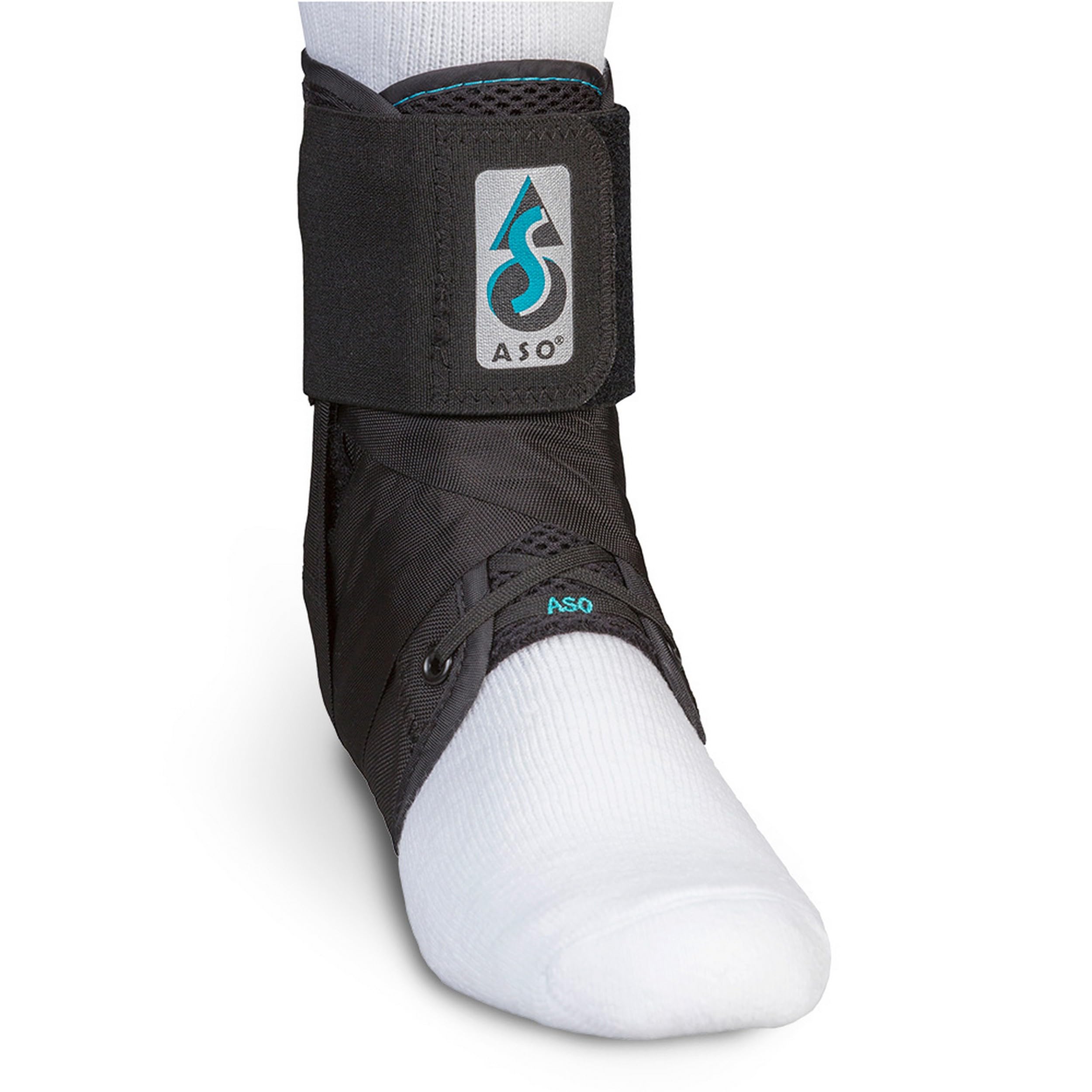
The Med Spec ASO earns its reputation as the standard a physical therapist recommends. Its lace-up base locks the foot into the brace bed, then two figure-8 straps cross over the talus to control inversion without crushing your arch. The CoolFlex padding prevents the heat buildup that makes long runs miserable, and the nylon shell resists the stretch that cheaper braces show after a month of strides.
Reviewers who suffered grade 2 sprains consistently report that the ASO allowed them to transition from walking to jogging without that wobbly sensation under the ankle bone. The bilateral fit works for either foot, and the sizing chart is unforgiving—measure accurately because the snug fit is what prevents micro-movements that aggravate peroneal tendons.
On the road, the brace fits comfortably inside running shoes with a normal volume. You lose about a third of your heel lift range, which actually discourages the over-stride that causes re-injury. The laces require an extra minute to thread, but the payoff is a locked-in feel that no slip-on sleeve can match.
Why it’s great
- Figure-8 straps provide targeted lateral control that mimics athletic taping.
- Breathable CoolFlex padding reduces sweat and irritation during longer runs.
- Durable nylon build holds shape after repeated use and washing.
Good to know
- Does not fit well with slip-on or very low-volume shoes.
- Lace threading takes a bit of practice to get the tension even.
2. DonJoy Stabilizing Speed Pro

The DonJoy Speed Pro solves the biggest frustration of traditional lace-ups: application time. Its speed-lace system uses a single pull to cinch the entire foot bed, then you secure two Velcro gathering tabs and a full-circumference elastic cuff that compresses the tibia and fibula. The 800D ballistic nylon stands up to pavement scrapes, making it a long-term investment for runners who train daily.
Removable articulated stays on the medial and lateral sides provide customizable rigidity. You can run with the stays in for maximum stability on technical trails, then pop them out for a lighter feel during track work. The heel cup is reinforced, which prevents the brace from riding up and bunching inside your shoe—a common failure point in cheaper wraps.
Multiple reviews note that the D-rings anchoring the figure-8 straps can create pressure points on the front of the ankle, especially during long runs. A thick sock or a thin gel pad solves this, but it is worth knowing before you lace up for a half-marathon. Once adjusted, the Speed Pro offers a locked-in feel comparable to a high-end athletic tape job.
Why it’s great
- Speed-lace design cuts application time to under 10 seconds.
- Articulated medial/lateral stays are removable for transitioning support levels.
- Durable ballistic nylon resists abrasion from shoes and pavement.
Good to know
- D-ring anchors can dig into the ankle without a thick sock layer.
- Heel material may bunch slightly after extensive use.
3. Ultra 360 Lace Up Ankle Brace
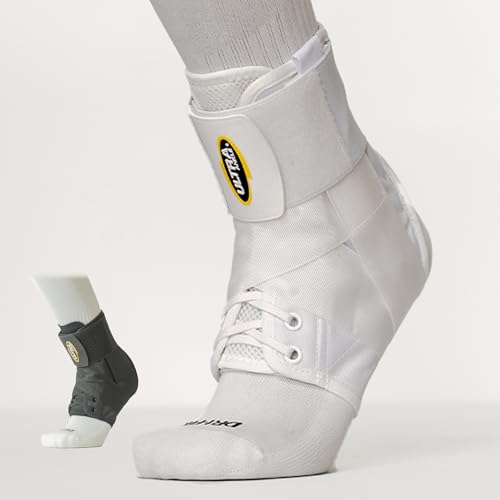
The Ultra 360 strips away unnecessary padding to create a brace that slips into running shoes without bulging at the heel. Its slim nylon construction and figure-8 straps mimic athletic taping, wrapping around the ankle in a pattern that specifically targets the anterior talofibular ligament—the most common injury point for runners. The lace-up closure allows you to dial in tension from the midfoot to the shin.
Runners who play multi-directional sports like volleyball or basketball alongside their road work will appreciate how well the Ultra 360 handles lateral cuts without shifting. The breathable material prevents the sweaty sock feeling that heavier braces cause, and the low weight means you barely notice it after the first few strides. Reviewers mention that the brace fits comfortably inside cleats and boots as well.
The only trade-off is a slightly less rigid feel compared to braces with metal or hard plastic stays. If you are still in the acute phase of a sprain and need absolute immobilization, a brace with removable splints might be a safer first step. For runners who need prevention more than recovery, the Ultra 360 hits a smart balance.
Why it’s great
- Slim build fits easily inside tight running shoes and cleats.
- Figure-8 straps target the anterior talofibular ligament.
- Breathable construction reduces sweat buildup.
Good to know
- Less rigid than braces with removable splints.
- Not ideal for acute injury phases requiring full immobilization.
4. McDavid 195 Deluxe Ankle Brace

The McDavid 195 has been a locker-room staple for years because its figure-6 strapping pattern provides a functional compromise between full immobilization and freedom of movement. The ventilated tongue lets heat escape during intense sessions, and the top compression strap lets you tighten support without unlacing your shoe—a small detail that makes interval training less annoying.
Runners who prefer a more natural feel will like that the brace relies on strapping tension rather than rigid inserts to control motion. The fabric blend offers a snug fit that isolates the ankle without cutting off circulation. Reviewers mention that the brace feels secure during lateral movements like cutting on a basketball court, translating directly to stability on uneven running surfaces.
The brace can feel bulky inside low-cut running shoes, particularly if you have a narrow heel. A few reviewers noted that the Velcro straps can scratch the skin above the ankle bone, easily solved by wearing crew-length running socks. The laces run long, which helps you find the perfect tension but requires tucking before you start moving.
Why it’s great
- Figure-6 strapping provides excellent lateral control without rigid splints.
- Ventilated tongue improves airflow during sweaty runs.
- Top strap allows mid-run tightening without removing your shoe.
Good to know
- Can feel bulky inside low-volume running shoes.
- Velcro tabs may irritate exposed skin without crew socks.
5. Fitomo Triple-Lock Ankle Brace
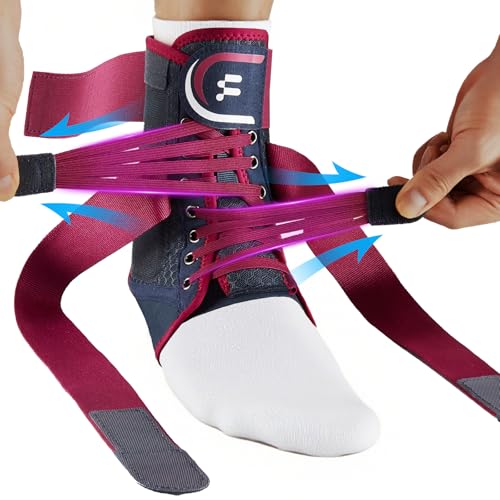
Fitomo’s Triple-Lock system uses three distinct stabilization layers: a top strap for compression, dual removable side stabilizers, and cross straps that create a figure-8 wrap over the ankle joint. This layered approach allows you to graduate from heavy support to lighter protection as your ankle heals, making it a versatile option for runners who want one brace to handle recovery and maintenance.
The removable stabilizers are lightweight plastic splints that slide into side pockets. With the splints inserted, the brace provides a secure, medially rigid feel that prevents the ankle from collapsing inward during the ground contact phase of a run. Removing them converts the brace into a support wrap that still offers figure-8 resistance but with more natural dorsiflexion.
Reviewers recovering from stroke-related foot drop and post-surgical ORIF procedures found the brace easy to apply with one hand—a sign that the strap layout is well thought out. Some users felt the sizing ran slightly large for very narrow ankles, so double-check your measurement against the brand’s chart. The rose color option is a nice change from standard black or white.
Why it’s great
- Removable side stabilizers let you adjust support level over recovery phases.
- Triple-Lock design provides redundant resistance to inversion.
- Easy on/off with one hand, suitable for post-surgical users.
Good to know
- Sizing may run slightly large for very narrow ankles.
- One brace per pack—no left/right pair.
6. Fitomo 1.5mm Ultra Thin Ankle Brace
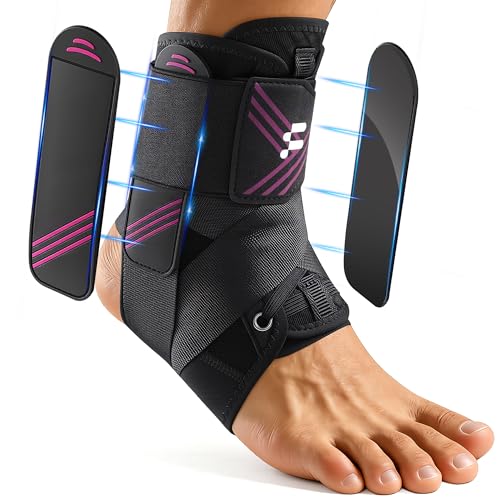
At just 1.5 mm thick, this Fitomo brace is engineered for runners who refuse to sacrifice shoe fit. The microfiber fabric stretches to accommodate your foot shape while the visible air vent grid actively dissipates heat. The three-layer system uses an inner silicone grip to prevent slippage, a figure-8 stabilizing strap, and a flexible support panel that works together during push-off.
The low-profile design disappears under socks and fits inside everything from snug running shoes to work boots. Reviewers consistently mention that this brace does not alter their stride or cause the heel slippage that plagues thicker wraps. The adjustable hook-and-loop strap allows fine-tuned compression without the hassle of threading laces.
Because the brace prioritizes low weight and breathability, it offers less rigid lateral support than a lace-up model with side stays. It is best suited for mild instability, general ankle fatigue during long runs, or as a preventive measure for runners who want confidence without bulk. For moderate sprains, you may want a more substantial lace-up option.
Why it’s great
- Ultra-thin 1.5 mm build fits in any shoe without altering fit.
- Visible ventilation grid prevents moisture buildup.
- Inner silicone grip keeps the brace from shifting mid-run.
Good to know
- Less rigid than lace-up braces with splints.
- Not recommended for moderate or severe sprains.
7. AGPTEK Adjustable Lace-Up Ankle Brace
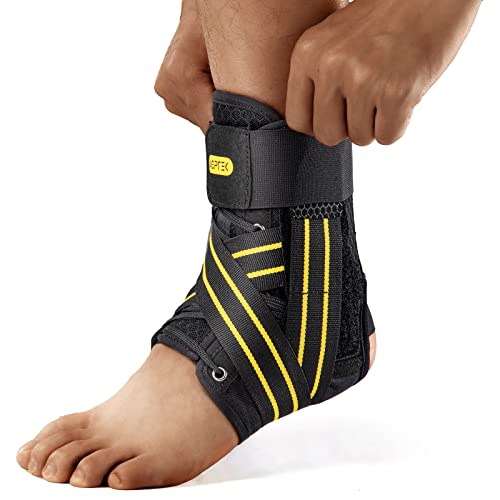
The AGPTEK brace uses a cross-shoelace design paired with removable aluminum splints to provide 360-degree protection at a very accessible price point. The metal stays run along both sides of the ankle, creating a rigid frame that limits inversion and eversion effectively. The lace-up closure lets you distribute tension evenly across the foot.
Reviewers who compared it directly to orthopedic braces from their doctors found the AGPTEK more comfortable and supportive, with the aluminum splints holding their shape after months of daily use. The breathable polyester-nylon blend prevents sweat buildup during runs, and the two stabilizing straps on both sides reinforce the lateral wall without adding weight.
The brace can feel stiff out of the box, and the yellow color option is not for everyone, but the function is undeniable. If you are coming off a fracture or a high-grade sprain and need a reliable support that will not break the bank, this brace provides a solid foundation. The splints are removable, so you can transition to a lighter feel as you recover.
Why it’s great
- Removable aluminum splints offer strong, rigid lateral support.
- Breathable material prevents sweat buildup during runs.
- Cross-lace design distributes tension evenly across the midfoot.
Good to know
- Initial stiffness requires a short break-in period.
- Some users found the sizing chart slightly off for larger ankles.
FAQ
Can I wear an ankle brace inside my running shoes without changing my stride?
Should I use a lace-up brace or a sleeve for chronic ankle instability while running?
How do I wash my ankle brace without damaging the stabilizers?
Final Thoughts: The Verdict
For most users, the best ankle brace for running winner is the Med Spec ASO Ankle Stabilizer because its figure-8 straps and breathable CoolFlex padding deliver proven, PT-recommended lateral control without making your shoe feel like a cast. If you want ultra-fast application and a locked-in fit for Achilles support, grab the DonJoy Speed Pro. And for a low-profile option that disappears inside your shoe and handles mild instability during daily runs, nothing beats the Fitomo 1.5mm Ultra Thin Brace.